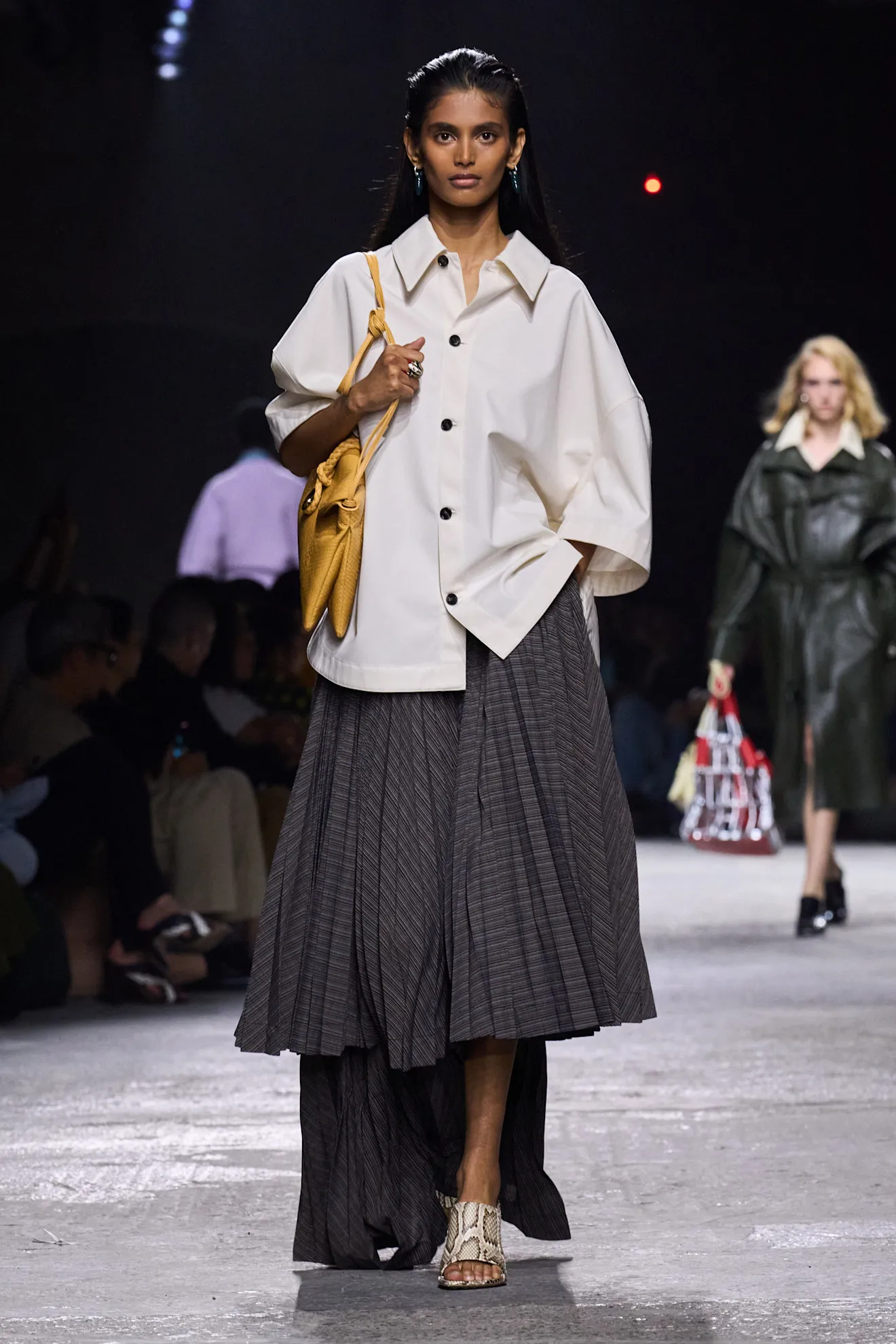
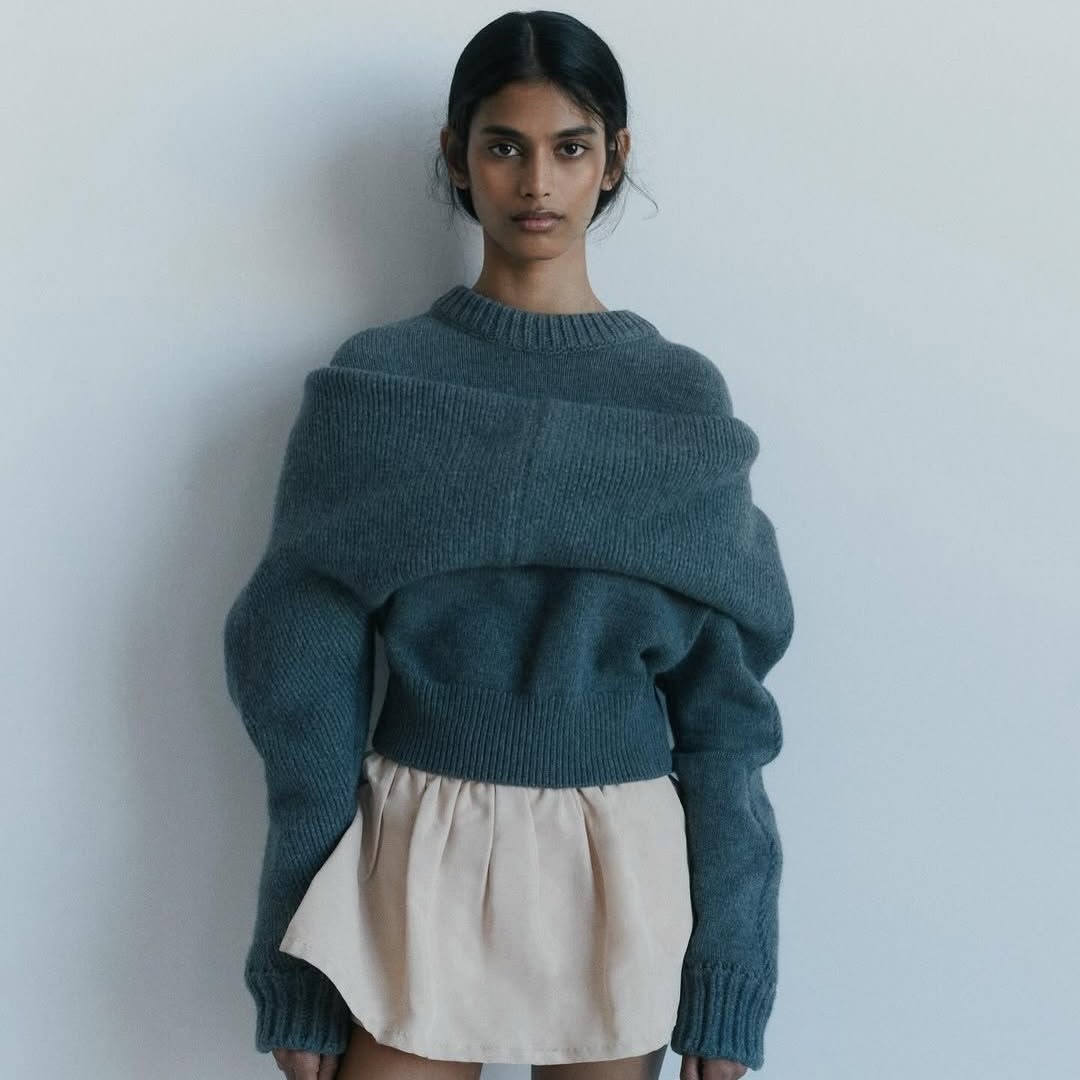
For a while there, it seemed as if fashion had altogether outgrown the art of scouting a model from the wilds of real life. Sure, one might still get “discovered” on Instagram or TikTok these days, but the tales of the truly great runway models being plucked from the plebeian crowds—Gisele Bündchen spotted whilst eating Big Macs on holiday or Natalia Vodianova snapped up from her hometown of Nizhny Novgorod in Russia—have been relegated to myth. It’s yet another disappearing analogue from the 1990s that fashion people talk about with nostalgia, the same way they bemoan the large budgets and folded magazines of the olden days.
But that was before Bhavitha Mandava.
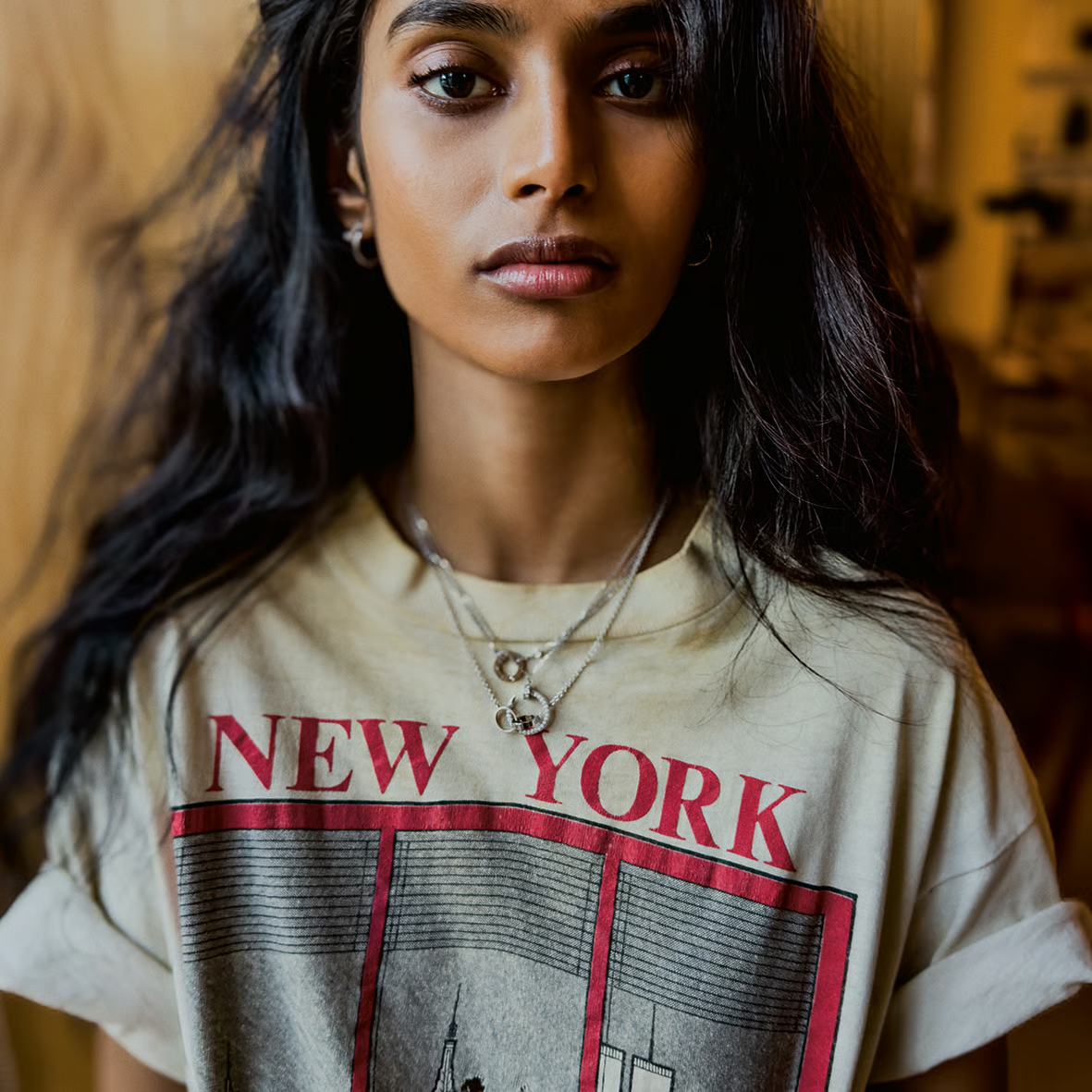
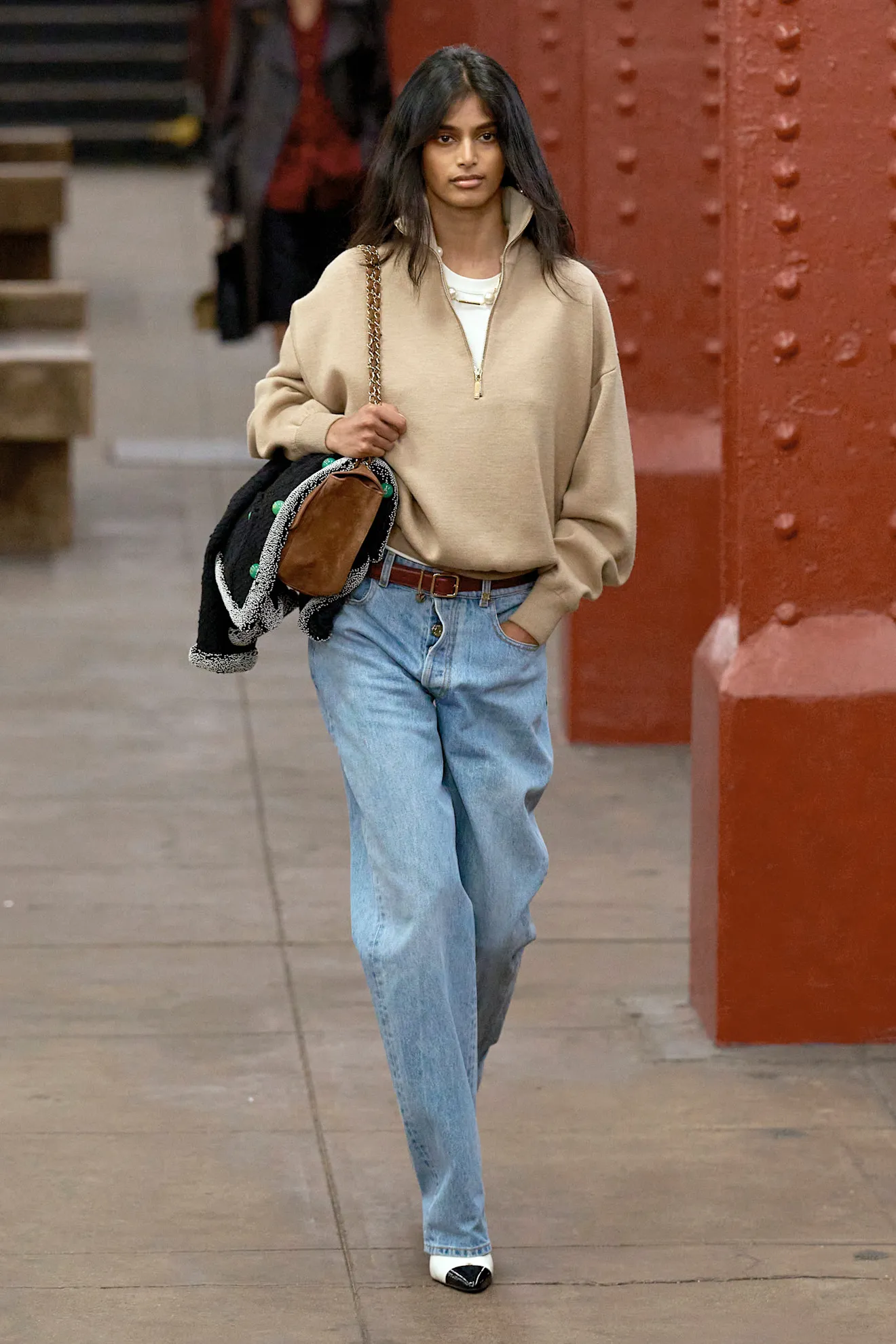
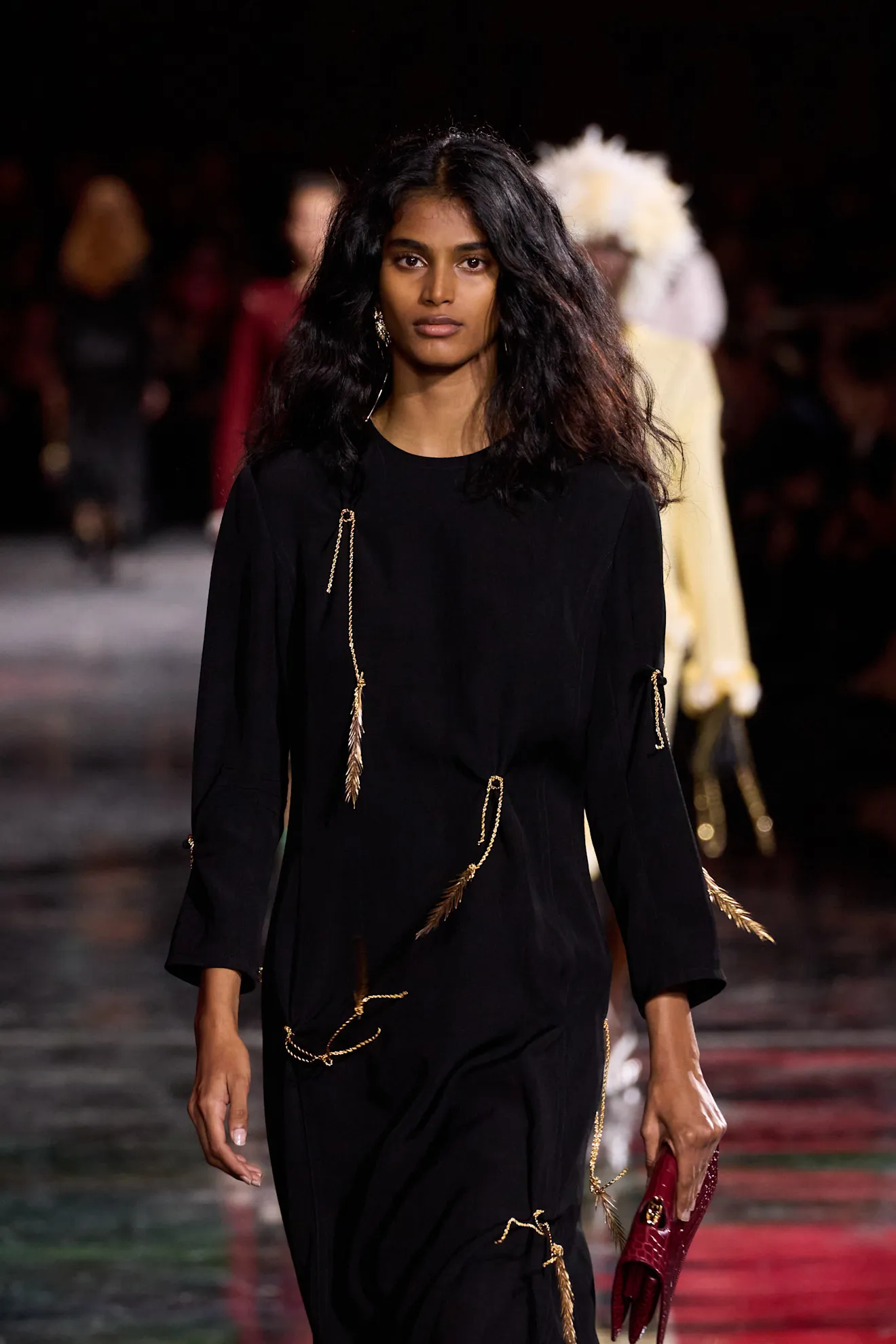
Seldom does fashion virality, generated on the highest and most gatekept echelon of runway, overflow into civilian life the way it did for the 25-year-old model, who opened the Chanel Métiers d’art fashion show in December—yes, the one held inside an abandoned New York City subway station. Post-show, Mandava posted a heartbreakingly sweet clip to her Instagram, captioned “my brown parents’ reaction to me opening the Chanel show,”which exploded with the kind of resonant intensity (26.2 million views) to rival a Marvel movie’s box office numbers. At first, the internet was abuzz with curiosity about her identity—who was this incredibly beautiful younge.
“I did get a little overwhelmed [at first],” she tells me. We’re drinking hot chocolate on a freezing Wednesday in January. During our conversation in the mostly-empty café, we’re interrupted by a grandmotherly white lady in her 70s, who shyly comes up to Mandava to express her admiration. She’d found out about the model from her neighbours Sanjeev and Alka, who told her about the Indian girl who walked in the Chanel fashion show. She could not wait to tell them that she’d met her in real life. Another young man leans over to politely remark, “I can’t believe I’m just sitting right next to you.”
The adoration is pure and completely devoid of the malice sometimes directed at objects of new stardom. Mandava’s attitude toward this whole fame thing, so far, has been one of unflappability. She’s neither too moved by it nor completely dismissive of the ways it’s changed her life. But yes, it’s still been a lot to take in. “I locked myself in for, like, two weeks,” she says of the initial wave of.
In the flurry of news articles chronicling Mandava’s rise to runway supremacy, the word “Cinderella-esque” has been invoked more than once—which is fair, considering the obvious parallels: beautiful young woman, miraculously rescued from a life of labour, becomes the people’s princess. The ugly stepsisters in Mandava’s fairy tale, however—in a modern twist—have been 1) a historically awful job market and 2) the limitations on immigration options for international students in America, who cannot work on an F-1 visa.
Born in the city of Vijayawada, in the southern Indian state of Andhra Pradesh, and brought up in Hyderabad, Mandava is the child of classic middle-class Indian parents, who raised her with the classic middle-class Indian ethos of “work hard, get job.” It doesn’t account for what happens when you “work hard,” but the “get job” part doesn’t follow. I understand this fallacy on a fundamental level, because I too am a product of the same system, which refuses to acknowledge the larger structural forces that play a role in things like employment. For the many of us raised having completely internalised this system of belief—that putting your head down automatically begets success—that first encounter with the American job market comes as a stunning reality check. Mandava was stumped.
An architect by training, she came to America in 2023 to pursue a master’s in integrated design and media at Nyu’s Tandon School of Engineering, where she worked as a design lab coordinator for $30 an hour on the side. “From day one, I was hustling, right? I got the job on campus. I was prepping for internships. Suddenly, the job market froze.” I got the job on campus. I was prepping for internships. Suddenly, the job market froze.”