For Simon Porte Jacquemus, whose practice increasingly moves between fashion, hospitality and object styling; this collaboration marks a first entry into the world of wine and spirits. For Veuve Clicquot, however, it extends a longer history of treating the champagne vessel as a collectible design object. Previous collaborations with figures such as artists Yayoi Kusama, Andrée Putman and Italian ceramicist Paola Paronetto—who created paper-clay sculptural cases for La Grande Dame during the house’s 250th anniversary—have similarly positioned Veuve within the overlapping worlds of art, craft and hospitality.
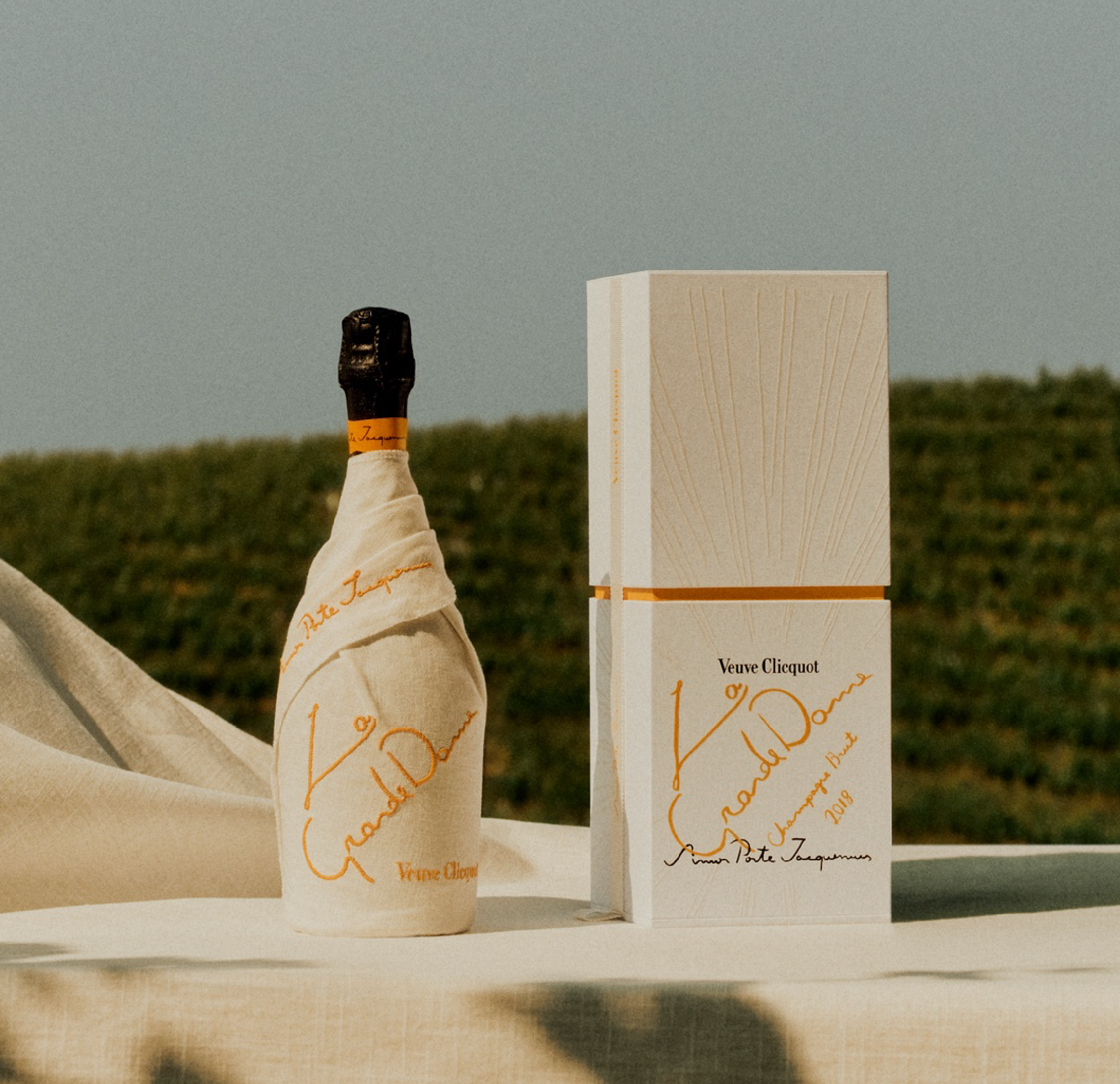
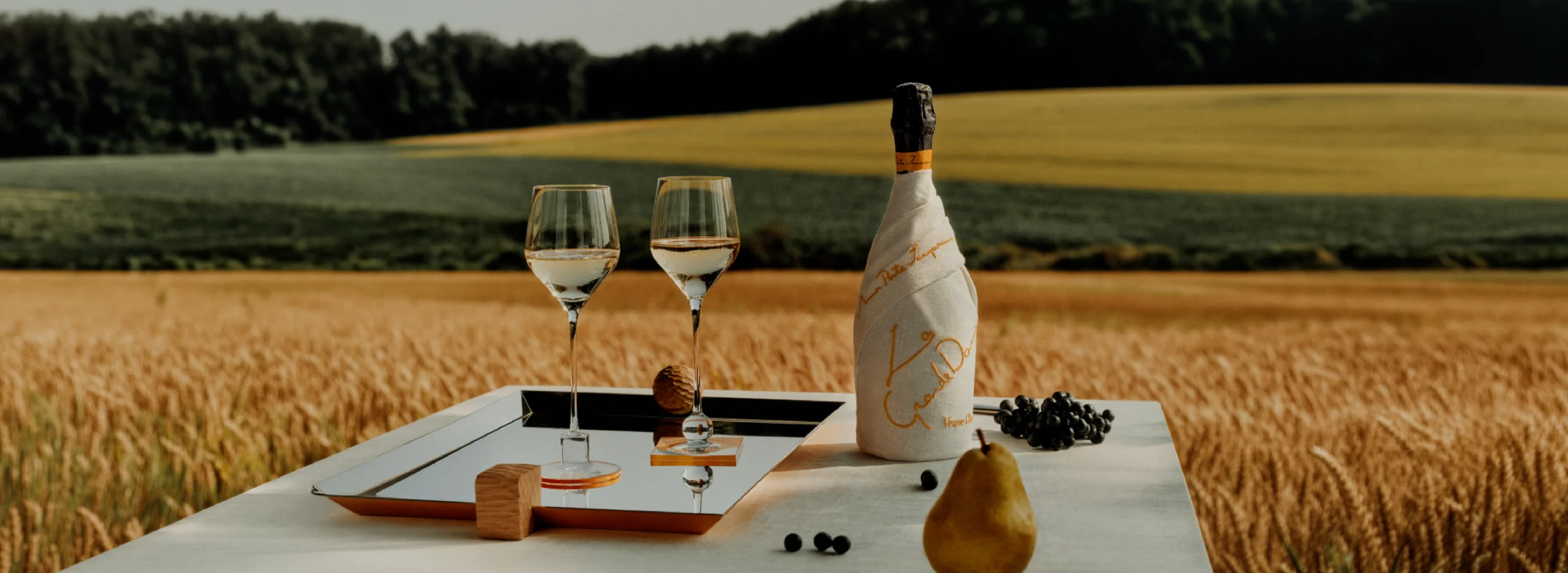
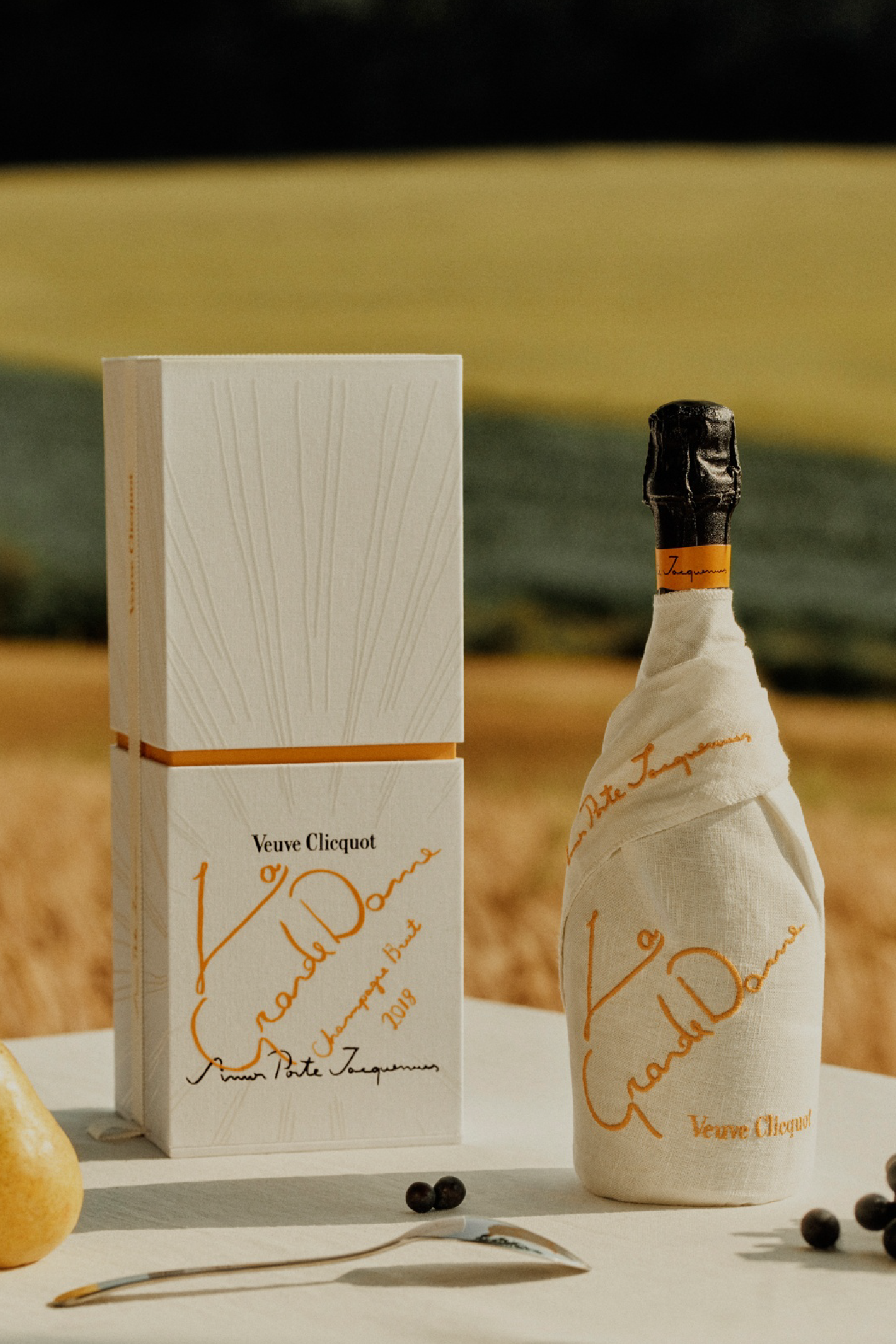
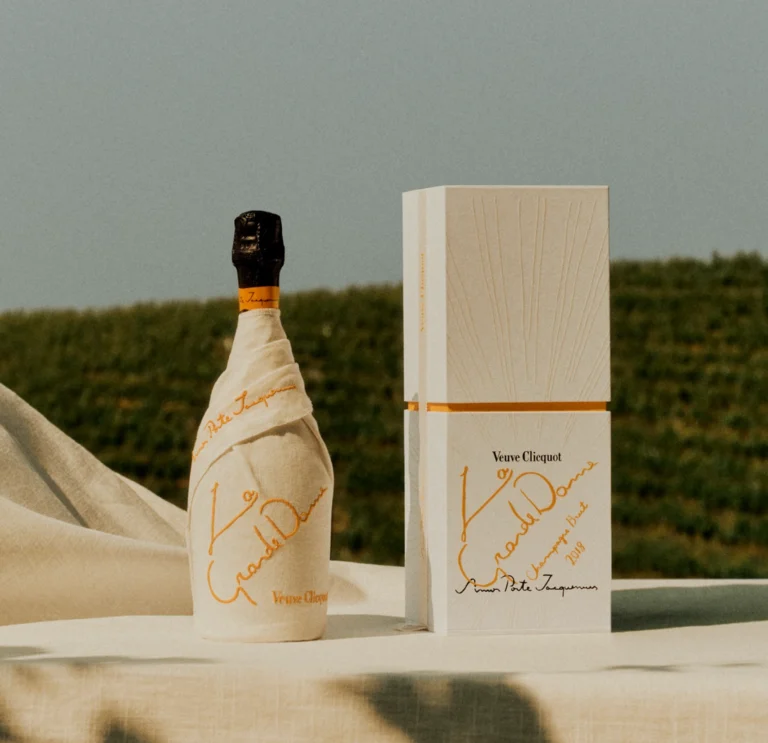
At the centre of the collaboration is the La Grande Dame itself, wrapped in cream linen embroidered with handwritten typography in mustard-yellow stitching—as though wrapped for storage in a Provençal kitchen. Beneath the aesthetic gesture lies a quieter historical reference: the fabric wrap draws from an old Mediterranean method of cooling wine and champagne bottles in which damp cloth was wound around bottles and left to chill through evaporation during summer heat.
Alongside this sits Le Rafraîchissoir, a limited-edition, silver-plated champagne cooler developed with Parisien metal atelier Camille Orfèvre. Produced in a series of just 50 pieces, the silver-plated object draws loosely from Medici urns while incorporating curved handles and marine motifs that evoke fishing baskets and Mediterranean vernacular objects. Founder Camille Gras belongs to the lineage of France’s Meilleurs Ouvriers de France (Best Craftsman of France)—one of the country’s highest craft distinctions—and each cooler reportedly requires over 40 hours of hand-finishing.
The collaboration feels especially coherent because both brands already operate within adjacent emotional worlds, cultivated independently. Since founding his label in 2009, Jacquemus has built an entire aesthetic universe around the imagery of southern France—sun-faded fruit, wrinkled cotton, rural table settings and the peculiar sensuality of ordinary objects photographed with reverence.
Meanwhile, Veuve Clicquot, named after Madame Clicquot—the 19th-century widow who transformed the champagne house into one of France’s most enduring luxury institutions—has long associated itself with craft, hospitality and the choreography of gathering. Jacquemus could have monumentalised this legacy and opted for an overt historical reference. Instead, he approaches it obliquely, through domestic gestures rooted in history that suggest preservation ritual and care. He leans into texture and familiarity: creased linen, visible stitching, softened metal surfaces, objects designed to appear handled rather than untouched. Even the palette—butter yellow, cream—abandons opulence in favour of warmth. There is also subtle symbolism tying the collaboration together: sunlight. Veuve Clicquot’s distinctive yellow has defined the house since the late 19th century, while Jacquemus has become synonymous with the sun-drenched visual mythology of the Mediterranean. Even the 2018 vintage itself has been described by the house as a notably “solar” harvest year. Across linen, silver and champagne, light becomes the atmosphere.
What emerges across the collaboration is a broader shift currently reshaping luxury culture itself—from collaborations as visibility-oriented branding exercises to immersive lifestyle-building. Beneath the exclusivity and the limited-edition framing, the true resonance of this collaboration lies in both Veuve Clicquot and Jacquemus understanding intimacy as a form of luxury.