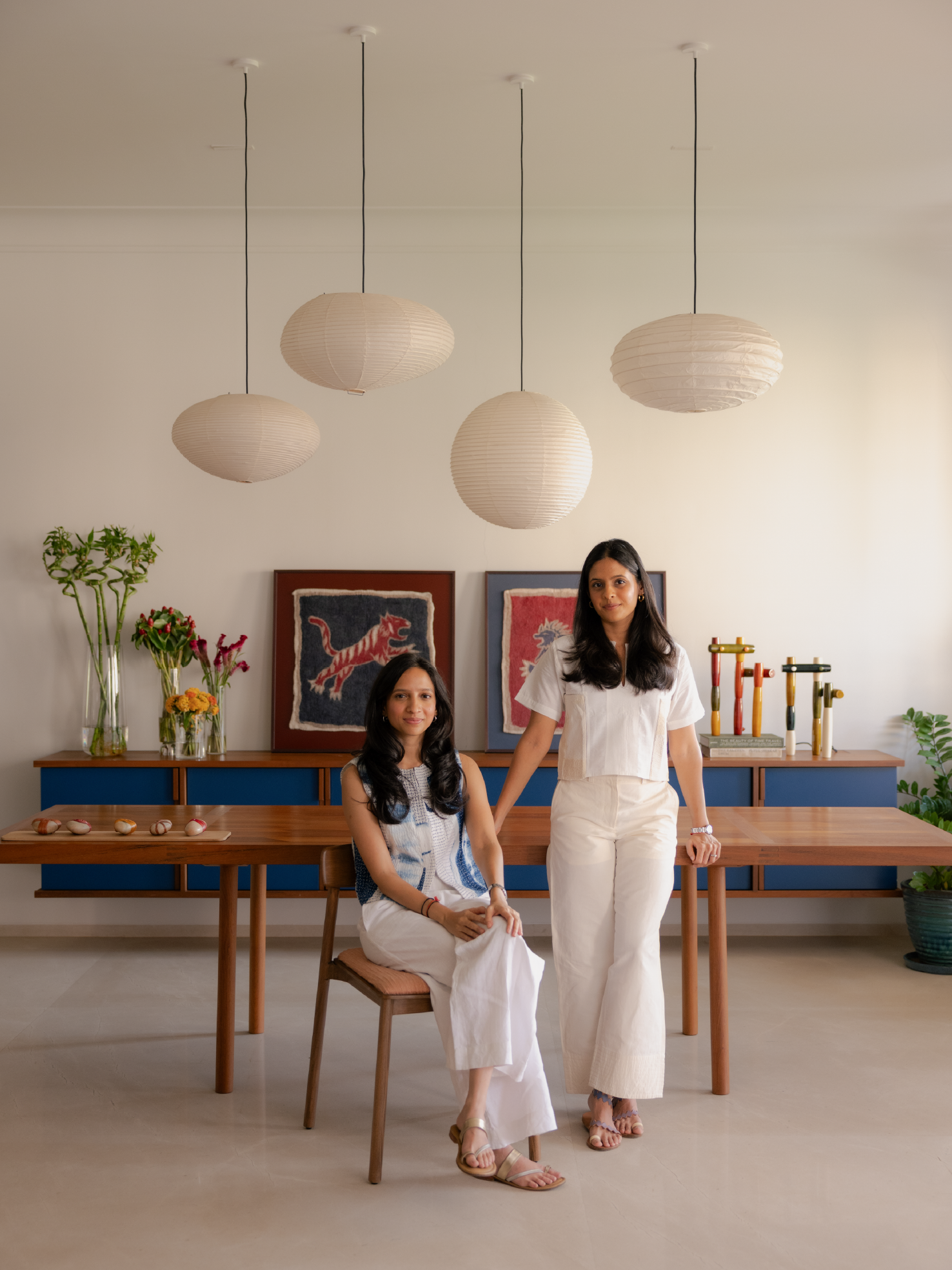
Every family has a phrase that gets said so often it stops meaning anything, until suddenly it does. In the Mangaldas’s family, it was two words: ghar ghar or house house. The name of a game Ayesha and Amaya played as kids in Mumbai — cushions off the sofa, a dupatta tied up as a roof, a steel thali standing in for a plate nobody was actually eating off — building entire pretend households out of whatever they could find lying around. It was, Ayesha says, a time when "our imagination was completely unshackled."
They didn't think about it again for years. Then Ayesha got married, moved into her first apartment, and spent months rearranging furniture, chasing the right spot for a chair, the right corner for a lamp. "Our first full year of marriage felt like playing house house," she says. Somewhere in there, she kept catching herself mid-sentence with Amaya: this feels exactly like when we were kids. But a feeling isn't a business plan, and craft wasn't the obvious next step — it's what the sisters landed on almost by accident. When they sat down to actually build the brand, they asked themselves something simple: what do we actually like living with, every day, in our own homes? The answer, every time, was something slow — objects made with care, by someone with real, hard-earned skill. That's how a childhood game turned into a business built around craft: not a plan to save a dying tradition, but two people noticing that the things they loved were never fast and easy.
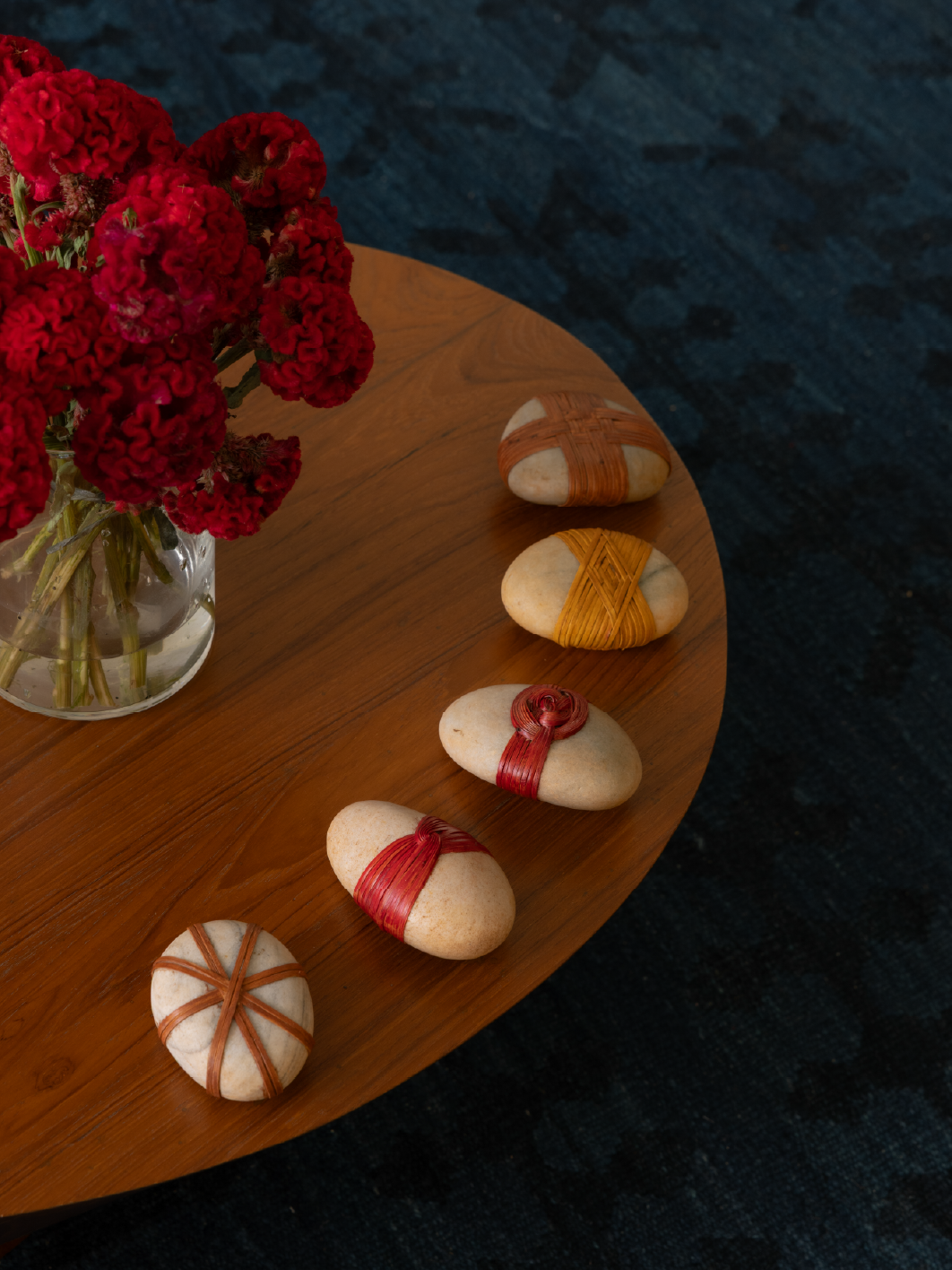
River stones wrapped with cane: The House House Cane-Woven Pebbles are a collaboration with Shreya Dalal - the founders’ grandmother. Photography by Manan Sheth
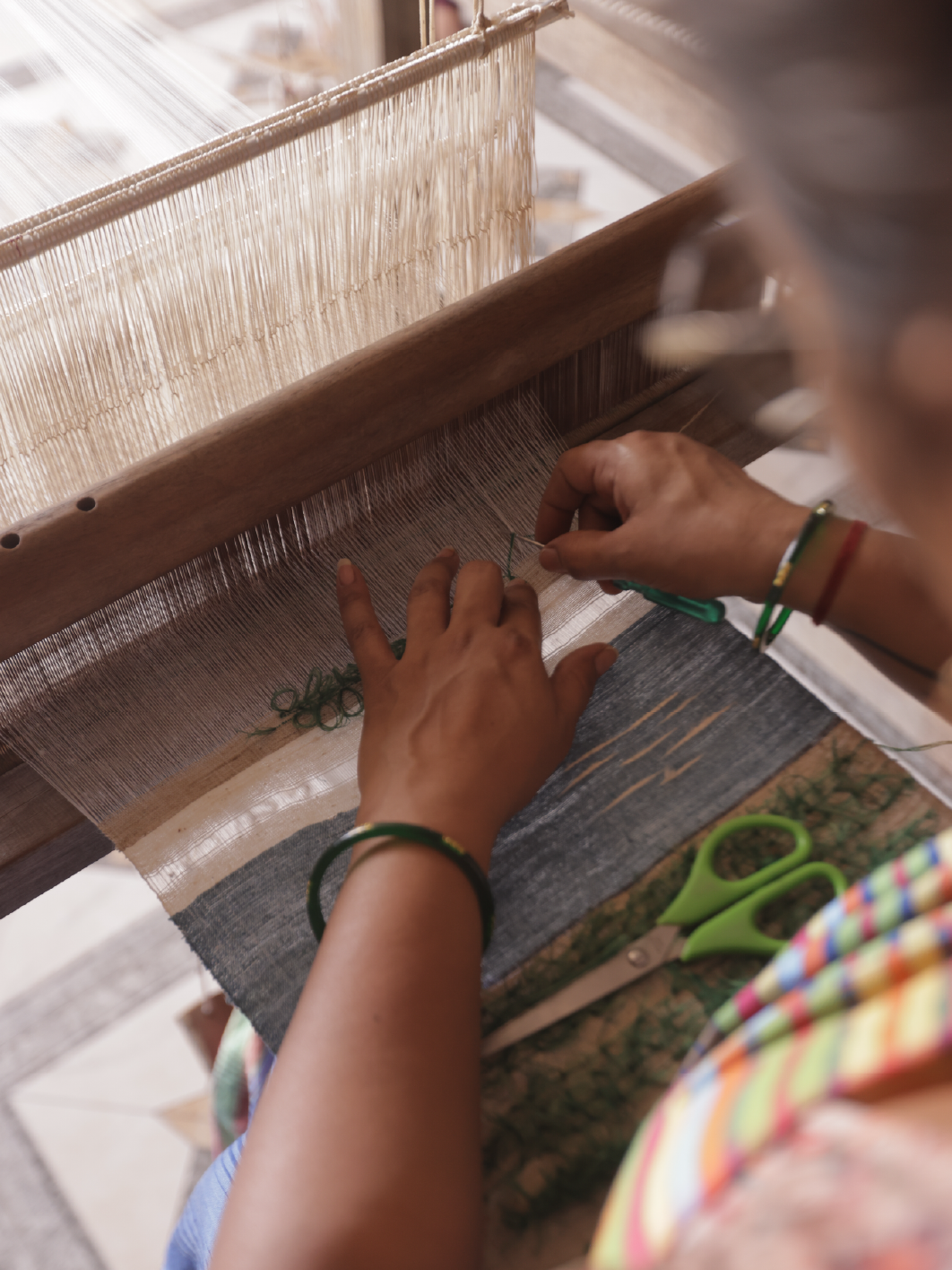
Third-generation Kutchi weaver Champaben uses an extra-weft technique to create the landscapes in the House House woven frames. Photography by Maheshwari Badal
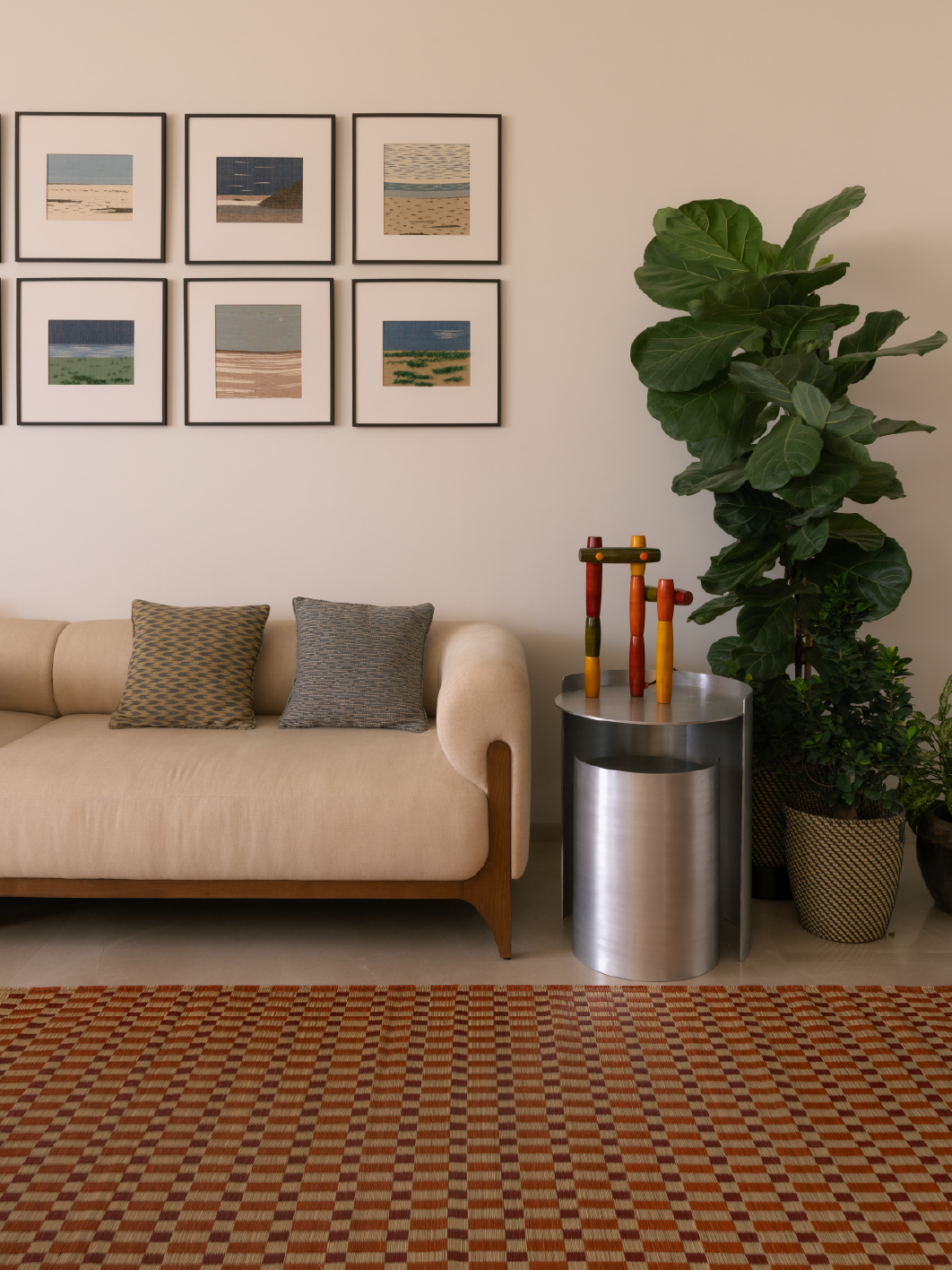
Handwoven landscapes from Kutch are pictured with the Atike Lamp from Channapatna, Karnataka, and a Madurkathi Mat from Medinipur, West Bengal. Photography by Manan Sheth
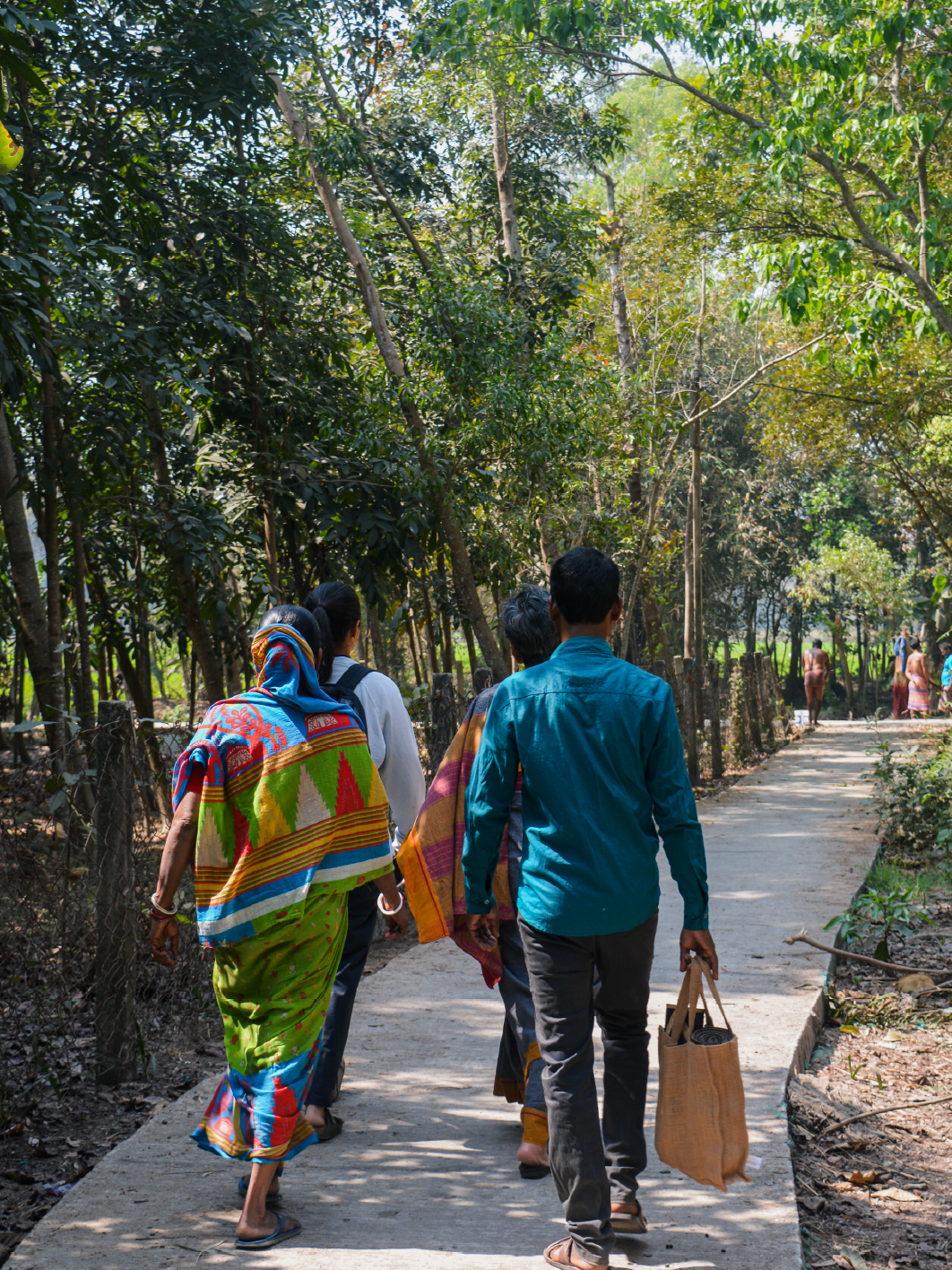
Exploring Sarta, a village known for mat weaving, about five hours from Kolkata. Photography by Amaya Mangaldas
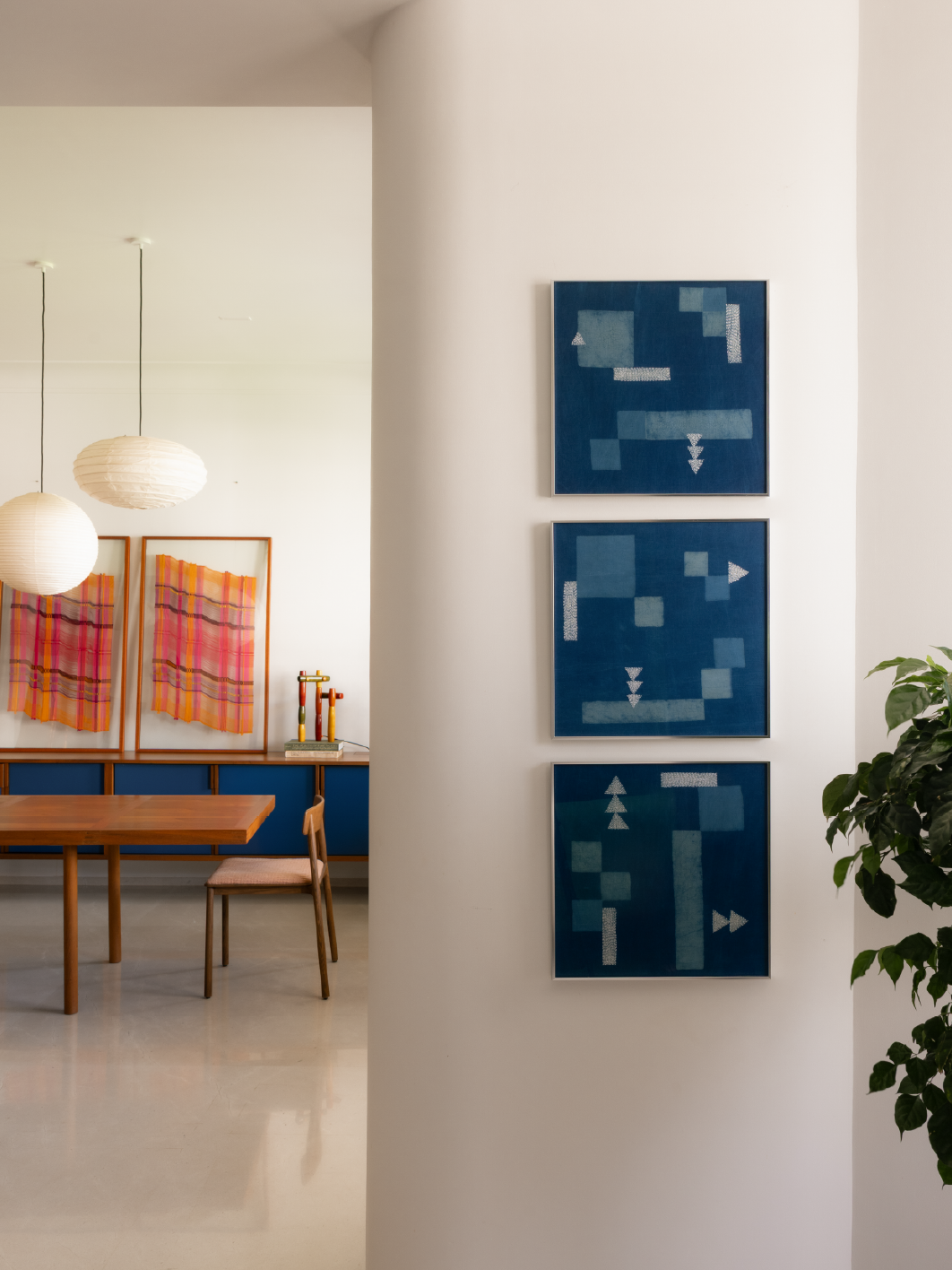
The House House Dabu Indigo works are created by multiple dips in a vat of indigo. This process creates varying shades of indigo from sky blue to midnight. The Maheshwari Atri Tapestries sit on a console in the background. Photography by Manan Sheth
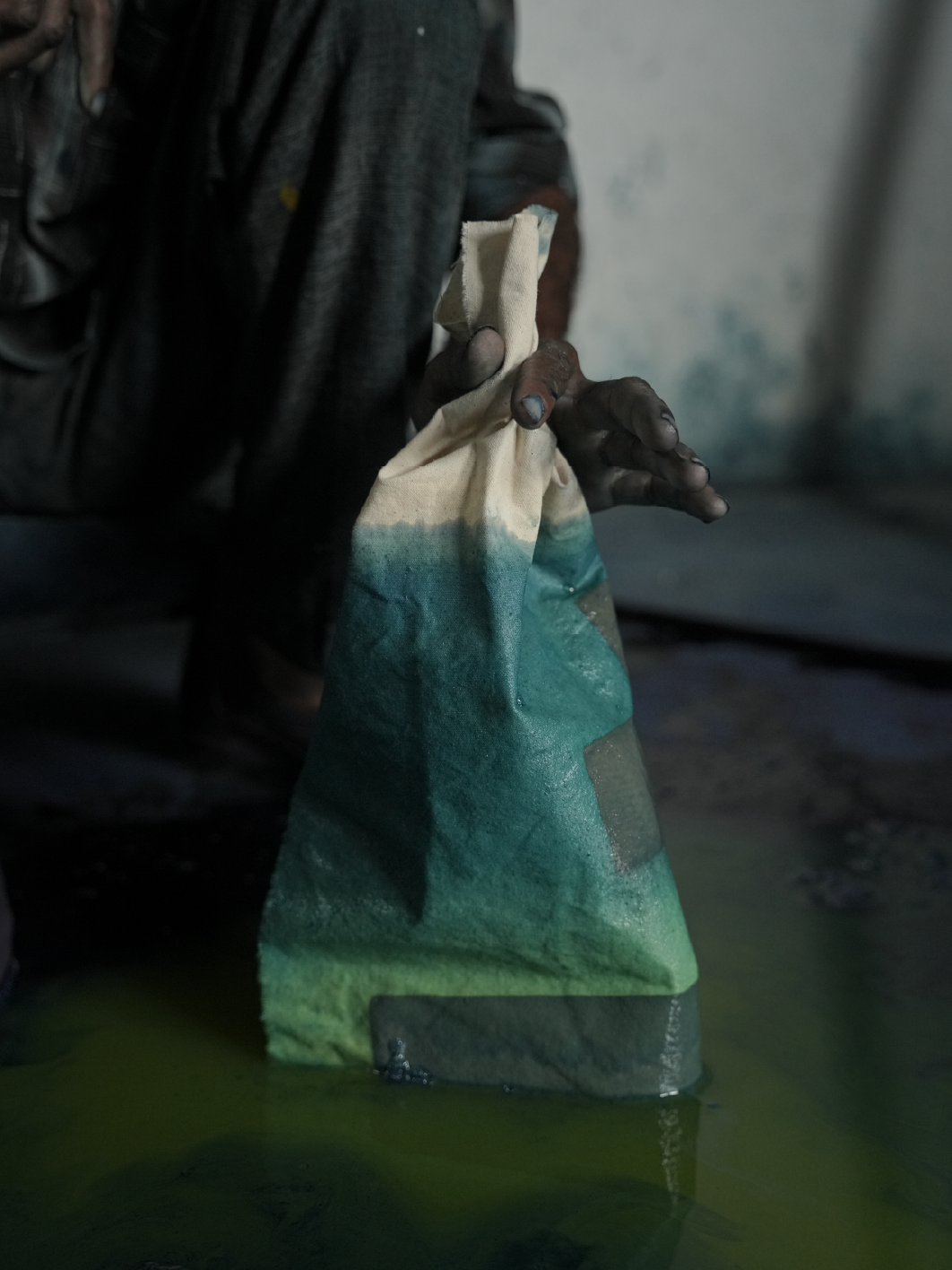
Dabu-printed fabric is lifted from an indigo vat. It emerges green, then turns blue as the soaked fabric meets the air. Each successive dip deepens the shade of indigo. Photography by Ayush Vaswani
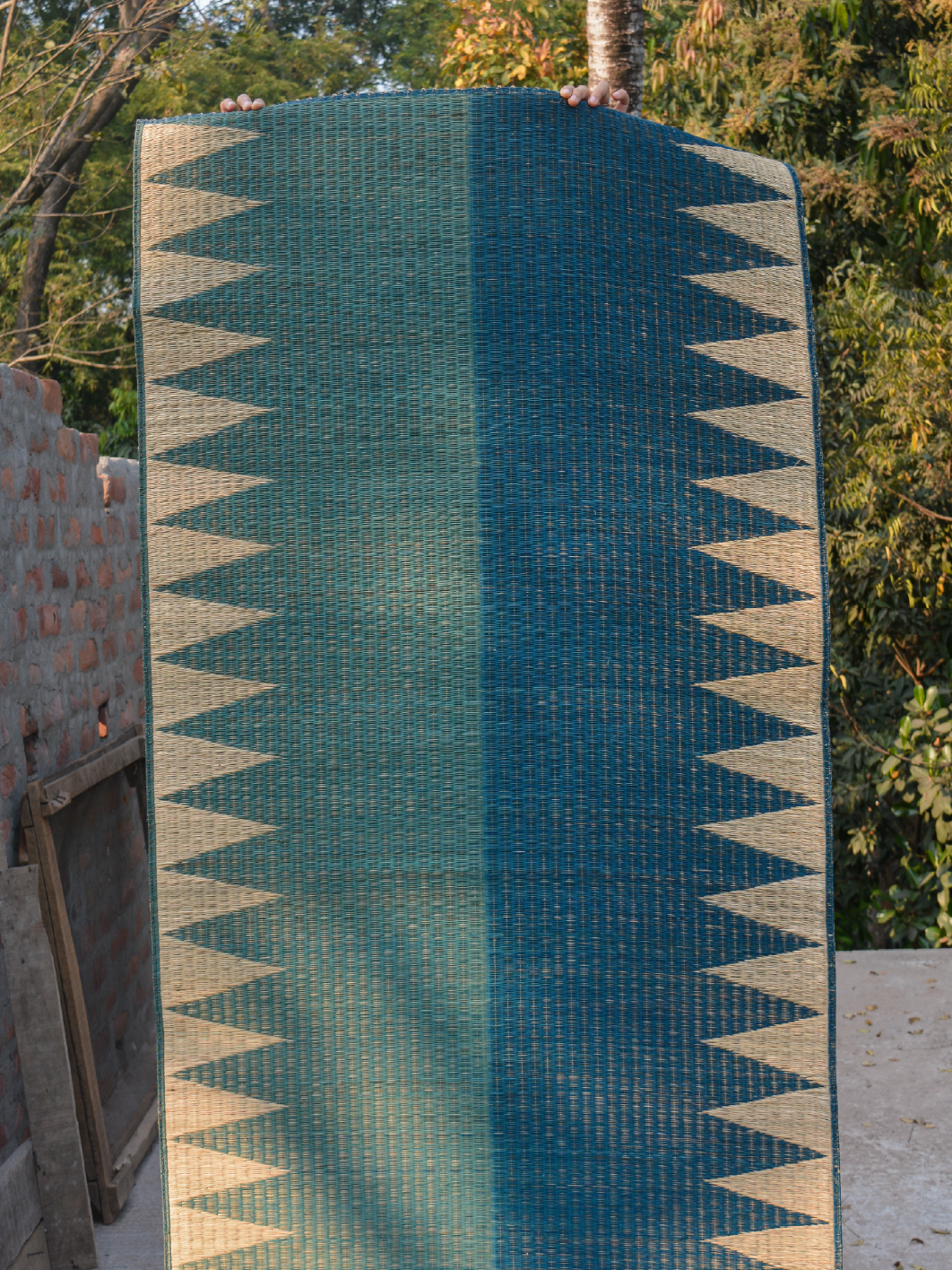
The Chevron Madurkathi Mat in Aqua/ Indigo straight off the loom in Medinipur, West Bengal. Woven by a family of master weavers, each mat takes a pair of weavers two weeks to complete. Photography by Amaya Mangaldas
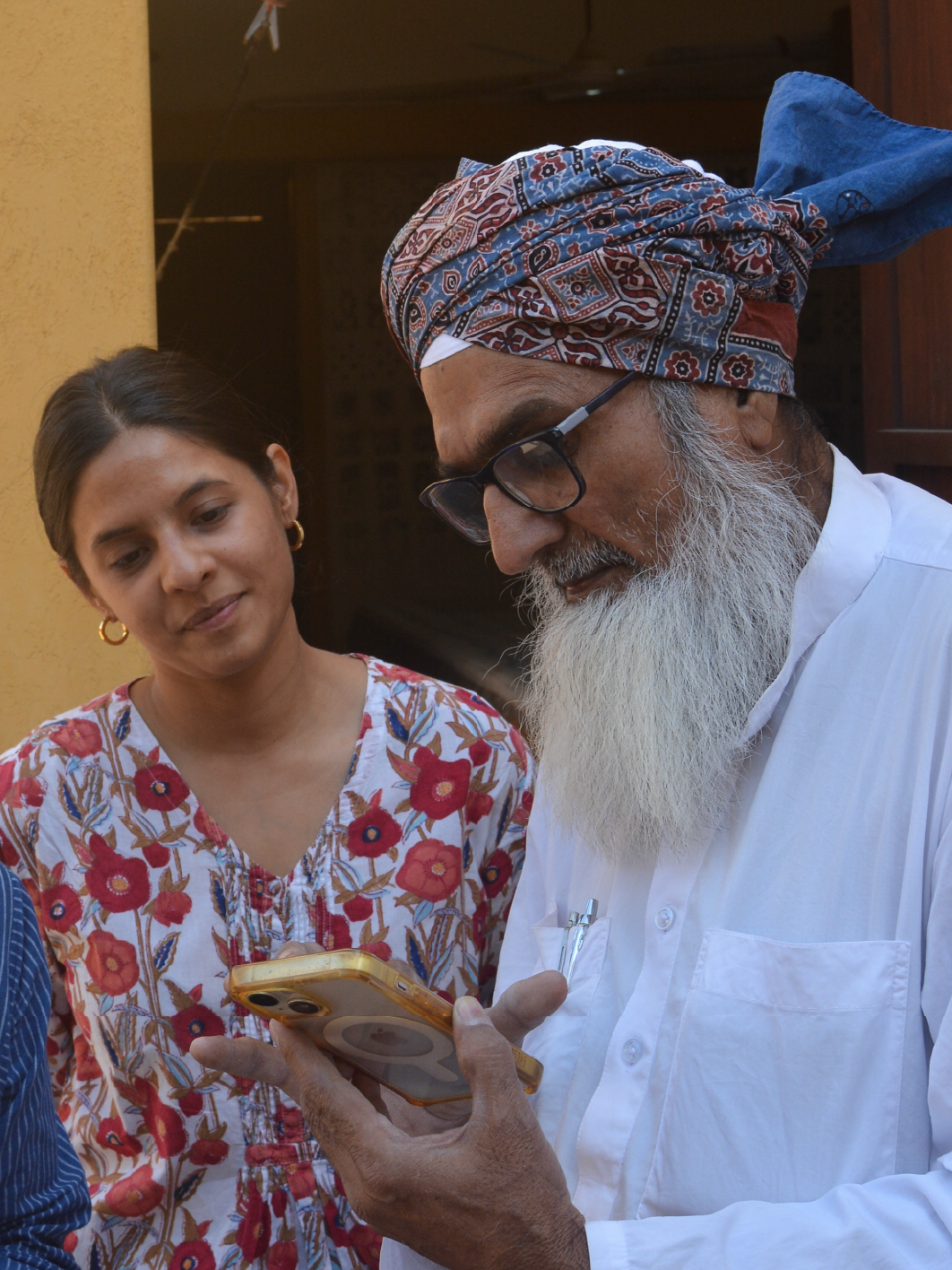
Ayesha with master Ajrakh printer Dr. Ismail Khatri at his workshop in Ajrakhpur. Photography by Amaya Mangaldas
Improvising on the loom
The instinct behind the name was put to test in February 2026 in a workshop in Maheshwar, Madhya Pradesh, on the sisters' first product. They'd arrived with months of prep — renders finalised, colours locked — and were warned their digital plans wouldn't survive the loom. They didn't believe it until they watched it happen: weavers tossing in colours and techniques, until someone noticed the scrap of loom space cut away between two sarees, a leftover called the atri, and wondered if it was worth weaving into the piece. It was. The fluid effect it created became the final product, nothing like what they'd planned on a screen weeks earlier. “The textile designer we were working with, Hema Shroff Patel, advised, ‘let’s set up the warp in advance, because that needs time. For the weft, let’s wait until we’re in person, and just play.” That was the moment, Ayesha says, they understood the importance of play in the process.
The same thing happened with indigo. The sisters had started with elaborate visions and mood boards, but the real education came at the vat itself — watching how the dye's colour shifts and deepens with each dip taught them more about what the final piece could become than any render had.
Neither sister came from design school. Both studied psychology in the US, both worked in New York tech — Ayesha in product management, Amaya in UI/UX — and both walked away from ten years of corporate careers to begin this. What they brought instead was an eye shaped by two very different worlds. The Indian half of their eye came from home — a mother who retells classical epics through 16th-century miniature painting, an aunt who performs traditional and contemporary Kathak. The global half came from time abroad — Amaya in London and Copenhagen, both sisters in New York — watching how something as ordinary as a Danish lamp still reads as unmistakably Danish, anywhere in the world. That's the balance they wanted for House House too. “We want to create things that can fit into contemporary homes around the world, and still be identifiable as Indian," Ayesha says.
Something that won't go out of style
Ask Ayesha to name one object that captures the philosophy, and she doesn't hesitate: the Teakwood memory box, released last month — a photo album handmade in Mumbai from reclaimed teak wood and brass, modelled on the albums that sat in the sisters' childhood living room. What makes it the example, she says, is that it's unusable at speed — no way to fill it without physically placing every photograph. That friction is the point: an object that gets more beautiful with age and gets passed down rather than replaced. It's also proven harder to make than expected — the sisters spent months hunting for physical photo sleeves, which have all but vanished now that everyone's albums live on their phones.
The same instinct governs how the sisters choose makers. Their first drop, the Madurkathi mats, is handwoven and hand-dyed by a family of master weavers in Medinipur, West Bengal — each mat takes 10 to 14 days and two pairs of hands, made entirely from locally grown madur reed. Their second drop, the Kutchi woven landscapes, comes from Champa Ben, a third-generation weaver in Bhujodi, Kutch, using a 600-year-old extra-weft technique to build clouds, sand and grass in raised texture — new motifs, an old method. Impressed by the technique and its possibilities, House House placed a much larger reorder with her within a week of the drop going live.
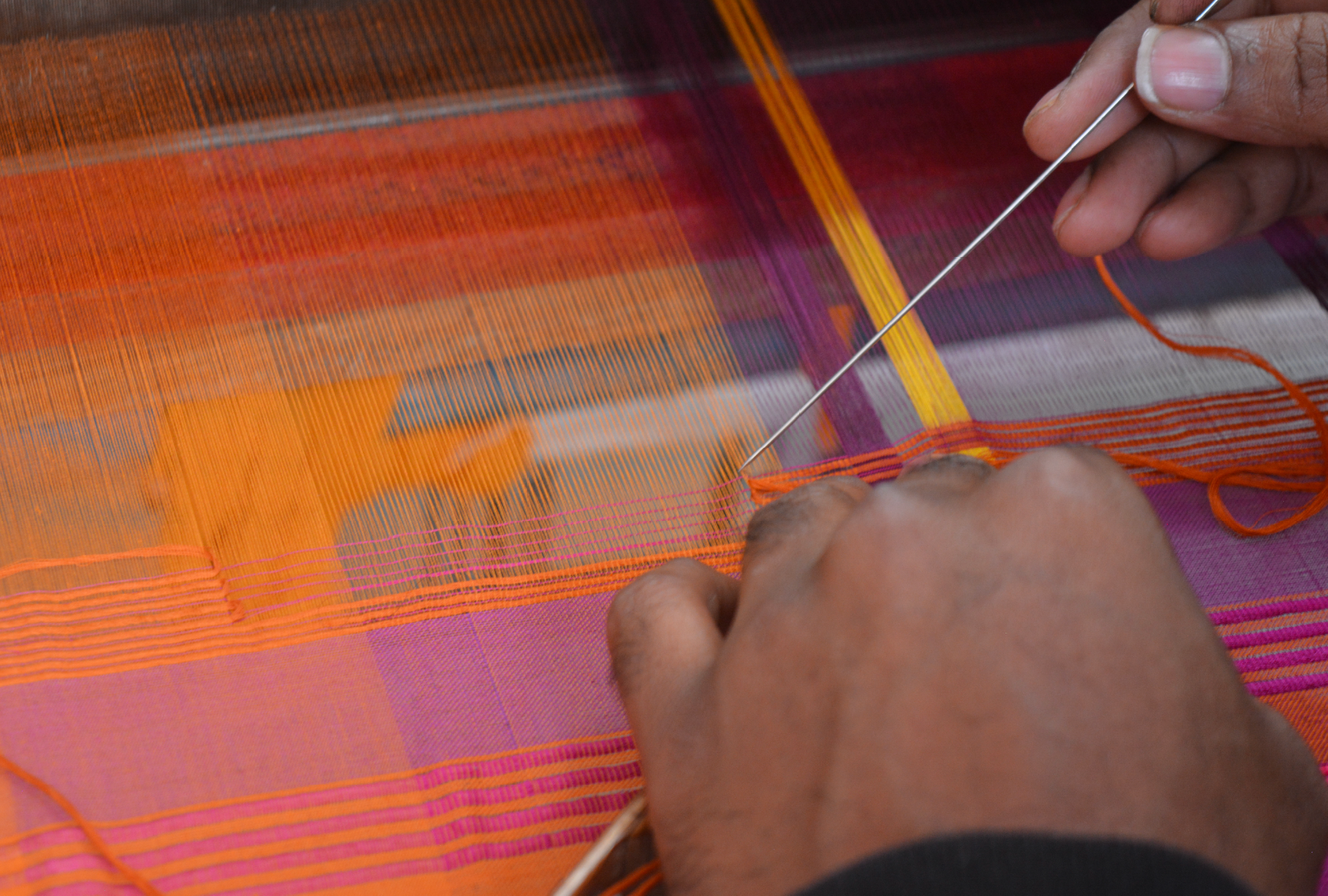
The tapestry takes shape The Atri Tapestry takes shape on a handloom in Maheshwar, Madhya Pradesh. Here, Imran Bhai inserts thick cording into the weft, gradually building up the tapestry’s textured surface. Photography by Amaya Mangaldas
Sisters first, founders second
There’s a restraint in how the brand operates. The debut collection stops at around 20 products across 15 maker communities, using only biological materials — wood, cotton, wool, grass, paper — sourced from India's west, north, southeast, and centre. Rather than launch everything at once, House House releases one product every two weeks on Instagram. “If we dropped all 20 products at once, we wouldn’t be able to spend time on explaining the technique or the story of any of the makers," Amaya says. Checkout follows the same logic. Orders move through WhatsApp and email, not a website cart — deliberate, because a frictionless checkout would let people buy without ever talking to them. Both sisters come from e-commerce backgrounds and know how to build a polished checkout flow but they chose not to, at least for the first six months, so they could learn from customers directly instead.
Half their audience is now international. Their first Instagram reel, featuring the debut floor mats, pulled inquiries from nearly every country, years earlier than planned. Next, the sisters plan a shift from biological materials to geological ones like clay, glass, metal, and marble.
For all that's shifting at House House, one thing has stayed exactly the same: the sibling tension in how decisions get made. Ayesha is the older sister, historically the bossier one; Amaya took direction. Turning that into a partnership has meant disagreement — including one design Amaya wanted killed outright, which Ayesha quietly ordered five units of anyway. It sold out. The harder shift, Ayesha admits, isn't material — it's personal. Turning a sister into a co-founder means renegotiating a dynamic that's existed a lifetime, and when they first agreed to do this together, they sat down and wrote themselves a kind of manifesto for how it would work. "We probably need to revisit that," she says, "but it's a work in progress." The closest thing House House has to an ethos is to build slowly, argue it out, and trust the thing takes the shape it's supposed to.