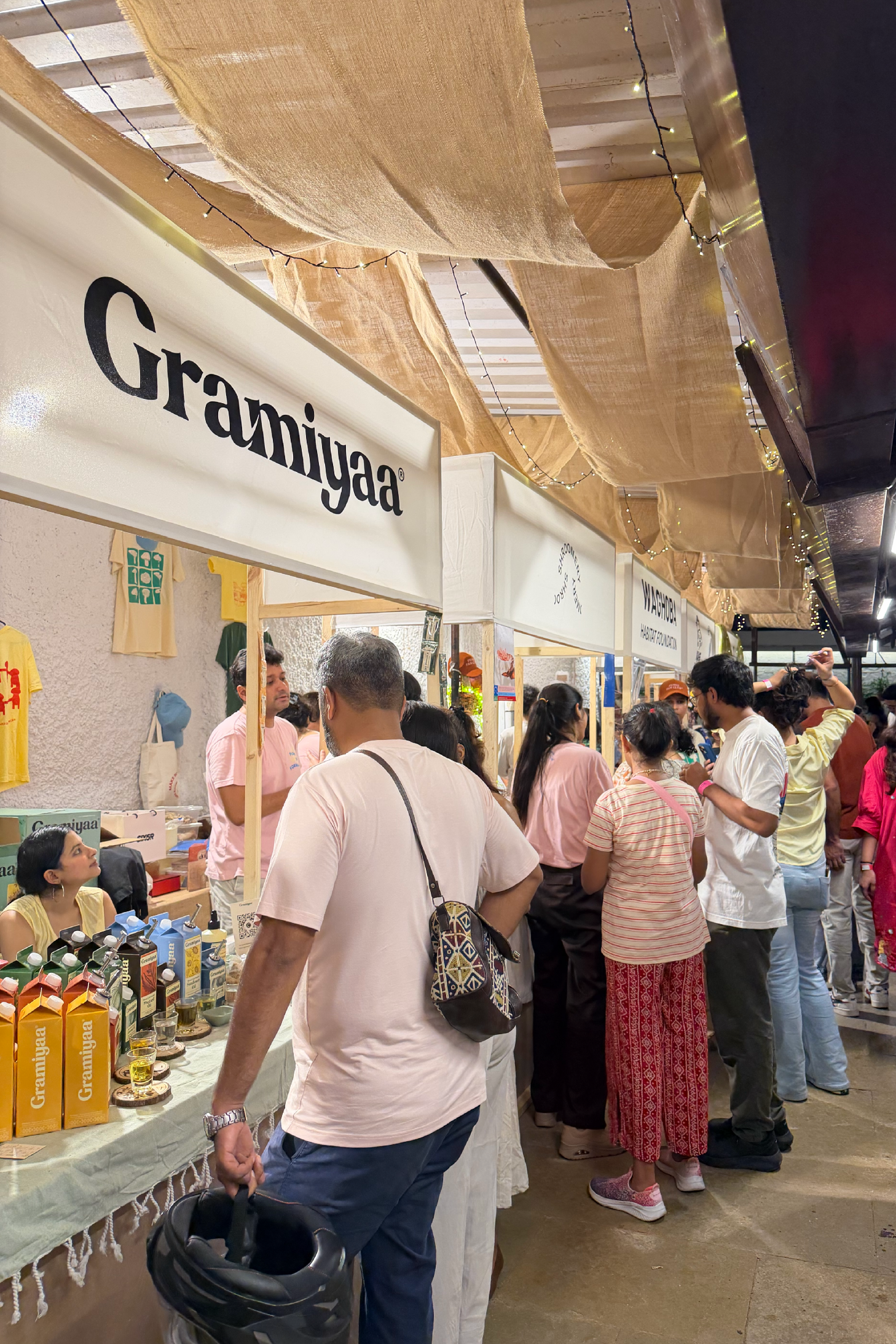
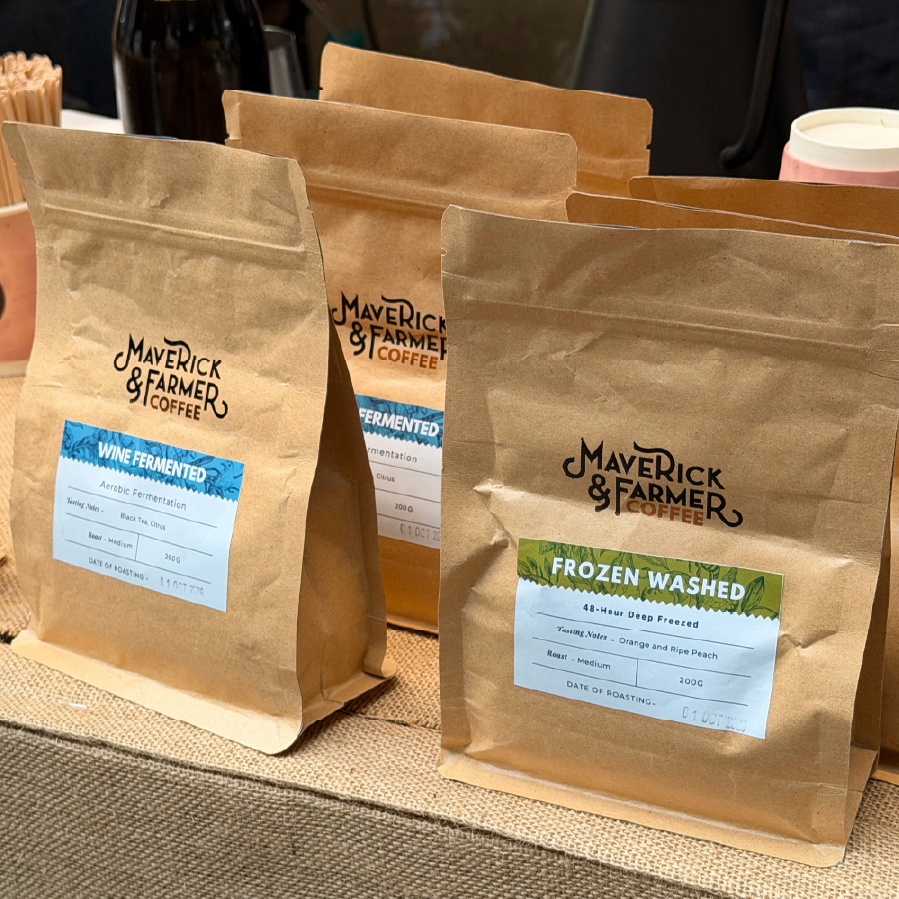
They say the way to the heart is through the stomach, and on a particularly warm afternoon in Mumbai we found little reason to disagree. With the city’s heat making the prospect of being outdoors less than appealing, the aromas of Maverick & Farmer’s wine-fermented coffee beans and Hearth grilling up some mean burgers led us to Pioneer Hall in Bandra, where the liveliest picnic in town was unfolding over the 10th and 11th October.
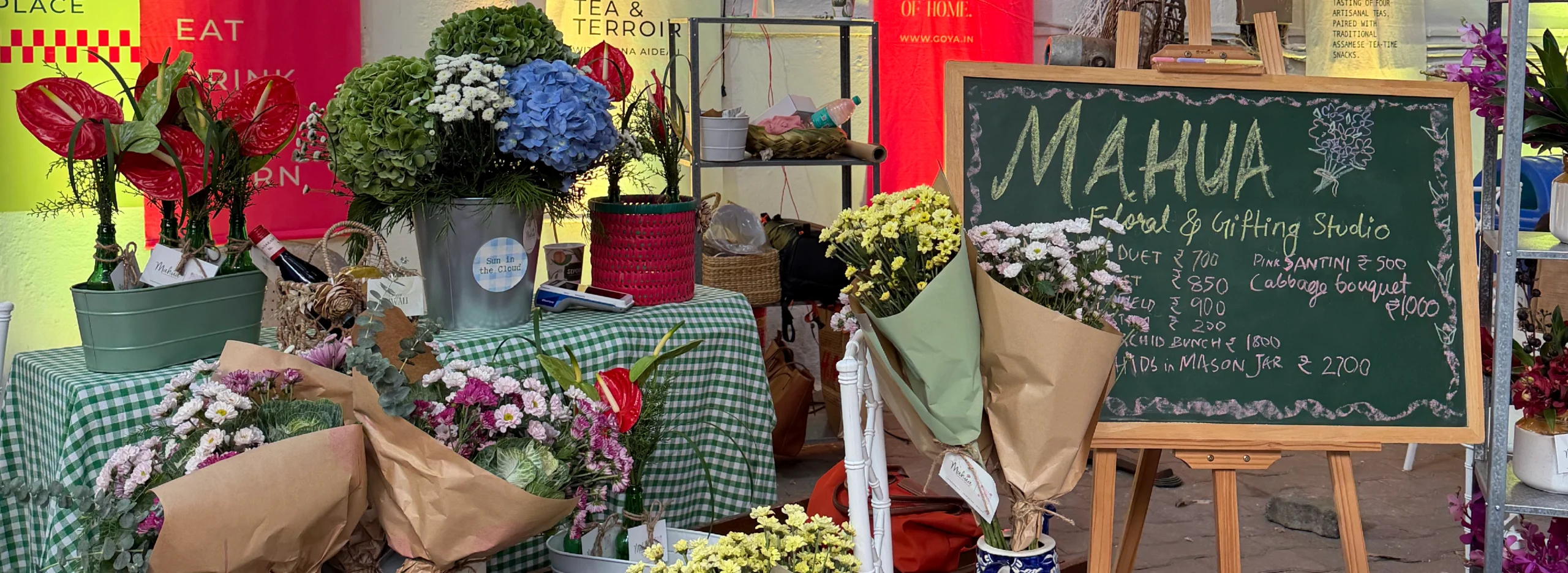
At SALT, Goya’s debut food and culture festival, the picnic spirit was hard to miss: benches sat at the centre of the food stalls, giving visitors a place to settle down with their finds, tuck into a bite and take in the bustle around them. There was whimsy beyond the food, too. Mahua’s floral and gifting studio brought a playful twist to the art of flower arranging, with its colourful bouquets and unexpected combinations, including one made with cabbage leaves. It was the sort of arrangement that made us look twice, then wonder whether our mothers would admire the ingenuity or immediately start planning dinner. After a decade of bringing people together through food and culture, Goya introduced SALT as a new festival celebrating the same spirit through an inviting mix of food, drinks, homegrown brands and design, offering just the sort of afternoon we could get behind.
A case for the analogue
As Goya’s founder Anisha Rachel Oommen puts it, salt “makes everything better” and its influence extends well beyond our kitchens and cookbooks. Salt has found its way into our language, too, from the cheeky “why so salty?” to calling someone “the salt of the earth” or advising them to “take it with a pinch of salt”. It is a small, everyday ingredient with a surprisingly expansive vocabulary, making it a fitting namesake for a festival that brings together food, makers and the many discoveries worth sharing.
Perhaps being in the heart of the city made the theme feel especially close to home. My mother often reminisces about the elaborate Bandra feast lunches the family would gather for, when hosting meant preparing for a full house and making sure there was always room for one more at the table. The kitchen would be busy, the food would keep coming, and the house would fill with the kind of happy commotion that only happens when everyone is together. The meal was certainly a highlight, but so were the conversations that wandered from one room to another and the reluctance to call it a day and leave. At SALT, that same spirit lingered from corner to corner: in the tasting, the talking and the simple pleasure of discovering something new alongside other people.
This year’s theme, The Year of Analogue, is an invitation to step away from the endless scroll and rediscover the pleasure of experiencing things in person. In an age when a new favourite can be found through a screen and delivered to our doorstep, there is something rather lovely about being able to taste before buying, feel the finish of an object or hear the story of a product from the person who made it
A taste of something new
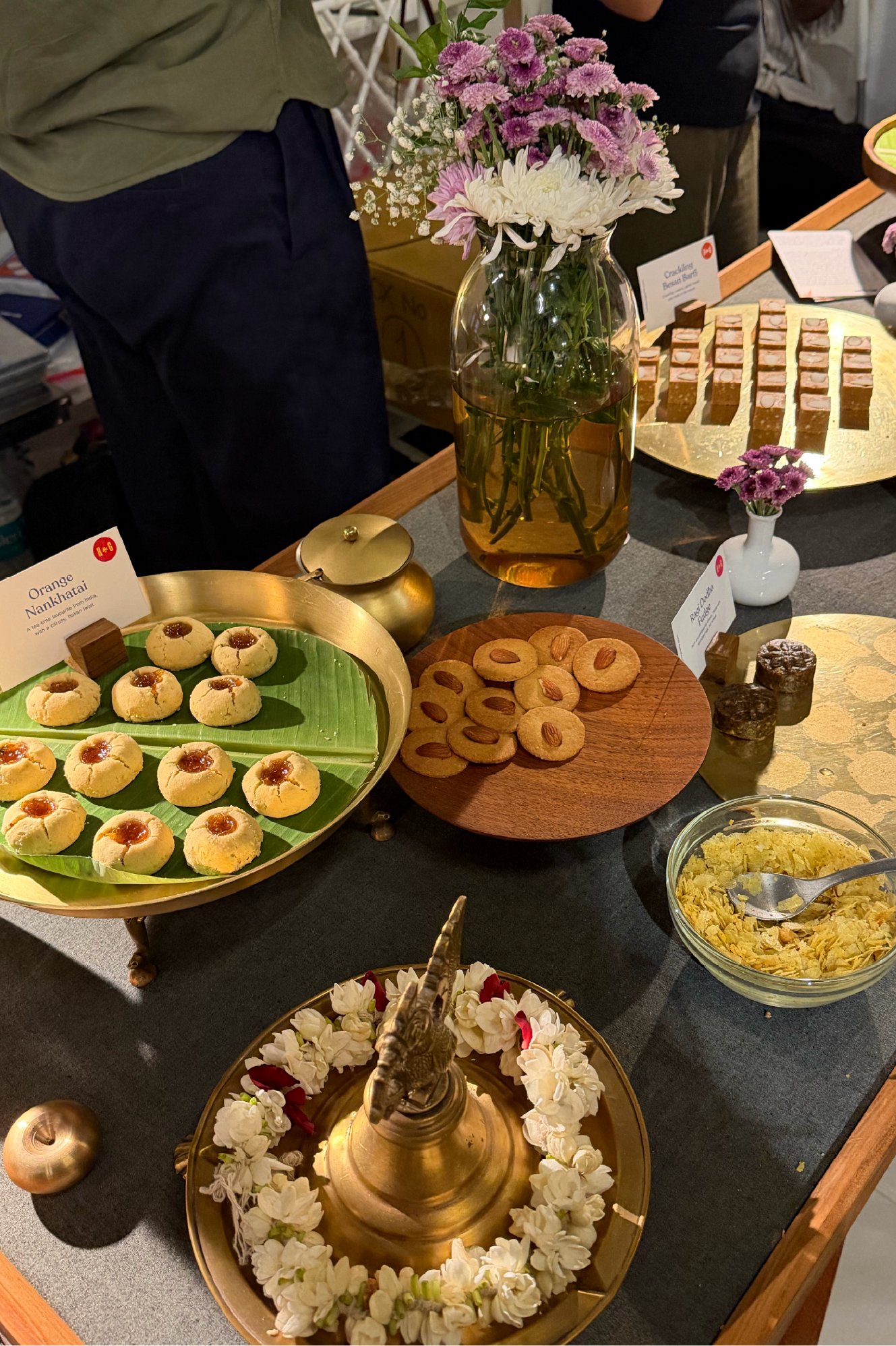
Homegrown brands from across the country had set up shop, bringing with them artisanal cheeses, handmade chocolates, jars of honey, fresh and foraged mushrooms, and a host of other ingredients that made you want to stop and ask questions. Among the stalls, Hatti & Giraffe was one that made us stop for a second look. Indian sweets are hardly unfamiliar territory, but here, they came with a few surprises of their own. Karanji bon bons, besan barfi and orange nankhatais reimagined familiar flavours in unexpected ways, each one delivering a little burst of flavour that kept us curious about what the next bite might bring.
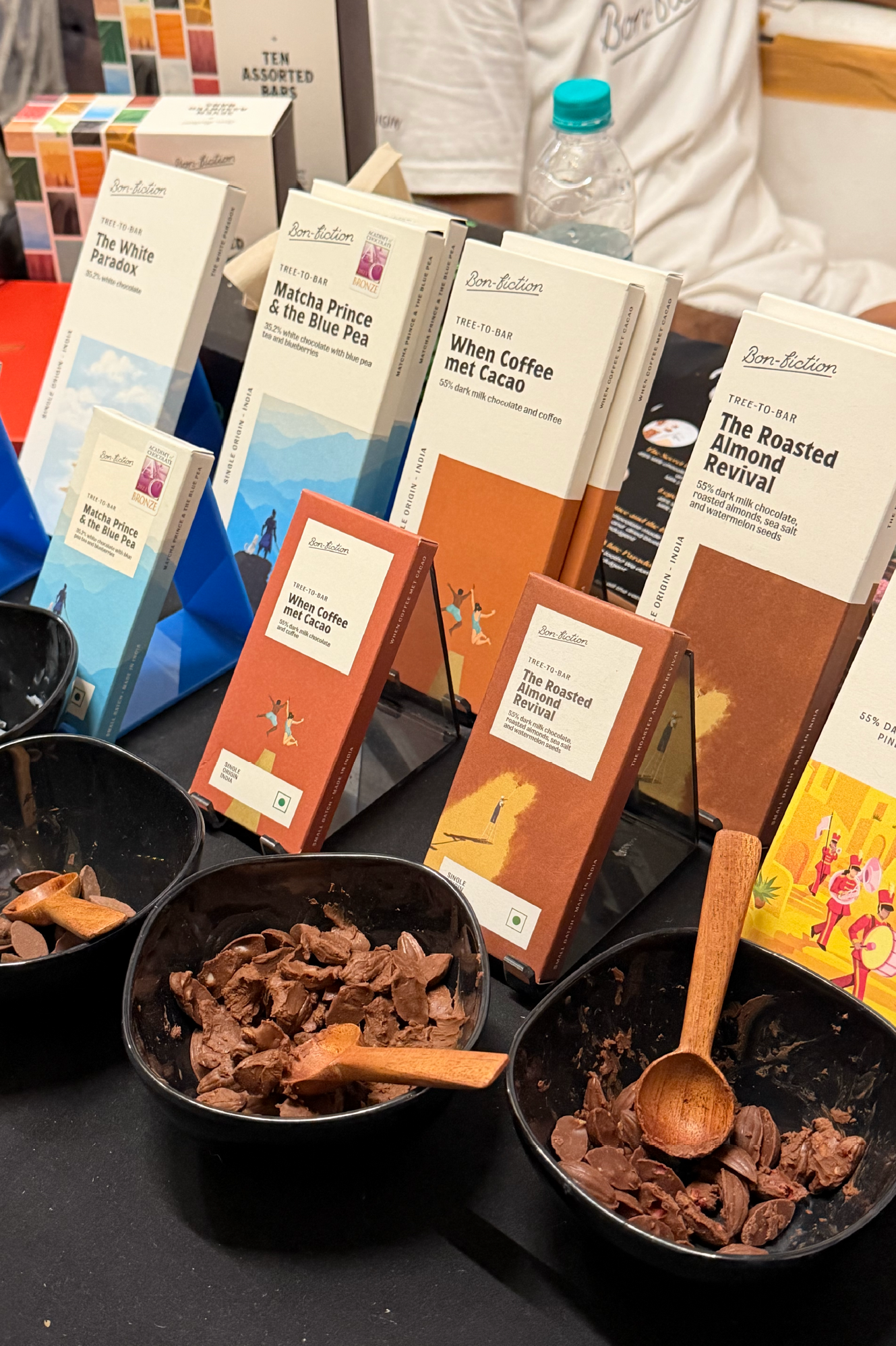
There were quite a few chocolate stalls to work our way through, and safe to say, we did not leave without sampling our fair share.
Bon Fiction, though, had us lingering over its names as much as its chocolates. A Song of Bitter and Sweet brought to mind the world of Game of Thrones, while ,Order of the Dark Roast sounded like it could have found a place on the shelves of Hogwarts. Then there was The Tropical Tempest, the brand’s newest creation, which paired mango and pineapple with pink pepper. It was the sort of combination that might have made us pause before taking a bite, but sometimes curiosity gets the better of you, and thankfully, this was one worth giving in to.
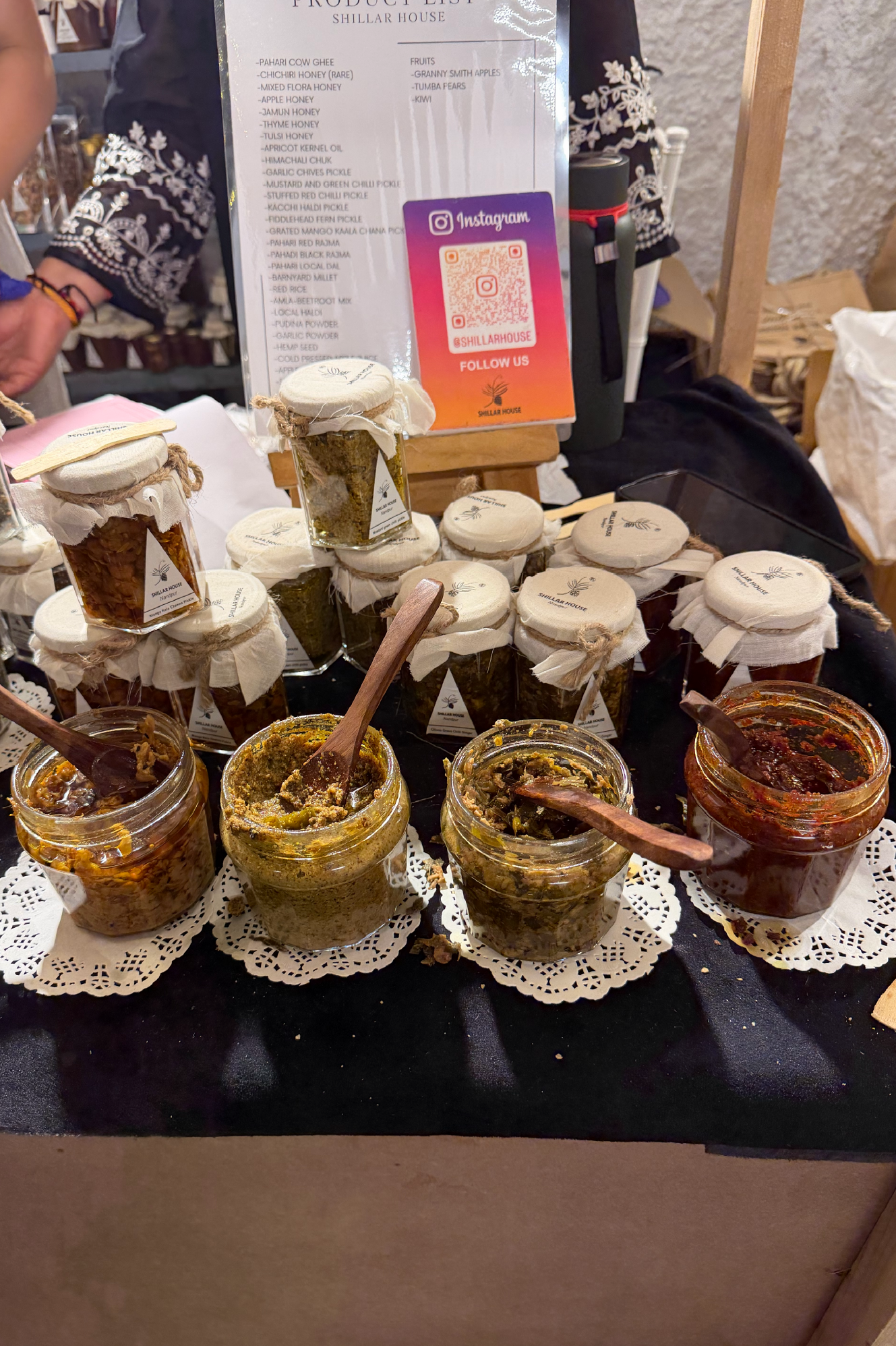
At Shillar House, the story of the hills came through in the details. Its honey is collected during the flowering seasons of different plants, allowing each variety to retain the flavour of the blossoms the bees forage from, whether apple or otherwise. Left unprocessed, the honey can naturally crystallise as temperatures change, a small reminder of just how little intervention goes into it. The pahari cow ghee, meanwhile, comes not from a large dairy operation but from households in Shillar village, in Himachal Pradesh, where women keep one or two cows and prepare the ghee using the traditional bilona method. It is a more personal way of producing food, rooted in the rhythms of village life and the knowledge passed down through generations.
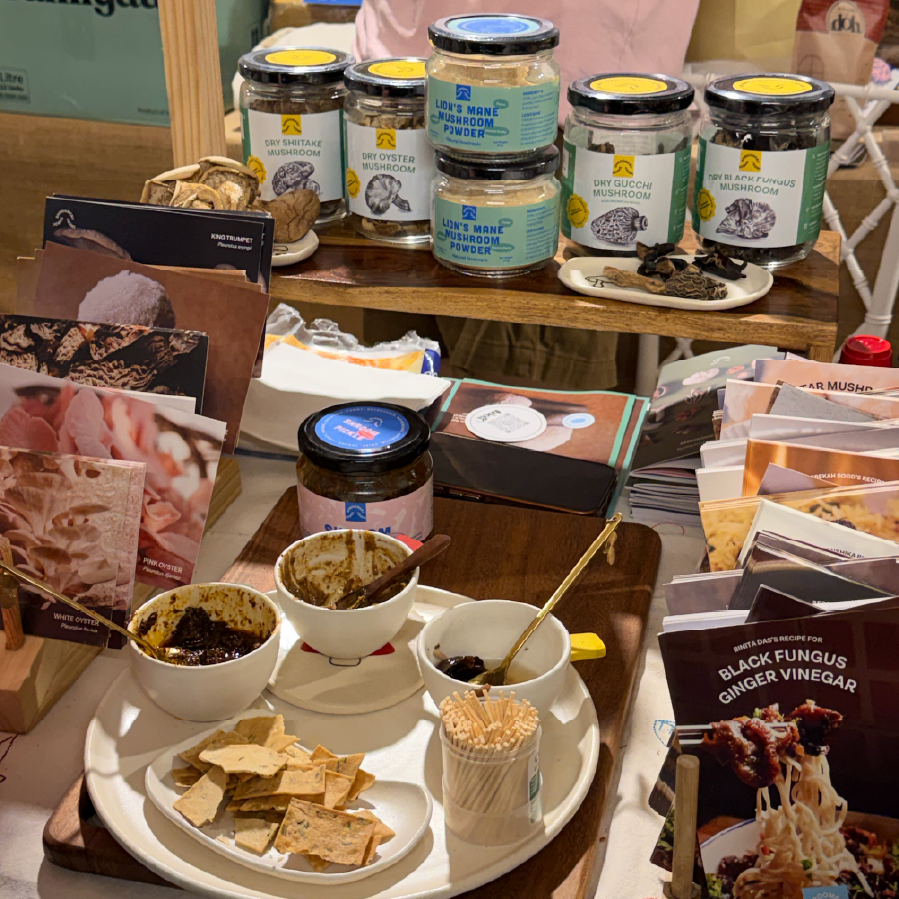
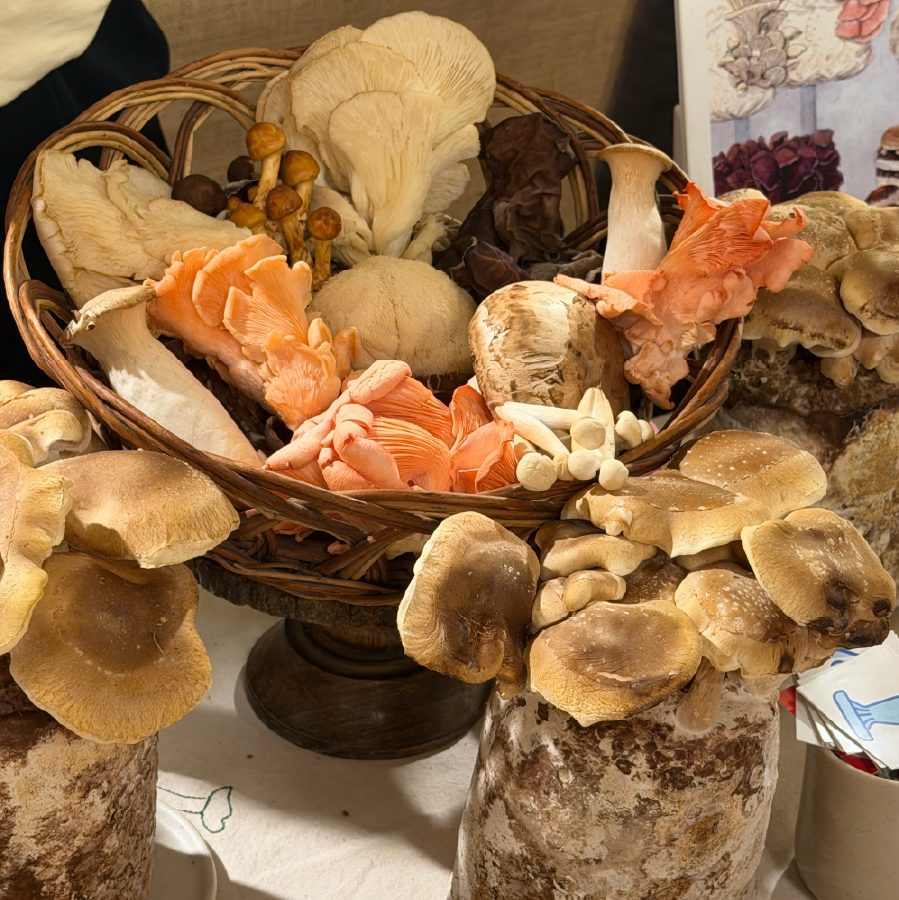
At Shroomery, the humble mushroom got a chance to steal the show. The farm grows a range of gourmet varieties, from oyster and shiitake to lion’s mane, pioppino and nameko, each bringing its own flavour and texture to the table. While oyster mushrooms crisp up beautifully in a pan and shiitake add a savoury depth to broths and stir-fries, lion’s mane, with its meaty texture, makes an interesting alternative to meat. Pioppino lends itself well to pastas and risottos, while nameko is often used in soups. For anyone accustomed to the usual button mushroom, it was an invitation to get a little more adventurous in the kitchen.
Beyond the stalls, SALT’s programme offered a few more reasons to stay awhile. The Slow Room by Friction hosted a record store pop-up, with guided listening sessions throughout the day, while Tea & Terroir paired artisanal teas with traditional Assamese snacks. Not Just a Tea Party, curated by chefs Aarohi of MÄKI and Tanisha of Monté, took a more ingredient-led, European-inspired approach to afternoon tea.
Beyond the plate
There is a reason a good meal can stretch well beyond the time it takes to eat, or why a visit to a market can turn into an entire morning. Some things are simply better when there is no particular rush to get through them. SALT brought food, design and the people behind them into the same space, making room for the kind of discoveries that rarely happen when everything is ordered through a screen. From tasting unfamiliar ingredients to finding new favourites among homegrown makers, the festival offered a welcome change of pace, and a rather good reason to look up from the digital world every once in a while.