There are few brands who can create an identity so strong that the recall is almost instant — whether you see the print on clothes, on a plane that’s landing or on the inside of a bus you take to commute to work. But that is the identity Finnish brand Marimekko has created with its bold colours and quirky prints. It was in 1951, an era dominated by black and white, when Armi Ratia broke the mould with a bold dress with prints that set the tone for this iconic brand.
Much like the climate of the 50s, when women were breaking free from gendered roles and finding their independence, Marimekko’s abstract patterns and vibrant colours too carried a breath of fresh air. The Marimekko dress especially became synonymous with unrestrained self-expression, a quality that steadily continues in the designs even today.
Over time, the design found expressions beyond fashion, expanding into home weaves like bedding, bath, fabrics and even dining. This evolution from fabrics echoes what Armi always set out to do — bring joy to people’s lives. Going beyond fabrics is a way to take that joy from clothes to newer avenues, even if that means on the wings of FinnAir, inside Bangkok’s skytrain, on an ice-cream truck in Helsinki’s summer or on a double decker bus in Hong Kong.
Marimekko’s identity wasn’t just built on prints alone. It was shaped by the artists who in the 50s and 60s made the Marimekko printing factory their creative playground. This year, the Finnish design house returned to that tradition with its Artist in residence programme that invites artists to work directly at the Marimekko printing factory for an extended period of time so they can fully immerse themselves in the world of Marimekko’s art of printmaking and give them space to engage in the ongoing creative dialogue with the artisans at the factory and the design teams.
Their first resident is Danish textile artist Vibeke Rohland, whose four-decade practice spanning form, colour and material turned out to be a natural fit for the Marimekko designverse. Born in 1957 in Gladsaxe-Søborg just outside Copenhagen, Vibeke’s interest in textiles began as a child. Colours, threads and yarn fascinated her and she spent much of her time doing embroidery, knitting and crocheting. This interest led her to study art history at the University of Copenhagen and then textile design at the Royal Danish Academy of Fine Arts. “Textile art and design has many directions, functionalities and are one of the oldest crafts – textile being at the very core of it, and it’s multifaceted,” says Vibeke.
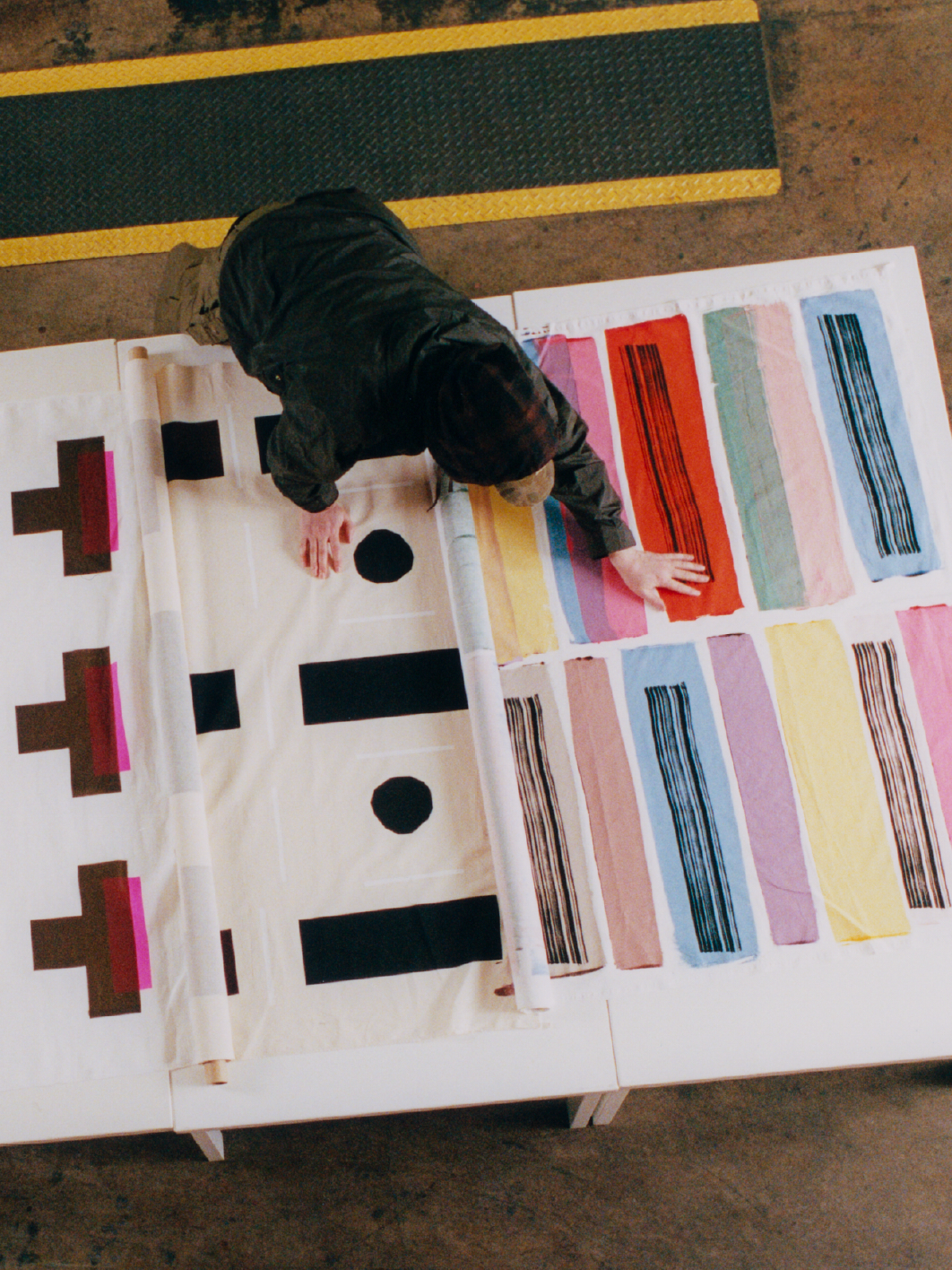
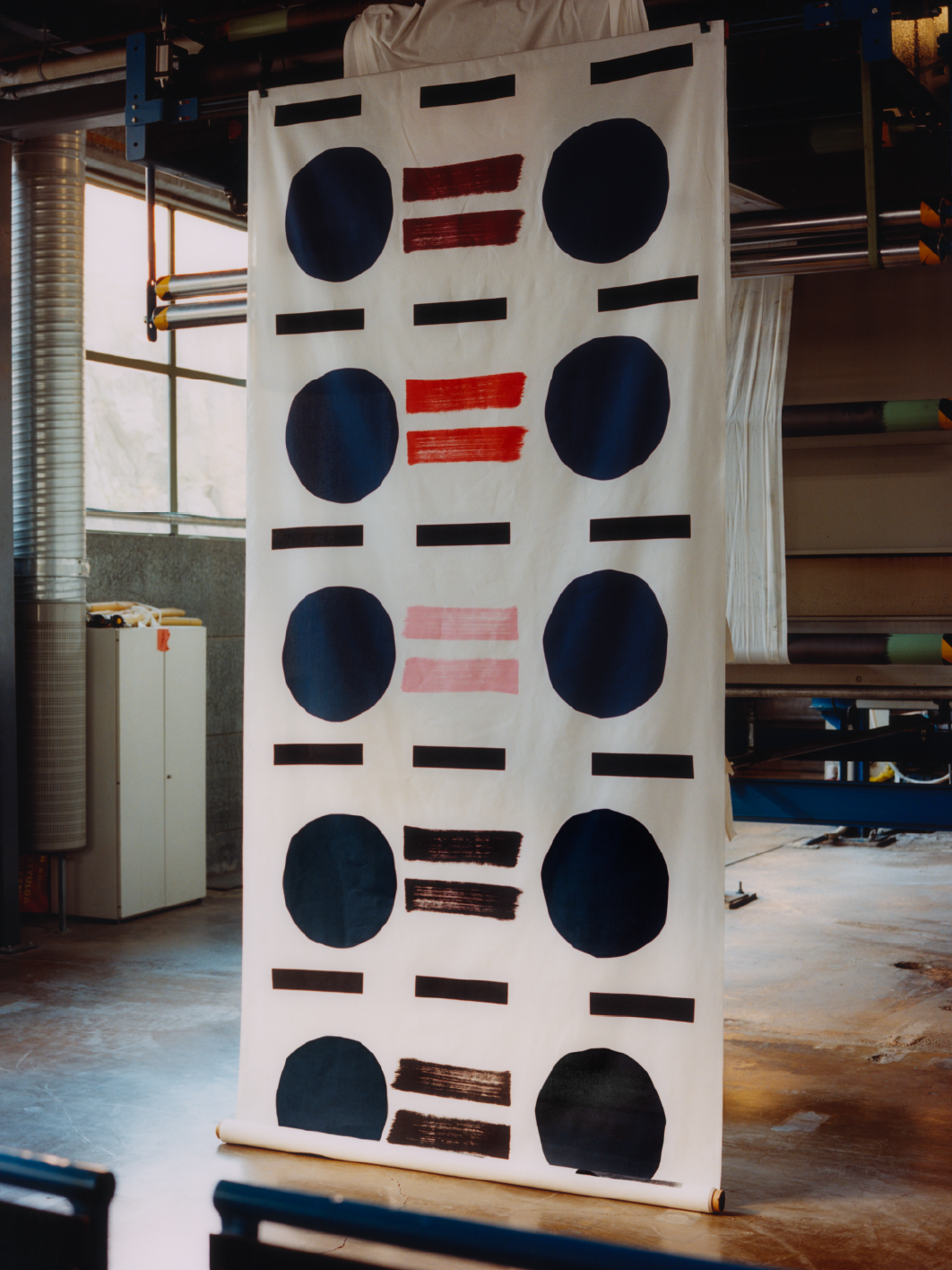
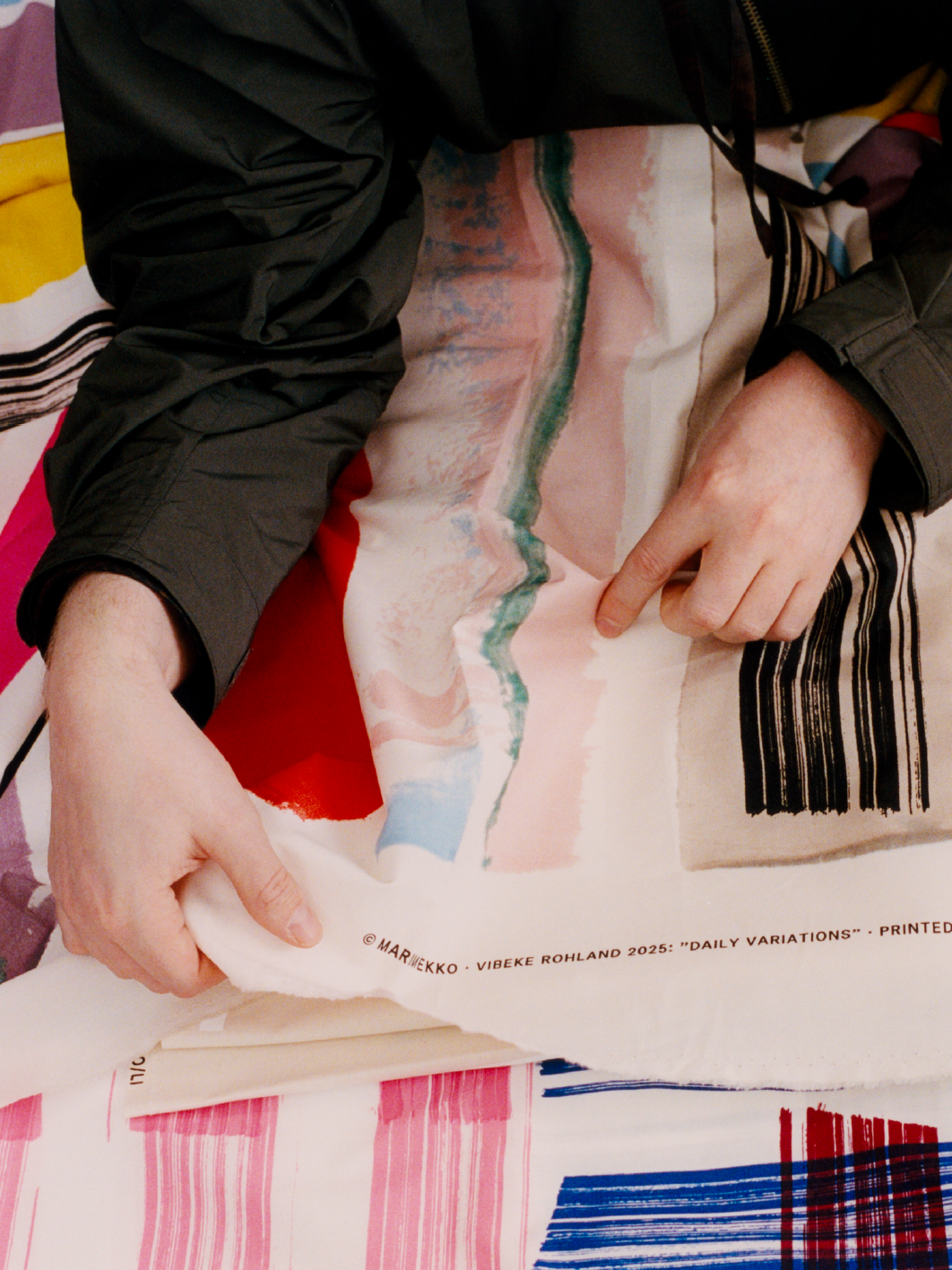
One of Vibeke’s first prints for Marimekko, Daily Variations, a pattern featuring minimalist stripes in different colours that challenge and complement each other representing the various shifting moods of a day
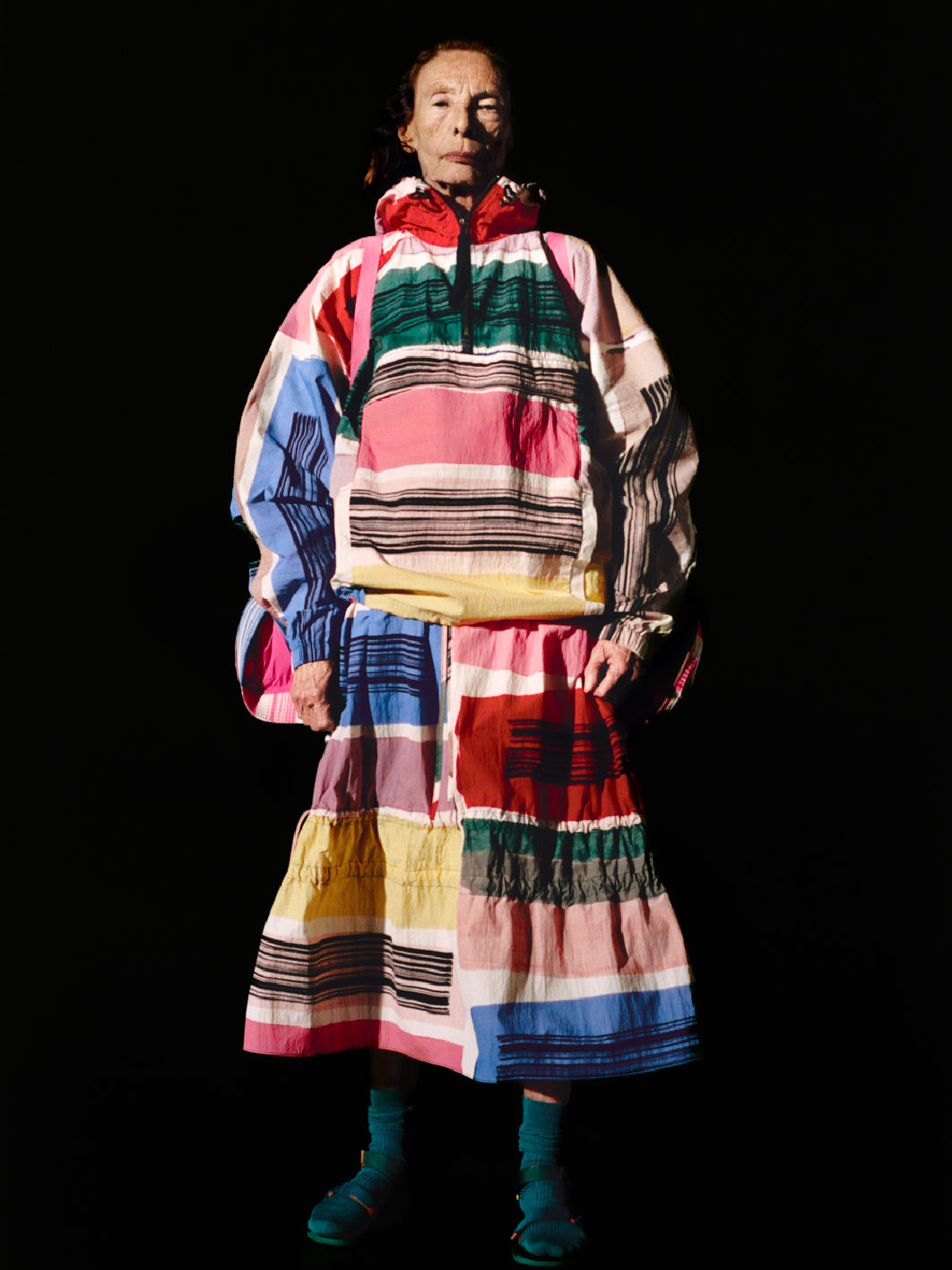
Finnish designer Rolf Ekroth’s capsule collection for Marimekko that blends contemporary streetwear and Nordic functionality featuring Vibeke Rohland’s print
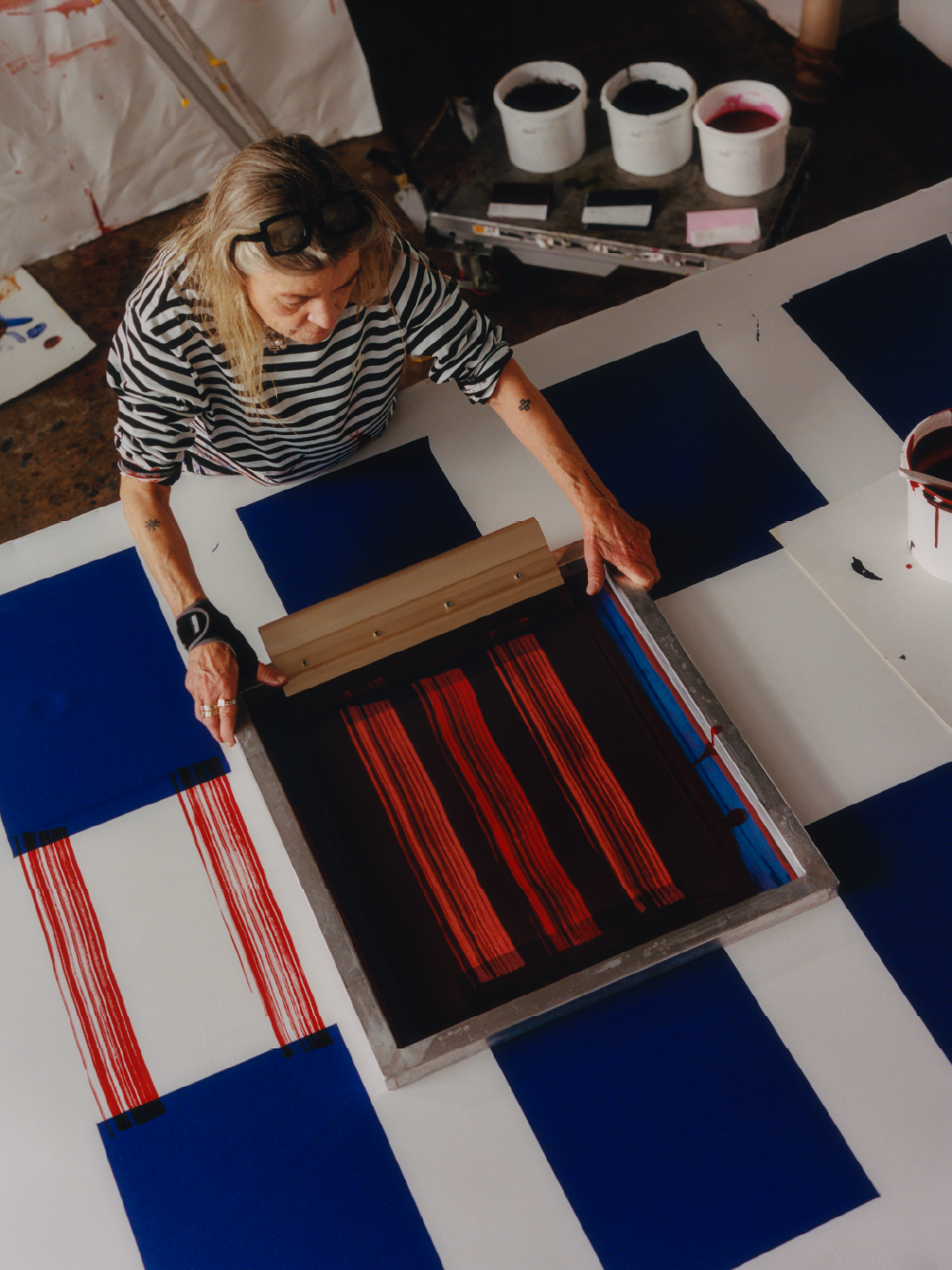
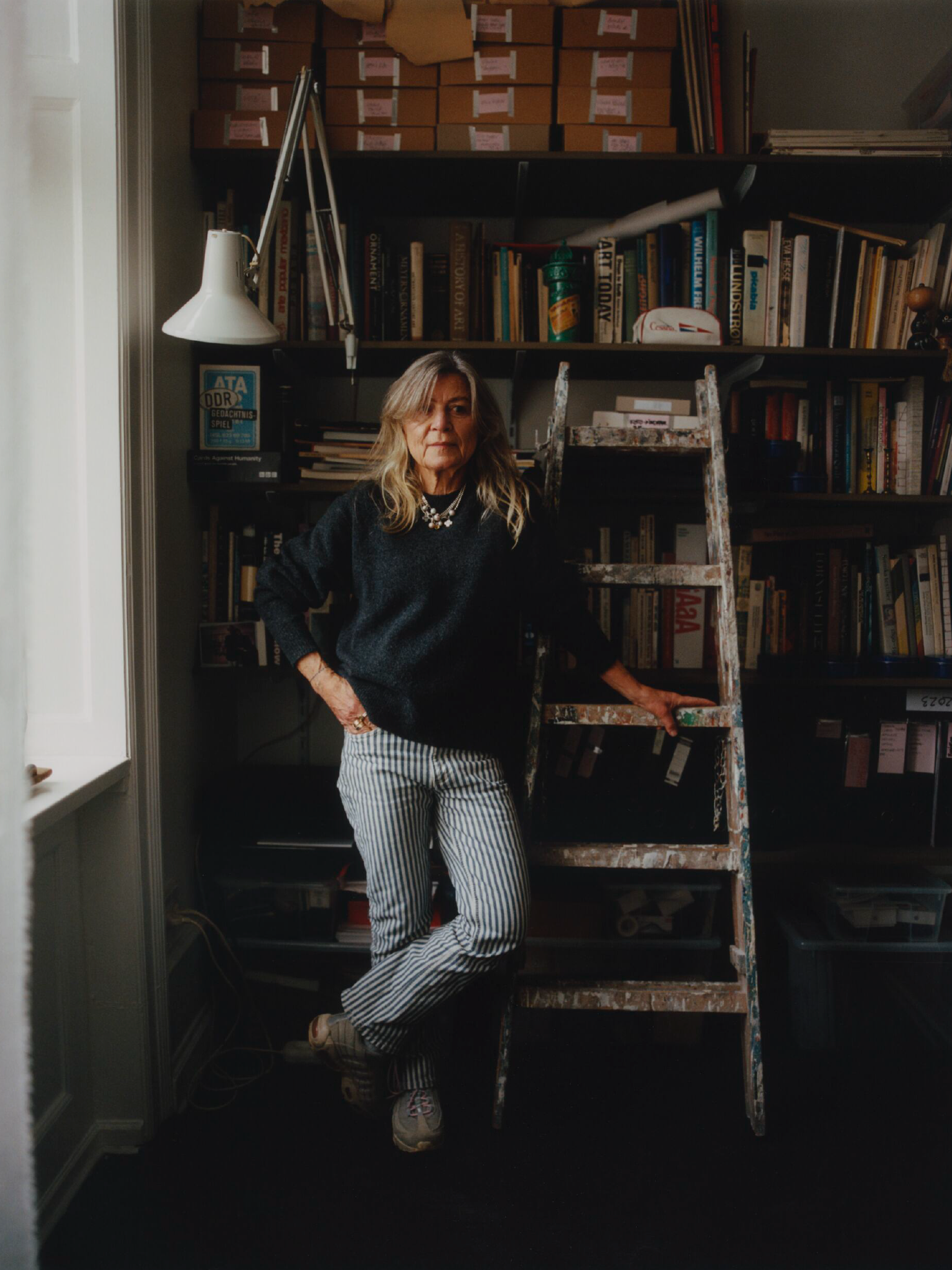
Danish textile designer Vibeke Rohland, the first artist in Marimekko's Artist in residence programme working at the Marimekko printing factory in Helsinki
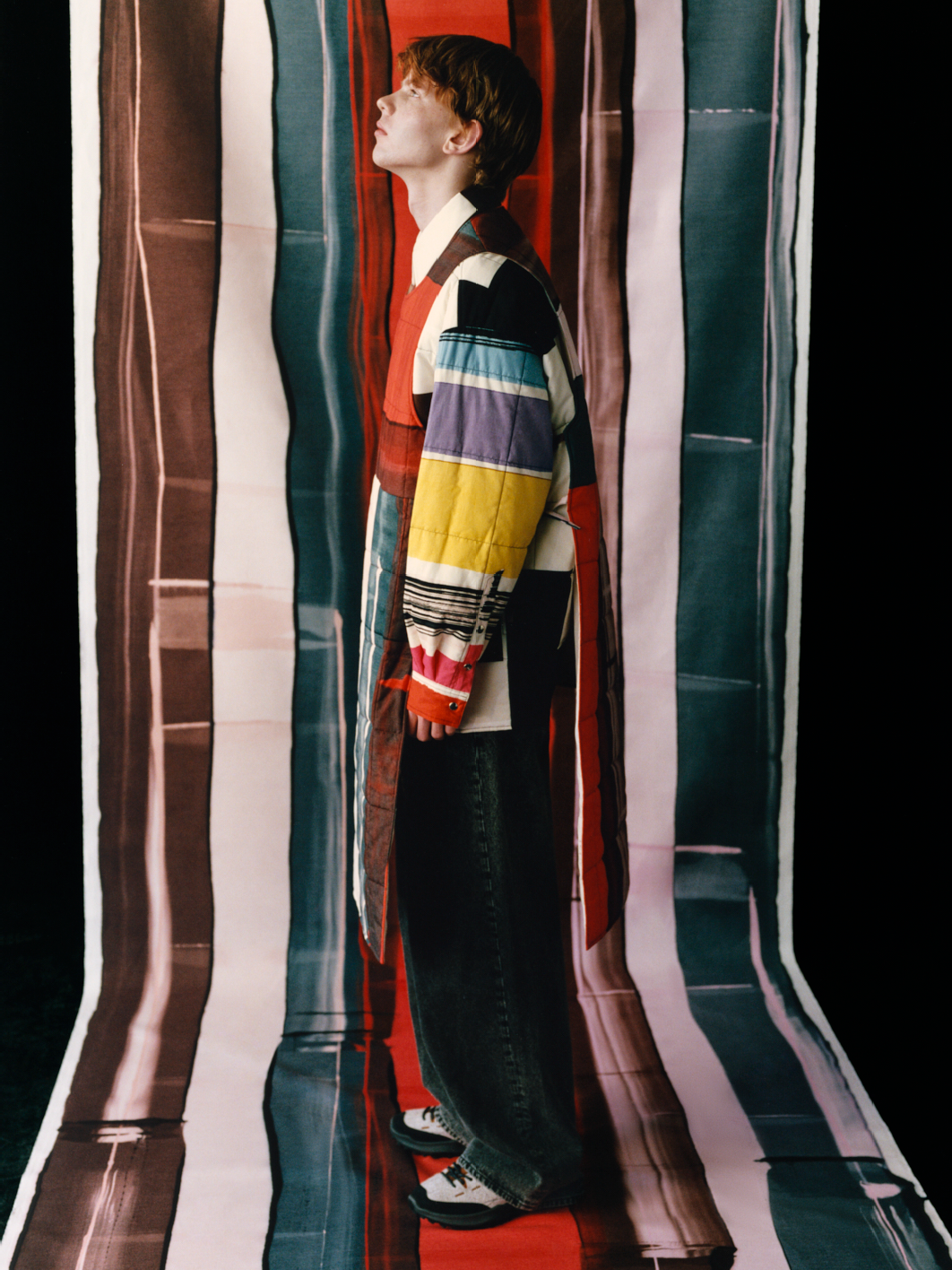
Vibeke's four-decade practice spanning form, colour and material turned out to be a natural fit for the Marimekko designverse
Vibeke did brief notes and sketches before working directly on the printing table. She didn’t pick a specific colour palette but experimented with ideas and shapes as they materialised during the process of printmaking
The Artist in residence programme invites artists to work directly at the Marimekko printing factory for an extended period of time so they can fully immerse themselves in the world of Marimekko’s art of printmaking and give them space to engage in the ongoing creative dialogue with the artisans at the factory and the design teams
When she arrived at Marimekko in 2024, Vibeke approached the collaboration as an ongoing dialogue between her own artistic practice and the brand's established design-language. “Marimekko artworks are bold and graphic, held together by a clear understanding of colour and form,” she explains, identifying qualities that have long resonated with her own work. She started off with what she calls a visual to-do list, “I work on textile as well as paper and I started out creating a kind of vocabulary for myself – a 5 metre long artwork on fabric that summed up some essential forms and moves that I referred to from time to time.”
Days at the artist residency were usually spent interacting with the people who already worked at the factory, sketching, browsing the sample library and brainstorming new patterns and colours on paper and on fabric. “I adapted to the lunch routine which was an opportunity to meet and talk and a nice break which you need, so if I could leave what I was doing, I did,” she says.
Once she had done her share of research, Vibeke started out by making a visual impression of form and colour on a three metre fabric that was a “not-so-interesting piece of strange-grayish colour,” that turned out to be a great starting tool. “The piece worked as my go-to reflection on what could work and what was necessary to do but not to be used.” From then on, Vibeke did brief notes and sketches before starting working directly on the printing table. She didn’t pick a specific colour palette but experimented with ideas and shapes as they materialised during the process of printmaking.
When Vibeke works in her own studio, she mixes colours and creates tones on the go. “I like to work with a vague idea and develop it. If you plan too much, you will never get to the essence of how the work speaks to you and with the art of printmaking you never really know how it will turn out.” At Marimekko, this process required some tweaks and structure. Since Vibeke had access to Marimekko’s sample colour library, she had to pick and choose the colour she wanted to work with and didn’t have to spend too much time on mixing colors, steaming swatches, getting supplies and other processes adjacent to printmaking which gave her more free time to focus on her designs and vision, “It was a big relief, I could concentrate on what I am best at.”
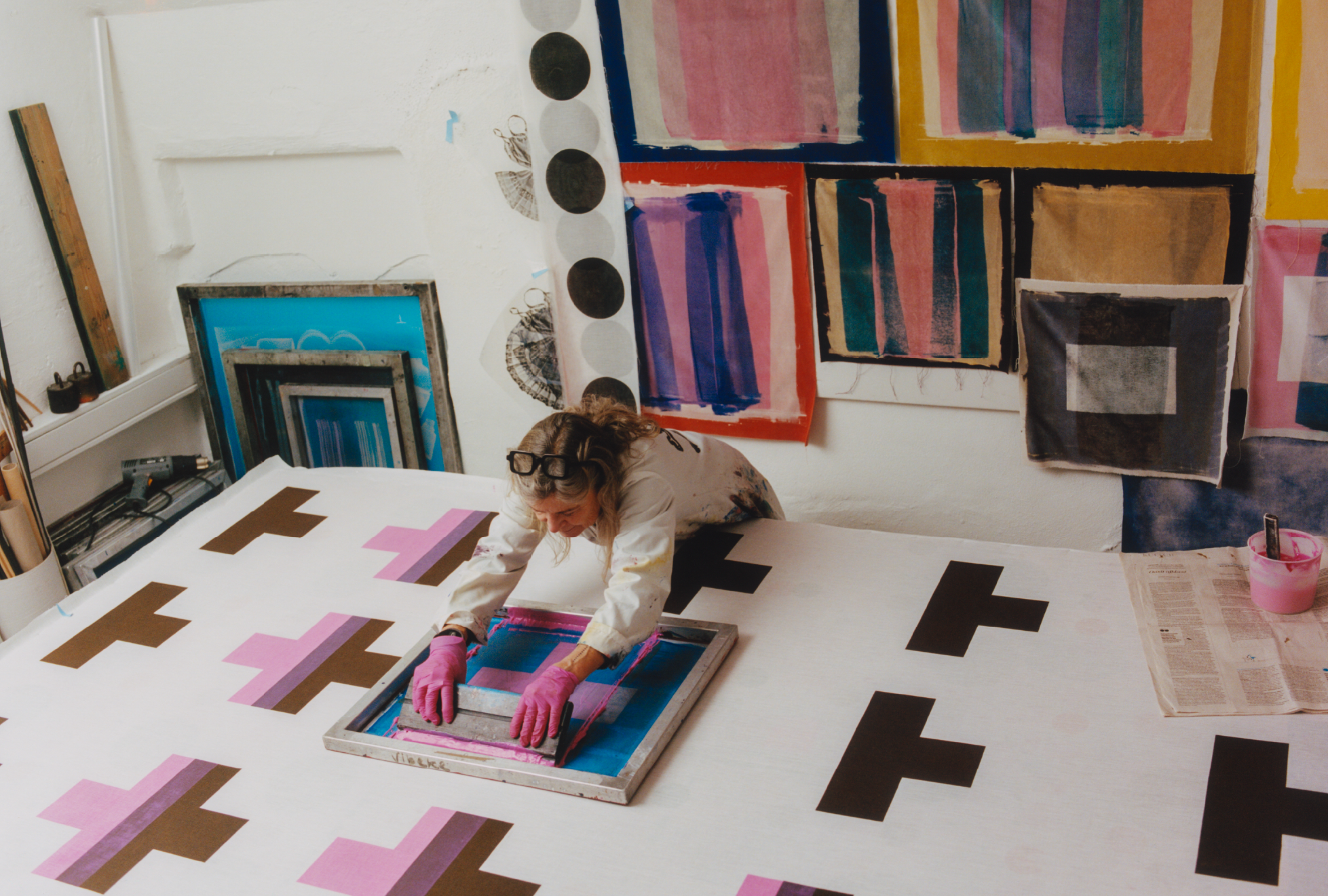
Vibeke immersed herself in printmaking at the Marimekko factory Vibeke's experimentation with colours, forms and textures resulted in 10 large scale prints for Marimekko, which appeared in their Fall/Winter 2026 collection and part of their home collection
Her experimentation with colours, forms and textures resulted in 10 large scale prints for Marimekko, which appeared in their Fall/Winter 2026 collection and part of their home collection. Among them is a print called Daily Variations, a pattern featuring minimalist stripes in different colours that challenge and complement each other representing the various shifting moods of a day. It’s one of the first prints Vibeke made and remains one of her personal favourites.
In many ways, Vibeke’s residency is a nod to Marimekko’s long time tradition of inviting artists to work directly at the Marimekko printing factory for an extended period of time. It’s reminiscent of say the late Marimekko print designer Maija Isola who created over 500 prints for Marimekko during a period of 38 years. Some of her most iconic prints were designed at the scale of production itself, while working directly at the Marimekko printing factory, often painting during the night.
While the brand's visual language remains instantly recognisable, it continues to evolve through the perspectives of individual artists. The Artist in residence programme is more a design dialogue that unfolds in real time where new voices and ideas mingle with the carefully curated and preserved Marimekko language. Do we have any input on why Marimekko chose her? That can be used to transition to this ending else again very abrupt