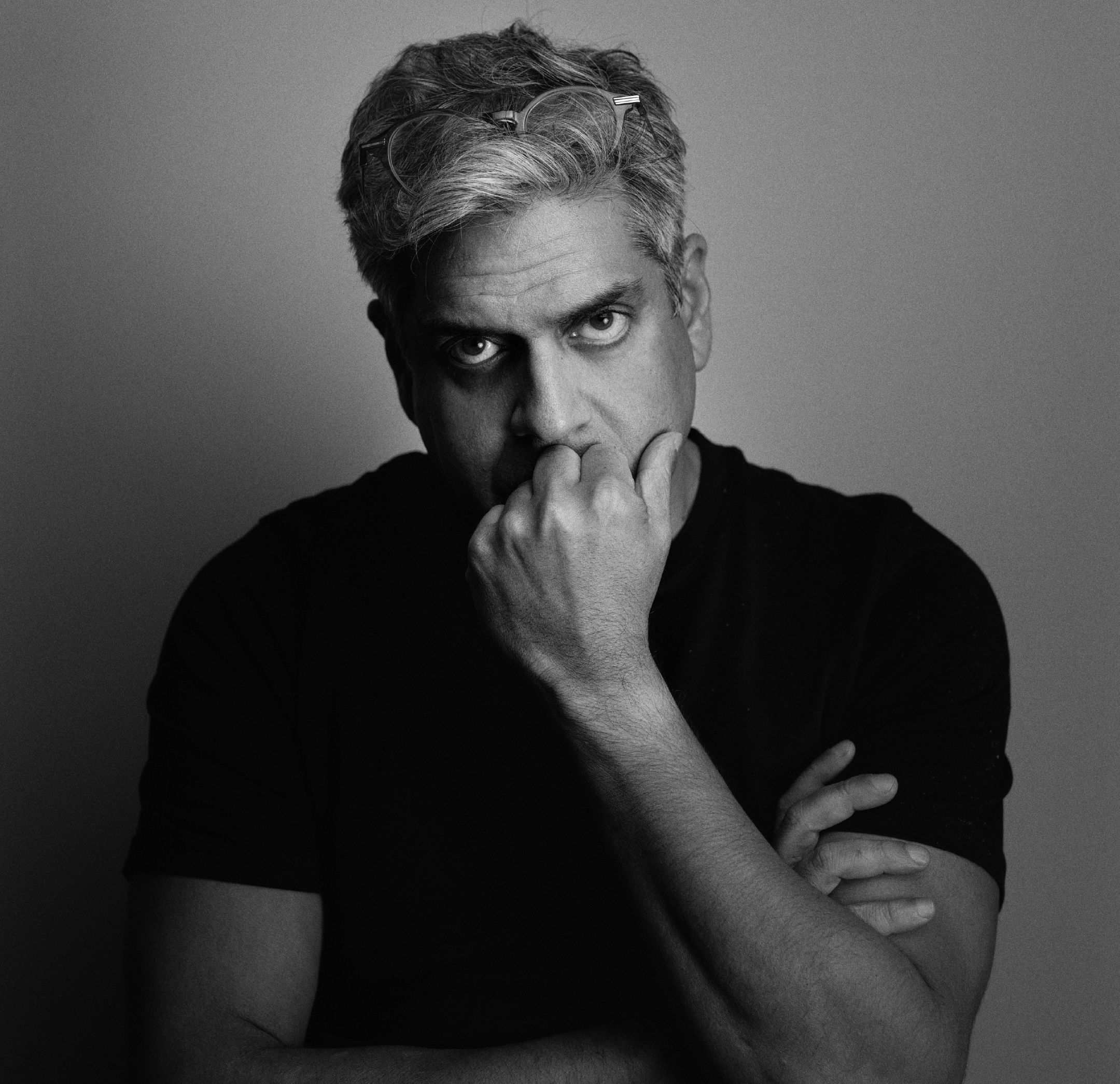
For years, the most important tool in photographer Sunhil Sippy's arsenal wasn't a camera but his feet."I walked at night, I walked in the day, I walked at dusk, I walked at dawn," he says. "I turned into blind alleys. I got lost." Mumbai became his studio, and the walking helped heal a badly injured foot. For a man who spent years directing films and commercials, and who grew up between London and Mumbai, two culturally different cities , it was an unlikely way to get to know the latter.
Two homes, one heart
Sunhil grew up in Hampstead, a leafy corner of north London, all parks and quiet streets. But every Christmas the family flew to Mumbai, so there was never a white Christmas or a turkey dinner. "I had this kind of double life," he says. And in a strange way, the city he visited for a few weeks a year held more of his heart. "I was more emotionally connected to Bombay than London."
Although his family had deep roots in Mumbai’s steel business, Sunhil had little interest in following that path. He was drawn to creative pursuits instead, wanting to build an identity of his own. "I wanted an individual voice," he says. He tried photography school at 17, found it too technical, and switched to English literature at Georgetown, where he won a medal for creative writing. He was a hopeless fiction writer, he admits. But he had an eye for capturing moments many would miss and found an early outlet for it in cinema.
The walls of the studio
His first feature film, Snip, arrived in 1999, funded by friends and shot on 35mm film. Film was expensive then, and only so much stock could run through the camera, so every take counted. “The limitations were the greatest thing,” he says, adding that limits are good for creativity. The story, he admits, didn’t quite hold, but the film had “a very strong visual appeal,” helped by cinematographer Ravi K Chandran. The advertising world sat up and took notice, and from 2001 he was directing commercials for L’Oréal, Garnier and Lux, working with the biggest stars of the day. “What I was, was a strong visualiser,” he says, and in 30-second films, led by the strength of an image, that was all the talent he needed.
Yet the more he succeeded, the smaller his world became. “I was being taken off the streets… and into these boxes, creating worlds inside studios,” he says. Clients grew stronger and directors’ voices softer. You could hand one script to five different directors, he says, and get much the same film. What he missed was “the rawness”.
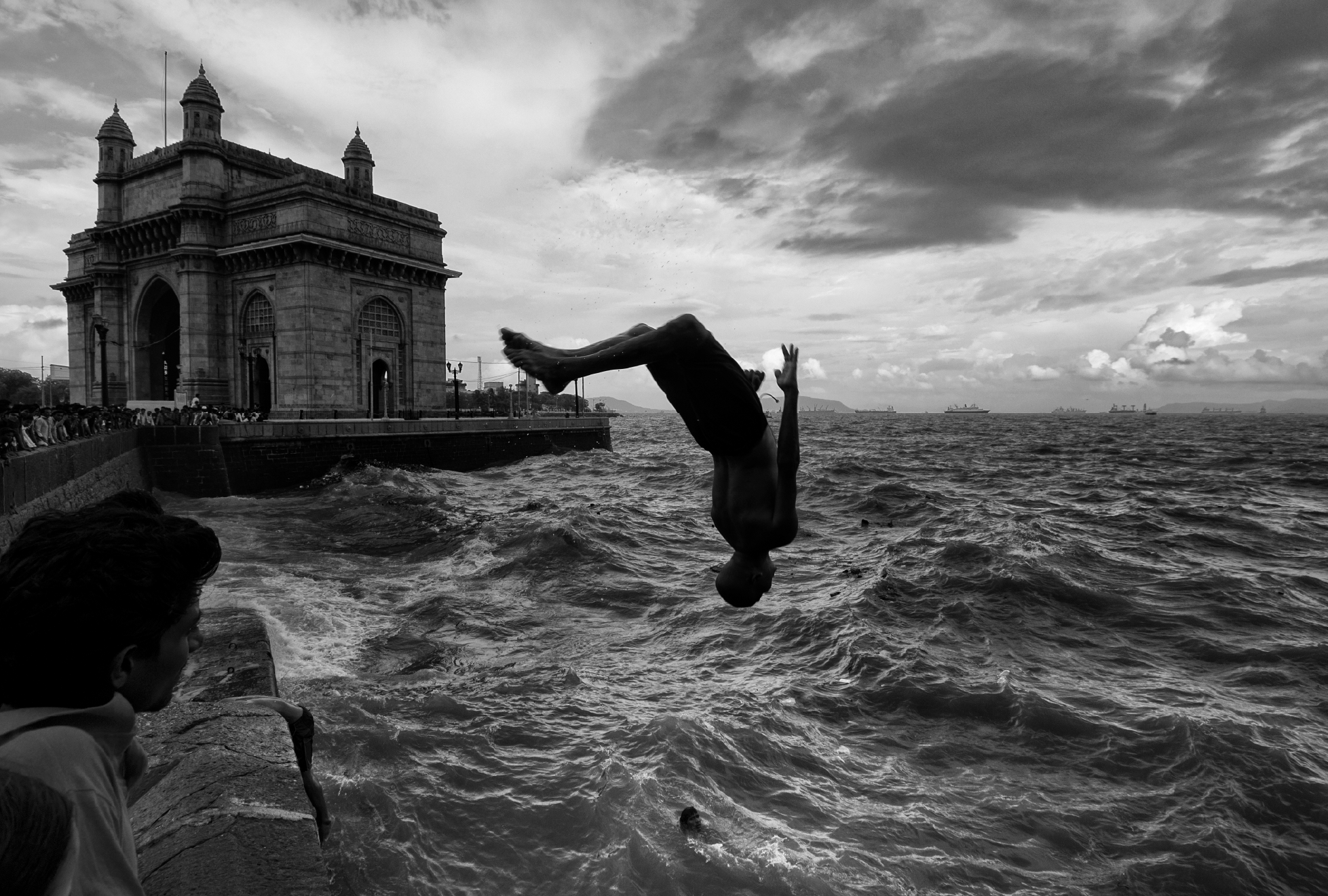
Around 2009 he picked up a still camera and started walking the streets of Mumbai, because, in his words, “I was claustrophobic inside the studio.” It began as an escape, a way to tell stories on the pavement instead of on a set.
Then, in 2012, came the accident. On a commercial shoot, he lost the heel of his left foot. It pushed him towards photography harder than he could have imagined, and it gave the walking a second purpose. “It was a healing process,” he says. “I had to walk. And walking is key to discovering stories on the street.” For the next 6 to 8 years he walked, turning into blind alleys and getting lost. The walking that mended his ankle was also how he found his pictures.
The city behind the gates
Planless as it were, those years of walking left him with an enormous archive, and eventually the pictures needed a home. In 2022 Sunhil published The Opium of Time, a dreamlike wander through Mumbai, pieced together over years of trial layouts. It holds everyday street scenes, and calmer pictures of the industrial east shot on film. It also holds a monsoon scene from Sewri in 2015: children of four and five hanging on to the back of a truck, “gliding through water in an industrial wasteland”. He remembers thinking about the joy they had found. “It was a gift to myself, frankly,” he says. “I’d always worked for other people. I wanted to express my own [voice].” It sold slowly at first, but lately readers have grown curious.
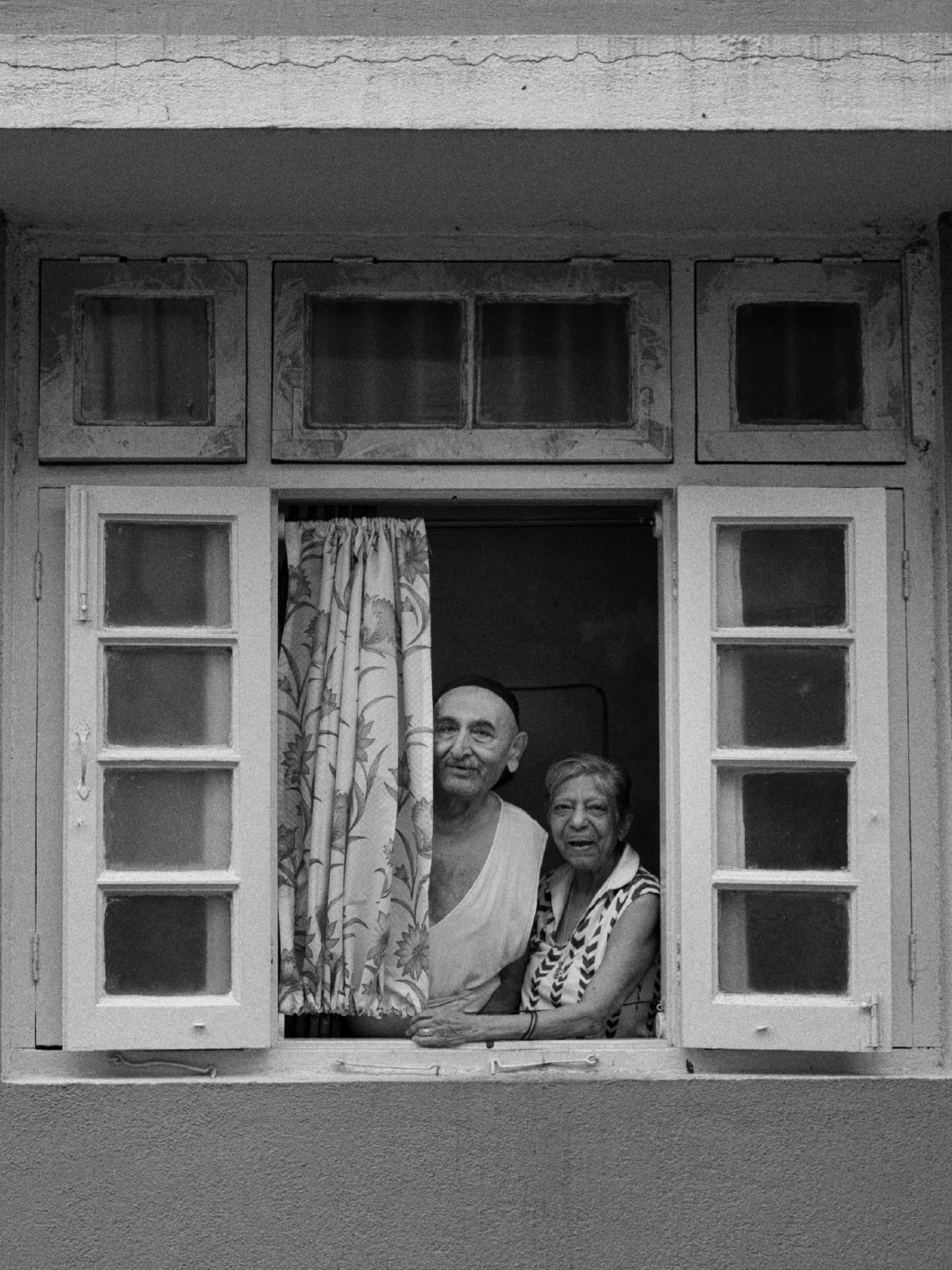
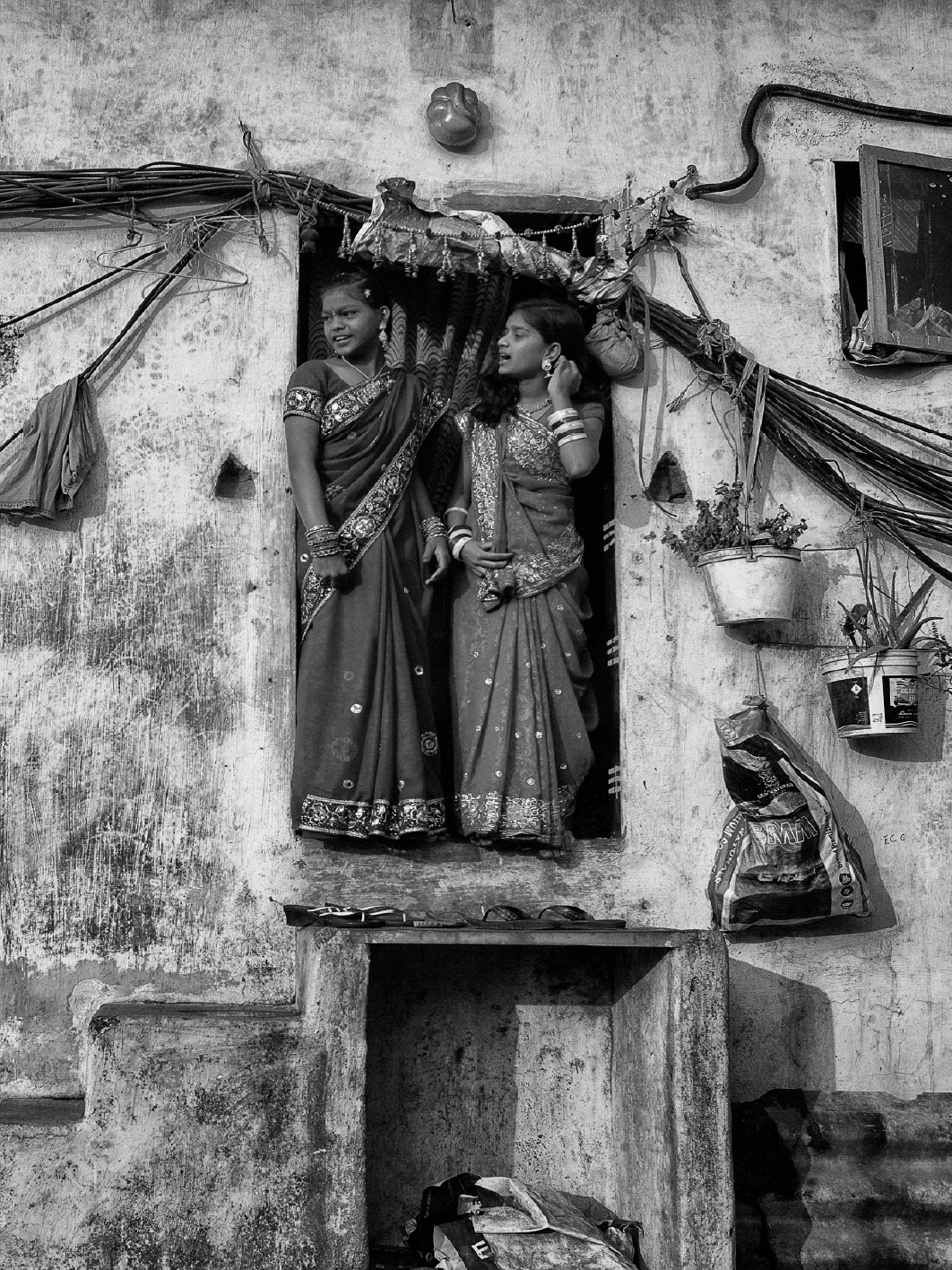
What pulls his eye is less a subject than a feeling. He has always looked for “a sort of poetic image”, one that provokes an emotion rather than showing off. “I didn’t want it to be too clever,” he says. Humour on the street never interested him, “but I was interested in people”, especially those he could watch without being noticed. Over the years he has been drawn to the hidden edges of the city, to industrial land, to small worlds that run on their own rules, like the racecourse, and to the way an old facade can stand in front of rubble.
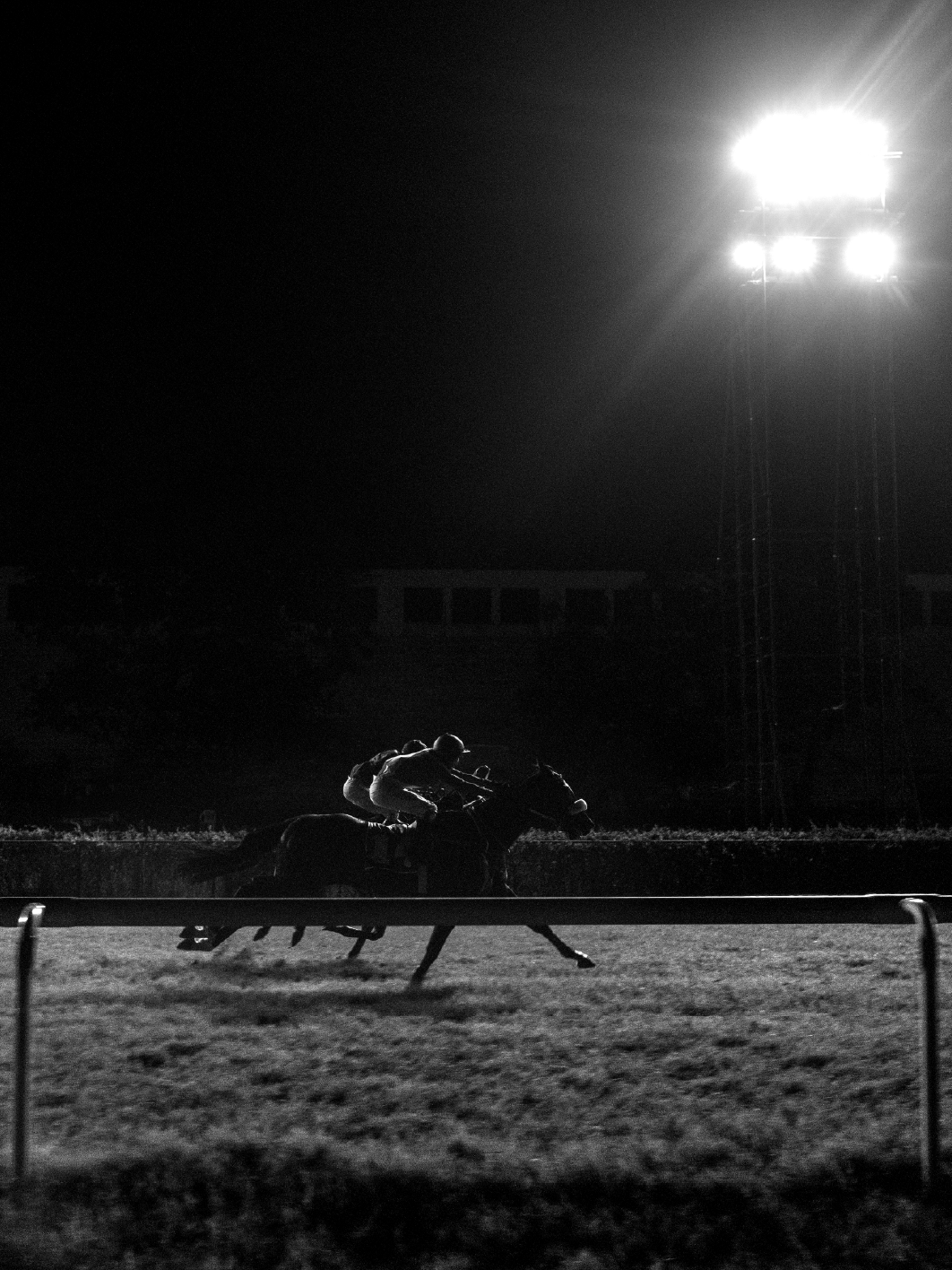
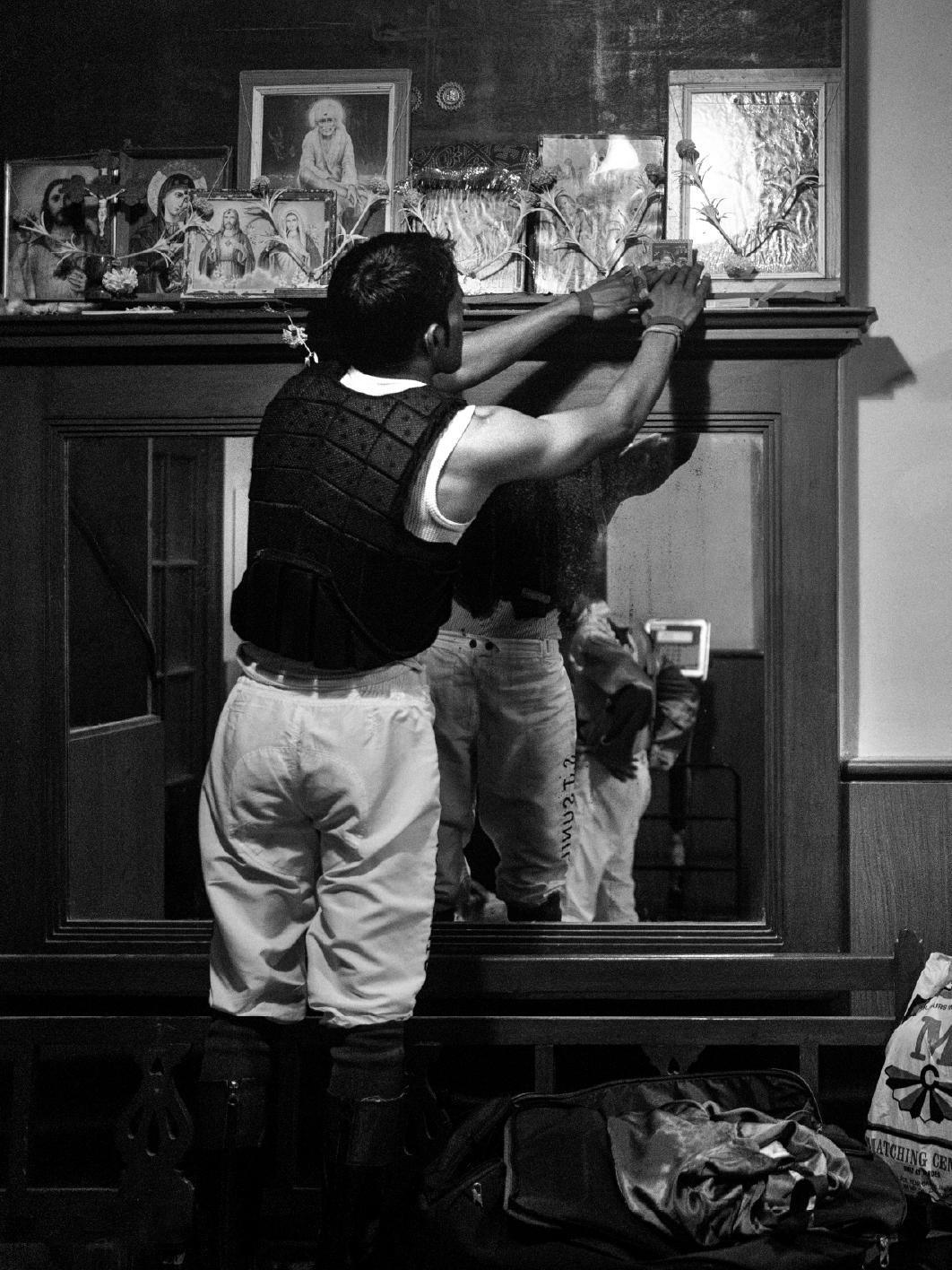
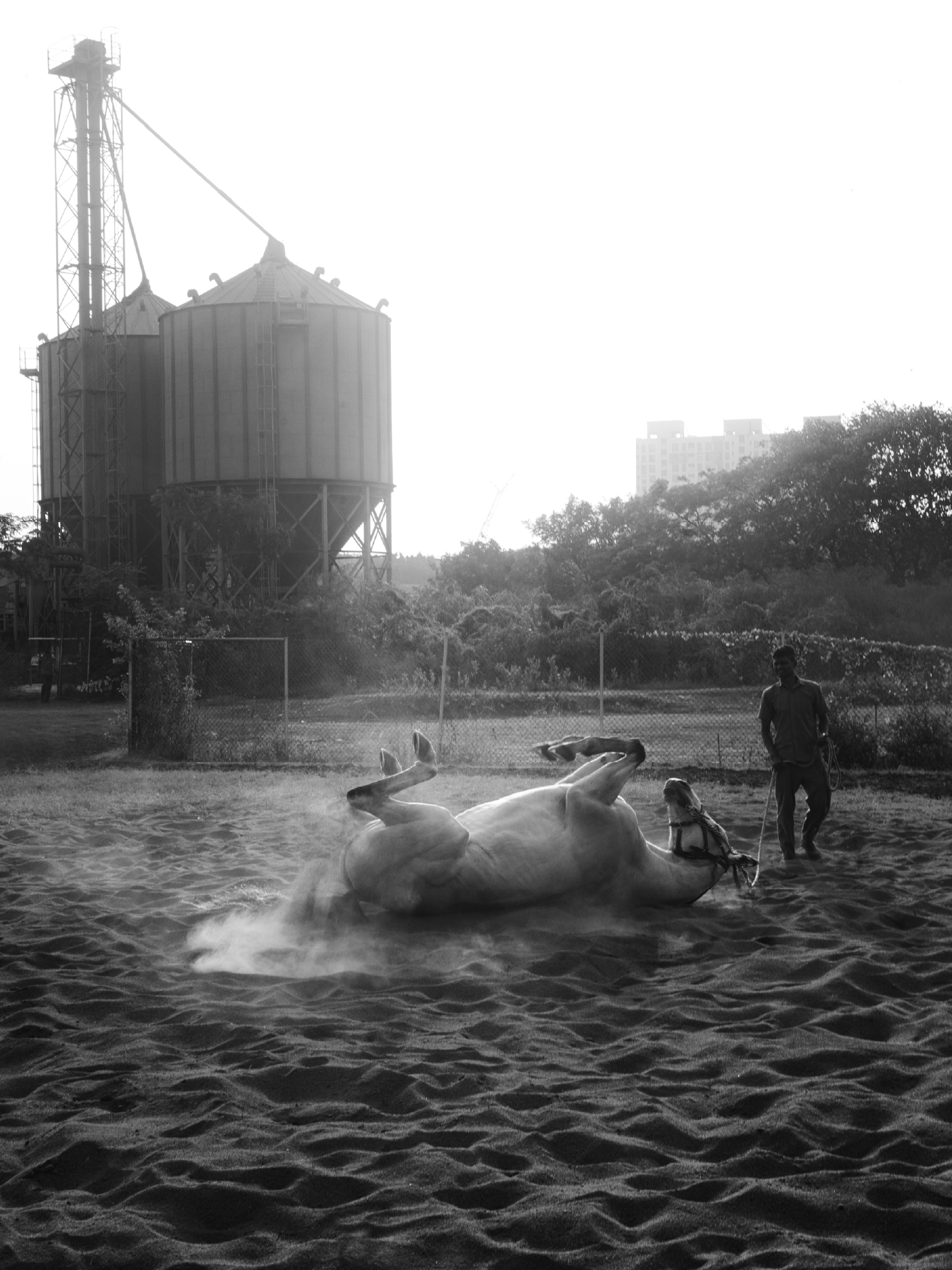
Two stories inside it refused to stay put. The first lay behind the gates of the racecourse. Years earlier he had photographed in the jockeys' room and ridden out with the horses, then barely looked at the pictures. Looking back, he thought: "Who has ever had access like this?" When he heard the racecourse lease was running out, he returned with urgency. The book that followed, Race Day, is really about the city. "The racing community is a metaphor for the resilience of a city in flux," he says. Inside the gates, everyone is obsessed with the same thing, and for those 60 seconds, once the horses bolt from the gates, everyone is equal.
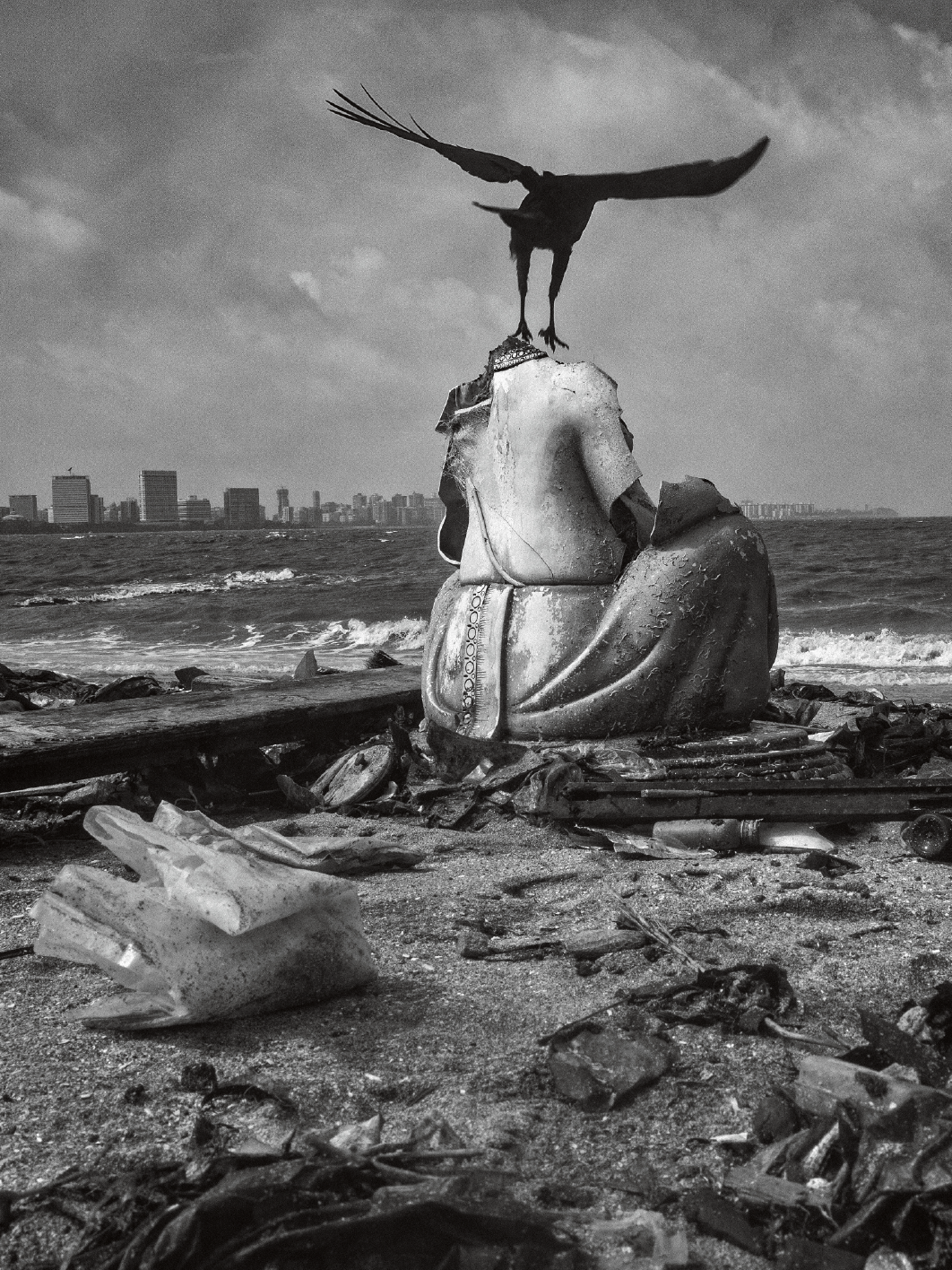
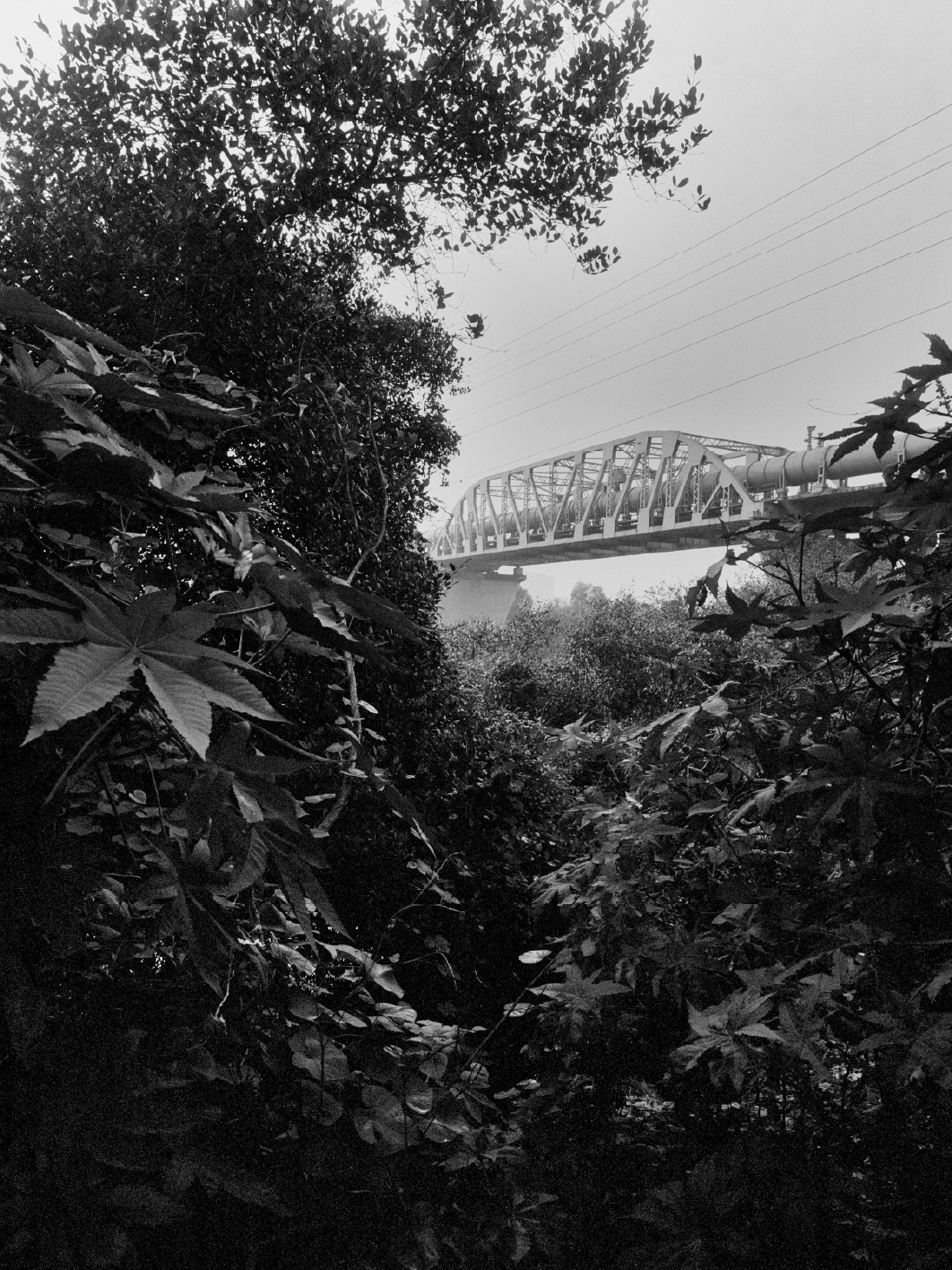
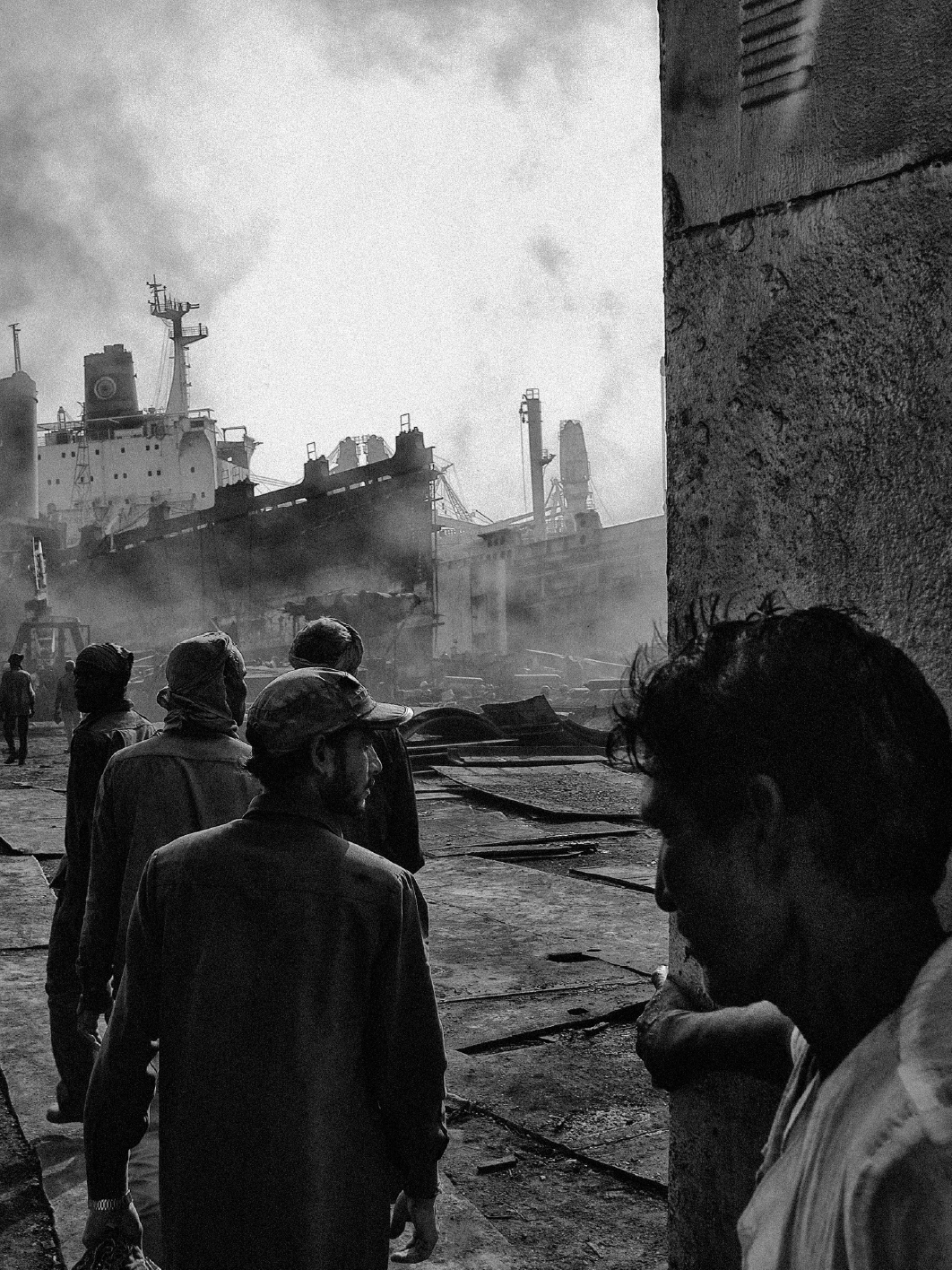
The second story pulled him east, to the city's industrial edge of Mumbai: the shipbreaking yards of Darukhana, the salt pans of Wadala and the port neighbourhood of Sewri. It became this year's gallery show, Eastward: Explorations Along Mumbai’s Eastern Seaboard at Galerie Mirchandani + Steinruecke, in Ballard Estate, Fort, Mumbai. Its roots are personal. His family once ran steel mills, and as a boy his grandmother took him to the one in Wadala: furnaces, cranes, heat and soot. By the time he saw the second family factory, it was abandoned. Charting the land between the two, he says, was a subconscious return to childhood emotion. What he wants is to reveal a city that is hidden, even from the people who live in it.
Both projects rest on a particular way of working. In Mumbai, Sunhil points out, many of the people with cameras travel in air-conditioned cars, while the people on the street live in a different world. So he commits to one world for years, returning until the faces become familiar. Shy by his own account, he is not someone who meets a stranger, shoots a portrait and moves on. "I need time with places, I need time with people," he says. Making a portrait in a single sitting is something he is still learning, and wants to do more of for the later part of his life.
What the walking taught him
That patience shows in how he works, too. In a world where every moment is filmed by someone, Sunhil has chosen to go slow. For his own work, he shoots mainly on film, while digital is for assignments. "I like loading a (film) camera. I like light metering. I like wandering. I like not having the results from the lab for a week." It’s also why artificial intelligence does not impress him: he would use it to rescue a blurred, once-only moment, not to invent pictures. What a changing city needs, he says, is "a human point of view."
That belief also took him beyond Mumbai's streets. Sunhil has photographed and filmed for several charities, among them the Savitri Waney Charitable Trust, where he first joined as a trustee. Sitting in board meetings, he says, he could not follow the talk of money, so he asked to see the work for himself. He travelled to Uttar Pradesh and Bihar and visited an eye hospital, where he filmed a girl before her operation and returned six weeks later to find that she could see. His palliative care images were later shown at a fundraising ball at the Dorchester in London. "I was never earning from photography," he says. "I was just doing it for love." While he has no interest in iPhone photography, he admires those who make great work with one and also sees a hopeful twist in the smartphone: in villages and communities, it is "empowering communities to tell their own stories", without needing an outsider to tell them.
Time, he has learned, is the best editor. A photograph of men at a Mohammed Ali Road bus stop, a demolished building behind them, once looked like "a stupid picture". Now it looks important. "Time reveals everything about pictures," he says, which is why he throws nothing away.
Perhaps that is the thread running through it all. Sunhil still thinks of himself as something of an outsider, circling a place without ever quite reaching its heart. "You're always slightly on the outside," he says. But from that edge he has watched Mumbai long enough to see what many of its own residents miss: a racecourse, a family steel mill, a bus stop on Mohammed Ali Road.
He doesn't expect applause just yet. "I consistently see myself as a colossal failure," he says, "but I'm hoping that history redeems me," and that his pictures become important in a city that never stops changing. Next year, he hopes, will bring back some of the innocence of photographing simply for himself.
Not bad for a man who never planned any of it. "Uncertainty is very, very underrated," he says. "It opens you up to things you could never have imagined."