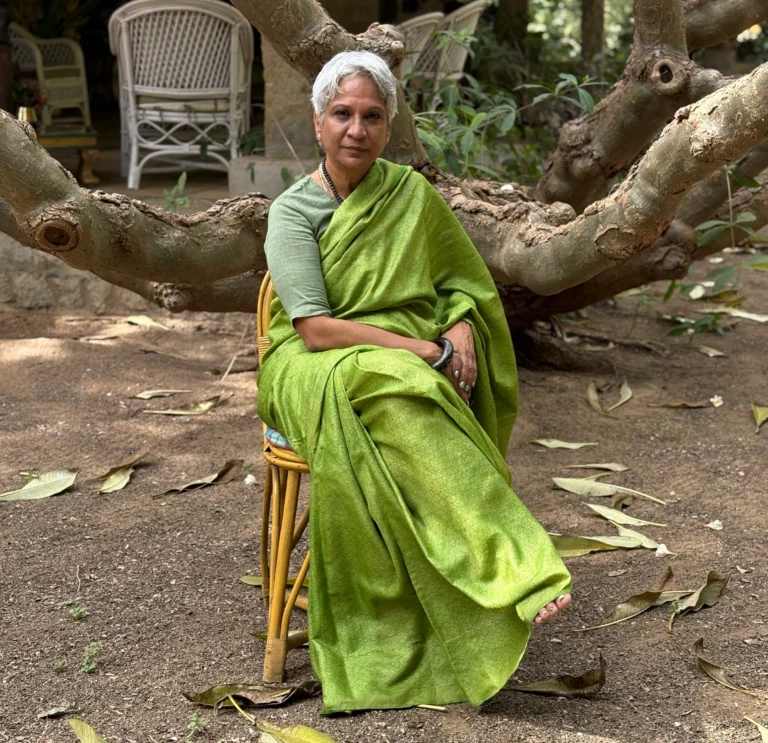
“I can't live in the city,” says architect Ajith Andagere, as we speak over a call, me here in Mumbai, and him in his workshop in Magadi, a sleepy town about 50 kilometres away from Bengaluru. Ironically, the workshop is one of the few places on the property that gets a reliable internet connection, though it is perhaps the space that needs it the least.
For the last 24 years, Ajith has practised architecture from different parts of the country, going where projects took him. But the idea of moving away from city life had been brewing for much longer. The turning point came while he was designing an artist residency building called Kula for Nrityagram from 2009-2013, the gurukul style dance village established by famed Odissi dancer Protima Bedi near Bengaluru, that preserves the art of Odissi, nurturing dancers to perform on a global level. “I lived on their campus for three years. That's when I realised I needed to have my own place. My hands were itching to build a workshop, do things and experiment,” he recalls.
Around 2013, he began searching for land on the outskirts of Bengaluru, eventually settling in for Magadi—a town where the natural environment wasn’t pushed in favour of concrete slabs and rapid development, the air was dry, perfect for wood work that’s central to his practice and the landscape was breathtaking.
On a seven-acre plot in Magadi, Ajith built his home where he lives by himself, established a workshop and slowly began creating a practice around carpentry. Long before Kaikale existed, the workshop here was already functioning as a space for research and experimentation. Initially, Ajith used it to develop furniture and material systems for his architectural projects. Timber, bamboo and other natural materials were already an integral part of his architectural practice. It took him a little over decade to launch Kaikale that was formed as a furniture enterprise but was more an extension of his architectural practice rooted in sustainability. His work is rooted in vernacular architecture that evolves as a direct and sustainable response to the site and its surrounding context. “The design is shaped by the local climate, terrain, natural resources, and cultural context, with a strong emphasis on using materials, construction techniques, and craftsmanship available within the region or state,” says Ajith who rarely does projects in the city. For a garden cottage in Moira, Goa, Ajith and team built a structure out of a local building technique of wattle and daub walling system using lime plaster, a material which would keep the indoors naturally cool during the extreme tropical heat. For another house in Karnataka’s Chikkamagaluru, the team used locally available materials like wood, kadappa stone, handmade earth blocks, lime plaster, brass and copper to bring in texture and tone.
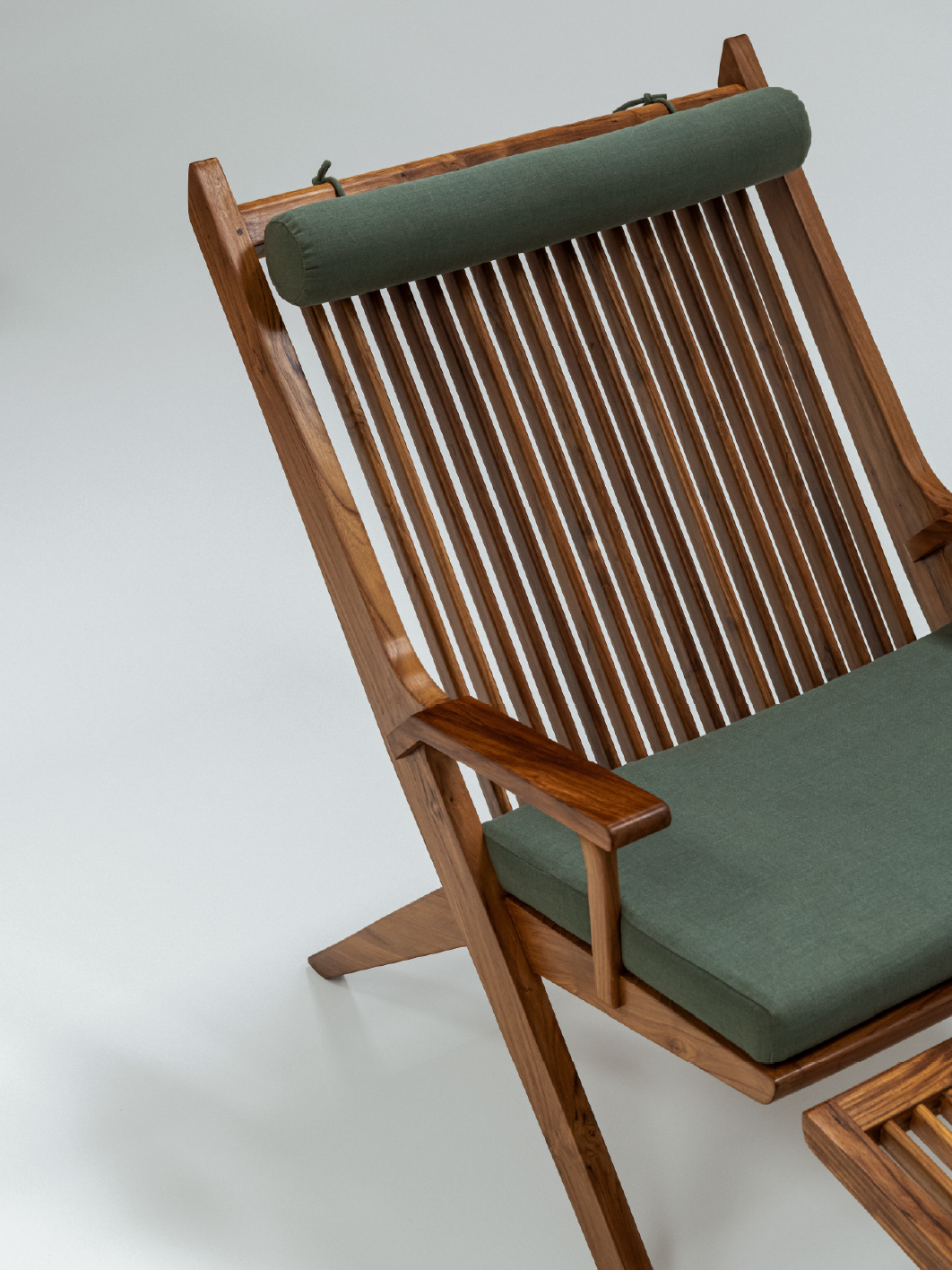
A reclining chair pairs a solid wooden frame with handwoven cord work, showcasing the dialogue between carpentry and craft
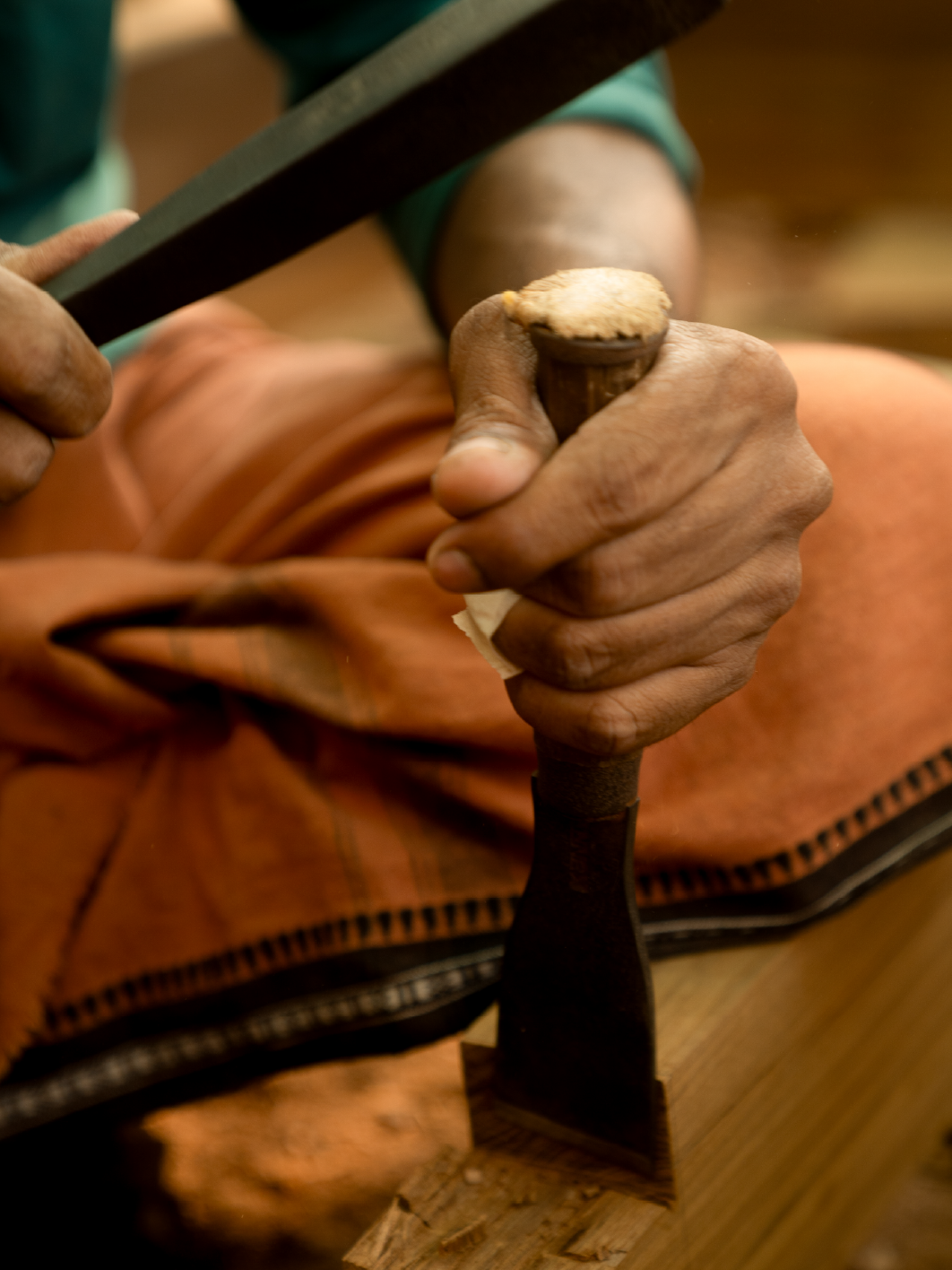
Hand tools remain central to the making process, allowing artisans to refine details that machines cannot easily replicate
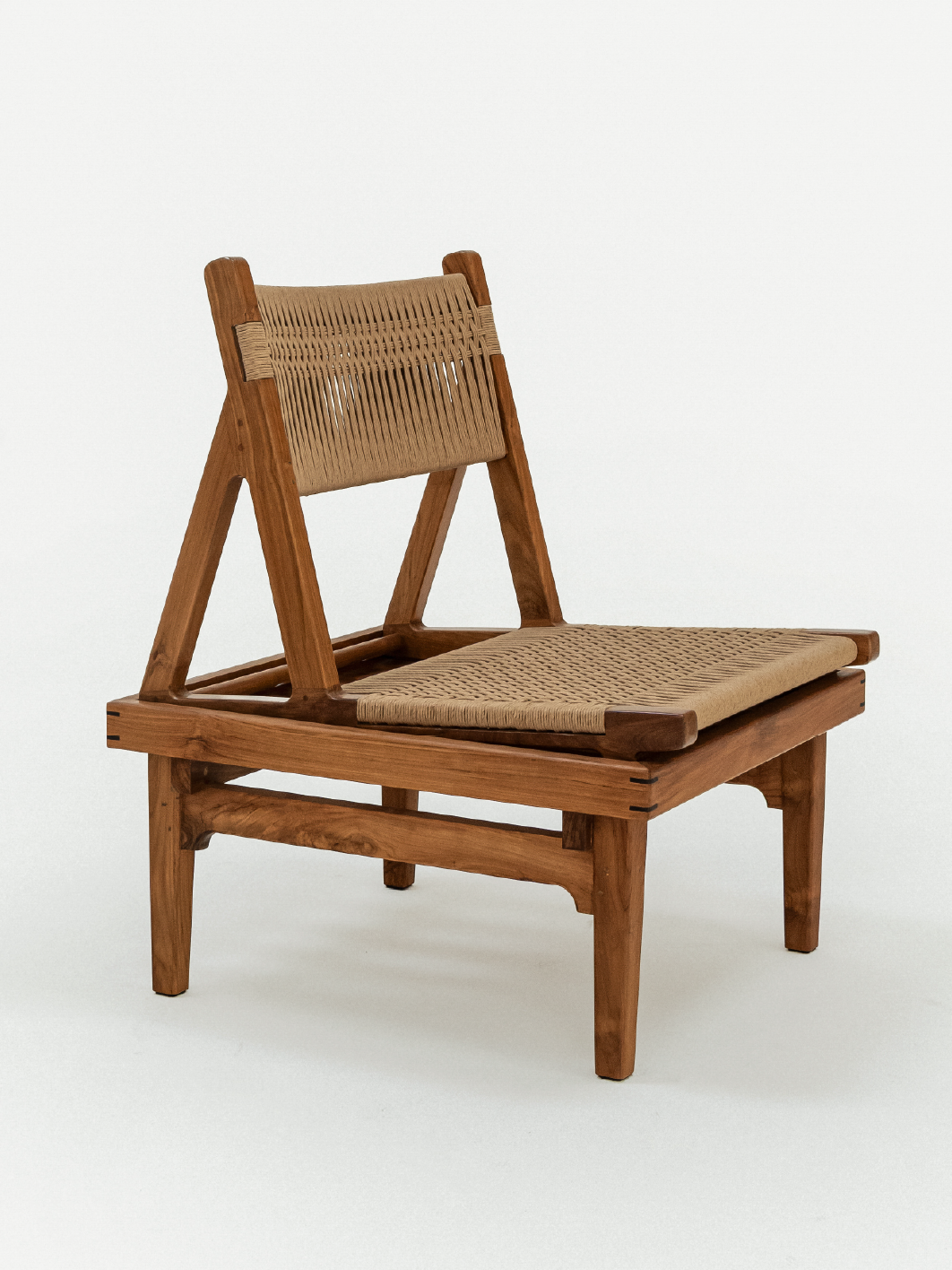
Visible wooden connections and woven surfaces highlight the workshop's emphasis on construction as a design language
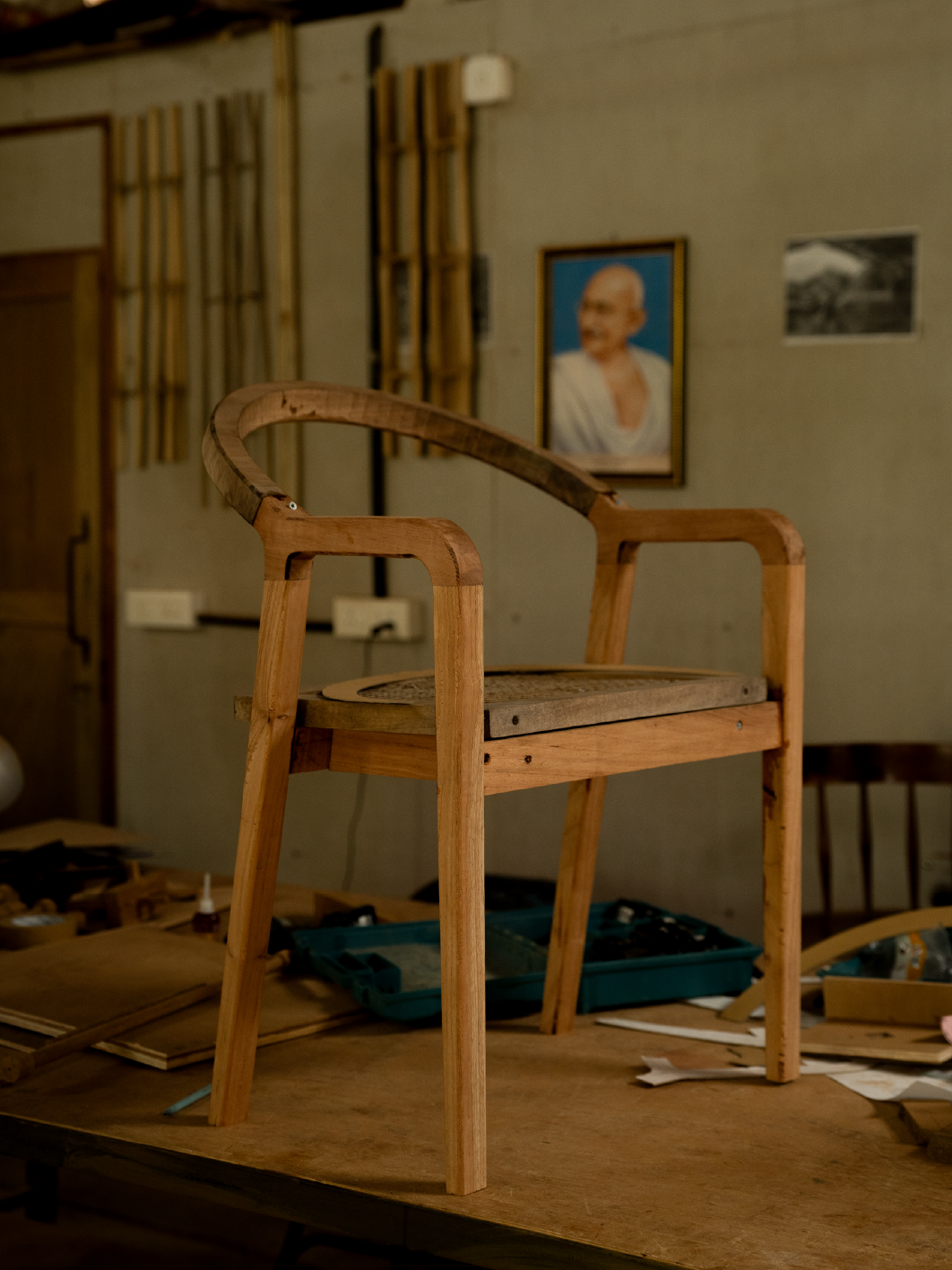
Set within the workshop, the chair highlights Kaikale's focus on joinery, material integrity and skilled handcraft
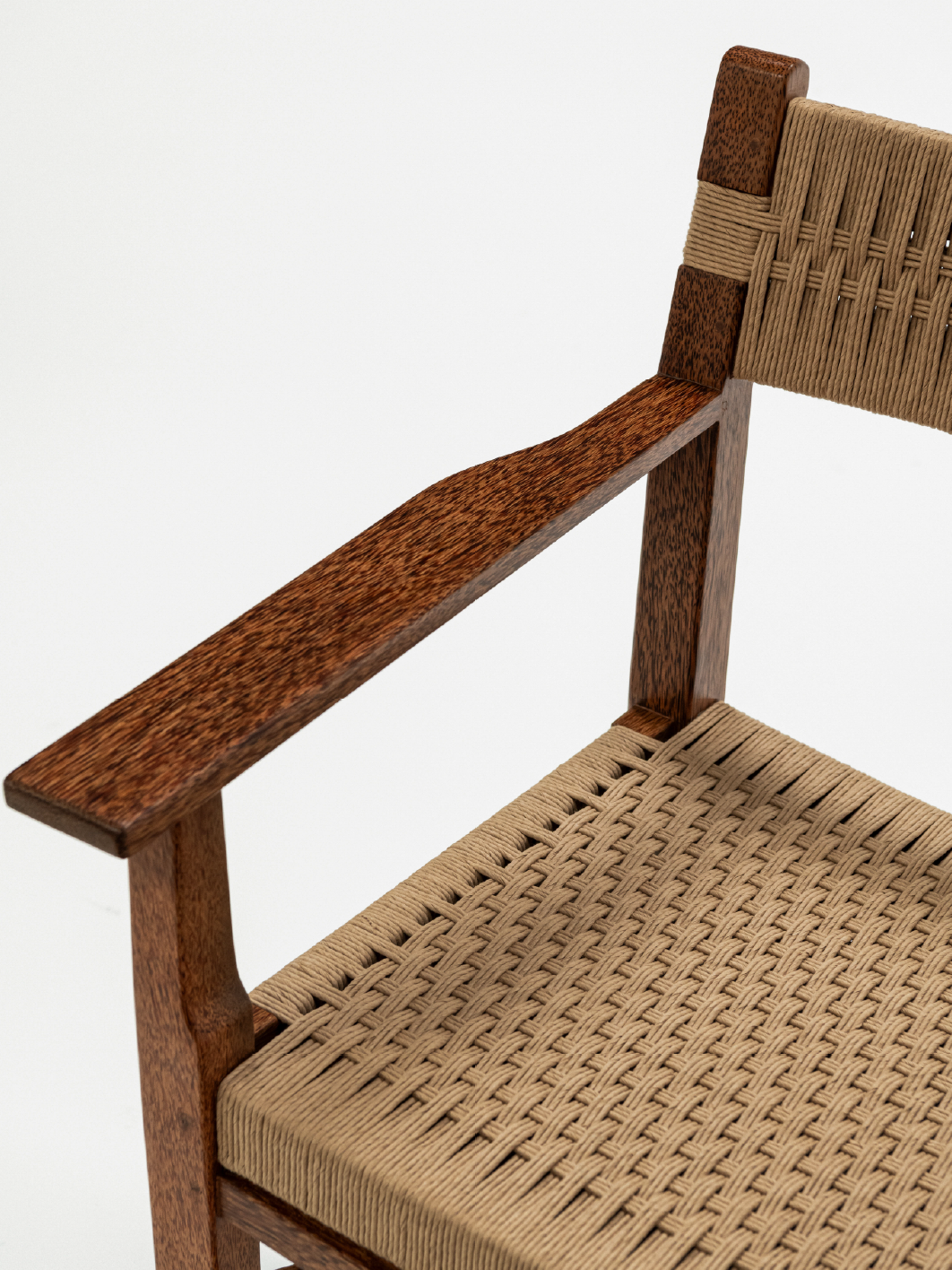
Danish cord weaving forms the seat, adding texture and comfort while drawing attention to the hand skills behind each piece
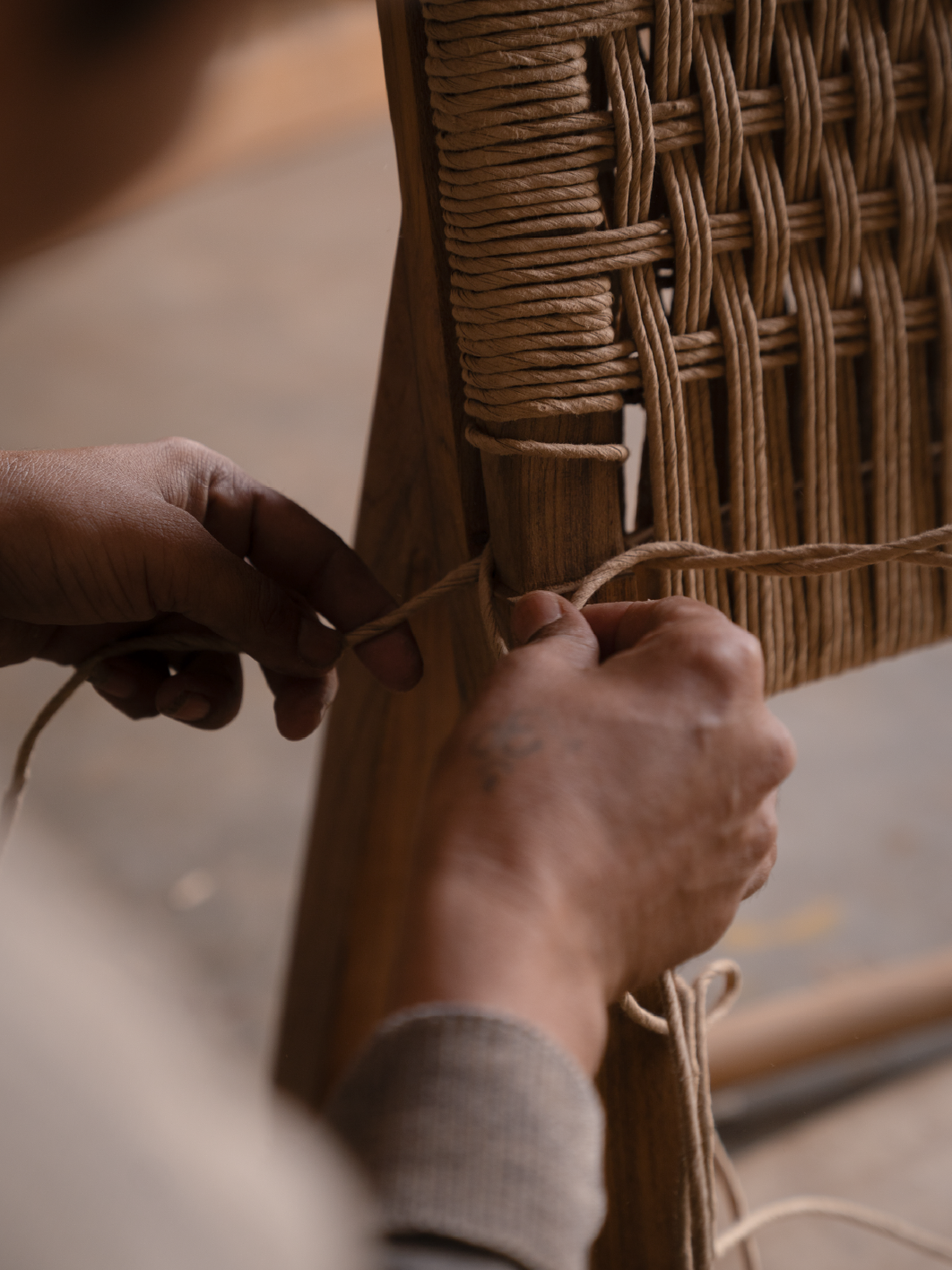
An artisan hand-weaves the chair back, a process that requires precision and hours of skilled manual work
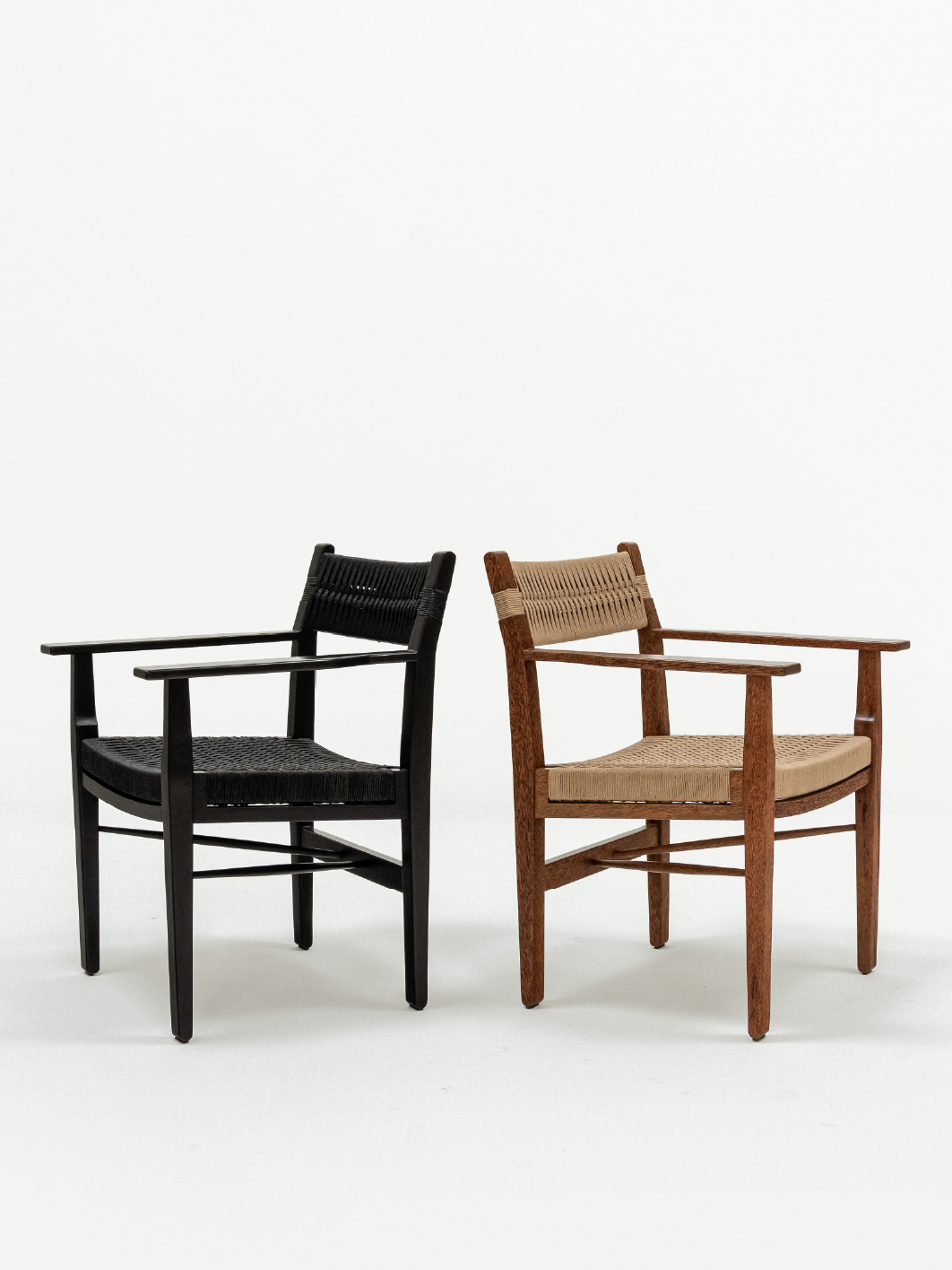
Presented in different finishes, the chairs demonstrate how material and colour can alter the character of the same form
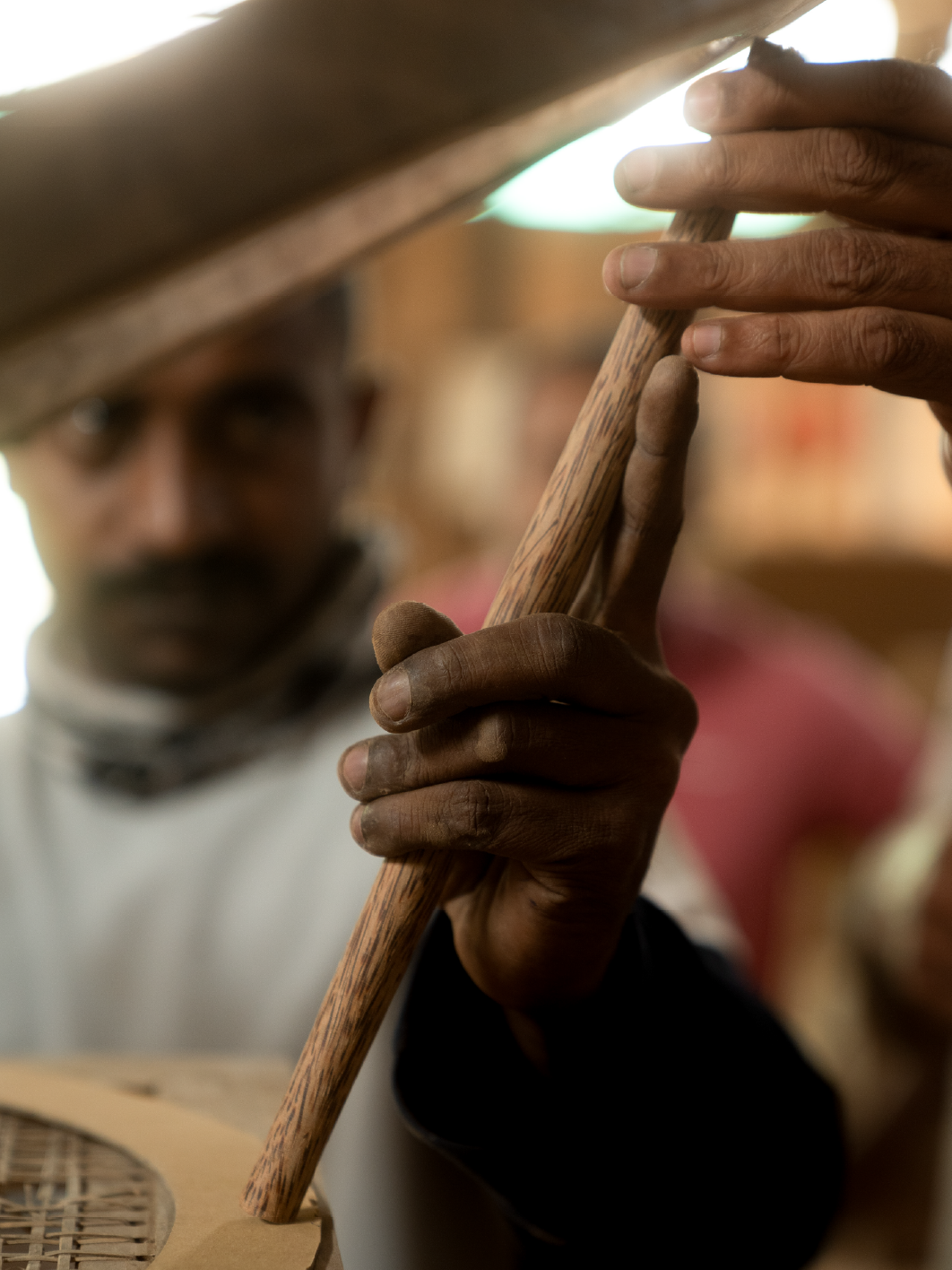
The workshop prioritises hand craftsmanship, with artisans shaping and assembling components through time-intensive processes
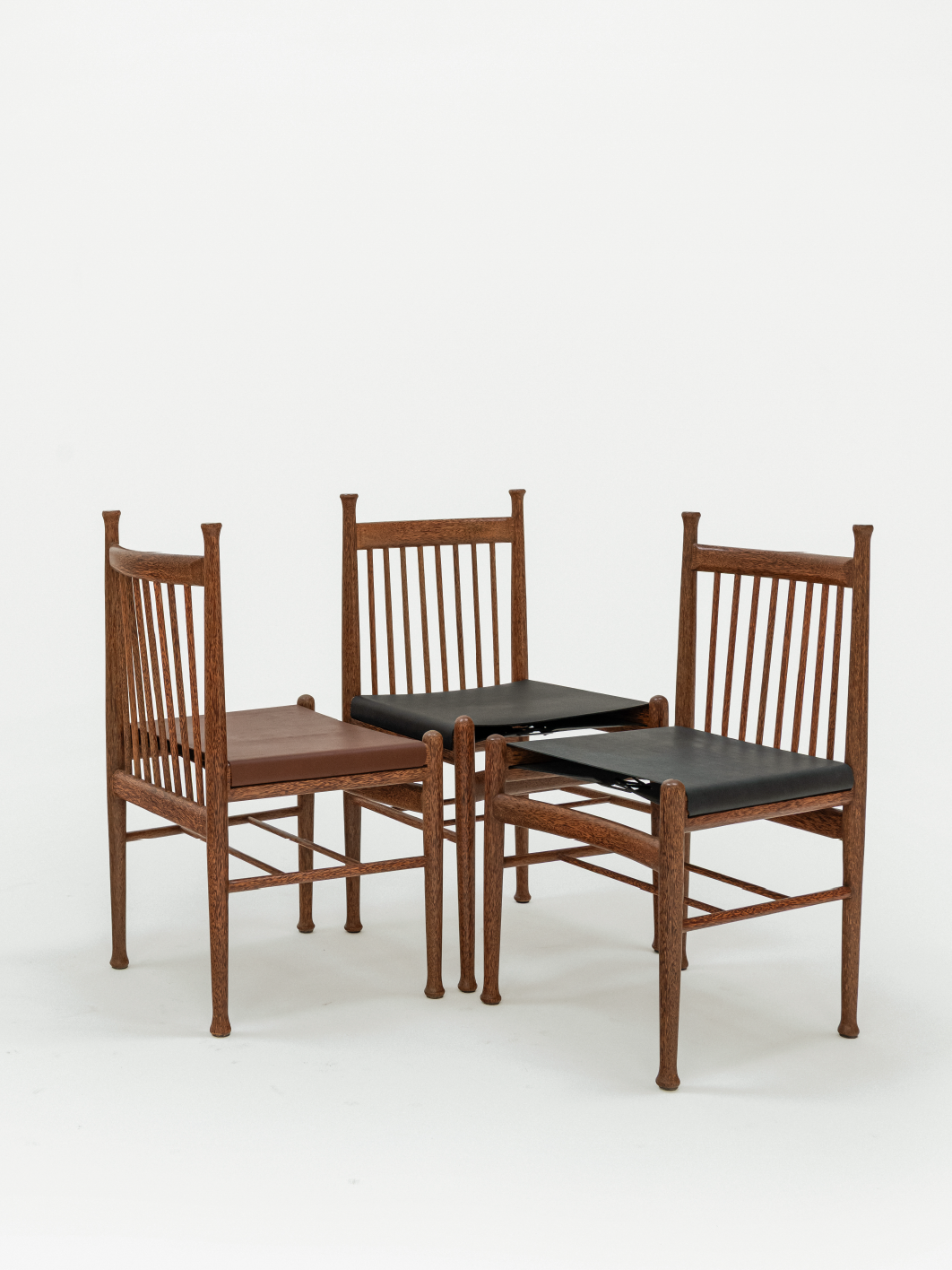
Defined by slender proportions and carefully resolved connections, the chairs celebrate the structural possibilities of timber
In a way, the slow pace of Magadi finds its place in Kaikale's philosophy. Rather than treating furniture as a product that needs to be manufactured as quickly as possible, Ajith approaches it as a process shaped by time, materials, craftsmanship and collaboration.
The carpenters Ajith works with all live within his farm’s premises in various housing units, “There's a whole ecosystem, it's quite peaceful. There's also a slowness to life so we can concentrate. We don’t have great cellular network, but it's a blessing,” he jokes.
The beauty of the practice lies largely in the material used. “I have never imported timber,” Ajith says with pride. The workshop uses timber from trees that are local to the South of India, specifically coconut, which is a non-forest timber. “Here, we call coconut trees Kalpavriksha because every single part of it is utilised; in the kitchen, in medicines, for beauty rituals, everything. It’s kind of a holy tree for us,” explains Ajith.
They use wood from coconut trees which have stopped bearing fruits and replace them with new saplings once they’re harvested. For teak, Kaikale sources it from the Forest Department’s auction. “The forest department collects trees of various species which have naturally fallen to the forest floor for a period of one-two years and then conducts an auction for people to bid, that’s where we buy our teak wood from,” says Ajith. Once the wood is procured, it is dried and treated before it can be used to make furniture.
The material dictated his decision on putting down roots in Magadi. The town’s arid climate helps with the natural seasoning and drying of wood which can often take longer in a tropical climate. Kaikale also does not mix woods from two different species of trees to make one piece. For instance, one dining chair is crafted out of one single trunk of a tree. “It's like between you and me, we are both different people. So two different trees can have a different character, different grains,” he says simply. Ajith turns to natural processes and materials to create his pieces. To timber, for the structure, rattan and Danish cords made from bamboo pulp for the back and seats, to silk and other natural threads for weaving, to fabrics like linen and cotton for upholstery and bee wax oil for polishing.
As far as product design is concerned, Ajith is aware of the limitations of what one can do singularly. While he has the architectural and design skills, furniture designing, as he says, “is a whole lifetime of work.” As a result, he collaborates with different designers from across the world. Any collaboration takes about two years of time - to exchange ideas, set processes, learn, come up with designs and create a collection.
For their current and first collection which mainly consists of different types of chairs — dining, desk, lounge and accent, table and modular sofa, Kaikale collaborated with Scandinavian furniture designer and architect Alexander Mihel. The impact of this east meets west collaboration became apparent when they exhibited at 03 Days of Design at Copenhagen, this fusion and the usage of teak wood and coconut timber and south Indian carpentry skills and finishes received much appreciation. Given the diverse cultural background and approach to woodworking, Ajith encouraged Alex to spend some time in Magadi to help him understand local craftsmanship and ecosystem, which then aided the design process, making the collaboration stronger.
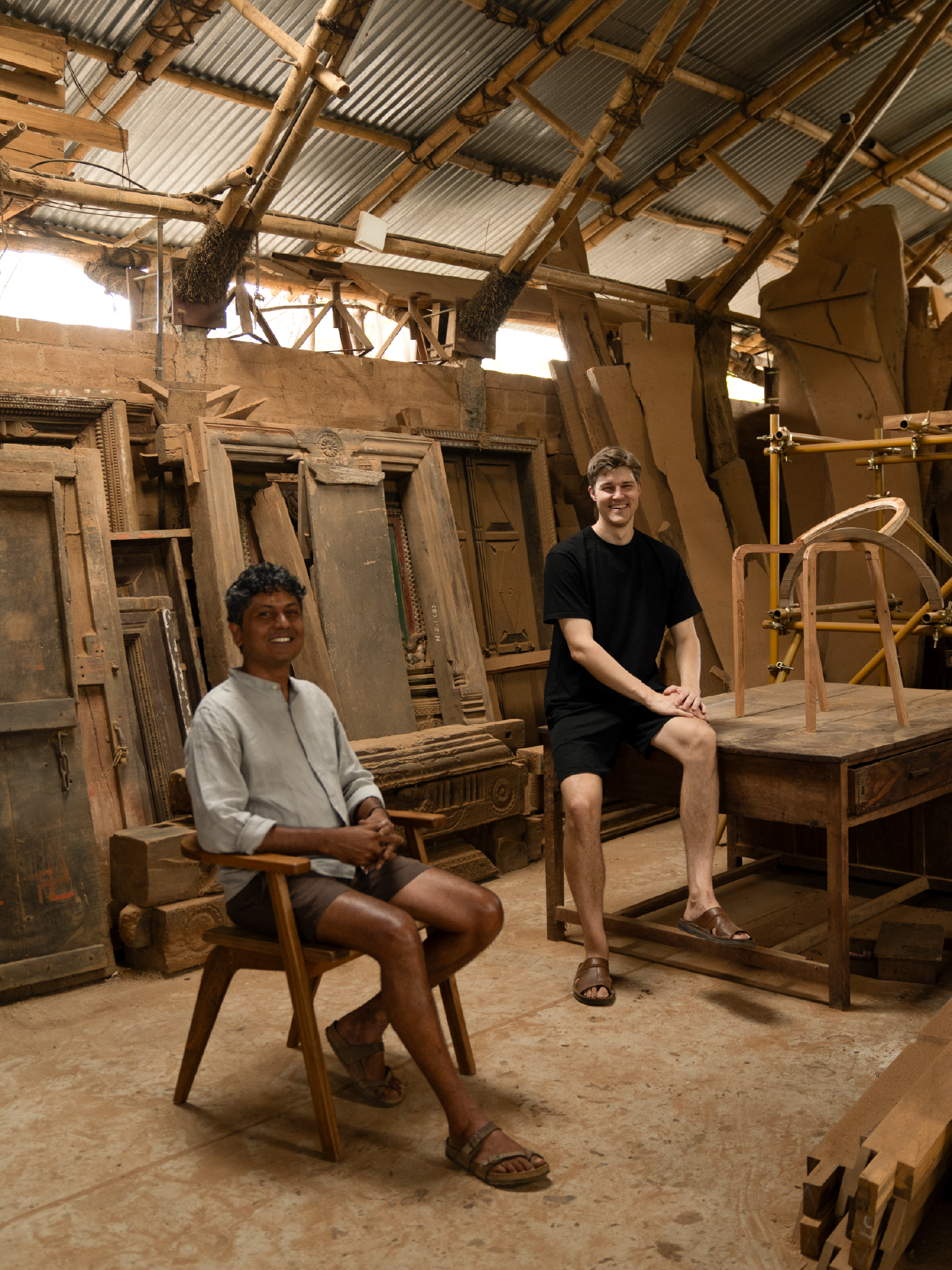
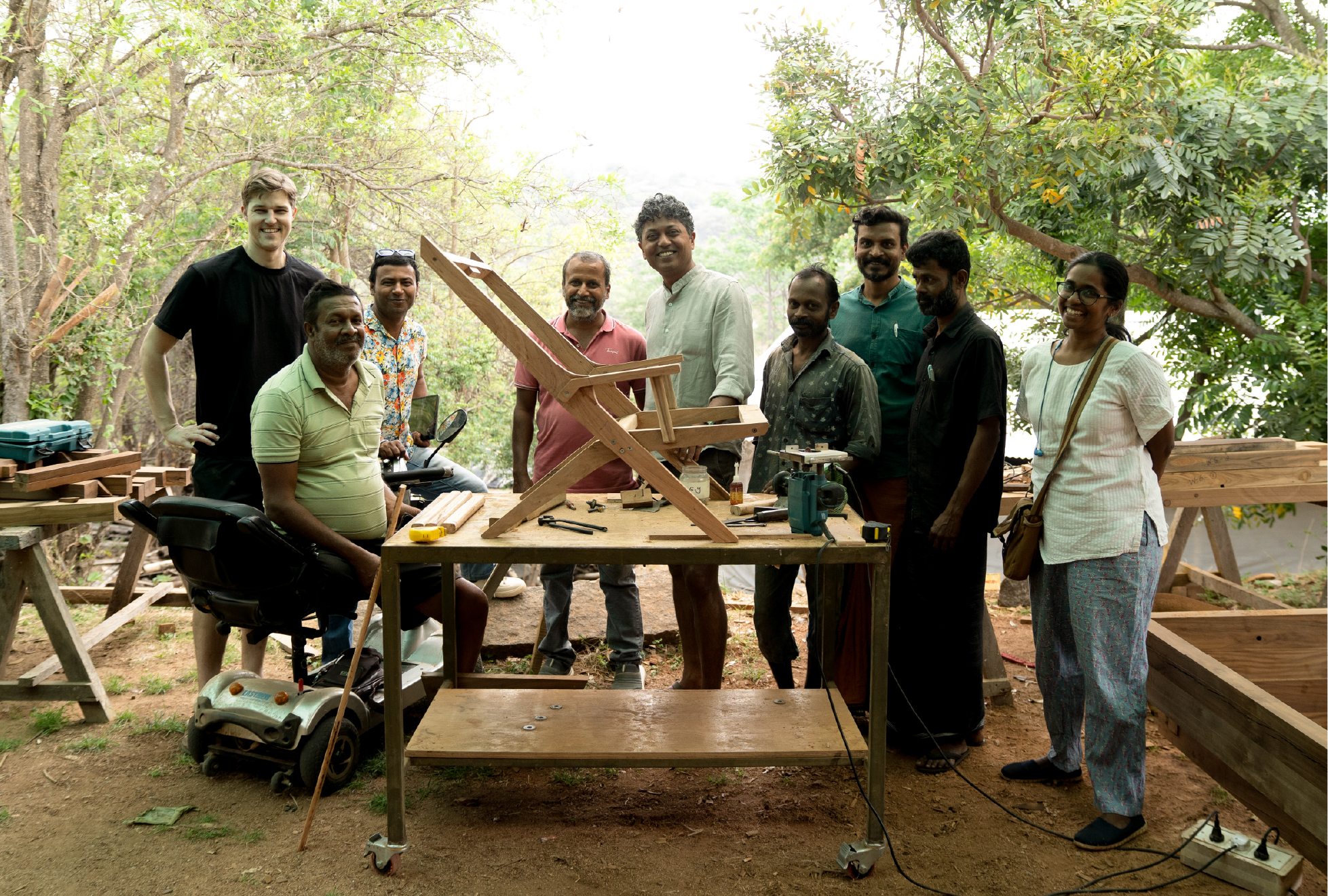
The people behind Kaikale The Magadi workshop brings together architect Ajith Andagere, designer Alexander Mihel and a close-knit team of artisans committed to hand-crafted furniture
At the heart of Kaikale are its artisans with the workshop highly focused on hand skills, the name Kaikale itself means made by hand in Kannada. You will find artisans across the floor, with timber firmly entrenched between their legs as they shape the piece by hand. Machines assist the process, but they do not lead it. Ajith explains that the carpenters in other parts of the world often specialise in one kind of building but in India, they often work on multiple projects that require different skills. Carpenters that build the roof also work on windows and doors, sometimes even making furniture pieces. “They may not always have the knowledge of proportions so that's where we as designers come in and build a prototype. I’ve worked with the same team for the last eight or nine years. They primarily make furniture, and over time we’ve also introduced different aspects of carpentry into the process—from joinery techniques and proportions to a deeper understanding of material thicknesses and their applications.”
This brings us to the core of Kaikale — the artisans and the craft they practice with their hands, techniques that are so ingrained in the way they work that a machine can never duplicate it. And it’s this art of making that Ajith wants reflected in his work. His intention isn’t to create pieces that simply look good and polished but to make furniture that has meaning, can be multi-functional and more importantly reflects the skill and material story of the region where it is made. In a time when everything is mass produced and instant gratification is the way of life, Kaikale is taking the opposite direction to reclaim the slow pace of life to prove that beautiful things and especially art always take time but at the end, it’s worth it.