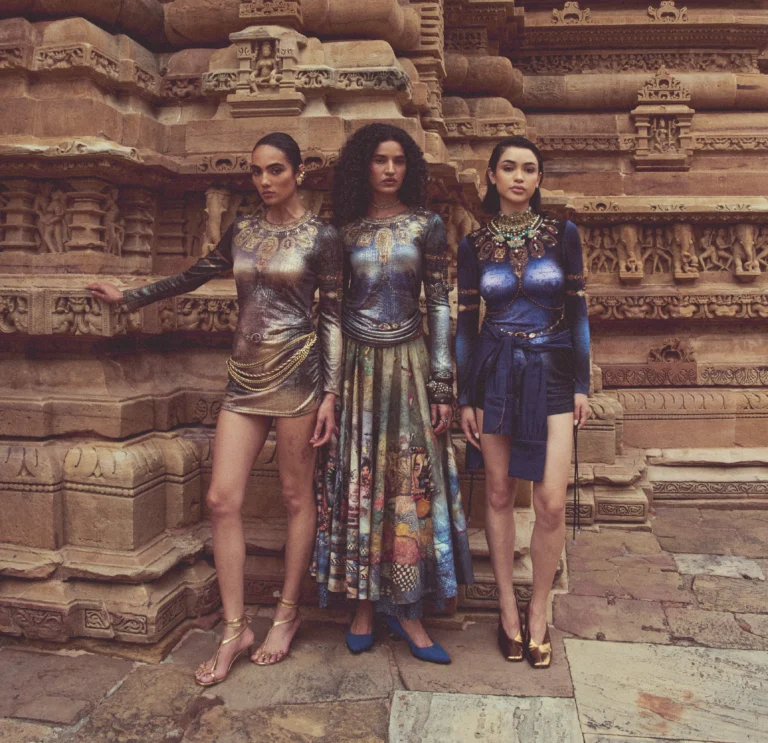
Inside an old Kochi home, under rays of golden sunlight, a muscular female bodybuilder strikes a powerful pose. Draped around her shoulders, unmistakably, a Banarasi. The image has nothing to do with the saree’s usual vocabulary of stillness and occasion. But for Tilfi—a Varanasi-based label built on five decades of family weaving history—it is a fitting summary of their approach to craft since they began: inherit the craft language, then ask what else it can say.
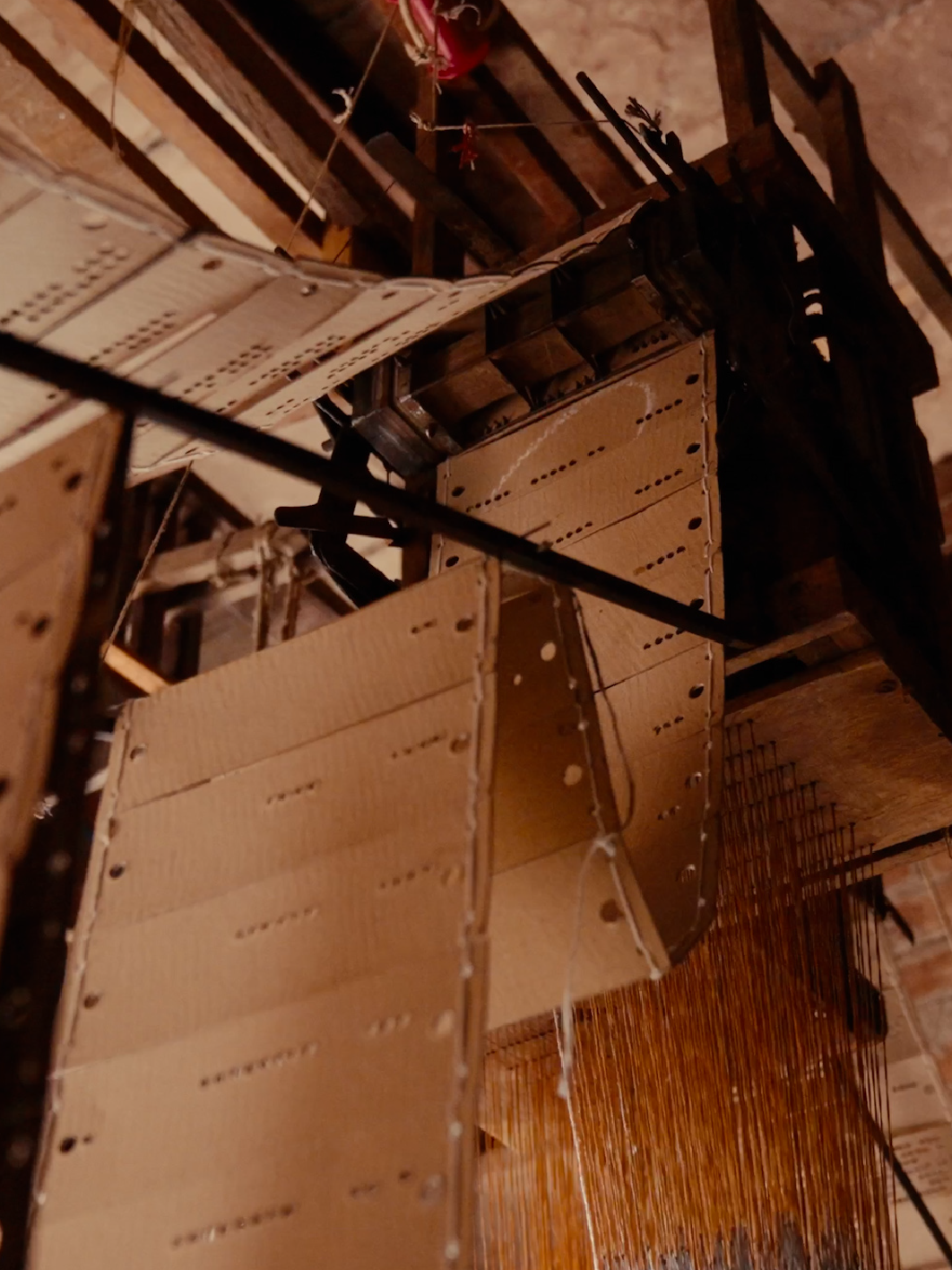
The brand is built on purity of material, primacy of the hand, and an unmovable devotion to Banaras.
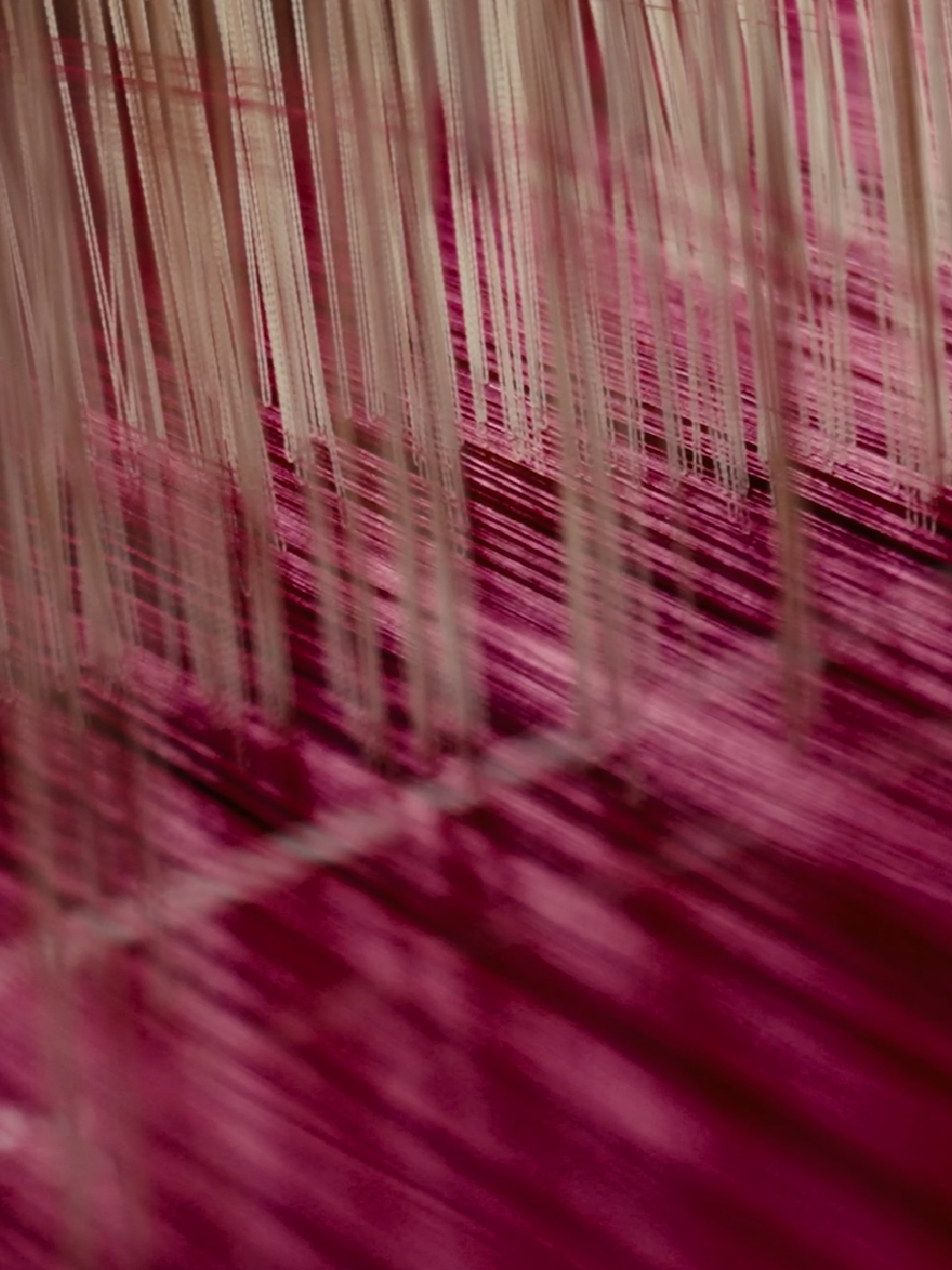
The idea is to perfect the technique to the point where it can extend into newer form of expressions.
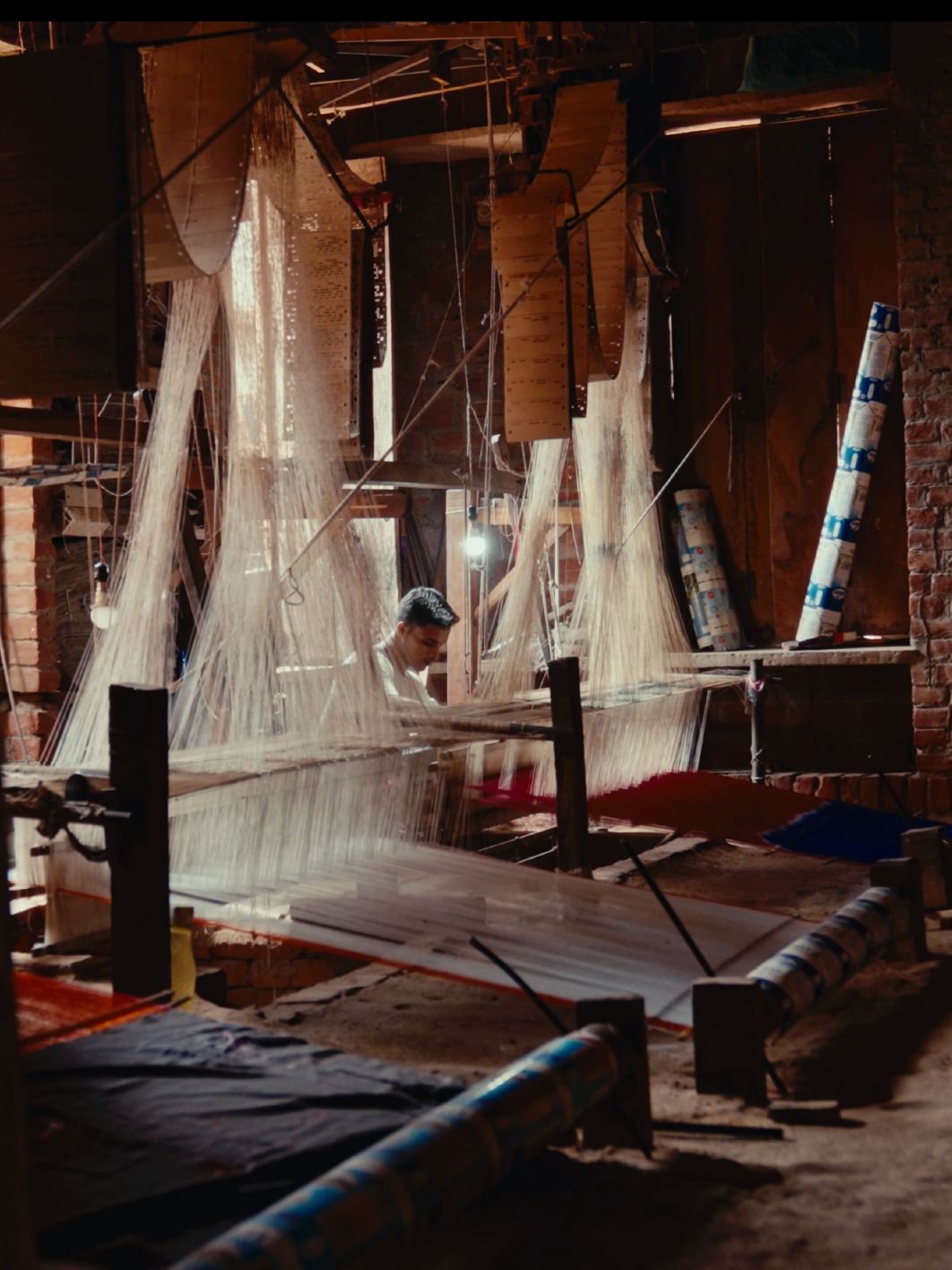
At Tilfi, the dyers, the loom-setters, the finishers are all considered as co-authors of a textile than just hired hands.
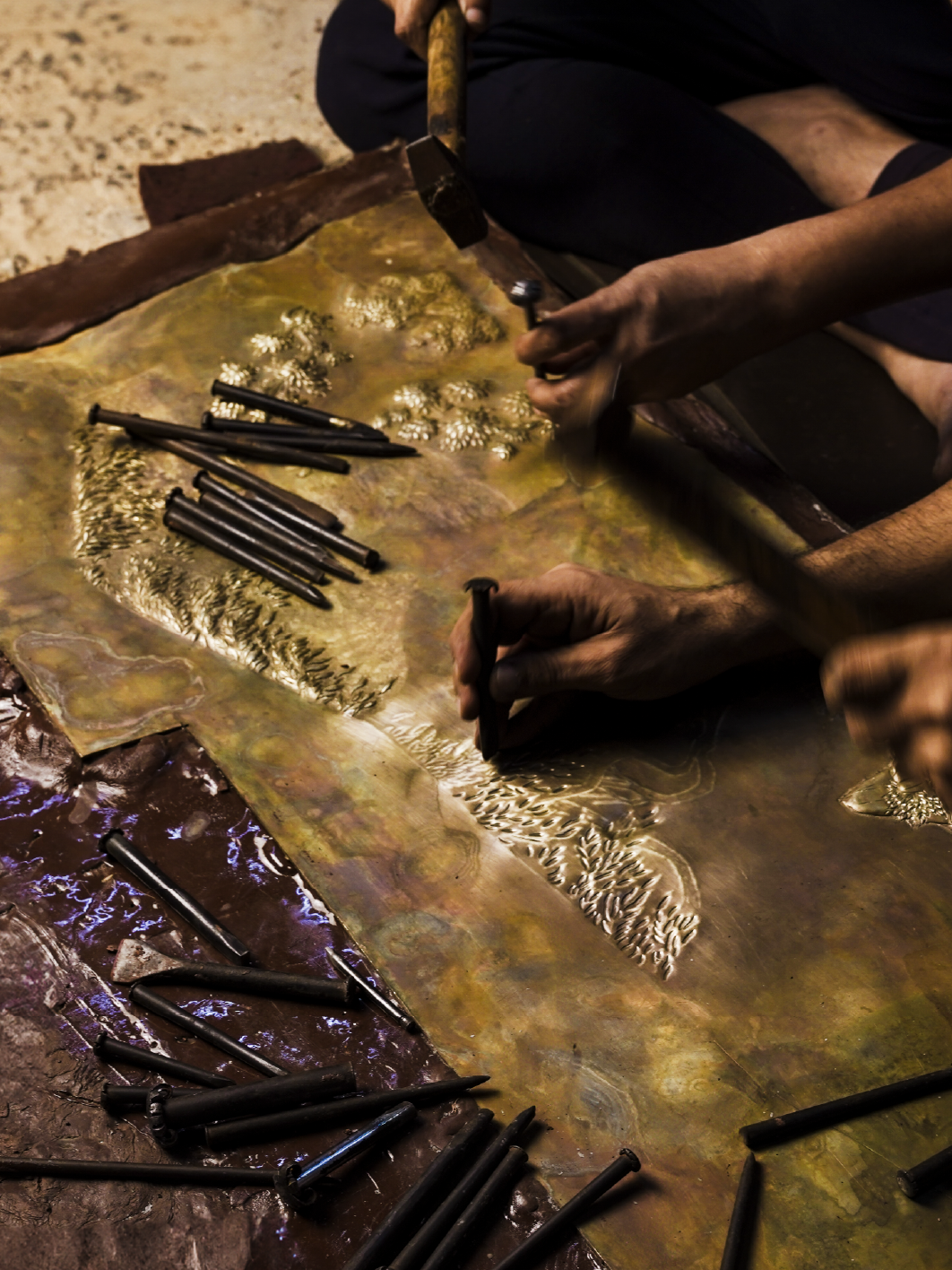
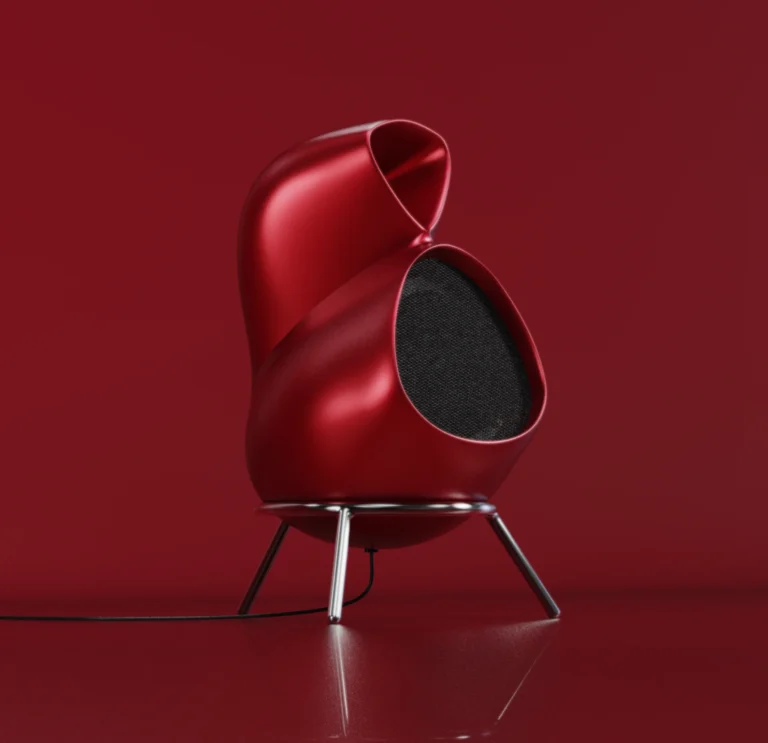
Tilfi recently found its way into Banaras’s repoussé, a metalworking technique that feels like an extension of the brand's same creative language.
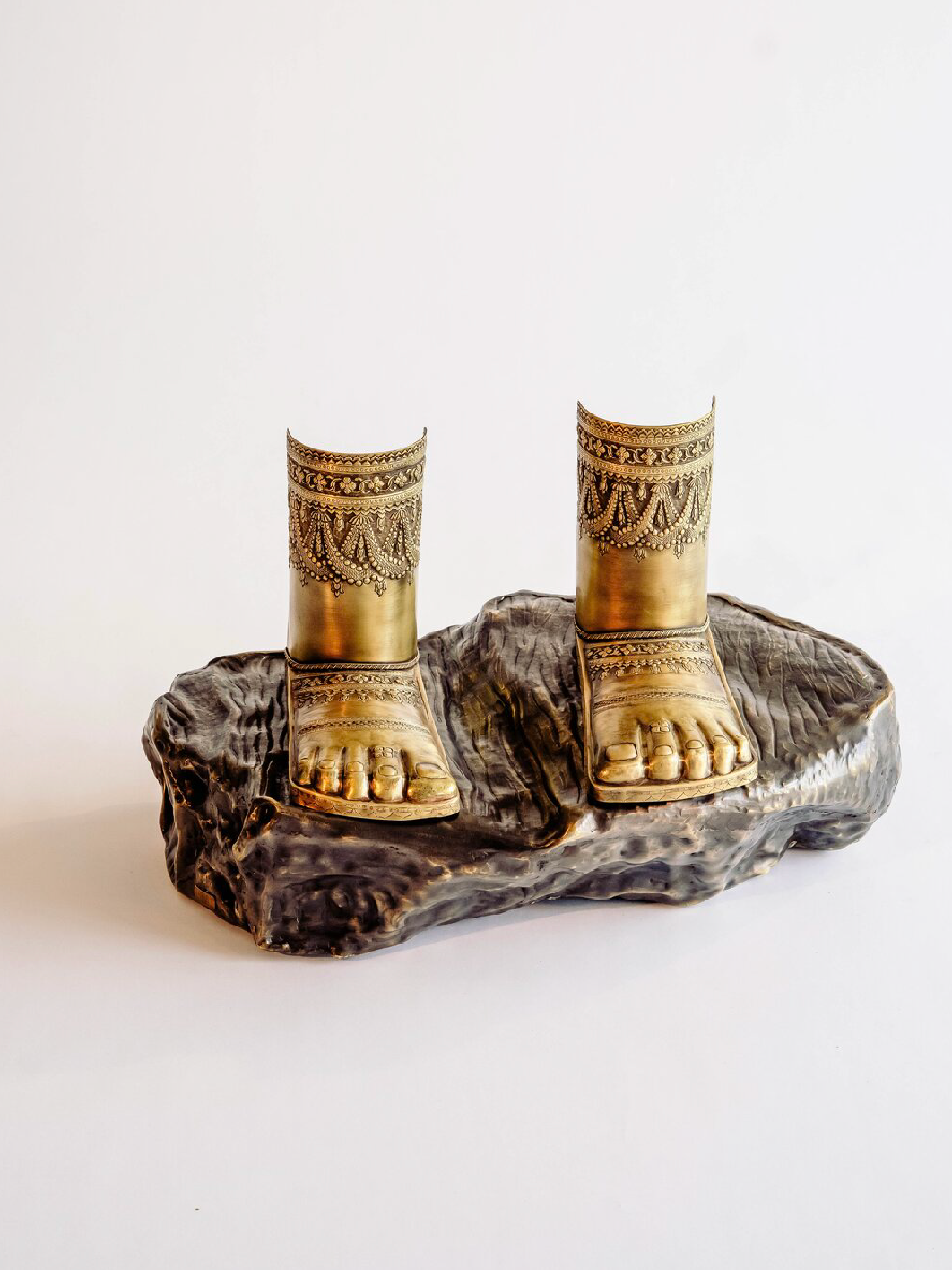
Charan: Between Two Flows is a detailed reimagination of feet in brass: Photograph courtesy: Tilfi for Sikao
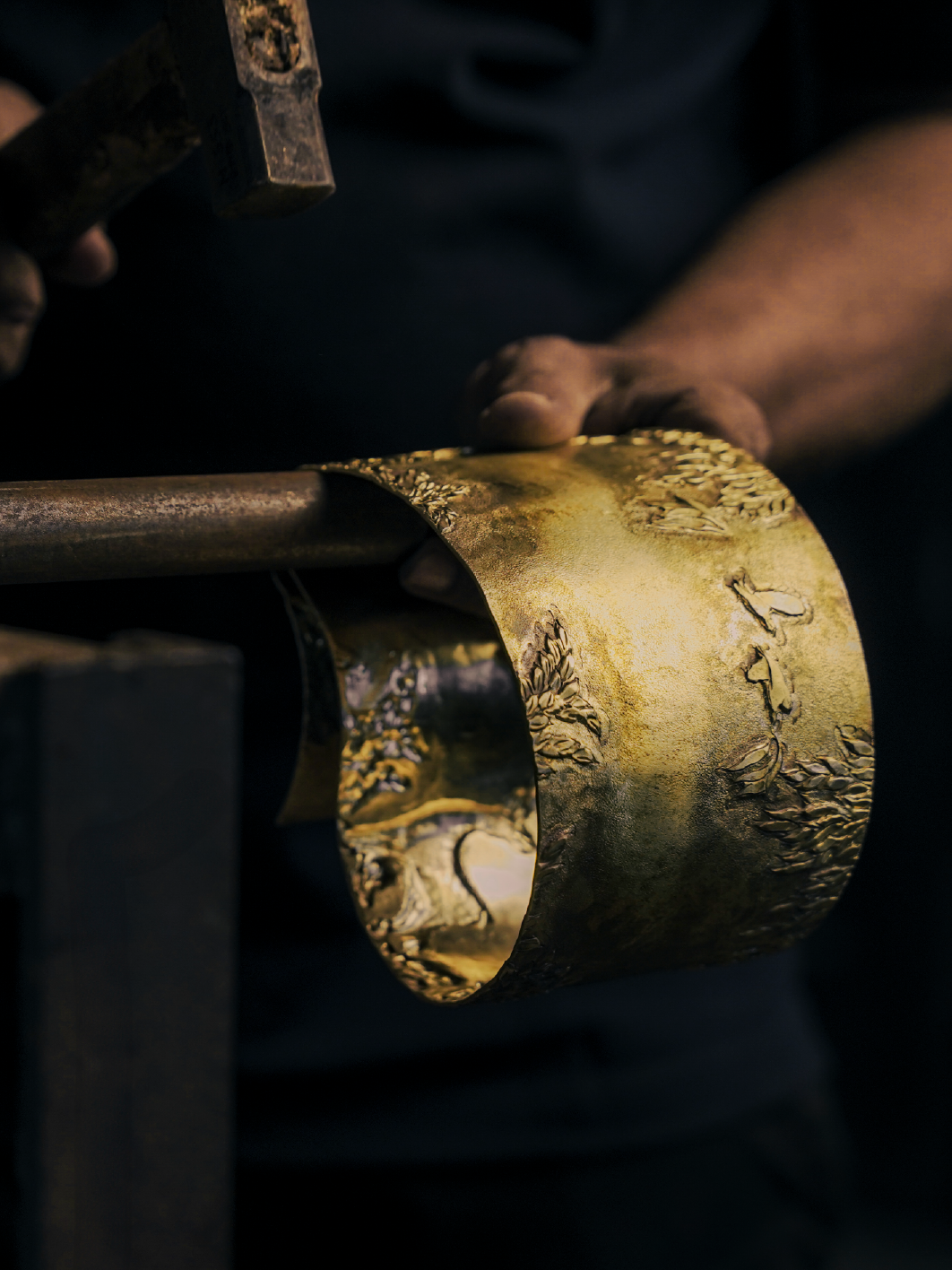
Using rhythm, pattern and surface, repoussé brings folds, movement and softness in an inherently rigid material.
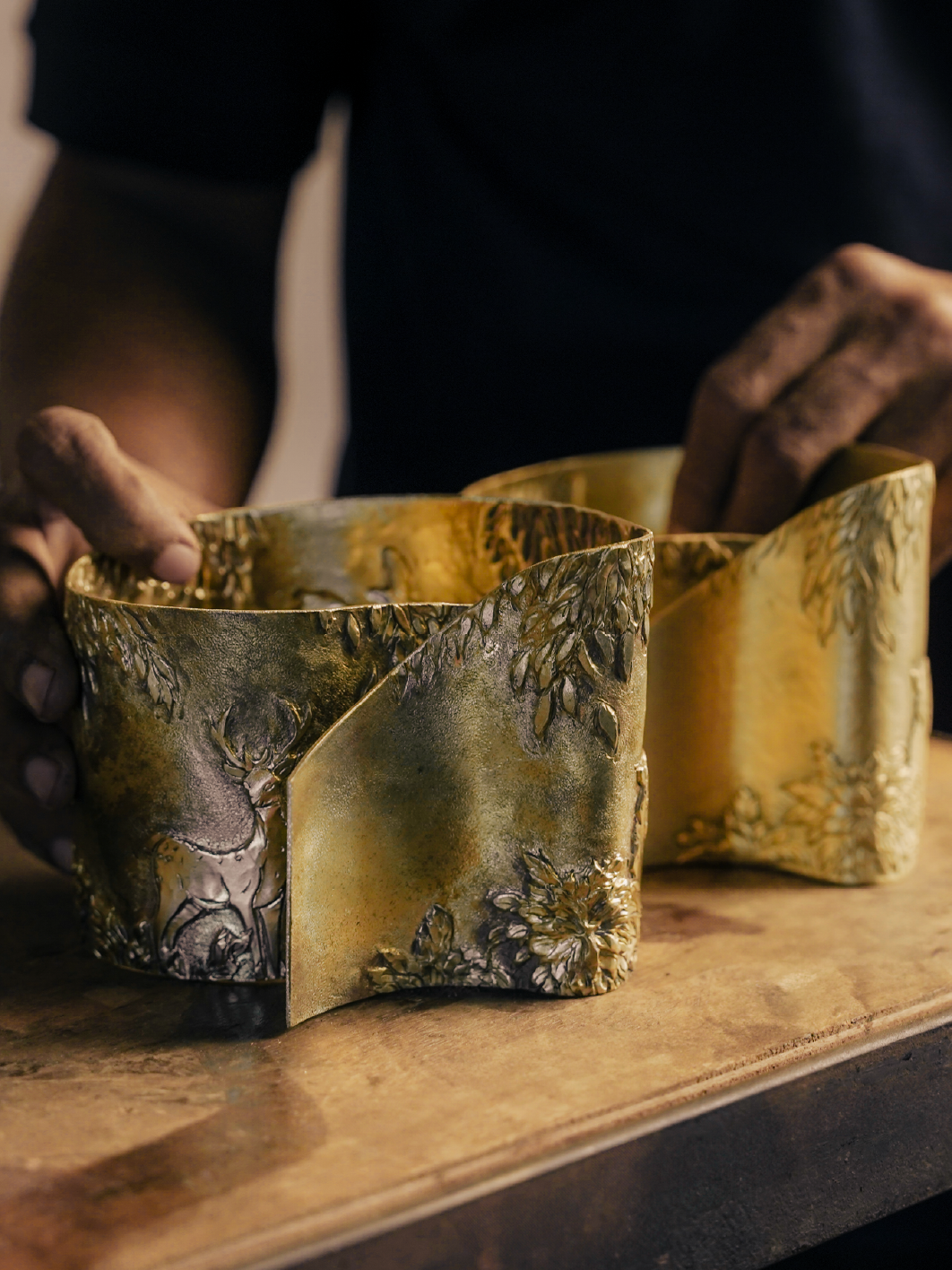
The repoussé art is a thoughtful tribute to a city where craft, culture, and history are deeply intertwined.
Tilfi’s story begins two generations before Varanasi with the Khanna family. The house still invokes the name of its patriarch Bashimal Khanna, who built a life trading fine textiles across Lahore and Amritsar and is remembered for a career built on integrity and discernment. When the Partition in 1947 dismantled this world overnight, the family fled with only what could be carried by hand. Bashimal’s son, Dwarka Das Khanna, rebuilt the trade from nothing, moving from Srinagar to Mumbai before settling, in the 1960s, in Varanasi—a city whose loom finally matched the family’s own exactitude. It was the next generation, under Rajan Khanna, that widened the business into block-printed and screen-printed textiles, supplying leading retailers across India and abroad, even as the family's original wholesale handloom operation continued to run out of Varanasi.
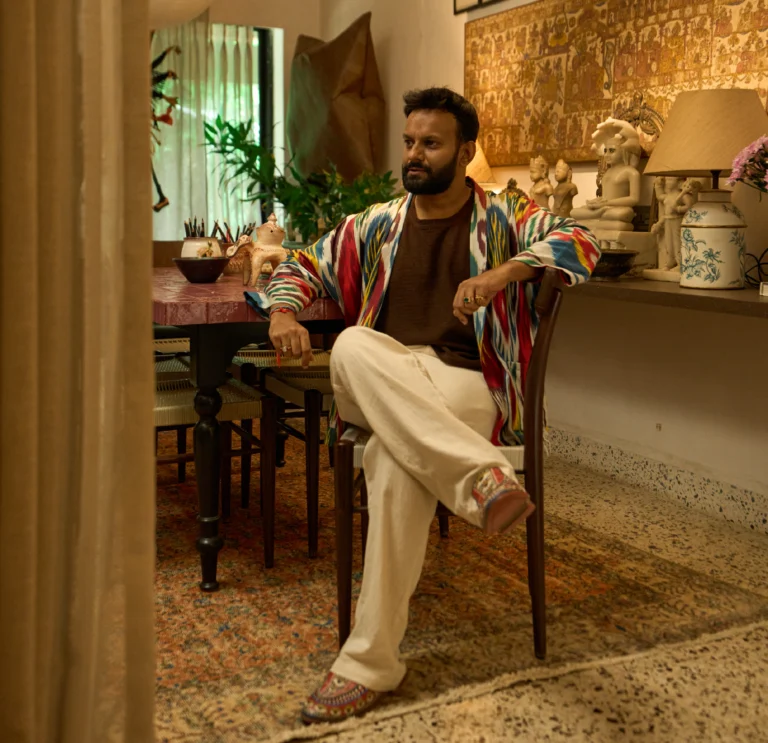
That wholesale business was still active when the fourth generation inherited the Khanna name in textiles. Based in UK and entrenched in the world of finance at the time, Udit Khanna and his wife Aditi Chand had no intention of returning to the family trade. Their route back to Varanasi was spurred by a single question, put to them plainly by one of the family’s own weavers, mid-conversation about his son’s future: “aap aapka hunnar chhod sakte ho—mere bete ne bhi chhod diya.” (You can leave your skills, my son has also left it) The words offered no argument, only a mirror—and alongside Udit’s brother Ujjwal, Tilfi was conceived in the silence that followed. Tilfi was no longer simply a continuation of the old wholesale operation—which had always worked several steps removed from the people who eventually wore the cloth—but a new house entirely that could speak directly to its customer.
The name Tilfi draws from the loom—a Banarasi weaving technique in which three coloured yarns run without a single break, a fitting emblem for the three convictions the house was built on: purity of material, primacy of the hand, and an unmovable devotion to Banaras. While the old trade had removed the artisans from both customer and credit, Tilfi restructured the risk itself.
Today, a decade after its launch, the house works with over two thousand artisans across Varanasi—not seasonally or collection to collection, but in continuous engagement—while absorbing the cost of every failed sample and stalled experiment in the house's own books. A weaver here isn't merely paid for finished textile; he is freed, for perhaps the first time, to develop his craft, and attempt what once felt too expensive to consider. Tilfi extends that same regard outward—to the graphers who translate a design into technical blueprint, the dyers, the loom-setters, the finishers—treating each as co-author of a textile rather than hired hand along its way.
In these settings, the loom came alive. It imagined possibilities that once seemed out of reach: silk meeting cashmere within a single Banarasi weave, jamdani reconsidered through the geometric cut-paper language of Mathura's sanjhi craft, an entire Ranthambore-inspired collection turning the forest's least-photographed residents—snow leopards, resting cats, a fort once built for royal hunts—into border and motif. Nothing here is called ‘modernisation’, a word the house resists on principle. The preferred term is simply growth—to reach an understanding of a technique so complete that extending it becomes inevitable. It protects more than the craft’s appearance,preserving the intelligence and integrity of the process, and the depth of accumulated knowledge behind it.
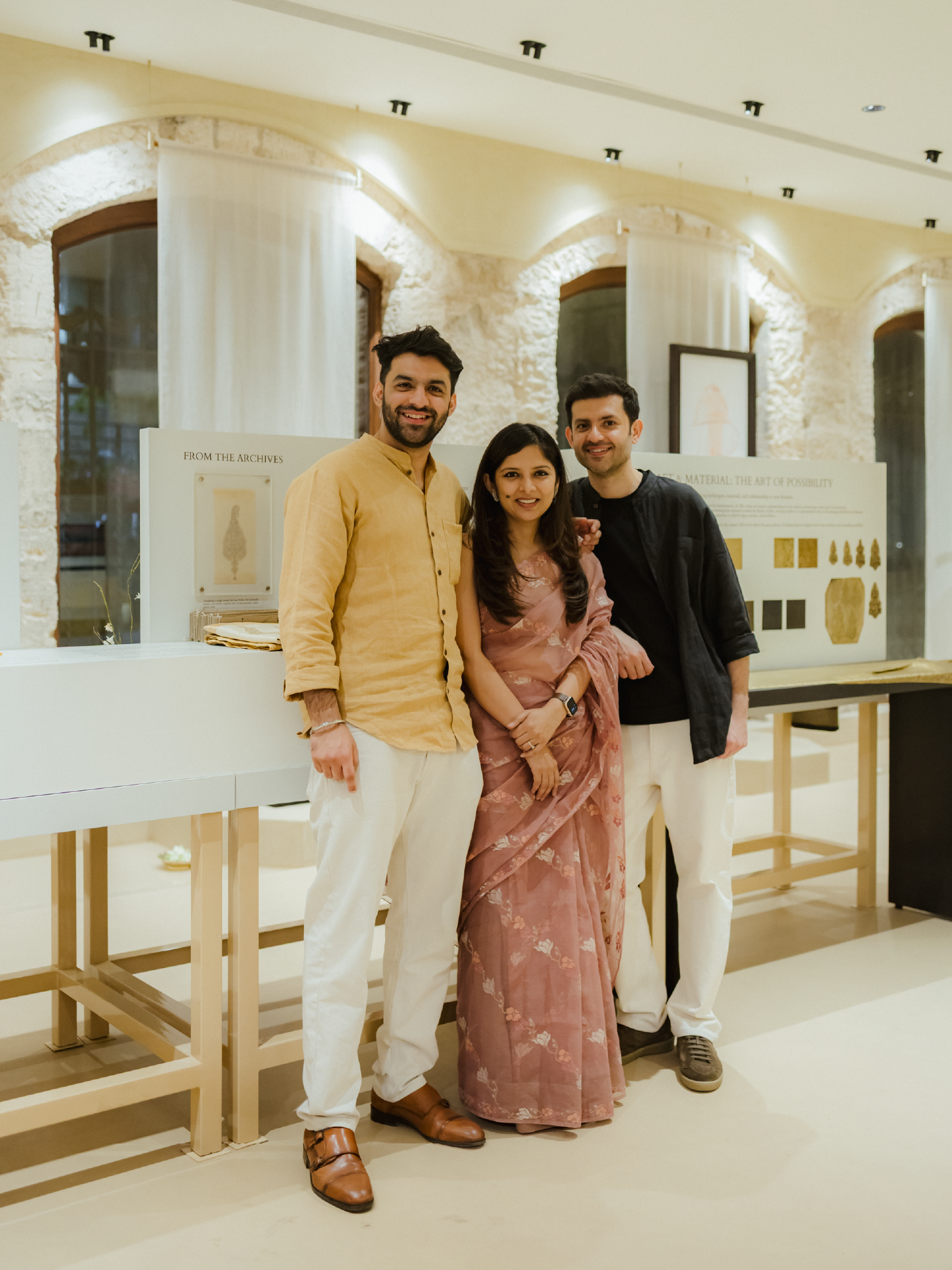
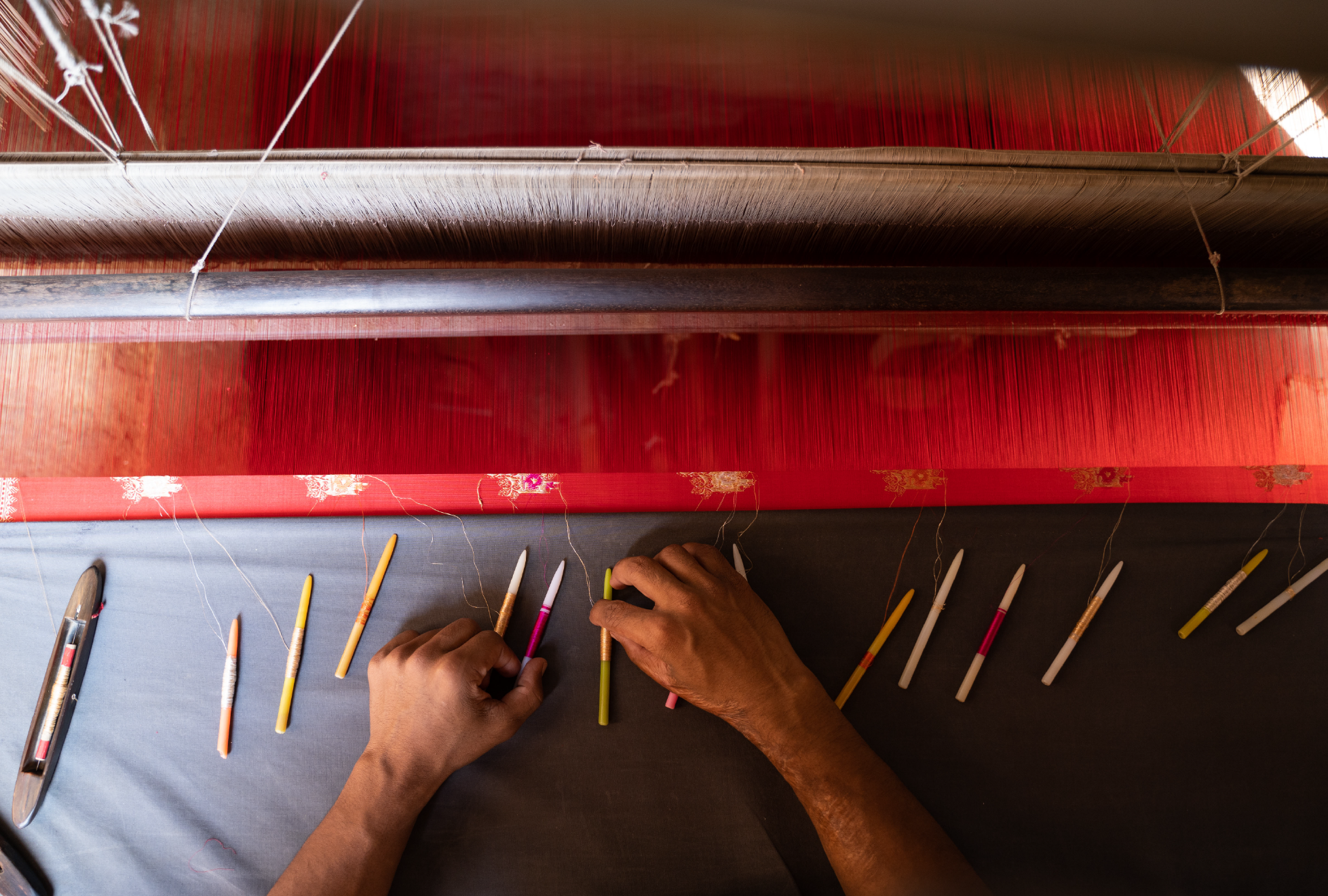
A tale of three yarns The name Tilfi draws from the loom—a Banarasi weaving technique in which three coloured yarns run without a single break.
Tilfi recently found its way into Banaras’s repoussé (a metalworking technique) tradition. "Repoussé did not feel like a move away from textiles so much as an extension of the same creative language," says Udit. "Both are slow, exacting and shaped by the intelligence of the hand. We often approach metal almost as though it were fabric—using rhythm, pattern and surface to create folds, movement and softness in an inherently rigid material." It began as objects and furniture, bearing the same hand-led sensibility as the sarees. This year, it folded back toward the body—wearable pieces suspended between clothing and sculpture. It is craft moving from body to space, and back to body—a singular grammar discovering new vocabularies.
It was this vocabulary that carried the house of Tilfi towards Kerala, and photographer Keerthana Kunnath’s ongoing documentary work with female bodybuilders—women of discipline who had spent years building strength no one applauded immediately. "Each body and each textile, in their own way, becomes a record of sustained effort," Aditi reflects, "carrying within it a history of devotion that rarely announces itself." A devotion quite identical to that of a weaver's, and much like the seven decades of accumulated skill that folds invisibly into every inch of silk Tilfi sends out into the world.
The saree, in Tilfi's telling, has always carried more range than it's given credit for—strength and softness were never really opposed, only kept apart by habit. What the house is protecting, across silk and brass alike, is not a fixed idea of what Banarasi craft should look like, but the intelligence embedded in how it's made. Lose that, Ujjwal says, and "we would lose the proof that collective, mindful, accumulative creation is still possible." For seven decades and counting, Tilfi insists it is.