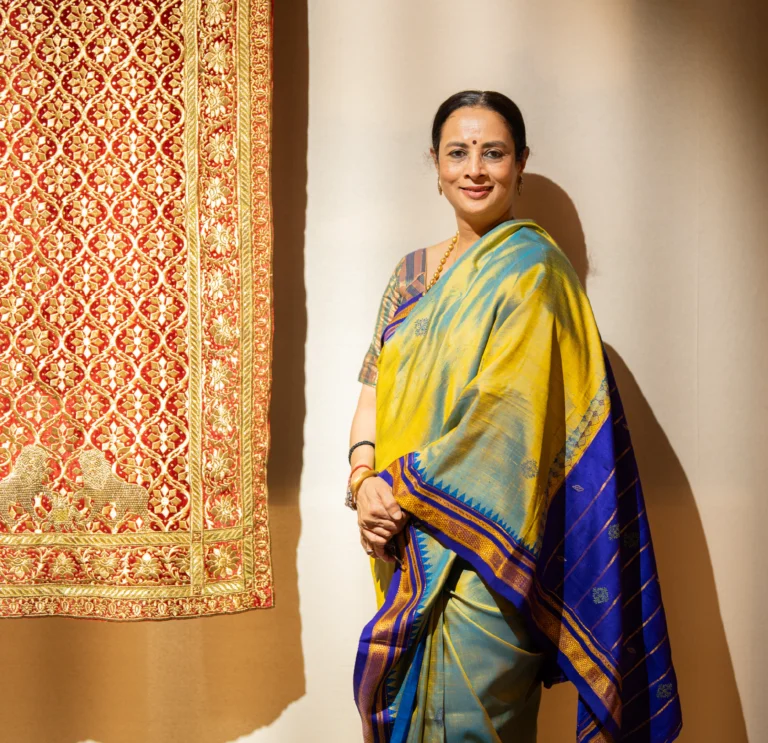
The earthy scent from the first rains, petrichor, they say. The lingering fragrance of tuberoses on a full moon night. The herbiness of freshly cut grass. The deliciousness of fresh bread baking in the oven. Fragrance is almost always equal parts nostalgia and memory. And lucky is one to be a part of this constant sepia-tone world, I thought, as I spoke to Krati Tandon, co-founder of Boond Fragrances. She grew up in Kannauj — the perfume capital of India, and my mind instantly dreamt images of lingering afternoons in courtyards blooming with jasmine, steam rising from deg bhapkas, fresh roses arriving by the sackful. But it turns out, for Krati, none of it felt remarkable at the time. “When you grow up in Kannauj, you just kind of assume everyone is a perfumer and it's not a big deal. Then you step out of your little pond and realise that the world is very big and where you're from, the craft is very unique. The more I stayed out, the more I travelled, the more I realised how special the craft was,” she says.
But that realisation also came with an uncomfortable truth. The craft she had taken for granted was slowly disappearing. Boond Fragrances was never meant to be a business. Long before the idea took shape, Krati and her brother Varun, who is also a co-founder at Boond, had a creatively ambitious retirement plan — to make a documentary on the perfume industry of Kannauj. What was conceived as a plan for when they would be 60, was pulled up by a few decades due to the COVID-19 pandemic. Returning home during the pandemic years, the siblings found the craft dying due to the popularity of alcohol-based perfumes and influx of international brands. Many artisans were abandoning the trade altogether in search of more sustainable livelihoods. “We realised that by the time we retire, this craft won't be alive.”
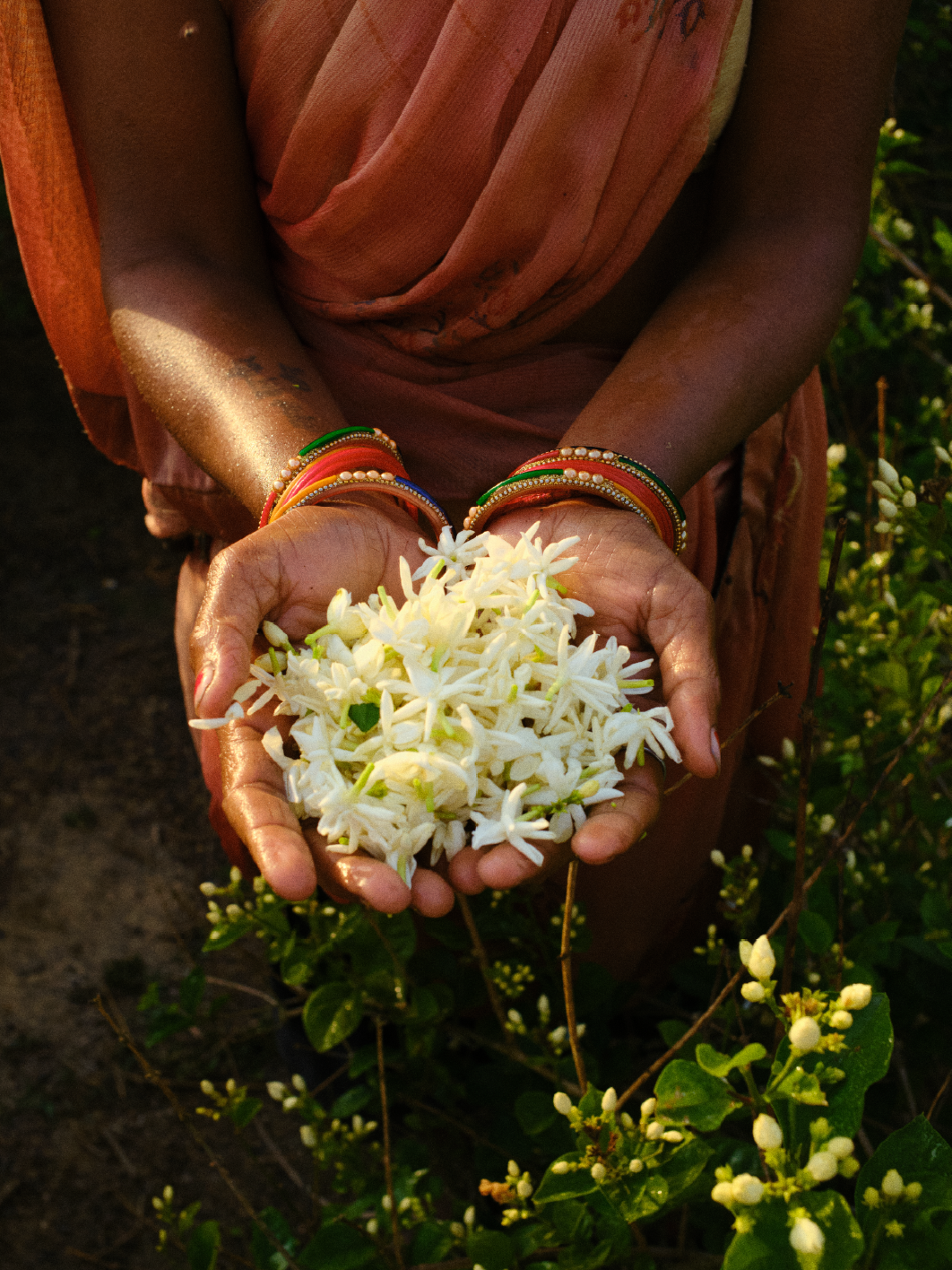
A handful of fresh beautiful Jasmine flowers used to make the Motiya attar. Photography by Stawb Bose Sarkar
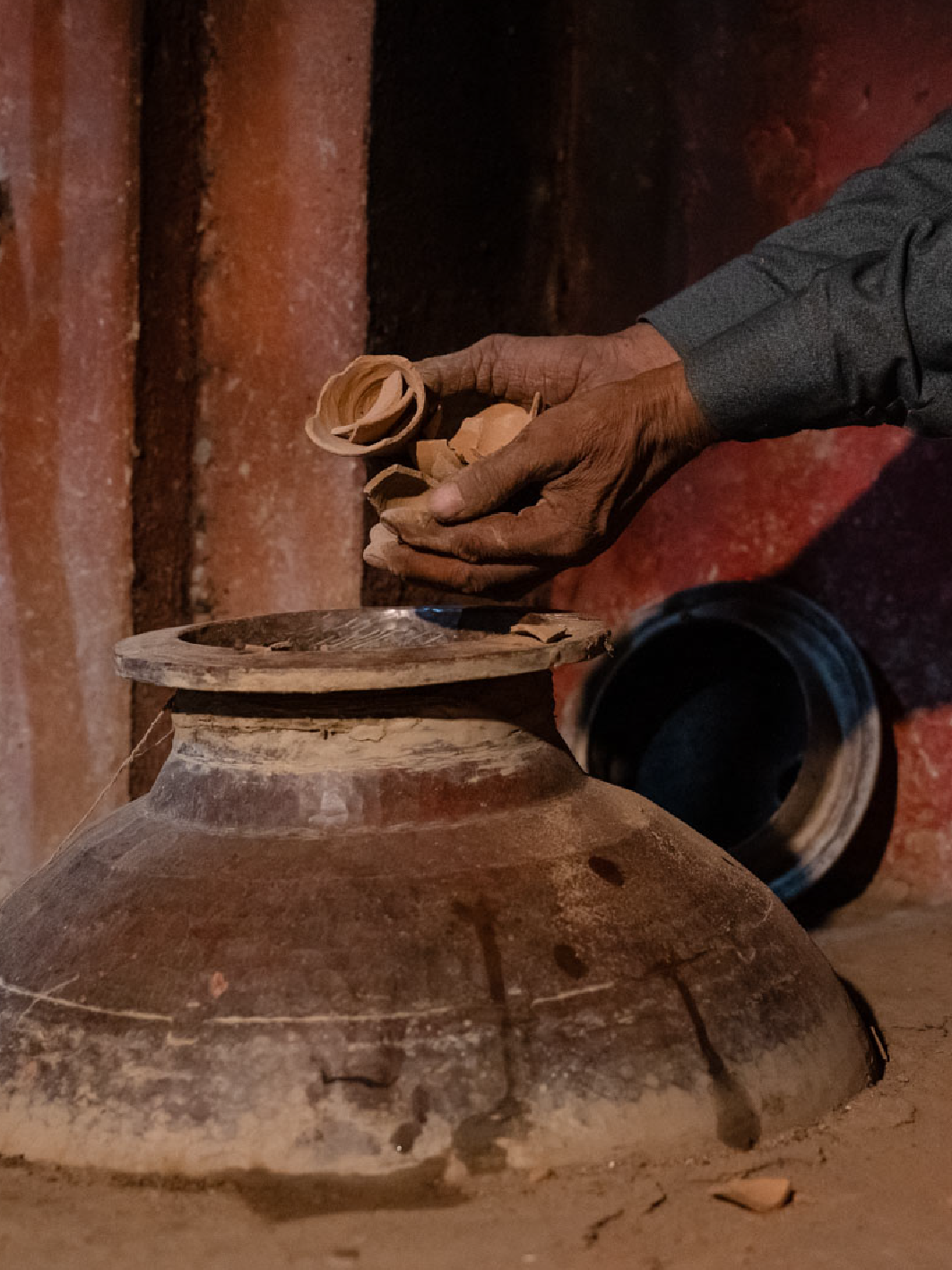
Adding clay pots to the deg, a part of the process of crafting the Maati attar. Photographs courtesy Boond Fragrances
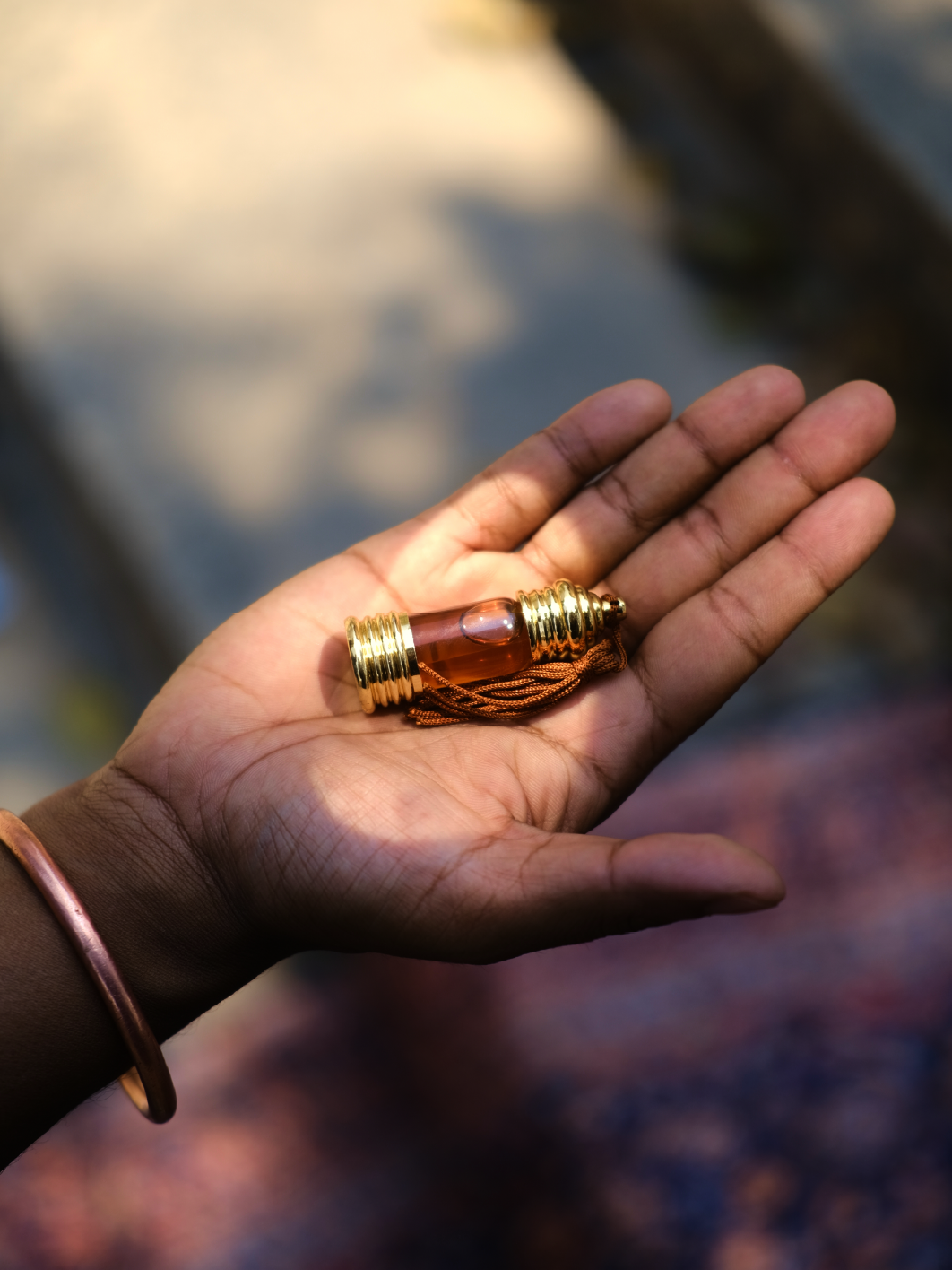
Boond was conceived as a multisensory experience starting with the perfume oil and ending at the packaging. Photography by Stawb Bose Sarkar
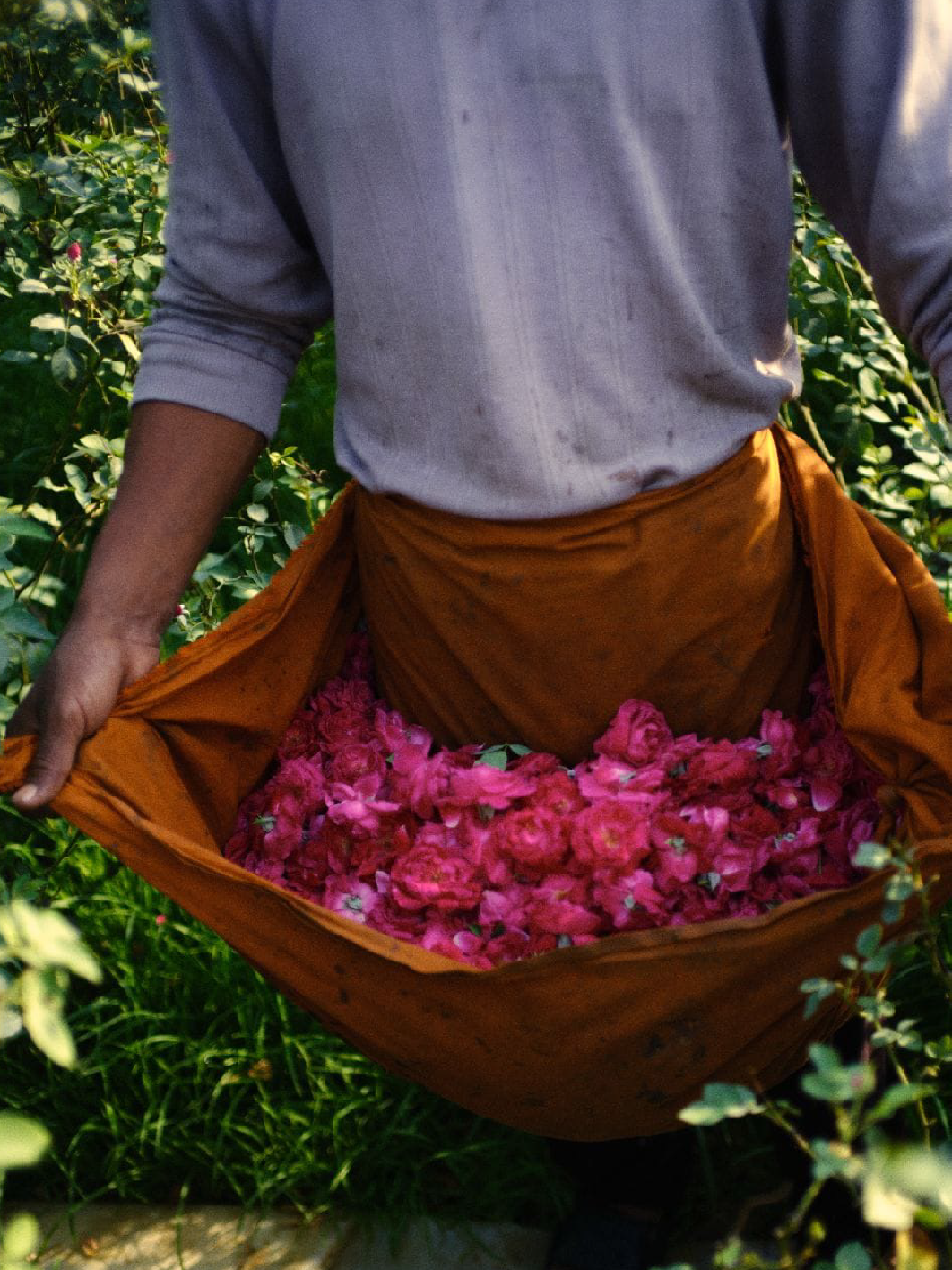
In process of collecting the pink Indian rose used to make Gulabi. Photography by Stawb Bose Sarkar
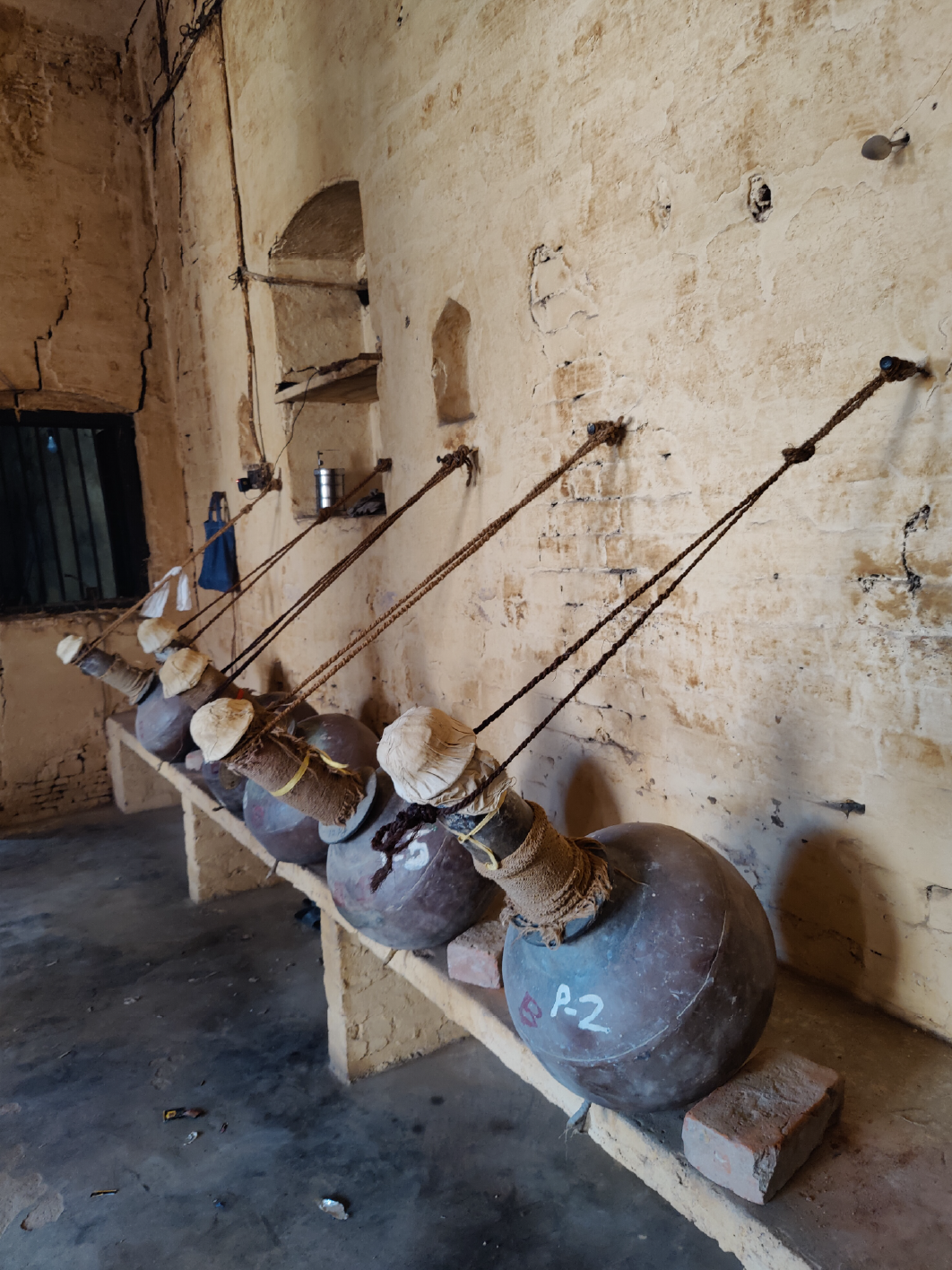
The traditional deg which is filled with ingredeints for distillation. Photographs courtesy Boond Fragrances
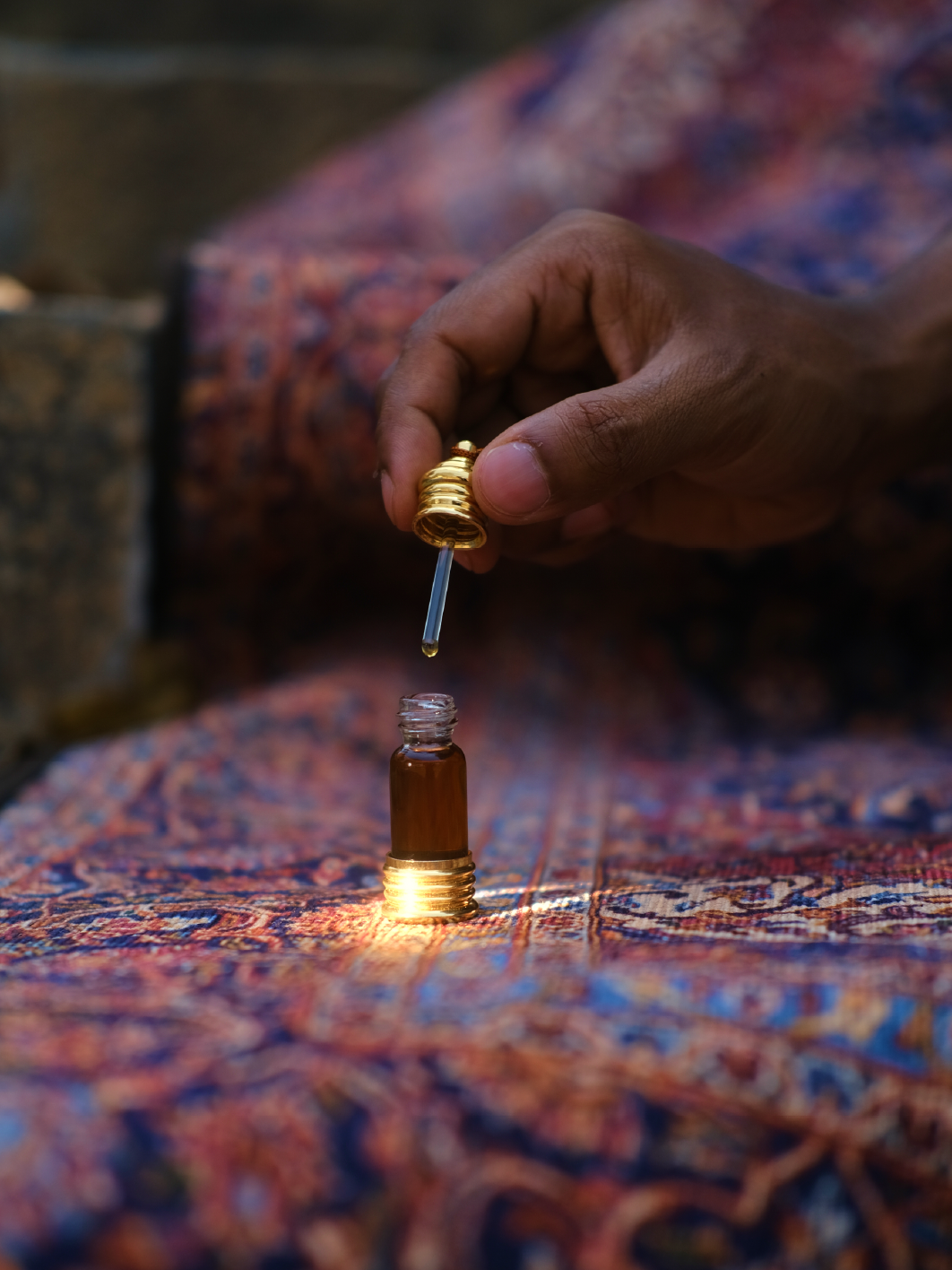
A traditional bottle of attar made with a combination of oils. Photography by Stawb Bose Sarkar
Krati and Varun both had independent careers outside of Kannauj, starting a business from their home town was nowhere on their radar. Plus Krati wasn’t even based in India at that point. All they wanted to do was create a few documentary style videos to capture the perfume industry. Having lived in Kannauj for generations, the Tandons had indirectly dabbled in the perfume making business with their father, Pravin Tandon, a perfume hobbyist pursuing this for over three decades. When Krati and Varun set out to tell their story, he too came on board. Together, they were able to craft a small batch of Maati, their now best-selling perfume with woody and earthy notes that captures the scent of petrichor. Since this is one of the traditional, signature fragrances native to Kannauj, Boond chose this route for their first ever drop. “It felt like the best demonstration of the beauty of the craft that we’re championing, the deg bhapka method,” shares Krati.
The deg bhapka method through which the final perfume is bottled is a long labour of love. Every fragrance starts with ingredients sourced directly from farmers—flowers, spices, woods and even mud. These are placed inside a traditional copper vessel known as a deg, which is heated over fire. As the ingredients distil, fragrant steam travels through a pipe called a chonga into another vessel known as a bhapka, which is already filled with a small amount of oil. As the steam condenses, it infuses the oil with the fragrance. The process has remained largely unchanged for centuries.
What makes it remarkable though is not just the vessels but the artisans operating it. The distillation is a long process which could take hours, days or months depending on ingredients and fragrance and the fire needs to be monitored, something the artisans do manually through instinct and experience. "They are able to tell the temperature of the water and if the fire is too low or too high just by intuition or sight," says Krati. "That's how they've been trained. And that's the craft, right?" she says. "That's why not everybody can be an artisan. This is why it's a travesty when seasoned artisans transition to other jobs because the craft loses a master."
What makes Boond truly unique though is their distinct perfume philosophy of advocating natural ingredients and biodiversity of the land they come from. Be it jasmine, saptaparni flowers, Maati and Tabaq (tobacco), Boond’s focus is to capture Indian fragrances that are so closely tied to our memories that these bottles become not just perfumes, but, transporters to a moment in time — a summer visit to your grandmother’s house, a sunset that lives in your memory or simply the smell of chandan on a Diwali morning. The duo borrow from their lived experience for the fragrance story. Rajnignadha, for instance, is their mother’s favourite “It’s a very tough fragrance profile and took us years to crack,” Krati quips. The Satparni was Pravin’s choice. The sweet and intense smell of the saptaparni tree he crossed on his evening walks in Kannauj inspired him to bottle it.
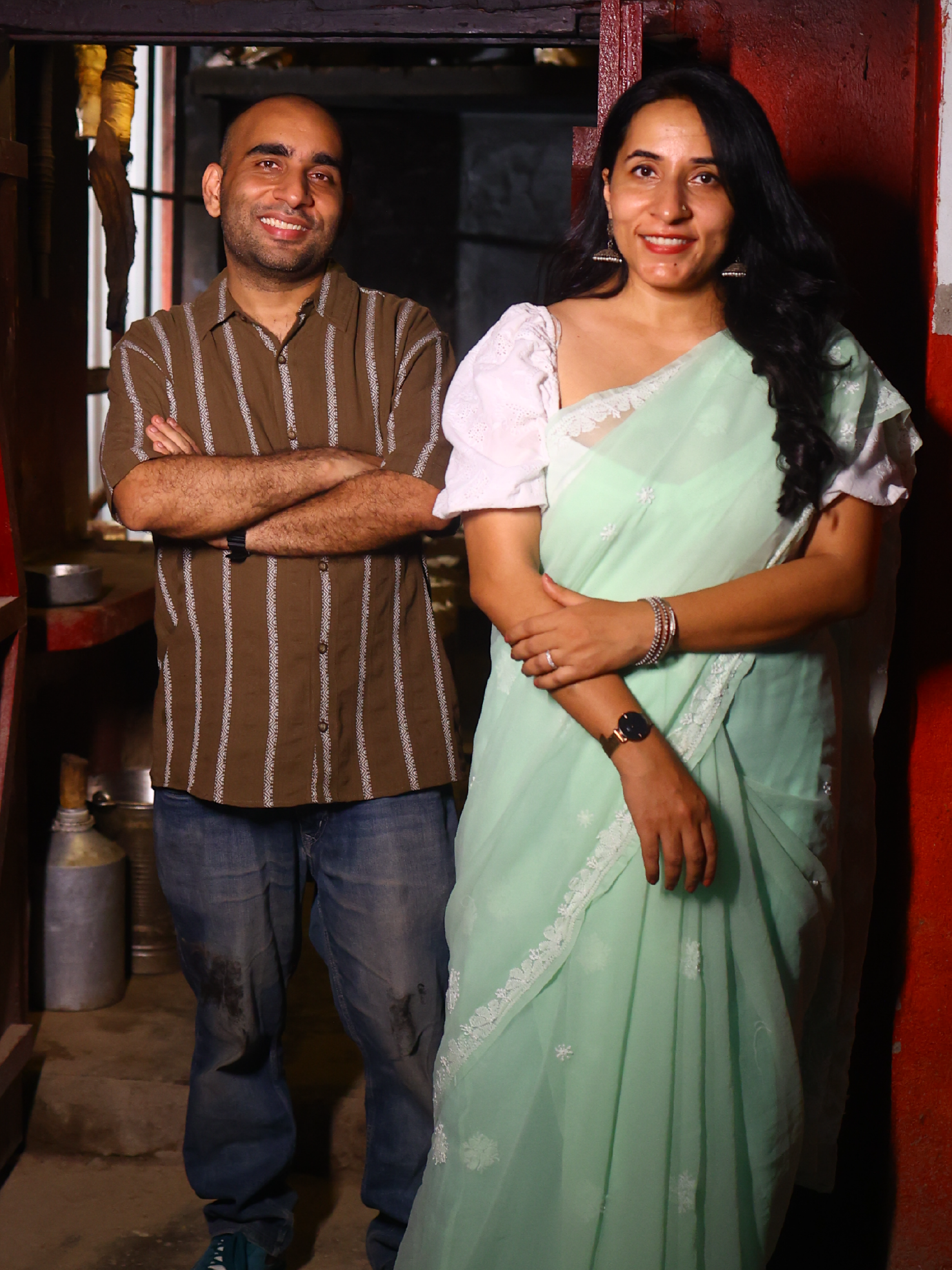
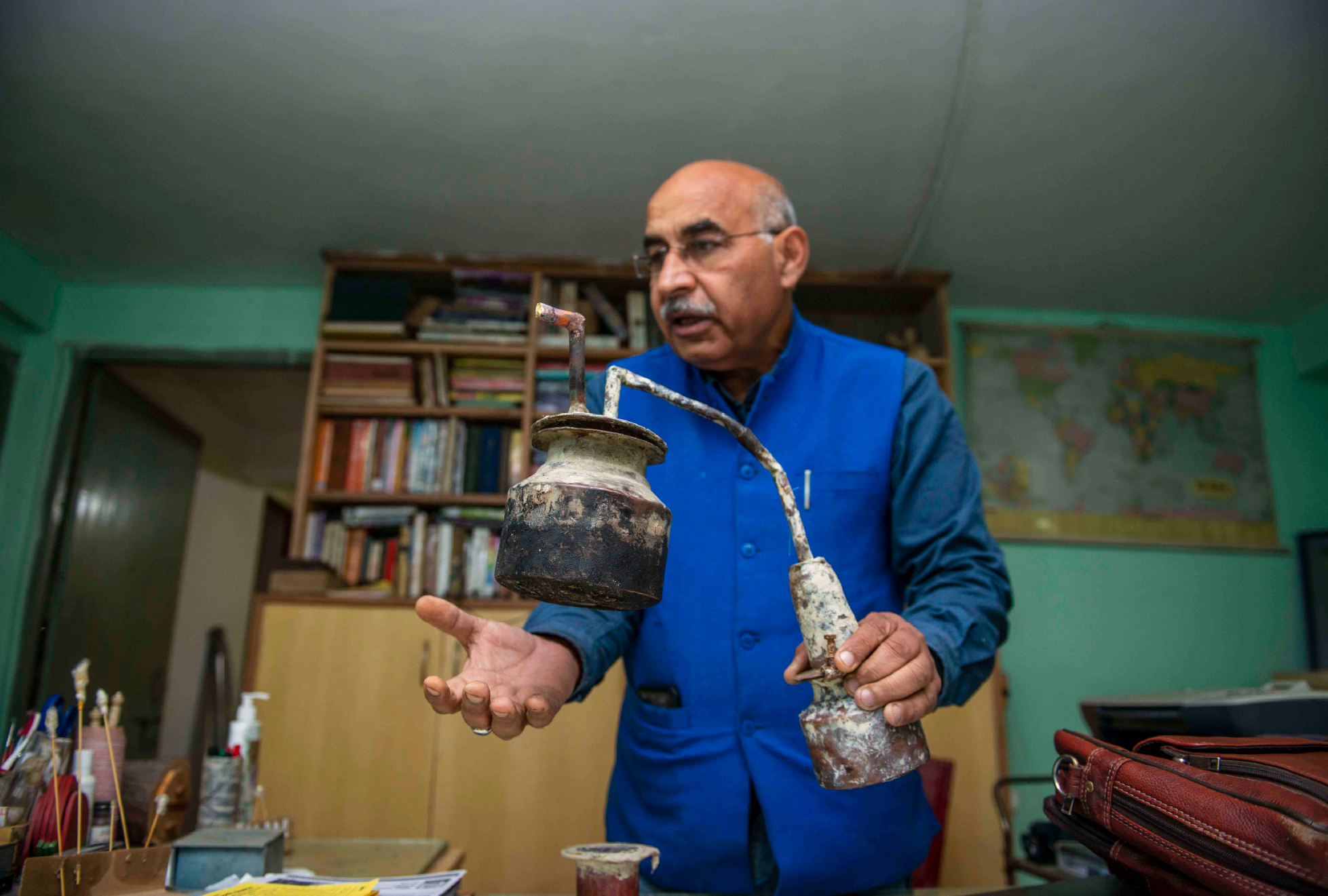
The master perfumer The siblings' father Pravin Tandon is the in house perfumer bringing his expertise of 30 years to the business. Photographs courtesy Boond Fragrances
It was never meant to just be about the perfume oil though. Boond was conceived as a multisensory experience. Every package arrives in a handcrafted box accompanied by a note and poetry written by the siblings' father. The perfume becomes part of a larger story about place, memory and craft.
In Kannauj, perfume is not merely an industry. It is woven into the identity of the city itself. The city's attar-making traditions stretch back centuries to the time of Harshvardhana’s rule, further fuelled by the patronage of the Mughal emperors. "Even the sewers smell of perfume," Krati jokes. The line sounds exaggerated until she begins describing the city. Many perfumers still operate from family homes with distillation units installed within the premises, digitisation has not reached the deg bhapkas yet and knowledge is passed from one generation to the next orally like folklore.
Yet even as the brand continues to grow, its focus remains unchanged. The goal was never merely to sell perfume. It was to introduce an old craft to a new audience and there does not seem to be a dearth of people wanting to buy attars or familiarise themselves with the process of making one. Krati shares that one of the most tangible and significant changes has been the influx of people travelling to Kannauj to witness the making. It’s this change, she hopes, that will drive the attar industry towards a better tomorrow because despite renewed interest, many artisans continue to migrate to newer professions for better income opportunities, leaving the craft’s future still hanging in the air.
The revival may be slow, but it is underway. Much like the name, every little boond or drop of effort matters in ensuring that a thousand-year-old craft would not disappear before someone had the chance to tell its story.