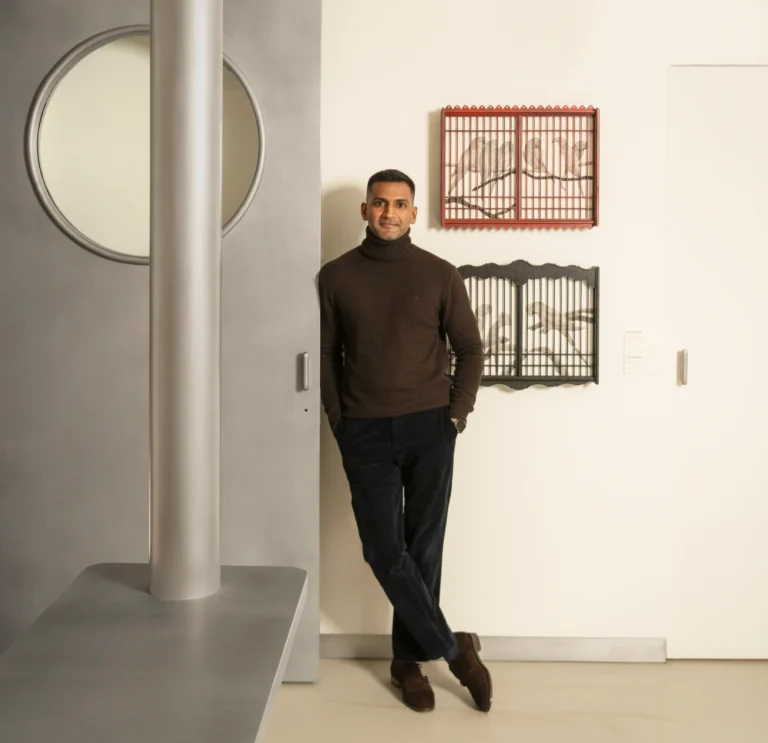
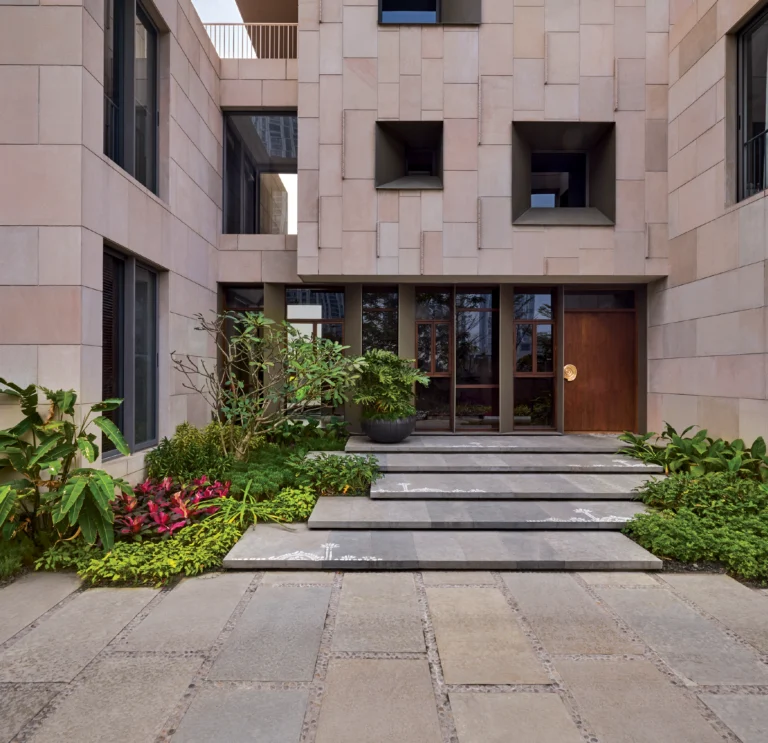
In a bustling suburb in Mumbai, Kavan Shah’s home cum studio holds its own unapologetically, in all its maximalist glory amid the incessant development creeping up, not like a quiet monument to his ideas but more like a loud declaration of his lived experiences. “I come from a family where art, history and creativity were always part of everyday life. I grew up around artists, objects and collections, so I developed an instinct for looking, observing and understanding things visually quite early, “ says Kavan as he lets us into his living space, which has more art than I can take in. His calling came rather easily he says, from doing his masters in material systems and major in art history from the University of Michigan, Ann Arbor to literally walking into a show at CSMVS museum called Sahib, Bibi, Nawab: Baluchar Silks of Bengal, 1750-1900, he knew right then the path he wanted to pursue. That was 2014. The rest he says is a lesson in maximalist history.
The last time I met Kavan, work was in full swing at what he calls his “hybrid” space. The red tiled bathroom, and terrace were just about shaping up. He was sure even then that there would be no distinct boundaries between his living, working and making spaces. “Creativity doesn't follow boundaries, so spaces shouldn't have to either. The studio, workshop and home naturally overlap, allowing ideas and objects to move between them,” he explains.
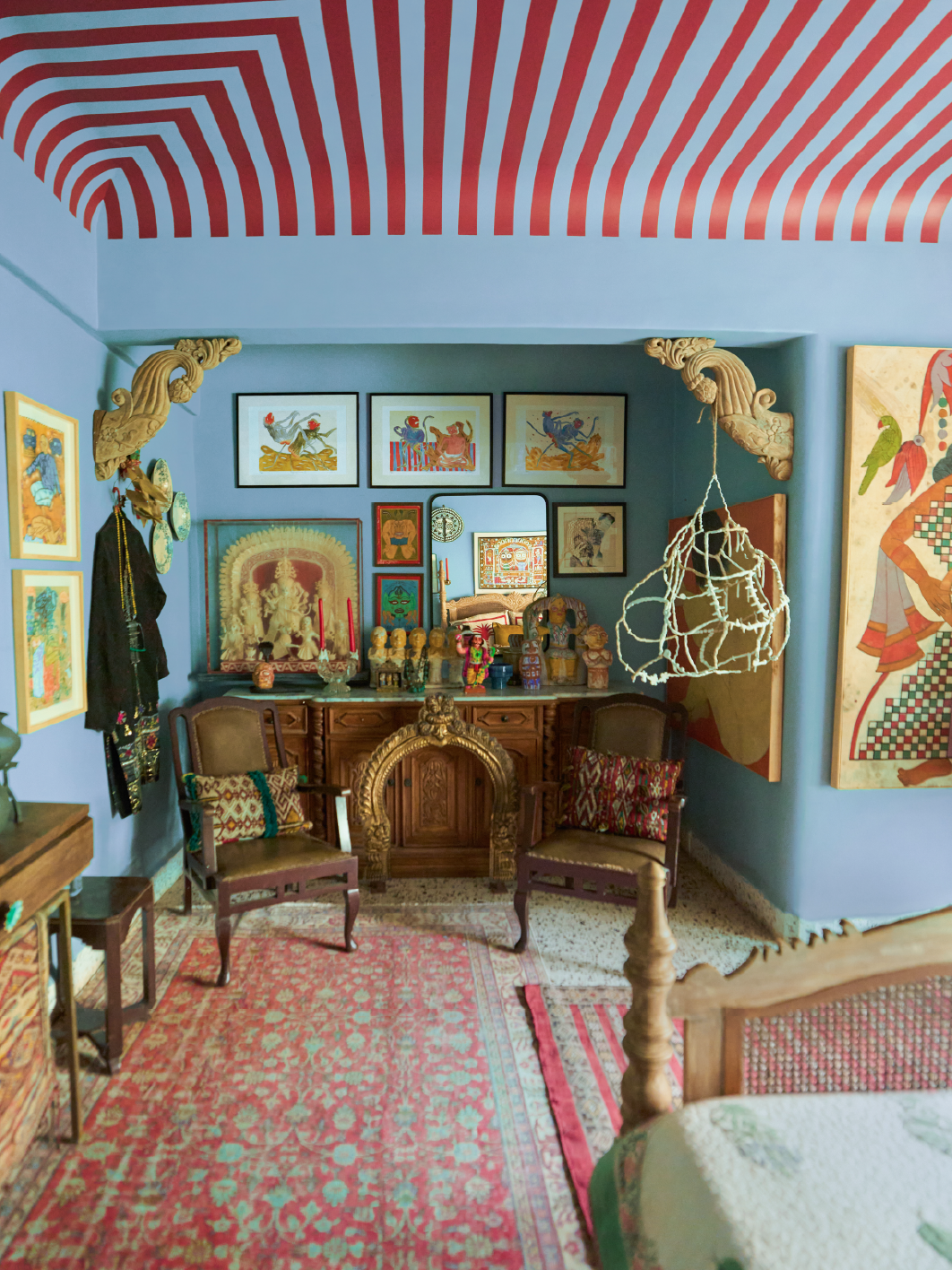
In the bedroom, crimson hand painted crimson stripes create a canopy for the art pieces. On the left is a hand embroidered jacket from Kutch alongside a Sholapit Durga statue from West Bengal. There’s also a miniature by Alok Nath Jain along with a limited edition serigraphs by Amit Ambalal. Next to them are a collection of folk figurines from Jew Town in Kochi. On the far right on the wall is a vintage, carved wall bracket from Ahmedabad. In front of the console is an antique brass ornate arch
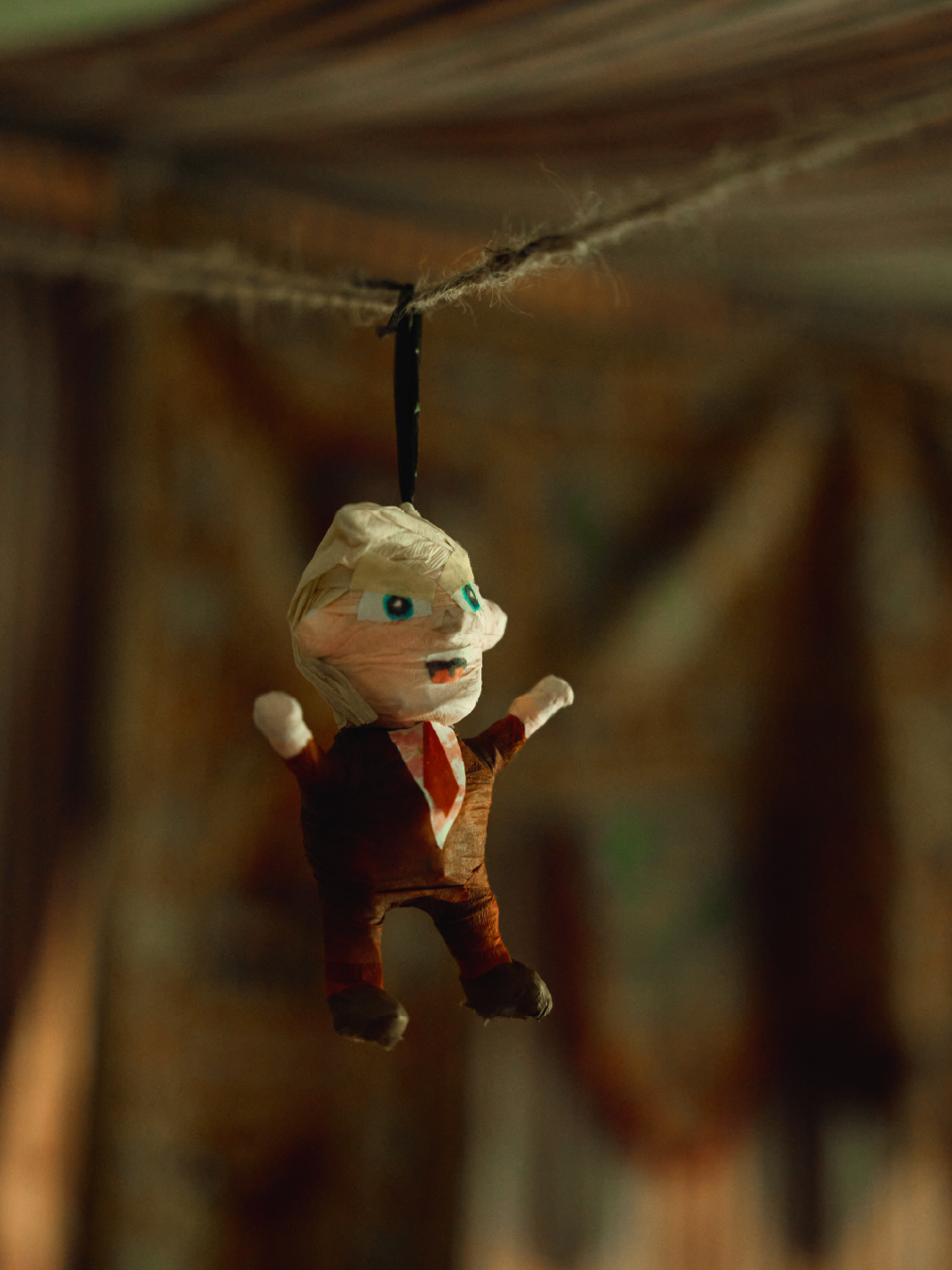
A string of papier mâché puppets known as cartonería from Mexico line the canopy over the study table
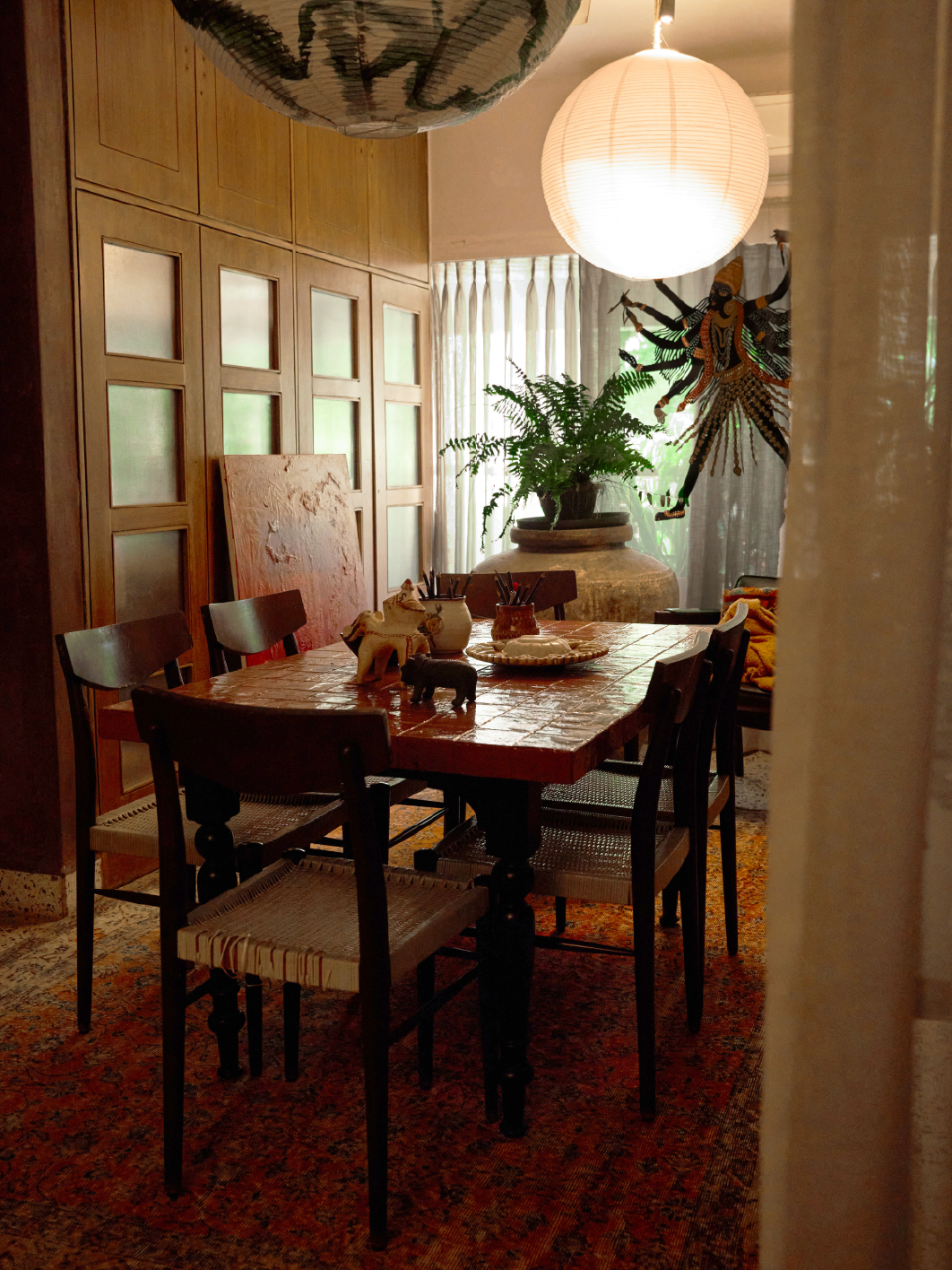
The informal dining room also doubles up as his workshop cum extended studio space. In the background is a handcrafted piece of art of goddess Kaali in leather made by an artisan in Andhra Pradesh
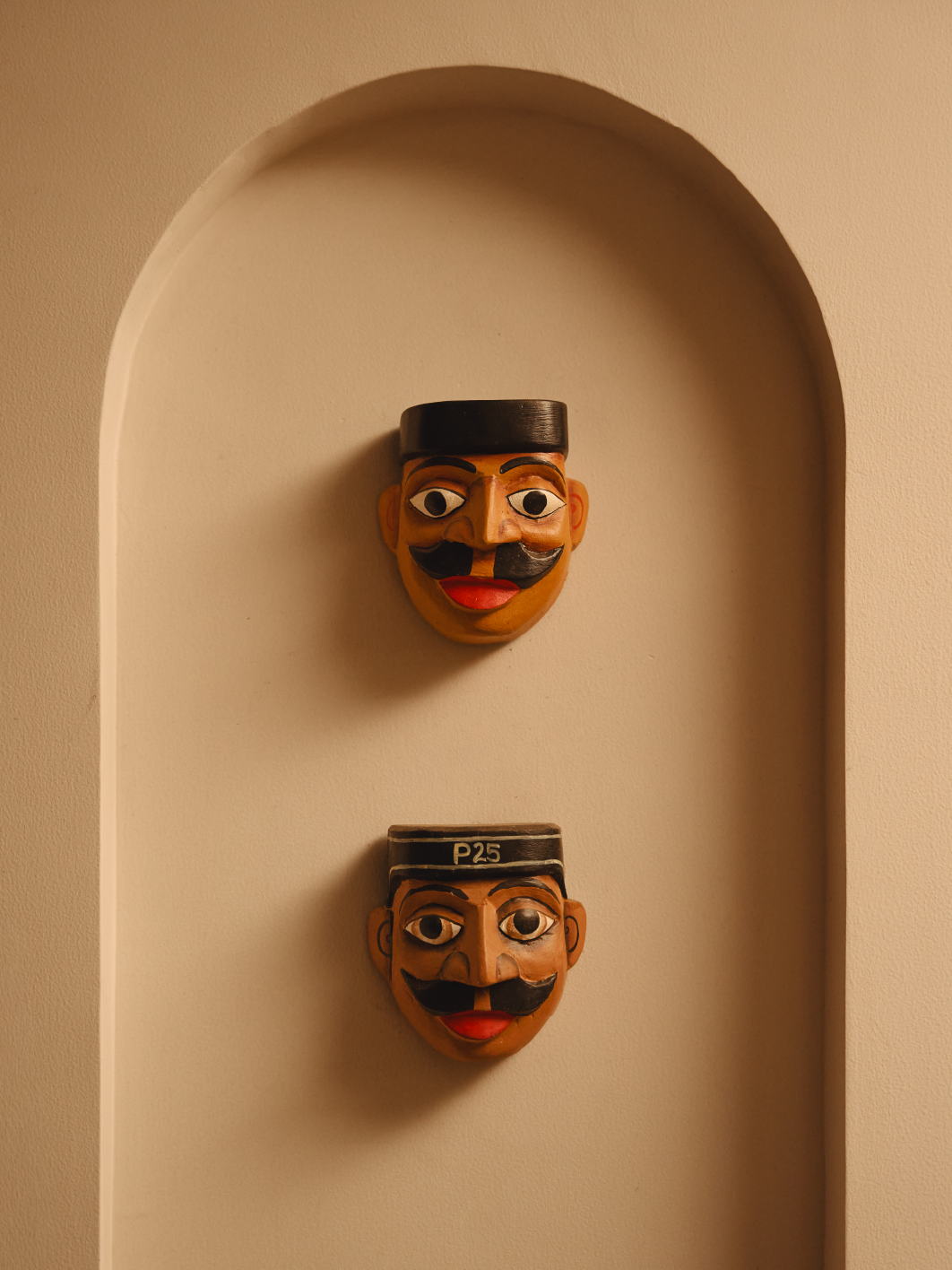
Folk theatre masks from Paradise Road in Sri Lanka adorns one of the walls in the bar area
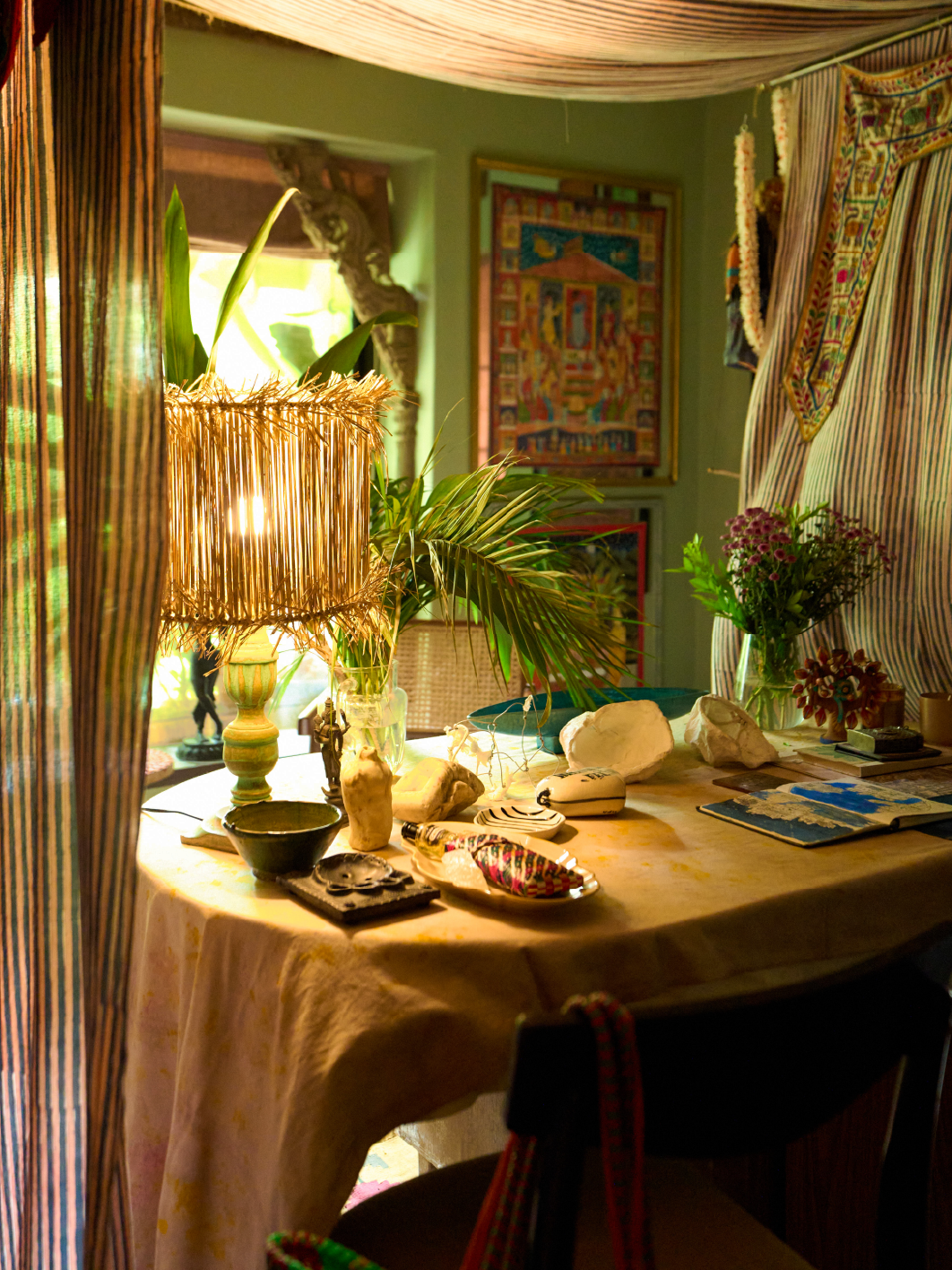
Kavan traded a formal office space for an art-forward studio. In the background, a vintage carved wall bracket from Ahmedabad frames the window while a Annakut pichwai painting from Udaipur and an embroidered fabric wall panel from Gujarat adorn the wall next to it. In the foreground, the work table itself has a striped textile forming a canopy along with papier mâché puppets he picked from his travels to Mexico
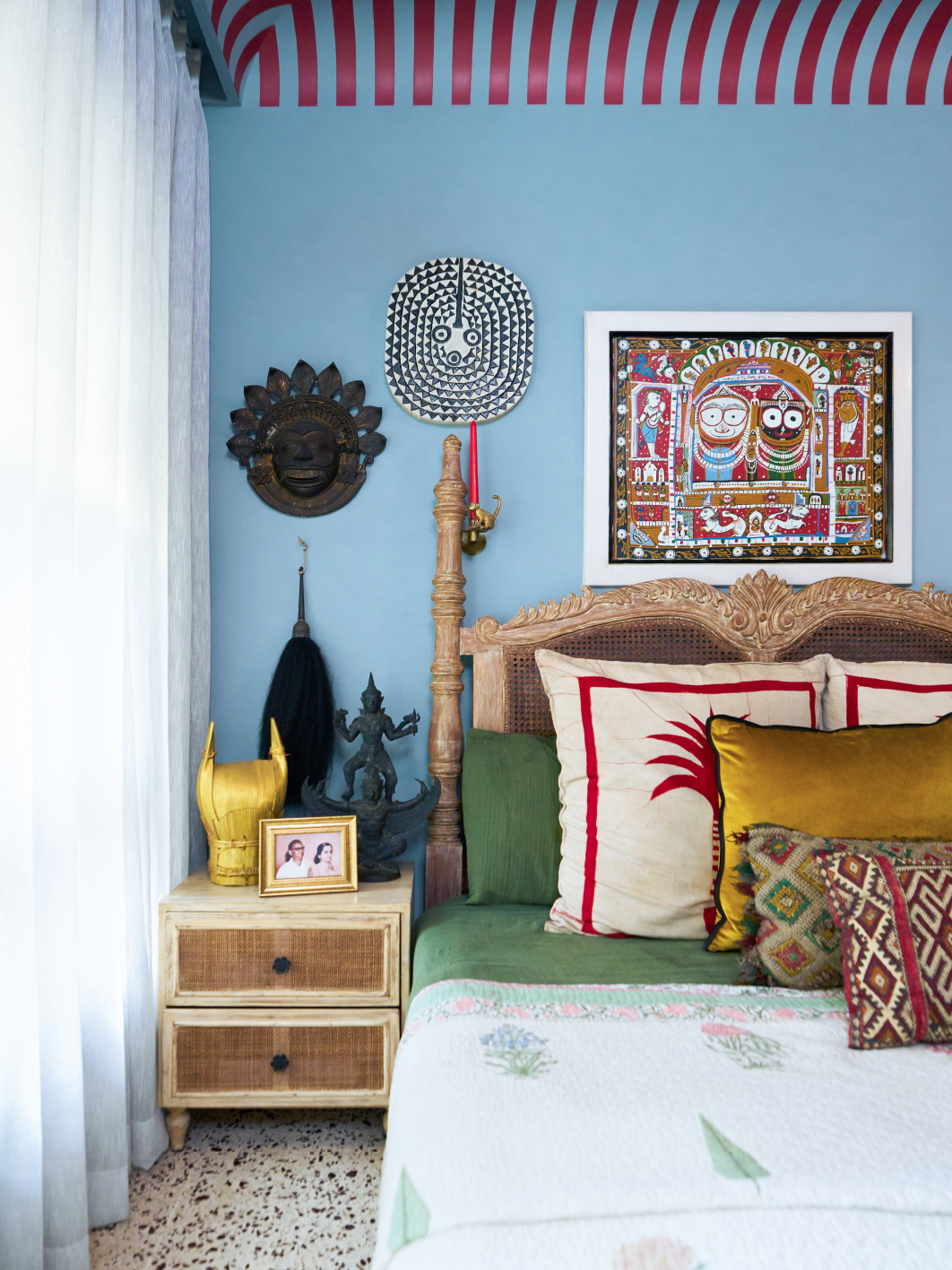
Much like the rest of the spaces, an unusual yet striking combination of colour dominates the walls and ceiling. On the wall is a sun mask in metal from Kochi. Next to it is a wooden Bwa mask from Africa. Above the bed is a Jagannath Puri hand painted by Kavan’s aunt as a gift to him. On the side table is a rice basket from Kerala, god Vishnu on Garud statue from Cambodia
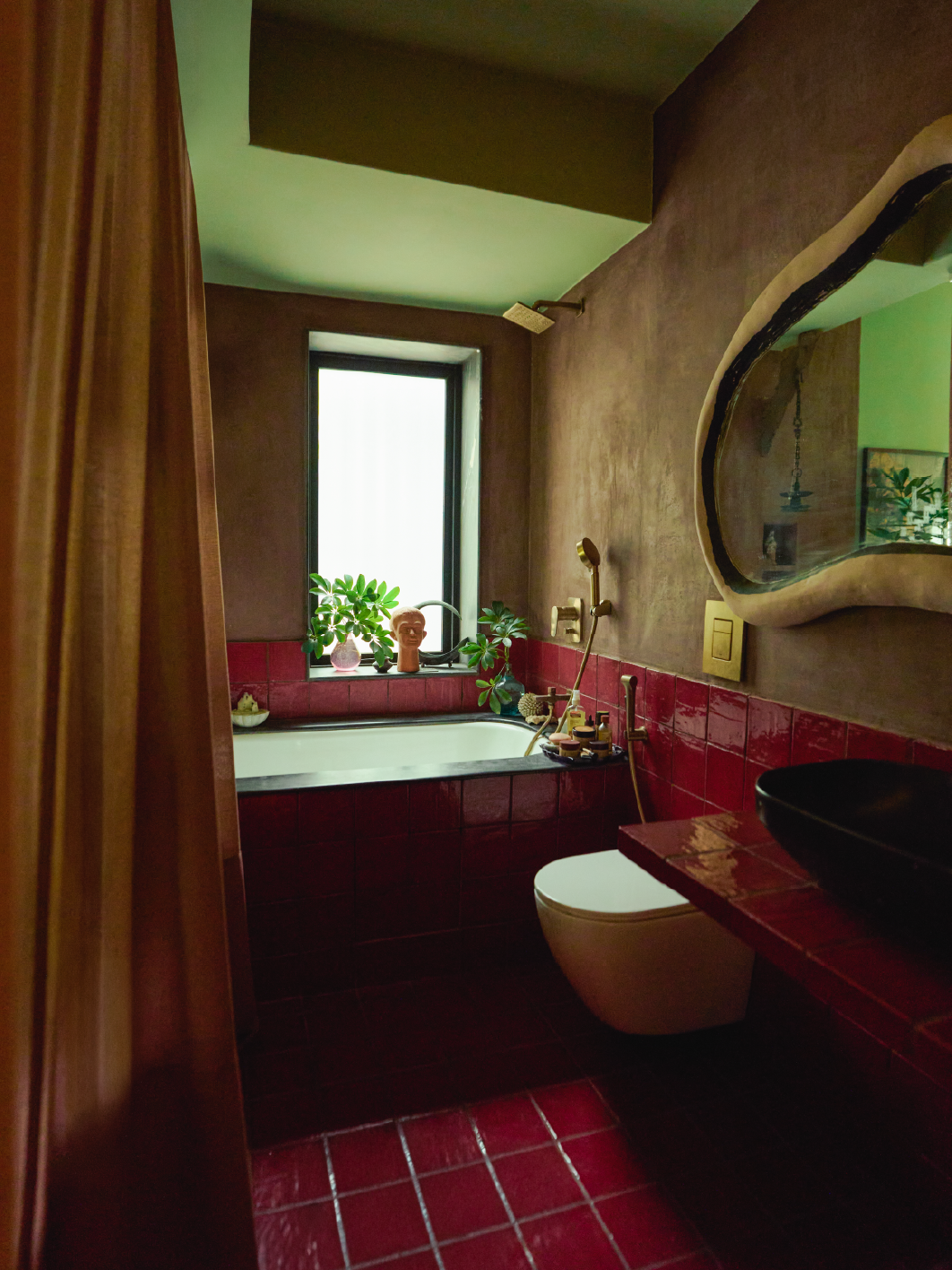
In the bathroom, by the window is a figurine from Claro while the mirror is custom made by Kavan
Perhaps that’s why it’s hard to define the formal and informal living spaces. What is clear though is that this space is a layered narrative informed by Kavan’s explorations in the world of design, art and craft. “The collection has happened very organically over many years. Some pieces I have inherited, some I have collected on travels, from galleries and artists, and others are things I've simply come across and felt connected to. I don't collect to fill a space; I collect things that speak to me,” shares Kavan. This is also why The Dance, a painting by his grand aunt, gifted to his great grandparents on their 25th wedding anniversary takes pride of place right at the entry.
The space had great bones to start with including a very ‘70s sunken living room. Kavan knows he got lucky with this find, not only for the layout but also because the octogenarian who lived here earlier left behind all her vintage crockery. “My mother loved cooking meals for Rodrigues’ aunty, and of course all of us,” shares Kavan, so as an ode to her generosity, and his mother’s love for cooking, he created a wall art with the former’s vintage baking dishes in the kitchen.
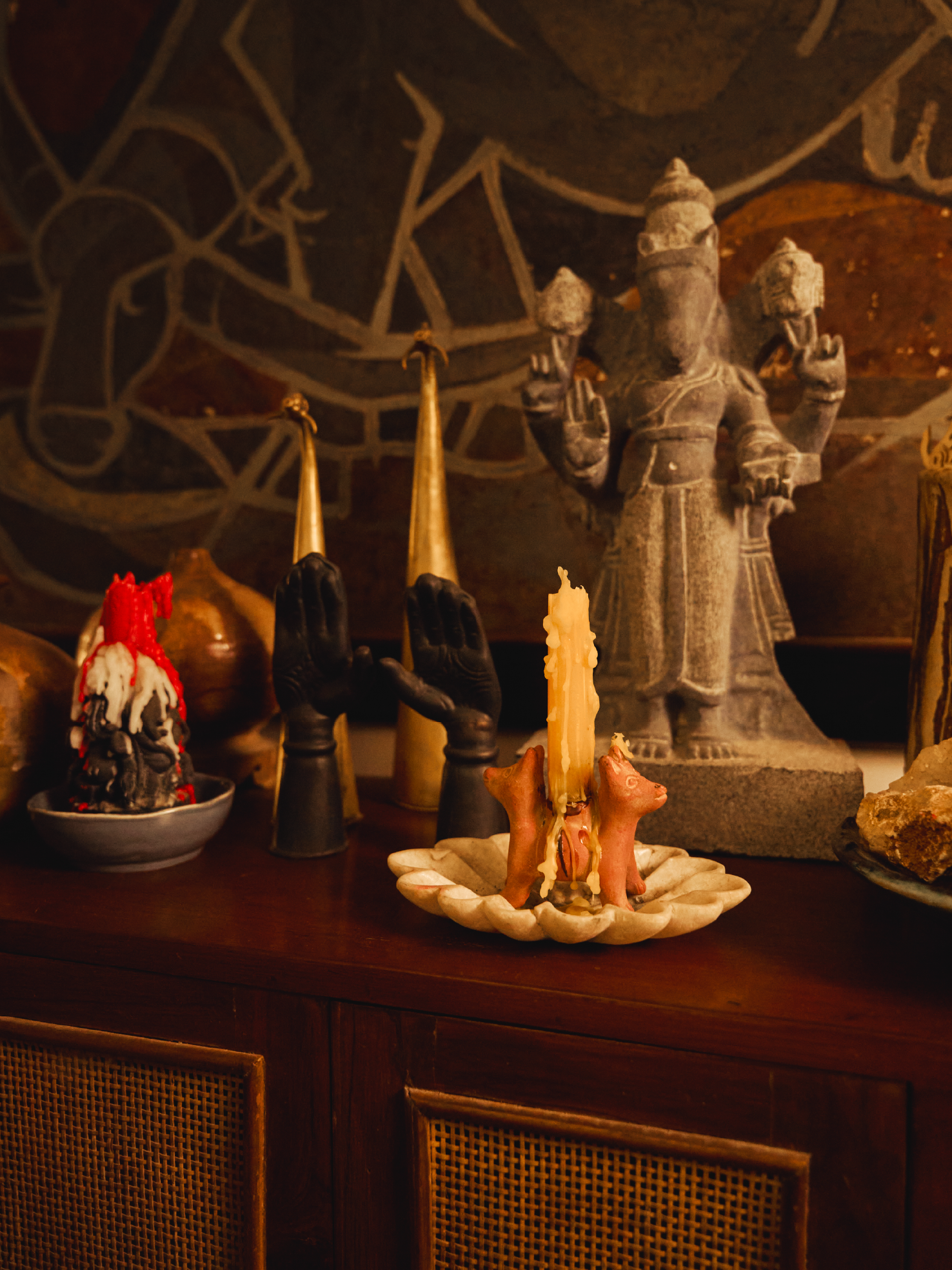
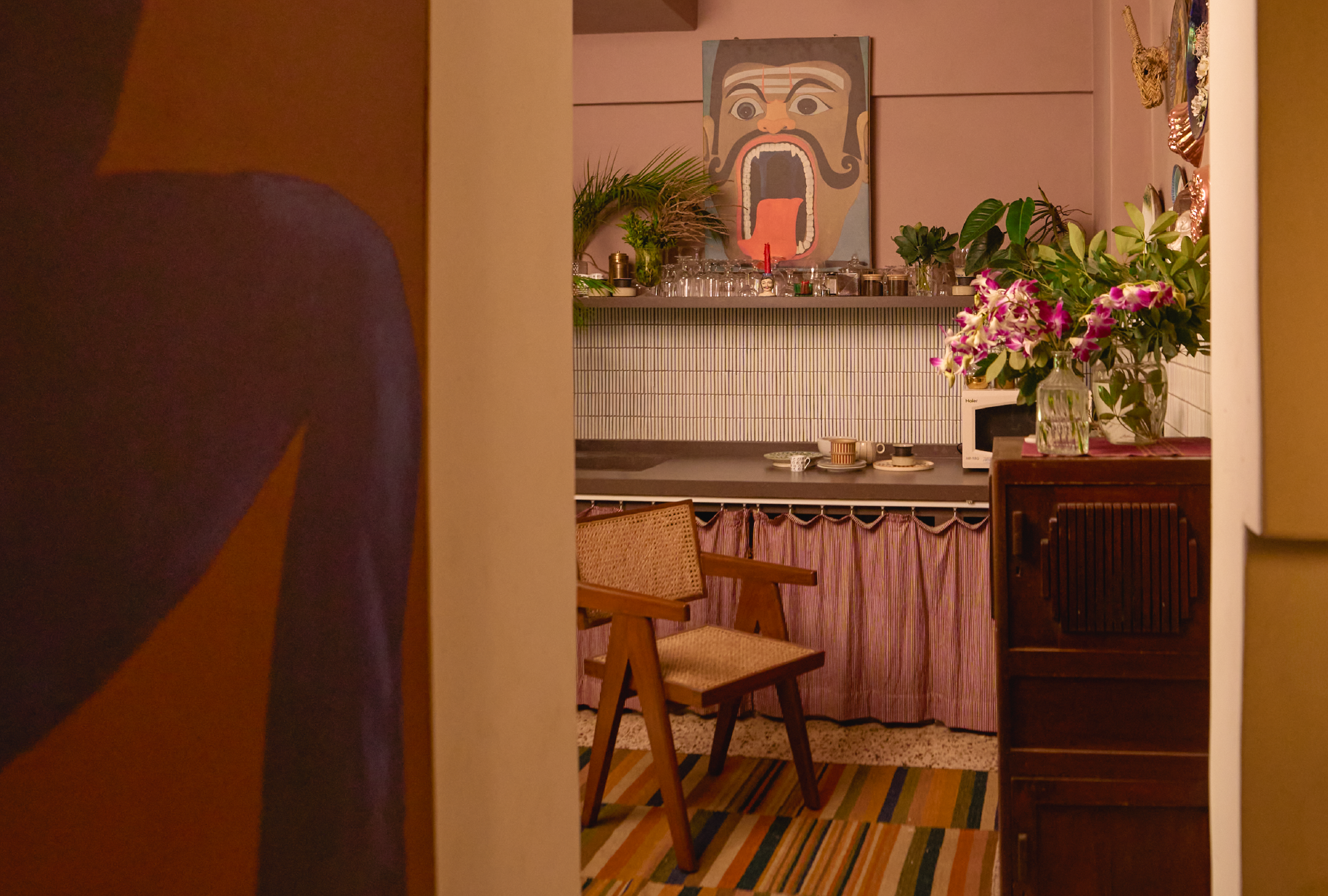
All the right ingredients Kavan treats the kitchen as a canvas with a striking painting taking centre stage along with wall art on the right comprising of vintage crockery.
Right behind the kitchen is his studio, for which, Kavan ditched the concept of a formal workspace and instead opted for a fresh avocado green, an unorthodox colour choice that strangely creates a stunning backdrop for the various pieces of art, and its stories dotting every inch of the available wall space. His study is right in the centre of the room sheltered by a striped canopy. A series of cartonería – papier mâché puppets dance along the length of the canopy, while a traditional puppet, Rūkada Nātya from the Ambalangoda district in Sri Lanka hangs merrily on the other end. The deep red bath tub right next to it might catch you by surprise but if you’ve known Kavan even for a minute, then you know eclectic is a way of life for him. Adjacent to his studio is a space where he’s parked another dining table— large enough for his work to spill over, to host his workshops with May or May Not be Art, or to simply accommodate his large, ever growing set of friends over a meal. At the far end is an intricate piece of the goddess Kaali in leather made by an artisan from Andhra Pradesh.
While the spaces are brimming, each layer is intentional, and every decision instinctive. “I think experimentation requires a certain willingness to be wrong, and that freedom is where new ideas emerge,” says Kavan. While art and architecture may seem like two disciplines that approach space differently, he feels “Art teaches you to look, while architecture teaches you to experience. The most interesting work happens in the space between the two—when an object, a material or an artwork changes the way you perceive a room.”
He believes maximalism can be beautiful, but like with most things in life, needs constant editing. “Give every object enough space to breathe; even a maximal space benefits from moments of restraint and silence,” he says as he opens the door to his light-filled, slightly subdued bedroom. Here, a pale blue envelope with a crimson, striped ceiling commands your attention. Reminds me of a circus canopy—just that the tricks here are slightly different—a cultural juggle, where a collection of folk figurines from Jew Town in Kochi sit next to a Sholapit Durga statue from West Bengal; an ornate, antique brass arch takes its place in front, while a hand-embroidered jacket from Kutch takes the last spot on the wall. It’s all a fine balance, where Kavan quite clearly is the ringmaster.
“I'm interested in pushing the boundaries between architecture, art and objects. I want to make more, experiment more and perhaps worry a little less about where it belongs. There are a lot of possibilities in the area unknown, unexplored,” says Kavan.