Long before conversations on craft entered our living rooms, textile designer Sanjay Garg was thinking of ways to get women to look at Indian textiles differently. This was a little before 2008, when you could find Sanjay selling handloom sarees at Dilli Haat and Dastakar Bazaar. Not much later, you could find his pieces at Good Earth. But it was in 2017, with the launch of Raw Mango’s 2,500 sq ft flagship store in Mumbai that one could feel the impact of his vision of this new Indian aesthetic, which was no longer limited to ceremonial duties. He changed the way one viewed Indian textiles; in a way he made it modern and desirable again, shaping it to fit a new contemporary narrative. “Creating culture is our primary focus at Raw Mango — it isn't about just adding value to narratives around objects,” emphasises Sanjay, “I want to interest the larger republic in art, dance, and cultural exchange — start conversations around design, craft and culture which encompasses textile, the human condition, socio-economic realities, design challenges and cultural touch points. My belief is that the boundaries between art, design, and history are blurred which is why we work with multiple artists to add multi-dimensional outlook and perspectives.”
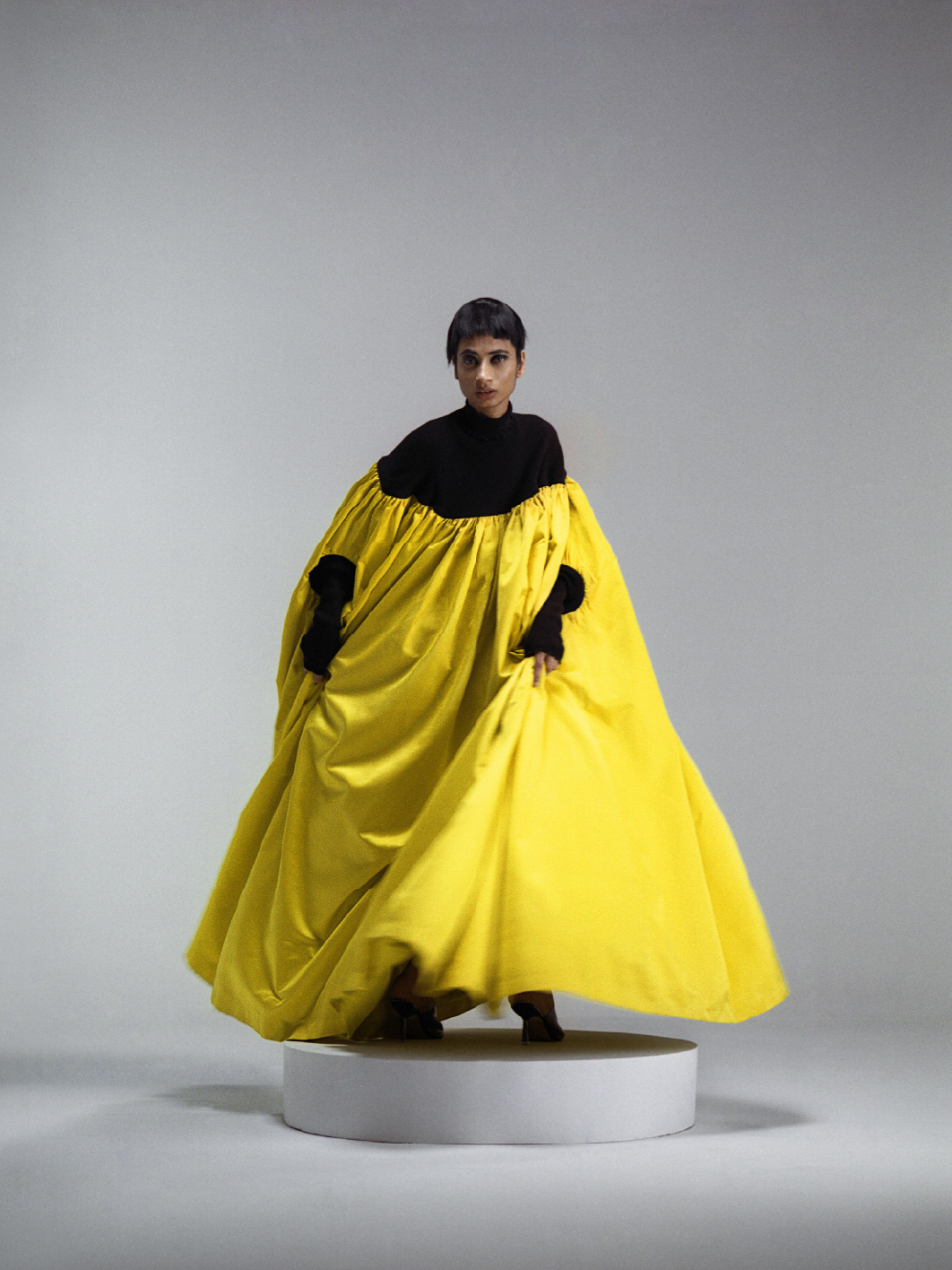
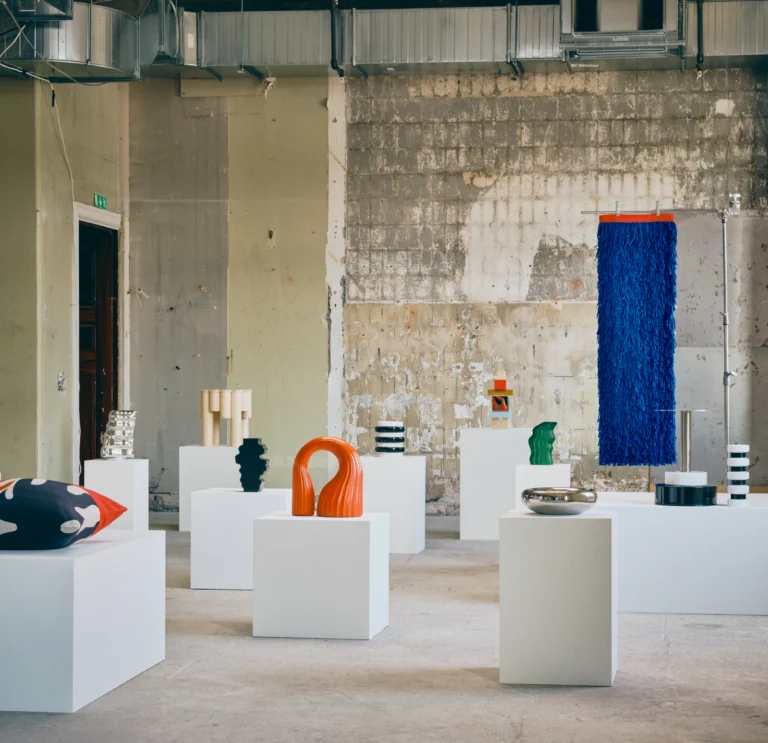
In the Children of the Night collection welded sculptural forms take shape to highlight innovations in traditional textiles through a range of metallics and brocades that impart the feeling of knitwear. Photograph by Vikas Maurya for Raw Mango
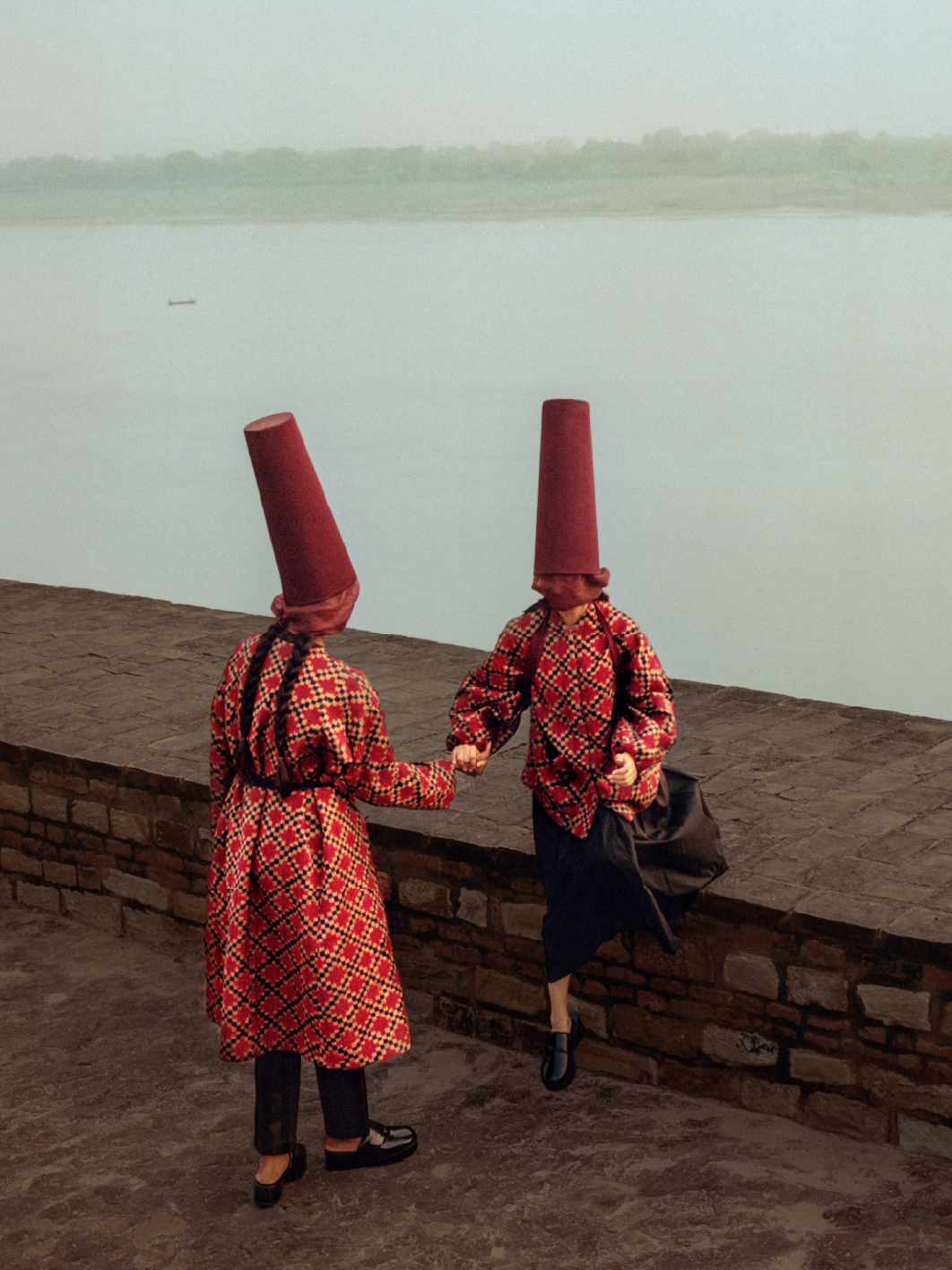
The Agama collection features outerwear and saris made from Mashru, Mashru Ikat, and Kantha. Photograph by Ashish Shah for Raw Mango
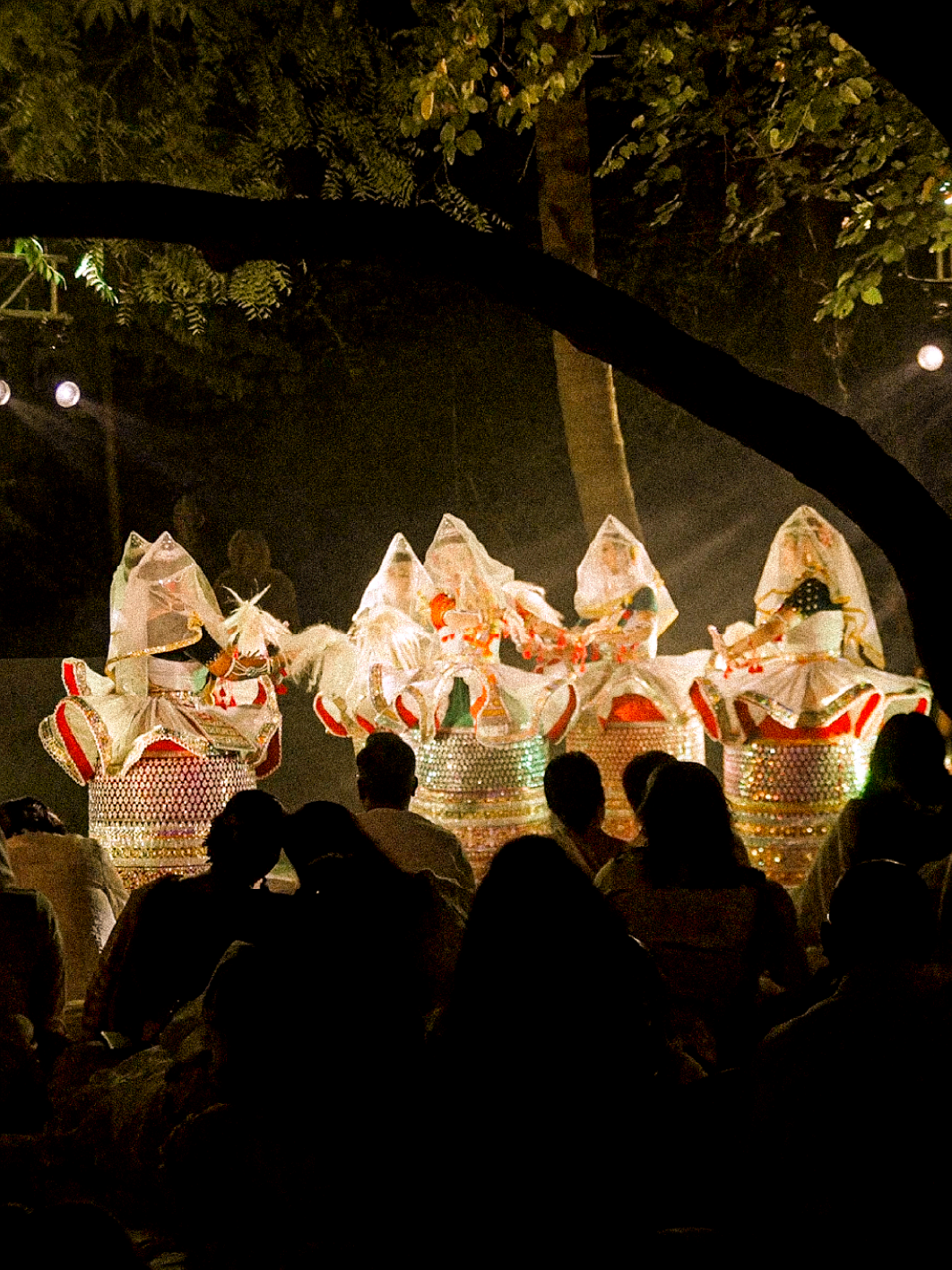
At a Baithak hosted by Raw Mango in Hyderabad, Manipuri Jagoi Marup presented Basant Raas, which is a classical dance drama traditionally performed under the full moon in March/April at temples in Manipur
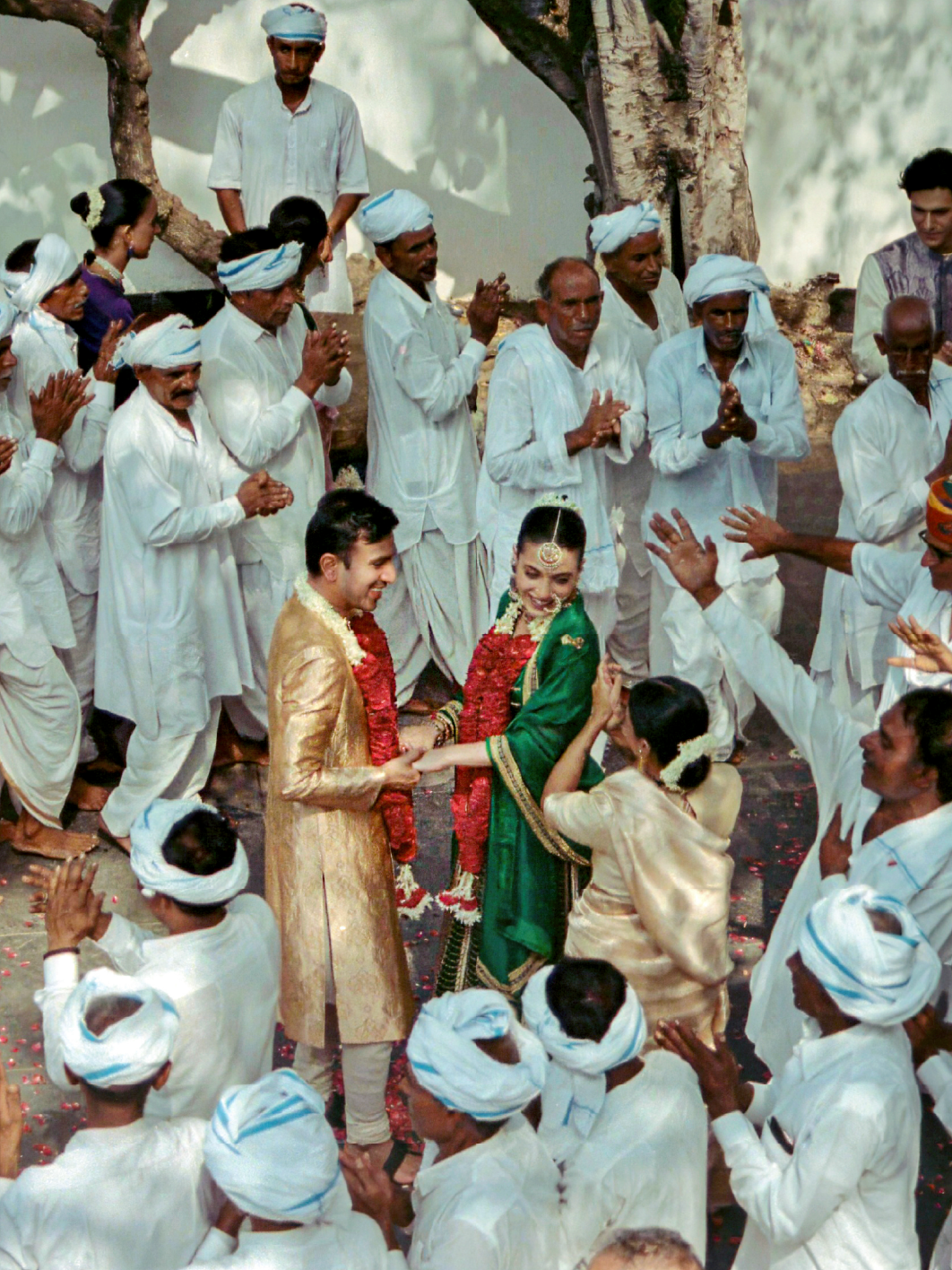
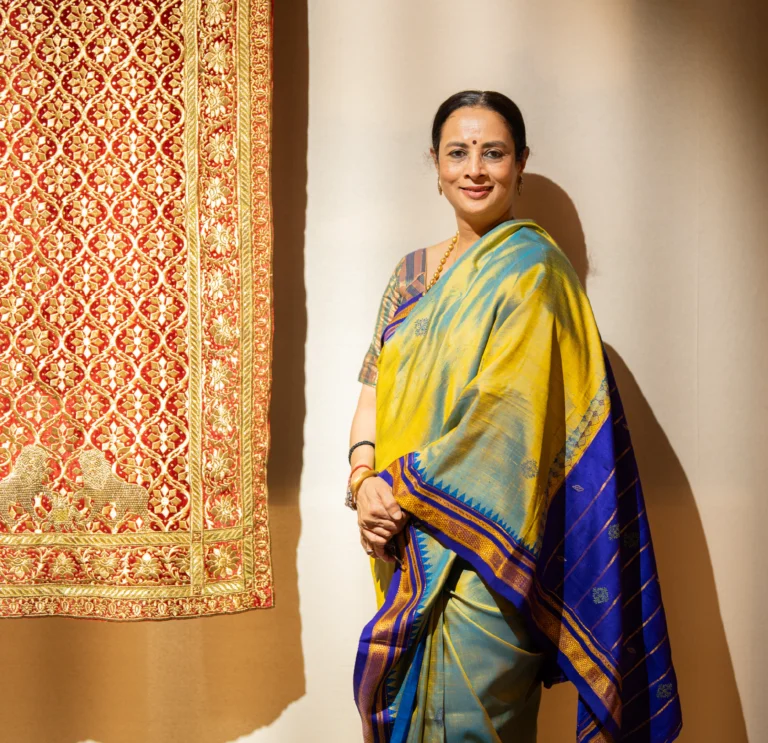
The Garland Festive collection explores the floral symbols through motifs via the introduction of embroidery on brocade, and contrast colour appliqué. In the background are the Kanhaiya Dangal performers of Dosa, Rajasthan. Photograph by Sarang Gupta and Vikas Maurya for Raw Mango. Photograph by Sarang Gupta and Vikas Maurya for Raw Mango
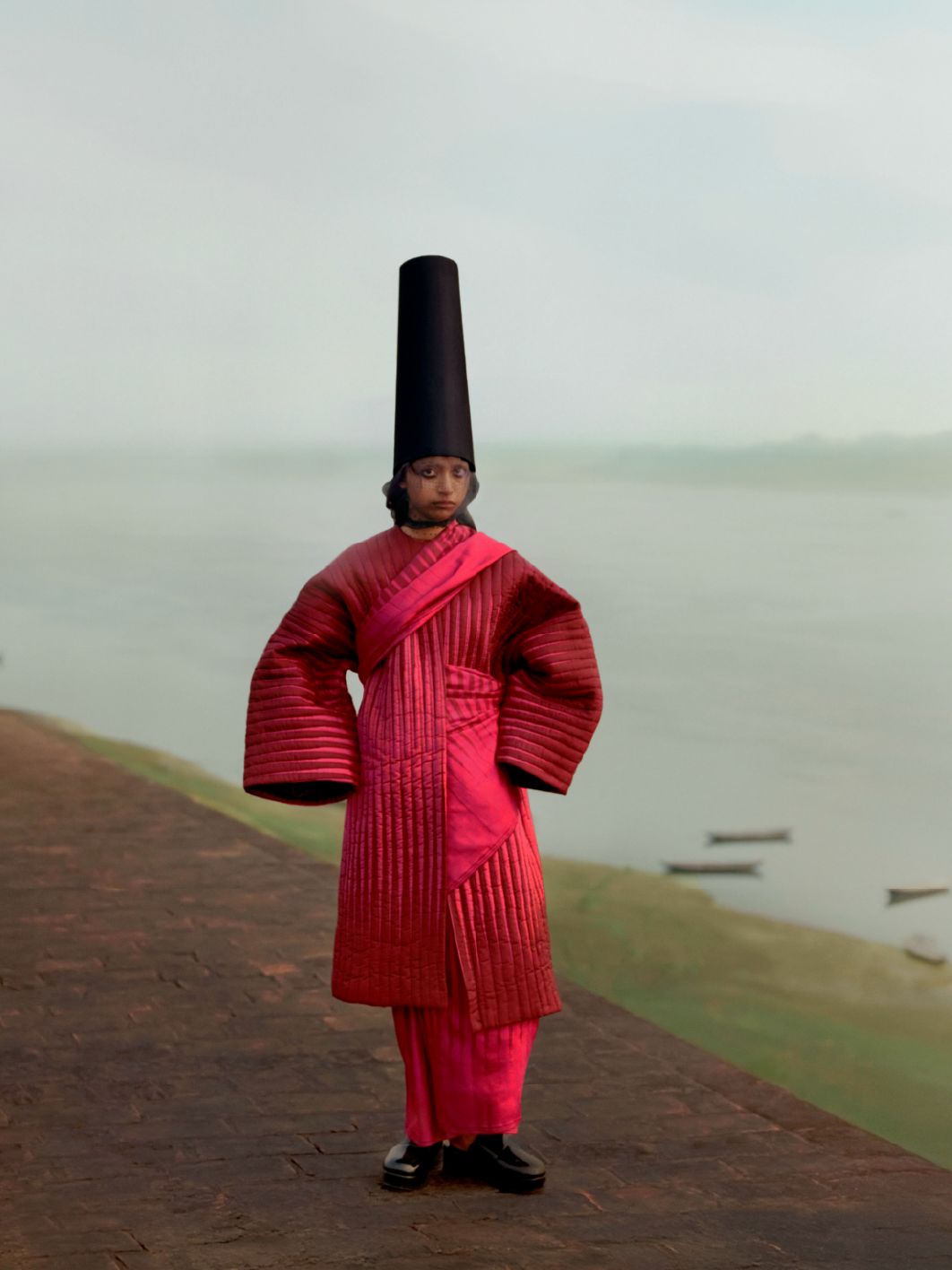
In the Agama collection, Kantha jackets incorporate katran made from offcuts generated during sampling and production which are sorted, dyed, and stitched together to form jacket bases. Photograph by Ashish Shah for Raw Mango
From Mubarikpur to the world
Sanjay grew up in the village of Mubarikpur, Rajasthan and he credits his appreciation for aesthetics to the sensibilities of rural India. Having trained at Indian Institute of Crafts & Design (IICD), Jaipur not only gave him a foundation but exposed him to a fundamental understanding of design. In his quest to pay for higher studies abroad, he began undertaking projects, which brought him in contact with weavers during the Chanderi Cluster Development Programme. The impetus behind Raw Mango is simply a continuation of the journey that began with Chanderi. “We questioned possibilities, engaged ourselves in dialogue with weavers and the culture, and created our own narratives in the world. It has always been about adding value and innovating on the loom, while being in conversation with what’s going on around us,” says Sanjay whose experience in Chanderi set the tone for the relationship he now has with fashion – one that is rooted in exploration, engagement and experimentation with craft. “Once I interacted with weavers in Chanderi, it felt like I had found the depth I was looking for and saw no reason to seek more answers in the West. The textile language I helped develop in my work with Chanderi was the earliest intersection I experienced between textile and fashion,” he explains.
It’s little wonder then that every piece that comes from the Raw Mango stable is rooted in authenticity and driven by intent. He doesn’t chase glamour, instead, his work is a response to an internal pursuit – of what excites him, what needs exploration, and what holds meaning. Every collection by Raw Mango is a celebration of India that is often accompanied by gatherings that bring together music and dance forms from across India, from the Manipuri Jagoi Marup troupe performing Basanta Raas, to Gidda performances by Lok Rang, to Ragini by Rajbir Dujaniya. “We create music. We create films. We host baithaks to enjoy everything from Haryanvi Ragni to Dadri and Thumri. We engage with these art forms and cultural traditions because I am interested in them. The textile is a part of that story, but not the complete story itself. Textile is a medium of expression for me—one of many,” says Sanjay.
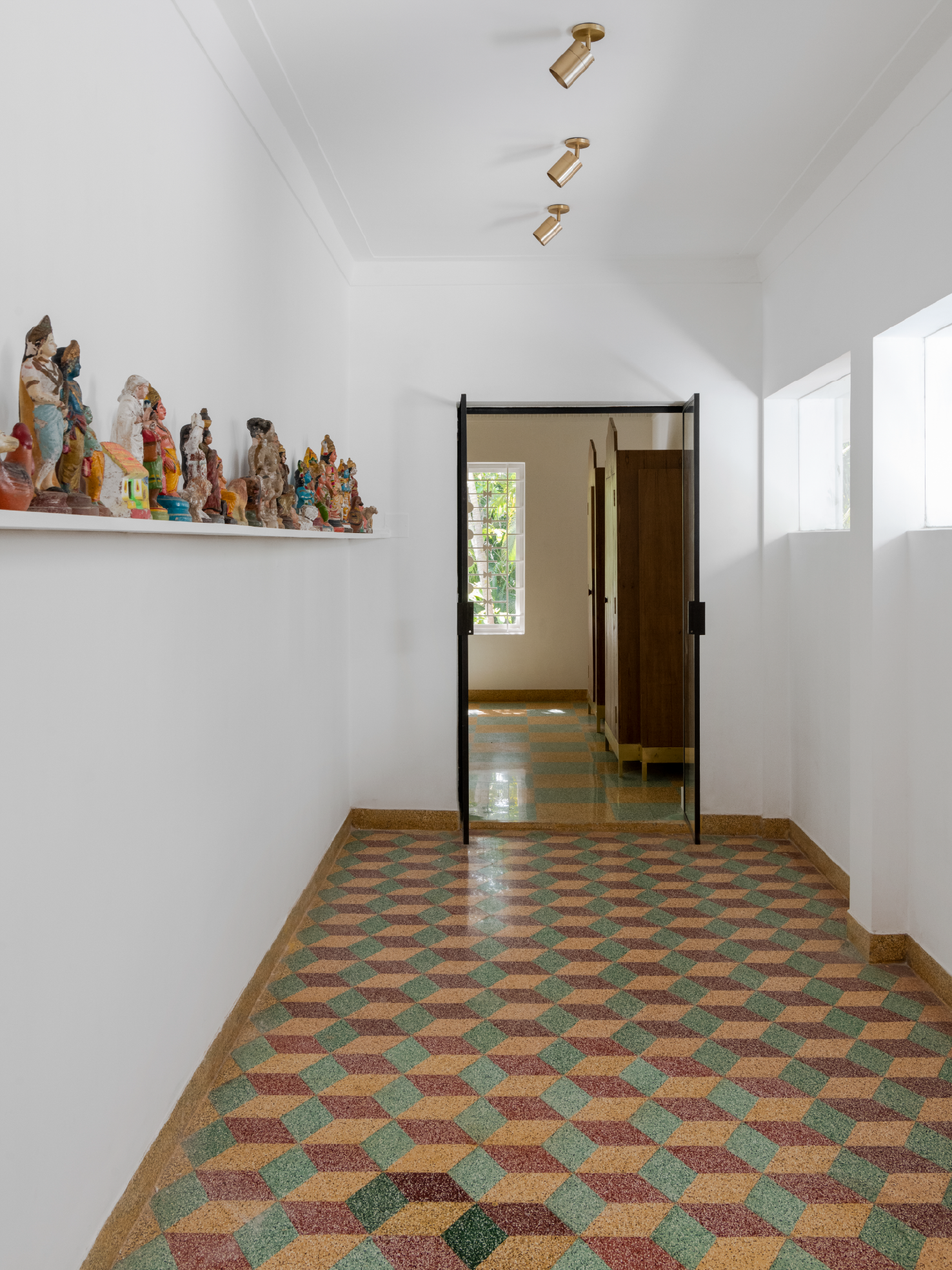
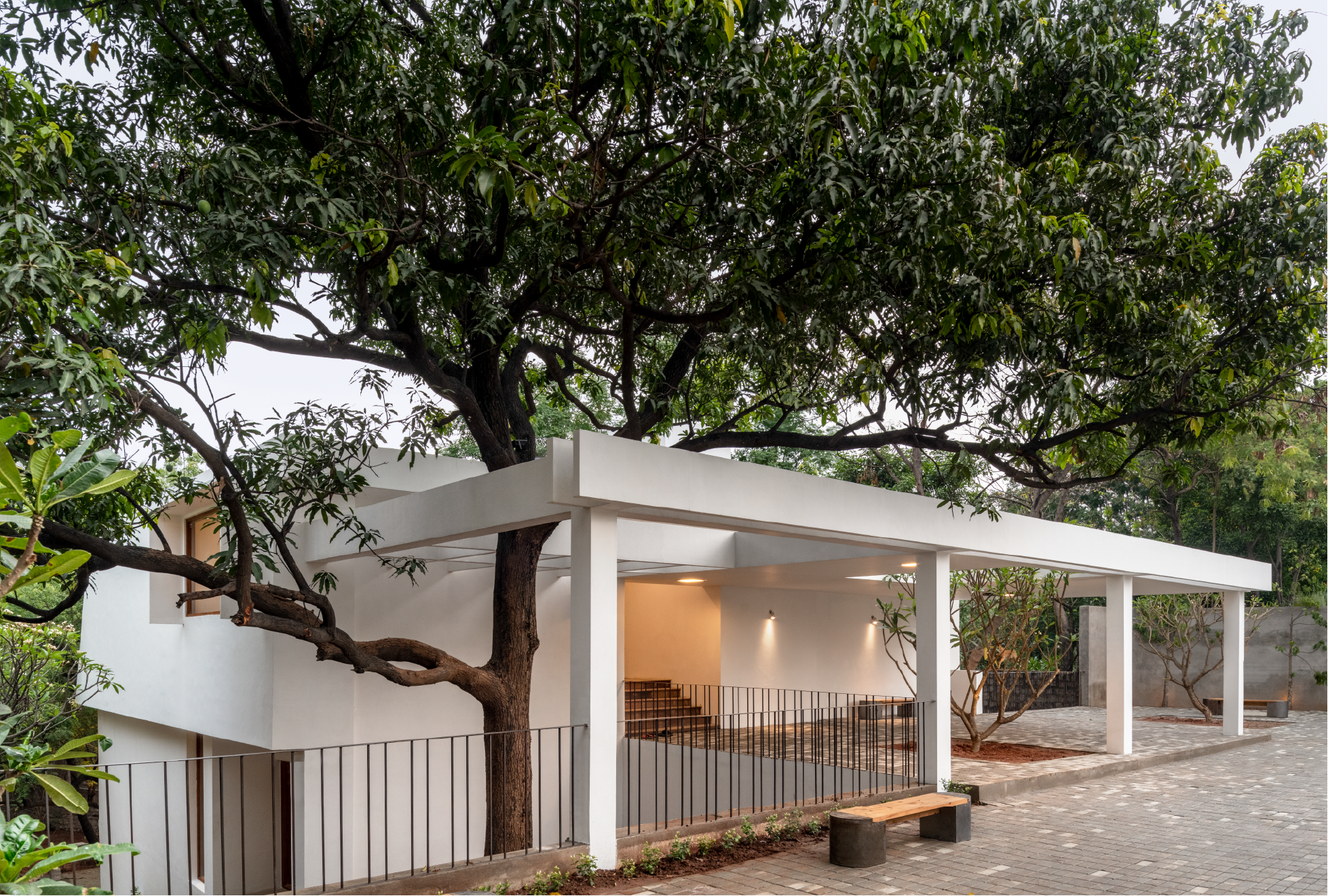
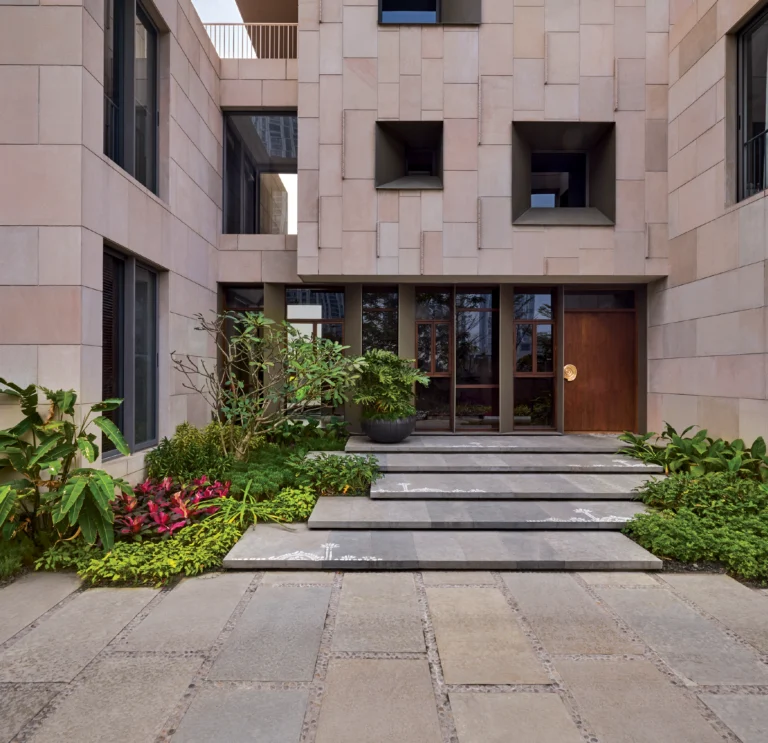
A definitive presence Raw Mango stores are often housed in unconventional locations like former residential spaces that spotlight culture and context. Here, the Hyderabad store with its unmistakable modernist presence. Photograph by Studio Suryan//Dang for Raw Mango
A craft-led narrative
Today, Sanjay’s work is driving conversations around inclusivity, possibilities and the hands that make them. He has always believed that design intervention is required for textile crafts to survive. For ultimately, it is about identifying what is needed and then designing for that. He grouses, “I think overselling and romanticising the craft story is an attempt to sell a sentiment, almost fetishising it and creating that irresistible emotional blackmail. At the end of the day, the creation must be a combination of design, craft, and quality,” while being aware that with so many cultures and stories, it can be a chaotic repository that is difficult to organise and document.
His debut earlier this year at the London Fashion Week, Fall/Winter 2026, titled "It's not about the flower,” was driven by his desire to attempt and shift the appreciation of Indian fashion from the heavy, maximalist, bling aesthetic to a more meaningful, craft-led narrative. Conversations often revolve around the number of hours it took a weaver to create a garment over the beauty of the weave itself. “This collection is a way to engage with what can be seen as an aesthetic that is organic to India: from garlands that decorate everything deemed important: a new car, an old tree, a lover’s bun, a doorway and those that walk through them. The collection blurs the line between decoration and that which is decorated,” says Sanjay.
Through design interventions that begin at the level of the weave, and sometimes even the yarn, he is dogged about how the fabric takes shape—that it is created at its origin within craft clusters that have nurtured the techniques while ensuring that the artisans receive a fair value for their work. Sanjay has come a long way from the tiny village in Rajasthan, making an impact through his intent while crafting a legacy of quiet luxury with restraint. He is defining a new language of Indian fashion that sits at the intersection of craft and culture and context.