Colour, before it is anything else in Anjolie Ela Menon's paintings, is a form of memory. It is the bright red of a childhood room, the subtle blue of the seas at dusk, the warmth of skin caught in soft light. Anjolie is one of India's most celebrated contemporary artists, known for her luminous portraits and contemplative figures. For almost sixty years that memory has stayed still, pinned to canvas. This season, it gets up and walks. OTT by Tarun Tahiliani's new capsule doesn't borrow Anjolie's imagery so much as it liberates it — letting six decades of paint finally do the one thing a painting never can: move through a room on its own.
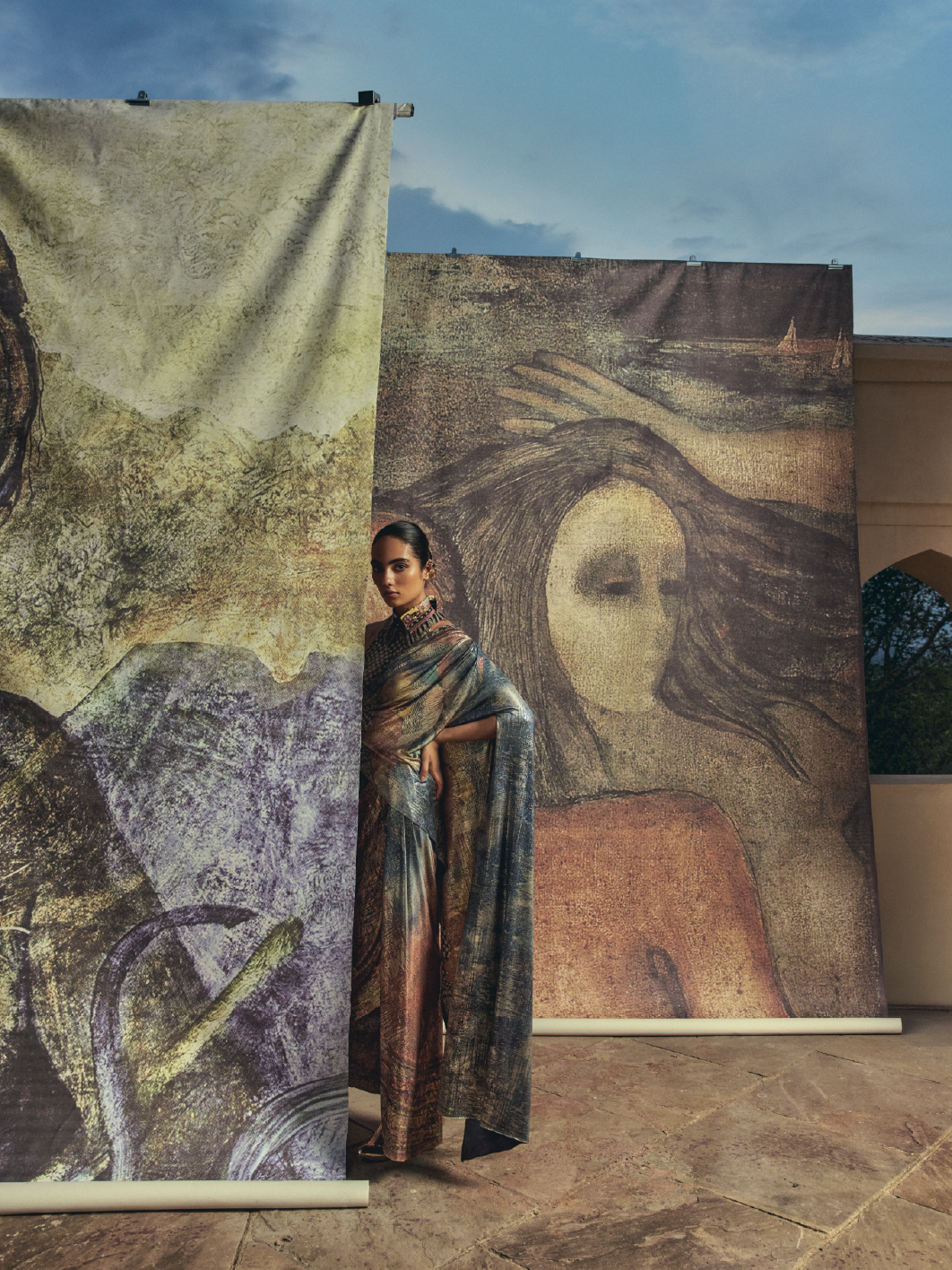
Standing beside the painted mural, a liquid-metal ensemble holds its own quiet glow
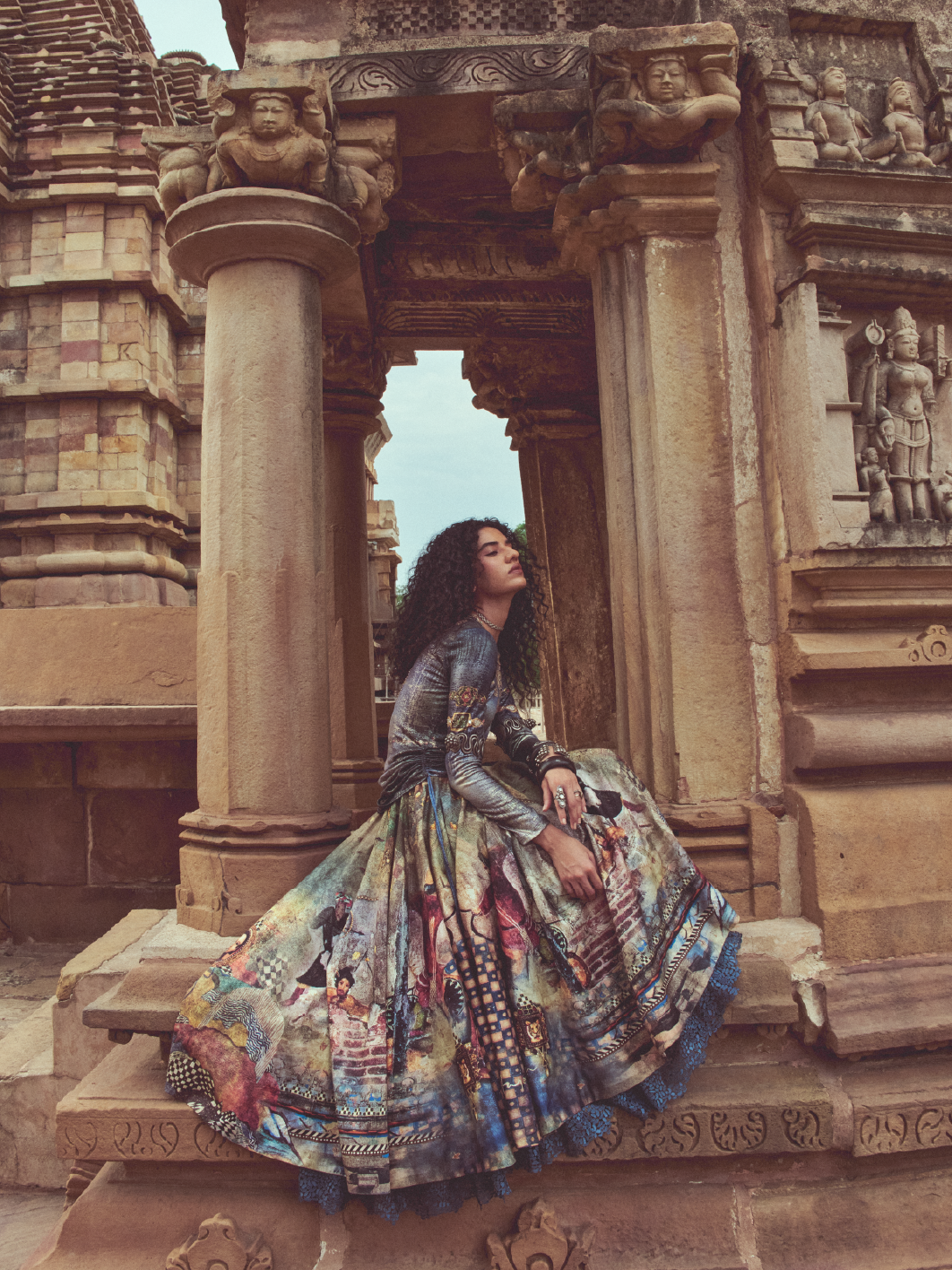
Settled on ancient temple steps, a richly printed gown pools around the model like brushwork left mid-stroke
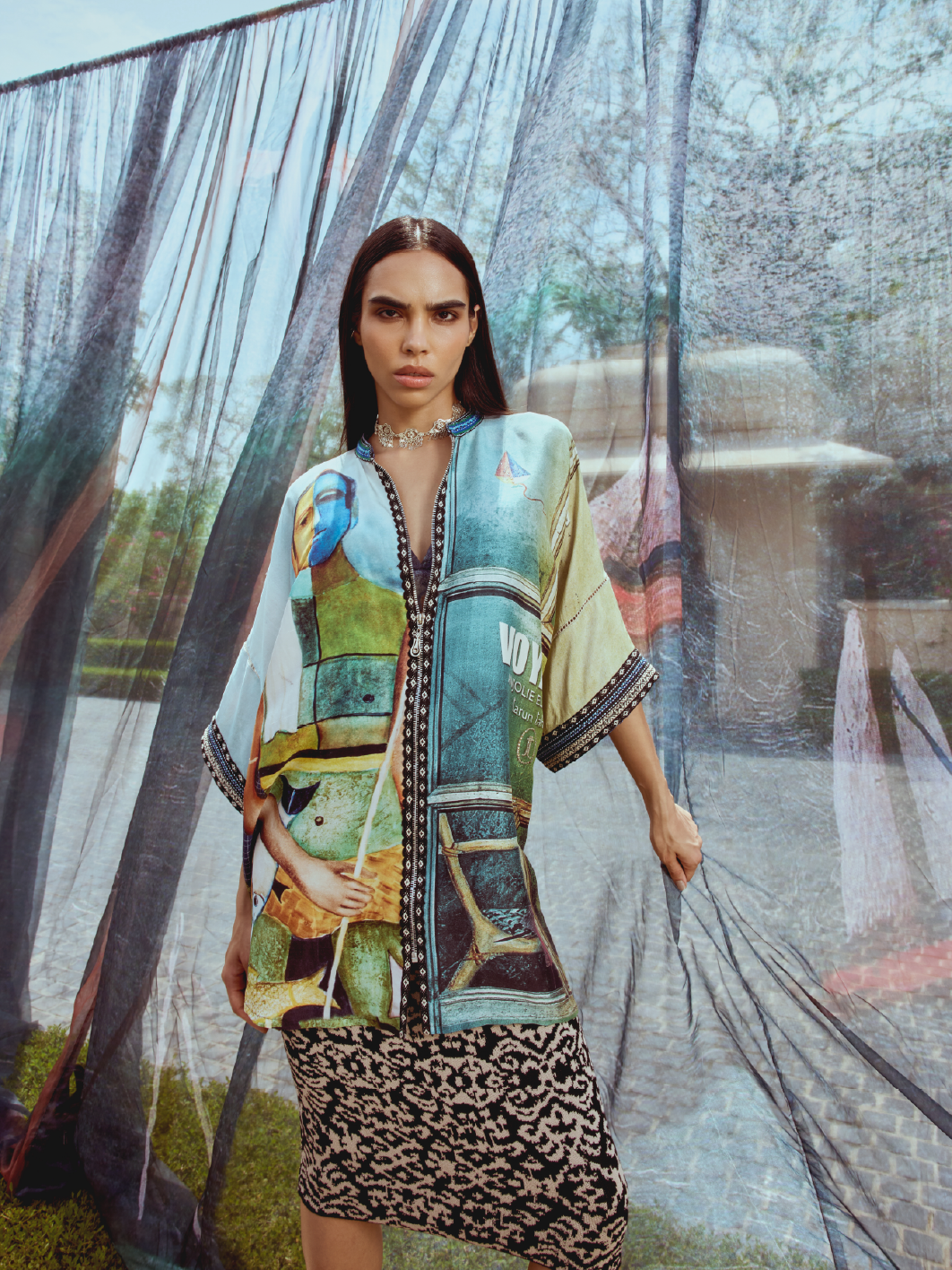
A kaftan-style tunic, painted with fragments of Anjolie's imagery, catches the breeze through sheer curtains
A concept sari rendered in Anjolie's earthy, painterly palette finds its echo in the weathered sandstone pillars around it
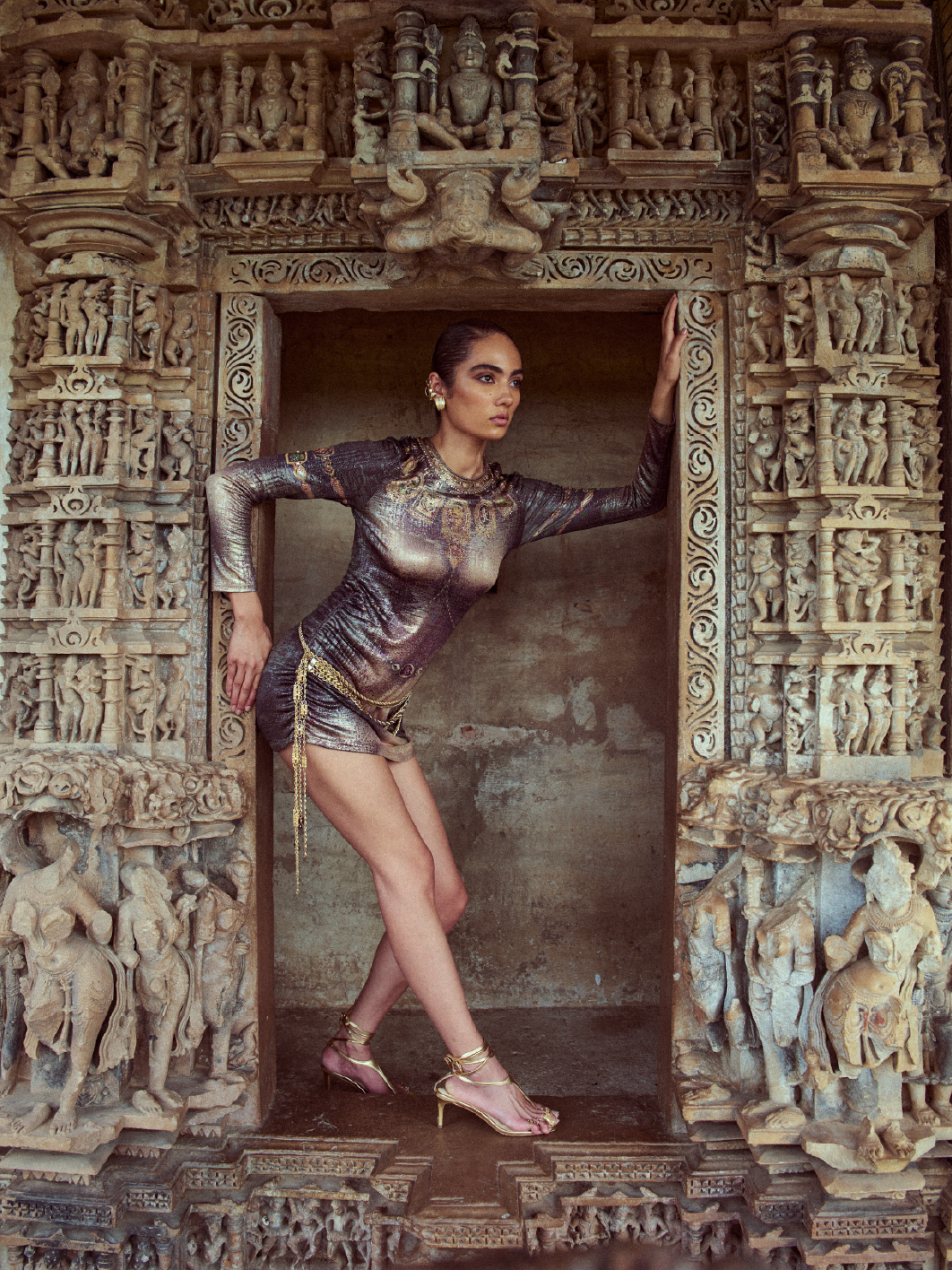
Framed within a temple archway lined with carved deities, a fluid metallic dress stands as its own small shrine to the collaboration
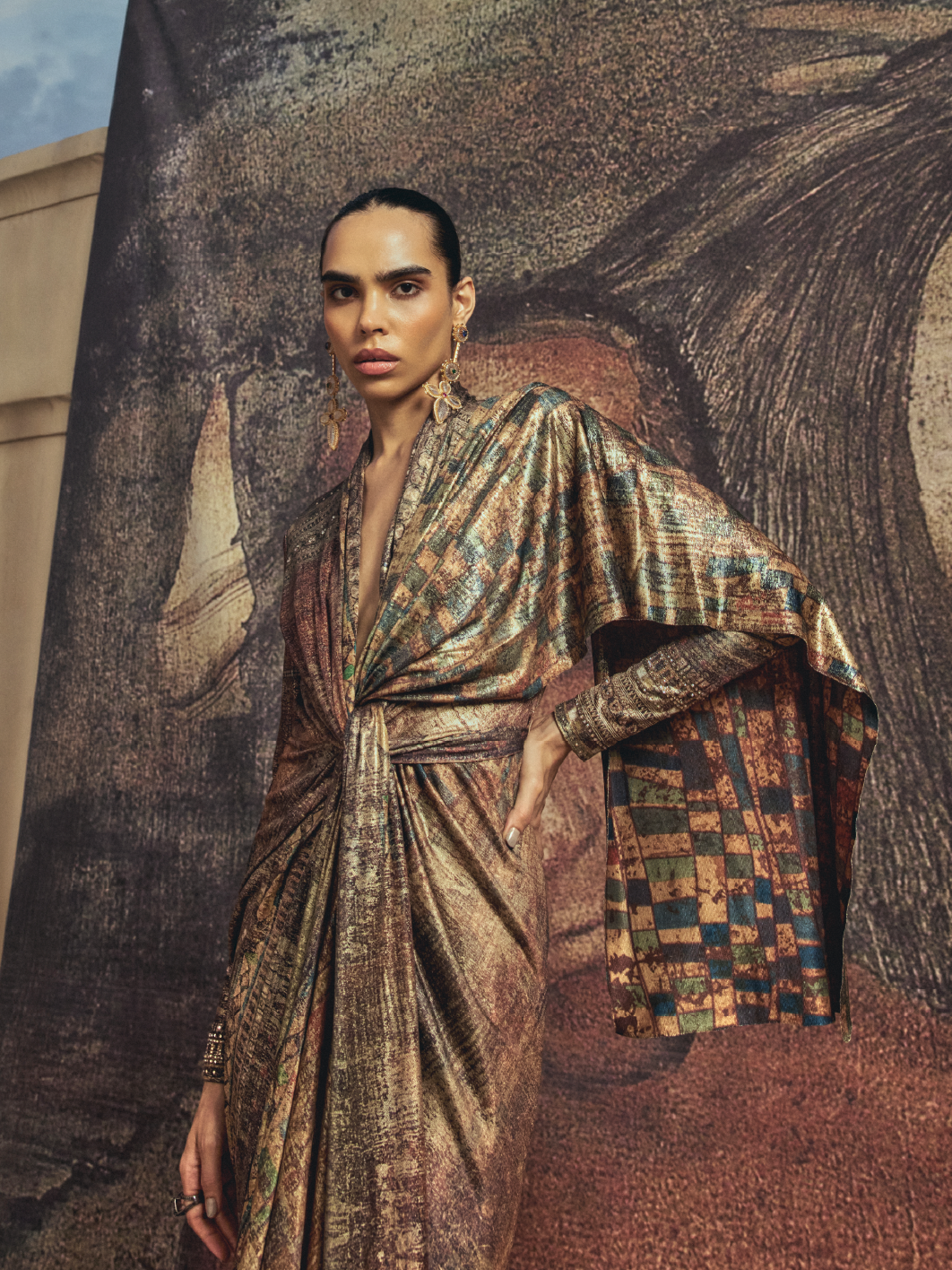
A luminous gold coat billows before the painted head — the same warm palette, translated from pigment to fabric
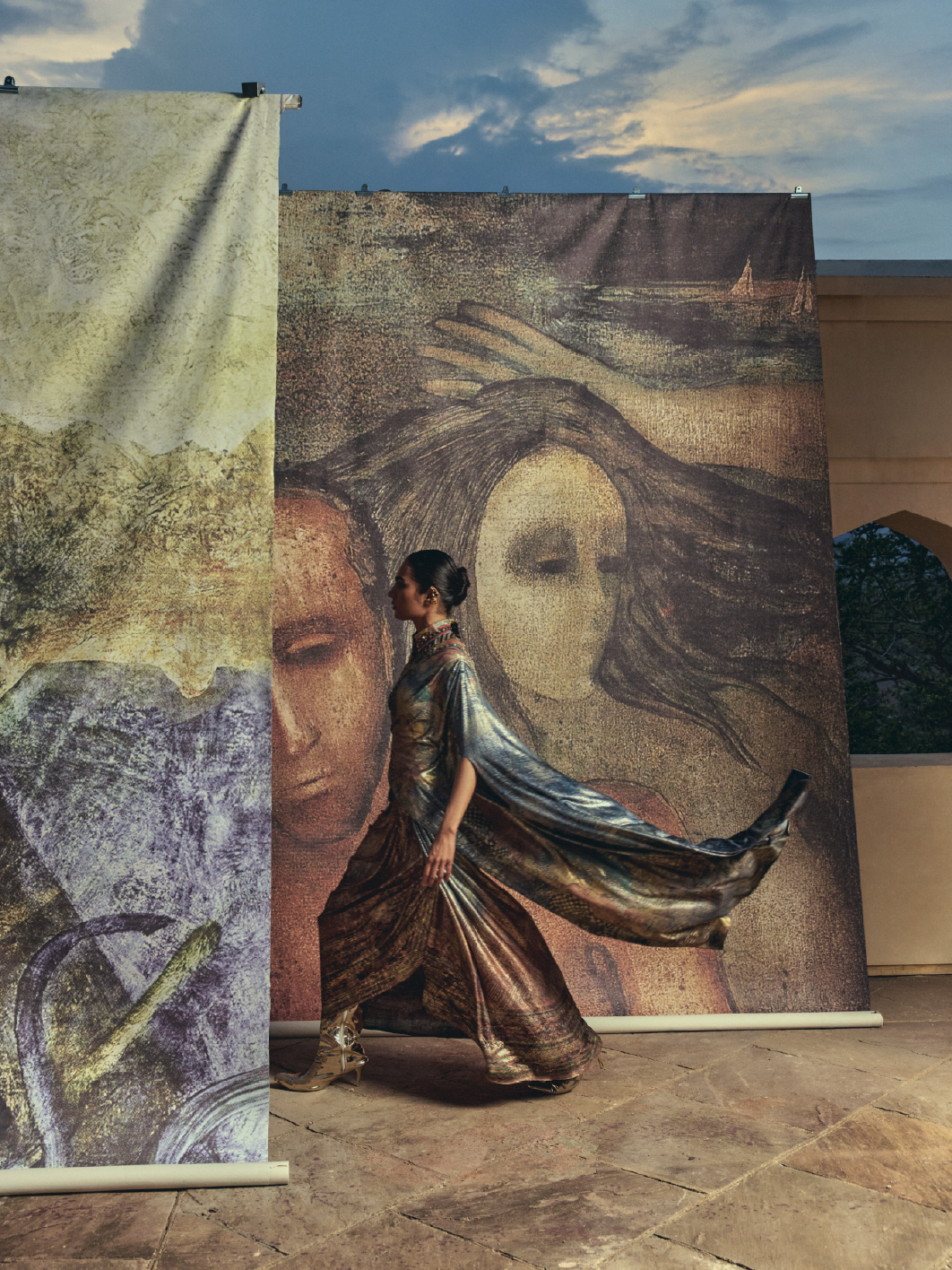
A cascading gold gown trails like liquid metal past the same haunting mural backdrop, the model mid-stride as the cape catches the air
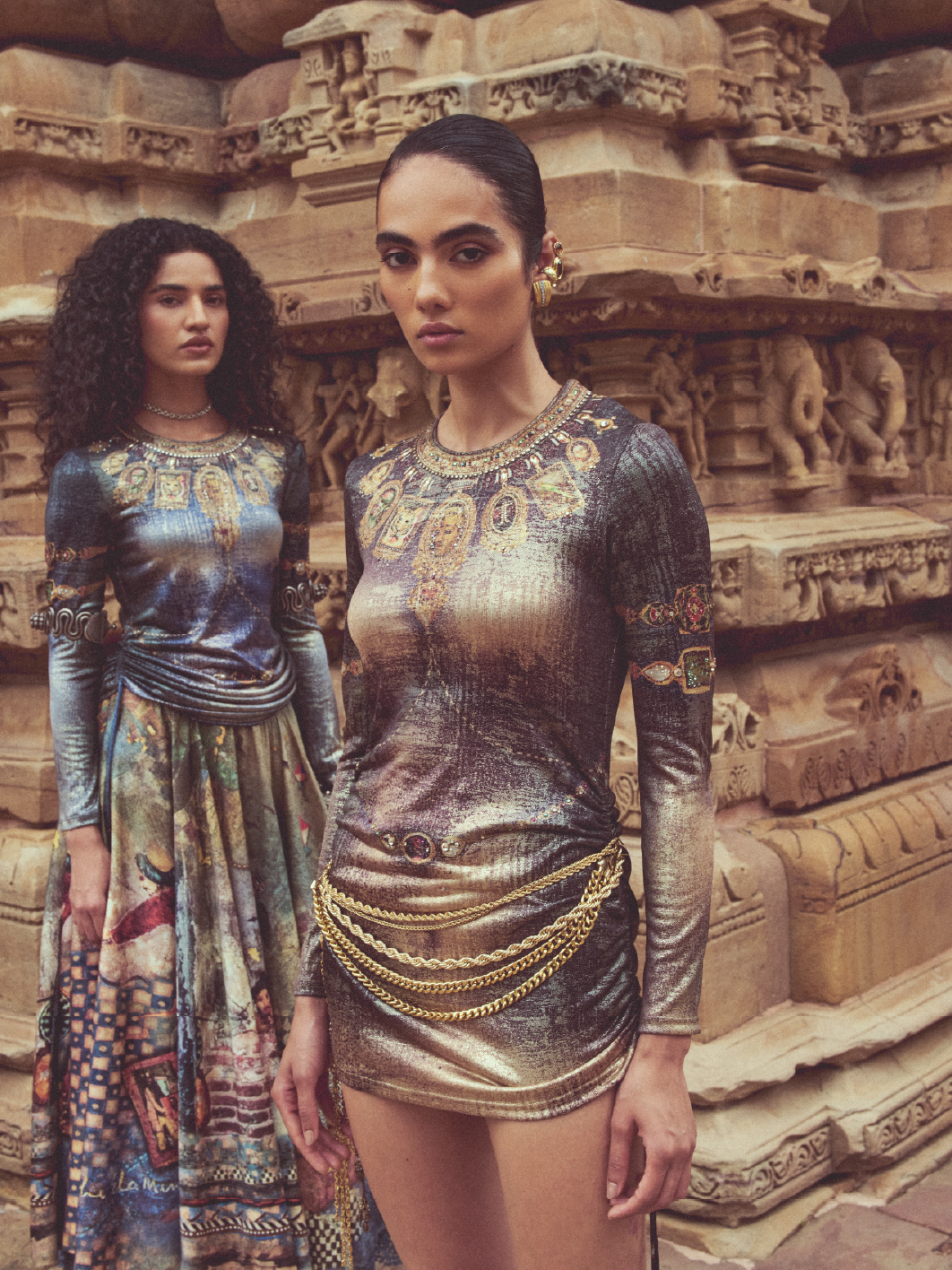
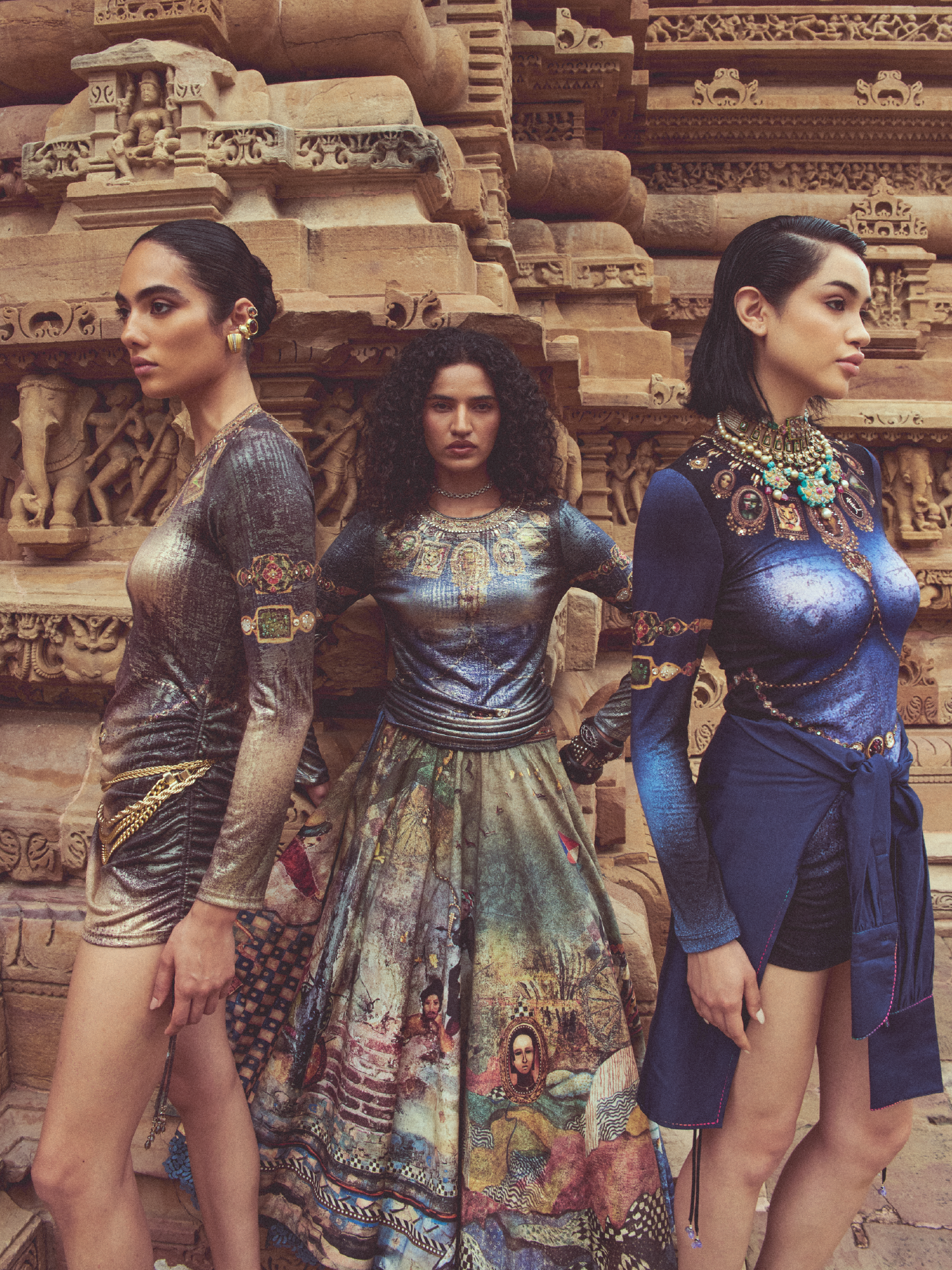
Back at the temple wall, two looks in shimmering, painterly print and layered gold jewellery close the story
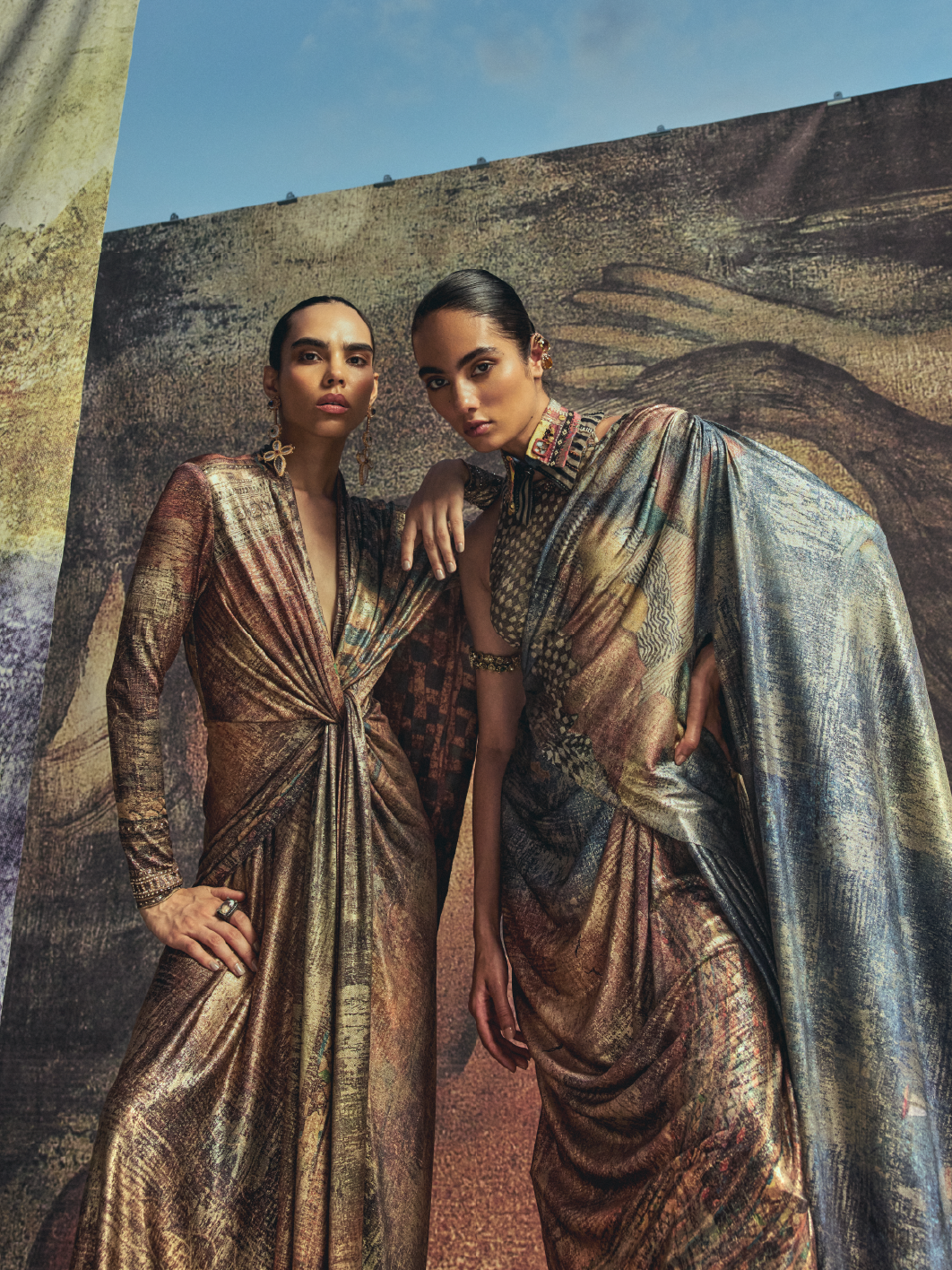
Two looks in draped gold stand together, the earthy backdrop echoing the collection's warm palette
Two worlds, one language
The story behind this collection didn't begin in a studio. It began decades earlier, when Anjolie and Tarun were still children, part of two families that had always been close. That early closeness never really faded — it just changed shape over the years, settling into a shared love for art, craft, and the quieter possibilities of Indian design. So when the two finally decided to make something together, it didn't feel like a new partnership at all — more like something that had been simmering for a while. In many ways, it's a natural extension of OTT's own philosophy of India Modern — traditional silhouettes and Indian craft reimagined as easy, contemporary prêt, this time carrying Anjolie's paintings along with them.
Anjolie's practice spans six decades and resists easy labels — a body of work that has earned her some of the country's highest recognitions, including the Padma Shri, and decades of exhibitions across India and abroad. Her portraits and contemplative figures sit somewhere between Indian visual tradition, European Renaissance painting, and a language entirely her own — one where colour carries memory, identity, and feeling rather than just filling a frame. For Anjolie, colour has always meant something — emotional, symbolic, deeply human. Tarun's world, meanwhile, has always treated craft as narrative, couture as something rooted in Indian heritage but built for the way people actually live and move today. Bringing the two together, then, wasn't a stretch. It was almost inevitable.
Anjolie puts the history of the relationship simply by saying, "I have known Tarun since he was very young, and our relationship has always been rooted in a shared love for art and beauty." And on watching her work leave the canvas altogether, she says, "A painting exists on a surface, while a garment moves with the body and becomes part of someone's life." It's a line that holds the entire idea of the collection inside it — the shift from something looked at, to something lived in.
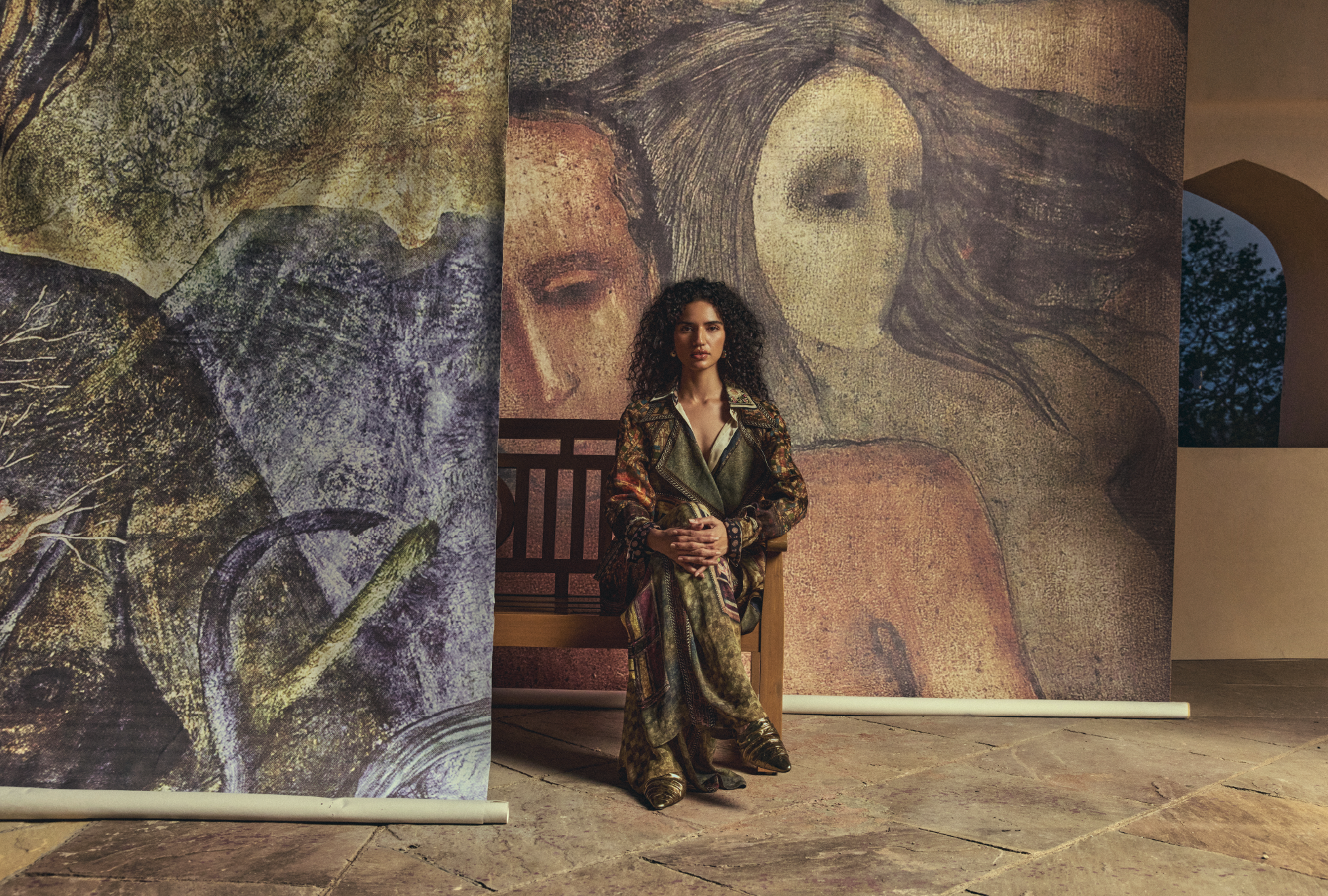
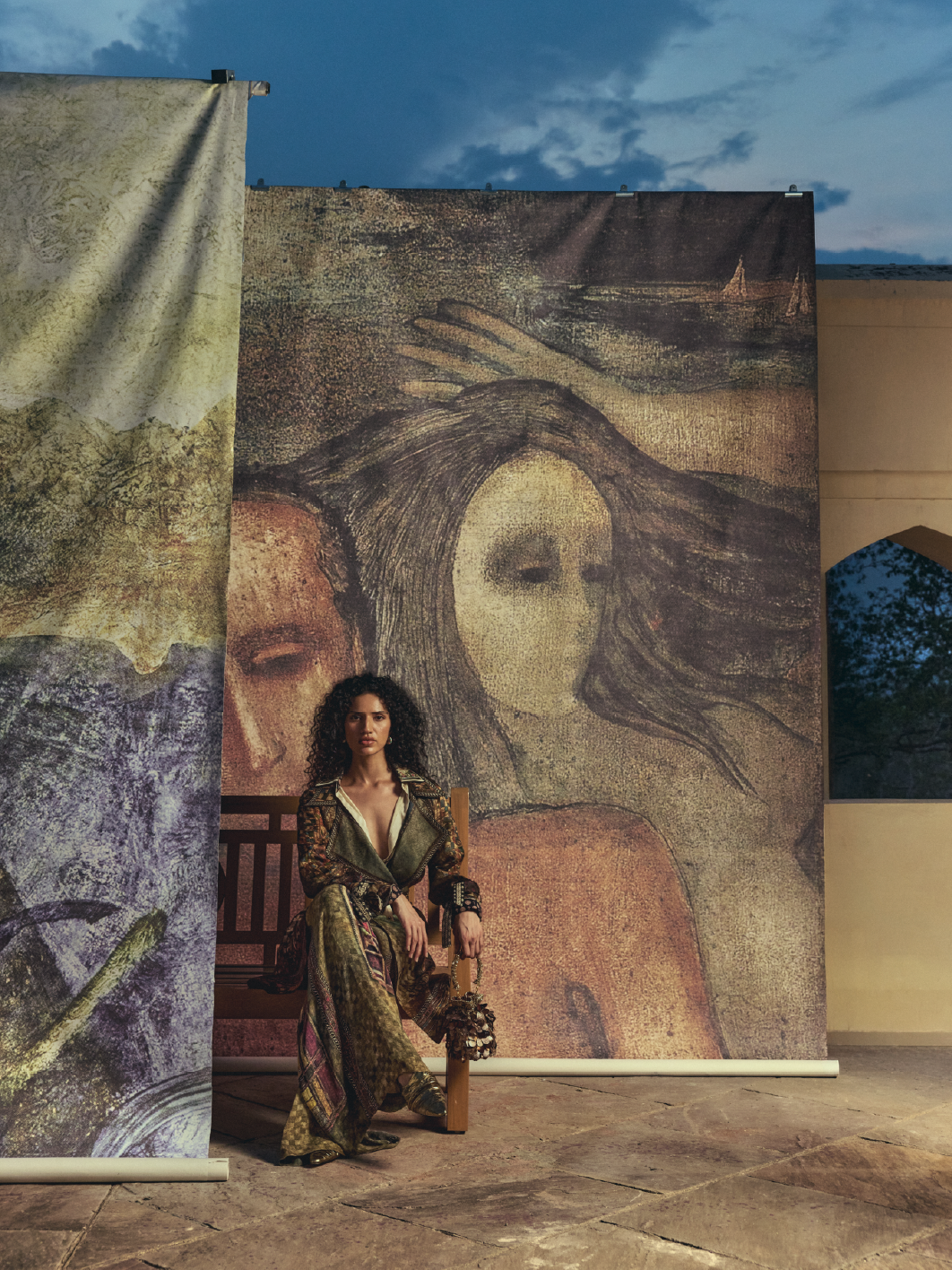
Portrait in motion An olive-and-gold ensemble settles into quiet stillness before Anjolie's painted gaze, canvas and cloth in the same warm register
A living canvas
Once the idea took hold, the harder question followed, how do you actually put a painting on a body without simply printing it there? The answer, it turns out, was to stop thinking of the garment as a surface and start thinking of it as its own canvas. Anjolie’s iconic heads, portraits, and painterly fragments weren't just repeated across the collection. Each piece was composed on its own, shaped by the silhouette it belonged to.
The collection carries all of Tarun's signatures — draped skirts, concept saris, fluid tunics, easy separates, coordinated sets, rendered in deep lapis blues, rich vermilions, luminous greens, and softened earth tones lifted straight from Anjolie's own palette. Designed to move from day into evening without missing a beat, each piece translates the brand's couture heritage into contemporary luxury prêt.
Tarun speaks of the collaboration as something that runs deeper than a single season: "Anjolie has been part of my creative universe for as long as I can remember. This collaboration feels less like a meeting of our worlds and more like the continuation of a relationship that has existed for decades." And on the actual work of translation, he says the intent was never to place her paintings onto garments, but "to understand how her imagery could live on the body, move with it and become part of the wearer's own story."
In the end, the collection is all about work that’s seeped in decades old friendship and a collection where art isn’t just borrowed for a season, but has found its own translation with fashion.