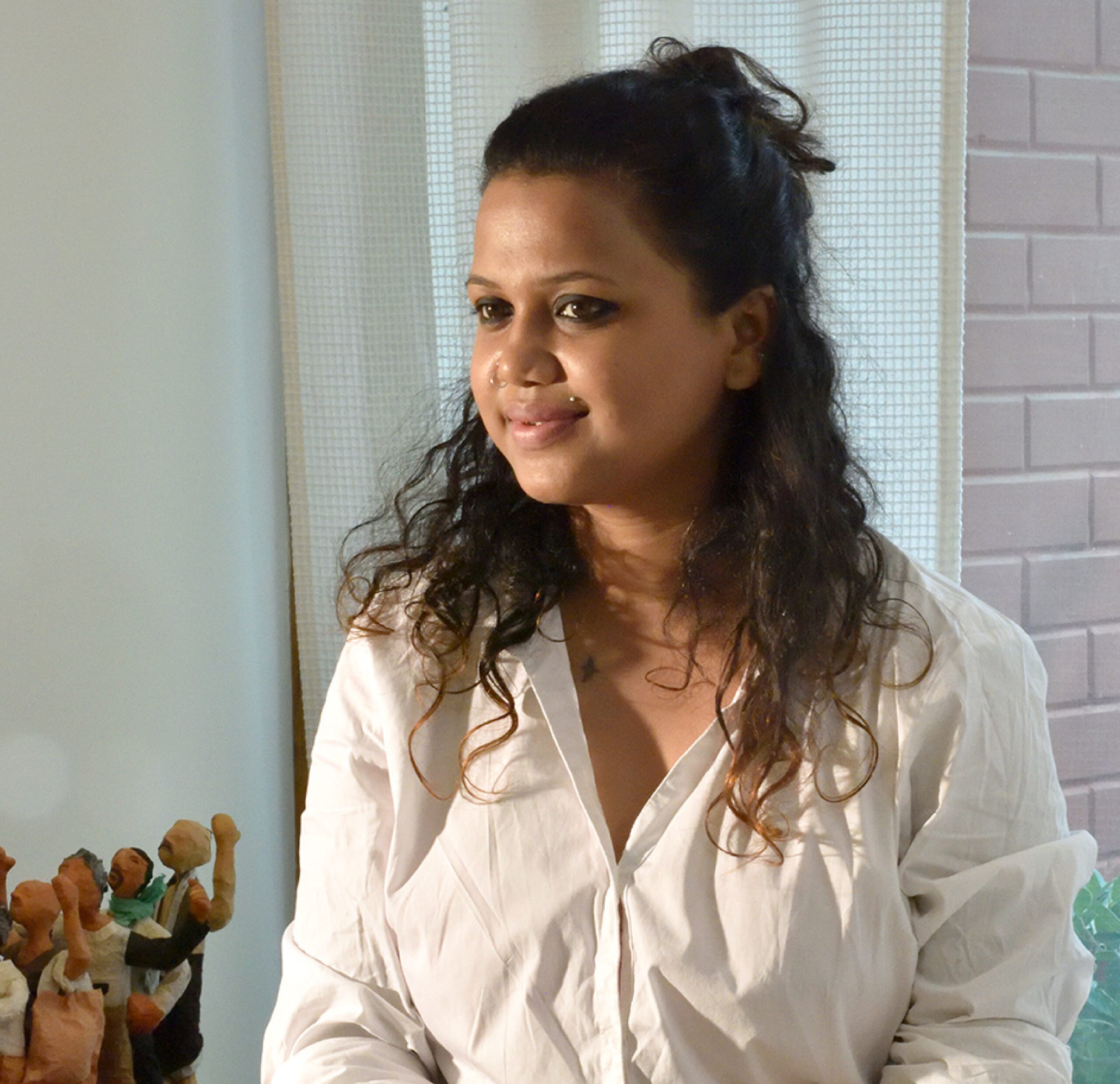
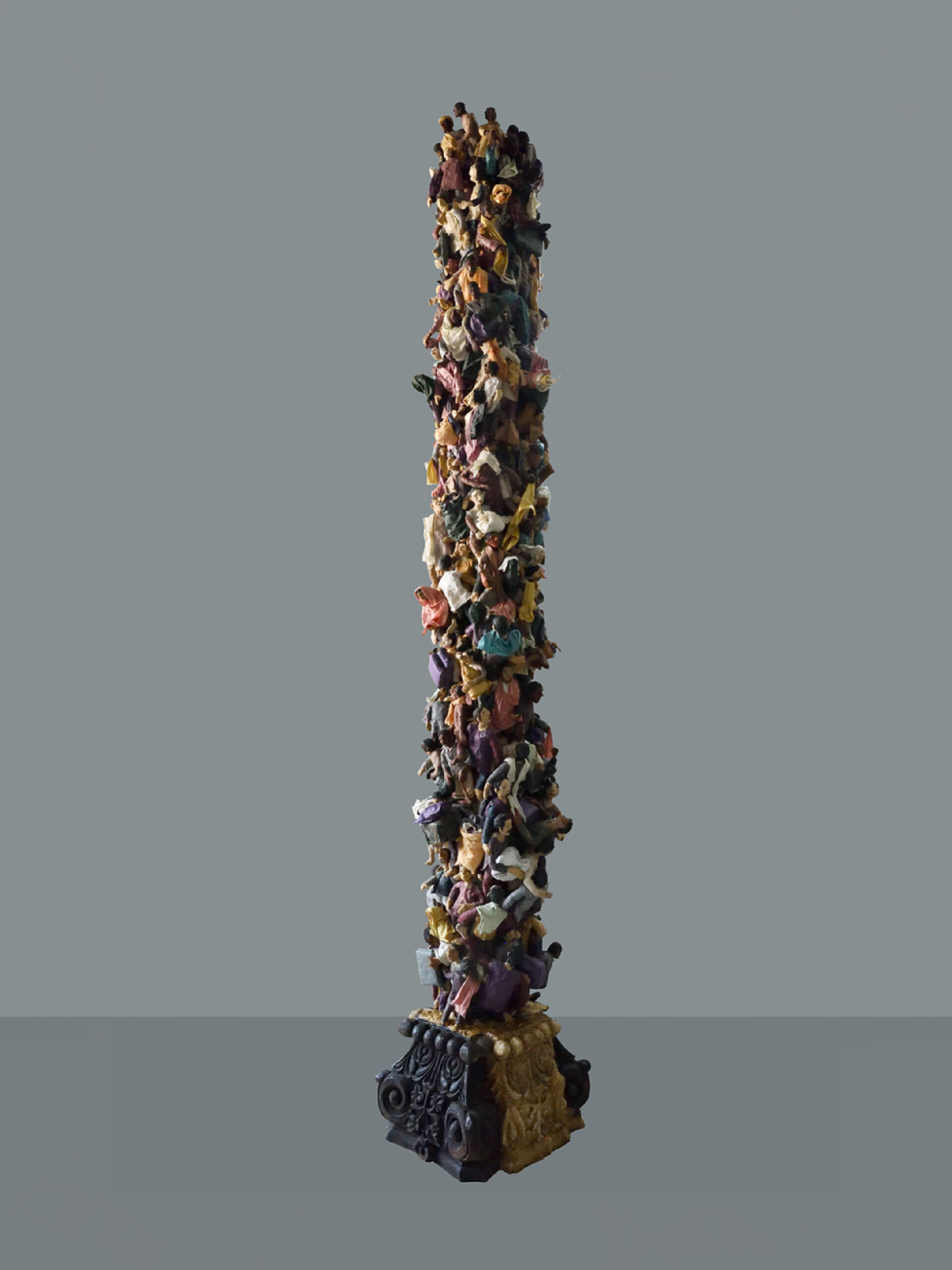
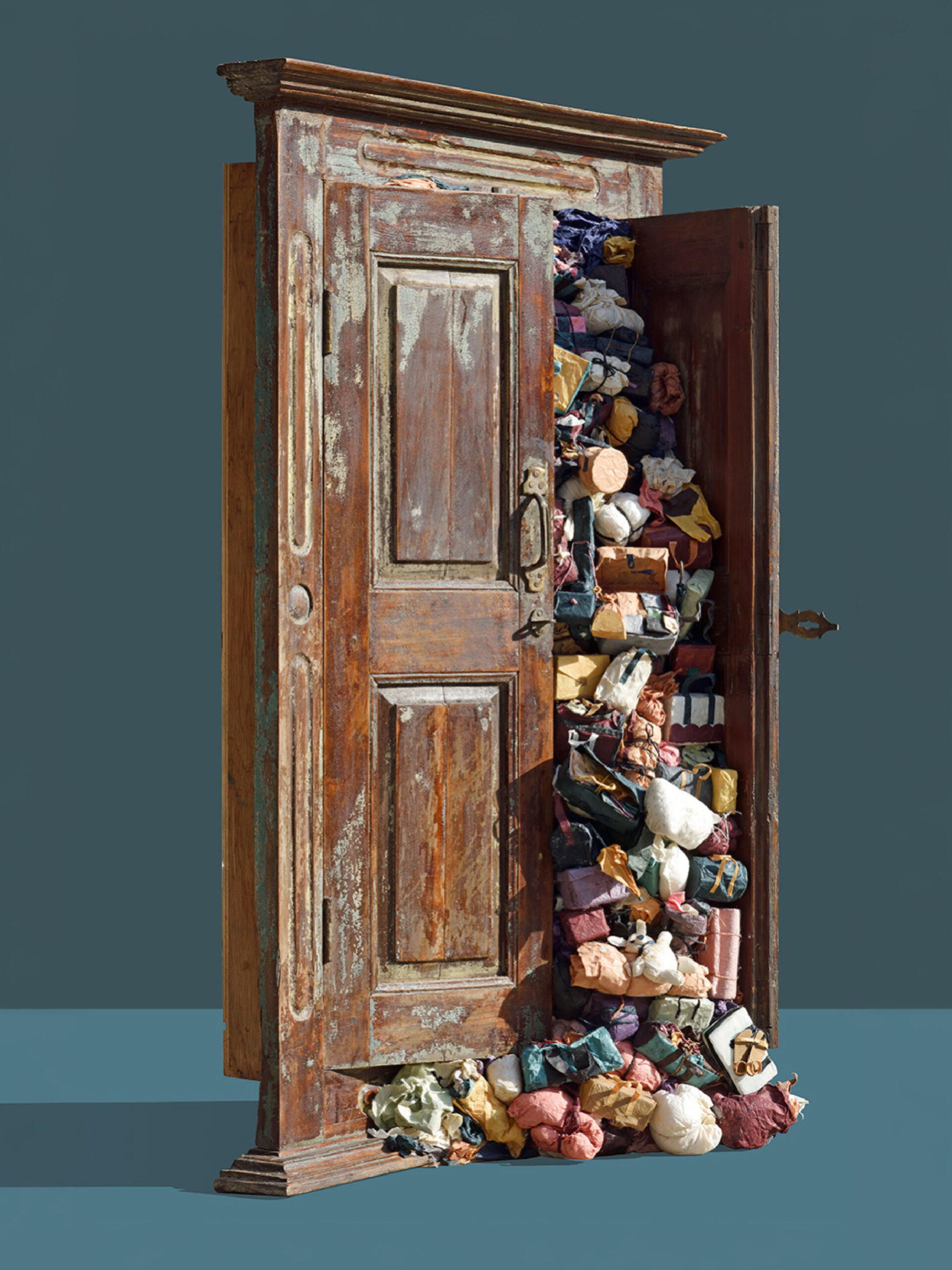
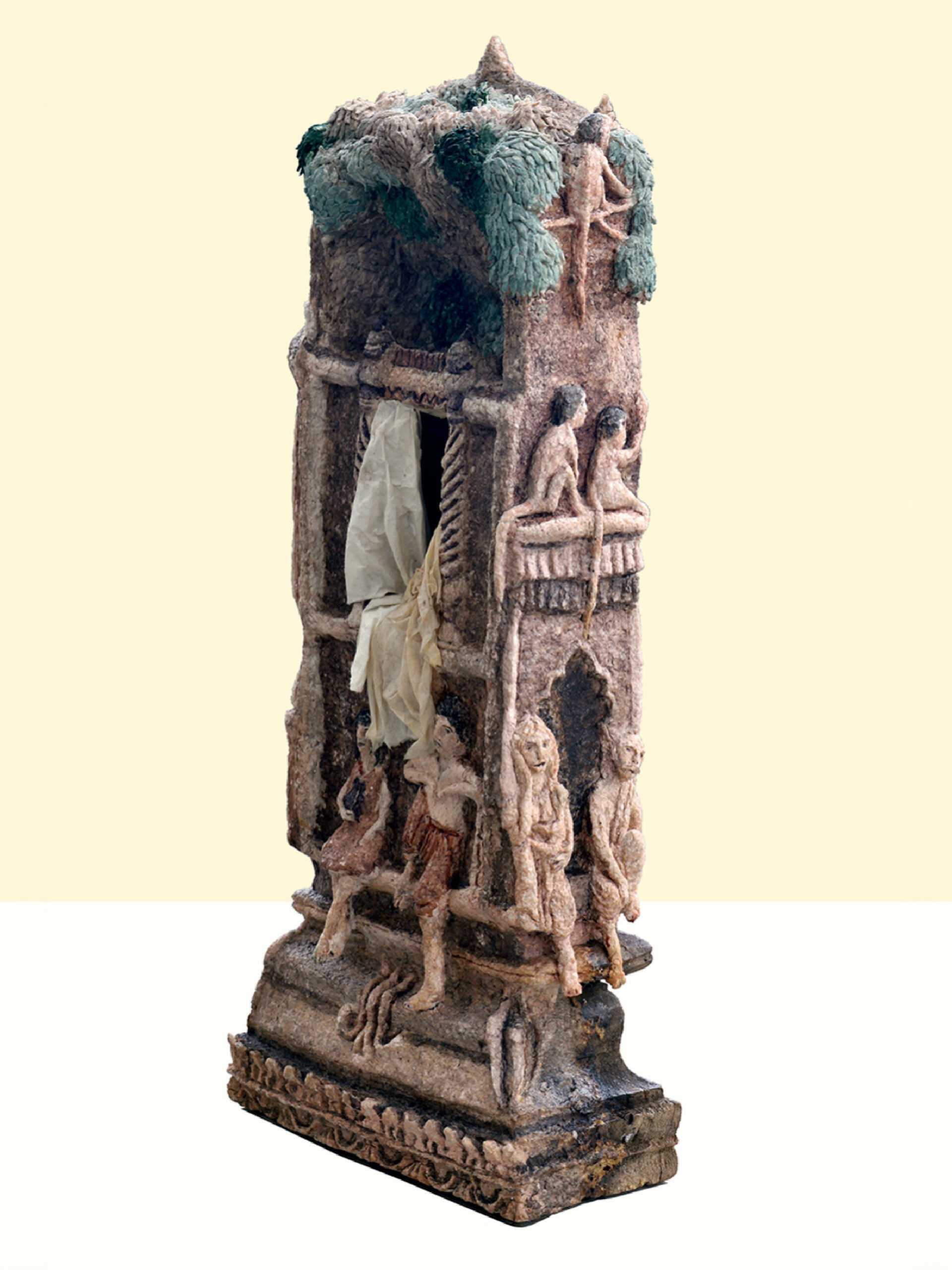
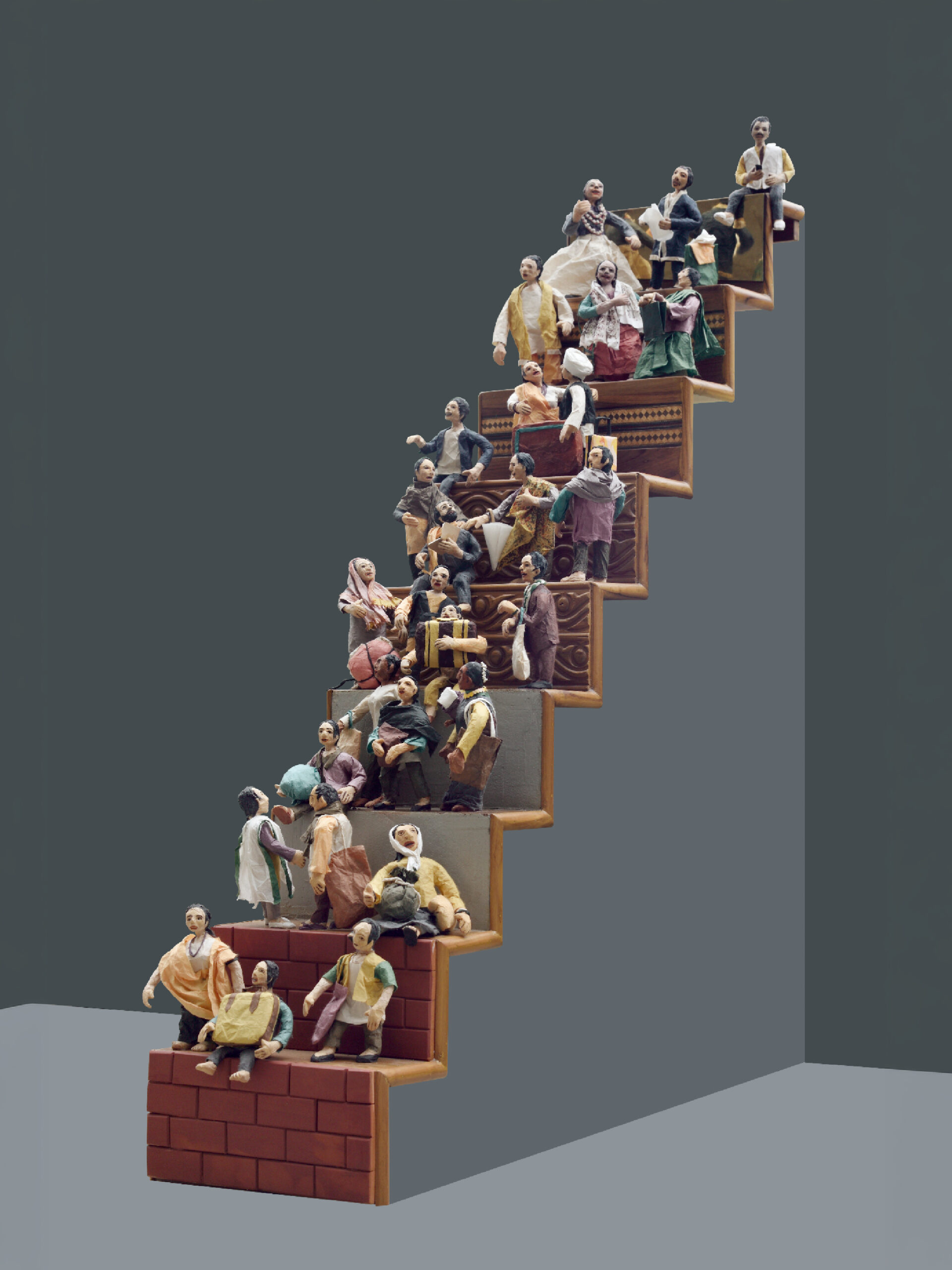
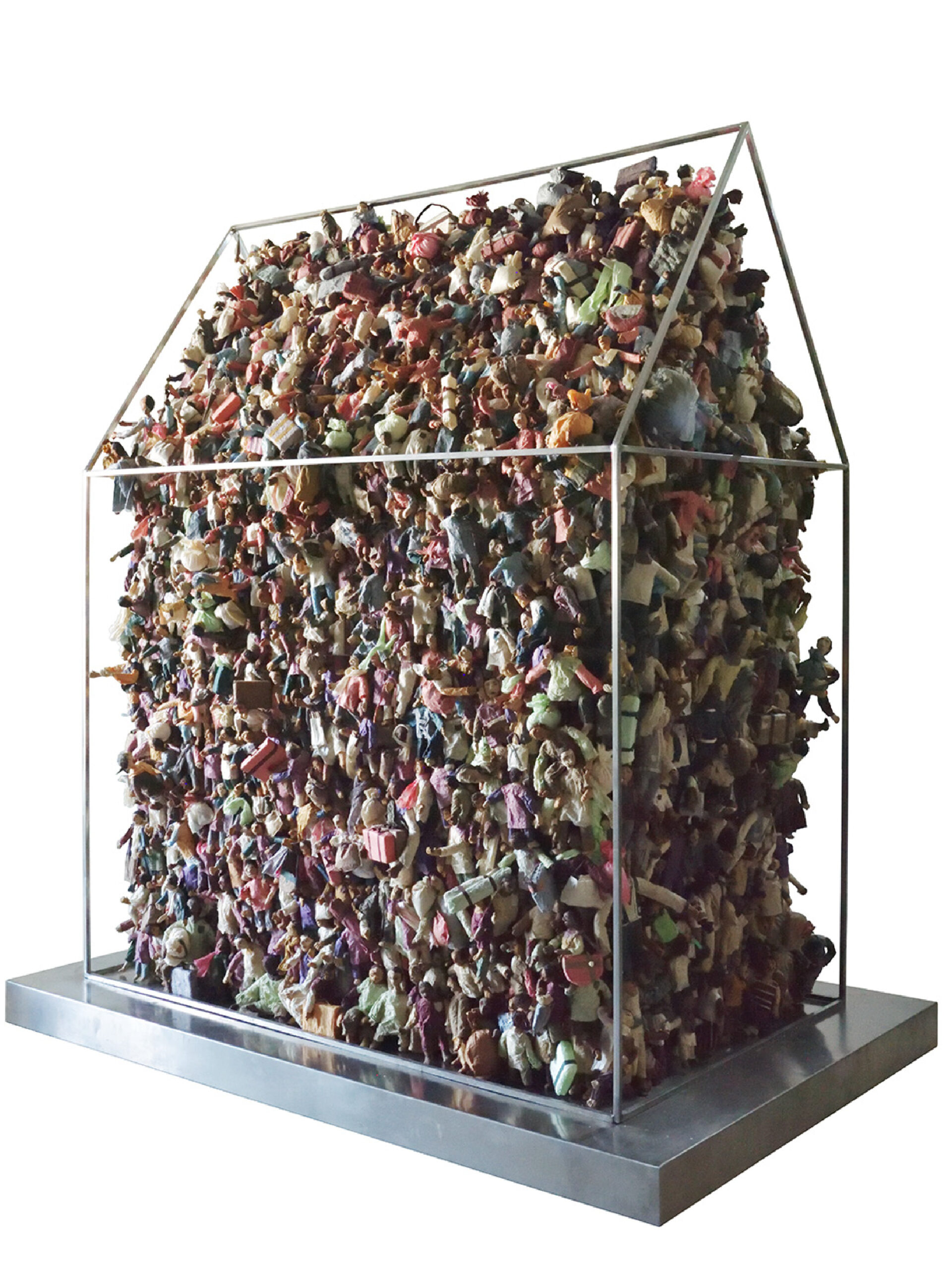
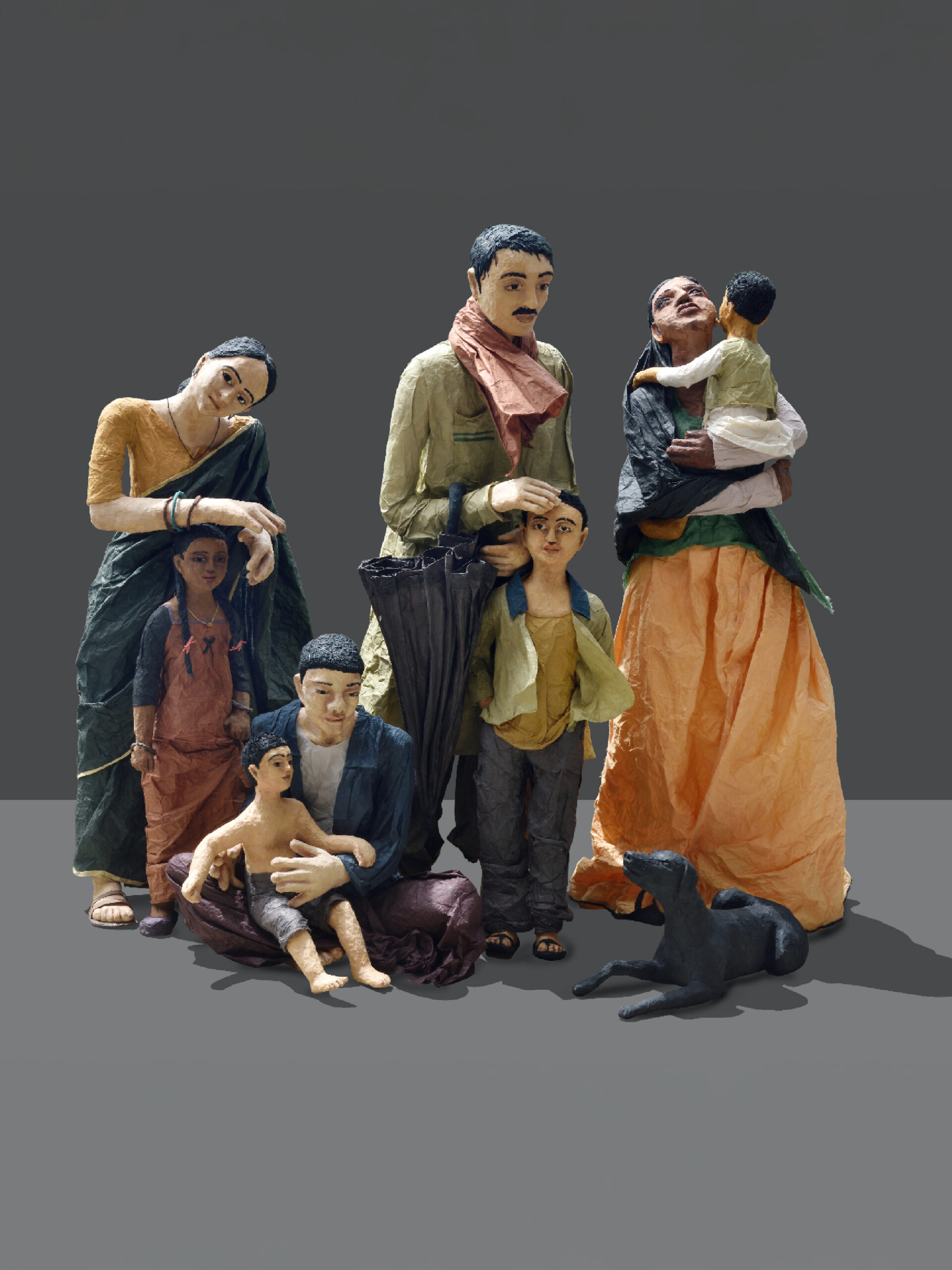
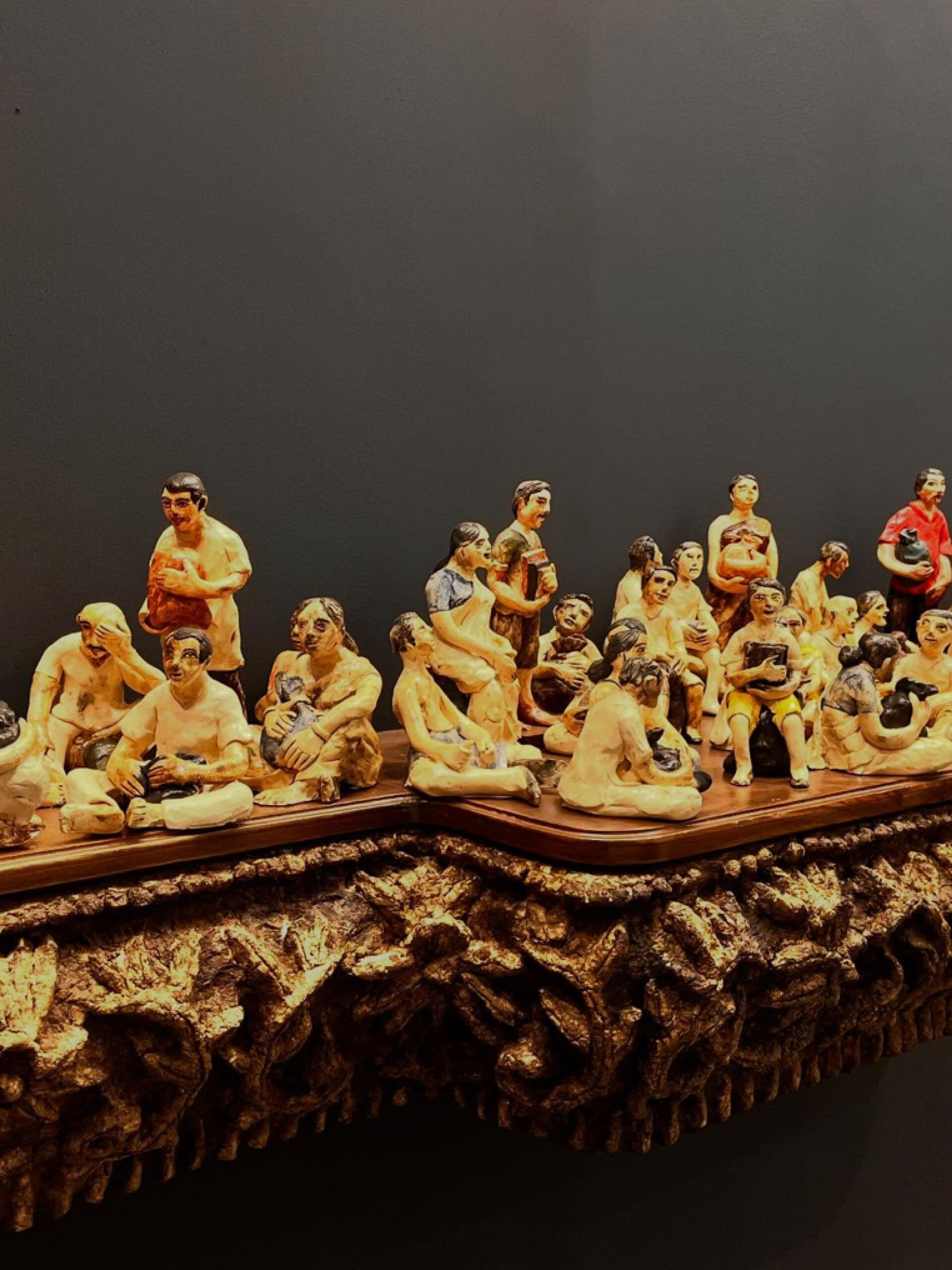
There is something almost paradoxical about choosing paper as your primary material when you want your work to last. Paper tears, yellows, dissolves, catches fire; yet that is exactly why Sudipta Das, an Indian contemporary artist, reaches for it, fragment by fragment, sometimes a thousand pieces in a day, building figures so delicate, a breath could undo them. Born in Silchar, in Assam's Barak Valley, and now based in Vadodara, Sudipta has spent over a decade turning that fragility into a language for migration, memory, and resilience.
Home, and the water that shaped it
Displacement runs through nearly all of Sudipta Das’s work, but it isn’t an abstract subject for her. It’s something she’s lived through. Ask her when it first entered her work, and she doesn't point to a single moment, she points to a life she had closely seen and known.. Growing up in Silchar, the floods weren't disasters, they were just part of how the season moved. As water rose, families moved into temporary shelters, rebuilt and waited it out. Alongside the hardship was real joy. Schools shut down and she and her brother rowed banana-trunk boats to the neighbour's house. "As a child, I didn't recognise these moments as displacement," she says. "I thought they were simply life."
Underneath that was an older, quieter inheritance. Her ancestors had crossed from East Bengal (present day Bangladesh) and even four generations on, they still spoke Sylheti at home, still kept a trunk or photograph carrying more weight than its size suggested.
Then came Santiniketan — Kala Bhavana, at Visva-Bharati University — and everything shifted. She arrived wanting to make images; she left understanding that art could hold history, politics, and poetry at once. Studying artists like Ramkinkar Baij and Benode Behari Mukherjee, who had lived through partition themselves, gave her a vocabulary for what she now calls "temporary shelter” not just displacement, but any time people are forced to rebuild somewhere unfamiliar. "It taught me to trust slow observation," she says, "and to allow ideas to grow organically."
That habit of slow observation never left her. She still stops mid-walk to study a roadside settlement, noticing how a family fits a kitchen, cupboard, and a bed into almost nothing, how bare pavement by day becomes a full household by night, lit by lamps from somewhere unclear. It isn't crisis that draws her in, she says, so much as the quiet ingenuity of people building a life out of very little.
Of all things, why paper?
Sudipta didn't start out as a paper artist. In college she painted in oils, sometimes pixelating faces to erase identity, a nod to Gerhard Richter's blurred canvases. But she discovered that oil paint was too final, as it didn't let her undo anything. What she wanted was a material that could be built, torn down, and rebuilt without pretending the damage never happened, and paper turned out to be that contradiction. It is cheap and fragile, yet also the material we trust with everything that matters like birth certificates, passports, letters, photographs, etc. "The material that carries our most important memories," she says, "is also one of the most fragile."
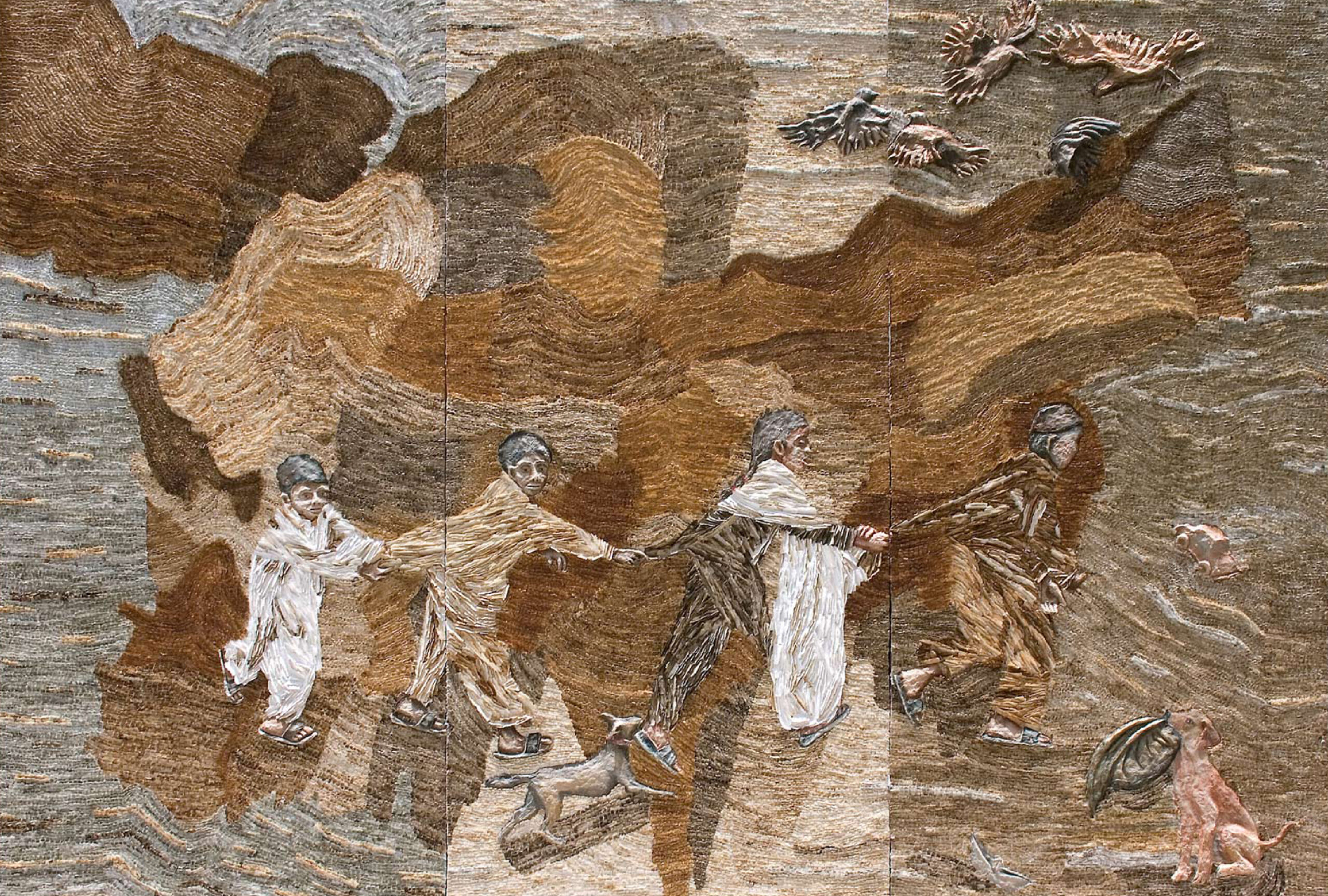
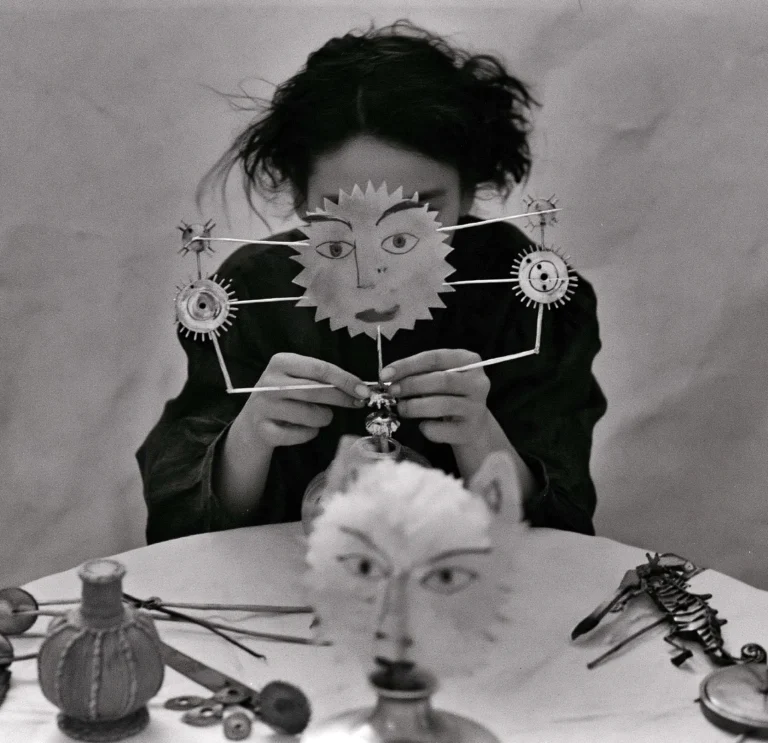
So, the studio became a ritual space, building frames, tearing paper into confetti, layering, drying, sanding, repairing and starting over, often to Sufi or classical music. A single figure can take days waiting for glue to dry. She calls it meditative: "Every layer records time." None of the figures are portraits, they're deliberately anonymous, "carriers of shared human experience," rather than likenesses of anyone in particular. Even her flat board work already had a kind of dimension to it, a relief texture you could actually touch, and Sudipta had been reaching for more of that: something three-dimensional, but fragile rather than solid or permanent. Before her Korea residency, she'd made one life-size sculpture, her first three-dimensional figurative piece, now on permanent display at Art Ichol. In 2015, a residency in Taiwan pushed that further: a 20-foot paper globe built entirely from torn comic book pages.
In 2017 at Gochang Art Studio in South Korea, that search continued. Sudipta noticed the country's own deep paper-making history and spent her free time visiting museums, where she came across large ceremonial dolls made for weddings and family rituals, dolls that were surprisingly big yet remarkably light and fragile. Curious how, she looked into their history and traced them to a traditional practice called dakji doll making. She asked the artisans if they'd teach her. They agreed, but on their terms: she'd have to train exactly as they did first, the way apprentices learn miniature painting, living and working alongside them for three months before adapting anything of her own. Only after that could she begin bending the technique toward her own work. She still blends Korean hanji with Nepali, rice, and Indian handmade paper.
When the kiln is fired up
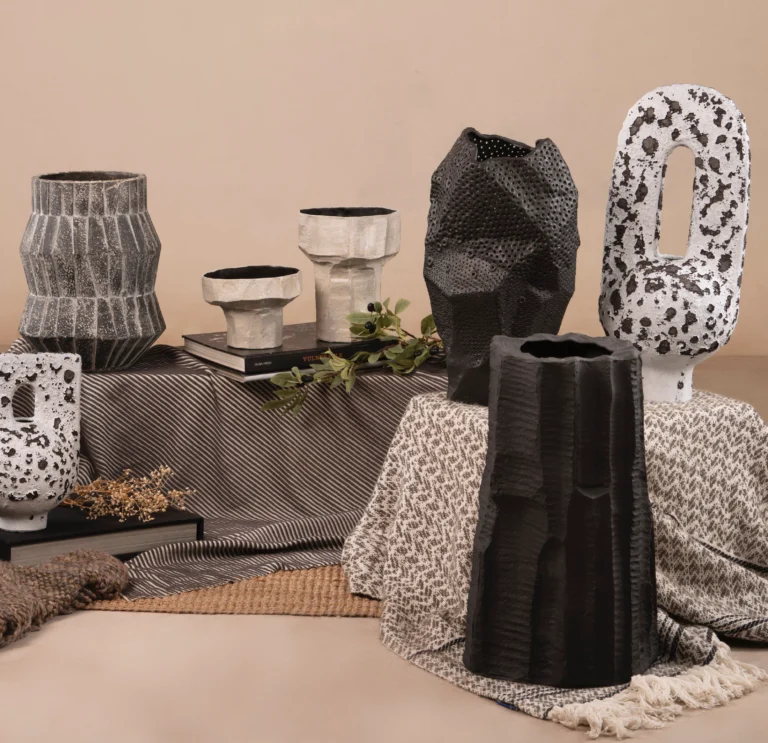
Lately, Sudipta has also begun working with clay, a surprising fit once you notice what the two materials share. Paper is fragile because it's light, clay because it's unpredictable. "With paper, I control almost every stage," she says. "With clay, the kiln becomes a collaborator." For an installation at Art Mumbai, she planned two hundred ceramic figures; after firing and glazing, only about half survived. To her, that isn't failure. It's the same idea, just picked up in a different material.
A practice built on empathy
Ask Sudipta if her work counts as "bearing witness," and she pushes back gently. She isn't documenting anyone's story, she says. She's making room for empathy. That comes through in Crossing Over, where a line of figures crosses a bridge carrying almost nothing. For Sudipta, the bridge isn't a structure. It's all threshold people cross without knowing what waits on the other side, the same posture, she notes, as daily-wage workers lined up at dawn. Even the dogs that keep turning up in her work carry that same idea forward: displacement was never only human.
There's a reason her figures stay small. You walk right up, close enough that the room falls away a little. "I don't hope they leave with a single interpretation," she says. "I hope they pause." It's happened in galleries across India and, more recently, at Harvard's Mittal Institute. Different rooms, different histories, but the reaction barely changes, she says. Someone stops. Someone looks a little longer than they meant to. Somewhere in that pause, a stranger finds a version of their own life folded into one of her anonymous paper figures, and for Sudipta, that's the whole point. Every migration, she says simply, carries a human story. Hers just happens to be made of paper.