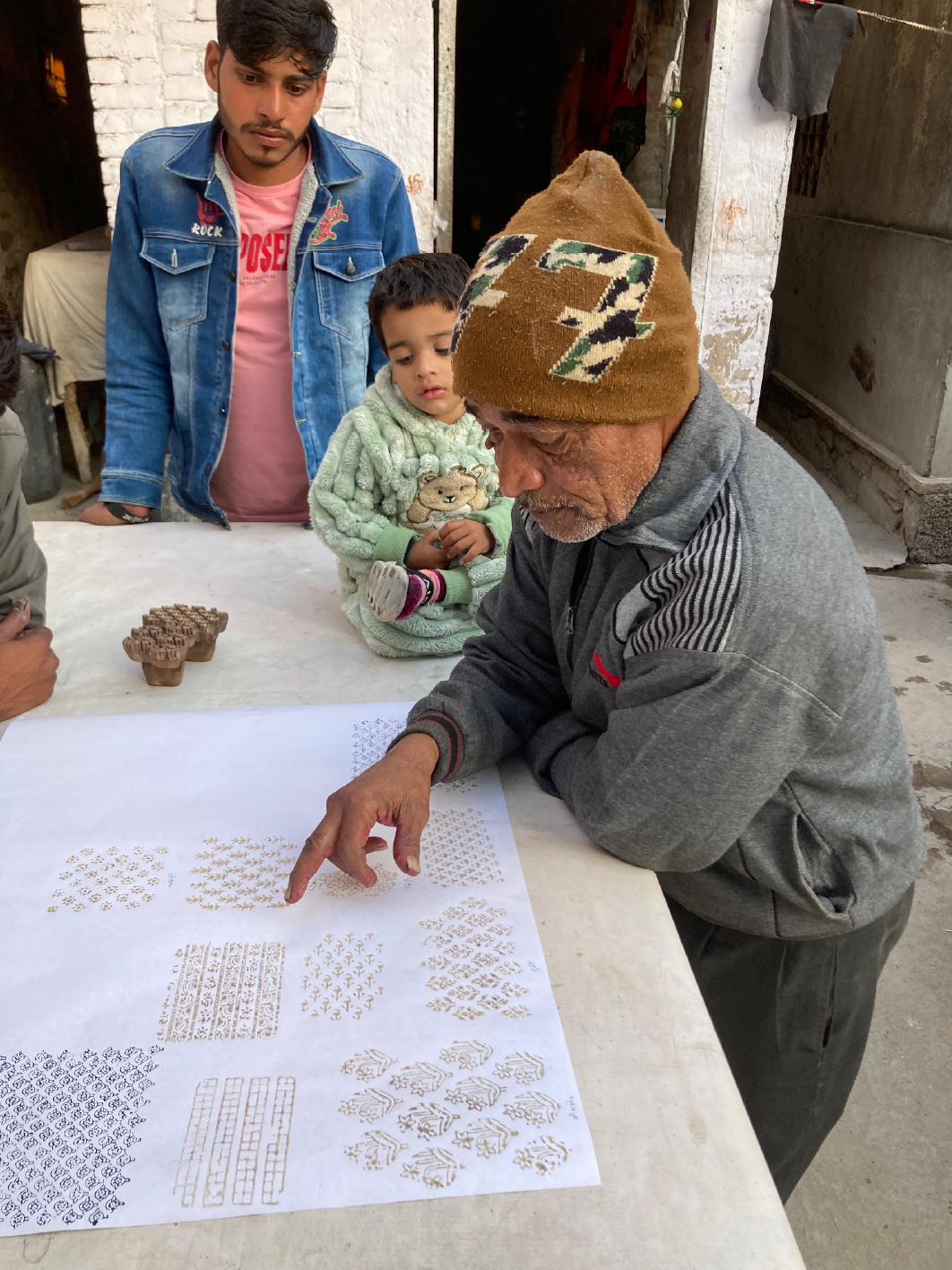
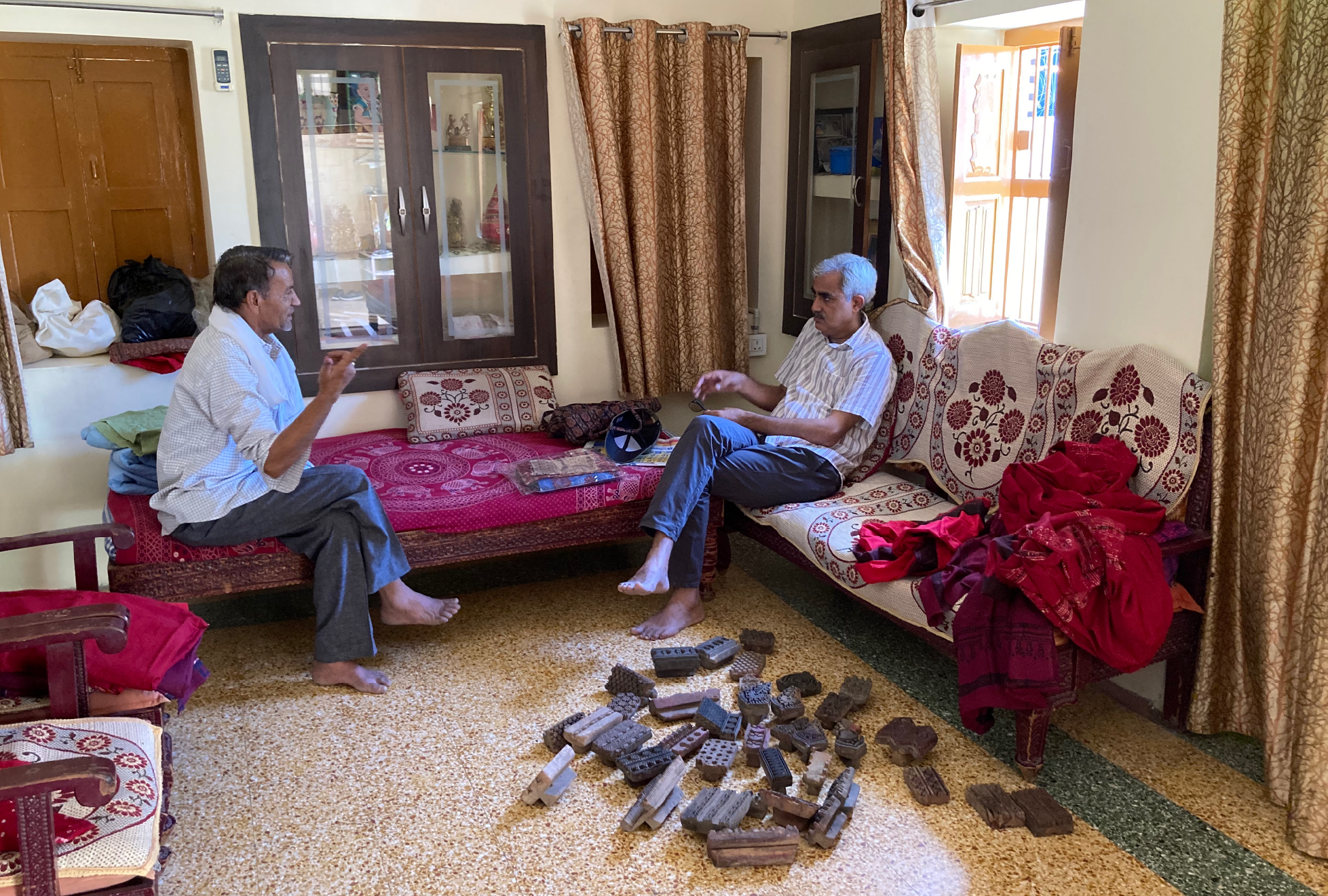
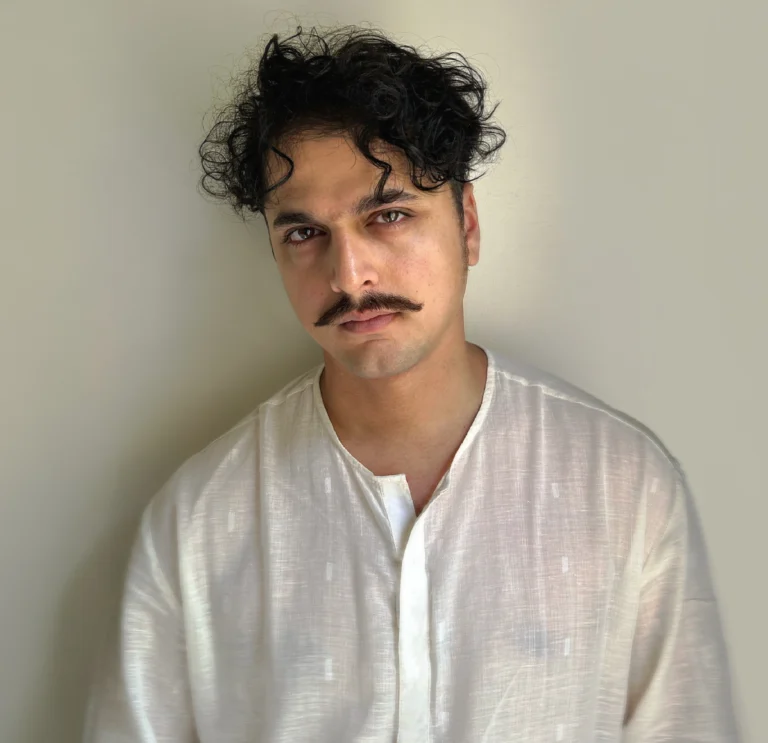
It started with twelve quiet days in Narayanpur, in Rajasthan's Sawai Madhopur district — a village Dr Madan Meena had returned to in 2012 for a round of family rites. On the third day, with nothing to do until the next ritual, he found himself walking toward villages his uncles used to speak of, in search of printers who had once supplied his own family's cloth.
It wasn't really about curiosity. His family had left their own village for Kota generations earlier, after his father took a job with the railways — a shift that left him, despite belonging to Rajasthan's Meena tribal community, cut off from his own history. The walk through Narayanpur's surrounding villages, was an old instinct playing out again — one that had already shaped his doctoral research, into his own community's Mandana wall paintings, and would go on to shape nearly everything he's worked on since.
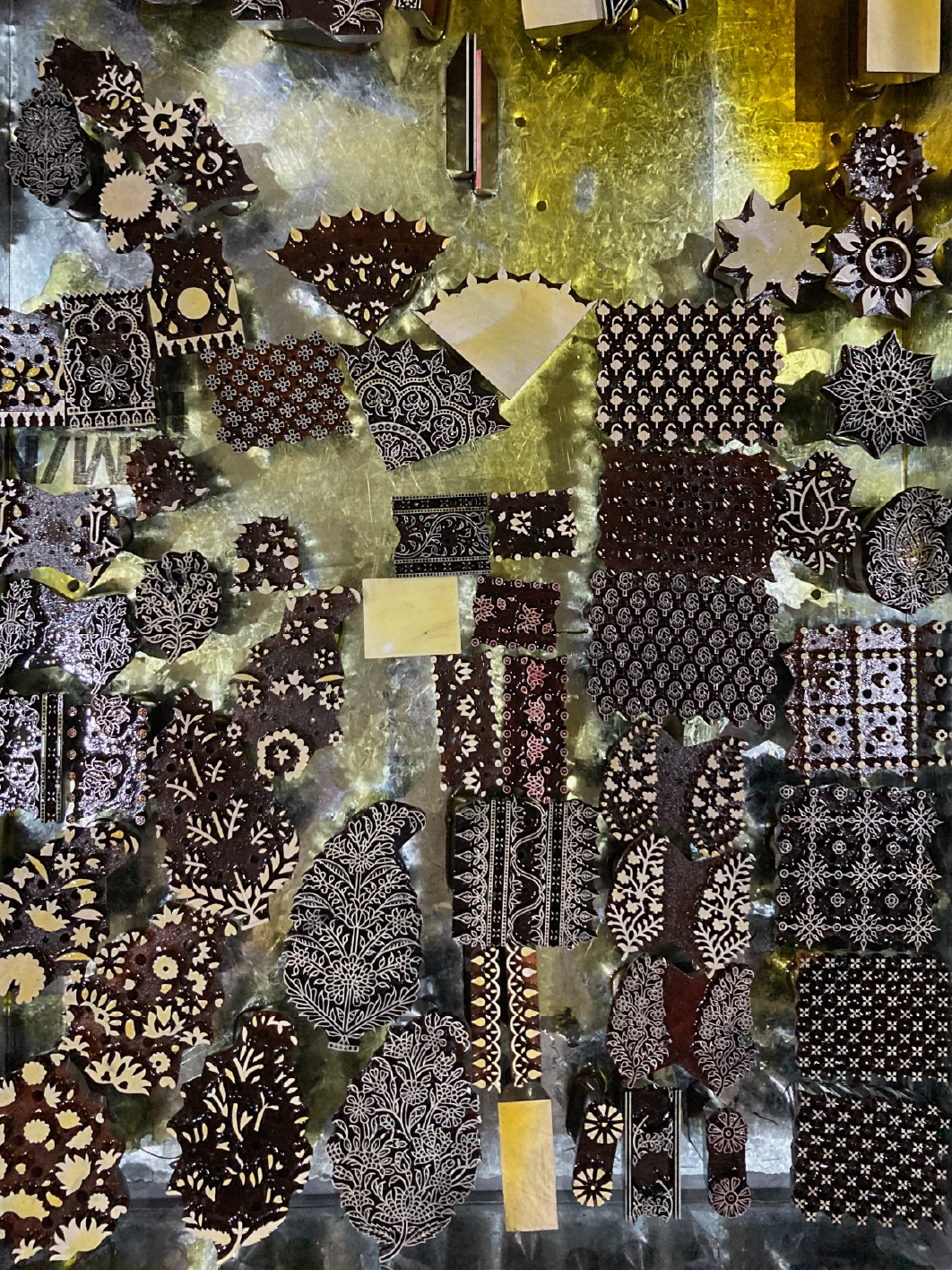
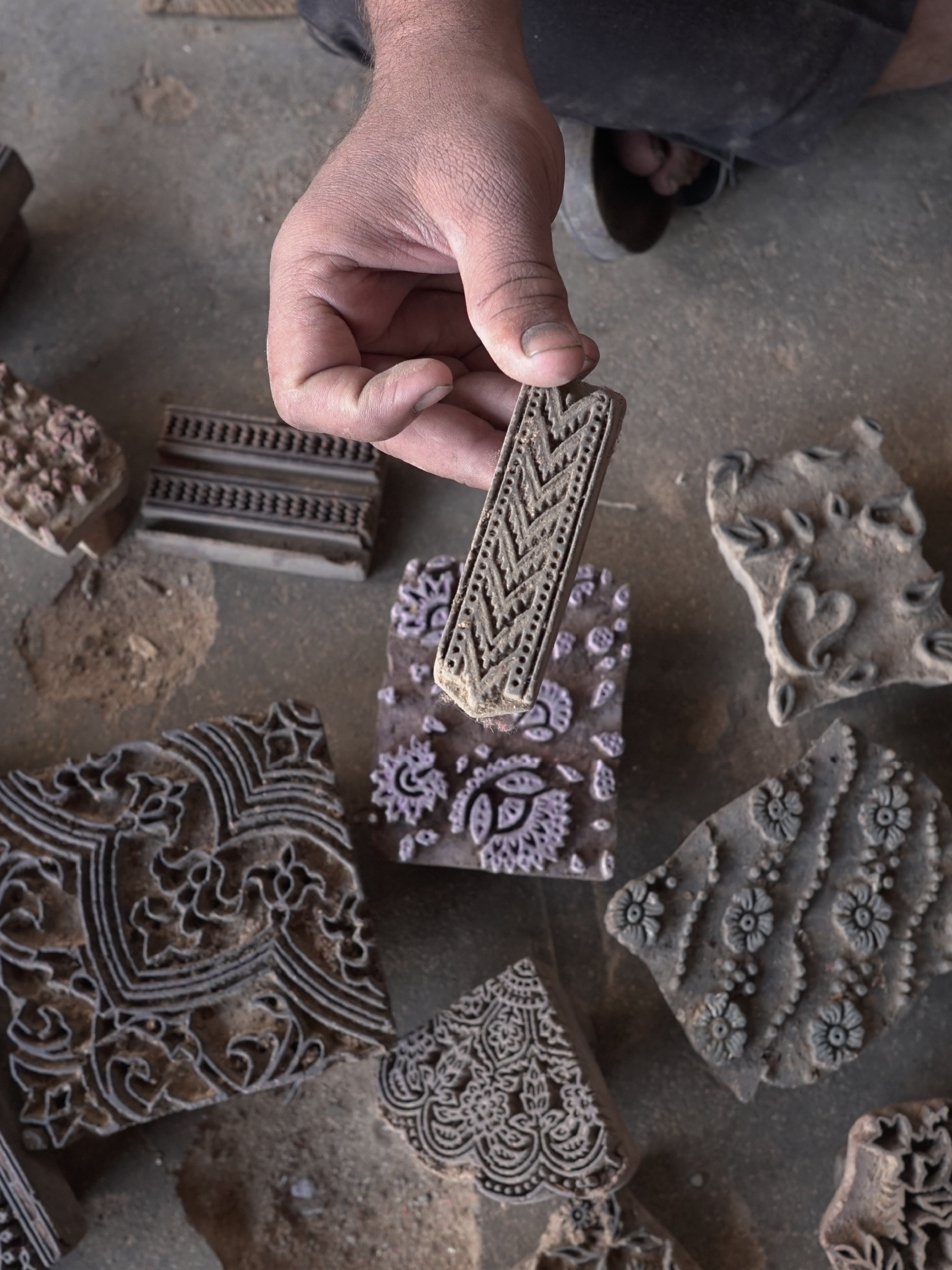
That walk took him to nine or ten such centres within a 25-kilometre radius. At each, the story repeated: the printing had stopped three generations ago, and the blocks, if anyone still had them, sat cracked and sun-warped in the back of the house — too meaningful to throw away, too useless to take pride of place in the home. He began collecting them, without an end goal in mind.
Dr Madan Meena is an artist, researcher and folklorist, founder-trustee of the Kota Heritage Society, and was conferred the Marwar Ratna by the Mehrangarh Museum Trust in 2018. His doctoral research examined the Meena tribe's (his own community) Mandana wall paintings; he later designed Arna Jharna, the Thar Desert Museum of Rajasthan, for the late folklorist Komal Kothari, curated a pottery survey for Kaner Retreat, and spent seven years reviving loin-loom weaving at the Adivasi Academy. "What I'm actually interested in is the knowledge systems of indigenous communities," he says. "That's the real thread running through all of it."
That instinct has become the Marwar Block Print Revival Project, spanning Rajasthan, Gujarat, Madhya Pradesh and Sindh. This October, it arrives at Kaner Retreat as an exhibition, Prints of Marwar, running 29–31 October 2026 — tracing how printing communities, motifs and techniques moved across this landscape through migration, trade, ecology and shifting patronage.
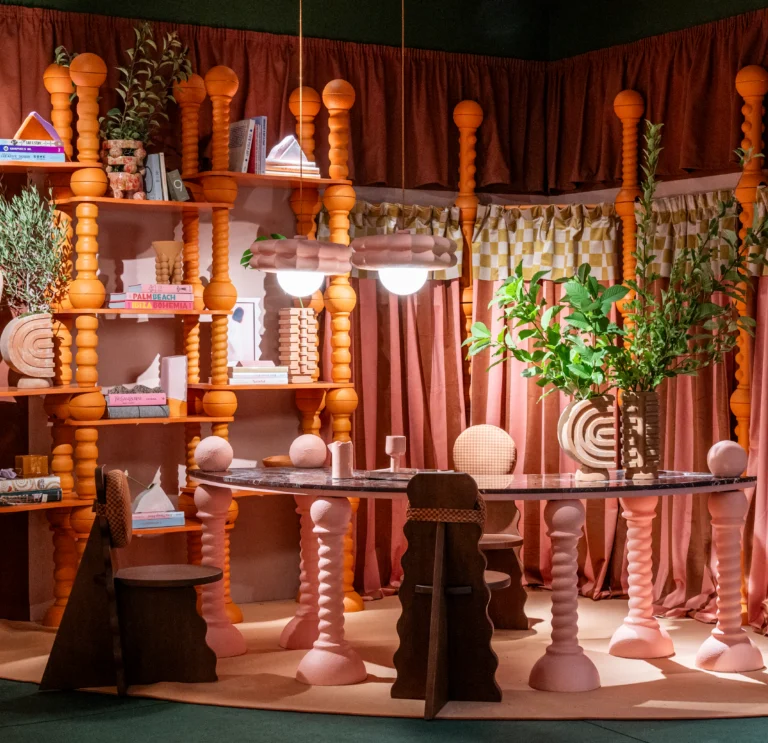
The choice of venue is not incidental. Kaner Retreat is a small desert property near Jodhpur, founded by Sapna Bhatia, who had invited Dr Madan to curate the retreat's pottery survey long before this exhibition was ever imagined. So in a sense, he was never a guest here to begin with. He arrives, this time, into a landscape he already knows — a protected desert land at the heart of Marwar, close enough to the region's surviving printing towns that the exhibition feels like it is returning to its subject’s origin. This is the same desert that grew the plants these motifs were drawn from centuries ago. The same ground, where a handful of printing families still work a trade that once belonged to hundreds.
A century of silence
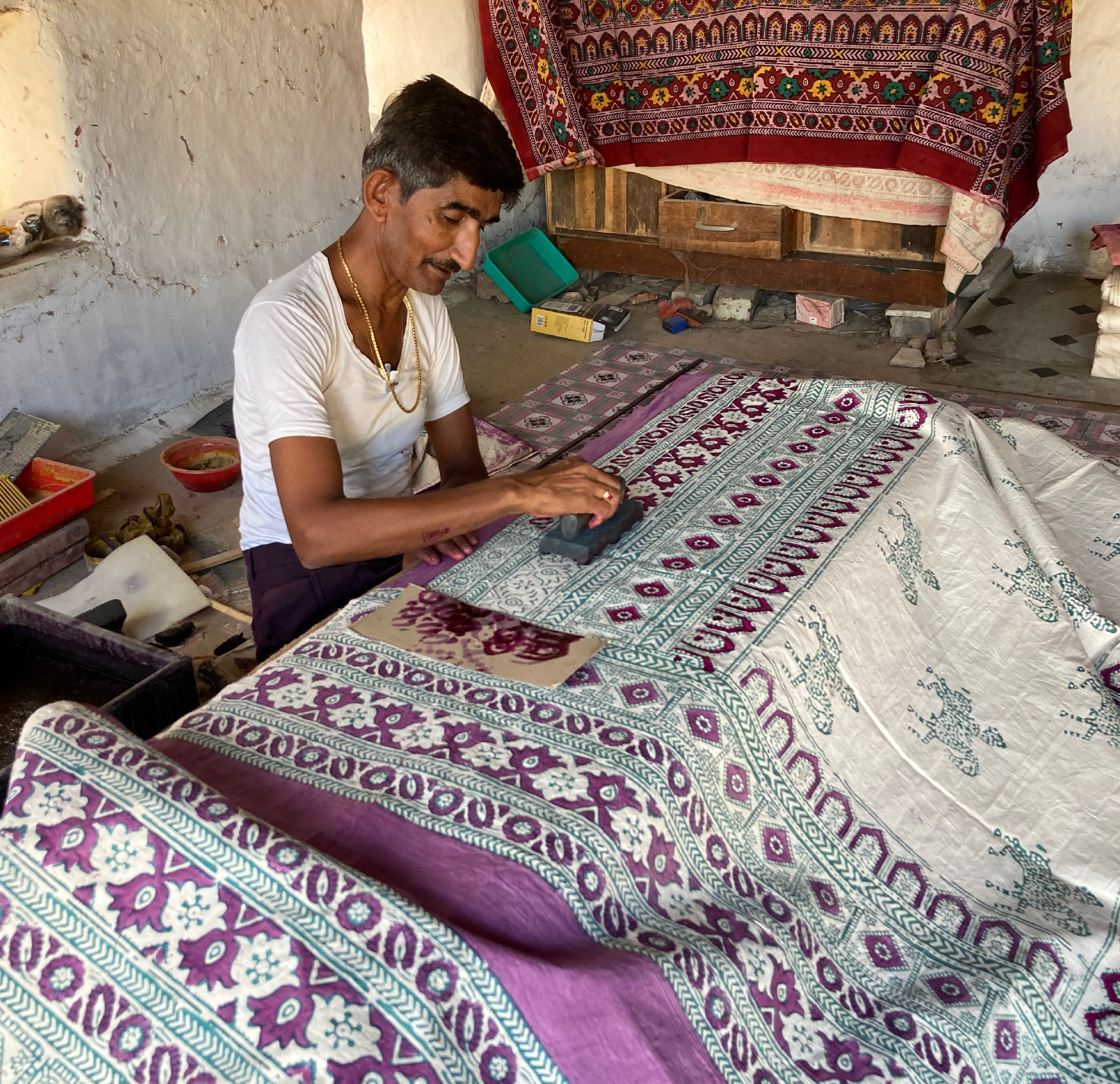
Eighty to a hundred years ago, by Dr Madan’s estimate, some 500 block-printing centres were active across Rajasthan, producing around ten thousand distinct designs, for clothing, tents, animal coverings, the floor spreads laid out at a wedding or a wake. Today, only a handful remain active. The decline came in two waves: cheap textiles imported from Manchester over a century ago under colonial rule and polyester and screen print from Ahmedabad and Surat in the 1970s–80s, which made the ordinary cotton block print seem like an expensive choice. A few names, Anokhi — the Jaipur-based textile brand — chief among them, kept the tradition alive through the revival years, but most of what existed was already gone — burned for warmth in a village winter, sunk in a well, sold to antique dealers to be cut down into tabletops. "If I hadn't gone to these centres," he says, "they would simply have been discarded."
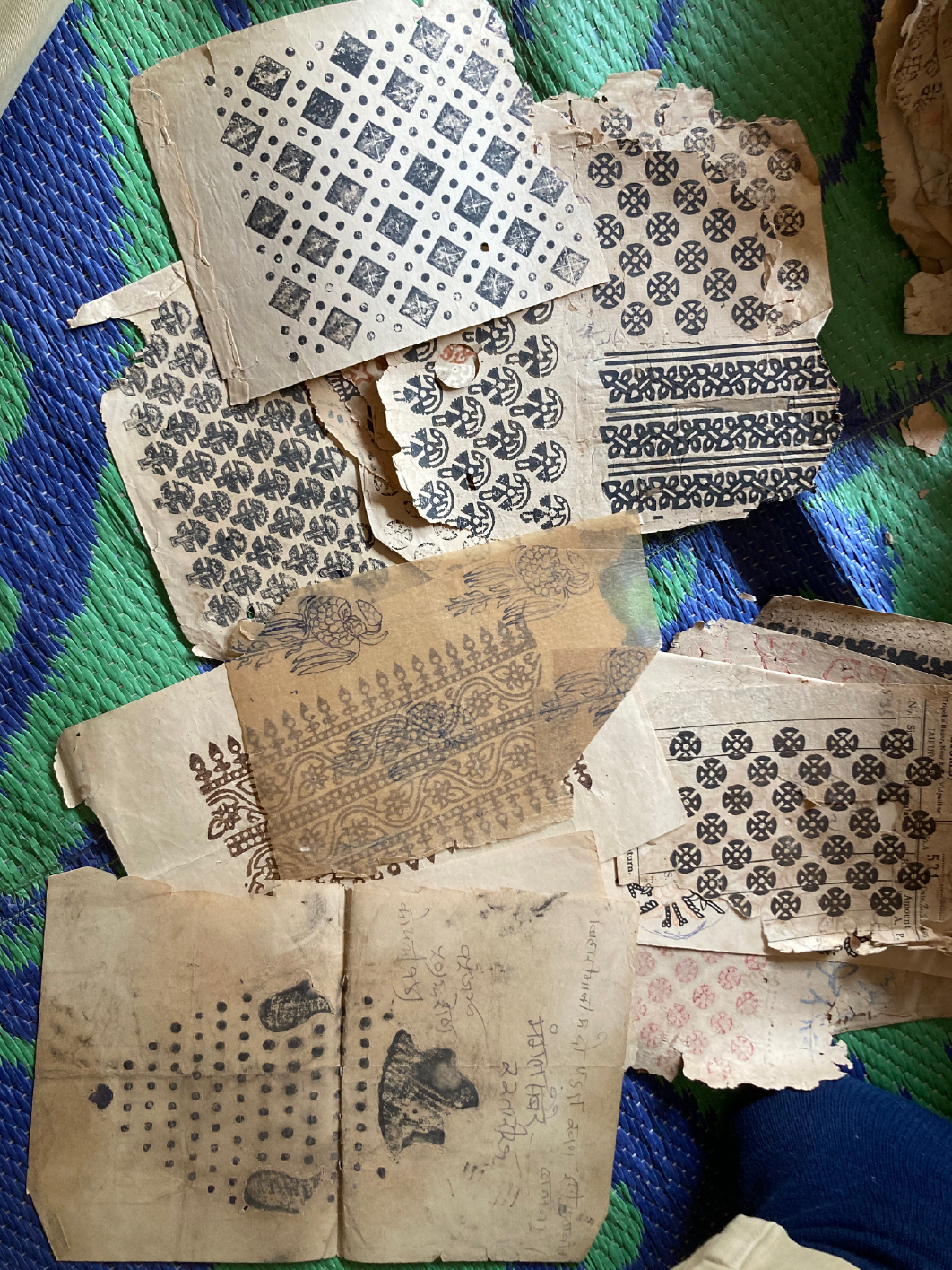
The rescue happened region by region — roughly a dozen centres each around Ajmer, Jaipur and Kota, alongside those near his own village, close to 60 in total. What he has assembled is an archive: over 600 designs, historic blocks, and textile fragments gathered from village trunks, antique dealers across Jodhpur, Ajmer, Jaipur and Bikaner, and communities including the Jat, Banjara, Mali, Dhakar, Meena and Marwari. More than 400 designs have now been recreated.
Following a single thread
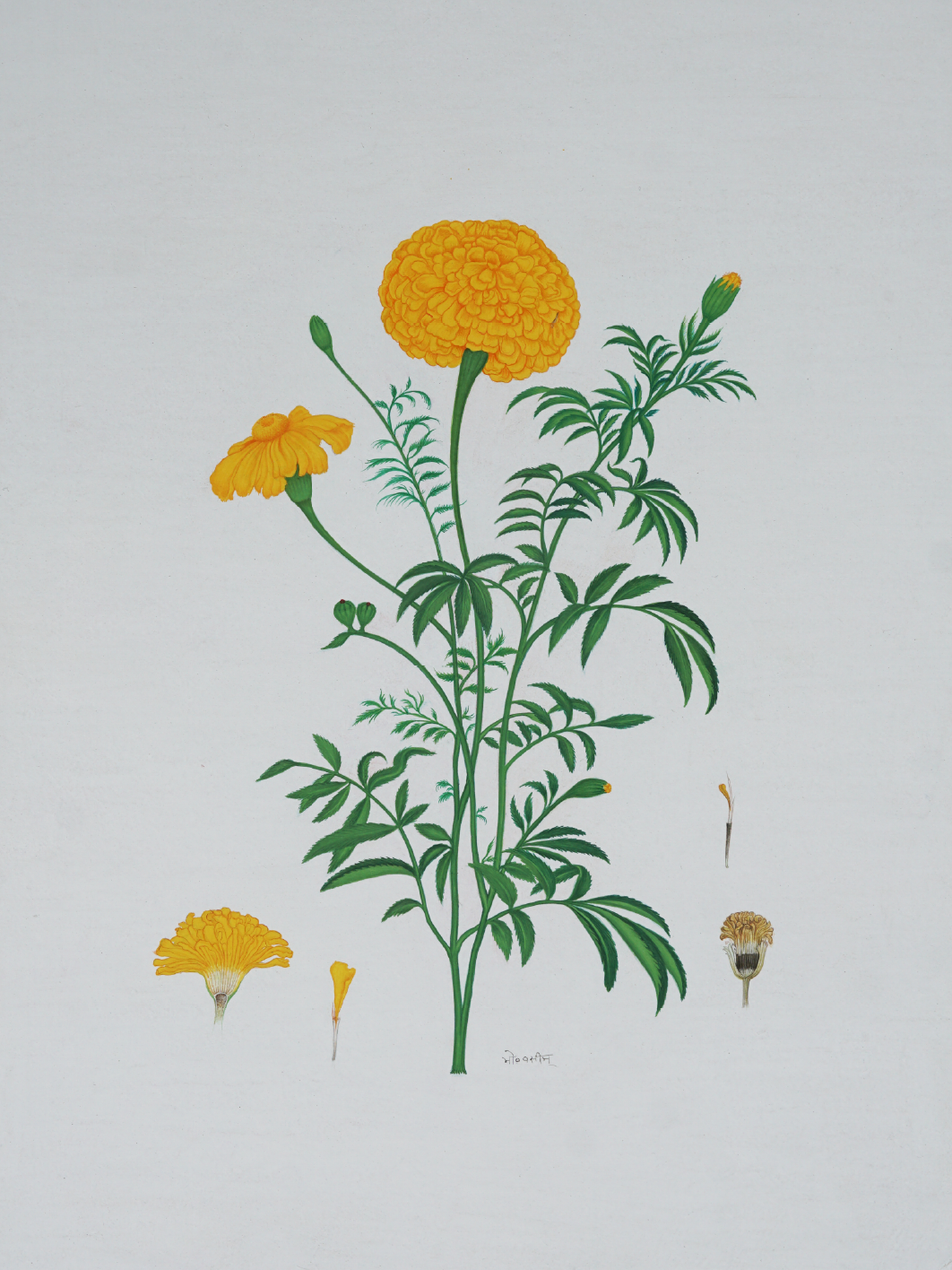
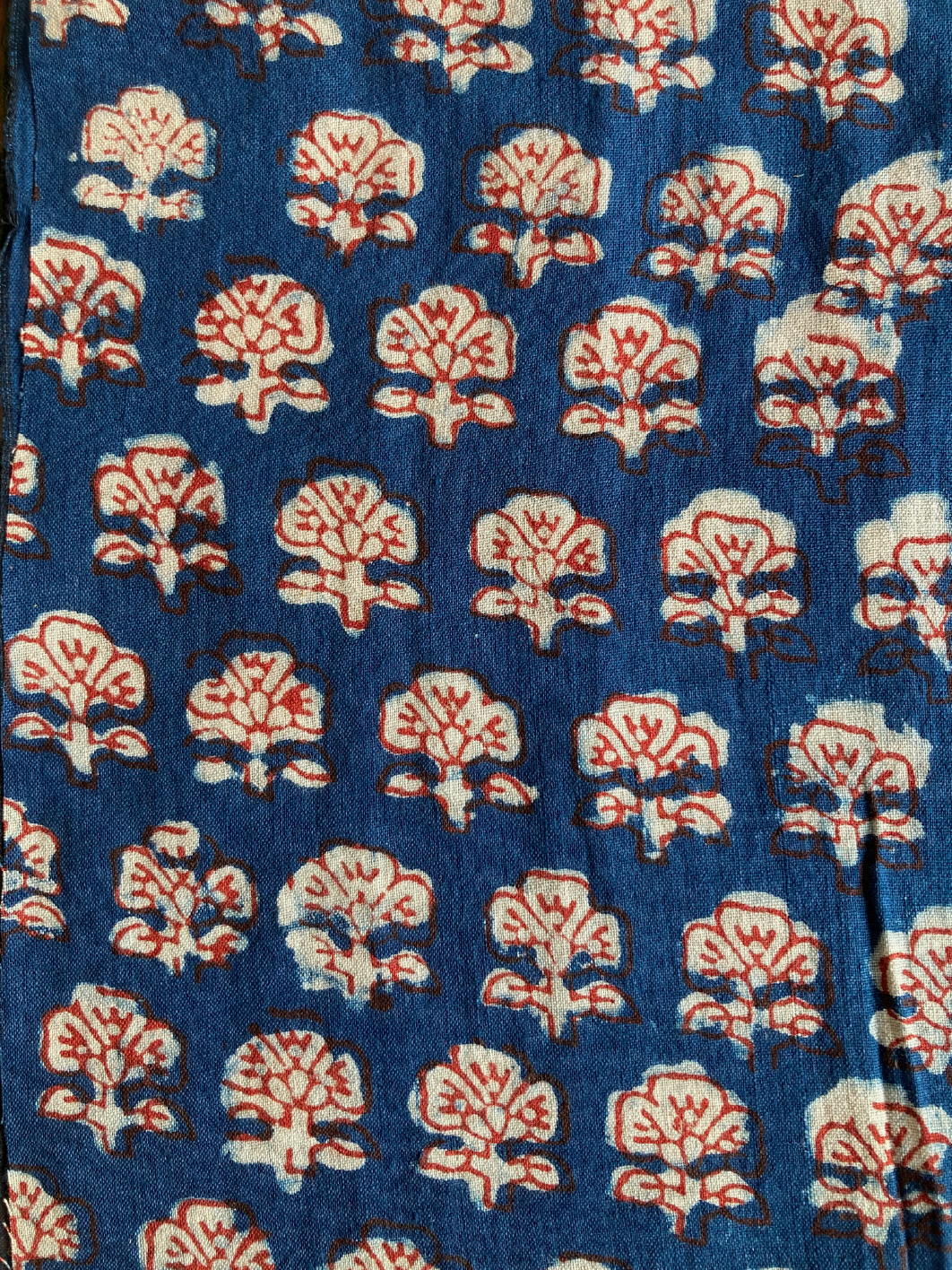
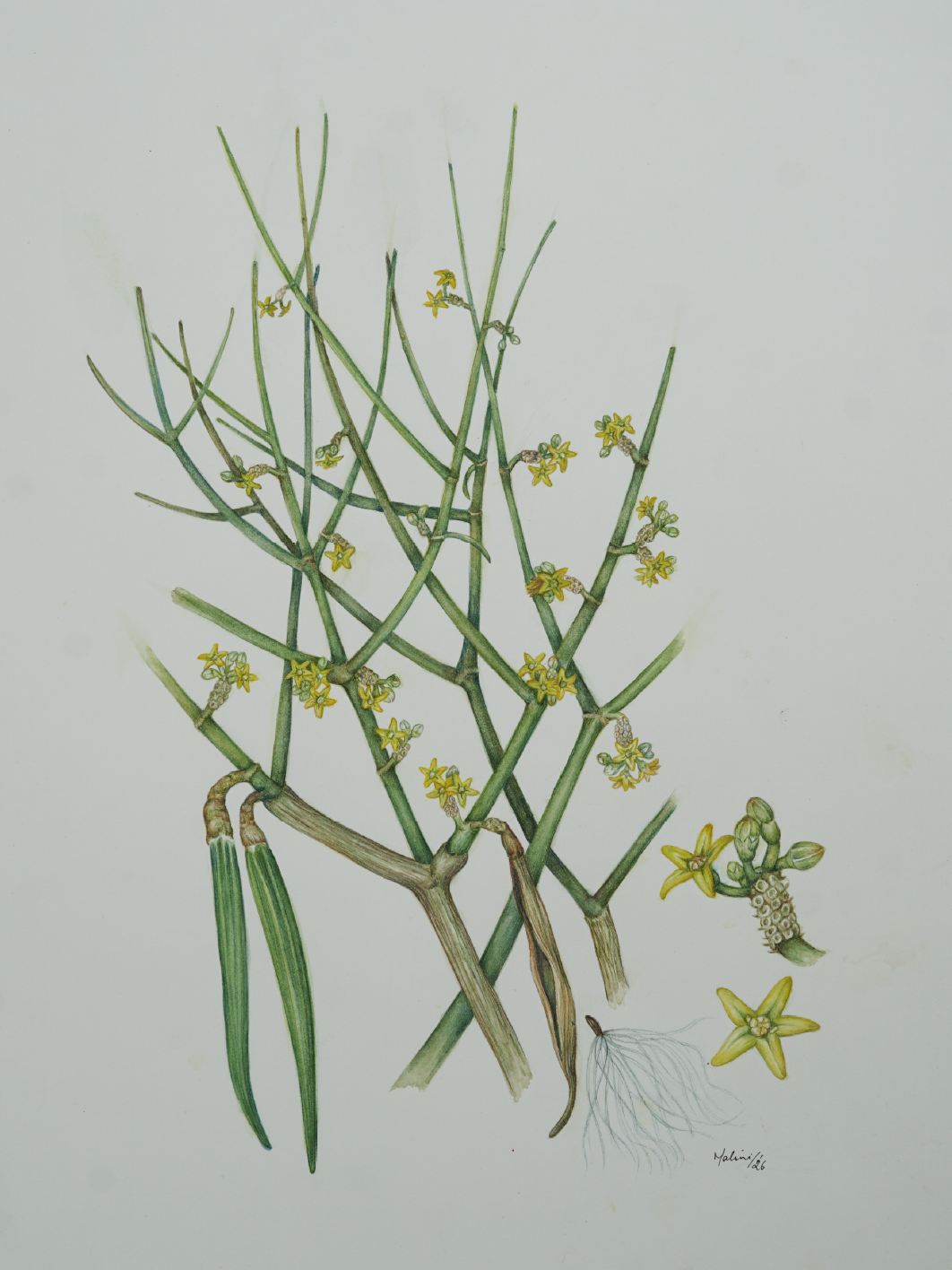
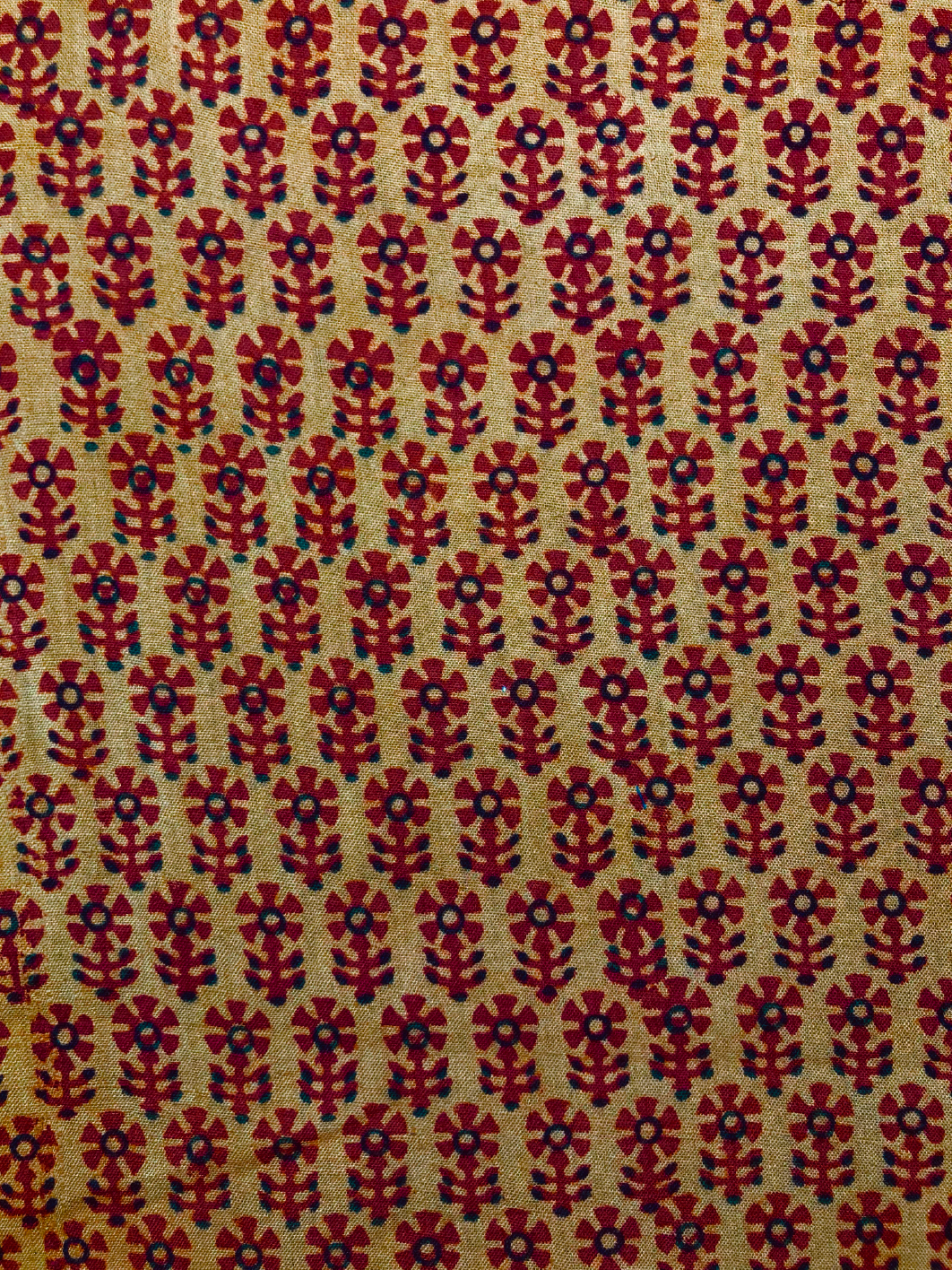
To remake a single print, Dr Madan first had to source original khadi — rewoven for this project in Bengal and at Gandhigram — before rebuilding the exact sequence the printers once followed: which block strikes first, in what alignment, by which regional recipe, since every historic centre carried its own different method. "It's a whole chronology," he says, "just to decode one design" — a process that starts with a miniature painter's observation of a plant, passes through a preparatory sketch, and only then reaches a carver's incision and a printer's hand. It is this entire chain, not just the finished cloth, that visitors will find laid out at Kaner Retreat.
The blocks themselves carry their own lineage. They were carved by the Multani carvers of Jaipur, descendants of carvers who arrived from Multan some 350 years ago and once carved the fine Sanganeri prints made for Jaipur's royal court. Across five workshops, they have completed 300 of the 400 recreated designs so far. What emerges in the finished cloth is a mix of true desert flora — cactus, thorn — alongside the occasional, almost mischievous import: a narcissus that has never grown anywhere near Rajasthan, or Kevda, the screw-pine flower, which Dr Madan eventually traced to an old palace garden in Sojat, a town otherwise known for its henna. By his own estimate, around 95% of the motifs are entirely indigenous to the region.
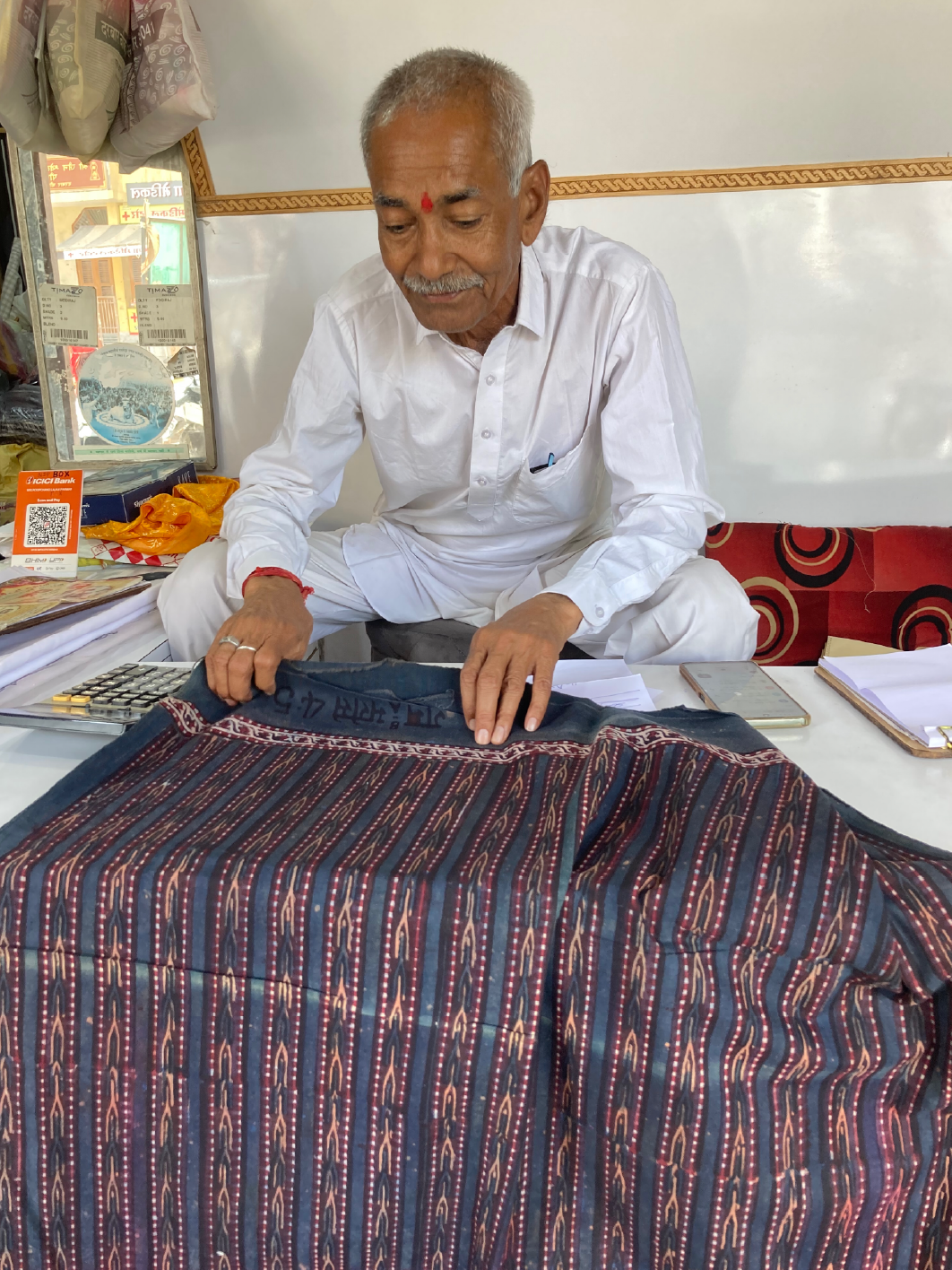
But a motif is only half the equation — what brings it to life on cloth is colour, and here too the region left its own fingerprint. Two colours dominate the palette: indigo, native to Rajasthan, Gujarat and Madhya Pradesh, and red, drawn from al, the root of the Morinda plant. Indigo's roots here run deep — a recent expedition found the plant growing at five Indus Valley Civilisation sites in Kutch, long before any of these printing traditions existed. How far back it actually goes is anyone's guess, since nobody was keeping records for people like this.
"Our history is mostly oral," Dr Madan says. "The history of kings is written down. The history of common people, of artisans — no one has ever written that." Block print becomes its own kind of archive — of migration and trade, of tools that carry their own history of ironworking and metallurgy.
Landing at Kaner Retreat
Kaner Retreat turns out to be exactly that kind of place. The desert commons it sits within is under formal protection — no tree may be felled, and the land regenerates on nothing but what the monsoon leaves behind — which means the plants Dr Madan spent years tracing through old frescoes and palace gardens are still growing, unbothered, a short walk from where the exhibition hangs. Balotra sits roughly 60 kilometres off, Barmer and Pipar each about 90, and the villages in between hold elders who need no explanation to recognise an old piece of cloth — only a glance.
The exhibition doesn't present the prints as finished, self-explanatory objects. It walks visitors through the same research that produced them — botanical illustrations, some contributed by the Royal Botanic Gardens, Kew, London, sit alongside new work from two Kota-based artists, Dildar and Vasim, laying out the visual research behind each design. Costumes and original textile are shown beside the recreations rather than apart from them, and the audience has been deliberately widened well beyond the usual gallery crowd, to include the artisans and rural communities this whole project has drawn from.
By now, none of it can be called small. Across Rajasthan's printing towns and Jaipur's carving workshops, fifteen block-printer families and six carving units are currently at work, alongside four khadi organisations and a research collaboration stretching as far as Japan. The final body of work runs across 35 metres of printed cloth, cut into some 400 pieces for a three-volume publication of a textile book. The project has run to ₹2.25 crore, raised by the Kota Heritage Society. And yet Dr Madan talks about all of it the same way he talks about everything else here — not as something finished, but as something still being worked out.
That's perhaps why, asked what he'd want a young designer to understand before carrying any of this forward, he doesn't pause. "Our culture," he says. "That's the thing we're forgetting — we study design, but design pedagogy here almost never engages with culture. It's already there. That's what I try to teach in all my own courses."
It is the same conviction that sent him walking through those village lanes back in 2012, in the empty hours of a funeral, looking for blocks nobody else thought worth keeping. This October, some of those same blocks — recarved, reprinted, rewoven back into cloth — will hang on the walls of a desert retreat not far from where they were first made, in a landscape that has spent a century quietly waiting to be read again.