Irene Saputra’s earliest muse was a doll. It was a Hawaiian Barbie named Kira standing at 11 inches tall and plastic, a gift from her mother, and young Irene loved giving it makeovers. What she didn’t have was clothes to change it into. She asked her grandmother to sew some, but her grandmother was busy, and the outfits didn’t always come. So she did what children do and wished for a superpower: one that could shrink her own wardrobe down to doll size. “I wanted her to look different every day.”
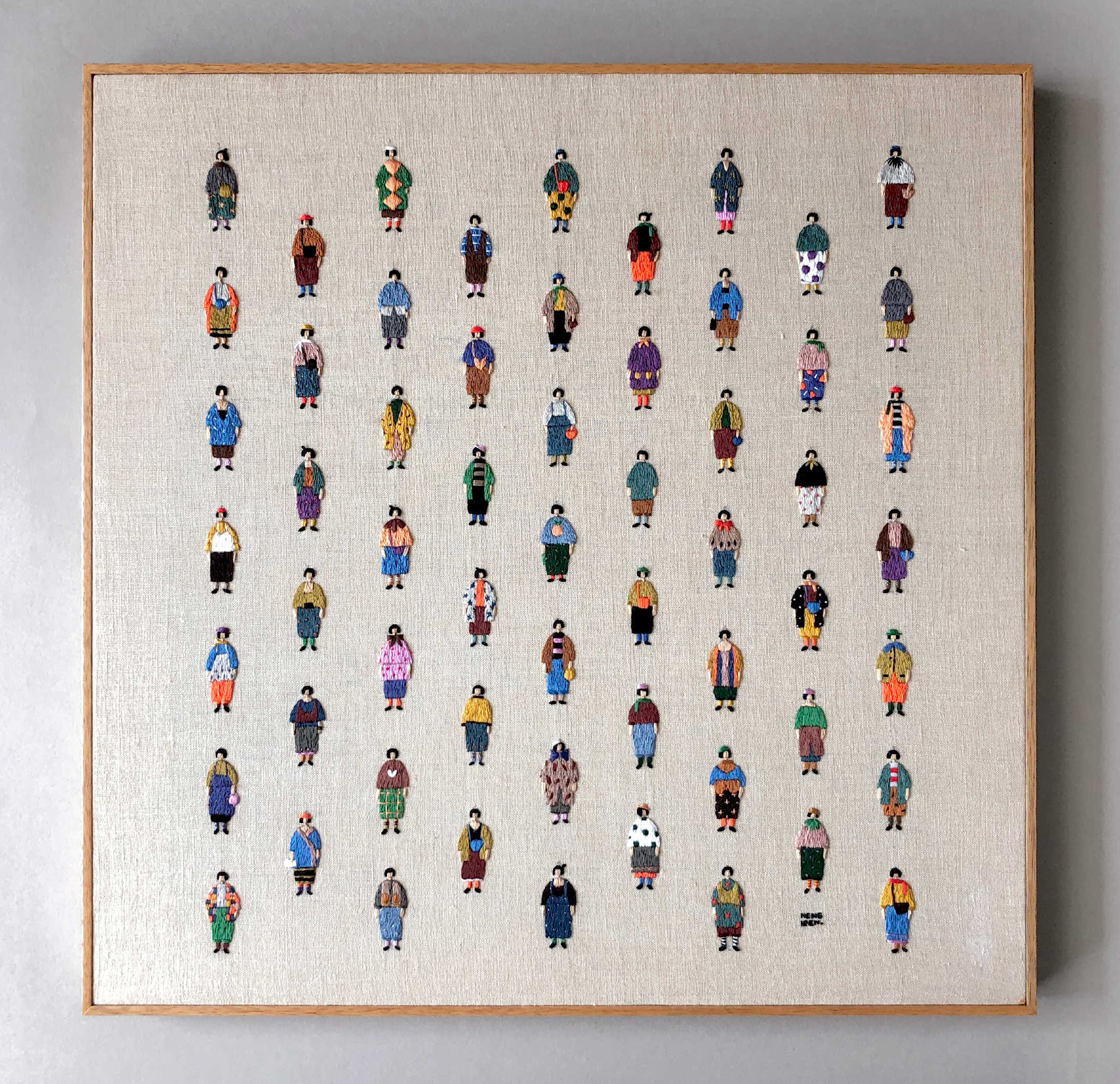
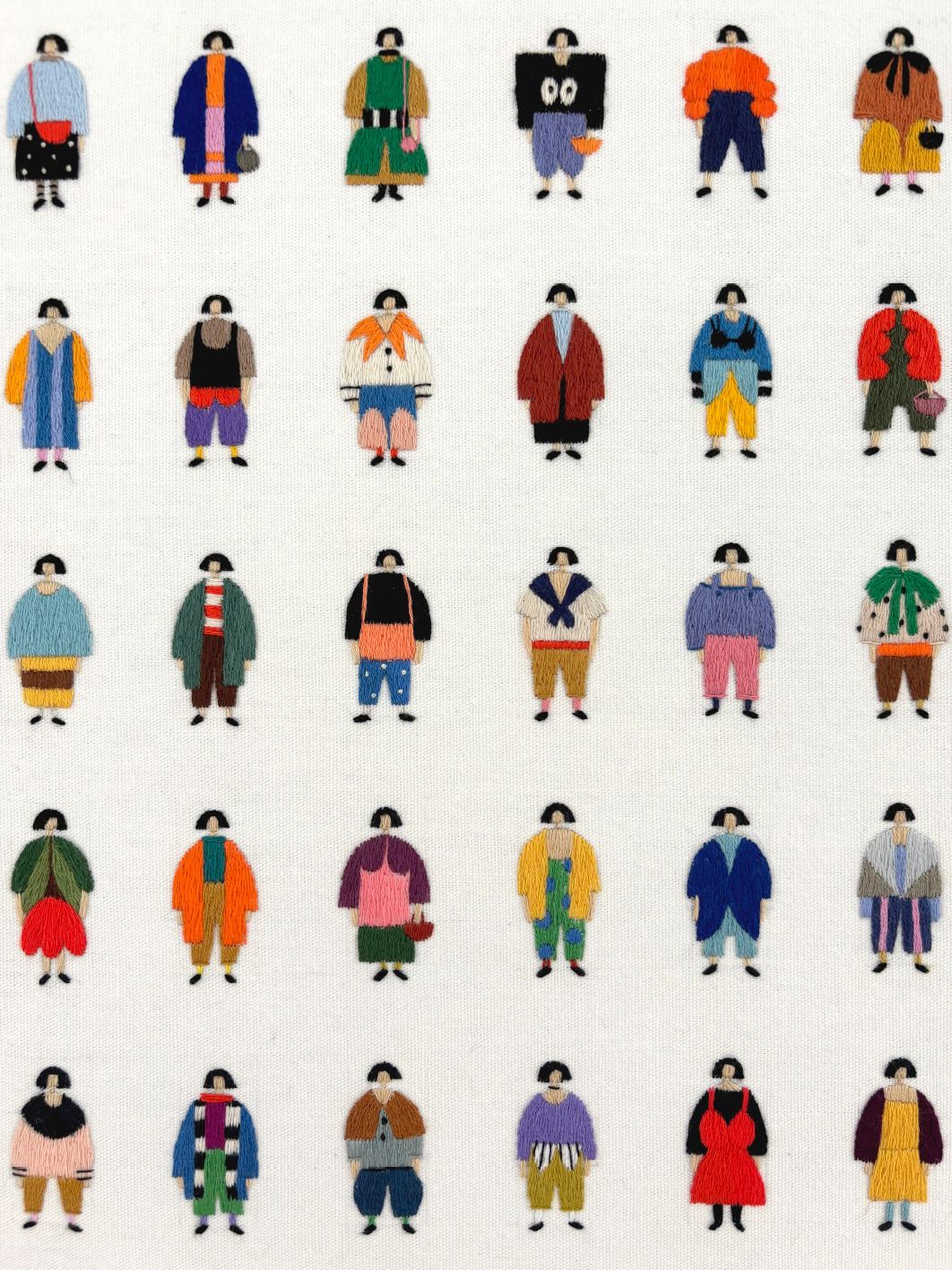
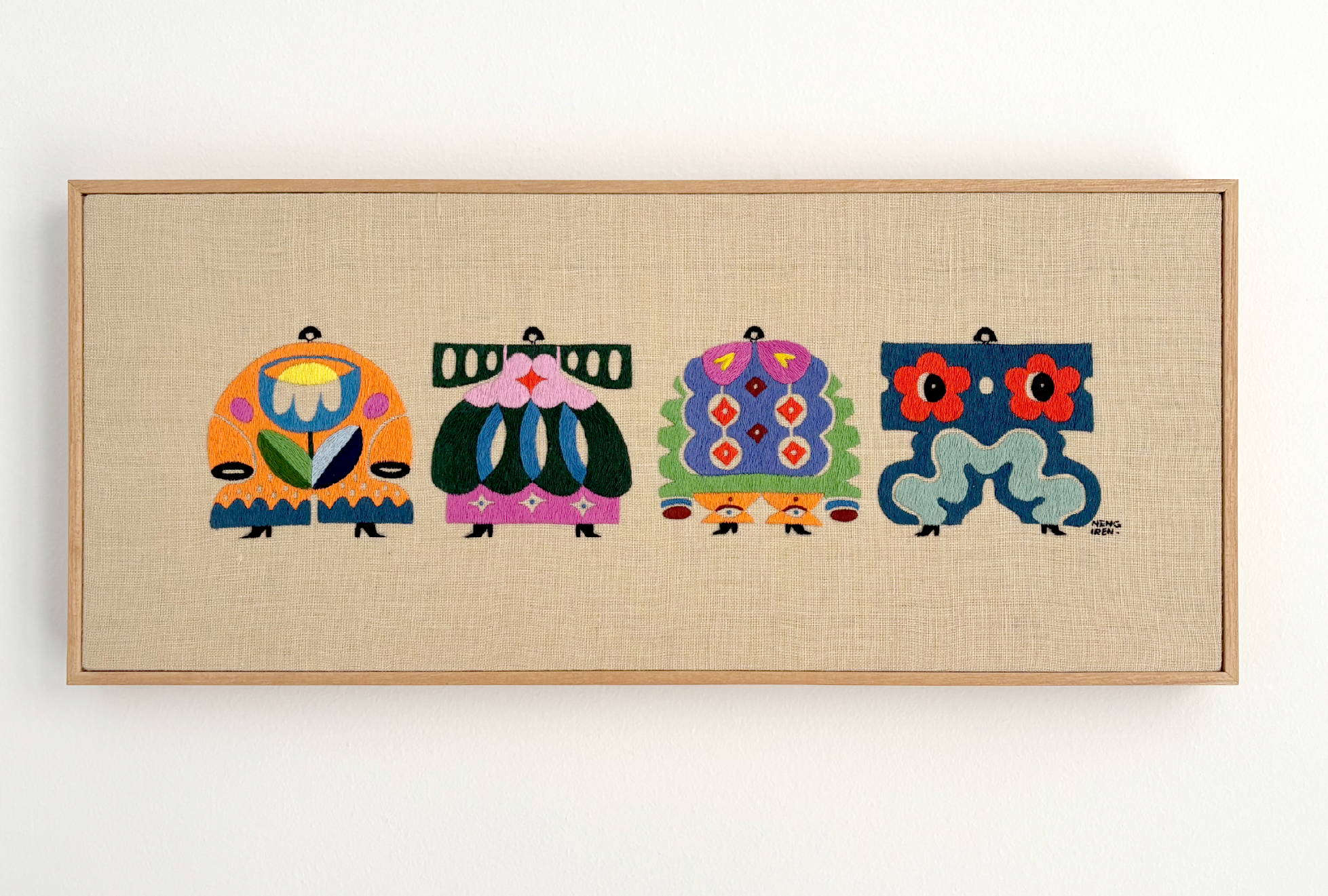
Years later, the wish found its answer in a few stray skeins of leftover thread. Irene, who now stitches under the name Nengiren — a blend of “Neng”, a Sundanese term of address for a young woman, and her first name, Irene — turned them into Nona Kecil, “little woman” (in Bahasa Indonesia), a tiny, faceless figure who has been dressed in a new outfit since 2016: a scalloped blue coat, a leaf-print dress, a jacket scattered with stars and watchful eyes.
But the wish had to come from somewhere, and so did the eye for clothes behind it. Both began in a childhood full of fashion magazines.
From magazines to thread
Irene’s mother’s stack of fashion magazines were everywhere. At school, her friend Patricia drew her own comic books during lessons, and Irene followed suit. She loved drawing and making things by hand, an interest encouraged by her friend, who made comic books during school lessons.
Some of those years were spent with her grandmother in Singaraja, North Bali, where a school assignment unexpectedly changed everything. She had to make a tablecloth, so she asked her grandmother to teach her hand embroidery. “At the time, I didn’t think much of it,” she says.
But design was etched in her mind. She studied Visual Communication Design at Petra in Surabaya, where she was introduced to different ways of thinking and creating, then joined a publication as a graphic designer, surrounded by endless visual references and free to explore ideas. In 2011 when she made her debut as an illustrator with a fashion magazine: the girl raised on fashion pages was now drawing for one. She kept illustrating part-time, and sketching became a kind of meditation. Still, she wanted another way to carry out her ideas.
In 2014, the tablecloth came back to her. Her mother had some leftover embroidery threads, and Irene picked up a needle again. “I didn’t expect it to become such an important part of my practice,” she says, “but I was immediately drawn to it.”
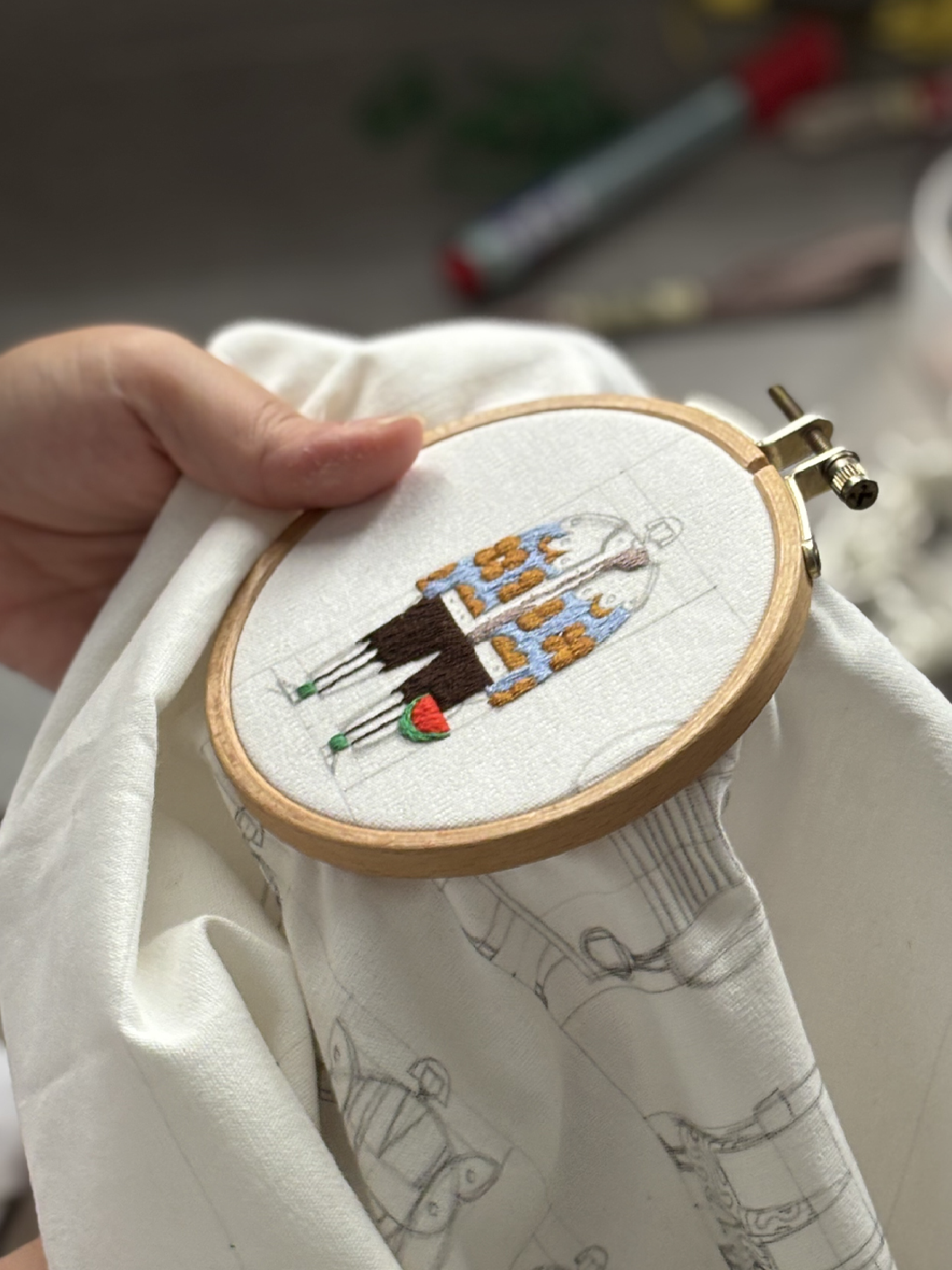
After a few years, she felt the need to try something different: something spontaneous, quicker to make, that would let her use up all the leftover threads she had gathered from earlier work. In 2016, that became Nona Kecil. “In a way, she answered all the needs I had at that moment,” Irene says. She wanted something playful that still let her explore embroidery from a different angle. Her work had always been about women and their expressions, so she gave this little figure a fashion sense of her own. And the wish from her childhood finally had a place to live: a different outfit every day or in the now well-established language of fashion, an OOTD (outfit of the day). Nona carries a deeper idea too: that change comes in huge shifts and in the smallest swap of clothes, and every day is worth cherishing.
Dressing a silhouette
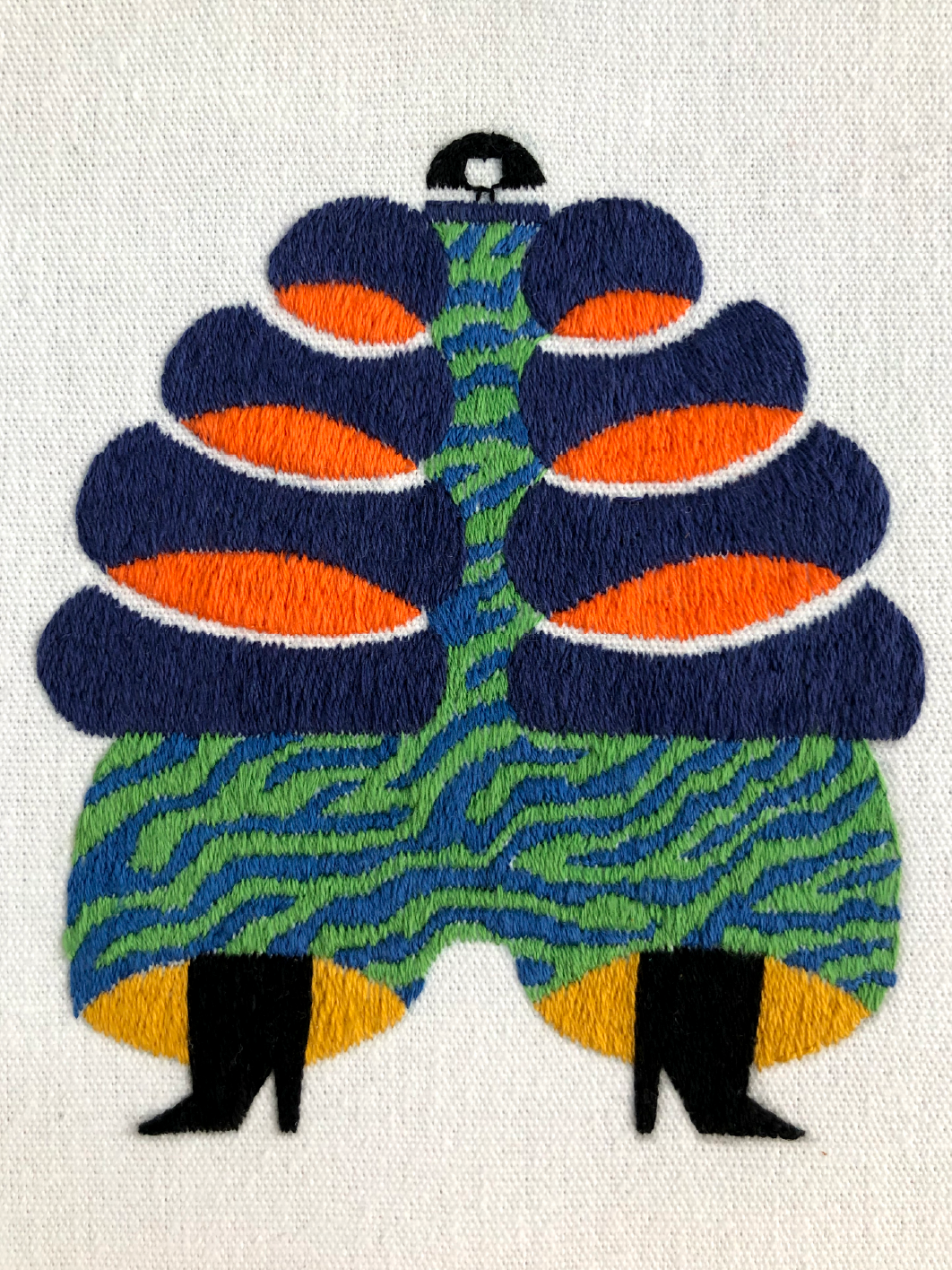
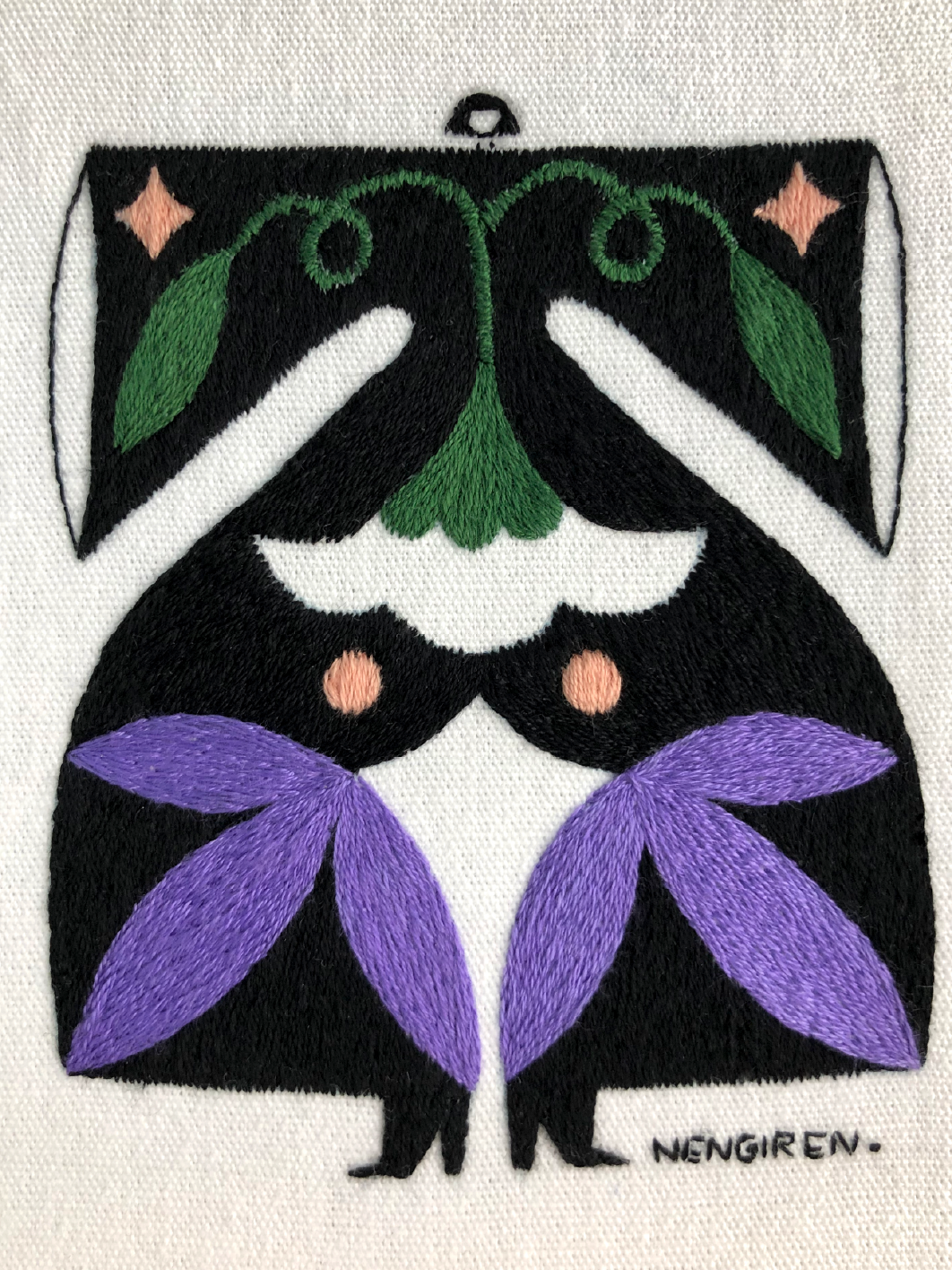
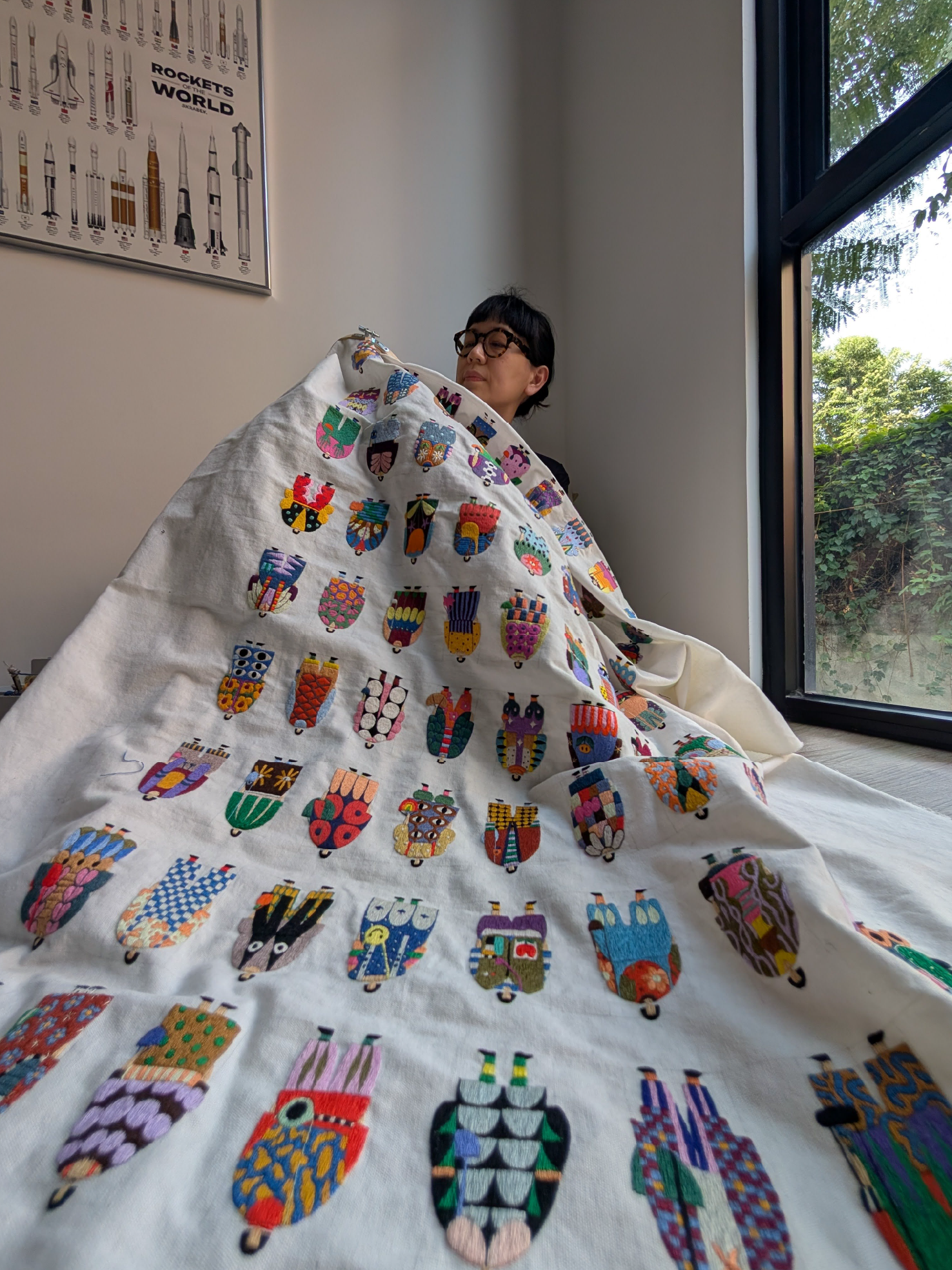
Look closely at the work and you notice what never changes. Nona is always a symmetrical, abstract figure, and her silhouette stays constant. Everything happens in what she wears. Flowers, stars, leaves and eyes swell into billowing garments, and dense stitches give them sculptural weight. Several Nonas often share one piece, as in “Koleksi Mimpi Kecil” (“Little Dream Collection”) or in grids of figures, each in her own look.
Irene has always been fascinated by how colour and pattern combine to shape mood and personality, and it shows in the wardrobe. Years in graphic design left their mark in recurring motifs of typography, flashy patterns and texture. Fashion, she says, is another way to communicate : what we wear can say something about who we are, or how we want to be seen. She builds her little characters and situations from everyday life, personal experiences and things she notices around her. With no face, Nona’s moods and personalities come entirely from her outfits, colours and patterns, and each viewer can bring their own experiences to the work and write their own story around her, so it keeps evolving through other people’s eyes.
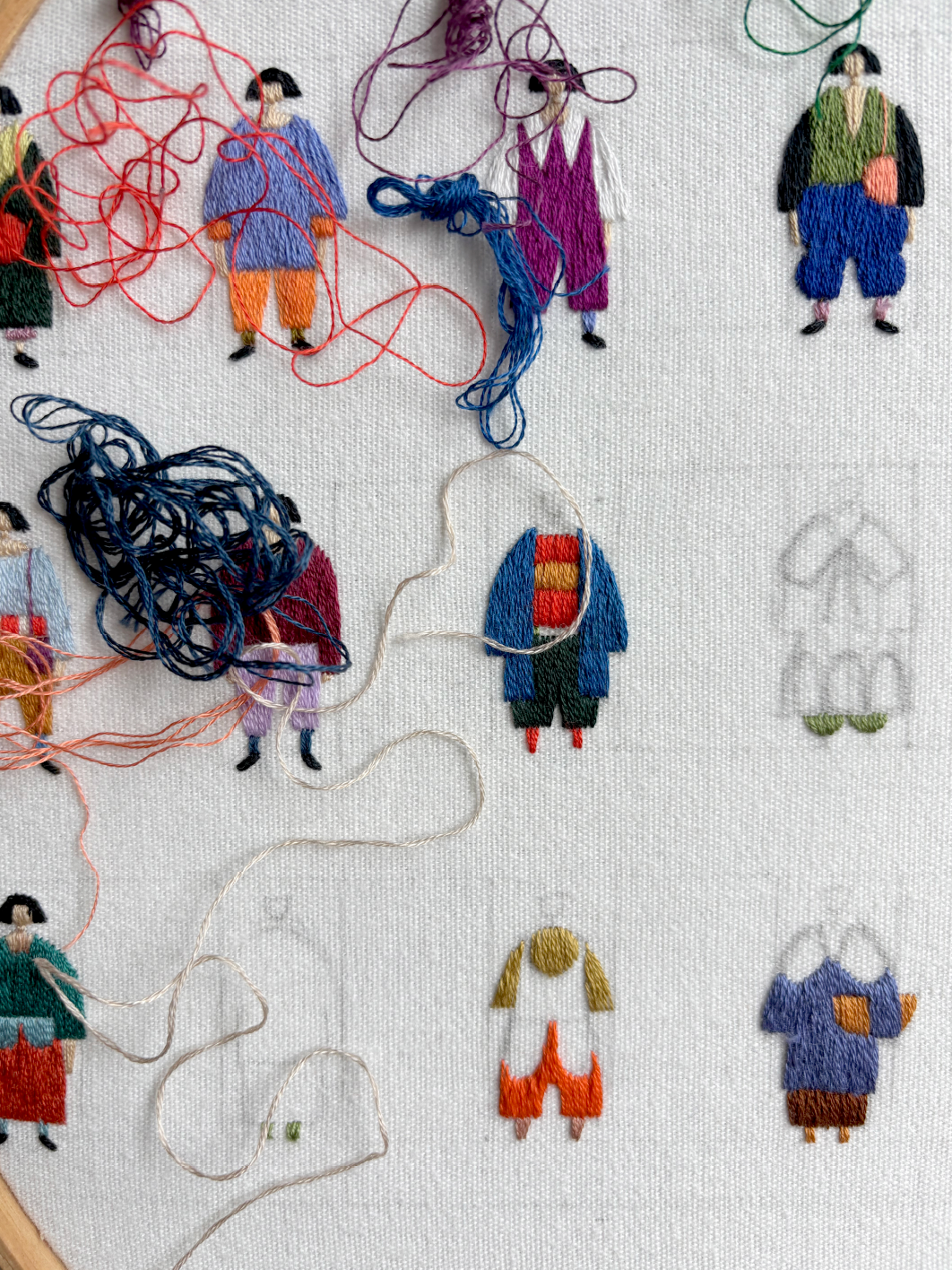
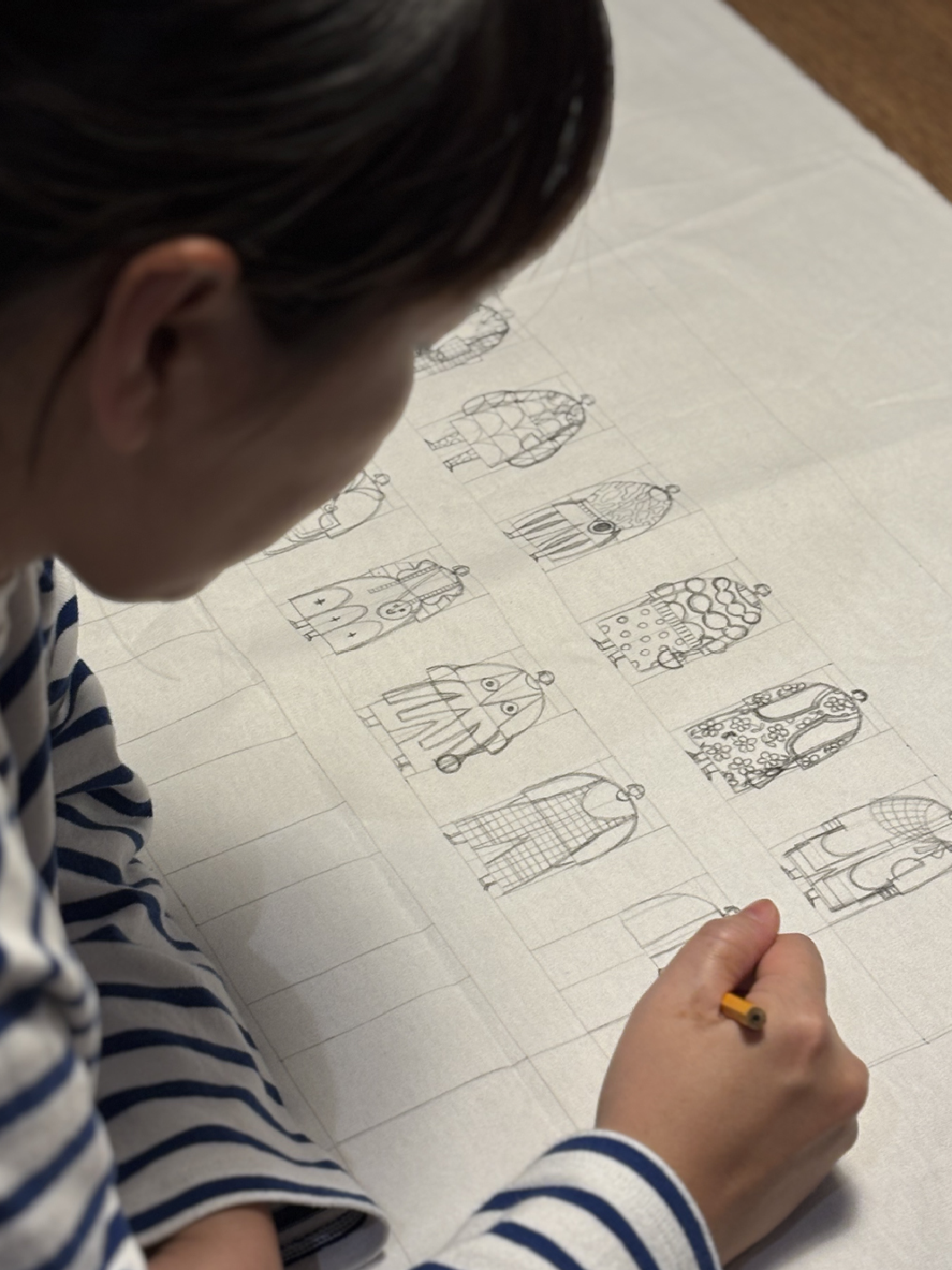
The process stays flexible and spontaneous. Irene gathers references from everything she sees, wears and notices, and collects them in sketchbooks. When an idea keeps tugging at her, she settles on a composition and palette and transfers it to fabric. Then the stitching takes over. “The outfit can develop as I stitch,” she says, “almost like getting dressed for the day.” She never quite knows how an outfit will turn out, and enjoys finding harmony as she mixes and matches whatever colours and patterns she has. Embroidery’s slow, repetitive rhythm gives her time to think, and each stitch is a small decision that changes the whole piece. For Irene, it is another way of treasuring time.
Her approach has shifted over the years. Early on, embroidery was an experiment with no fixed process or plan. As her ideas developed and her pieces grew in scale and complexity, she began paying more attention to composition, colour and detail, and sketching more before transferring a design to fabric. Small works still run on instinct and large ones get planned first, and that balance, she says, is what keeps the process interesting. Even after years of embroidery, she feels there is still so much to discover.
When motherhood rewrote the rhythm
With motherhood, Irene's process changed. Until then, Nona had been simple: small women in daily outfits, each with her own personality, made by an artist with time to observe.
Then came a new rhythm. Art happened when her son’s day allowed it, whether he was in class, playing or asleep. Her pace slowed, finished pieces became rare and Nona changed along with her. The figures grew more abstract, sometimes awkward and unusual, and many ideas survived only as quick sketches on whatever paper was nearby. She has learned to use her time and energy mindfully, and to accept the slower pace rather than chase productivity.
Now her son is more independent, and Nona has noticed. She is more detailed and more vibrant, “almost as if she wants to show herself again after being away for a while.” As Irene returned to her practice, she began exploring finer detail, brighter colours and different scales. Nona was changing with her all along, even when Irene wasn’t trying to change her.
The travelling threads
With that return came room to grow. Irene points to three turning points: discovering embroidery in 2014; All The Small Things 3 in 2019, an instalment of the Indonesian collaborative art exhibition series, where she she presented Nona Kecil to a wider audience and received a positive response; and ,Kelana, her first overseas exhibition, at Nucleus Gallery in Portland. The warm response beyond Indonesia gave her confidence, and, she says, “the fuel to keep going”. Seeing her work connect with people from different backgrounds and cultures has made her more intentional about how she develops and presents it, and reminded her to value the time and dedication behind each piece and to stay true to her artistic vision. Alongside exhibitions, she takes part in small shows and art markets and accepts personal and brand commissions.
For all the distance Nona has travelled, the story keeps circling back to Bali. On visits, Irene sometimes brings her works to her grandmother, who comments on them. The girl who once asked to be taught a few stitches for a school project now arrives with finished work of her own, and the two talk it over.
Where it goes from here is still open. Irene wants to explore different materials, textures and formats, from sculptural forms to tufting, and to see how far embroidery can travel beyond the canvas. She has no fixed direction yet, only a wish to keep experimenting and let the process lead somewhere unexpected. Her little woman, who began as a way to use up scraps, is bound to follow, with new forms and new expressions.
Whatever shape comes next, the wish behind her stays the same: to look different every day. And Nona, with no face and nothing to say, still has a great deal to wear.