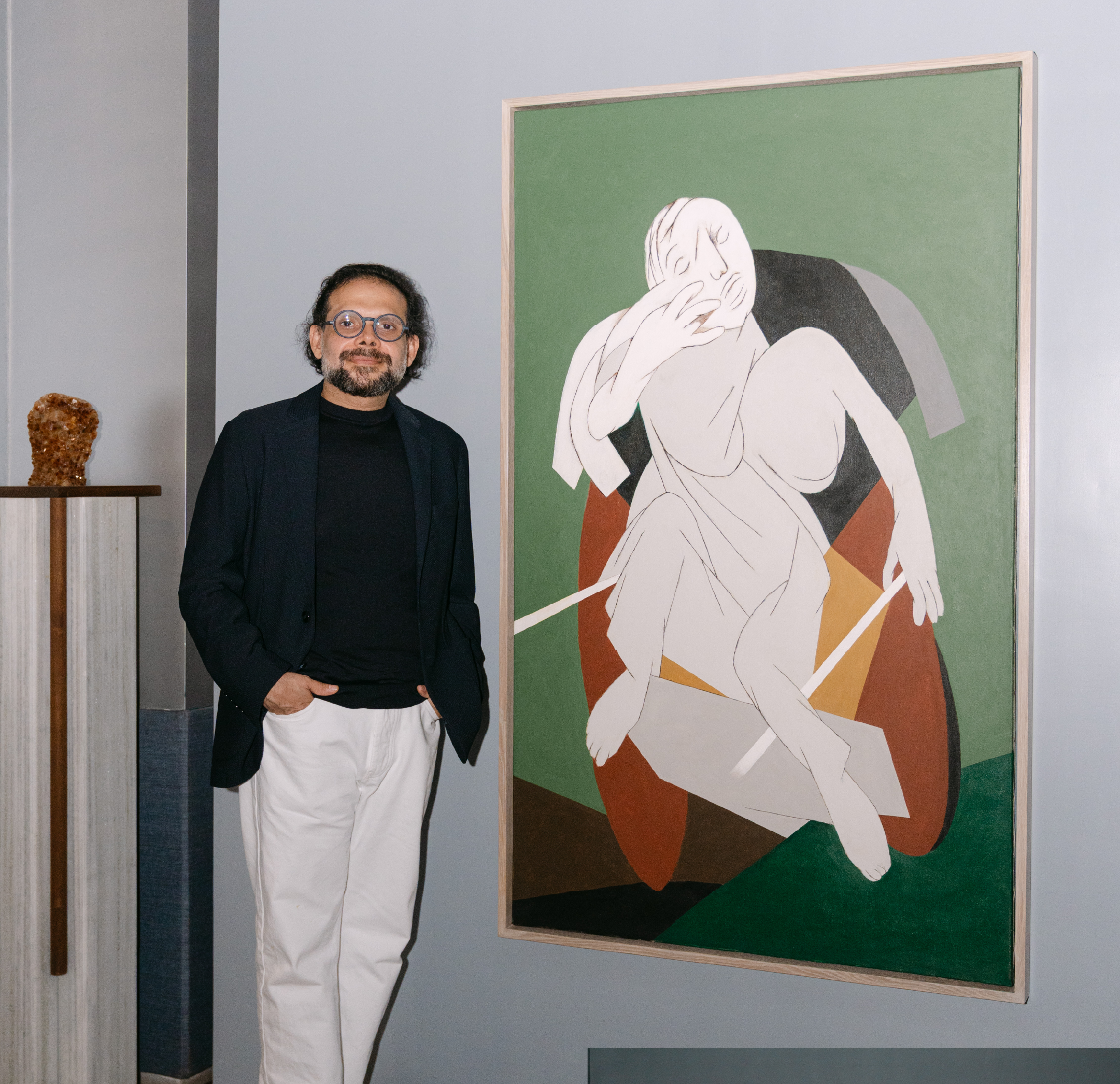
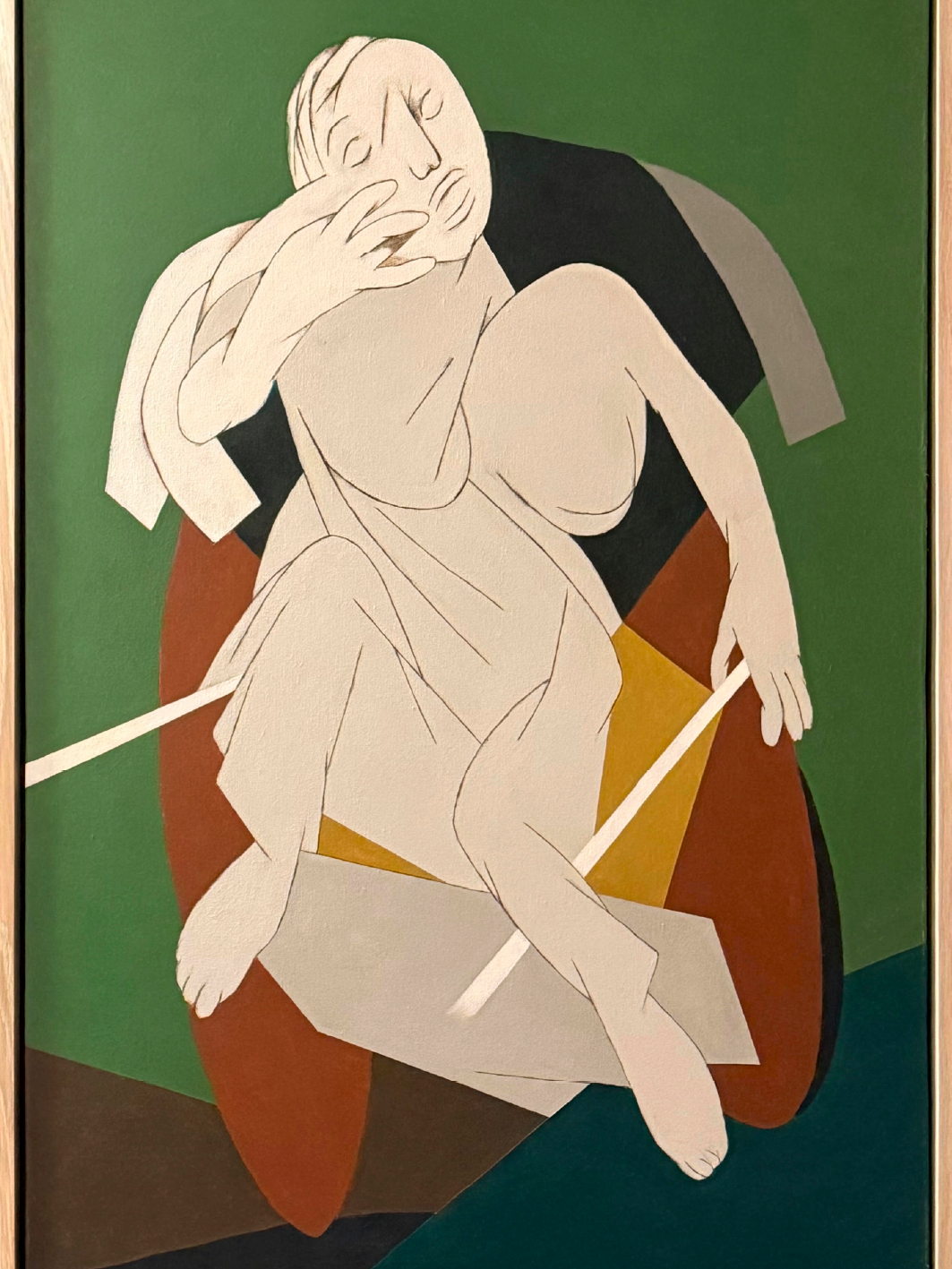
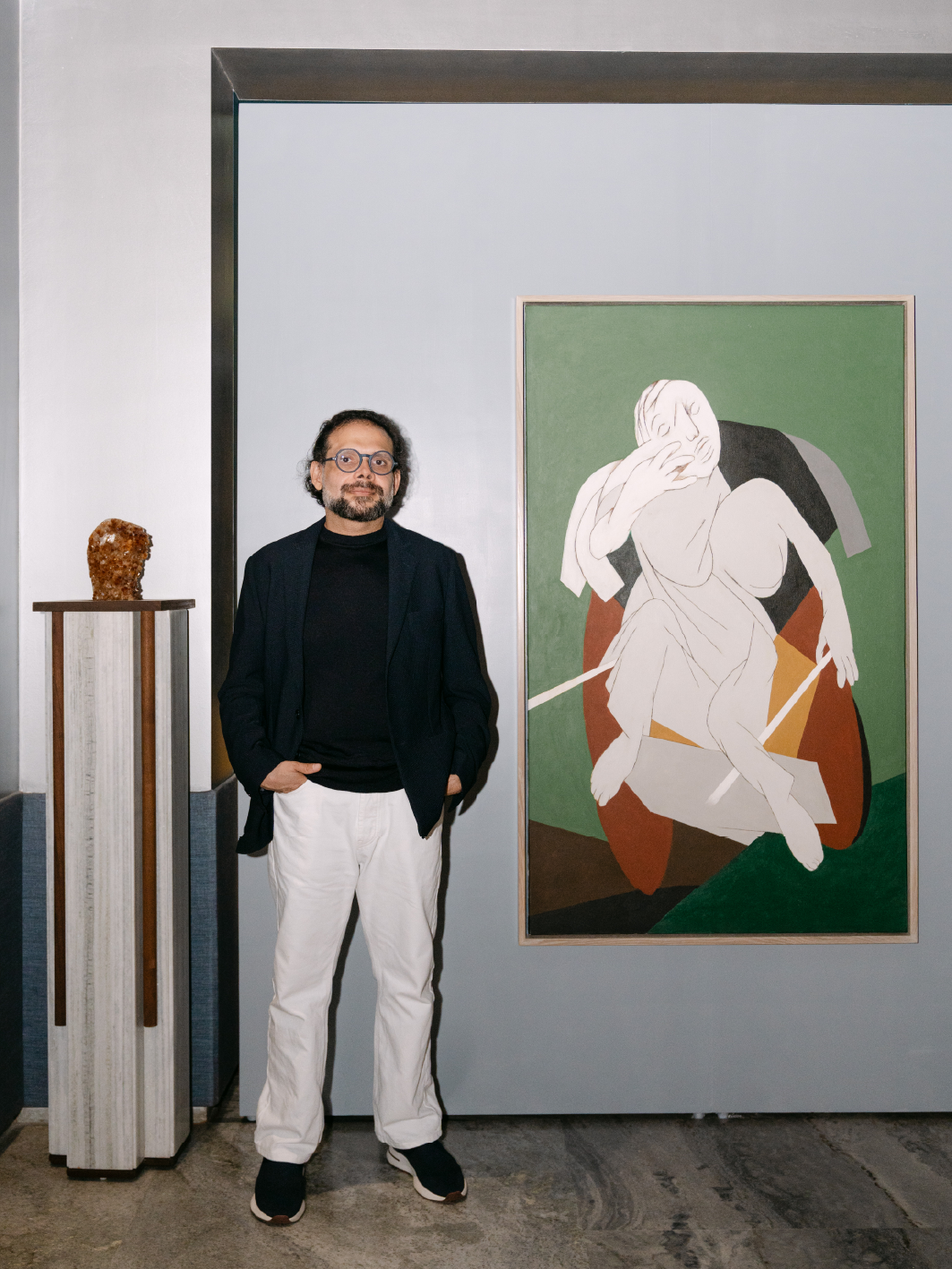
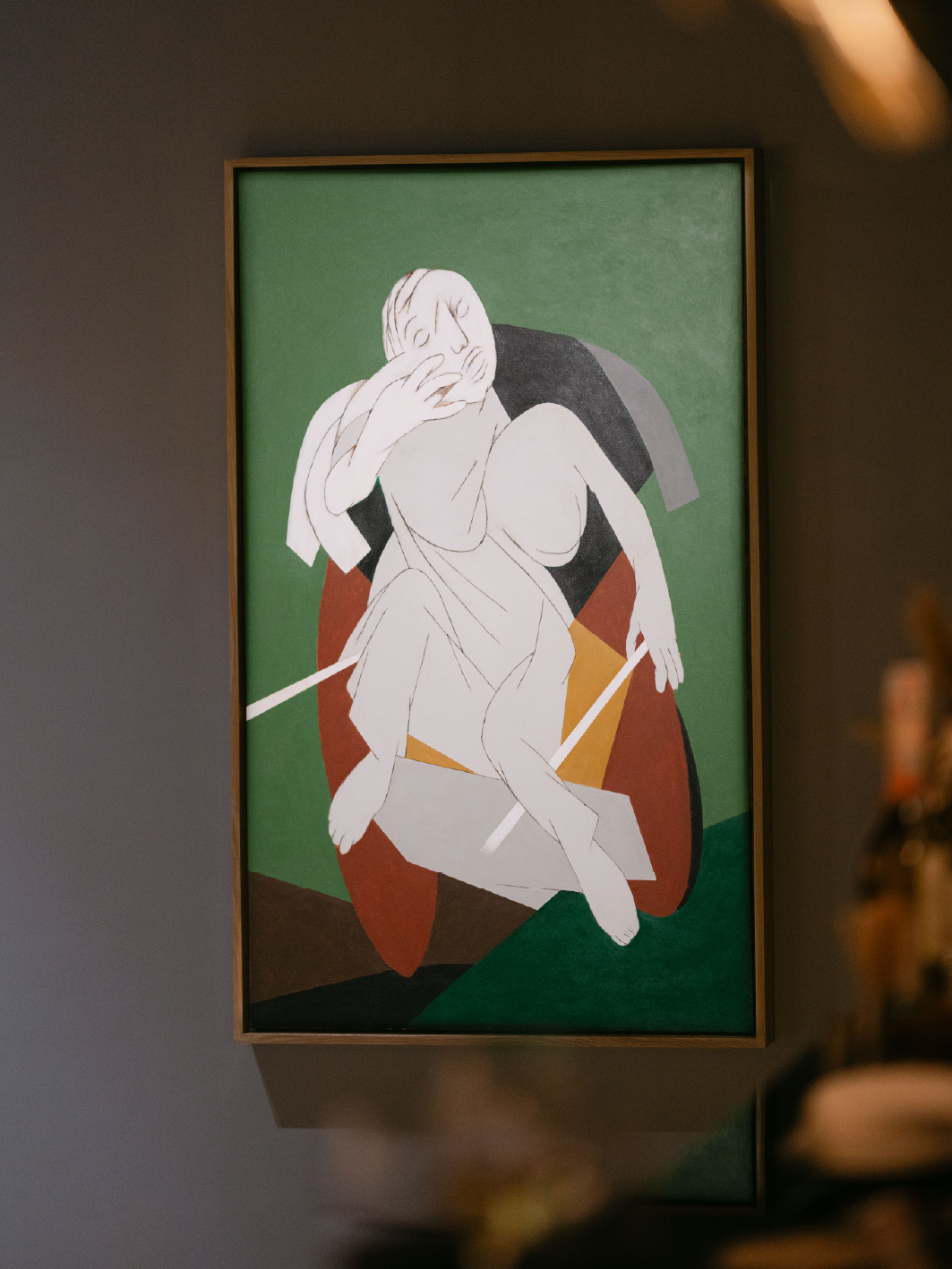
In 2002, Tyeb Mehta’s triptych Celebration sold at Christie’s for $300,000 —at the time, the highest price paid at auction for a work by a contemporary Indian artist. That same year, in the last decade of his life, Tyeb painted a rickshaw puller folded into the frame of his vehicle against a flat field of green. Since then, its path traced the two prominent routes through which important Indian paintings usually change hands—some move privately, at a never-disclosed figure, while others go to auction as one lot in a catalogue of hundreds.
But in October 2026, Tyeb Mehta’s Rickshaw Puller took a third route. It was the first and only lot offered by Volte Una, a new platform that auctions one work at a time. The painting sold for ₹69.1 crore—a world auction record for Tyeb Mehta, above the ₹61.80 crore paid for Trussed Bull in April 2025—and the fourth-highest price ever paid for an Indian work of art at auction in rupees.
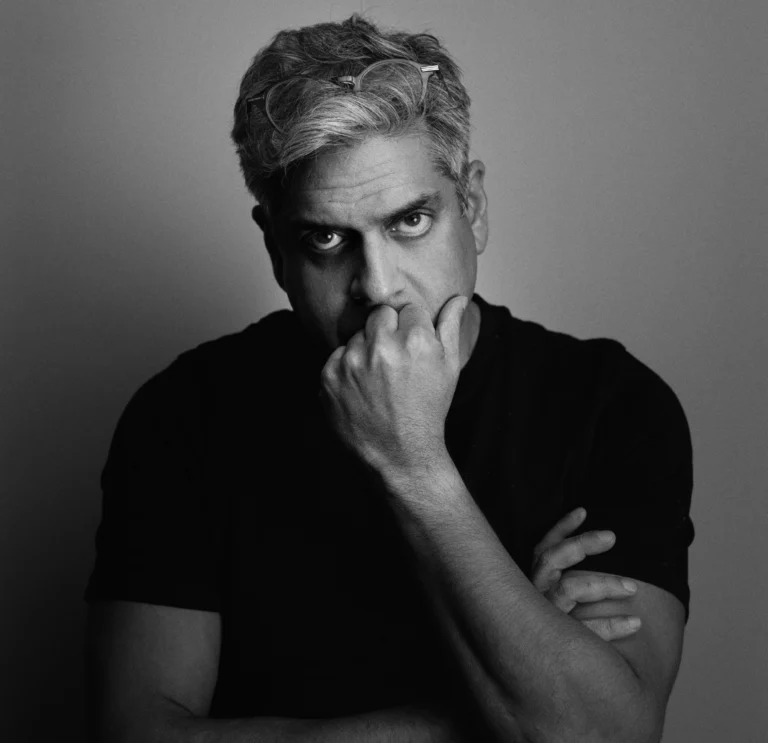
The platform belongs to Tushar Jiwarajka—who has spent 17 years as a gallerist in Mumbai and a private dealer in Dubai—and its debut invites a pertinent question: whether a format built around a single work might be what finally allows Indian modernists to be valued similar to their Western peers.
A room to itself
A major sale at an established house can run to 80 or 100 lots—and bidders spread their attention and budgets across everything on offer. “A major work enters a sale of a hundred lots, and its estimate, its position in the catalogue and the attention it receives are all shaped by the sale around it,” Tushar says. “A museum-grade painting needs a room to itself.”
Volte Una emerges from this philosophy. Each sale presents a single work to a closed circle of bidders by telephone and online. For now, Tushar explains, bidding runs over WhatsApp. A dedicated app will soon follow, but never a sale room. Bidders receive a digital paddle only after thorough vetting: Tushar either interacts personally or commissions meticulous KYC and background checks. Through this system, 12 buyers across the world registered for the inaugural sale.
In the weeks leading up to it, Rickshaw Puller was shown privately, by appointment, in New York, London, Dubai, Mumbai and Delhi, including at Kathiwada City House in Mumbai, with a condition report available on request. The platform plans 10 to 12 sales a year, scheduled around the works as they become available. It charges consignors nothing and buyers a flat 15 per cent premium, which the company says is significantly below the rates at the traditional houses.
The format met its first test in the closing minutes of the auction, when several bidders were still competing for the painting, something Tushar attributes to a rising demand. “The market for Indian modernists has risen sharply since 2021, and any honest answer starts there,” he says. “What the format adds is concentration. Every bidder is looking at one work, with nothing else competing for their budget.” He counts the sale as the steepest lesson in a career spent across nearly every corner of the trade. “Auctioneering is new to me, but it has taught me the most about conviction under a deadline.”
From Colaba to Alserkal
Tushar’s earlier lessons came slower, having arrived at the art world’s doorstep after a decade spent among corporates. He grew up in Mumbai and lived in Boston, New York, London and Singapore before opening Volte Gallery in a Colaba warehouse in 2009, months after the 2008 financial crash had stilled the markets—a lull in activity that he credits with giving him room to make mistakes and learn.
Over the course of the next decade, Volte Gallery—which draws its name from Cabaret Voltaire, the Zürich club where the Dada art movement was born—moved from featuring very young, emerging artists to senior figures such as Nalini Malani, Ranbir Kaleka and Sheba Chhachhi, and worked directly with prolific Western names such as William Kentridge, James Turrell, Marina Abramović and Antony Gormley to bring their work to India. “The gallery”, Tushar says, “taught me patience, because collectors live with a work before they commit to it”.
In 2021, he opened an 8,000-square-foot space on Dubai’s Alserkal Avenue, and with it, his practice turned towards a secondary art market—sourcing rare works of Indian Modernists and pre-Modern art for private collections and institutions. “It was here that I learnt discretion, and how purchase decisions are actually made: privately, slowly, and usually after a second conversation,” he recalls.
It also raised a question of fairness to the collectors consigning works to him. “If I was to be fair to the person selling a rare work through me, the only honest route to price discovery was auction,” he says. The idea for Volte Una came to him last year. Finding a work worthy of the launch took another twelve months, and the search settled on an artist whose paintings seldom reach the market at all.
Against the best of its era
Tyeb left behind around 200 canvases across nearly six decades. No major acrylic—the medium he took up in 1985—had come to market in the five years before the sale of Rickshaw Puller. When asked why this painting for the inaugural edition of Volte Una, Tushar reveals, “I have always found Tyeb’s work incredibly powerful. The surface of the canvas is quite flat, yet the figure leaps out and holds your attention. This is a work that needs nothing else in the room.”
The record matters beyond Tyeb Mehta. Western and Chinese masterpieces regularly cross $100 million at auction, while historically, only two Indian works have passed $10 million (Ravi Varma and M.F Husain). Volte Una’s next lot, due at the end of November, is a four-by-ten-foot M F Husain from the 1980s, from the Herwitz collection, bringing together his Buddhas and horses. Tushar also intends to extend the format beyond painting, to miniatures, ancient sculpture, historic jewellery and vintage cars with significant provenance. “Indian masterpieces have long been priced as regional art, a step below comparable Western modernists,” Tushar says. “I’d like this result to become a reference point, so that when a major Indian work is valued, it’s measured against the best of its era rather than against the Indian market’s own past.”