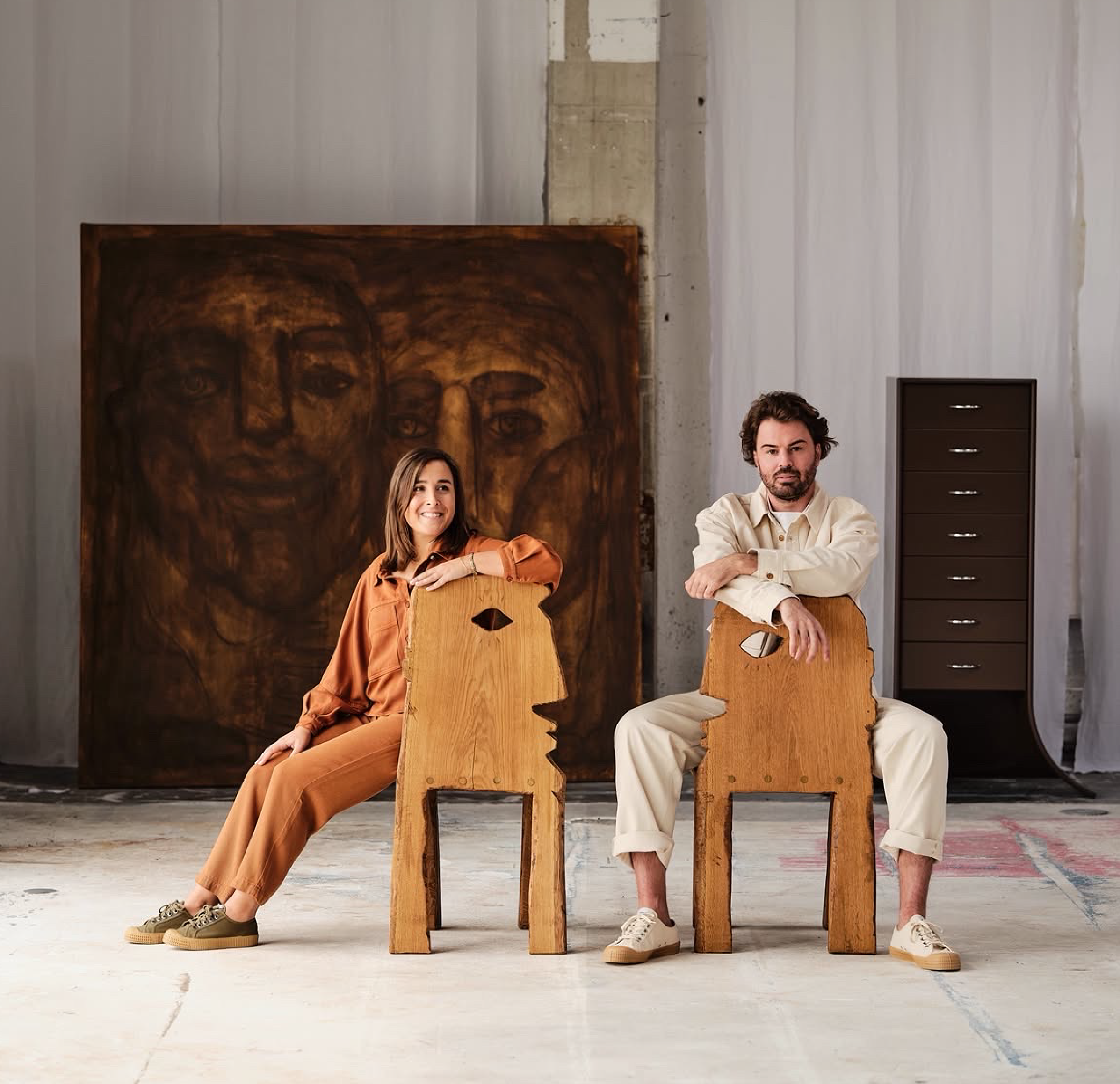
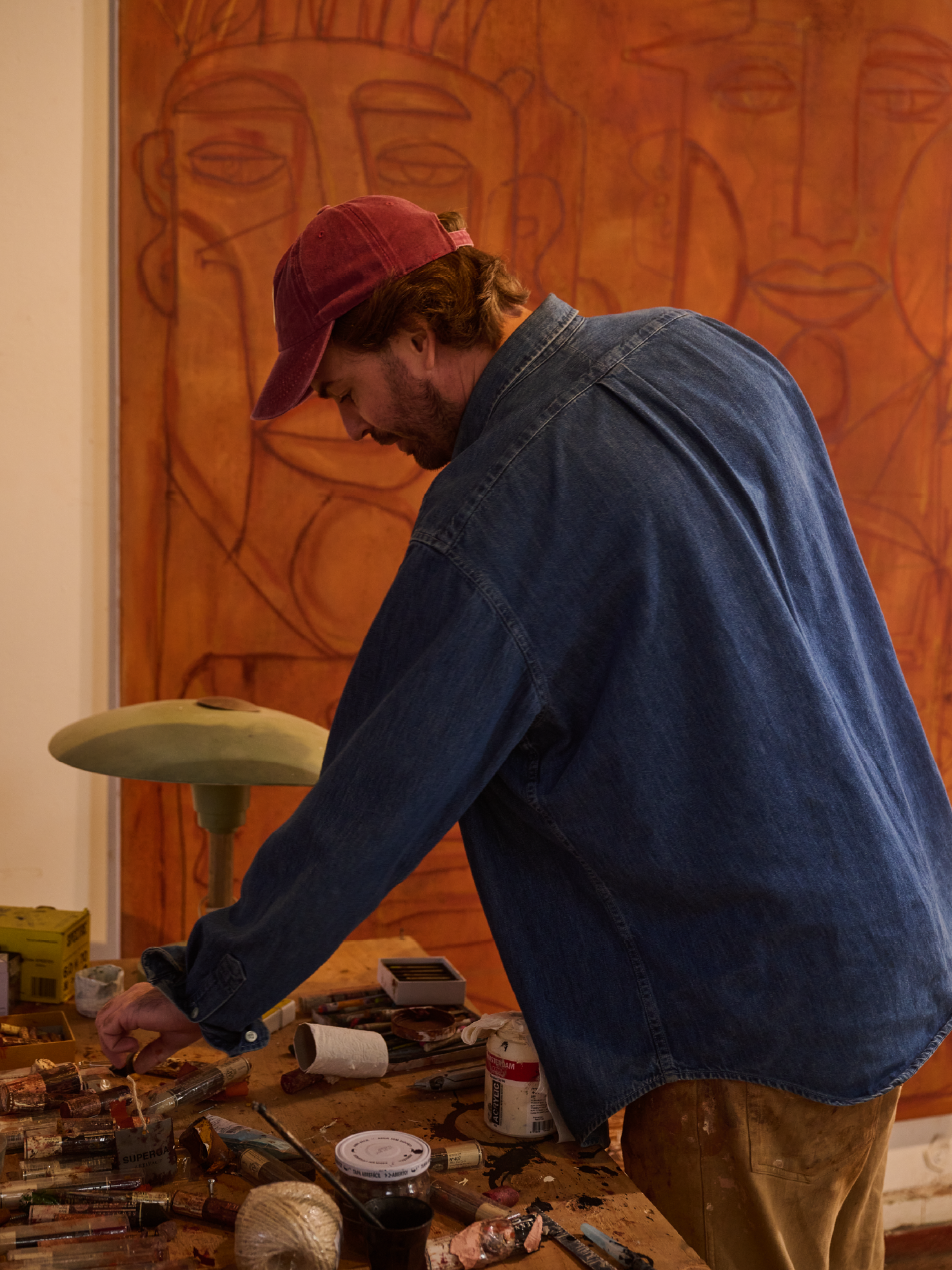
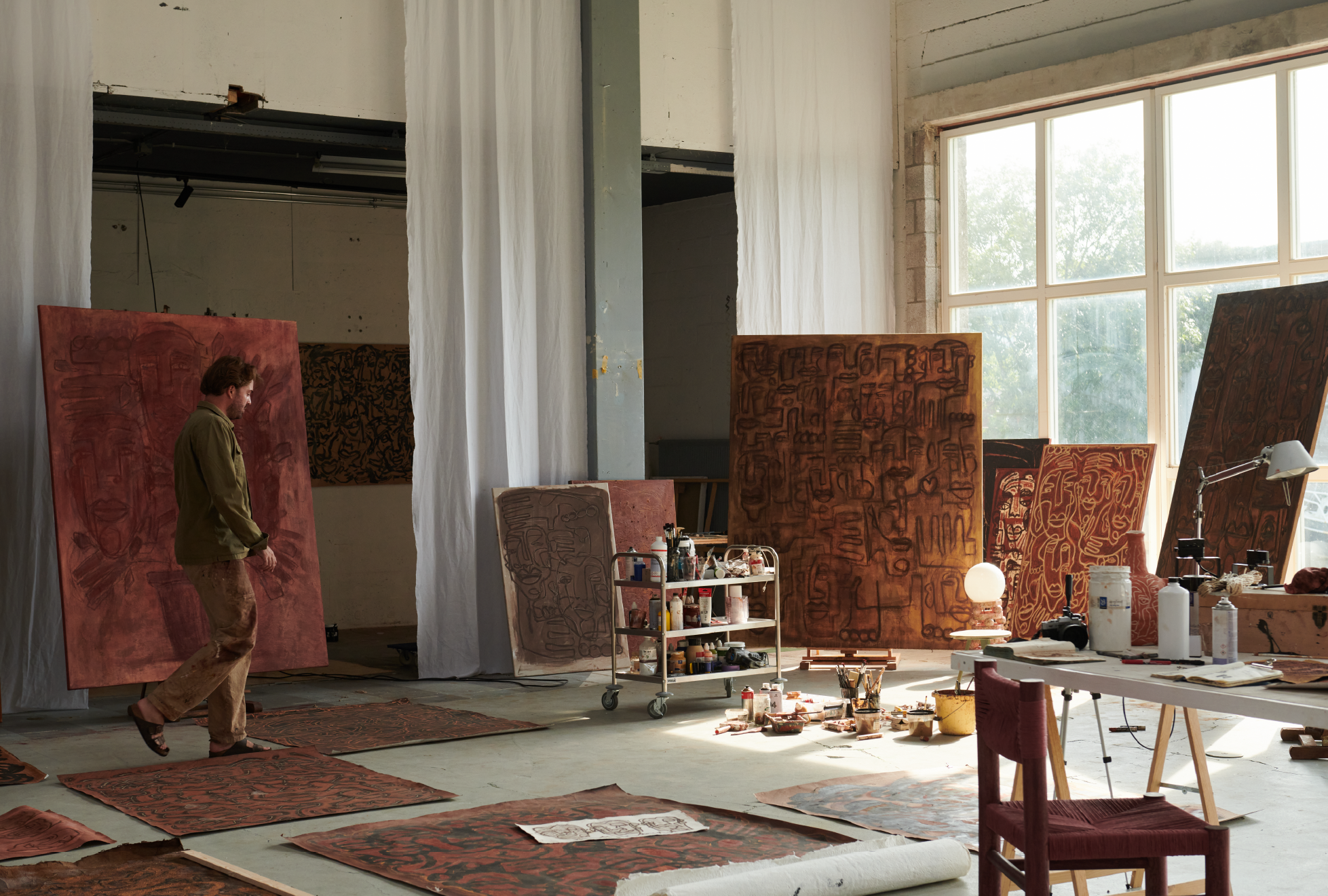
Dutch artist and designer Timothy Van Oorschot has a way of bringing the human figure into almost everything he makes. It appears in his paintings, in the three sculptural totems that make up his Counting on You series, and in the Besos chairs, designed as a pair. Across these works, he returns to ideas of connection, support and the relationships we share. This interest in making and the stories behind objects also extends to Atelier Manos, the Amsterdam gallery he co-founded with his partner, Jessica Barragan. The space brings together artists, designers and craftspeople, while giving Timothy another way to engage with the things that shape his own practice.
The places that shaped his eye
Timothy’s visual language was taking shape long before he began making art professionally. Visits to Ibiza with his father, who loved painting, introduced him to the colours of the sand, sea and landscape. The island came to represent a certain freedom for him. With his mother, he often visited his grandparents in Provence, where the flowers, plants and smells of his grandmother’s garden remain vivid memories. Her bougainvillaea seemed to grow everywhere, and the garden remains one of his most vivid memories of time spent with her. The family’s museum visits also left their mark, particularly those to the Fondation Maeght, where he discovered the work of Chagall, Miró and Braque. “I was lucky to grow up surrounded by art, colour, texture and a lot of nature,” he says.
At 18, Timothy moved to Florence to study art, where he immersed himself in fresco painting, a technique in which pigments are applied to freshly laid wet plaster, becoming part of the wall as it dries. He also studied restoration and colour, spending time among the city's museums and chapels. It was a formative introduction to art, but he was also drawn to the idea of storytelling and wanted a more dynamic way to work with images and ideas. This led him towards art direction and, eventually, advertising. The experience taught him how to build a story, but the pace of the industry soon began to feel at odds with the kind of creative practice he wanted to pursue.
Feeling restricted by the highly structured nature of commercial design, Timothy moved from art direction and advertising into the world of interiors. There, he became interested in the relationship between people and the spaces they inhabit, seeing homes as sanctuaries and the objects within them as things that could hold stories. Rather than simply filling a room, an object could carry the marks of its maker, the character of its materials and the passion behind its creation. It was a way of thinking about design that stayed with him.
Later, his time in Barcelona, where he returned to working with fine art after exploring different creative fields, brought him closer to the artist he had been trying to rediscover. He began to notice that he was spending more time working with his head and less with his hands. Jessica, whom he had met in Paris while they were both working in the design world, had recognised his artistic potential early on. With her encouragement, he started making things again, reconnecting with an instinct he had known since childhood. “I had to rediscover what I loved doing as a child,” he says. “In a way, it was about going back to my roots.”
A return to the art of making
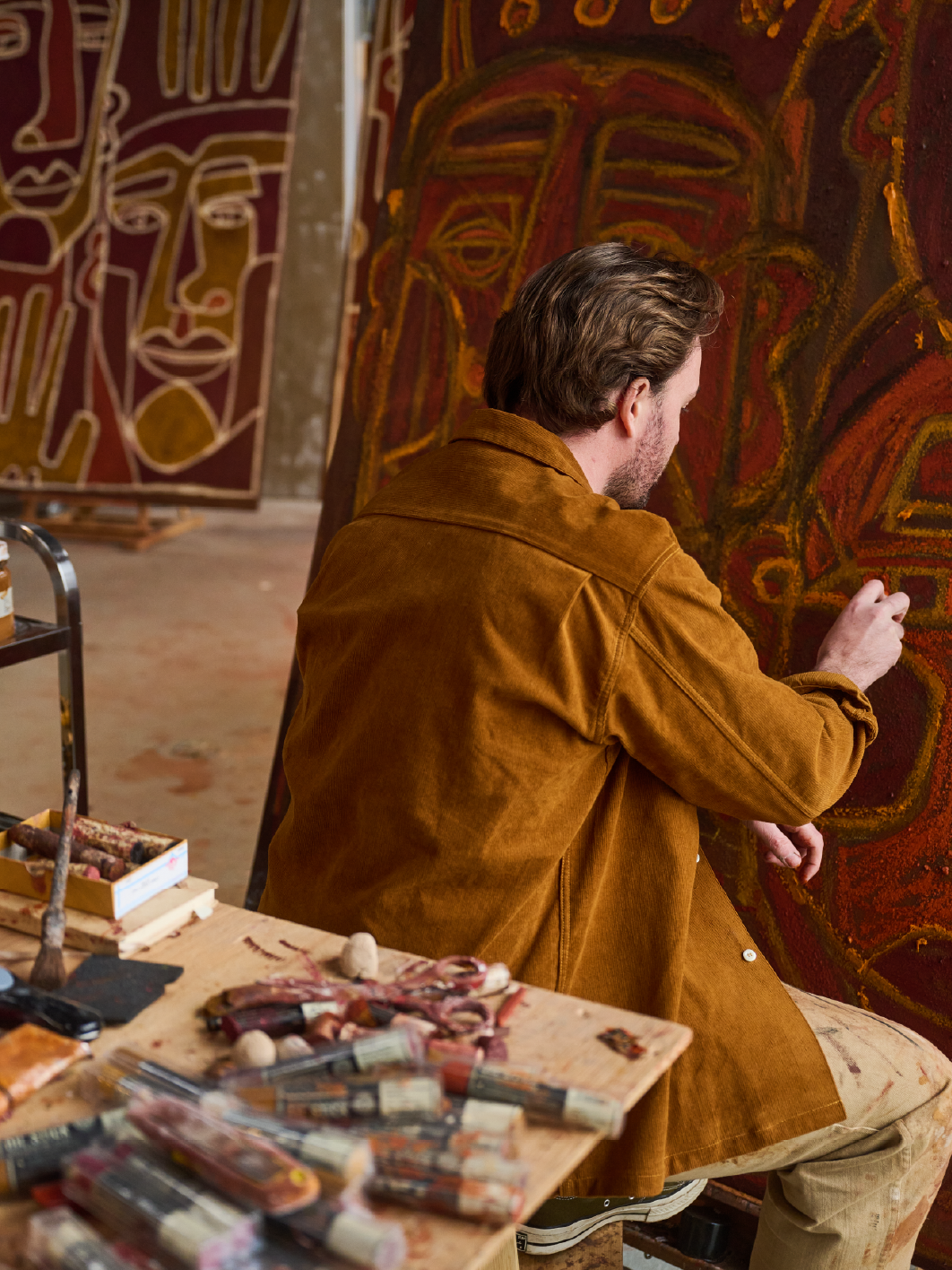
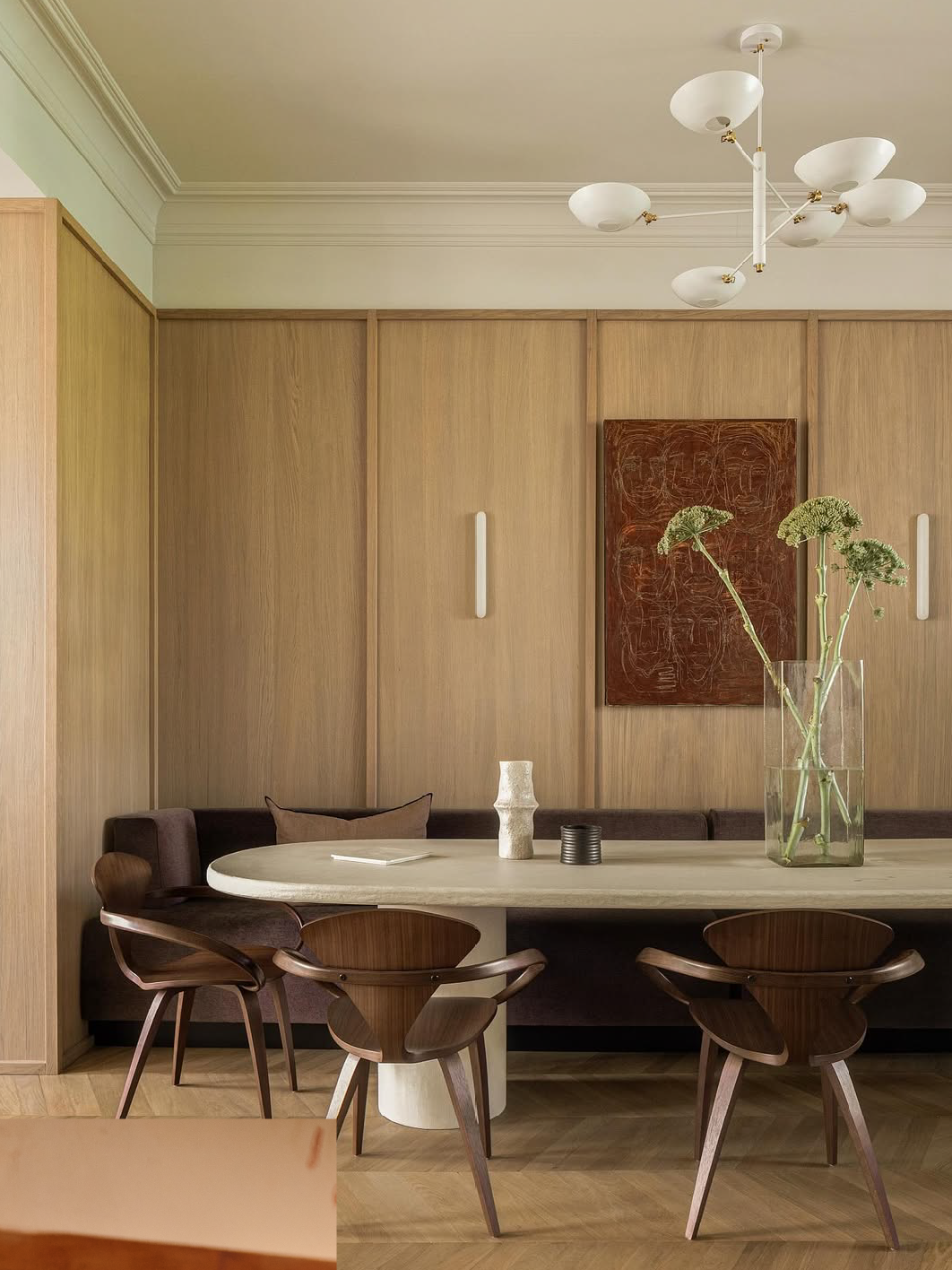
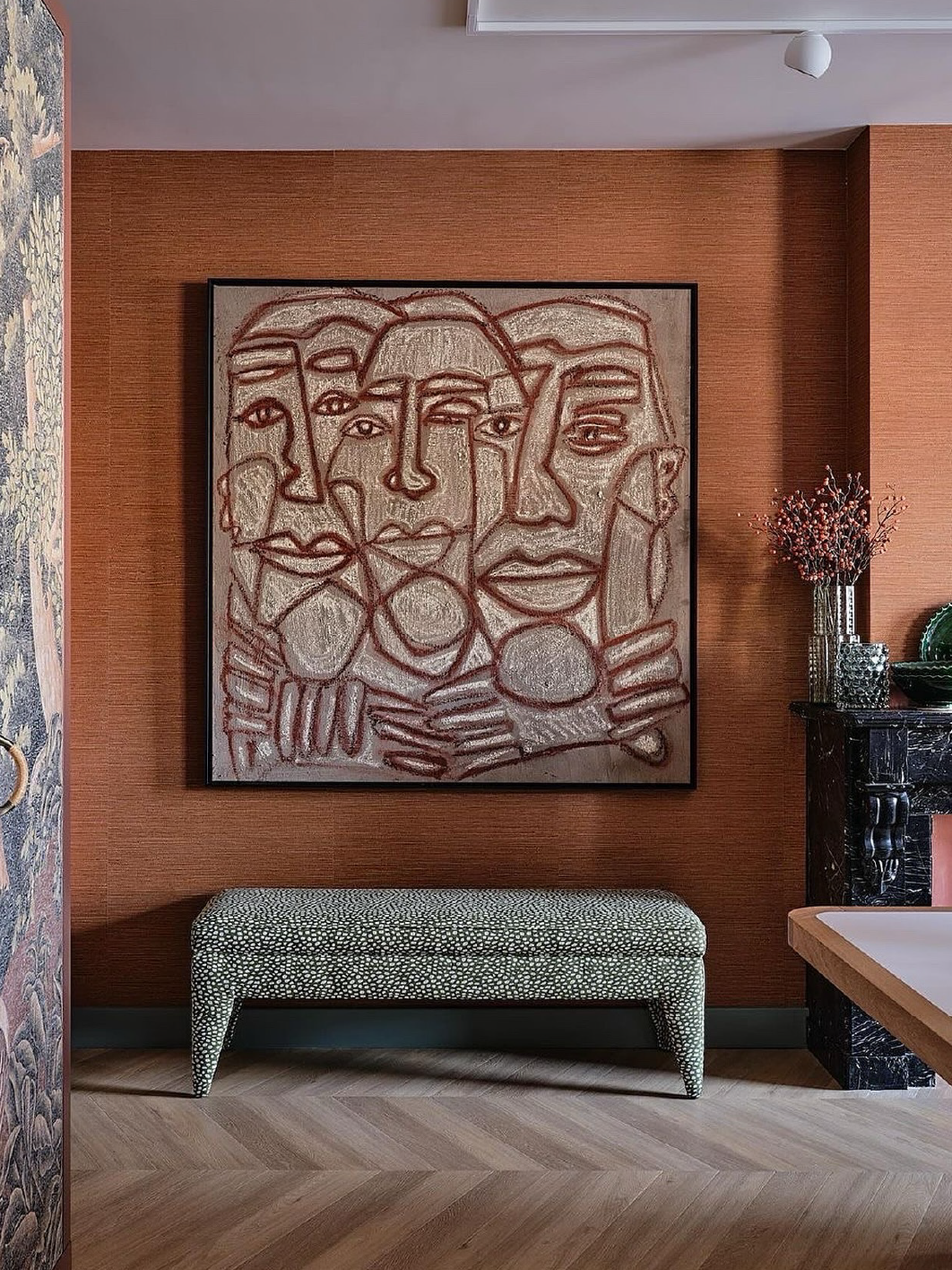
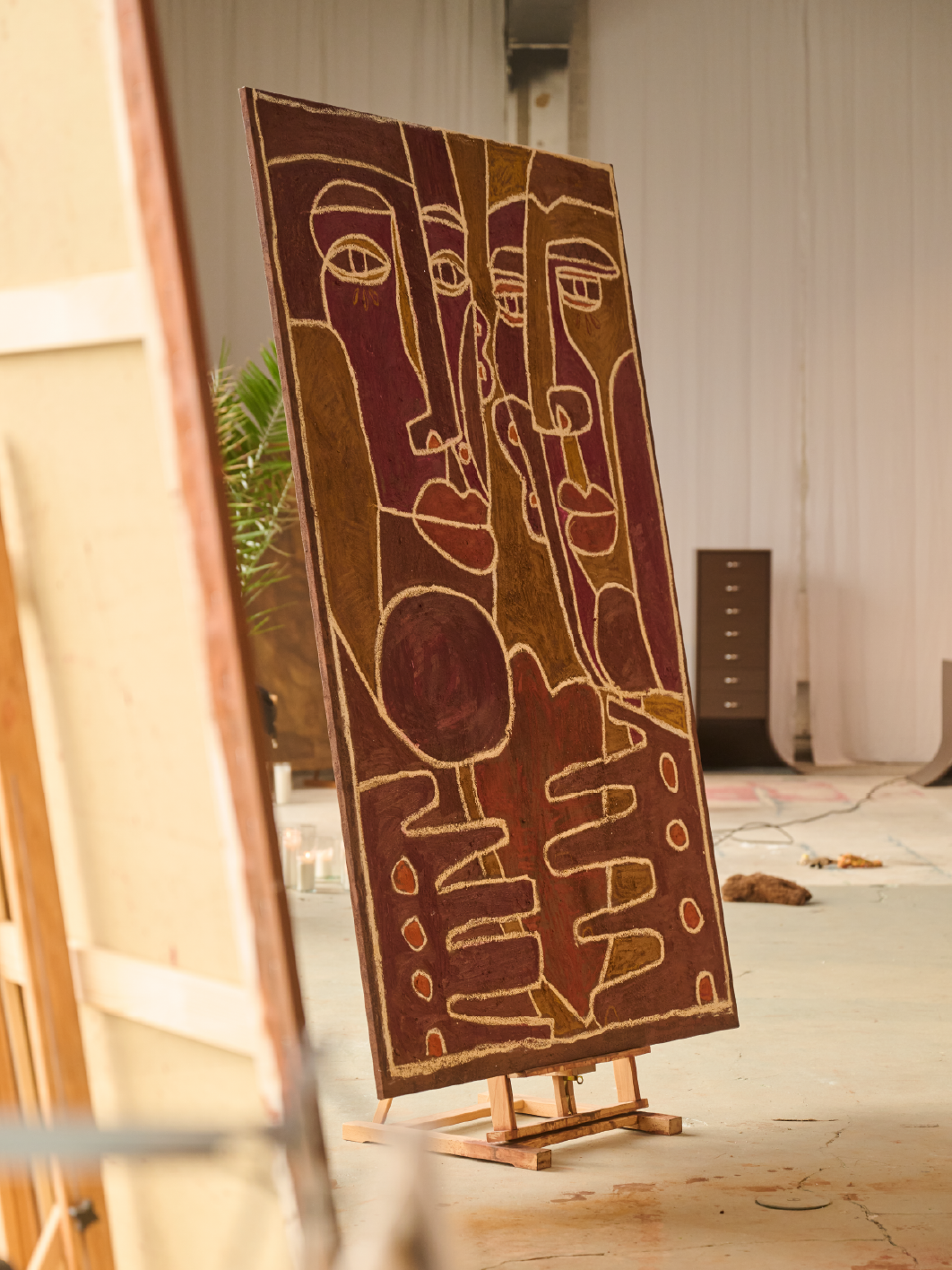
That return began with an interest in the human face. For Timothy, painting faces became a way of confronting himself, though he is quick to clarify that they are not self-portraits. He would paint them repeatedly and quickly, allowing room for mistakes and unexpected results. Over time, hands began to appear in the compositions, shifting the focus towards the ways people help and support one another.
Material experimentation also played a part in this evolution. He began incorporating sand from his father's garden in Ibiza into his paintings, bringing the earth and its colours into the work. “We all come from the earth, and one way or another, we all return to it,” he says. Working with plaster led him to create oval, egg-like forms that reminded him of the human face. For him, they came to suggest birth, potential and new beginnings. Those forms eventually developed into sculptural totems, taking his practice from painting into three-dimensional work.
The totems, including those in his Counting on You series, explore the idea of people supporting one another. He describes them as figures that do not represent any one person or culture, but speak to the idea that we are all connected and rely on one another. The series also led him to work with wood, alongside materials such as stone, concrete and ceramics. For Timothy, working with such different materials has often opened up directions he had not initially planned to explore.
The space between two people
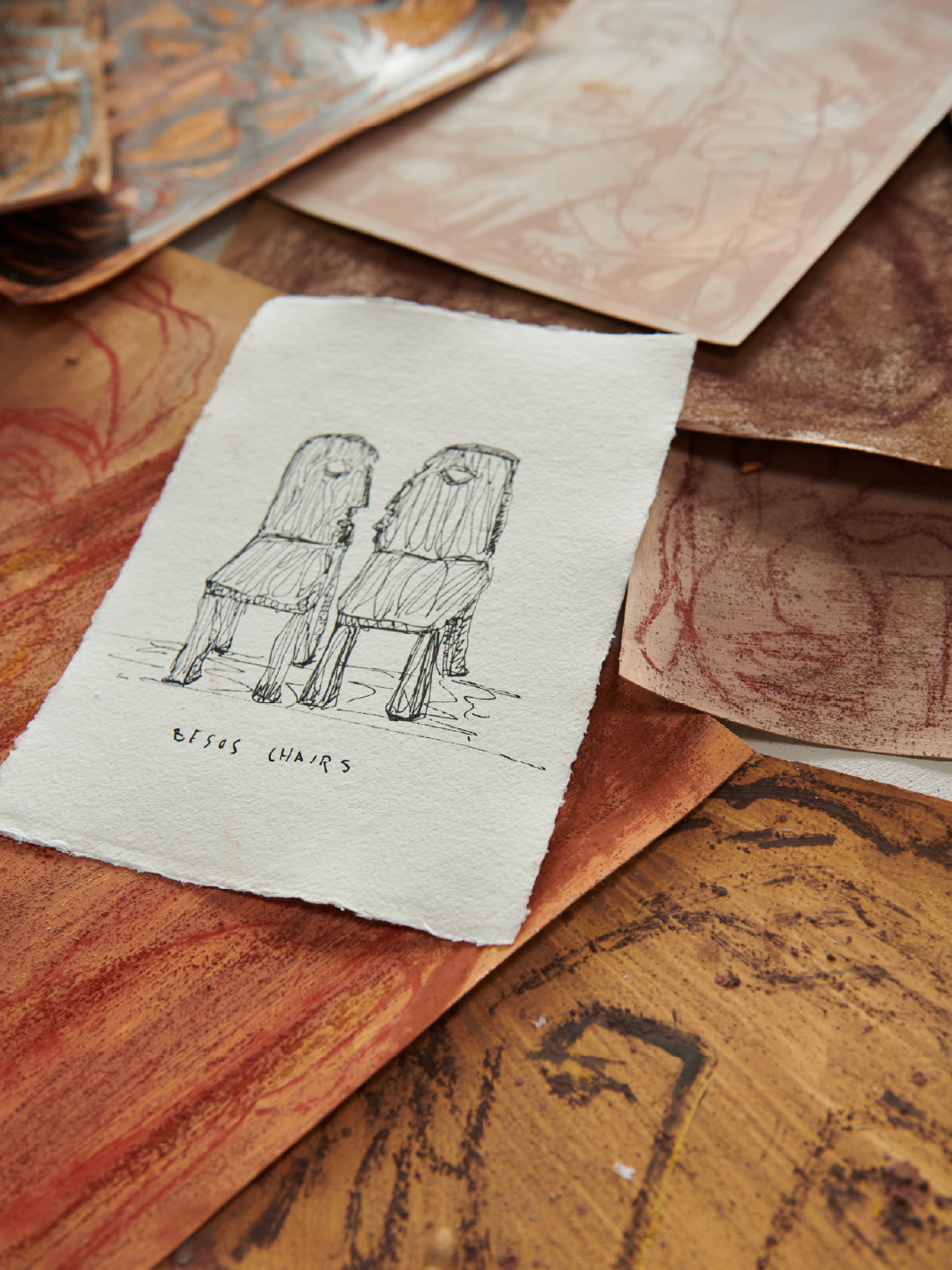
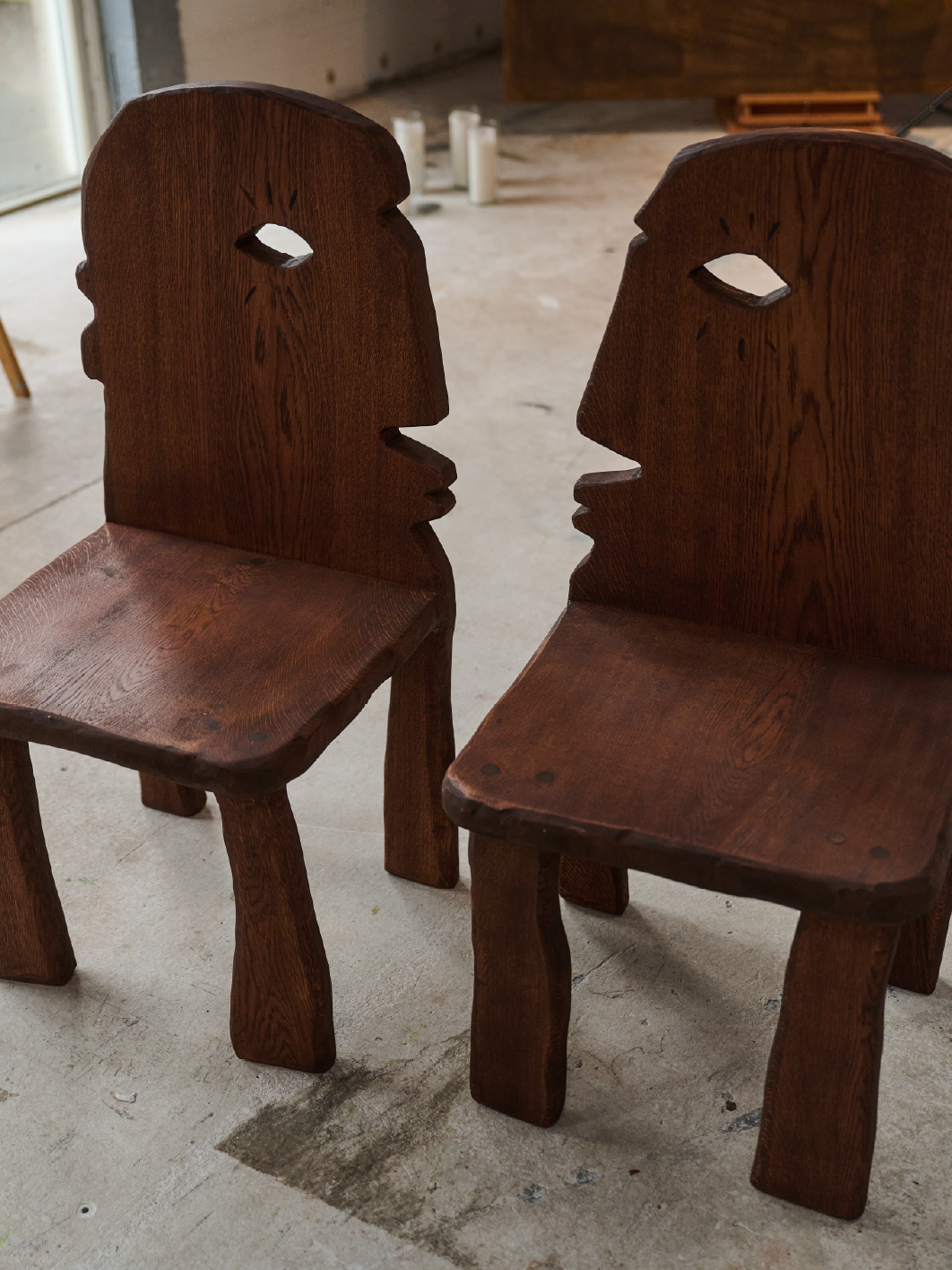
The same interest in connection takes a different form in the Besos chairs, designed as a pair. The idea began with an old church chair whose backrest had an opening that reminded Timothy of an eye. He initially considered working with recycled church benches, but soon realised that the meaning behind the design mattered more than the original source of the wood.
Religion, he felt, could bring people together but could also divide them. He wanted to explore connection beyond the context of religion. Besos, which means ‘kisses’ in Spanish, became the name for a design in which two chairs are always presented together. Their backs feature two faces leaning towards one another, suggesting intimacy and an exchange between people. The chairs are designed to be comfortable and stable, but their significance lies in the relationship between the two forms. Neither is quite complete without the other.
The idea soon grew beyond the chairs. The Besos Bench followed, bringing two faces together over a shared seat, and then came the Besos Table, designed for conversations and meals. Each piece extends the same thought: that furniture can do more than serve a practical purpose. It can shape how people gather, sit together and interact.
Making room for other voices
That philosophy eventually found a home beyond Timothy’s own work in Atelier Manos. Opened in 2024, it combines an artist's working studio with an exhibition space, allowing visitors to see both finished works and something of the process behind them. Jessica also wanted the space to feel welcoming, rather than like a traditional gallery. “We want people to feel at peace when they come to Manos. We want it to be a welcoming place where you can read a book, listen to music, discover art, have a coffee or simply share a moment with someone,” she says.
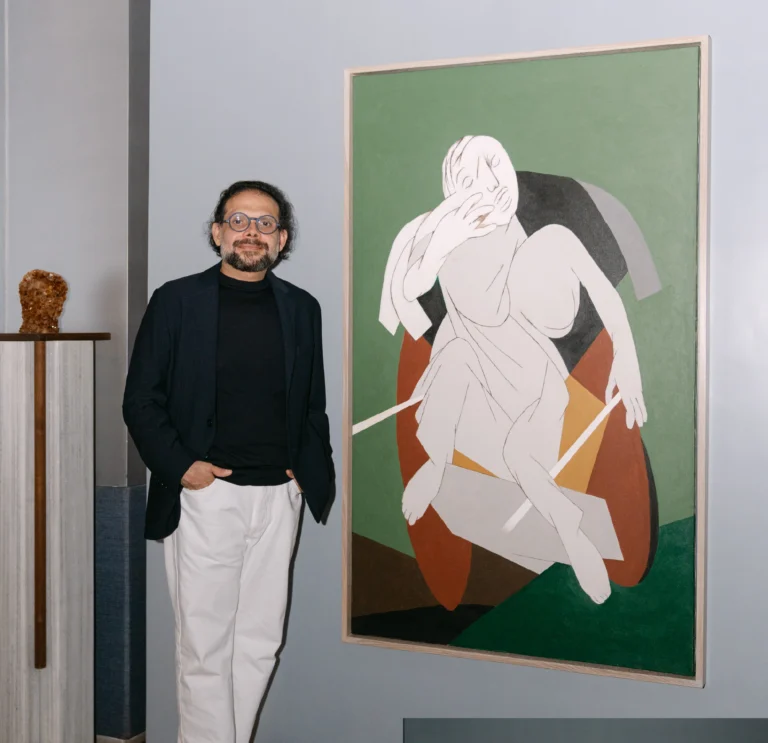
Manos means ‘hands’ in Spanish, a fitting name for a space centred on the act of making. Timothy leads the creative direction, while Jessica draws on her 15 years as a marketing director for an interior design company to handle communication, discover new artists and help them reach an audience. She was also the first to help bring Timothy's work to a wider audience.
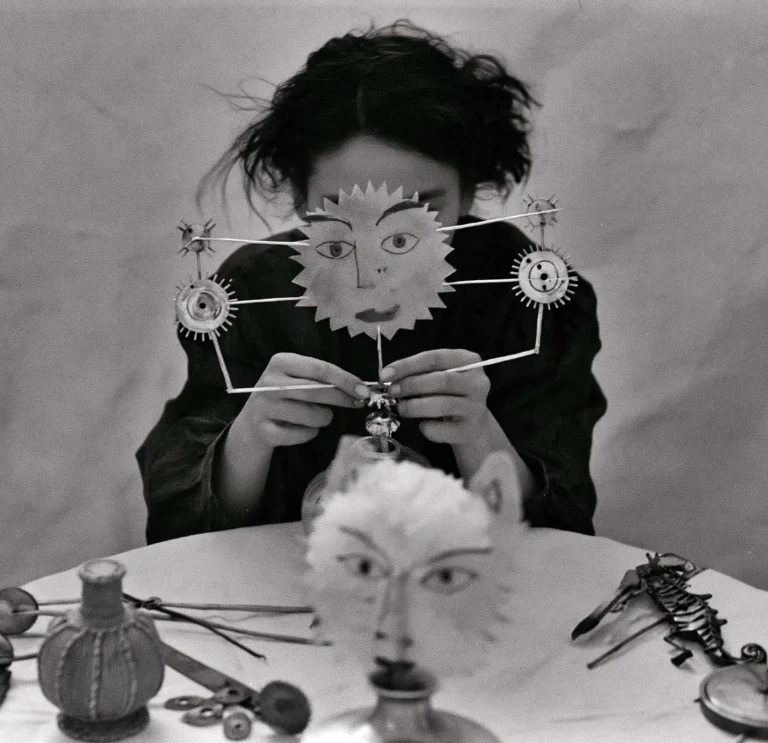
When choosing artists, they look beyond the finished piece to the materials, skill and time involved in making it. Jessica is drawn to the small details that make handmade objects unique. “We love imperfections. They make each object unique and remind us that human hands were involved in creating it,” she says. “I find beauty in the small details, the marks left by the artist and the time invested in making something by hand. These are the things that give an object its soul.”
The work on display can also transform the way visitors experience the gallery. One project Timothy remembers particularly well is an installation by Daniel Salorio, featuring 75 birds that appeared to fly through the gallery. Seen together, the individual pieces transformed the space. It is an example of how a work can change the way people experience a room. Running a gallery also involves helping artists sell their work, but Timothy believes that commercial value is only part of the picture. For him, craft is more than a technique; it is “memory, culture and experience held in the body.”