There is a renewed conversation around craft in the country today, one that is not just coloured by nostalgia but one that recognises what has always been there. It doesn’t simply revolve around the lore of craftsmanship but approaches the knowledge as a living archive. The makers, their history and lived experiences form the core of this new narrative. Our relationship with craft is personal yet regional at the same time, often shaped by materials, communities and memories inherent to place of making. Perhaps that is also why the idea of a single, contemporary Indian identity feels limiting. “What we call traditional today was also once new. It is about understanding what is essential to a tradition and then giving it the freedom to move into the present. We don’t have to reproduce something exactly as it was for its knowledge to remain alive,” says textile revivalist, Lavina Baldota, on her work at the intersection of preservation and reinvention.
Craft is often spoken about as an object or a technique, while its true story often is one of people, place and collective memory. It often begins with a simple act of experimentation, but what follows, the hands that refine it, the communities that sustain it, the stories that form around it, even the recognition it receives, becomes part of its identity. “When we separate the object from the community that makes it, we lose the heart of the piece. What remains may still be a beautiful textile, but the story that gives it depth begins to disappear,” says Lavina while referring to the Ilkal saree. Originating back in the eighth century, in the town of Ilkal in Karnataka, this GI tag labelled handloom is known for its weave where the body and the pallu are both woven separately before the artisans interlock the threads by hand to create one saree using the Tope Teni method. “The saree is inseparable from the place itself. When we speak of an Ilkal saree, we are also speaking about Ilkal, its weaving communities, the practices carried through generations and the history that has made the textile what it is. The textile and the place have grown together,” adds Lavina as she offers her perspective on traditions we have inherited, the need for revival and, perhaps most importantly, what we carry forward.
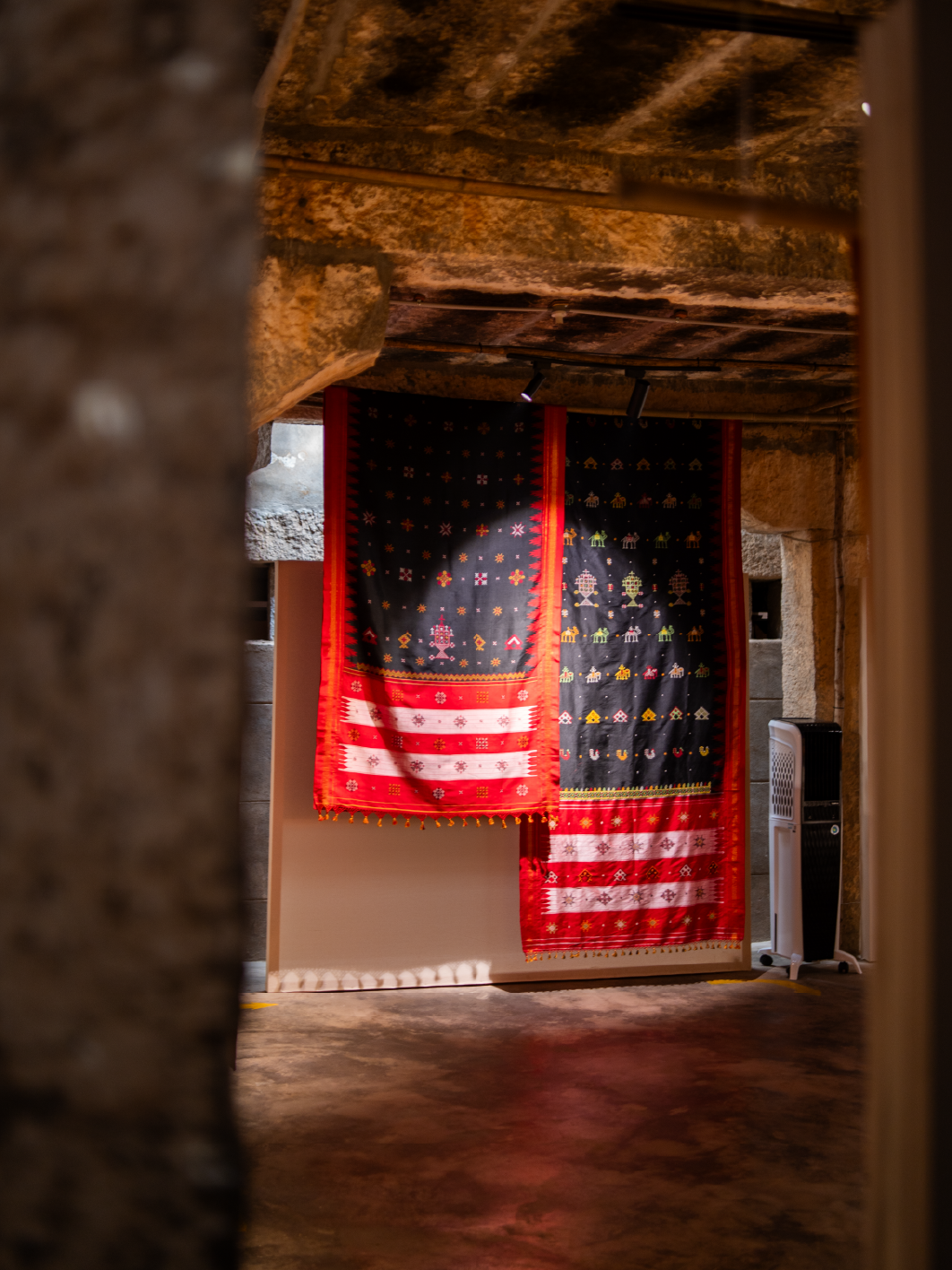
Part of the Pampa: Textiles of Karnataka, curated by Lavina Baldota and Mayank Mansingh Kaul. On the left is the ek-taar Chandrakali designed by Sujaya Mahesh, of Sameeksha School of Embroidery, Bengaluru while on the right is the do-taar Chandrakali designed by Asha Savla
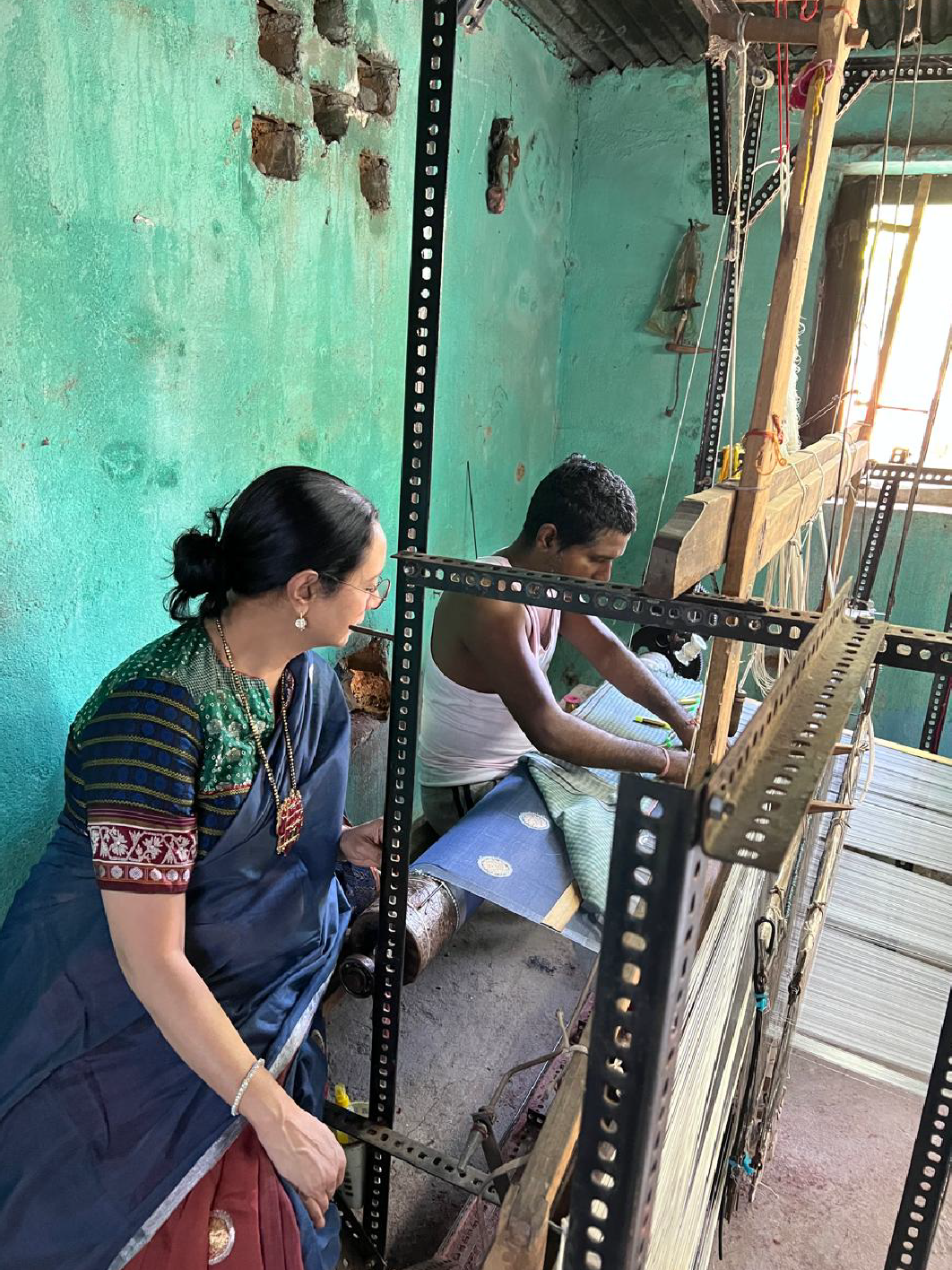
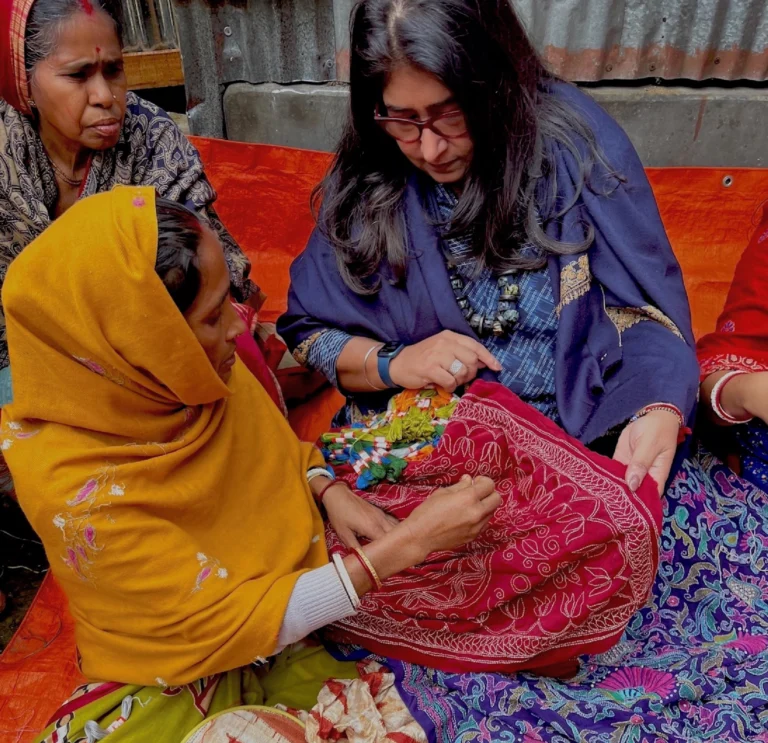
Lavina Baldota working closely with a handloom weaver, focusing as much on revival as on creating new forms of livelihood for the artisans
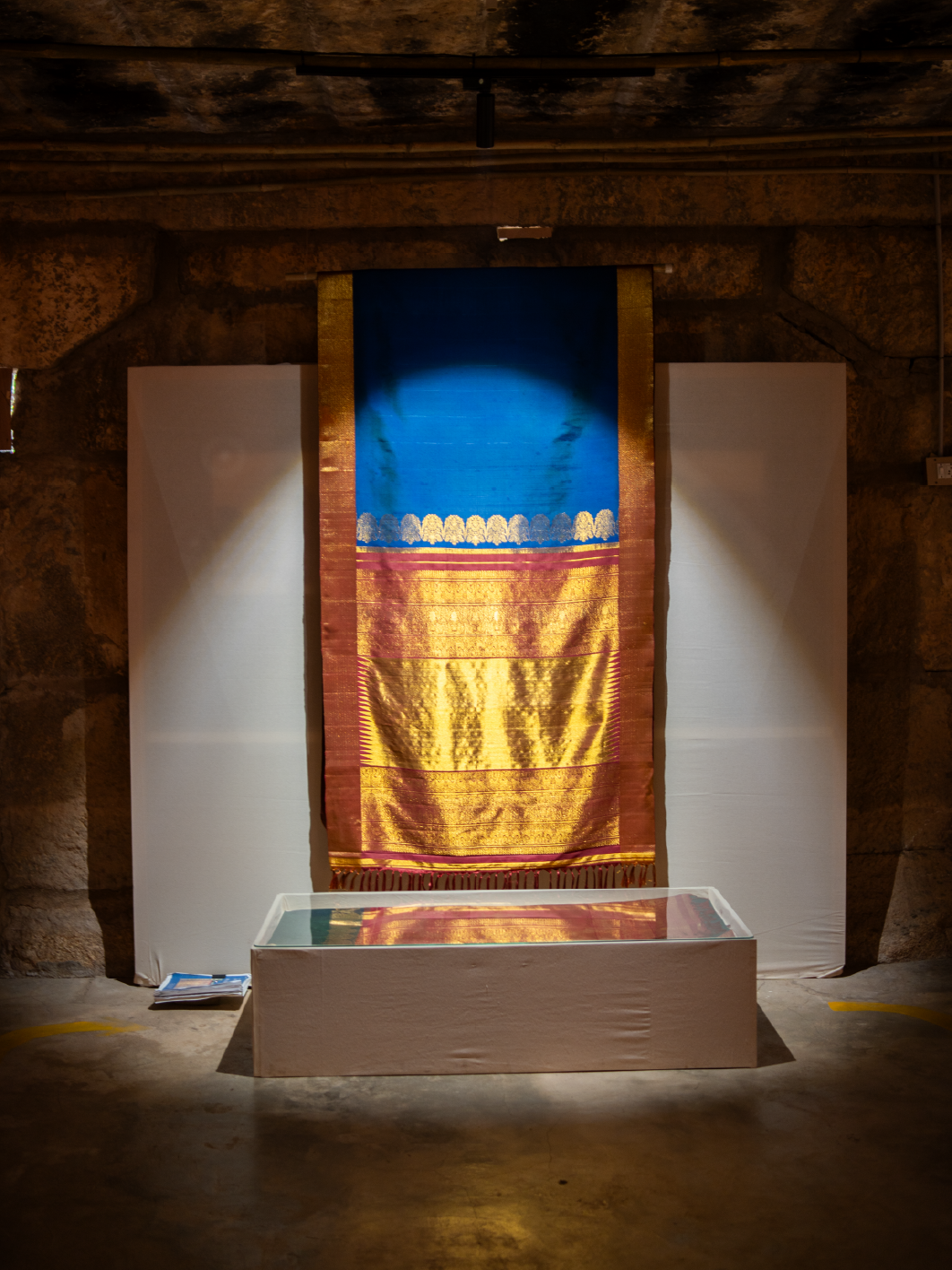
Born of the korvai three-shuttle technique that has shaped the weaving traditions of Kanchivaram, Molkalmuru, and Andhra in the Deccan, this 120-year-old saree was woven in the finest mulberry silk, and restored by the Abheraj Baldota Foundation, with the artistry of master weaver DS Manjunath
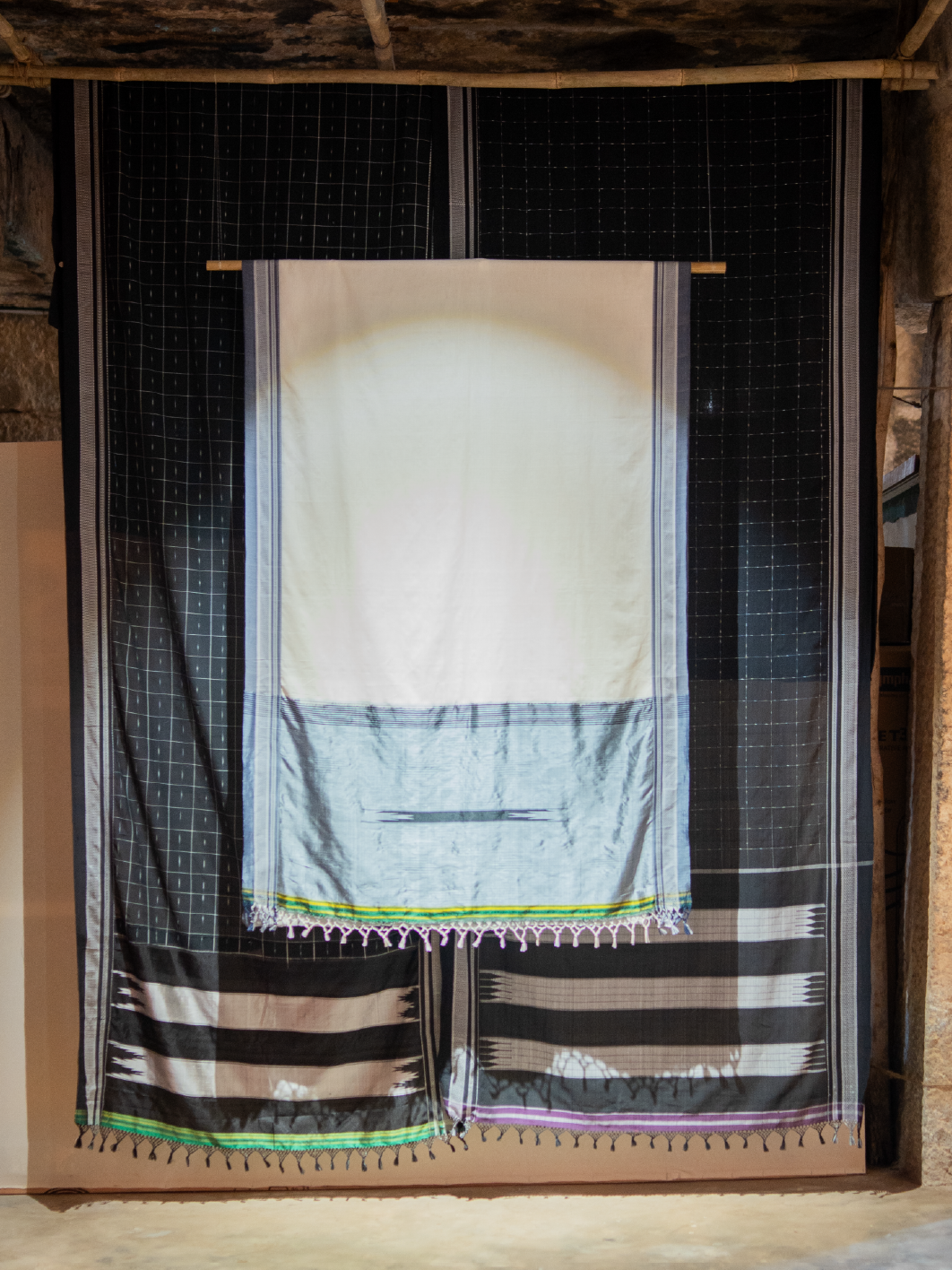
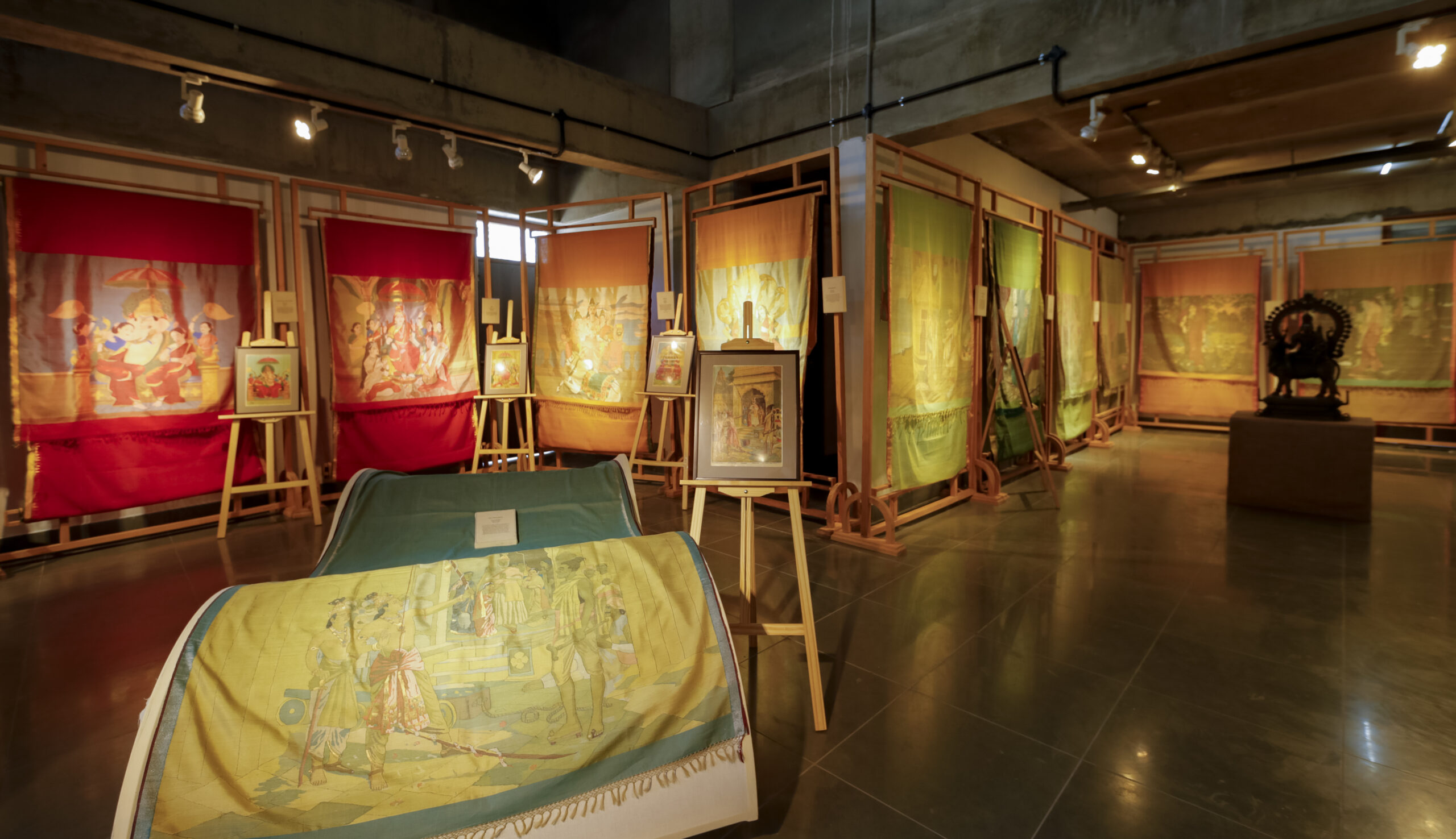
Held at the 7th-century Mantapa in Hampi, Pampa: Textiles of Karnataka showcased vintage Ilkal pieces. This weaving technique originated in the eighth century, in the town of Ilkal in Karnataka, and has been conferred with the GI tag today. In these sarees, the body and the pallu are both woven separately before the artisans interlock the threads by hand to create one saree using the Tope Teni method
Pragnya Rao: Do you see the current interest in Indian craft as a genuine cultural shift, or do you see this as a passing trend?
Lavina Baldota: There’s a definite shift but there will always be the risk of craft being reduced to an aesthetic. We are seeing much more interest in Indian materials, techniques and handmade processes, which is encouraging. What matters is whether we are also interested in understanding where they come from. When a traditional technique enters fashion or contemporary design, I would like the conversation to go beyond simply using its visual language. Understanding the maker, the process and the history behind it makes the engagement much more meaningful. I don’t think craft needs to be protected from contemporary design. It has always evolved. What matters is that, as it enters new contexts, we do not lose sight of what makes that particular craft distinctive.
Pragnya: What can we learn from the intuitive intelligence embedded within traditional craft practices?
LB: Craft teaches us to value the quality of making rather than simply the volume of what we produce. The time, material and process involved often demand a different kind of attention, precision and sensitivity. That does not necessarily mean restraint or minimalism. Craft can be extraordinarily abundant, layered and even maximalist. For me, the real lesson is not to reproduce traditional forms, but to learn from the way a craft approaches material and making. The form can change, but that way of thinking about material and making can stay with us.
Pragnya: The need to belong is much stronger today, than before, which has resulted in rediscovering regional identities. Do you think our cultural future lies in looking more deeply into the many local histories rather than searching for a singular idea of ‘Indian’ design?
LB: Absolutely. I think one of India’s greatest cultural strengths is its extraordinary plurality. We have different languages, cuisines, customs, landscapes, belief systems and ways of living, and together these many identities form the richness of India. To give you an example, as we continue working on Pampa: Textiles of Karnataka 2.0, even within Karnataka we encounter an extraordinary range of textile traditions, from Navalgund Durries and Molakalmuru sarees to Ilkal sarees and the very different practice of Kambli weaving. Each has its own material language, technique, history and relationship with the community and landscape from which it emerges. If there is this much diversity within a single region, the cultural richness of India as a whole is immense. The more closely we engage with these regional histories, the more nuanced our understanding of India becomes. These many identities together are what make the Indian cultural landscape so distinctive.
Pragnya: Textiles often carry histories of migration, trade, faith, geography and social exchange. What is your take on it?
LB: We often look at a textile simply in terms of where it comes from, without asking how it came to its current form. A textile can tell us about the movement of people, materials and techniques, the markets they encountered, and the communities that shaped them along the way. Regional textiles tell you a lot about the people who made them and the world they lived in. You can see this beautifully in Kasuti, an intricate form of embroidery originating in the seventh century in Karnataka, which today enjoys the GI tag, where many of the motifs come from things that were part of everyday life, from temple architecture and chariots to local festivals and celebrations. These motifs were not just chosen to decorate a textile. They came from what people saw around them, what they celebrated and what was important to their community. So when you look at a piece of Kasuti, you are also getting a glimpse into the cultural life of the people who made it.
Pragnya: What does collecting mean to you, especially when the objects are deeply connected to living communities and traditions?
LB: I would actually hesitate to call myself a collector. I see myself more as a custodian. When you bring an object into a collection, you are also taking responsibility for the history, practices and stories that come with it. For me, that responsibility is not just about preserving the textile itself. It is about understanding where it comes from, the people and traditions connected to it, and making sure that this is not lost. We are, in many ways, only holding these objects for the next generation.
Pragnya: Can craft become a form of cultural diplomacy for India?
LB: Absolutely. Craft can be a very powerful tool. We saw this with Sutr Santati (a travelling textile exhibition celebrating India's craft textiles) in Melbourne, where Indian textile traditions became a way of opening a conversation about India with an international audience. More recently, the India Pavilion at the Venice Biennale, after many years, has placed craft and material practice at the centre of its presentation, with curator Amin Jaffer using craft as a cornerstone of the pavilion. The exhibition Ce qui se trame at Galerie des Gobelins in Paris, curated by Mayank Mansingh Kaul, is another wonderful example of how textiles can create a dialogue between cultures. It brings India and France into conversation through their shared histories of textiles, making and exchange. This is where craft has a real strength. It allows us to introduce India through many different stories and experiences, rather than through a single image of the country.
Pragnya: Which Indian handloom traditions do you feel are at a particularly critical juncture today?
LB: There are many traditions that deserve our attention, particularly where we need to think about how that knowledge can continue into the future. In Karnataka, for instance, there is Molakalmuru. It has such a strong history of silk and brocade weaving. In the South, Kanchipuram has naturally become synonymous with silk sarees, but Molakalmuru has the potential to become a kind of Varanasi of the South for silk and brocade.
Pragnya: Are there lesser-known Indian textiles or weaving traditions that you feel deserve a larger place in contemporary conversations?
LB: I would definitely say Navalgund. Tracing back to the 16th century, these colourful, patterned GI tagged dhurries known as jamkhanas locally are woven on a vertical loom called KhadayMagga. Historically they were woven exclusively by women artisans. The durries have such a distinctive character, in the way they are woven and in the patterns and colours they use. There is a lot of history within that tradition, and there is plenty of room to look at it in new ways and bring it into contemporary design.
Pragnya: What does the revival of a handloom actually mean to you?
LB: Revival, to me, is much more than simply bringing an old technique back into production. The first part is understanding what we are trying to revive and, wherever possible, bringing the textile back as close to the original as we can. But revival cannot stop with the textile itself. You also have to look at the people who make it, how the practice is passed on, whether younger makers have a reason to continue with it, and whether it can support a livelihood. A revival becomes meaningful when the ecosystem around the craft can begin to function again. That could mean creating a market, bringing back a forgotten process, encouraging younger people to learn it, or simply giving the practice a reason to exist in everyday life again.