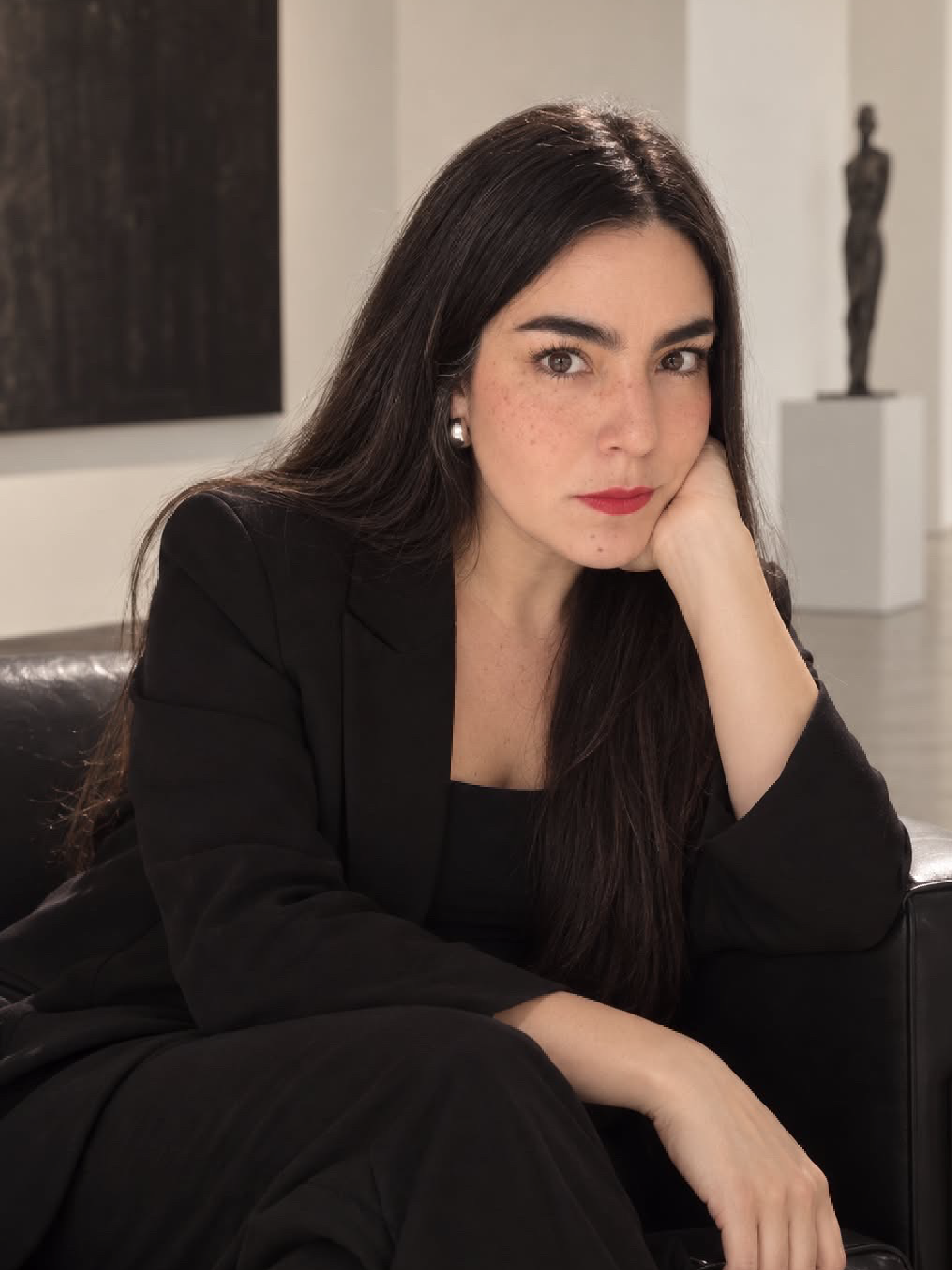
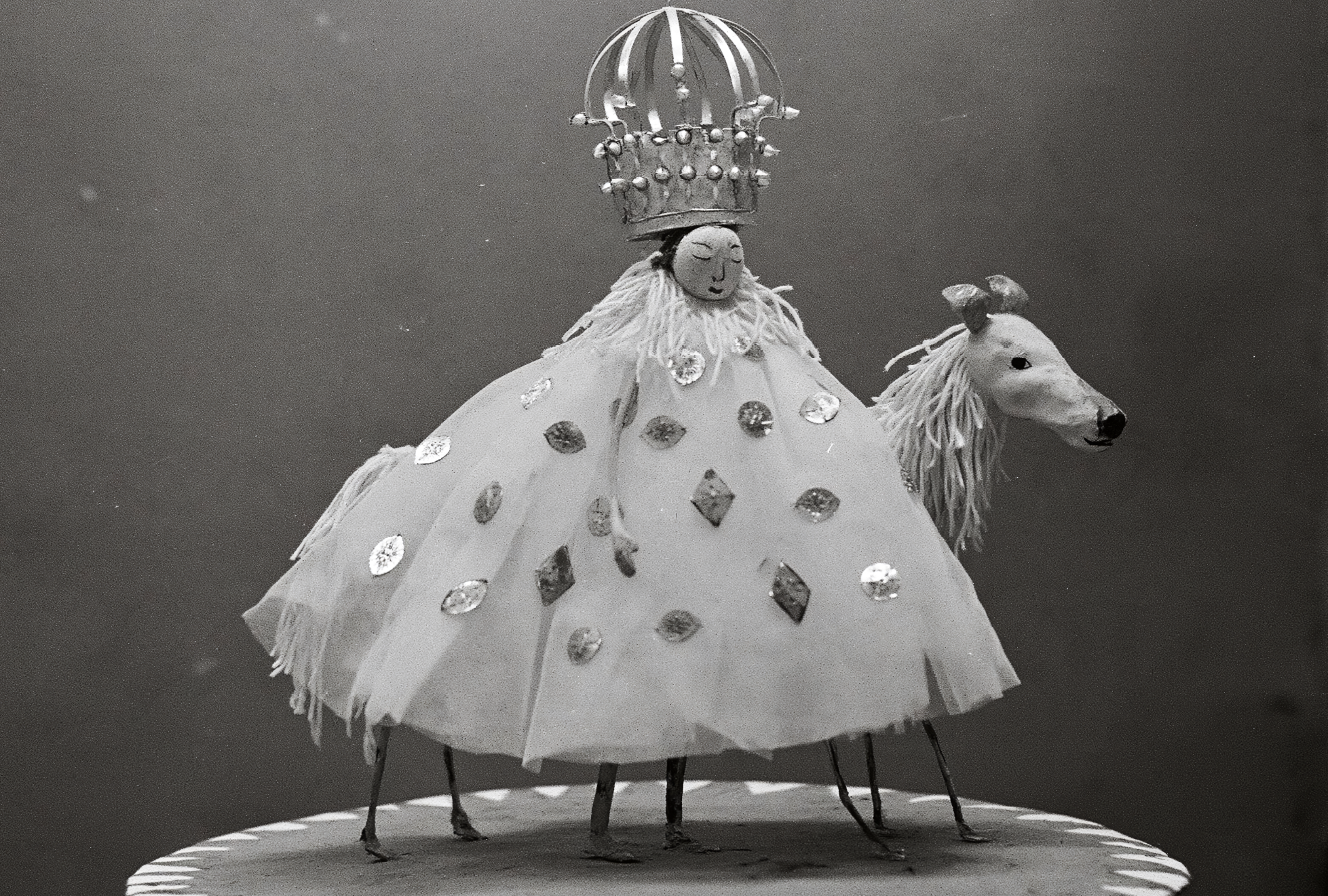
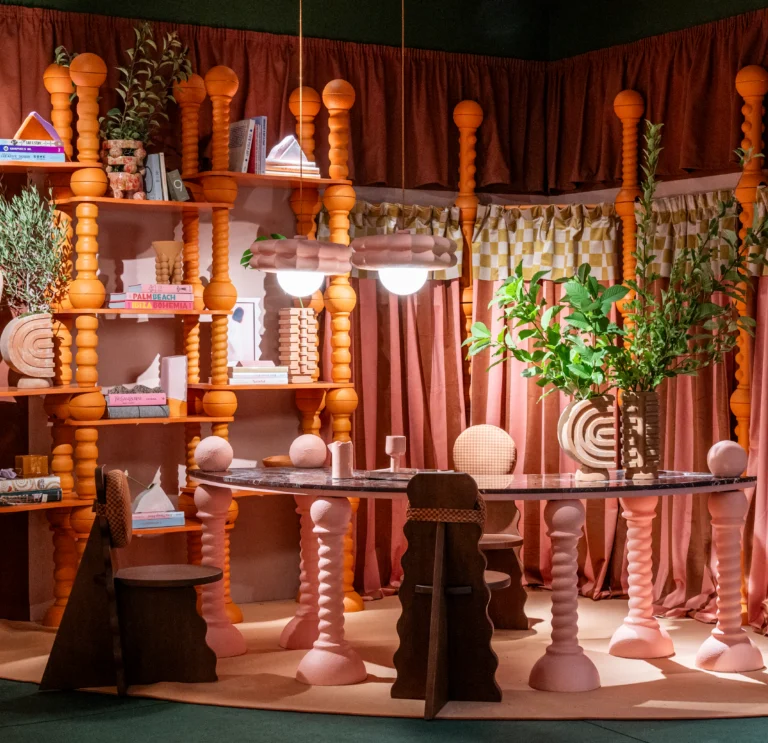
Somewhere, right now, a stranger is falling asleep and walking into a place they have never been. There's a particular quality of light in it, and a garden that keeps changing dimension as they move through it — origami one moment, ceramic the next, a smell of copal drifting in from nowhere. In the morning they'll wake up unsettled, search for the image online, and find it: a piece by artist María Valeria Pazos. They'll write to her, half-embarrassed, to say they think they've dreamed of her work. It happens often enough that she's stopped being surprised by it. "As if an image could touch a dream that was already living somewhere inside another person," she says, and she means it as plainly as a fact, not a metaphor.
A life assembled from fragments
To understand how she gets there, you have to go back to a much earlier version of her, the one who grew up treating imagination less like a hobby and more like a lifeline. "Imagination and art have helped me survive," she says now, and the sentence carries weight precisely because she doesn't dress it up. For her, imagination became a refuge, a space to turn difficult experiences into something meaningful and build worlds where she felt safe and free. When she says "survive," she means it in a personal sense — art and imagination, for her, have been essential ways to navigate life and make sense of what she's lived through.
As a child she was already collecting things that don't usually go in the same box — dreams, lights, animals, overheard conversations, the exact texture of a particular afternoon — convinced, even then, that they were all quietly talking to one another. It's no accident, she says, that she has always loved children's books. They understand, intuitively, "that reality can remain fluid, that an object can become a character, that scale can suddenly change, and that wonder can emerge from something completely ordinary." That was the operating logic of her own imagination before she ever had a language for it.
That conviction never really left, it just found more rooms to live in. Philosophy came first as a discipline, giving her a way to sit with the strange perceptual experiences she kept having and ask why they happened. Sensory theatre came next, and it taught her something philosophy alone couldn't — a smell, a texture, or another body's presence in the dark could open an entire inner world faster than any explanation. Poetry gave her permission to stay in ambiguity instead of resolving it. Visual art gave shape to whatever arrived before language did. "Philosophy, sensory theatre, poetry, and visual art belong to the same territory," she says now, and it isn't a diplomatic answer so much as a description of how her mind actually moves — sideways, between rooms, following the same thread through each one.
The thread, it turns out, is attention — the slow, not the frantic kind. She'll notice a wall the moment ordinary light stops making it ordinary. She'll feel a memory arrive on the back of a smell before she's consciously decided to remember anything. "I am drawn to moments when ordinary categories begin to soften," she says, "when memory enters perception, when an object acquires another emotional life." Everything she makes begins in that soft, unresolved moment, before it's decided whether it wants to be a poem or a room you can walk into.
Borrowed instincts
Two influences show up again and again when she talks about where this sensibility comes from. The first is the theatre director Daniele Finzi Pasca, whose work she describes as "the possibility of creating wonder through intimacy" — a kind of staging where time, scale, and gravity had shifted, and tenderness sits comfortably next to strangeness and play. The second is the surrealists, from whom she says she inherited a freedom of association and a profound trust in the imagination. It’s the belief that two unrelated things, brought close enough together, generate a third. "A grape and a mirror," she offers, "an egg and a chessboard, a forest and a piece of gold." What she takes from both is really the same permission: to make the familiar strange again, so that a chair might dream, or a wall might quietly contain a landscape.
The garden that wouldn't sit still
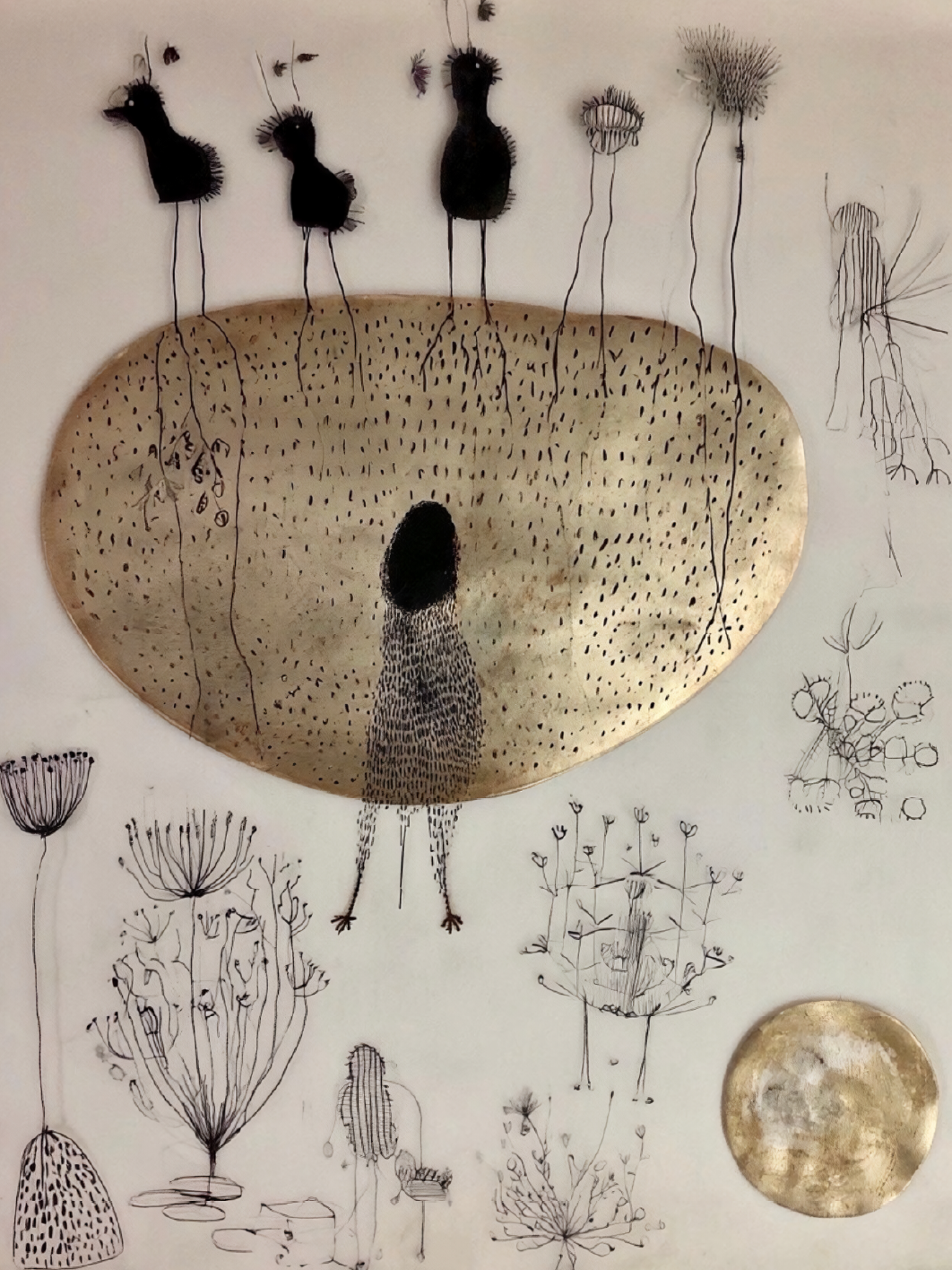
You can watch the whole process happen, start to finish, in a single trip. A few years ago María travelled through Japan and came home unable to stop thinking about ma — the interval, the pause that lets things breathe before they become something else. She started imagining a garden that lived inside that pause: portable, foldable, carried in the body rather than the hands. That became Jardín portátil. Across its poems, the garden won't sit still — it becomes aroma, then salt, then animal, then memory, while Mexico and Japan quietly merge inside it, cactus growing beside koi. Working through the drafts with the poet Rocío Cerón pushed the project into what she now calls "a living poetic system" — something as likely to arrive as a gesture or a scent as a stanza. "I could allow a cactus to speak to a Zen garden," she says, "or a smell to become architecture." The book itself hasn't been published yet — she's self-funding it, with no release date set, hoping to bring it into the world in print on her own terms.
The same restless shape-shifting shows up in Bitácora de un jardín, a piece she considers closest to who she is as an artist right now — not her most finished work, but the one that refuses to end. Its garden becomes, by turns, "memory, animal, fruit, language, architecture, childhood, Mexico, Japan, fear, refuge, and imagination." It behaves, she says, less like a place than like consciousness itself — "continually folding one experience into another."
The machines learns to wander
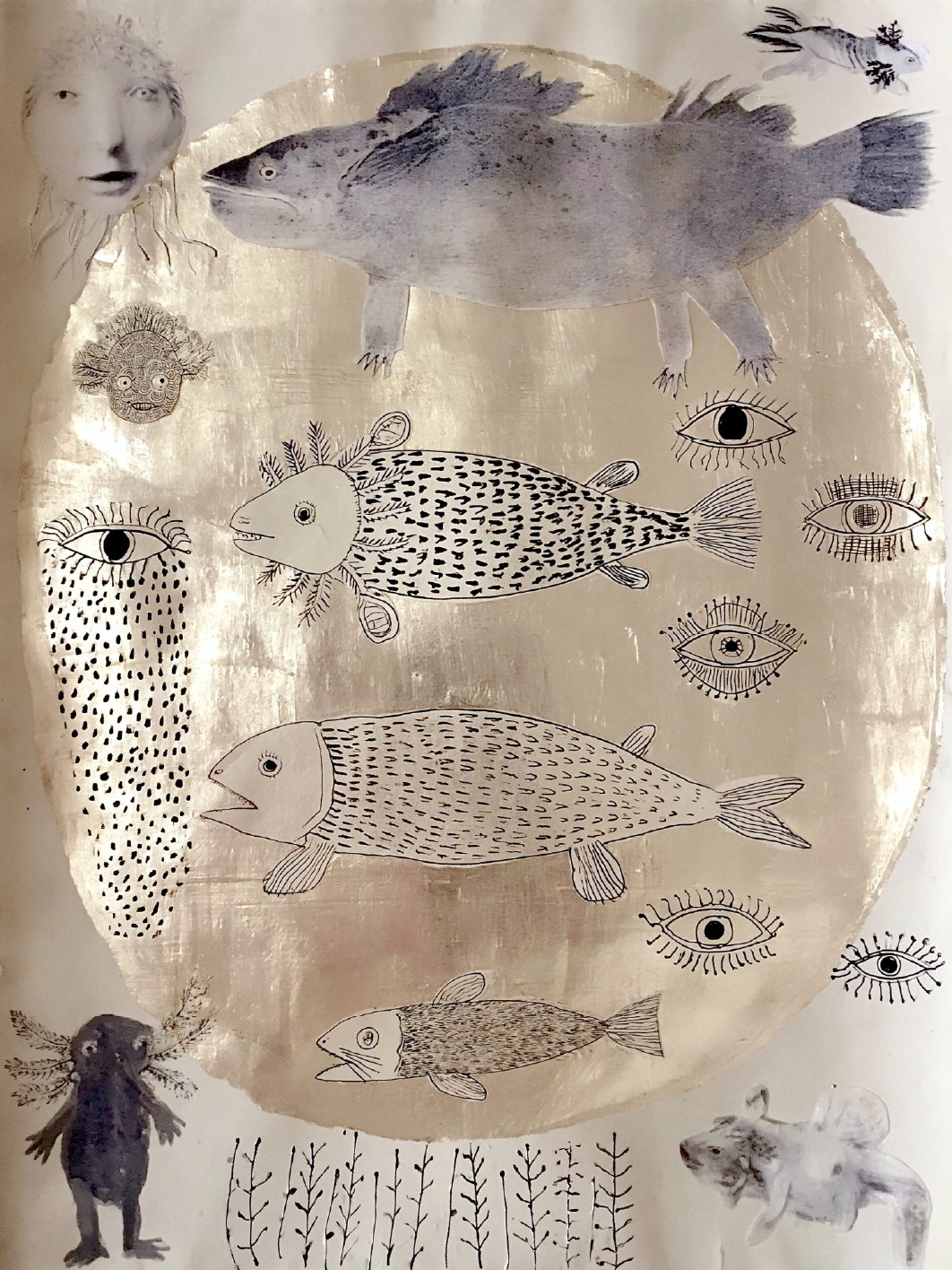
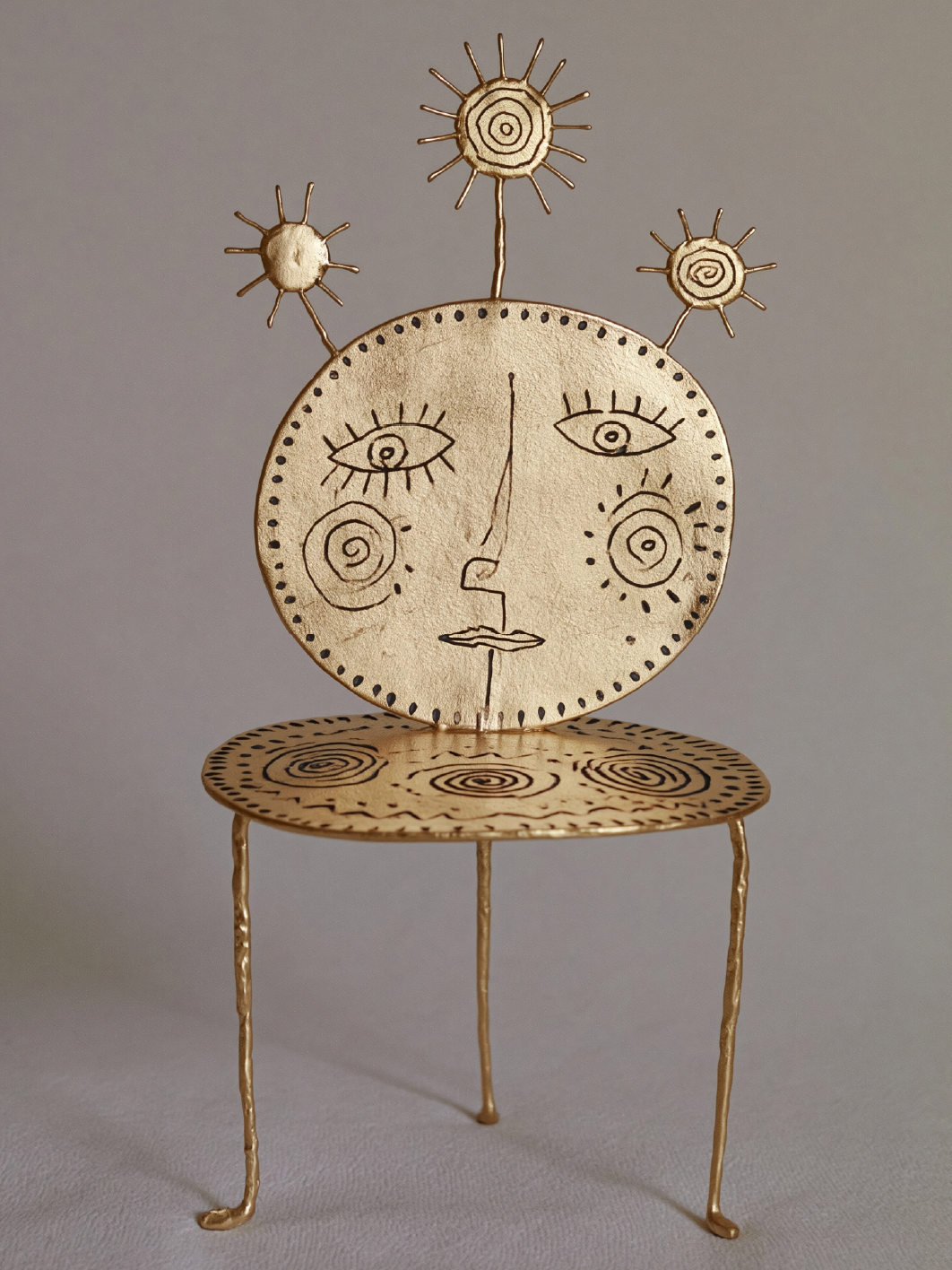
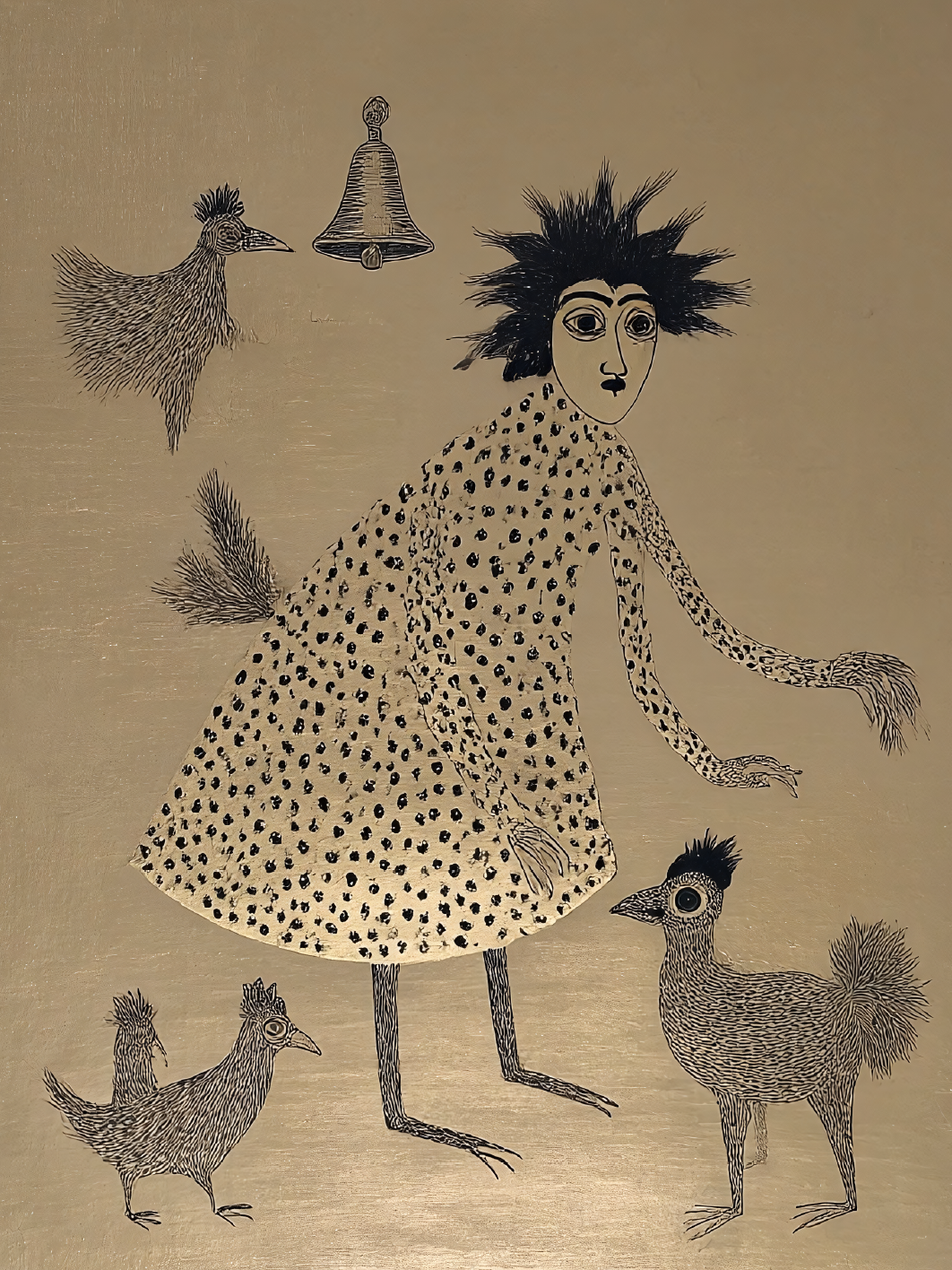
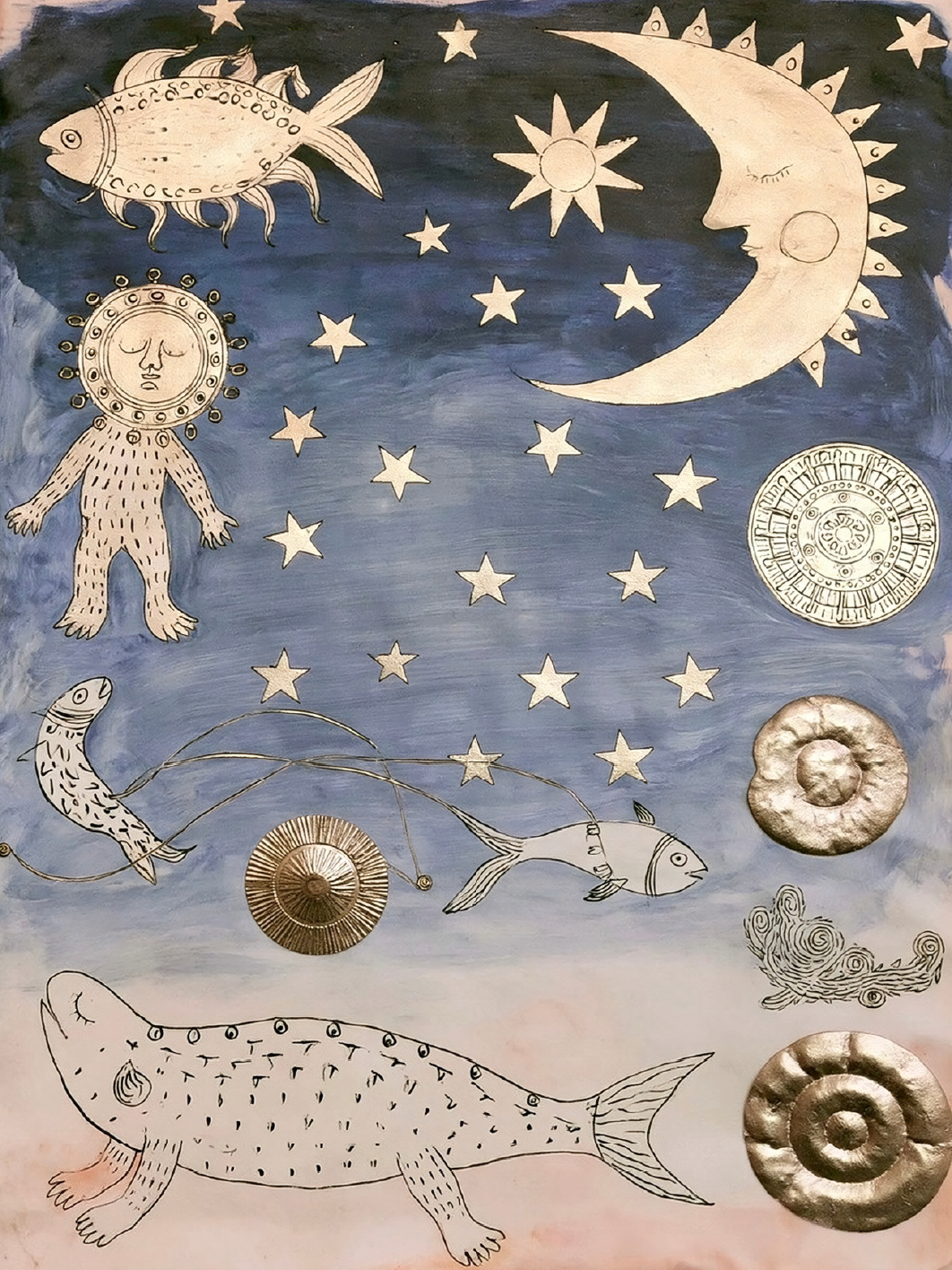
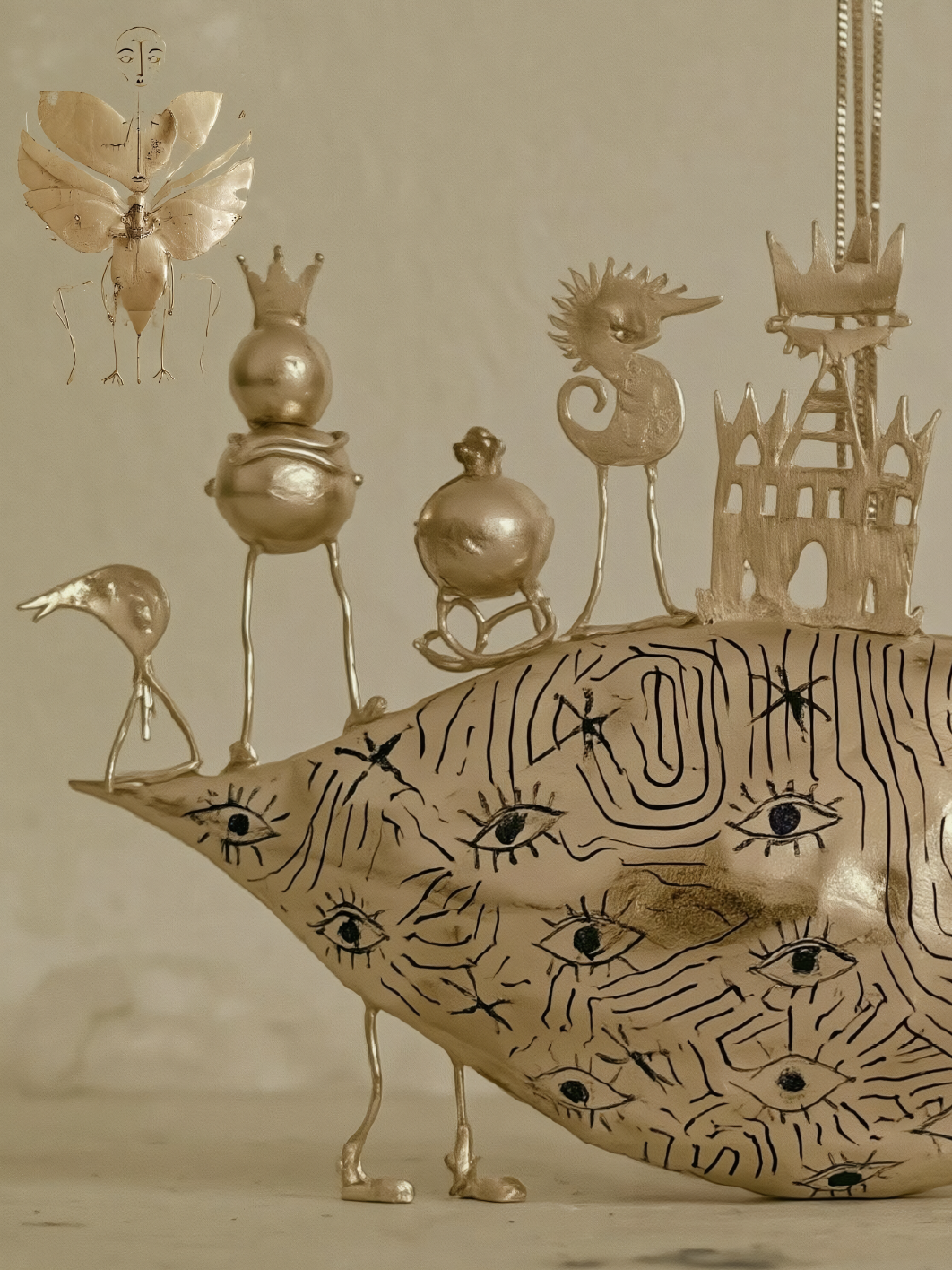
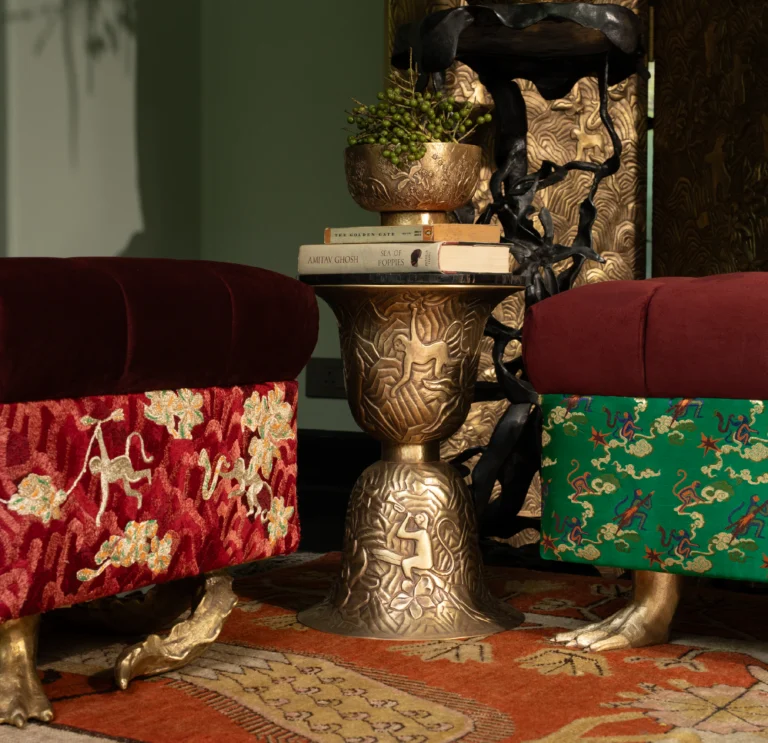
It's a short step from there to the newest room in the house: artificial intelligence, which María treats with more nuance than either the true believers or the skeptics usually manage. The process starts with something entirely hers — the light of one specific afternoon, the residue of a dream she can't fully reconstruct alone. The images themselves aren't generated from nothing, either. "I created them myself as part of my artistic process," she says, "combining my own sketches, textures, and previously developed imagery with AI." Her visual references include nature, Mexican papier-mâché and alebrijes, surrealism, medieval bestiaries, and the texture of brass. The AI works on top of that existing material — it doesn't start from nothing. "Human cognition is always where this process begins," she says. "My role is to choose, connect, edit, interrupt, and decide which possibilities carry meaning."
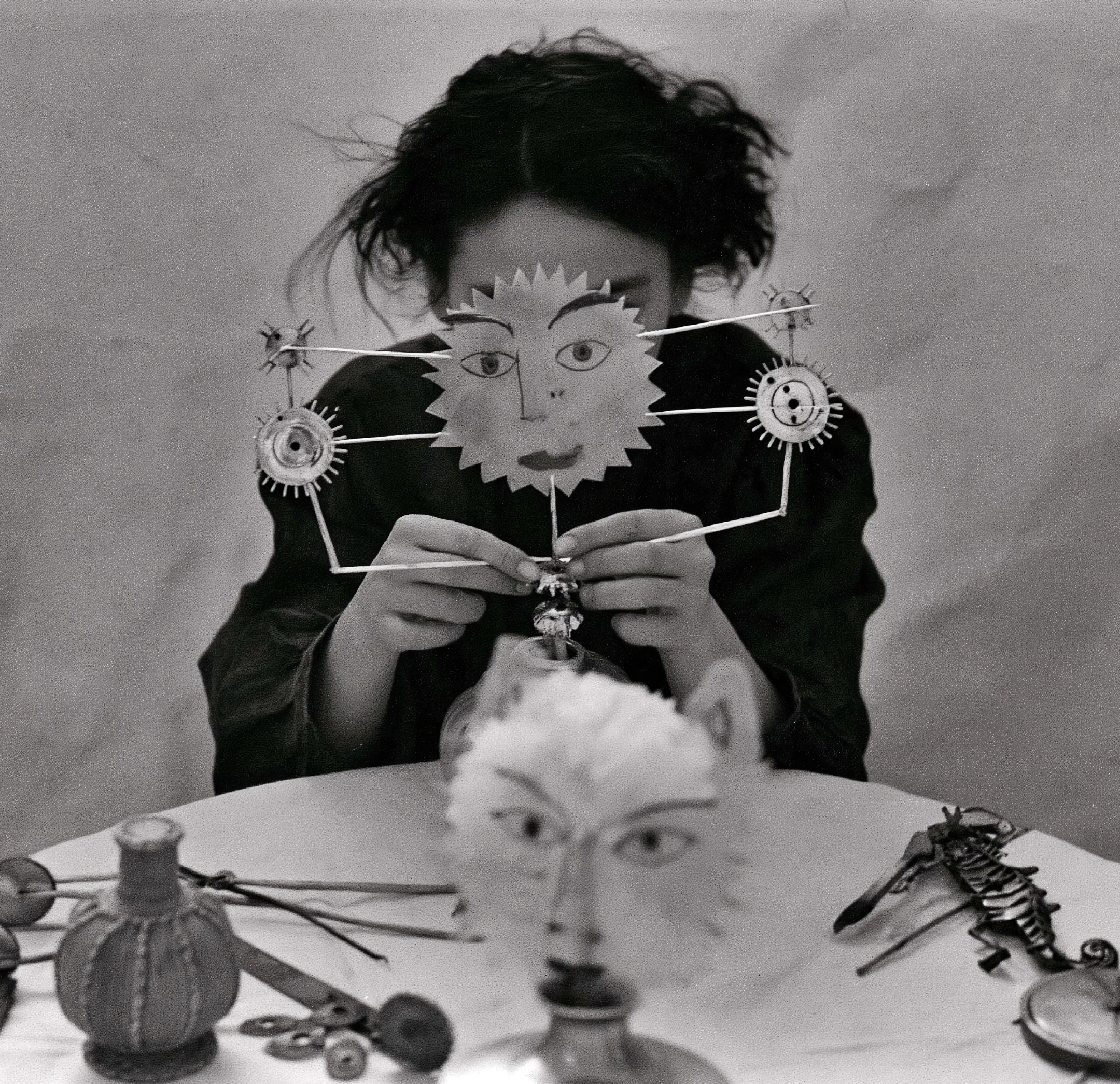
Beyond the digital work, her materials are much more hands-on: watercolour, textiles, crochet, origami, and suminagashi — the Japanese practice of marbling paper with ink — plus found objects, antiques, and paper theatre, alongside ballet and dance. One object she treasures came from a friend: sand from Malta shaped around a painted sun, textured and gilded; she made him a watercolour moon in return. "Through that exchange, both objects became part of a shared symbolic world," she says. She's drawn to Japanese folklore in which household objects wake after a hundred years of use. "I like to imagine," she says, "that every object in the universe has a soul."
That same appetite for expansion shows up in her current projects. The Body That Dreams — an experimental workshop around imagination, dreams, and surrealism — is already running; its latest session began in early September 2026, working with scent, imagination, and AI tools. A longer-term research group, exploring the senses and embodied cognition with women doctoral researchers at UNAM, is still taking shape for later in the year.
Reality reconsidered
María's work has mostly lived outside conventional gallery walls — paper theatre in reading rooms across Mexico City and at Teatro Lúcido, performances staged in forests, her own home turned into a sensory labyrinth for one piece, a water-themed work at El Laberinto in Santa María la Ribera. "These spaces allow the work to become a lived encounter," she says. She works with a representative, Maite Felices, on select projects — including an upcoming exhibition built around Felices's research into colour — but describes a "strong affinity with independent art and the freedom it offers to create encounters in unexpected places." Prints are available now through her online shop at thebodythatdreams.com.
If there's a single belief holding the whole practice together, it surfaces almost by accident, in a sentence she offers without much ceremony: tenderness as resistance. Not softness for its own sake, but a stubborn insistence that a forgotten memory, a passing atmosphere, a small unremarkable gesture deserves the kind of attention a faster world keeps training us to skip past. "To imagine another way of living already requires believing that reality can be different," she says.
Ask what María hopes people feel after encountering her work, and she won't reach for anything grand. Just an opening — the sense that reality holds more than we usually let ourselves notice. It's the same question, really, that she keeps returning to in her own research, stated as simply as she can manage: "What if imagination is already part of the way we experience reality?" And from there another one follows, the one the whole practice seems built to keep asking — if our ways of perceiving and imagining can change, what other ways of inhabiting the world might become possible? Which brings the story back to where it started: somewhere out there, a stranger is about to fall asleep, and a garden that was never supposed to be theirs is waiting to let them in.