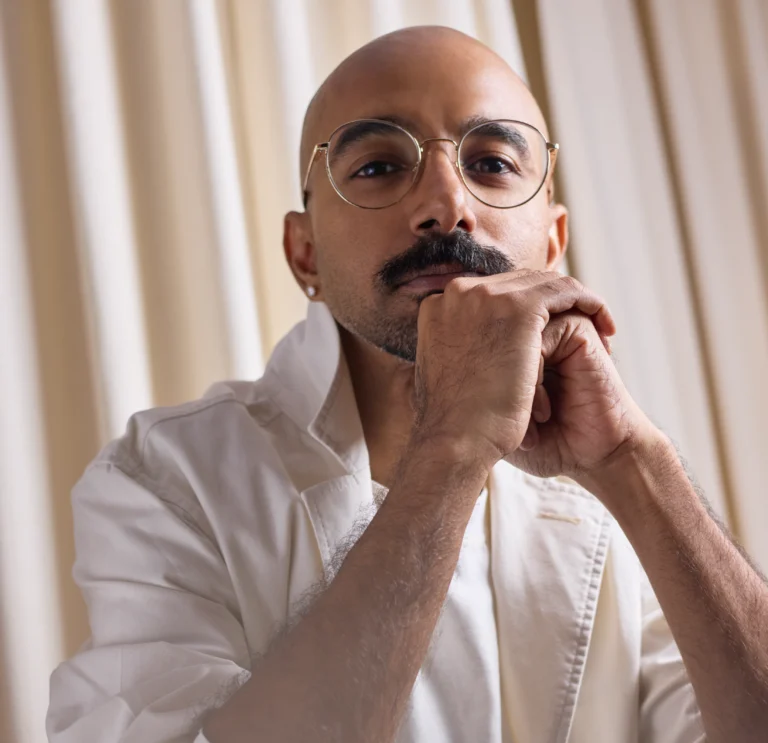
At three years old, Ayush Kejriwal already had a client, his mom. She had lost her eyesight to multiple sclerosis, and in their Kolkata home a young Ayush became her stylist, choosing her sarees, matching the blouses, doing her make-up and helping her dress. It never felt like a responsibility; he simply loved it. Sarees were part of everyday life for his mother, grandmothers and aunts, who wore them with ease and individuality, and he absorbed their sense of style as naturally as he absorbed the household around him. “Those early experiences taught me more about colour, proportion, beauty and personal style than any classroom ever could,” he says.
The fact that his mom could not see the final result of the dressing meant the only test was how she felt in it, and that test still governs his work as a self-taught designer and stylist who, in 2013, founded his eponymous label in Glasgow, the city he has made his adopted home. It began with sarees and has since widened into jewellery and The Ayush Kejriwal Art Project, where he reinterprets traditional Indian art, sculpture and decorative objects and designs interiors. Every piece, from an embroidered saree to a kalamkari painting, is brought to life by artisans across India, and each bears his unmistakable signature: expressive, nostalgic, richly coloured and wholly indifferent to fashion.
Two cities, one imagination
Kolkata supplied the rest of his education: handloom sarees, crumbling old buildings, crowded markets, art and festivals, all part of what he remembers as the city’s “wonderful visual chaos.” Beauty surfaced in the most ordinary things, and it planted in him a lifelong appetite for colour, detail and unapologetic excess.
In 2003 he moved to Glasgow, and distance sharpened his eye. Textiles and craftsmanship he had once taken for granted suddenly felt precious. A decade later, in 2013, he founded the label there, and both cities were stitched into its logo: the hand-pulled rickshaw, a symbol holding personal childhood memories, for Kolkata, and the symbols associated with Saint Mungo, Glasgow’s patron saint. The peacock and the number 27 are equally personal symbols.
The peacock, India's national bird, reflects his belief in embracing colour and wearing it with confidence, regardless of societal expectations. The number 27 refers to his first home in Glasgow, at 27 Huntly Gardens, where he lived when he started the label in 2013; he later came to associate it with an angel number that encourages faith in oneself and one's instincts. Together, these symbols make the logo what he calls “a visual autobiography”. He sums up the influence of the two cities beautifully: “Calcutta [Kolkata] gave me my imagination and Glasgow gave me the courage to do something with it.”
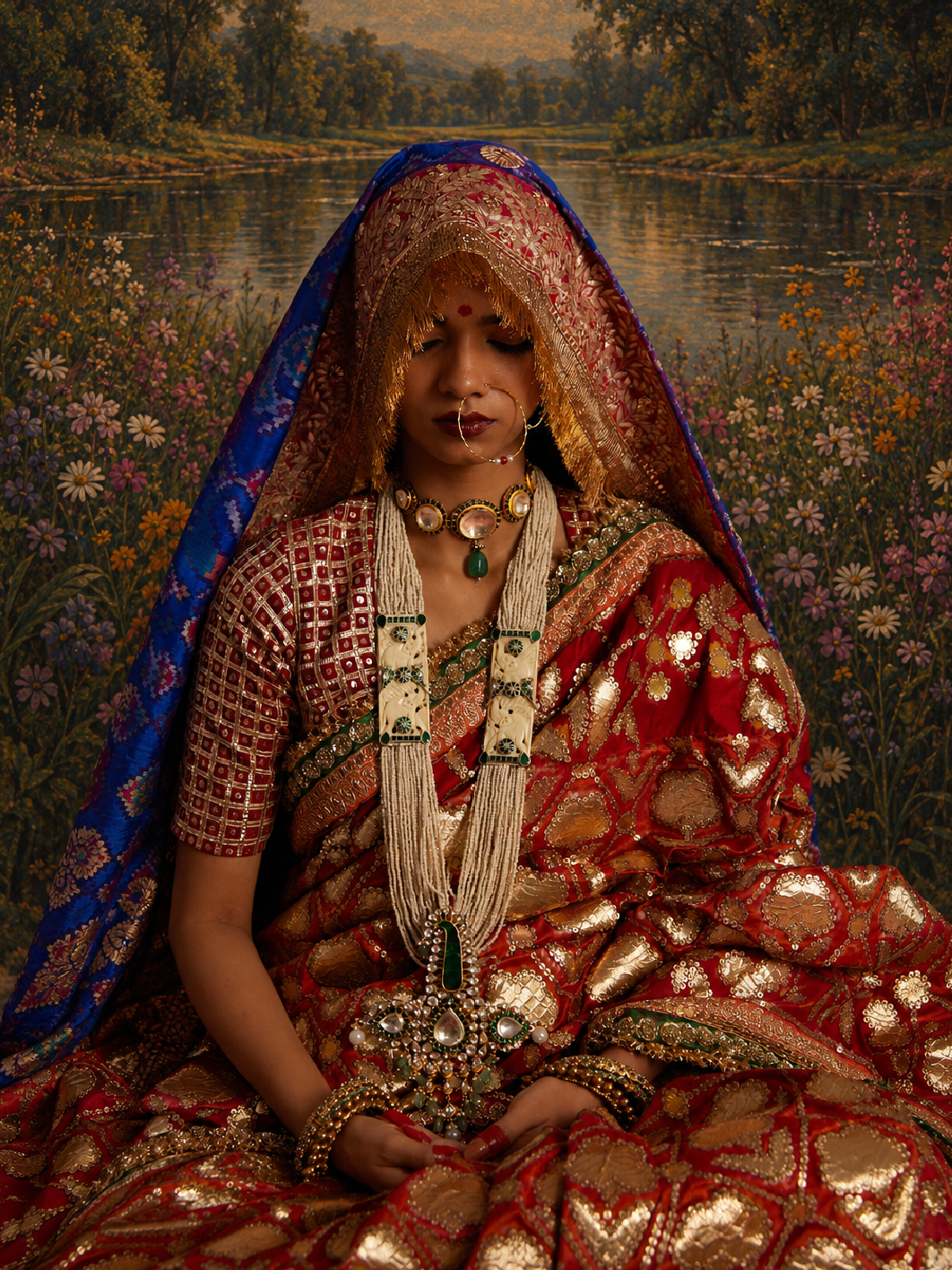
A richly embellished saree look that reflects Ayush Kejriwal's love for colour, ornament and traditional Indian dressing
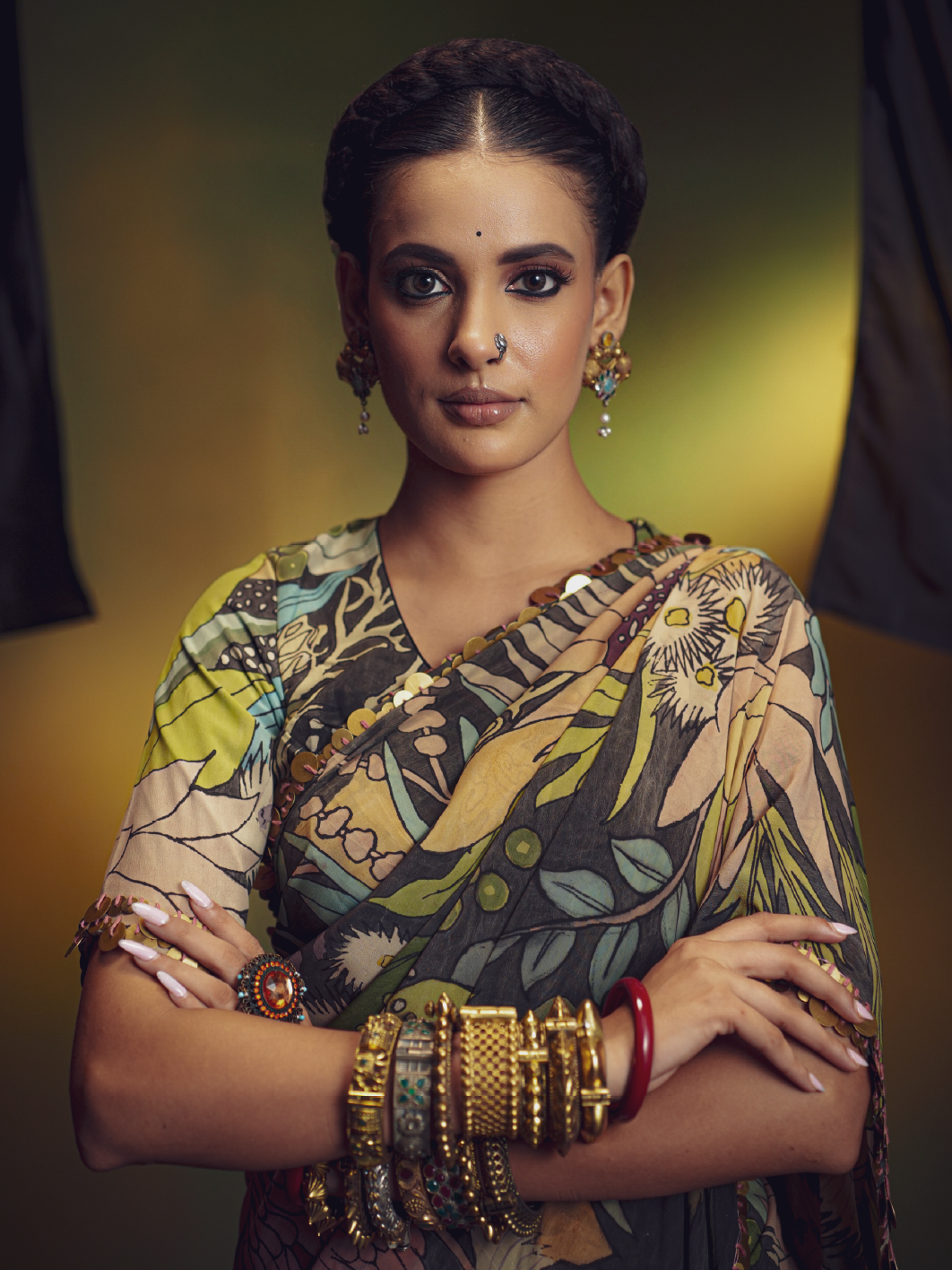
Expressive prints, unexpected colour combinations and traditional jewellery are central to Ayush's approach to dressing
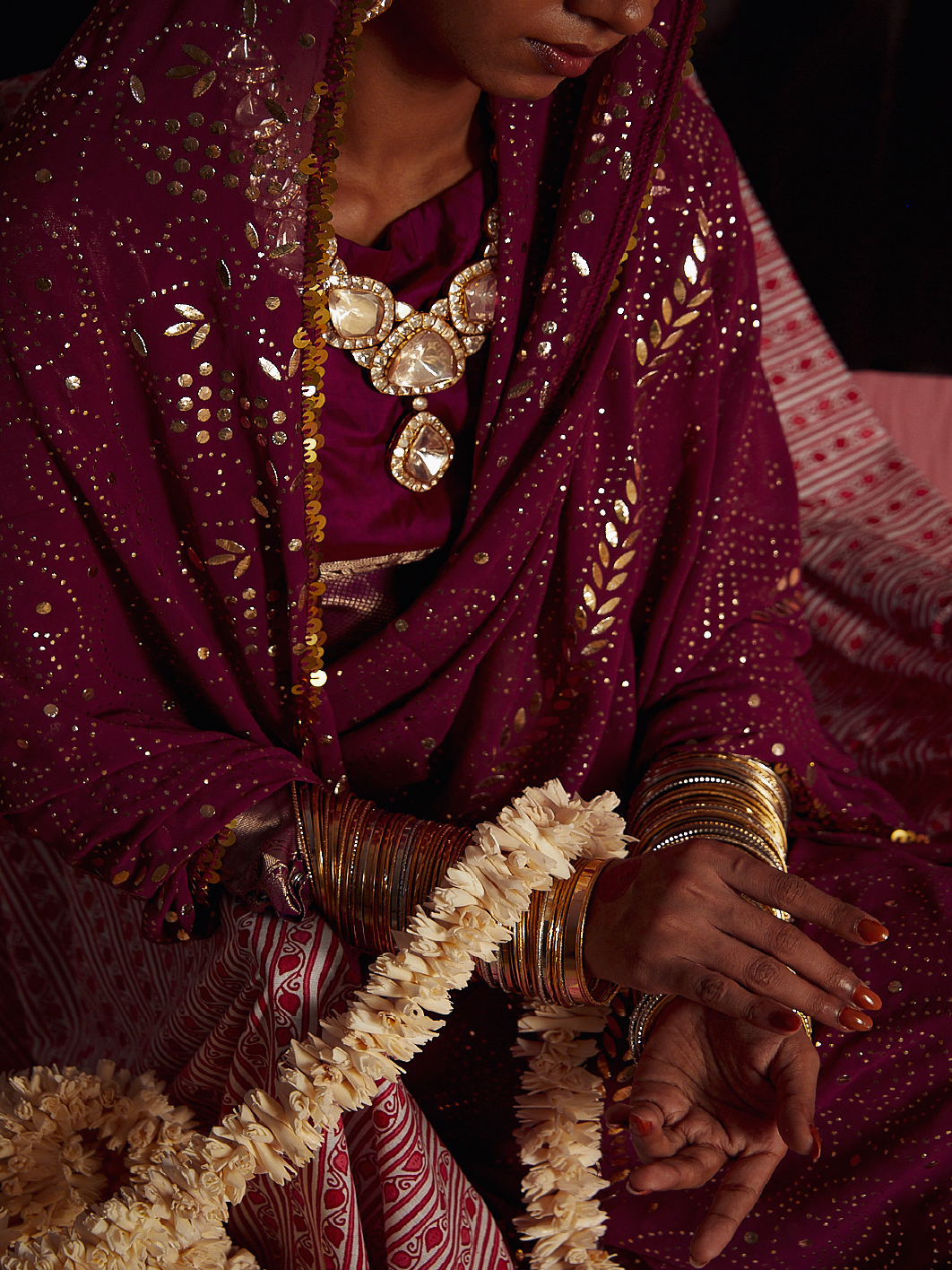
Intricate detailing and considered finishing bring character to the label's saree collections
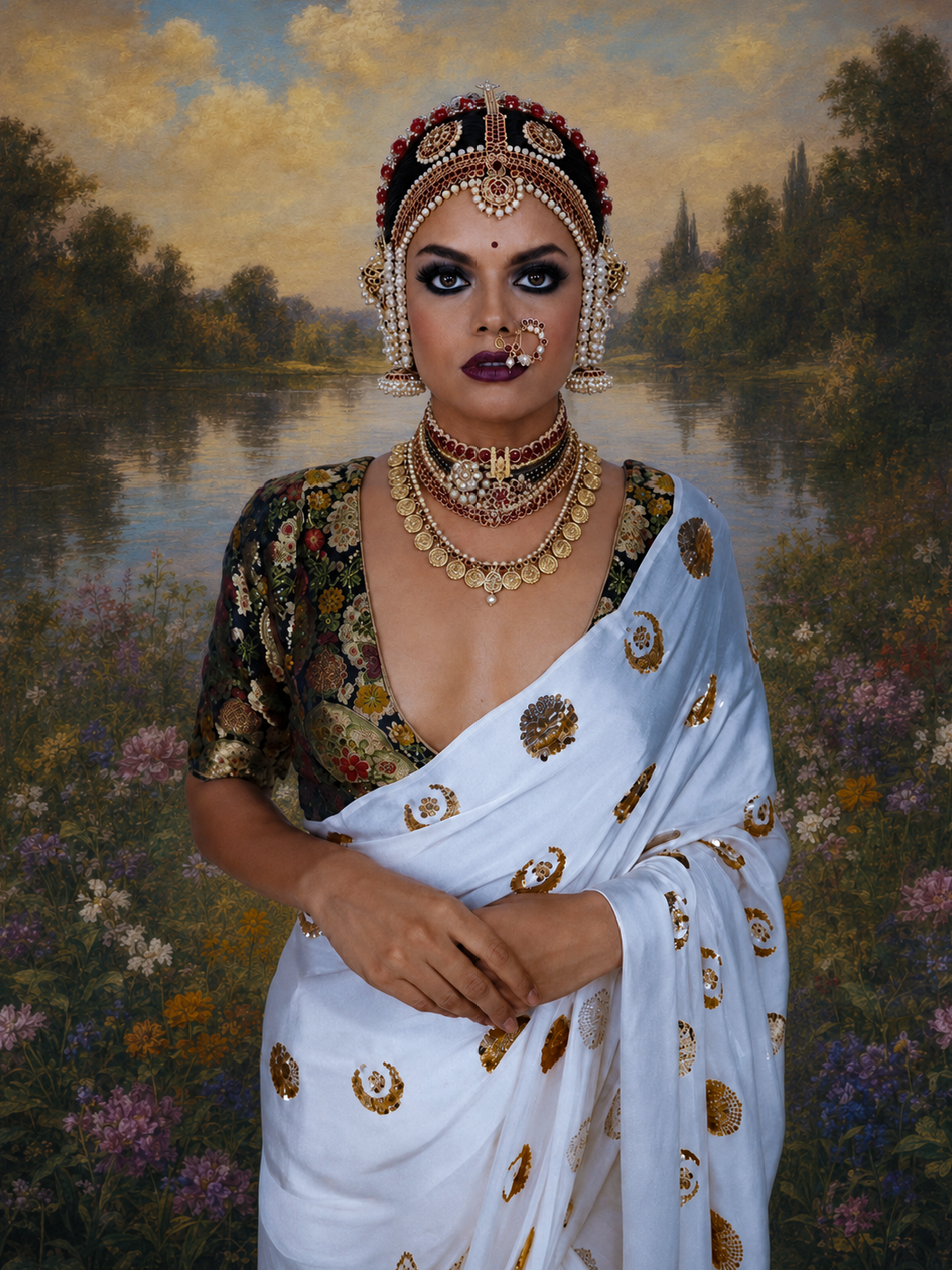
The designs retain the identity of traditional Indian textiles while introducing his own sense of colour and composition
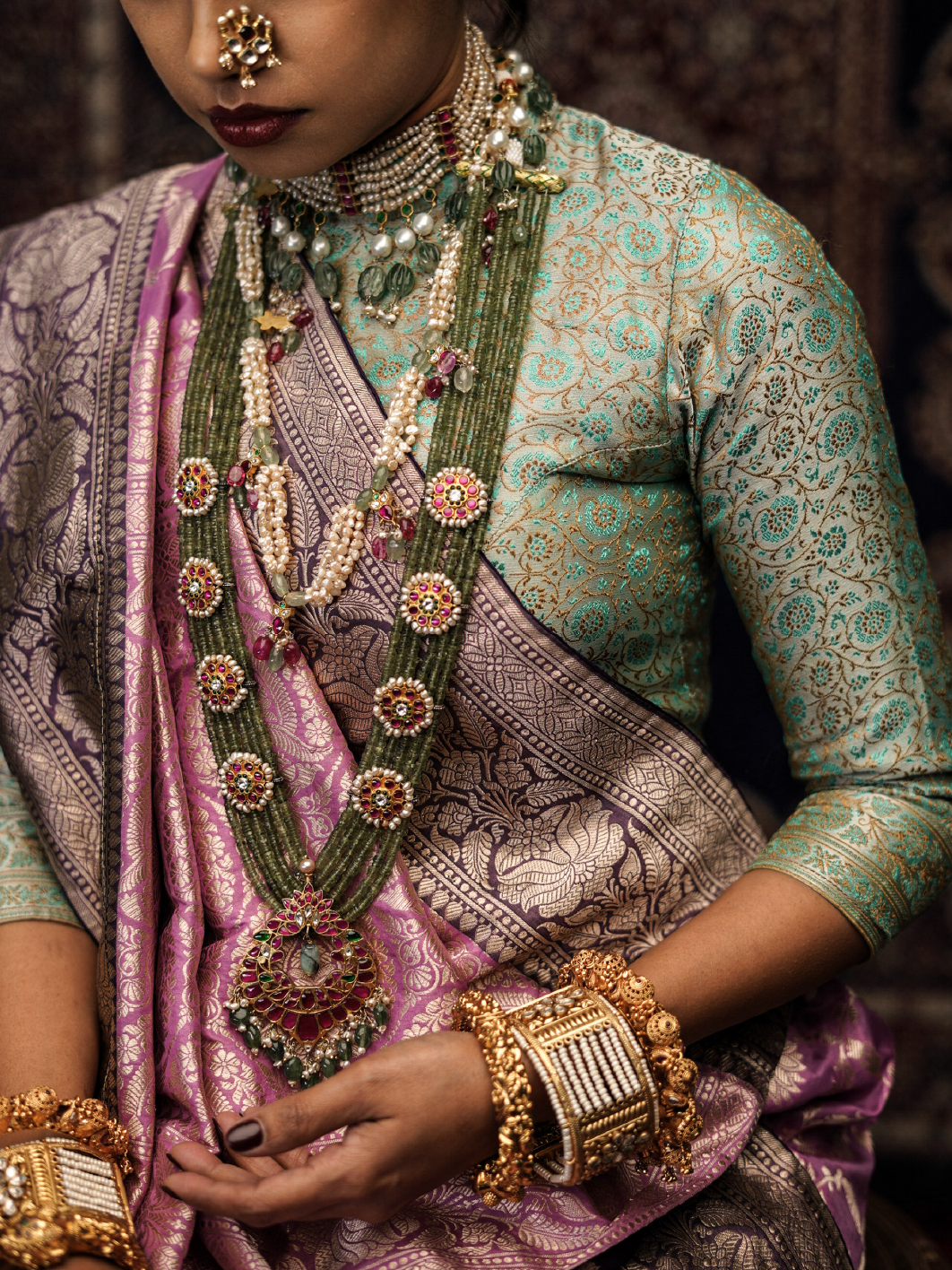
An emphasis on elaborate jewellery and textile detailing runs through the label's collections
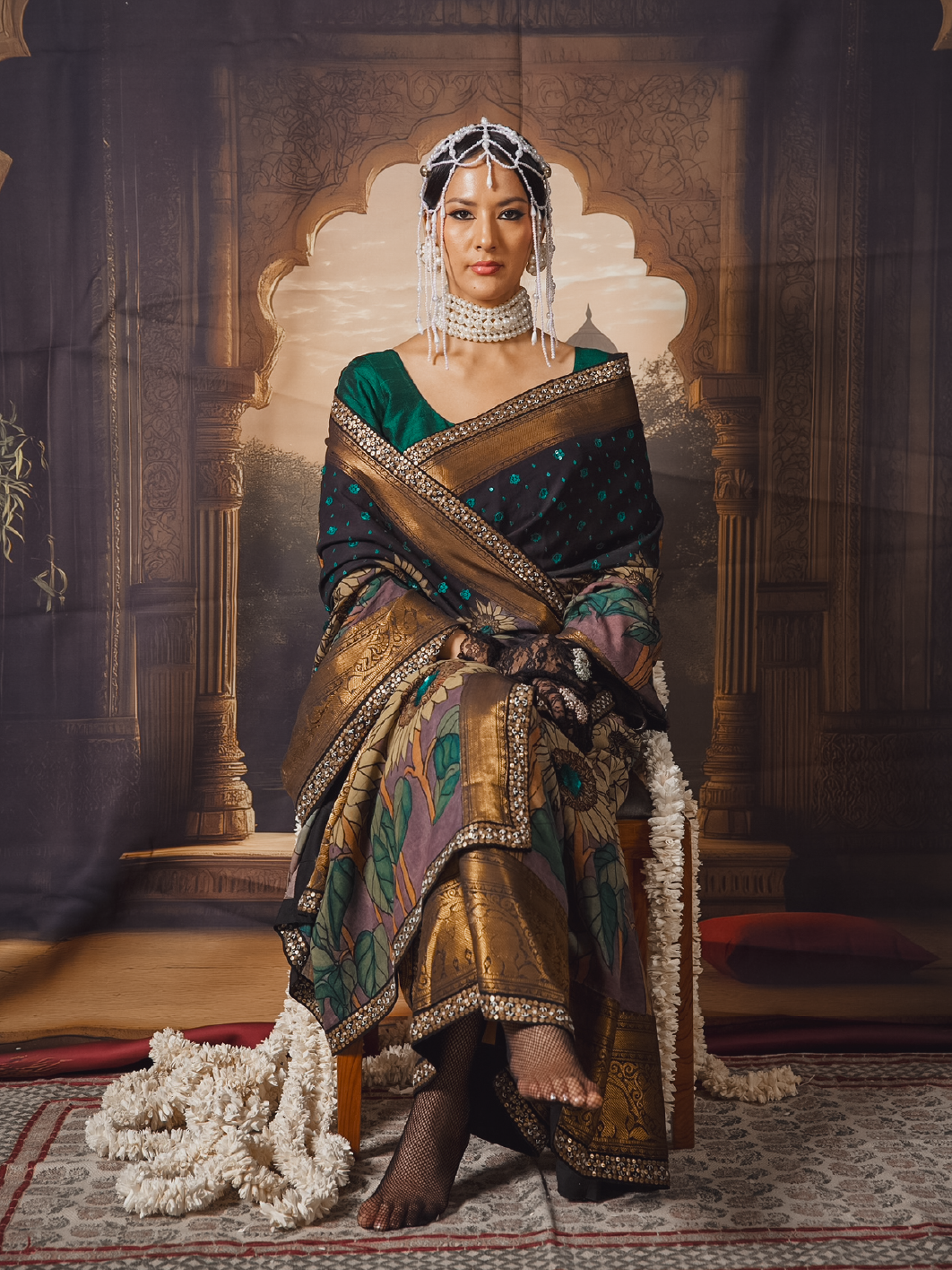
Traditional Indian dressing finds a distinctly individual expression through styling and design sensibility
Doors that stayed shut
That courage was tested early. No one ever handed Ayush a rulebook, and he counts that among his strengths. “When you haven’t been taught the rules, you don’t spend your life worrying about breaking them.” He learned by trial and error, with some experiments turning out beautiful and others “a complete disaster,” and by working closely with artisans who knew what he did not. Design school, he suspects, might have taught him that some of his ideas were impractical, unconventional or simply wrong, and he might have listened. “Thankfully, nobody told me, so I went ahead and tried them anyway.”
Following his instincts, he came to believe that creativity cannot be confined to one discipline: a piece of clothing, jewellery, a painting, a beautiful room or even a plate of food can carry the same imagination. While planning photoshoots for his sarees, he couldn’t find jewellery that complemented them the way he imagined, so he made a few pieces himself. Buyers began asking where to find them, and jewellery slipped into the label almost by accident. Interiors followed the same path: his own home first, then spaces for friends and family, until questions about the artwork, the objects and who had designed the spaces led to The Ayush Kejriwal Art Project.
A growing concern gave the project purpose. Handmade Indian objects were disappearing from people’s homes, and the skills behind them risked being undervalued. Living far from India, he also wanted to stay close to its art, textiles and craftsmanship, and where opportunities were missing, he made them. There has never been a five-year plan, and he still does not claim to have it all figured out. “I would much rather be defined by the things I haven’t imagined yet.”
More is more, and made to be worn
The thread through all of it is a single impulse in different materials, and it begins with a quarrel with the fashion industry. Fashion, he argues, tells you what to wear, while style is knowing who you are. His own aesthetic draws on Indian textiles, old paintings, architecture, vintage objects and the streets of Kolkata. He takes in an old building, a woman wearing an unusual combination of colours, a scrap of vintage fabric, plays with them in his imagination, and eventually they find their way back into his work.
A heavily embroidered saree is finished with contrasting silk on the reverse, which protects the skin from irritation and stops the fabric catching on jewellery, a detail no photograph will ever show. “What is the point of creating something beautiful if the person who owns it cannot enjoy it?”
Only occasionally does he make something purely as a statement, almost like a museum piece. While he brings his own colour, ornament and composition to each type of saree, he makes sure the original weave’s identity stays put, be it a banarasi, a bandhani or a kanjeevaram, and has never set out to modernise craft for younger buyers.
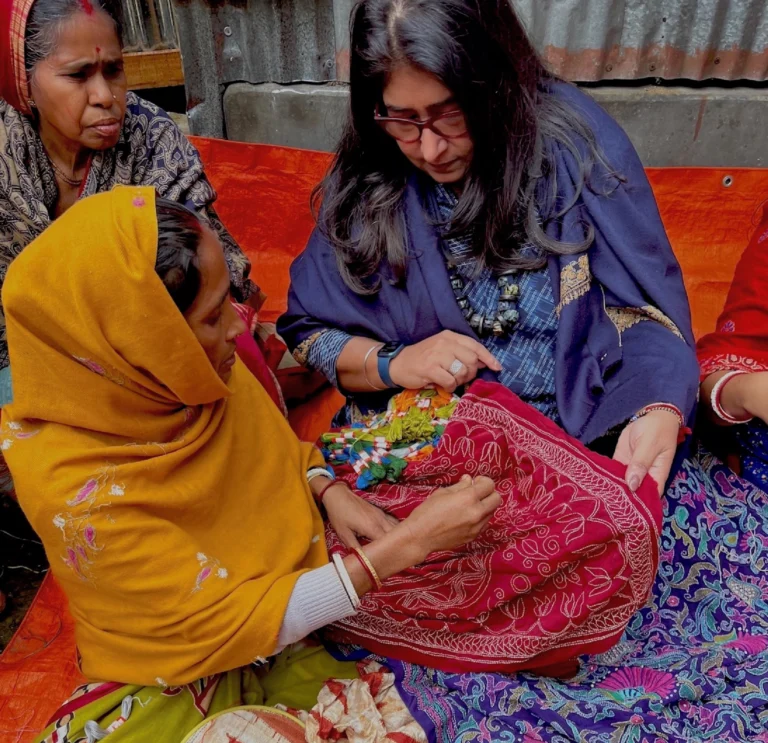
Kalamkari is the art form he returns to most. The traditional craft runs to 17 steps. The cotton is first bleached and washed over days until it is clean and white, then treated so the colours won’t bleed. The design is drawn and painted by hand, one colour at a time, with natural dyes taken from roots, flowers and fruit that are fixed into the cloth so they last. Washing follows each stage, and a mistake cannot be undone once the colour is on. He retains that process while experimenting with colour, composition and form, so that, as he puts it, the craftsmanship and technique remain rooted in tradition while the finished artwork has “a visual identity that feels distinctly my own.”
It began on sarees, which he paired with different embroidery techniques, unusual blouse designs and unexpected colour combinations, and he found that a single textile can take on an entirely new personality depending on how it is presented. That fascination carried him beyond clothing, into paintings and decorative pieces that tell traditional Indian stories in his own palette.
Jewellery pulls him the other way. There he is not especially interested in reinvention, only in the grandeur of the pieces once worn by Indian royalty and now found in museums, with their elaborate necklaces, oversized earrings and almost unapologetic extravagance. He wants his to feel “old school, vintage, theatrical and gloriously Indian.”
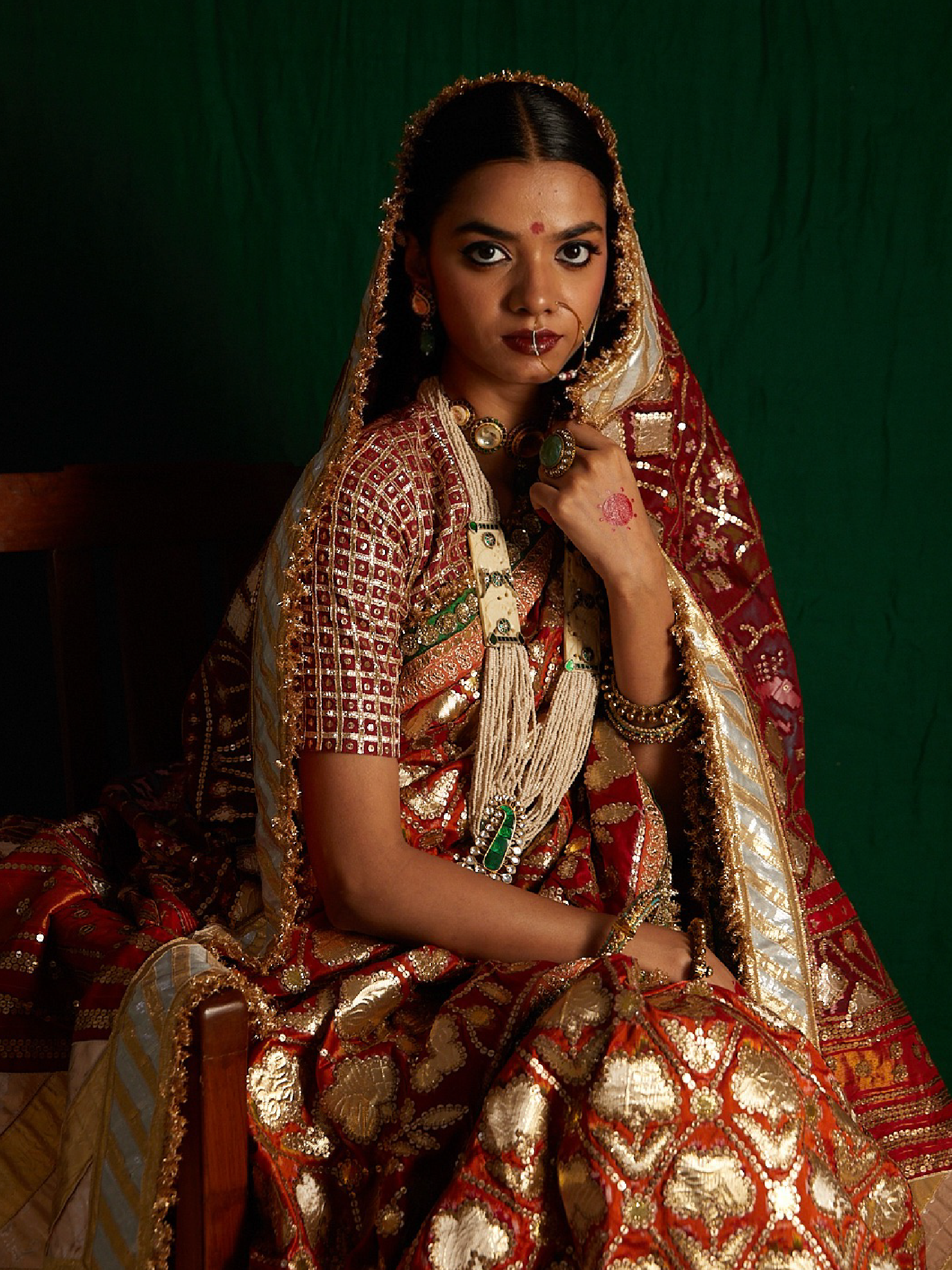
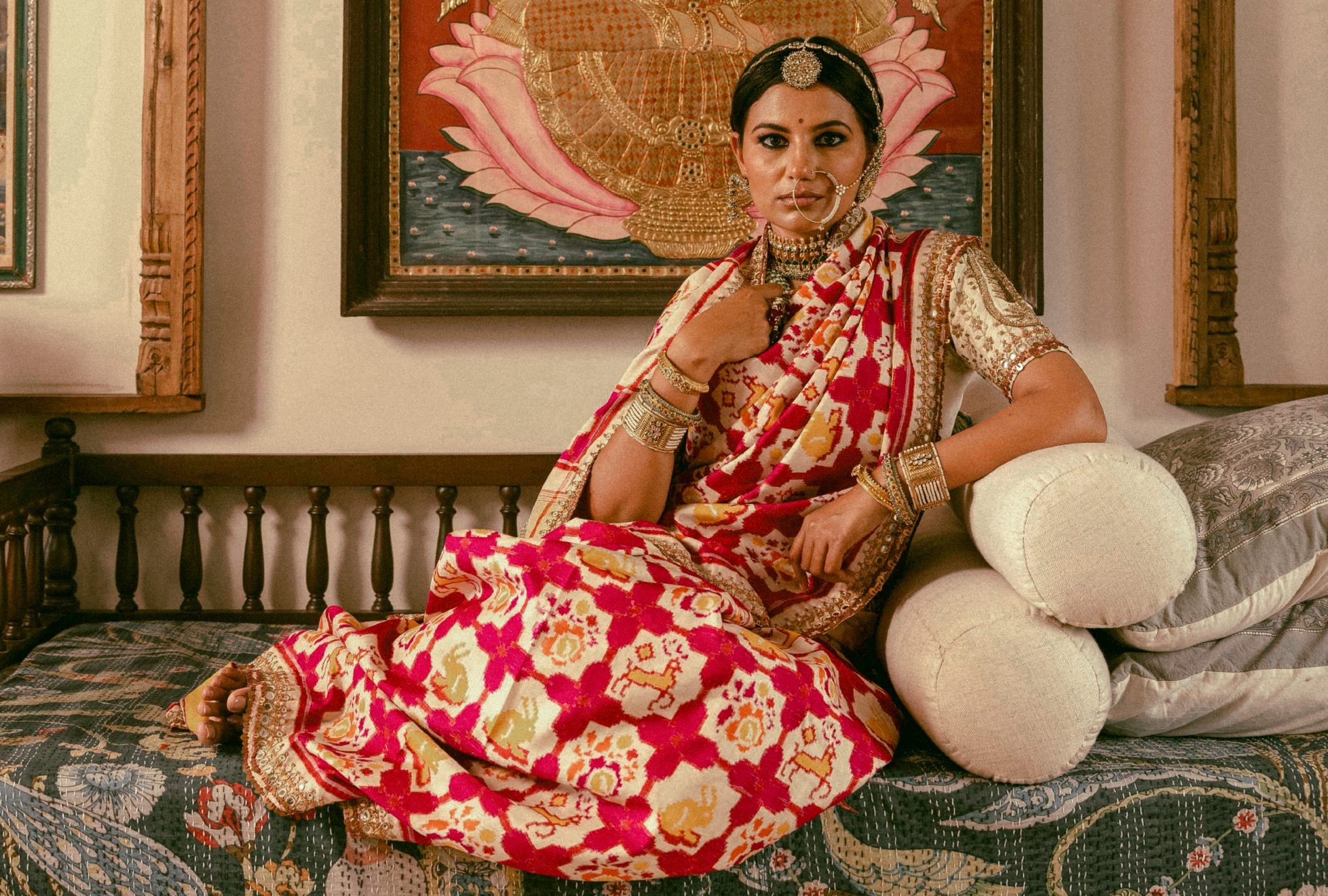
A world of Indian art Beyond sarees and jewellery, Ayush Kejriwal's creative practice extends to traditional Indian art and decorative objects
The hands behind the heirlooms
Every one of these pieces depends on the 20 to 25 artisans he works with across India’s textile and craft clusters, from Gujarat and Rajasthan to Bengal and southern India, many of whom he has collaborated with for 10 or 12 years. While the work takes shape across different regions, Kolkata serves as his central point of production, where the pieces come together for finishing. Sometimes what he imagines proves impossible, and sometimes their alternative proves more compelling than his original idea. “They are the wind beneath my wings. Without them, I am nothing.” They share worries and small victories, and disagree as families do.
Having been shut out himself, he is wary of a market that shuts makers out. Digitally printed reproductions of patola, a textile that can take months to weave, and of hand-painted kalamkari can be marketed in ways that leave buyers believing they are getting something comparable to the original. The price, he suggests, follows the signals we have learned to trust: a celebrity wearing a piece, a designer label, a strong social media presence. Meanwhile a weaver who spent months on the original may struggle to find customers willing to pay for it.
He has no issue with digital printing, only with blurring the line between craft and reproduction, and he says that a celebrity wearing a piece does not make it extraordinary craftsmanship. He encourages designers to be honest about technique and shoppers to ask what they are buying, who made it and why it costs what it does. Otherwise, “we celebrate the appearance of Indian craftsmanship while slowly losing the people who actually know how to create it.” He is modest about his own reach: “I don’t pretend that my little enterprise can save every traditional craft.”
Small by design
That small enterprise is small on purpose. It runs on its own resources, with no investors and no borrowed capital, and he manages the core operations with his sister, Ayushi Kejriwal. Working in small quantities lets him experiment, obsess over finishing and keep every piece individual. Though he never says never, a global fashion empire is probably not the goal. Success, for him, means time with the people he loves, travel and memories. “I don’t want to spend my entire life building a brand only to realise that I forgot to build a life.”
His advice to young designers follows the same logic: decide what success means to you, break as many rules as you can, find your own aesthetic, and learn from the artisans without letting your ambitions overshadow them. His larger hope is for the people who wear his work. He wants the dark-skinned woman told that bright colours don’t suit her, the woman shamed for her weight, and anyone with acne, wrinkles or grey hair to see themselves celebrated in his photographs. For Ayush, it comes down to a simple belief, “Fashion comes and goes. Style, when it is truly your own, is eternal. I don’t want to build a brand that makes people feel they are not enough. I want to build something that reminds them they always were.”