A village of quiet pavilions
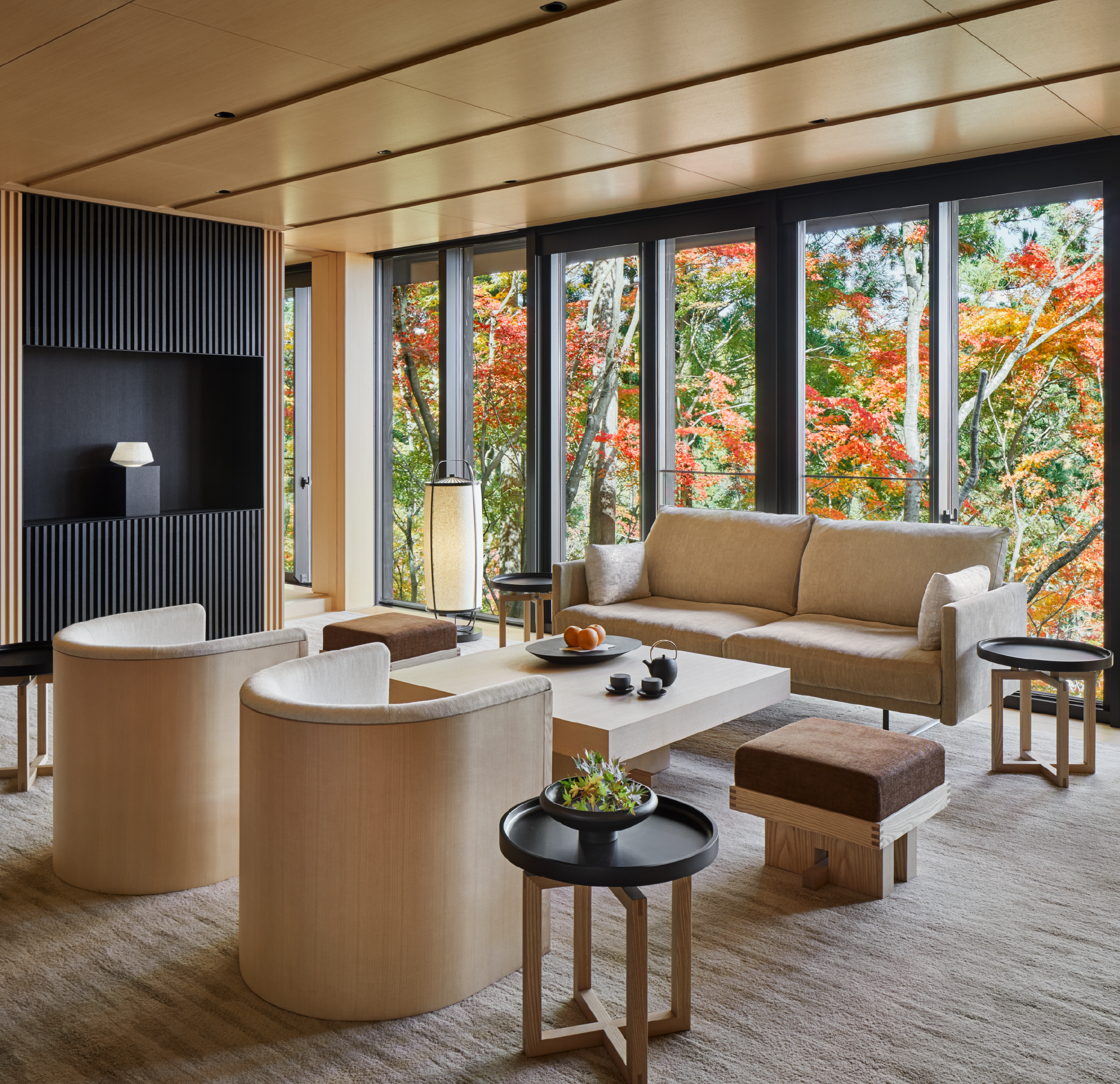
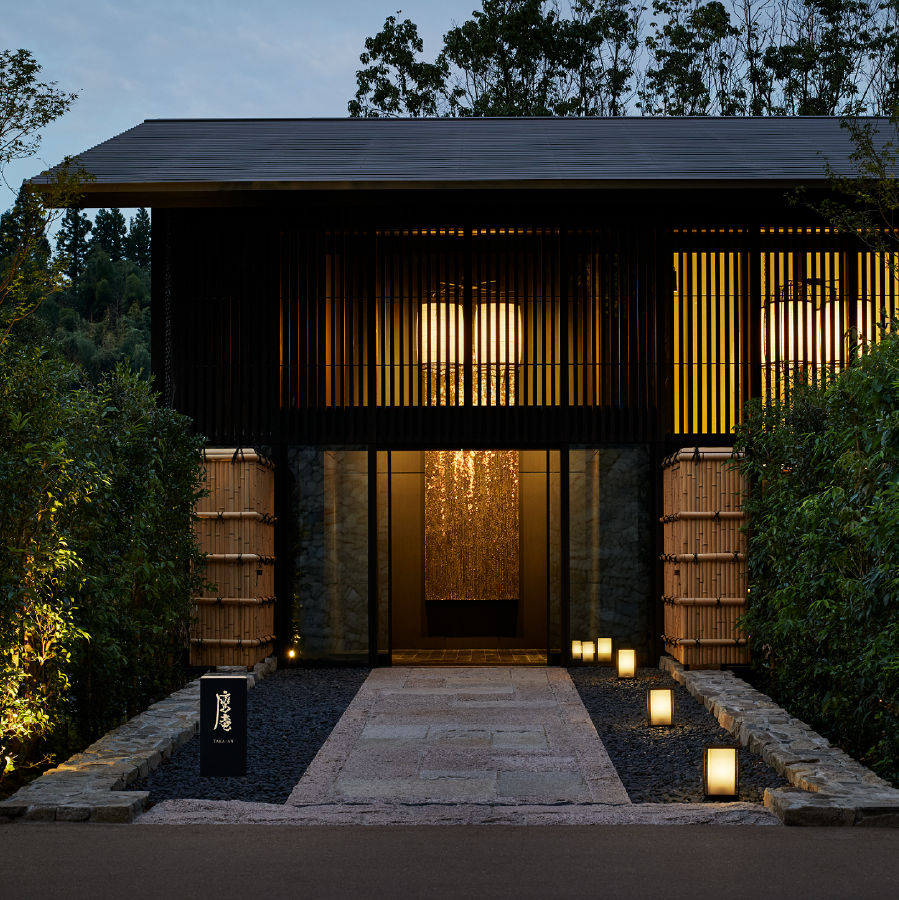
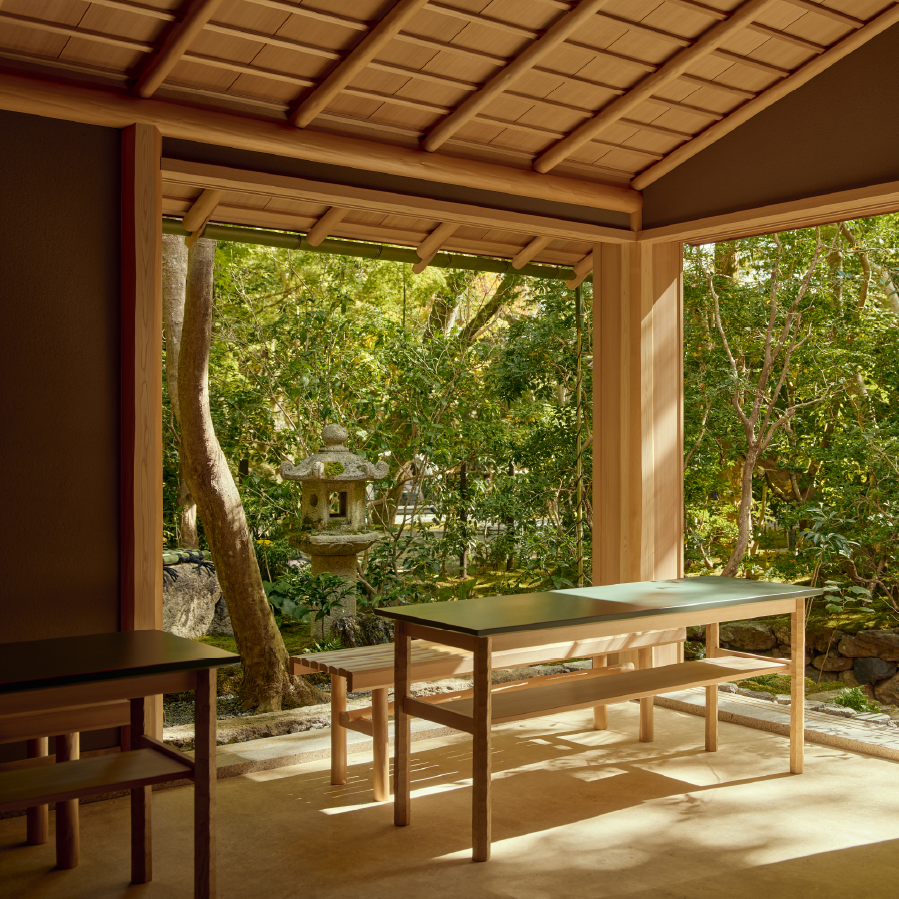
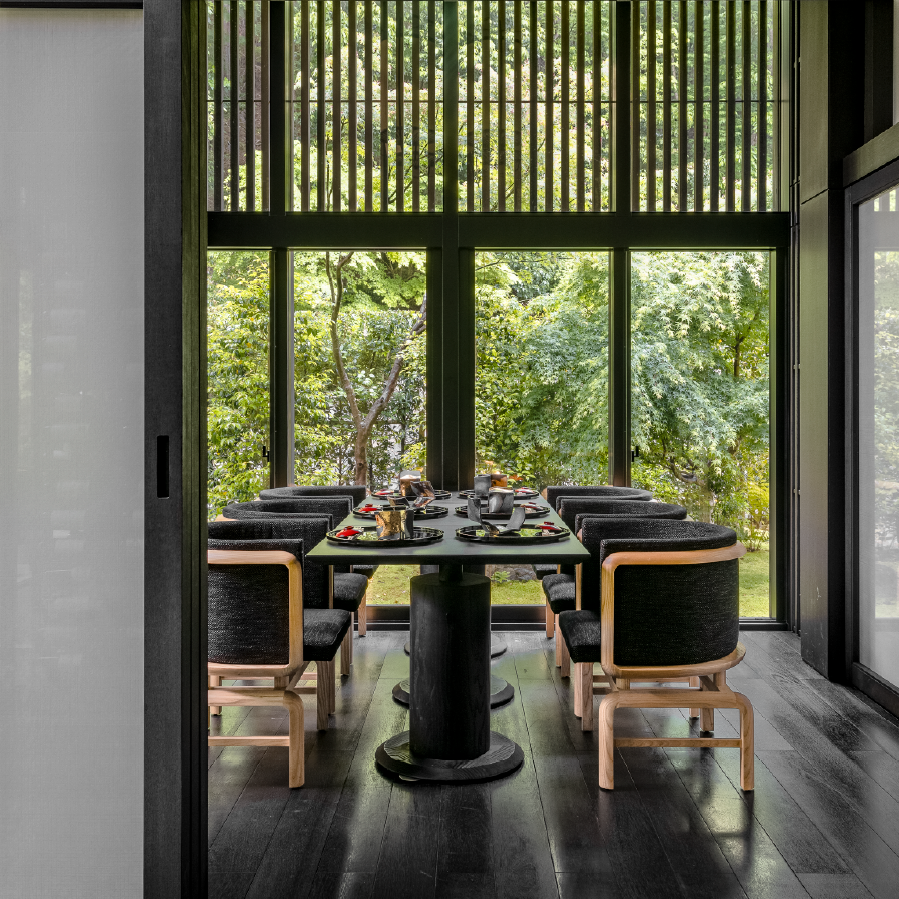
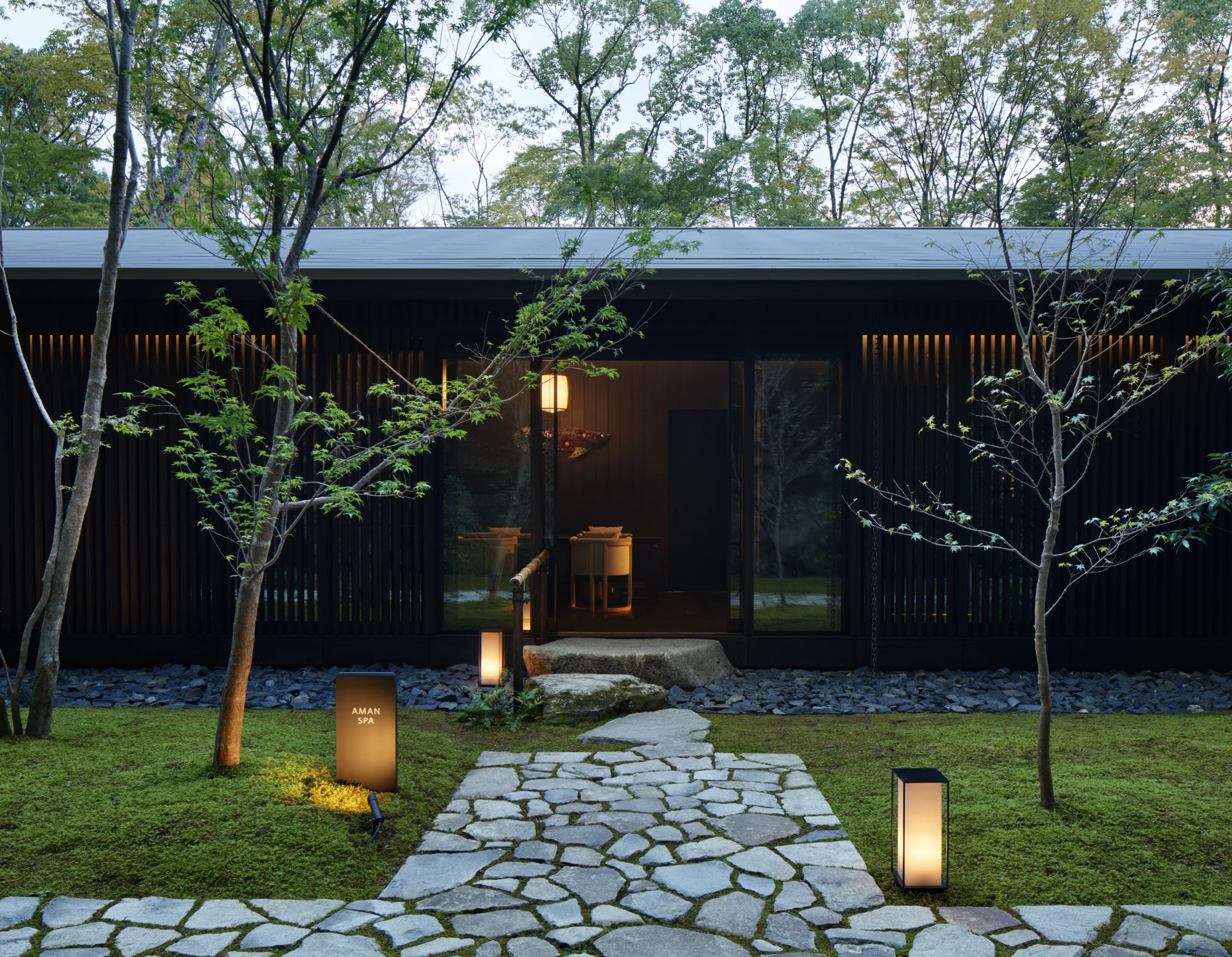
The architecture follows the garden's lead. Kerry Hill Architects, the firm also behind Aman Tokyo, an urban sanctuary in the capital, and Amanemu, Aman's first onsen resort on Ise Shima's Bay of Pearls, chose not to build a single large hotel. Instead the resort is a scattering of small pavilions, for arrival, living, dining, the spa, four for guest rooms and two set apart as private villas, all linked by the same moss-covered stone paths the collector once laid. Low rooflines sit beneath the tree canopy, so the buildings seem to rest inside the forest rather than above it.
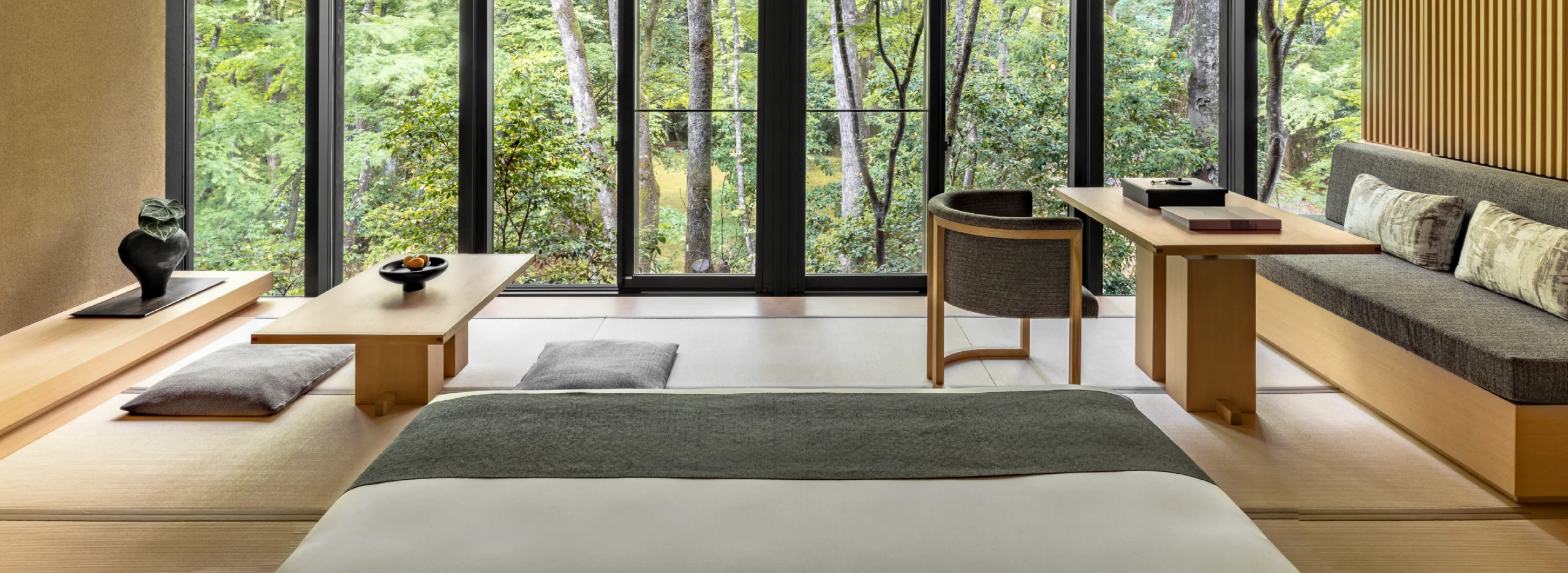
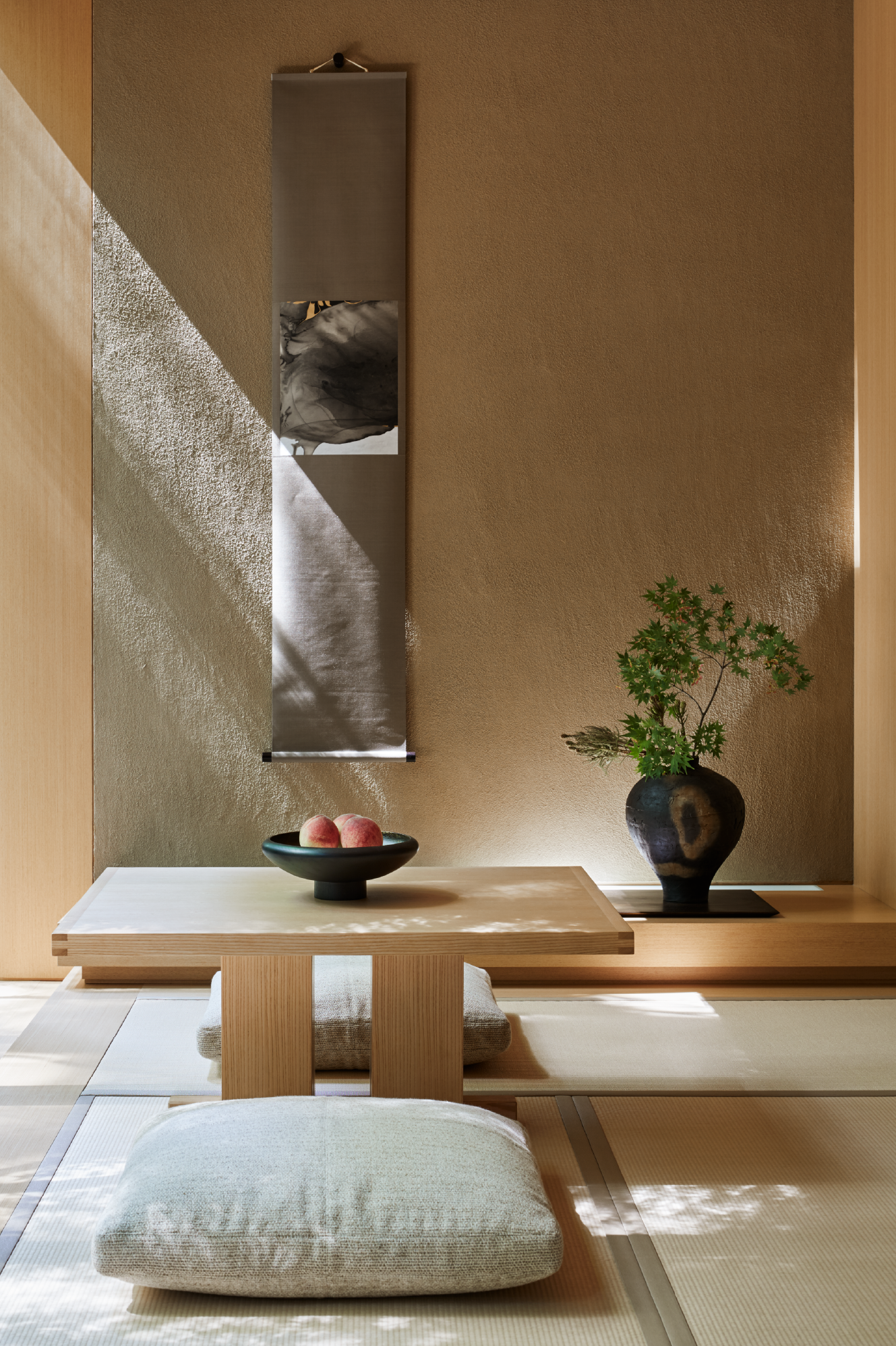
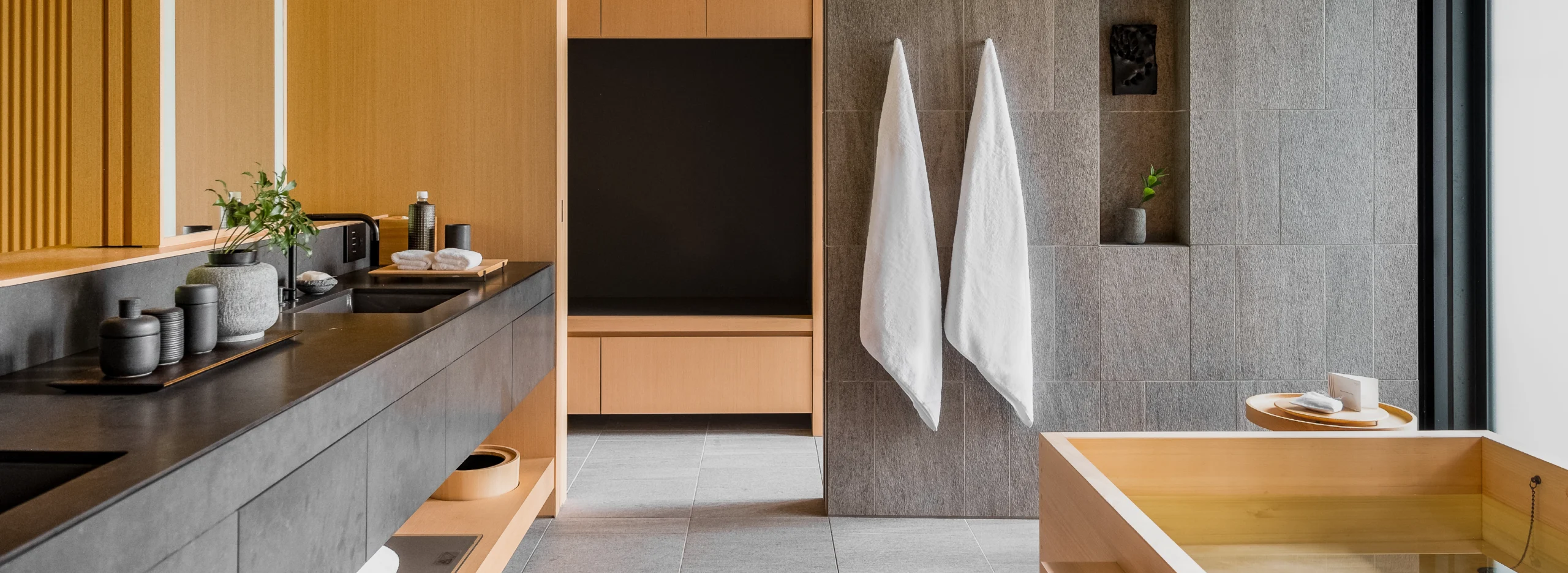
Inside, the mood is one of deliberate calm. There are five types of room, and each is oriented toward a different part of the landscape. The Susuki rooms face east, toward the Kamiya River, with the sound of water close by. The Hotaru rooms sit high on the mountainside, secluded and still. Two larger pavilions open onto views of Mount Hieizan. Everywhere, floor-to-ceiling windows frame the trees, tatami covers the floors, and a tokonoma alcove holds a single vase, scroll or antique, chosen so the eye has one place to rest. The bath is carved from Hinoki cypress, and its scent lingers long after the water has cooled.
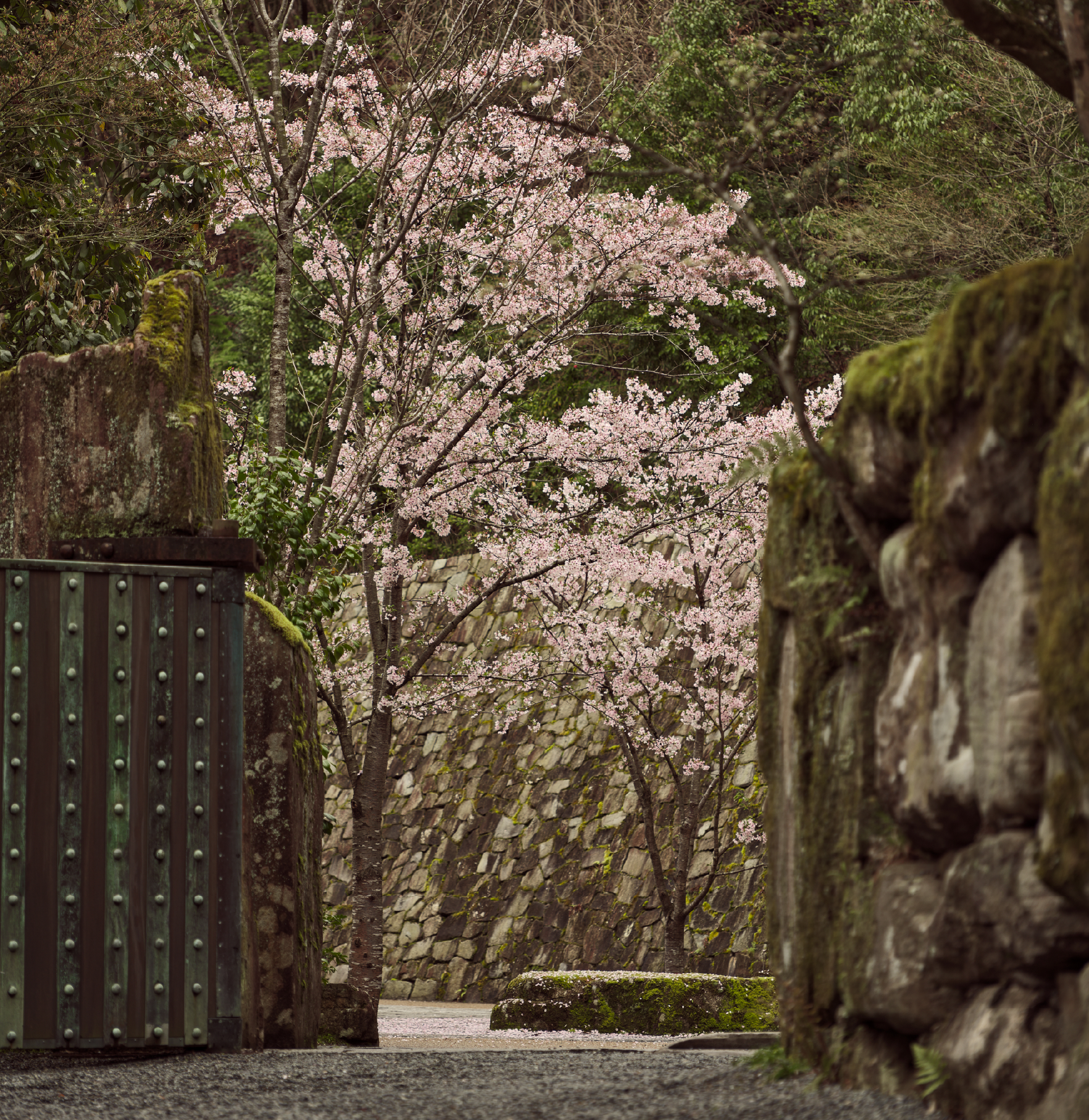
The details reward attention. A Tamba Himeji megalith stands at the front gate, and statues gathered from across Japan appear along the paths, each with its own history. In the Living Pavilion, 680 hand-made ceramic tiles by Kyoto artist Shigeo Yoshimura cover the walls, each one fired individually so that no two catch the light in the same way. The lamps take their curve from Kyoto umbrella-making, a craft a thousand years old, reworked in paper and bamboo.
The slow rituals of Kyoto
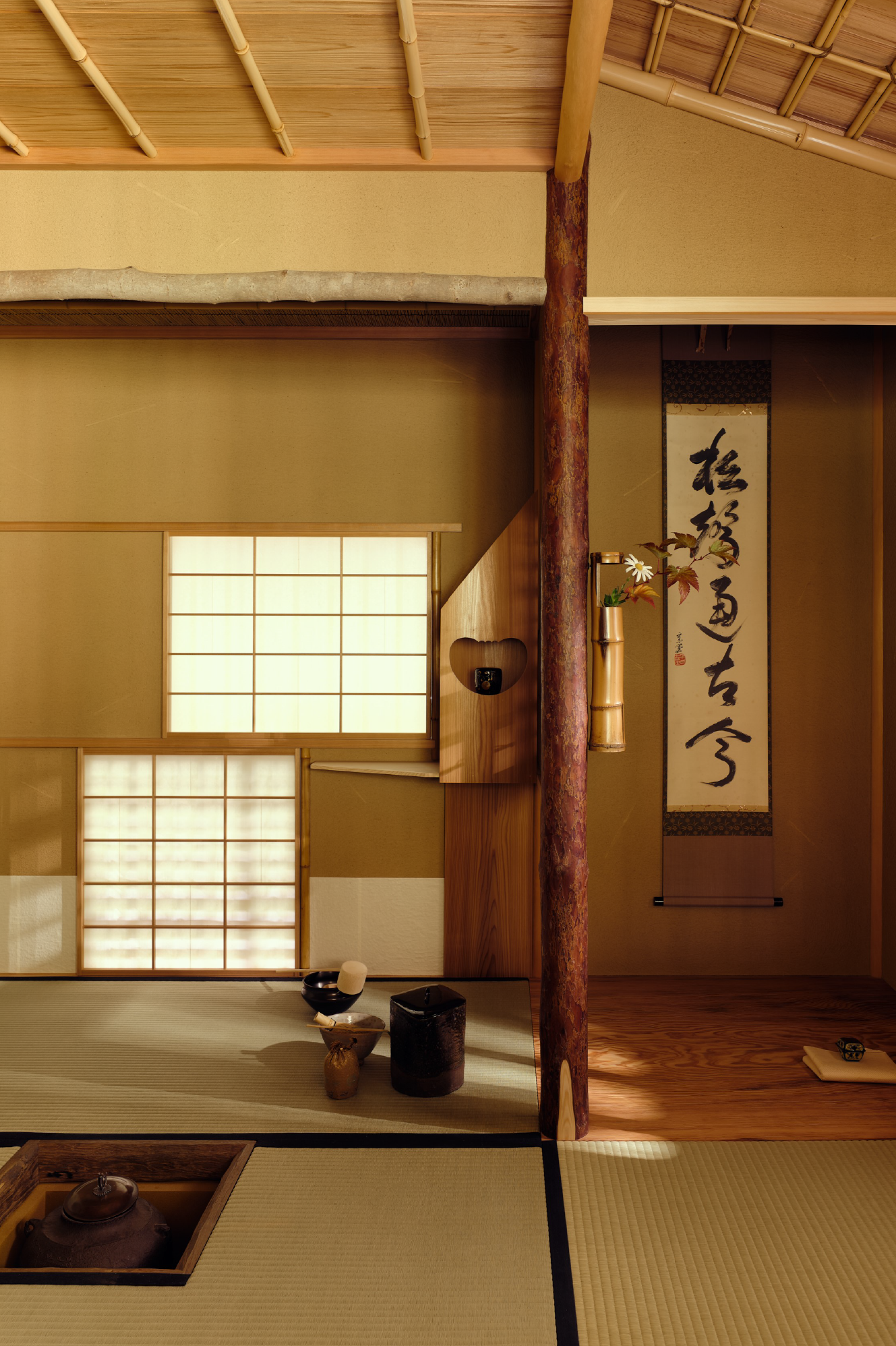
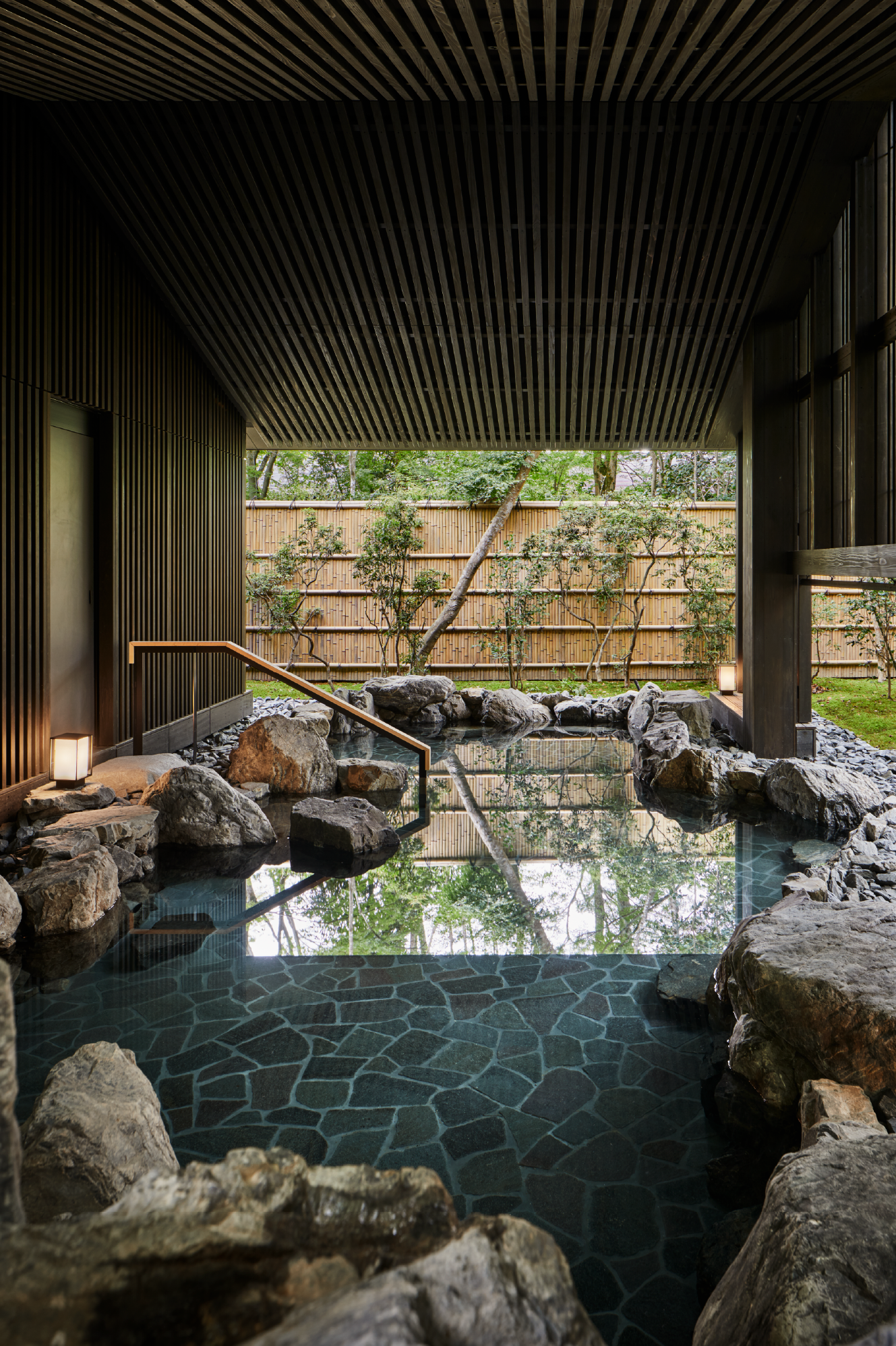
The Aman Spa continues the same quiet logic. Like the guest pavilions, it is built in stained timber and Tamo Japanese ash, with timber screens that let the daylight arrive softly and in pieces. The palette is neutral, leaving the forest outside to supply the colour. Three Kyoto-style treatment suites open off a calm relaxation lounge. At the centre is something rare for this part of Japan: natural hot spring water, feeding onsen pools both indoors and out. Treatments draw on ingredients from the surrounding region, including Kyoto green tea, Tamba kuromame black beans, local sake and cold-pressed camellia oil, with a facial finished in gold leaf as a nod to the temple nearby. In the forest beyond, guided yoga, meditation and shinrin-yoku are joined by morning sessions with Zen monks. Yet the smallest gesture here returns, again and again, to tea. Guests are welcomed with a cup blended for the spa by Yamamasa Koyamaen, a grower established in Uji in 1861, and the air carries the scent of tea roasted over a burner, a note woven into the essential oils as well.