Baz Luhrmann’s next set isn’t a film—it’s a train carriage on the British Pullman designed by him and Catherine Martin

Restaurants 05 Oct 2026 read

Baz Luhrmann’s next set isn’t a film—it’s a train carriage on the British Pullman designed by him and Catherine Martin

Celia, the British Pullman’s newest addition, turns a 1932 heritage carriage into a fictional starlet’s private stage

Words by Alisha Lad

Share

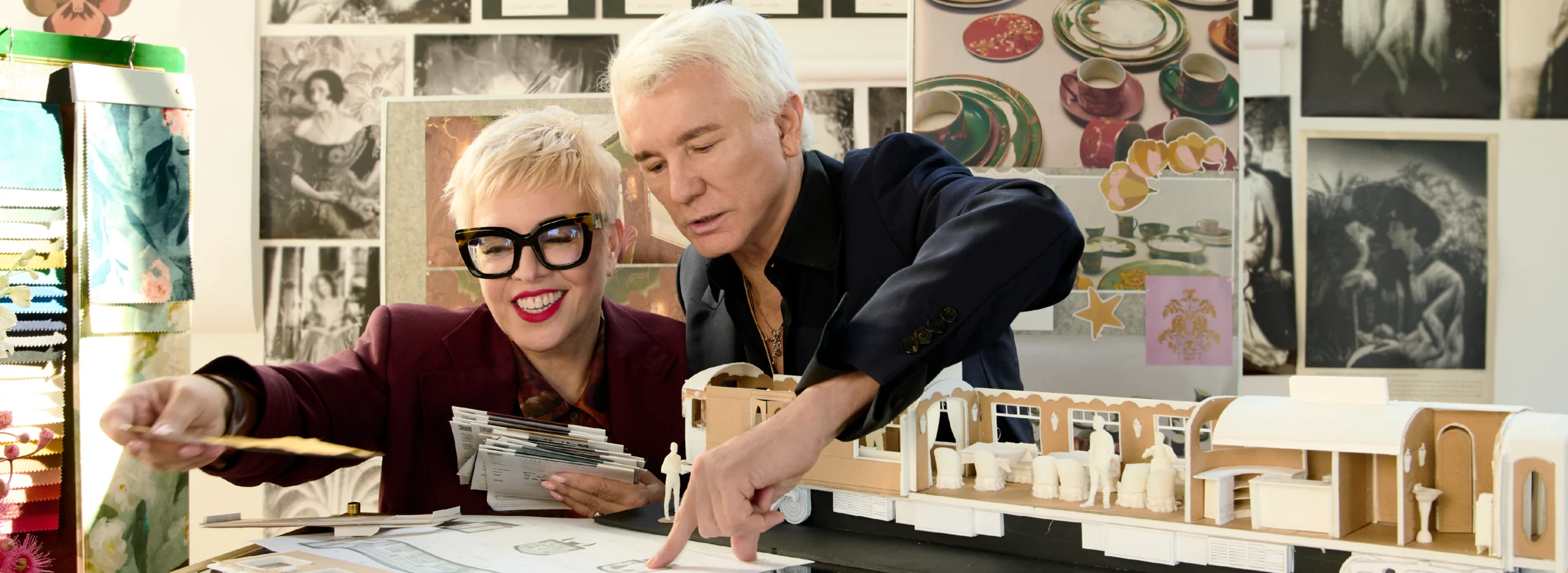
Australian filmmaker Baz Luhrmann has built his nearly five-decade-long career on immersive spectacle, as the mind behind classics like The Great Gatsby, Moulin Rouge! and Elvis. Alongside his longtime creative partner and wife Catherine Martin—four-time Academy Award winner for both costume and production design—he now turns that instinct, unexpectedly, towards a train carriage.

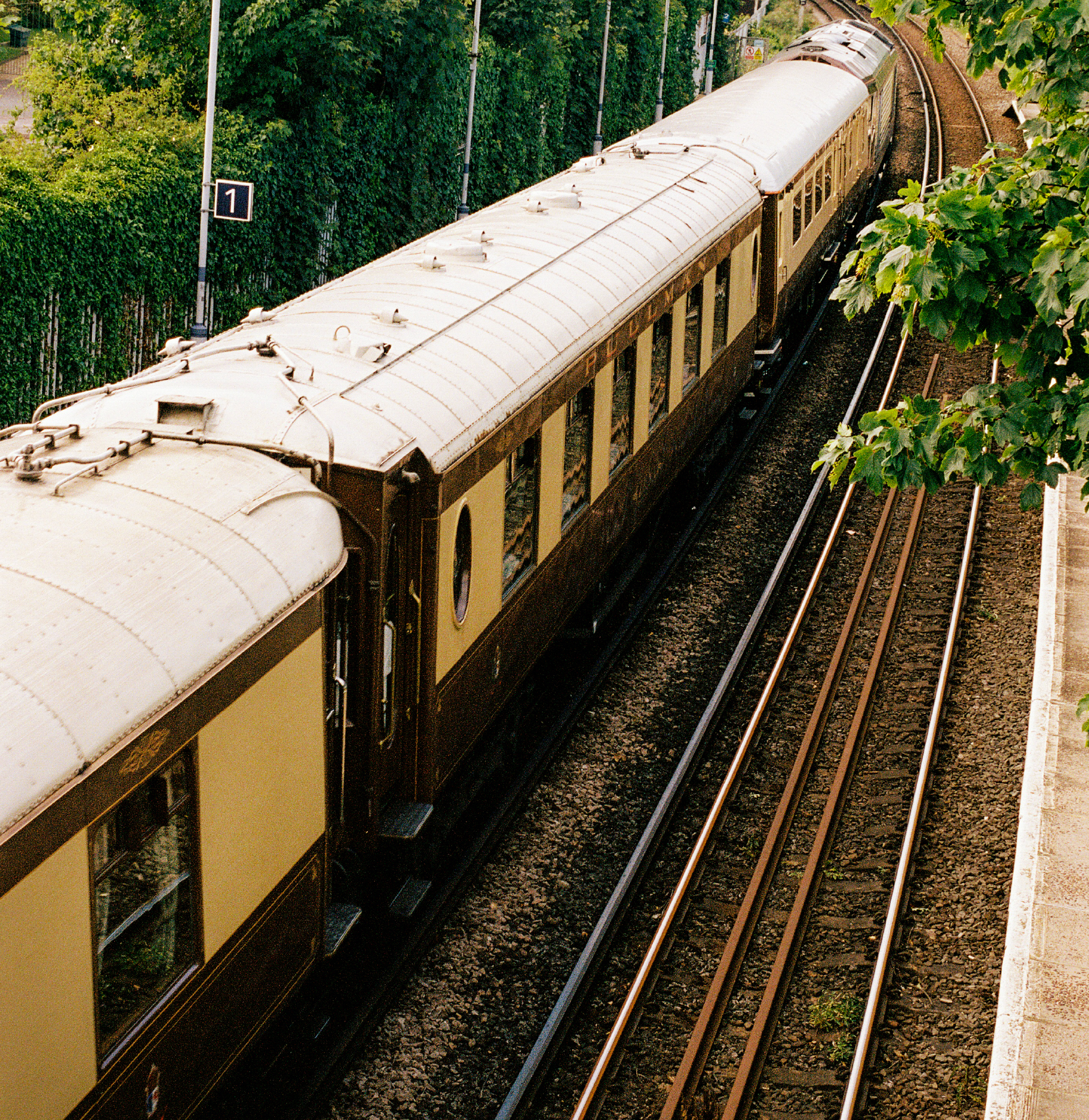
The British Pullman shares its lineage with the Venice Simplon-Orient-Express—two legendary sister trains under Belmond—but not its rhythm. While the Orient-Express sweeps guests across Europe over many nights, the British Pullman was built for single-day trips out of London Victoria, and has run since 1982. For its near 50-year-long run, it has always sold history, featuring ten meticulously restored carriages from the 1920s and 30s that lean on the romance of a slower England. But while most of these carriages carry the history they lived through, Celia carries a story that was invented for it—for which Belmond turned to Luhrmann.

Imagining Celia’s world Baz Luhrmann and Catherine Martin bring Celia’s imagined story to life through design. Photography by Hugh Stewart

Celia
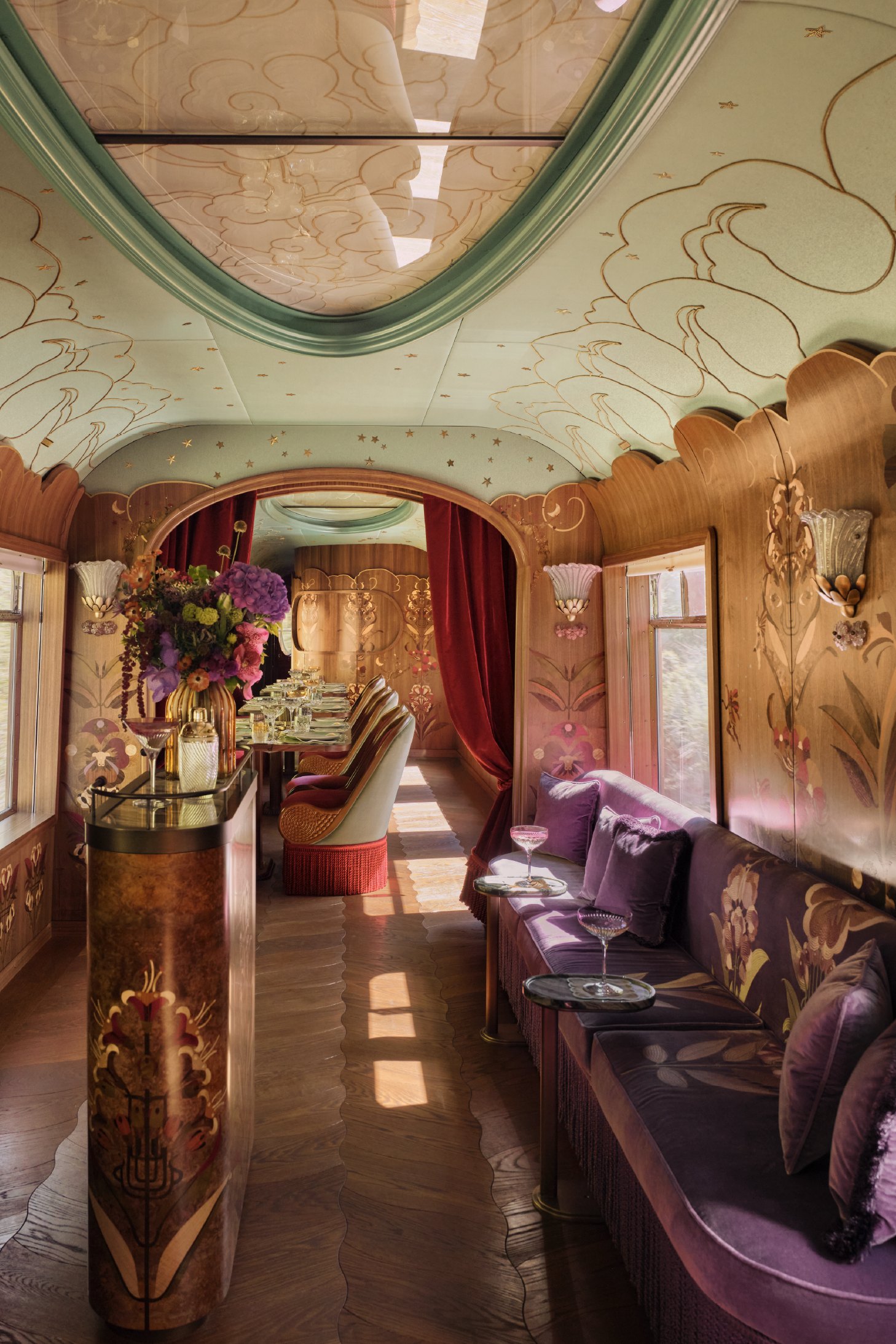
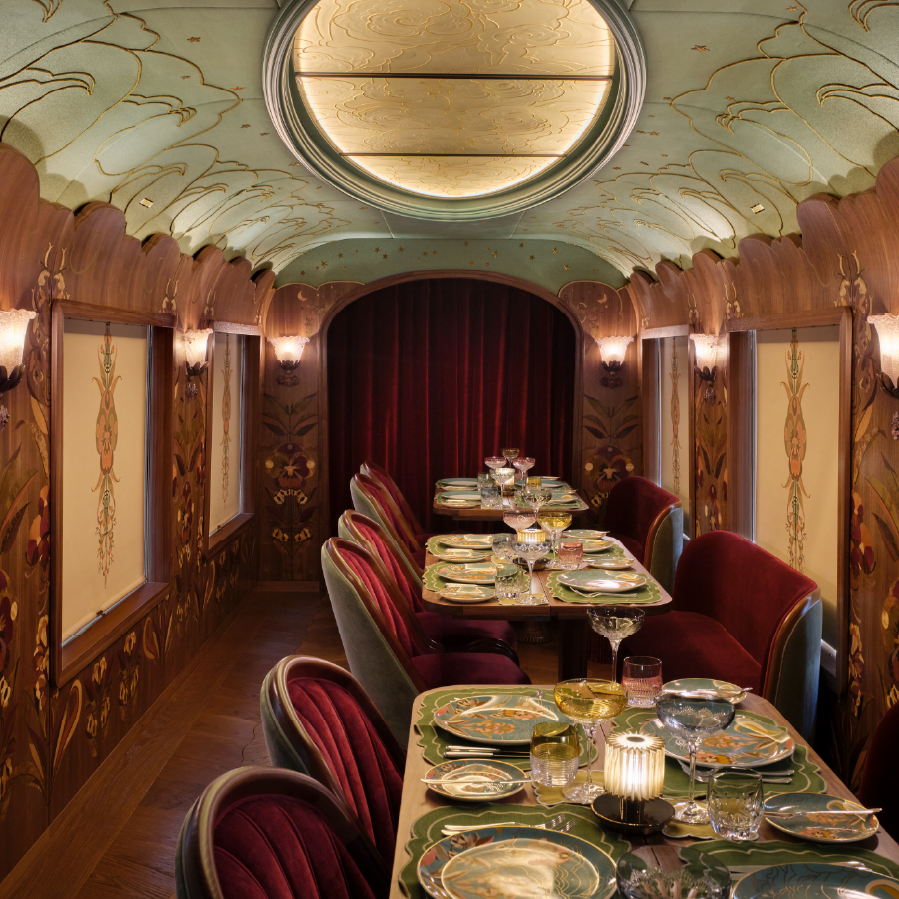
Set inside an original 1932 Pullman car, Celia comprises a cocktail bar, lounge, dining room and entertainment space, seating up to twelve guests with their own dedicated stewards and, on request, a private chef designing menus from British seasonal produce. It is the train’s most exclusive booking, available only for full private hire, and its most theatrical setting—based on a tale of pure fantasy.

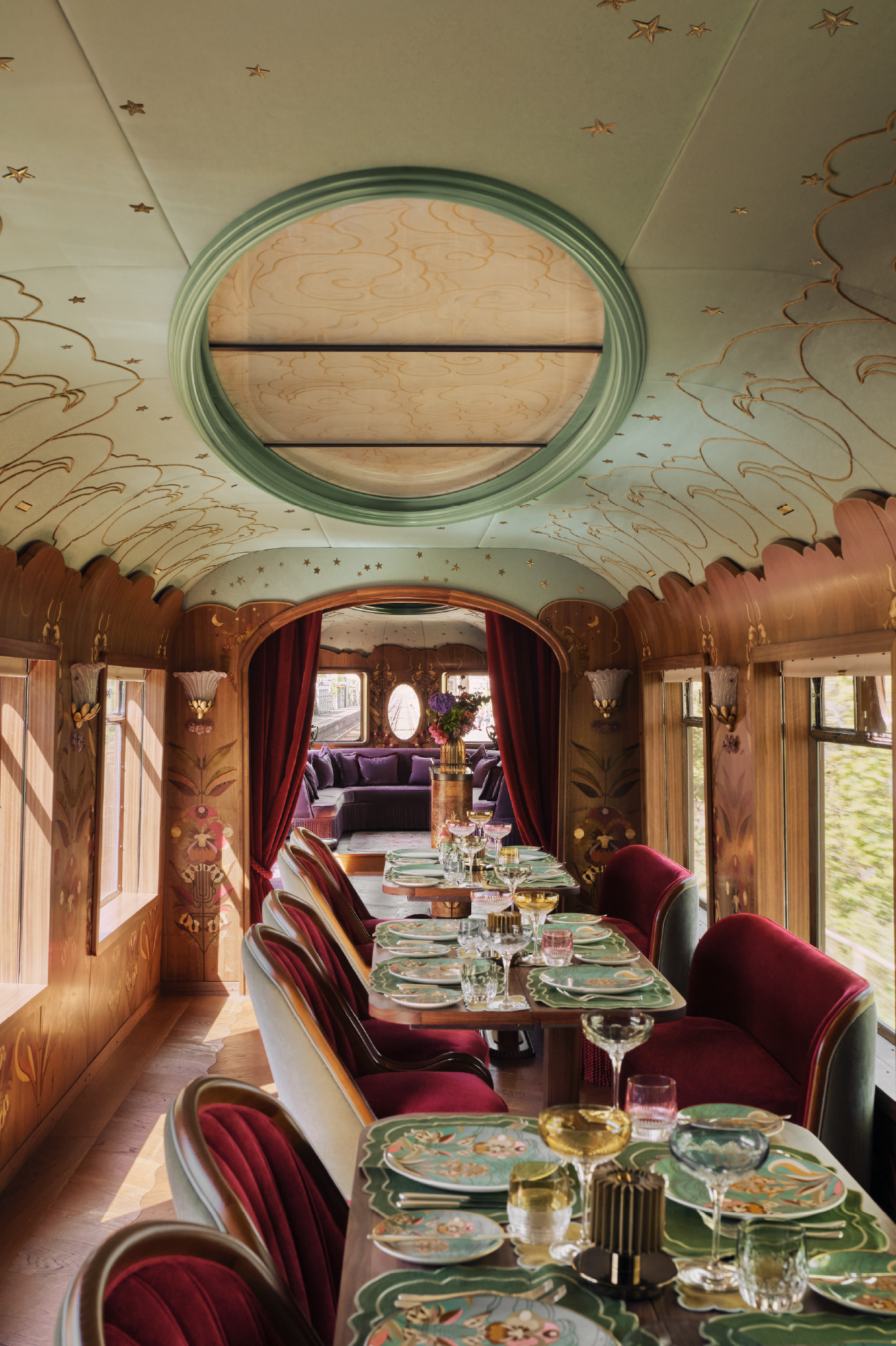
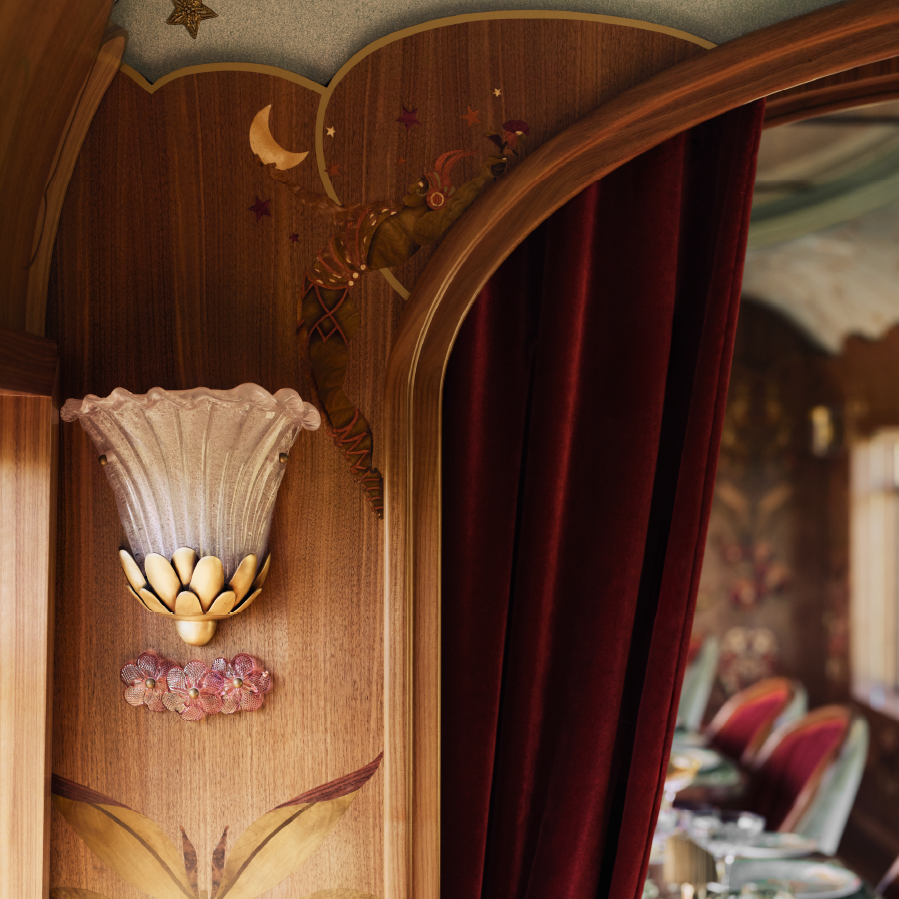
The setting: enter Celia, a West End leading lady Luhrmann invented, who was gifted the carriage in 1932 after her divine performance as Titania, Queen of the Fairies, in A Midsummer Night’s Dream. This invented backstory governs every inch of the room, and Martin’s fine hand is everywhere in the execution. Renowned British artisans, handpicked by Luhrmann and Martin, all worked on the same brief: build a set, not a room. Veneered marquetry by Dunn & Son, bespoke furniture by Bill Cleyndert, hand-blown glass from Tony Sandles, embroidery from Hand and Lock with contributions from JK Interiors, tableware shaped with Duchess China, cutlery made by David Mellor and glassware by Tom Dixon set the stage.
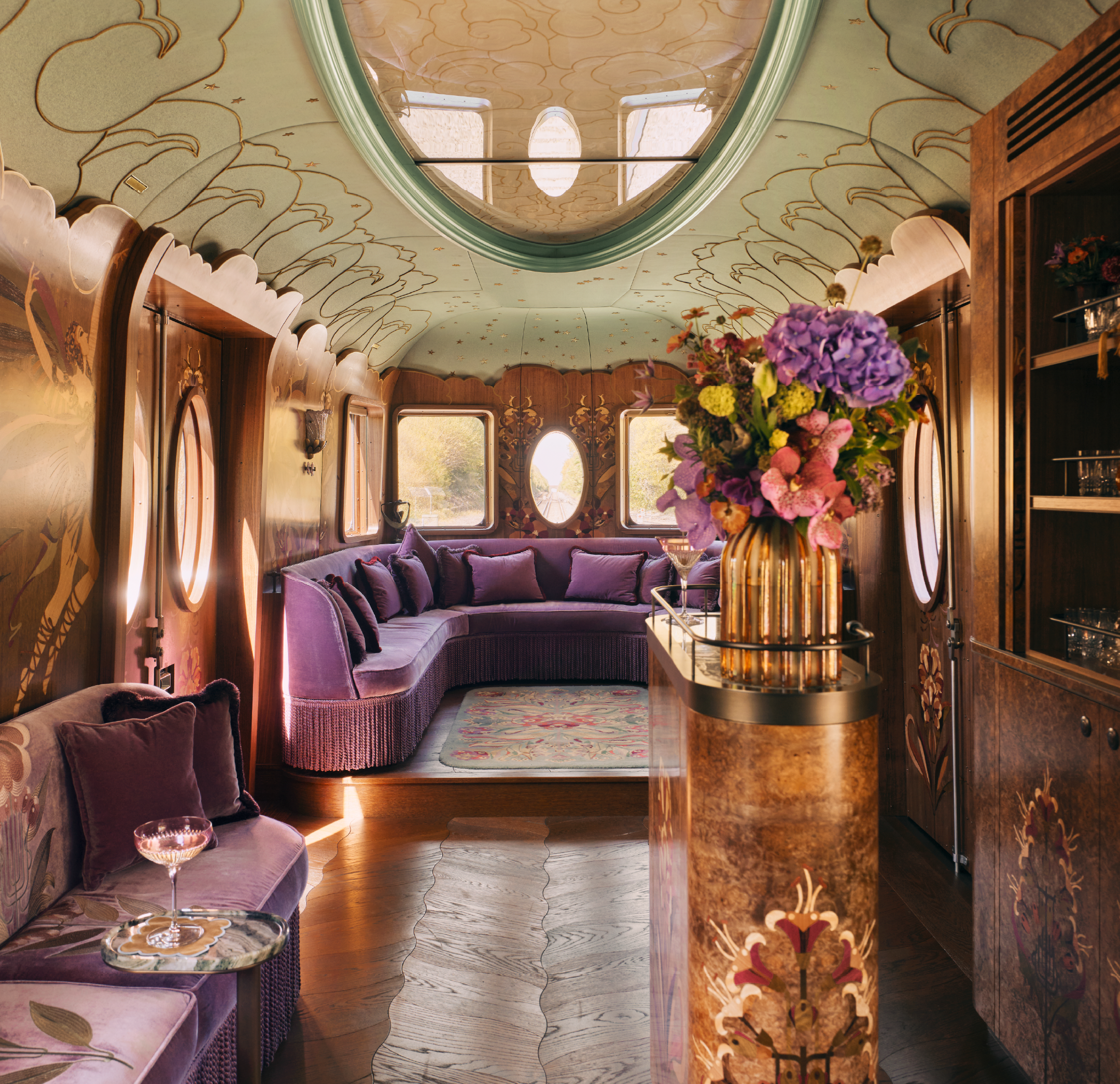
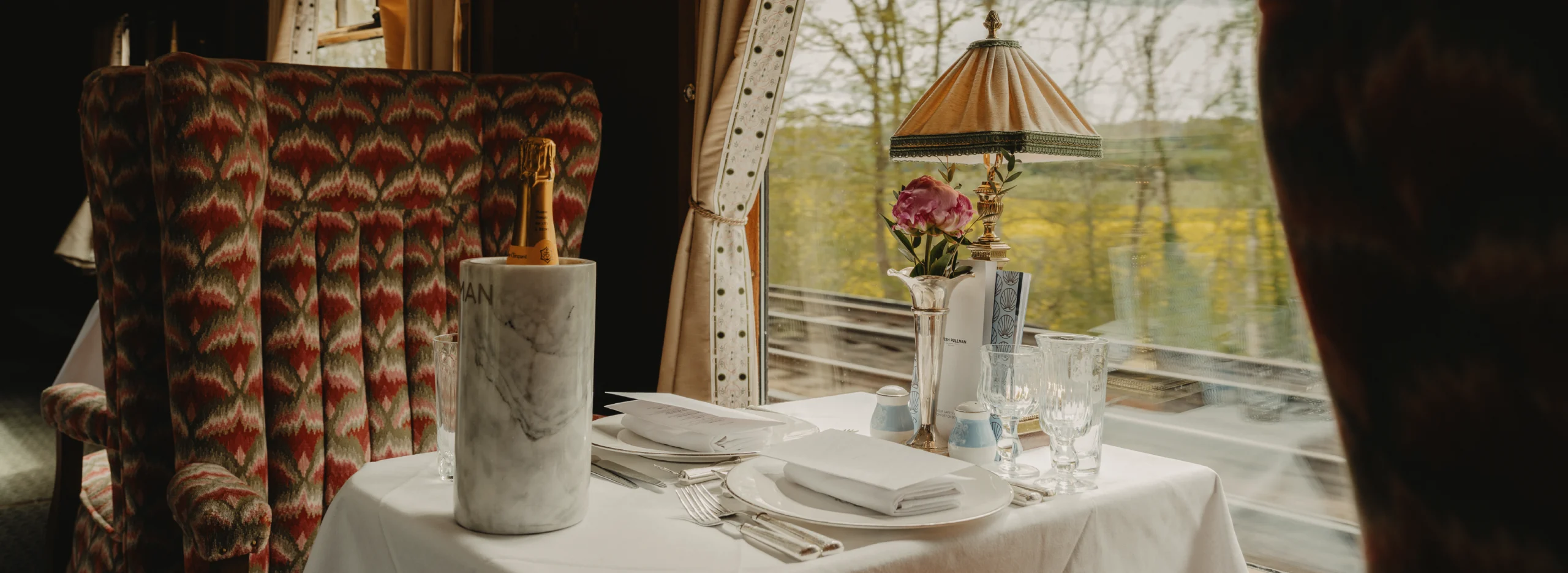
Dinner and drama Celia’s dining room blends restored Pullman heritage with theatrical design. Photography by Ludovic Balay
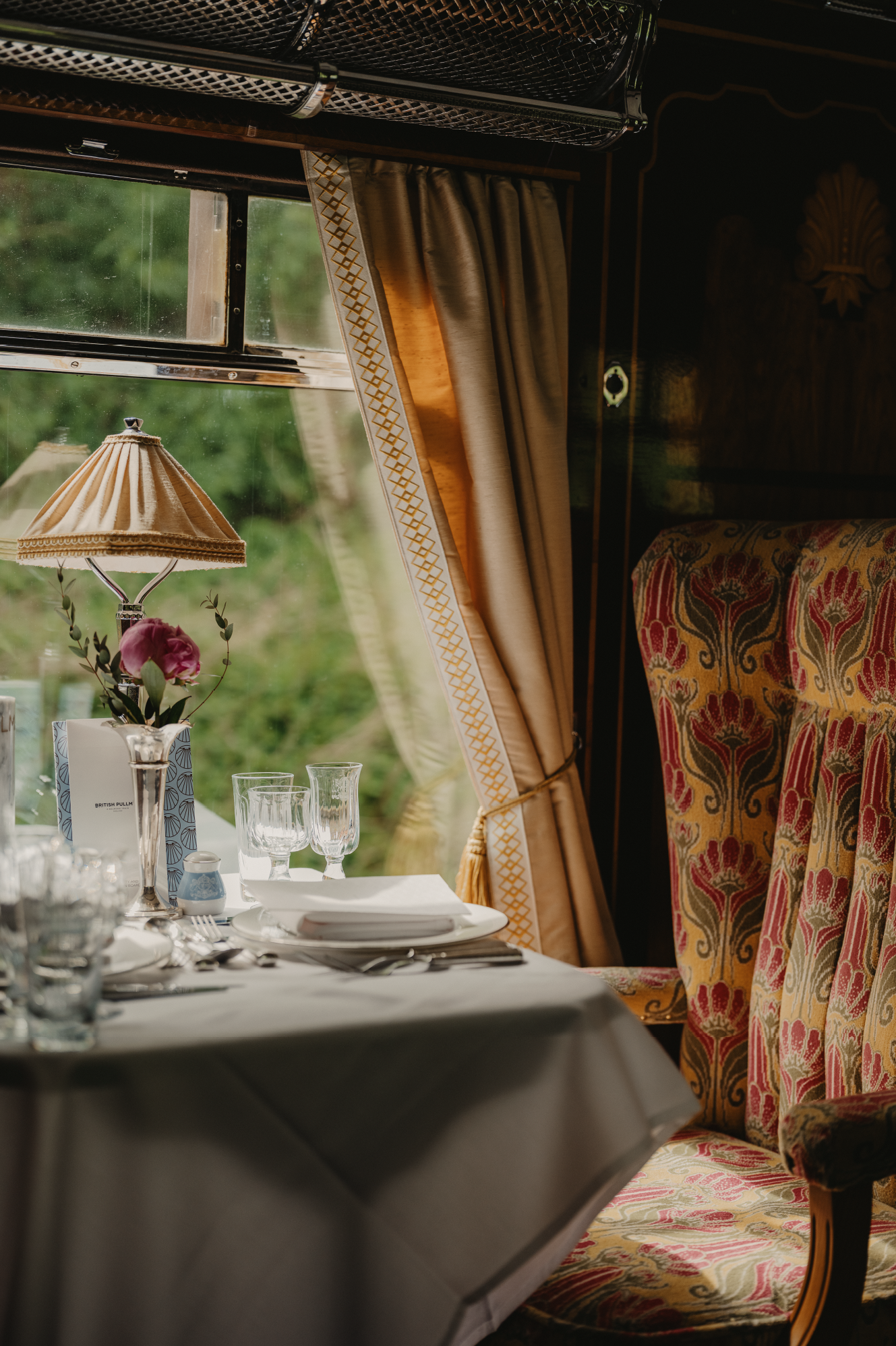
Dining in motion Original Pullman details frame an intimate dining experience on the move. Photography by Mark Fox
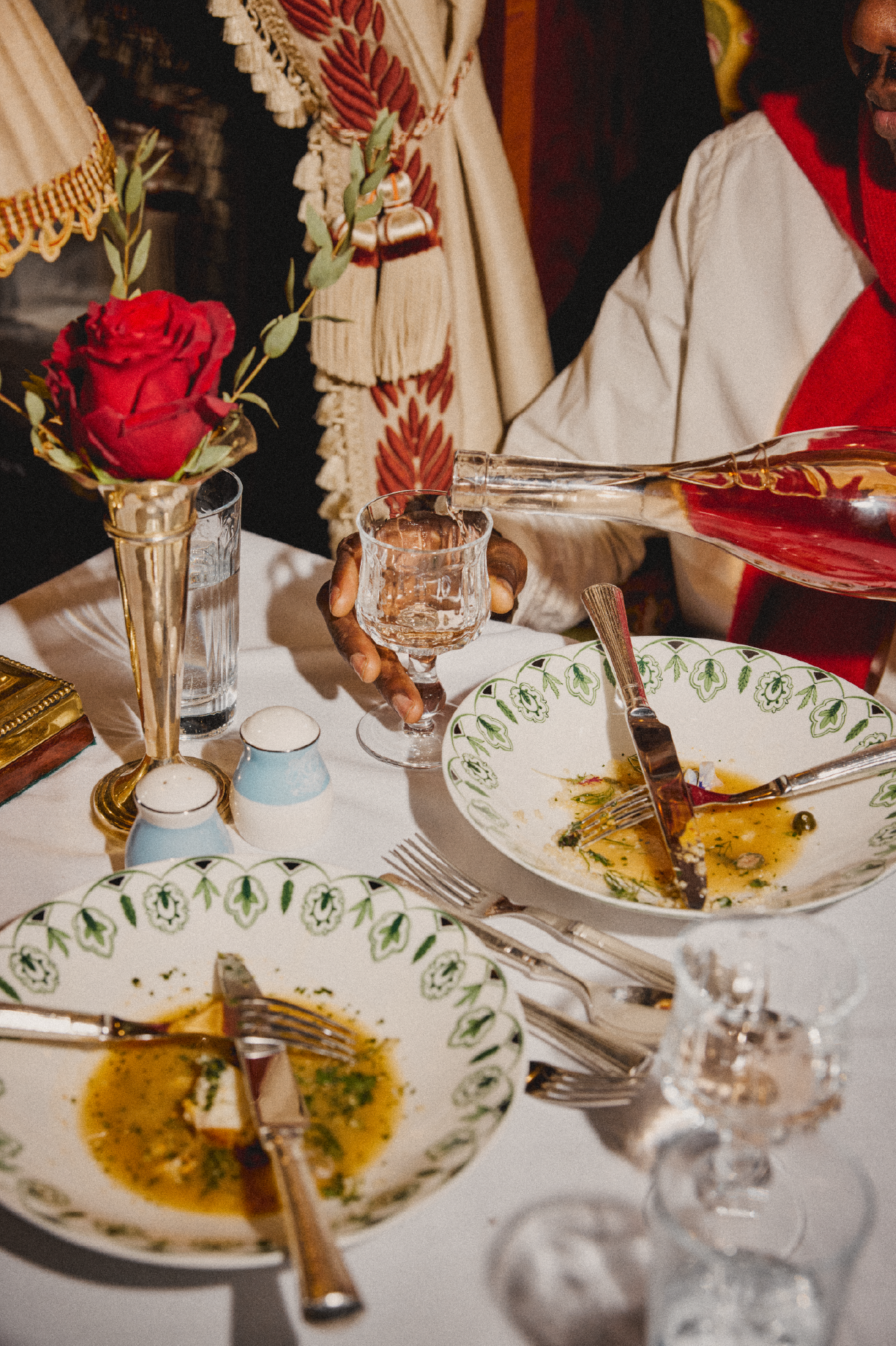
Crafted for the table Custom tableware and artisan-made details elevate every meal aboard Celia. Photography by Charlie McKay
A stage for supper The dining room is dressed in bespoke tableware, rich textures and leafy motifs inspired by the British landscape. Photography by Ludovic Balay
Where imagination travels

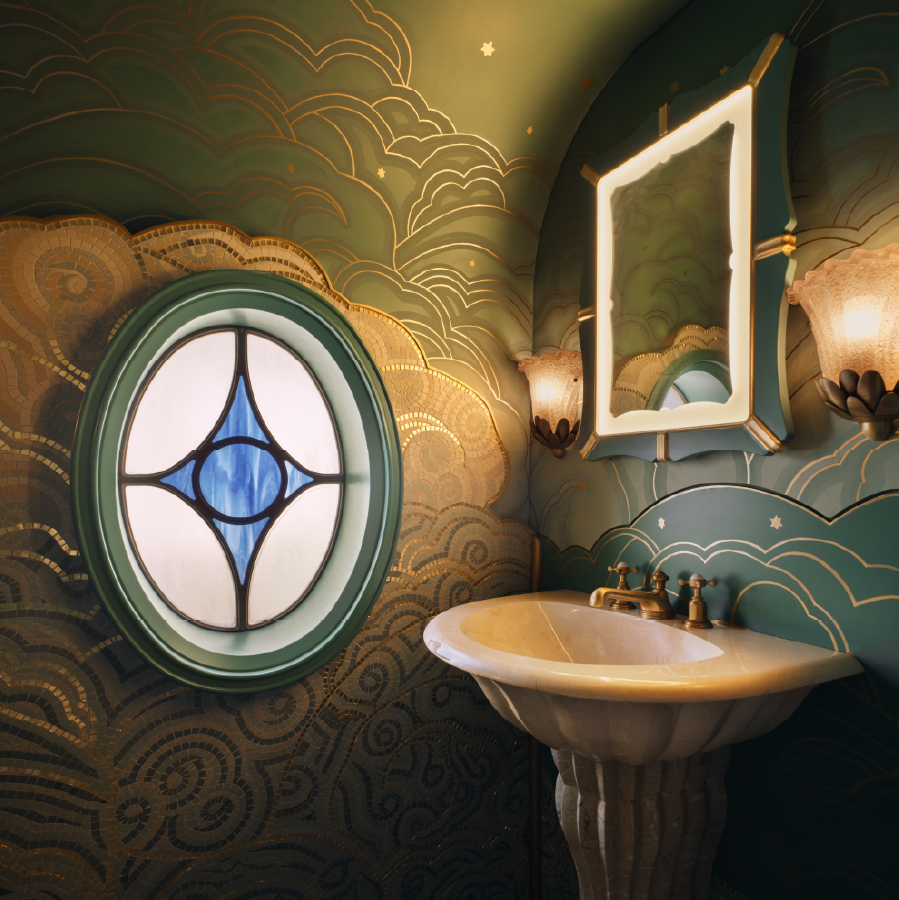
The palette pulls from native flora: greens, yellows, reds, purples, worked into oak-wood marquetry and thick velvet upholstery. Tucked behind the curtains, a separate powder room carries hand-painted walls of flowers and mystical creatures—a smaller and stranger offstage wing than the main act.

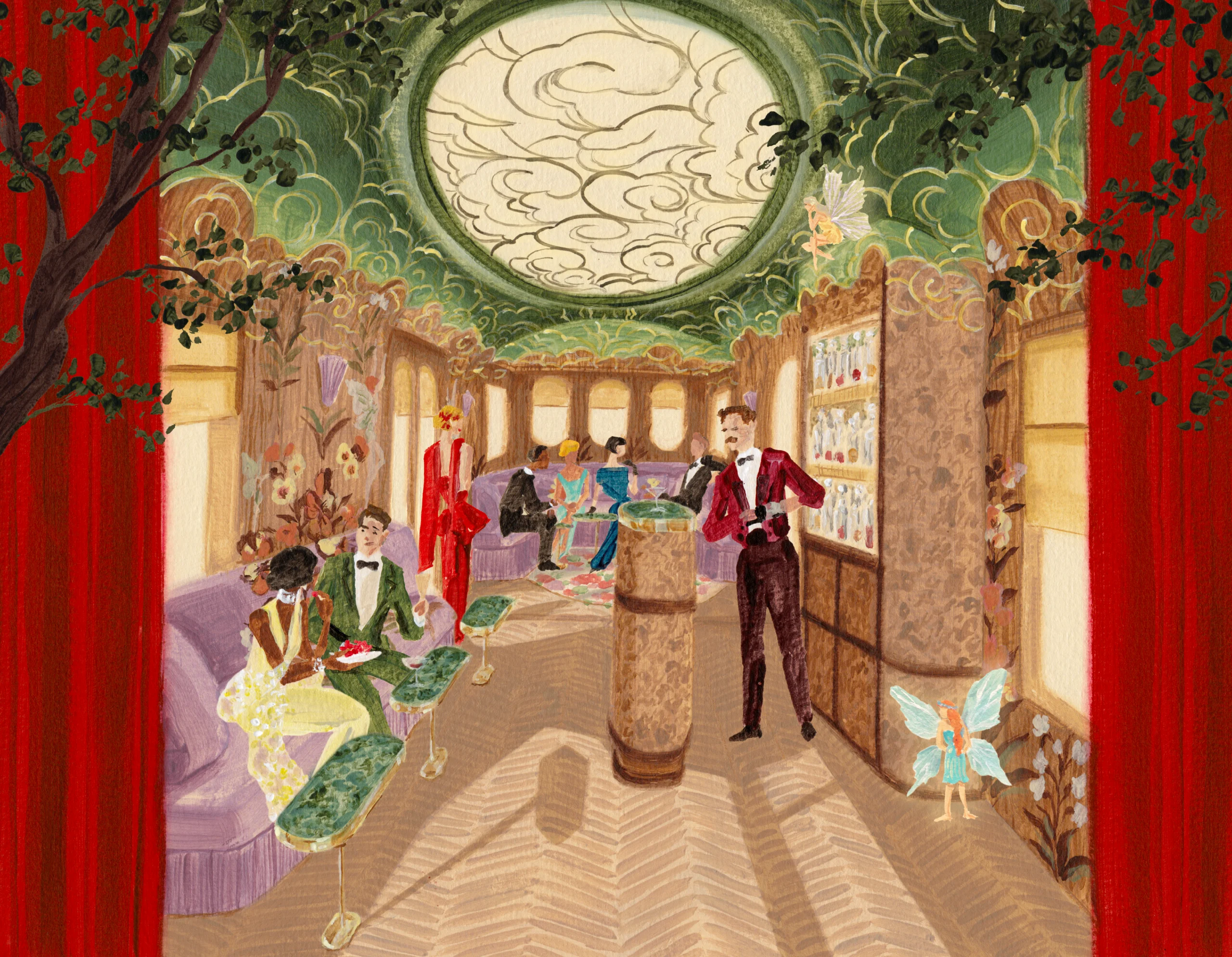
Celia doesn't restage A Midsummer Night's Dream scene for scene; it borrows its mood instead. The wit, the mischief, the romance of London's 1930s theatre world is handed over to whoever is seated at the table, once the curtain falls. "Stepping inside the carriage is like being transported into another world," Luhrmann says, "one in which guests are invited to become part of the story." Martin describes something subtler but related: a room built to slow the mind down, to make space for people to find each other again, away from the noise outside the window.

An imagined world An original rendering visualises Celia’s fictional universe, inspired by the romance, wit and mischief of 1930s theatre. Photography by Yukiko Noritake

Celia is not the British Pullman’s first experiment with a director’s eye. It joins Cygnus, the carriage designed by visionary filmmaker Wes Anderson—a study in his own visual language of symmetry and colour. It was built years ahead of Celia, making its official public debut in 2021, and offered proof that the format would work. But while Cygnus reads as a single, controlled composition, Celia is looser and more theatrical by design, built for the adrenaline of performance and for the momentous joy of the experience.

Together, the two carriages mark a shift in how Belmond is treating its heritage fleet, no longer as museum pieces to be preserved exactly as found, but as spaces open to reinterpretation by people who build fictional, experiential worlds for a living. It signals a shift towards interiors as an agent of authorship, giving narrative storytelling the same weight as craftsmanship.

Through the countryside The British Pullman journeys across the English landscape in a fleet of restored heritage carriages. Photography by Pia Riverola
Where the story starts Every journey aboard Celia begins with an invitation into another world. Photography by Mark Fox
Join Our Newsletter

We're making your inbox interesting. Enter your email to get our best reads and exclusive insights from our editors delivered directly to you.


    More Articles

    Sign up for our Newsletter.

    X