Sila Farmside dining on NH44 near Kurnool is like the poster child of the Rayalaseema region’s food and culture

Restaurants 19 Oct 2026 read

Sila Farmside dining on NH44 near Kurnool is like the poster child of the Rayalaseema region’s food and culture

Through fresh farm to table food, architecture and cultural programming, founders Apuroop Arja and Pratyusha Kethinedi are introducing visitors to all that Rayalaseema has to offer

Words by Shivani Pathak Photography by Terrence Manne

Share

When you think of highways, there’s a particular list of foods that your brain conjures — dense dal fry topped with a layer of red tadka simmering with spices, parathas topped generously with butter, fiery curries and charred tandoor specials served with spicy chutneys, onion and pickle. But at Sila farm side dining, the menu goes beyond just your highway regulars to reflect the cuisine of Rayalaseema, the region that lies between Bengaluru and Hyderabad on NH44.

For founders Apuroop Arja and Pratyusha Kethinedi, the idea did not start with building a restaurant in the middle of practically nowhere, it started with Apuroop’s inclination towards farming. Neither of them has a F&B background. While Pratyusha has a pharmacy degree and now runs an interior design practice, Apuroop trained as a data scientist, worked in a few startups, all while toying with the idea of pursuing something in agriculture parallelly. In 2016, his genes as the third generation of a farming family kicked in and he decided to explore farming. Based in Rayalaseema in Andhra Pradesh, Apuroop’s family has been into farming for decades and grew mosambis, sunflowers and other seasonal vegetables on their farm. So while for Apuroop, it was like returning to his roots, he chose the organic farming route after developing an interest in permaculture.

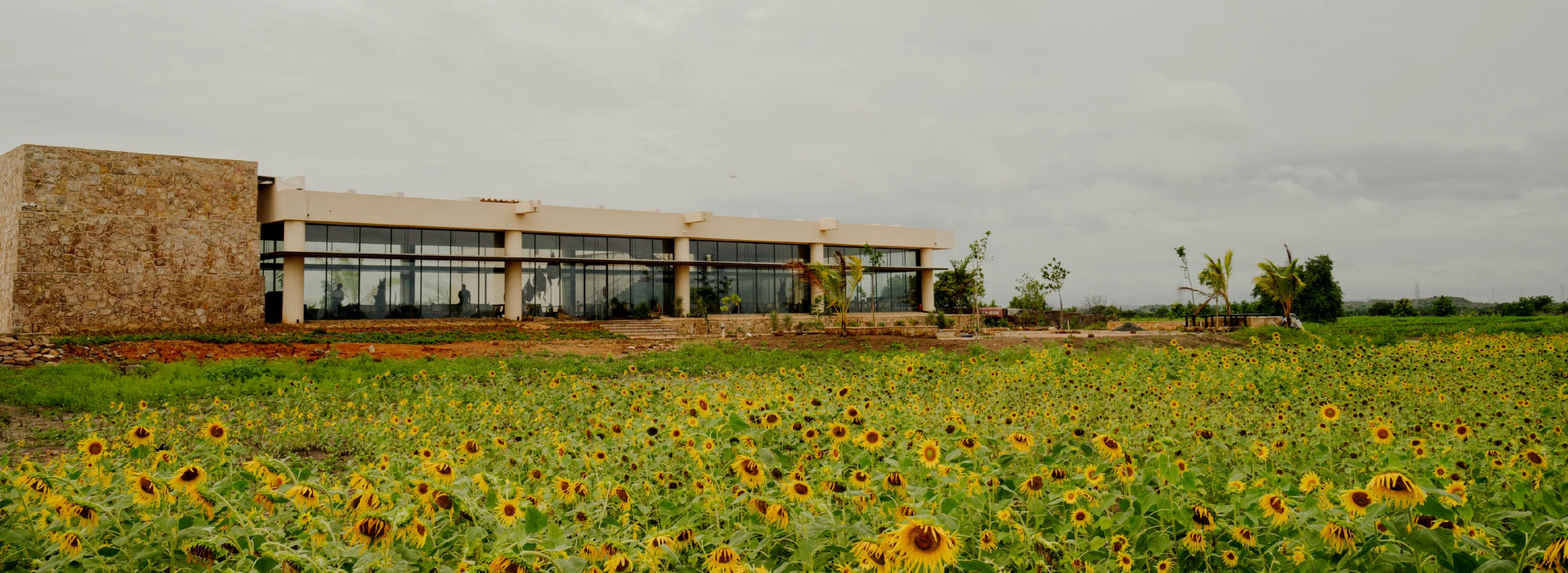
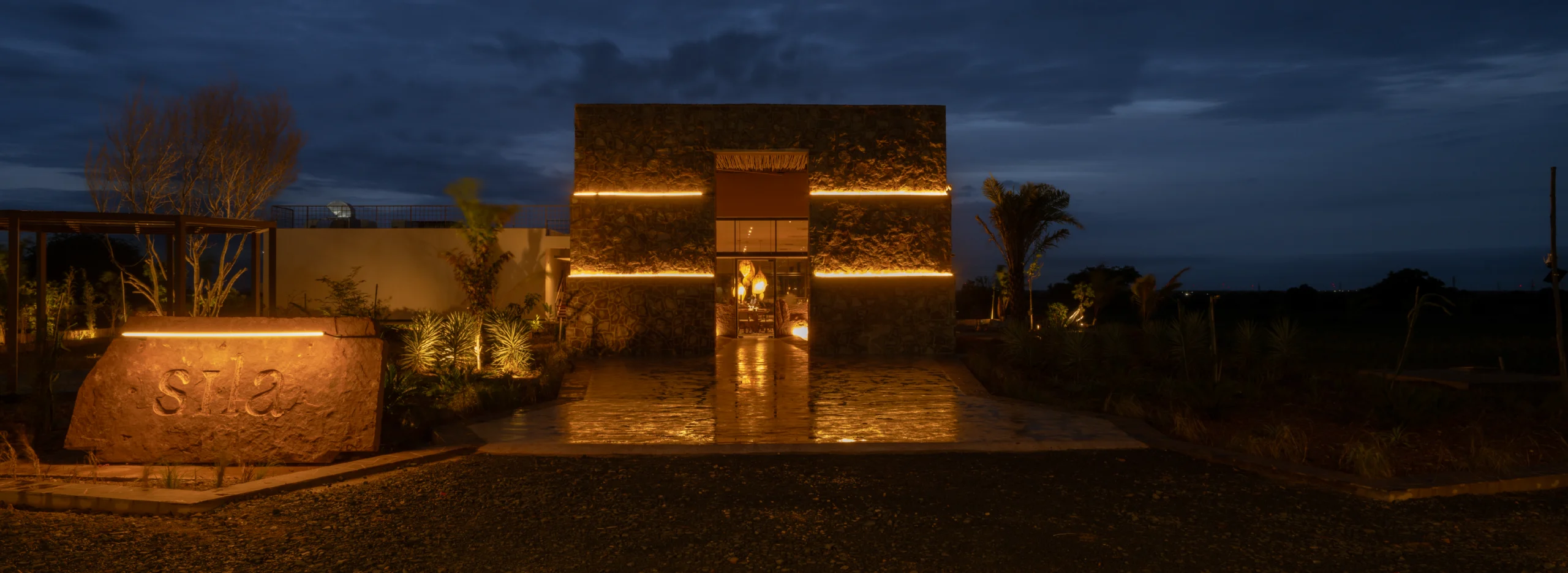
A stone landmark Built largely from natural stone, Sila draws from the material traditions of Rayalaseema

The piece of land they ultimately started working on was inherited by the couple from Apuroop’s family and named Ervana Wildfarms —an amalgamation of the Erramala range where the farm is located and vanam, meaning forest. The first task here was to restore the soil quality and biodiversity. “When I went to my bigger farm, we found deer hopping across the land. That was one of the reasons I wanted to get back to farming, I wanted to restore the land and nurture the biodiversity. It keeps the farm the way it must be, in its most natural form, and encourages the growth of the original ecosystem,” shares Apuroop.

As their first task on this bigger farm land, Apuroop and his team created a one acre lake to restore the soil and create a plan for water conservation and rain water harvesting. “This is helpful today when we have El Nino and there are no rains here in the South of India. We are using the water which we have already conserved in the last two years to grow produce on a certain portion of land,” says Apuroop.

It is within this 100 acre landscape that Apuroop and Pratyusha set up Sila Farm side dining that opened in 2025. The couple used to visit Ervana a lot with their friends but almost never found any good food, everything was either too spicy, harsh on the stomach or just simple dal chawal. But that’s not the Rayalaseema food Apuroop remembered from his childhood. “We thought we'll start a small cafe, it can also be a pitstop on the highway. But we wanted it to be a reflection of the farm and that’s how we came up with the idea of Sila and since Apuroop was already into permaculture and the idea of sourcing everything locally and being as sustainable as possible was a huge aspect for him, we decided to do this,” shares Pratyusha.

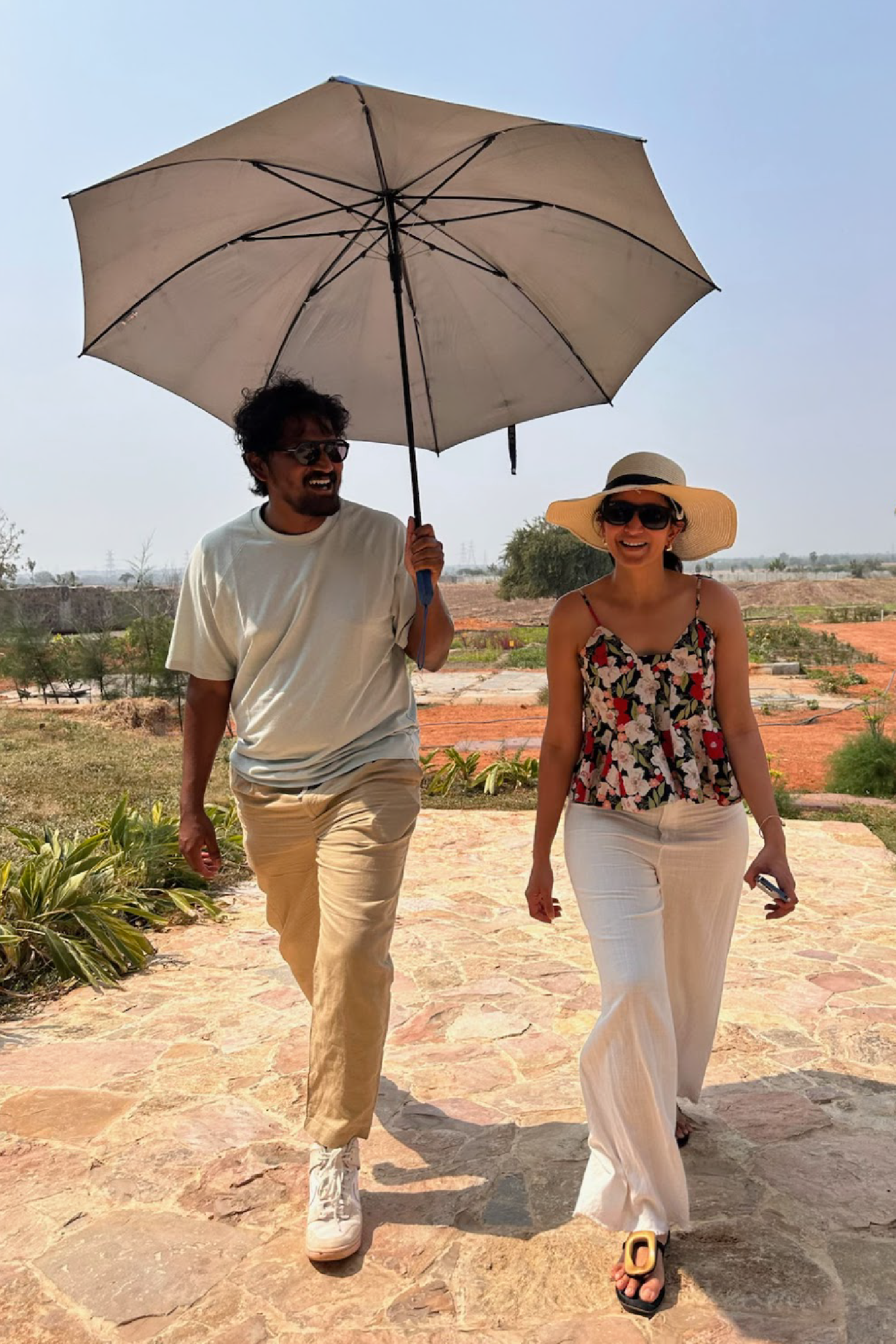
Cultivating a vision Founders Apuroop Arja and Pratyusha Kethinedi at Ervana Wildfarms, the 100-acre farm that inspired Sila’s farm-to-table philosophy
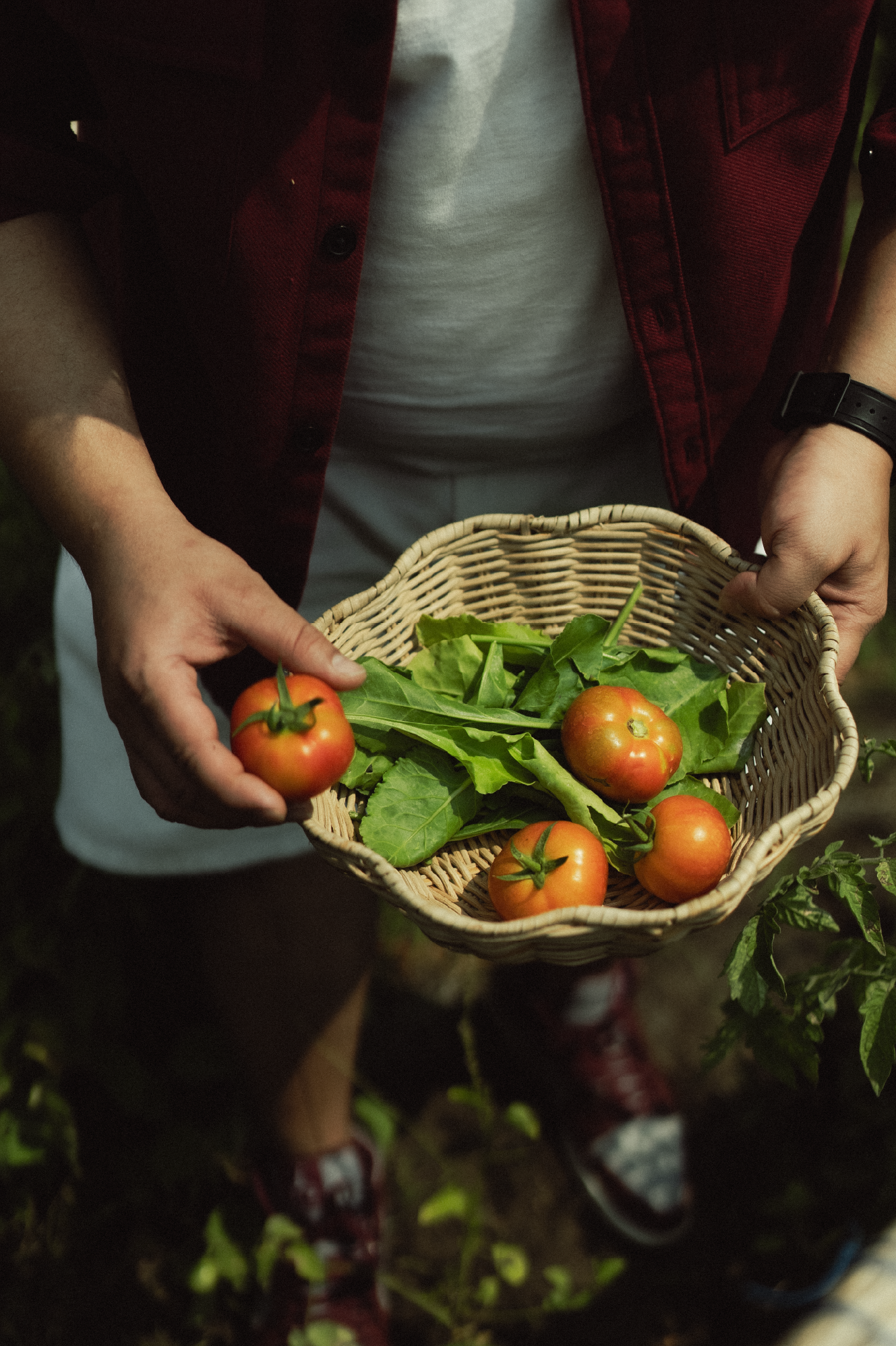
The morning's harvest Seasonal produce from Ervana Wildfarms finds its way directly from field to kitchen
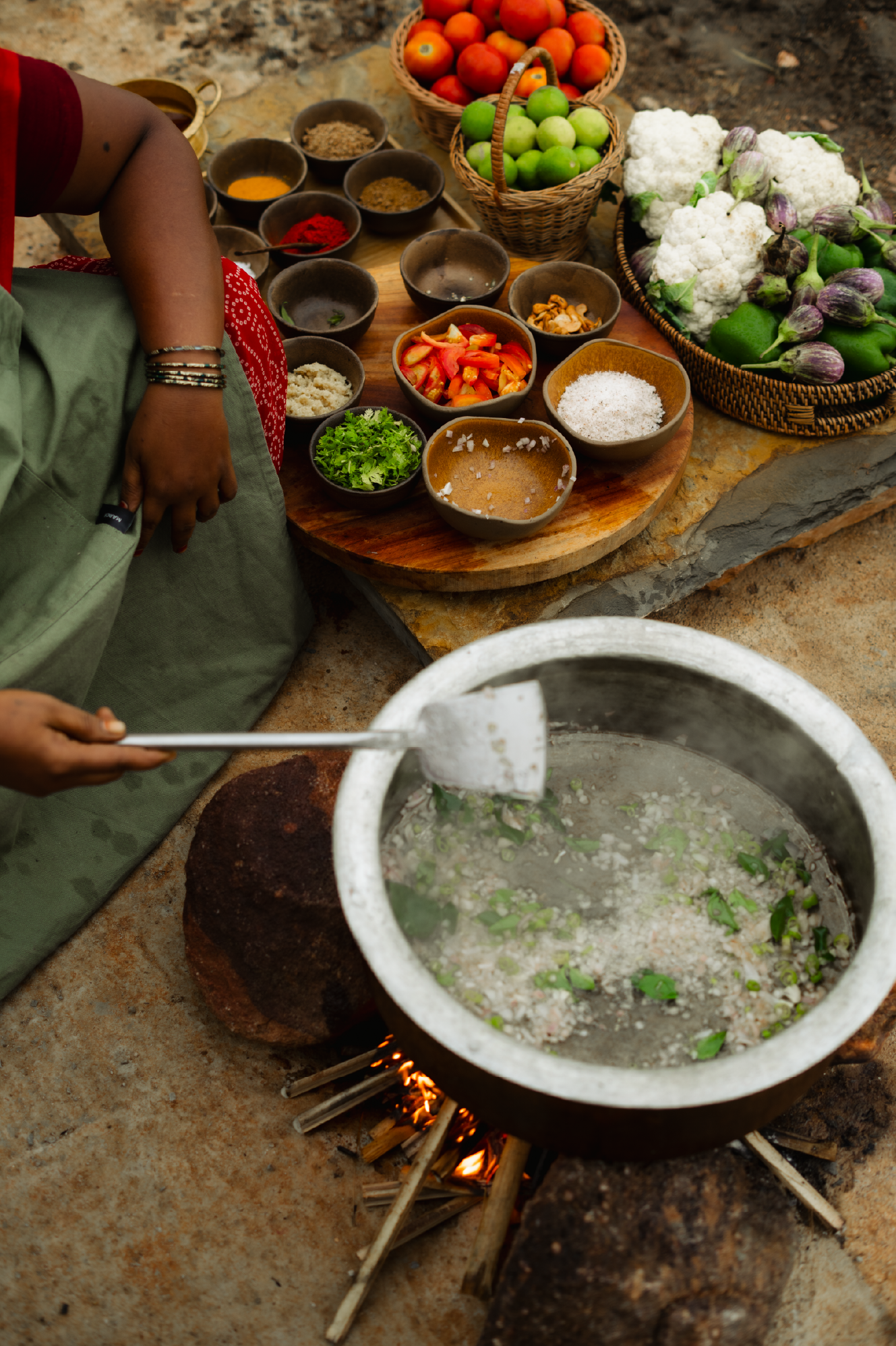
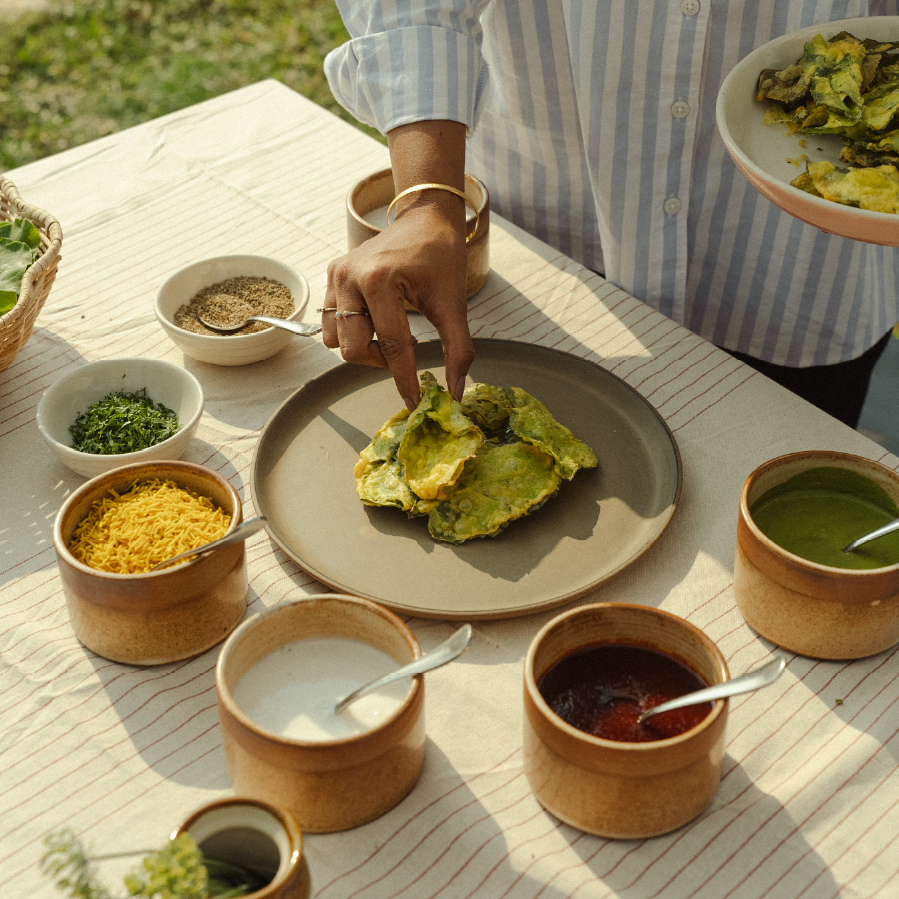
Fire and flavour Traditional wood-fired cooking techniques lend many of Sila’s dishes their distinctive flavour
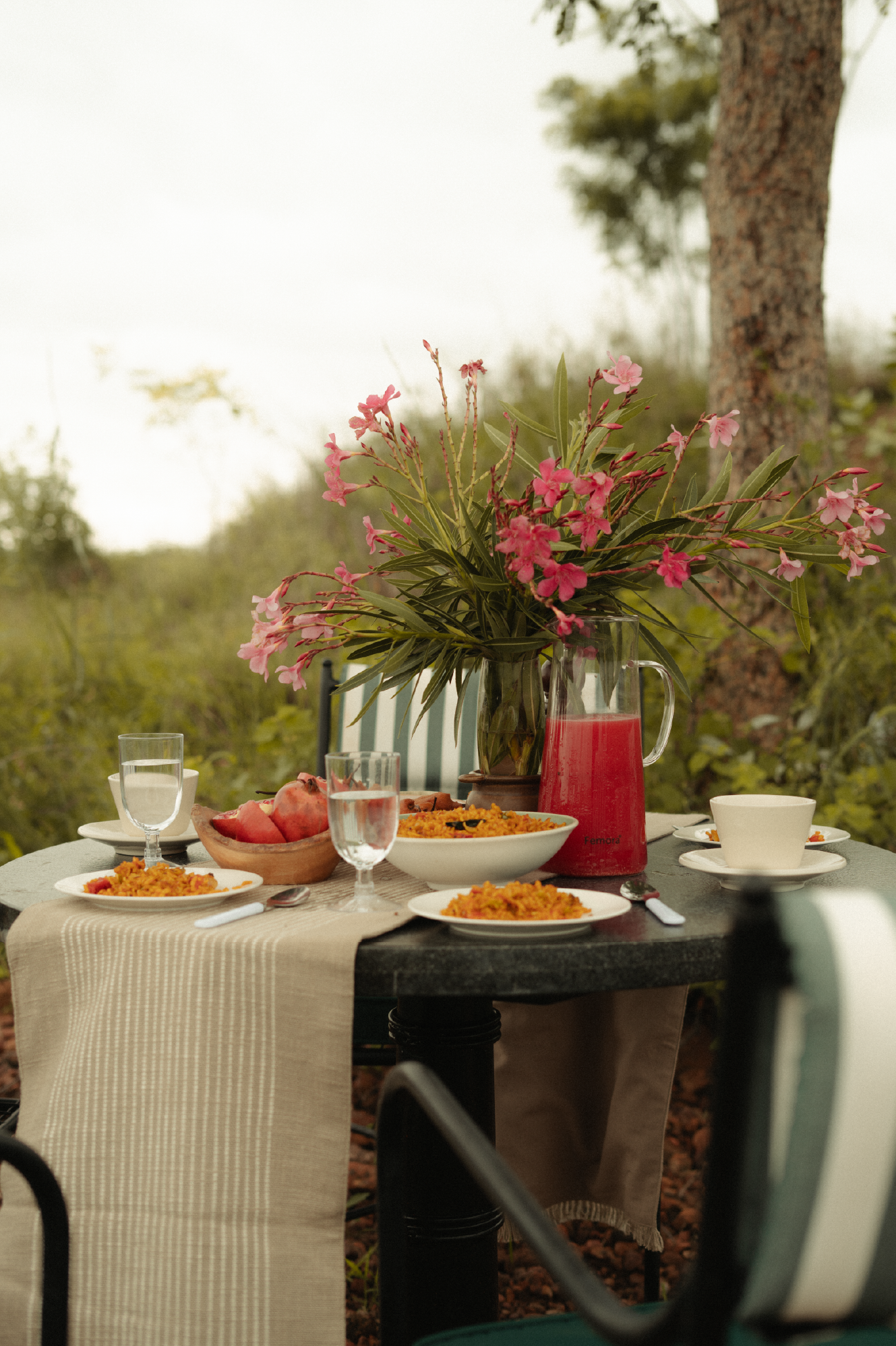
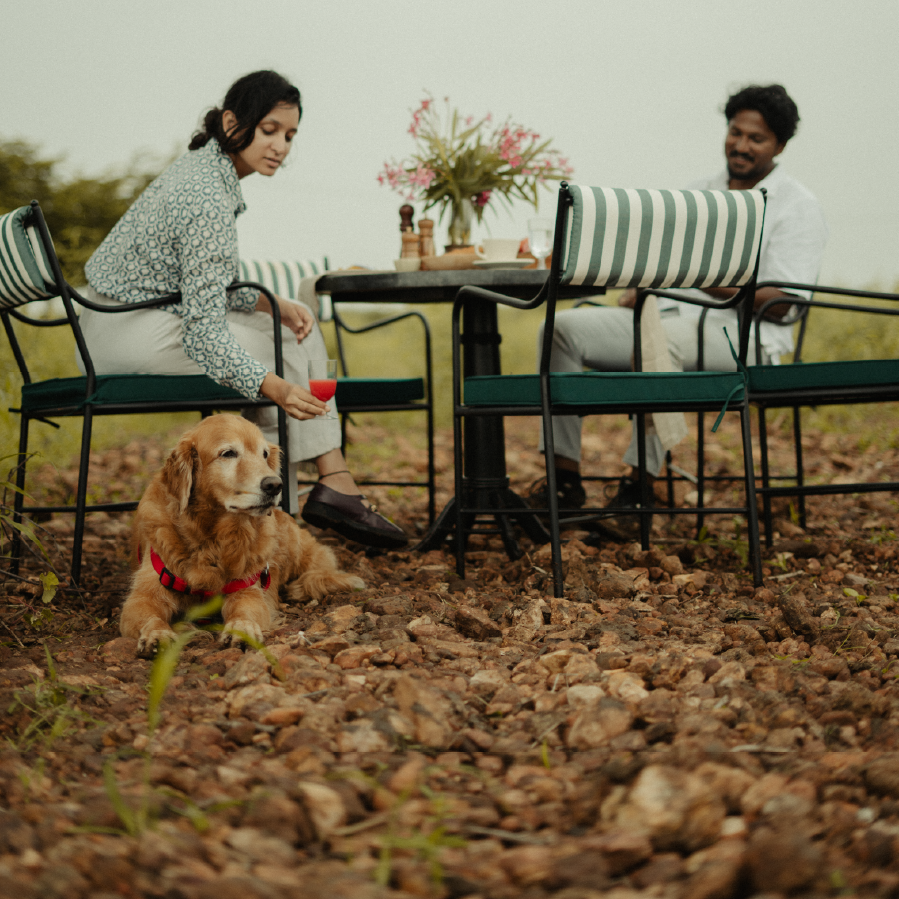
Dining outdoors Meals unfold against the backdrop of the farm that inspires both the menu and the setting

Being huge foodies and research geeks, Apuroop and Pratyusha dived head first into field work. They travelled to every little village around Rayalaseema to understand the culture — from the food and flavours to architecture, old structures and historic places that defined this area.

During their research trips, they realised that the older generations understood food through its relationship with the land and the seasons. “People would explain why they preferred the indigenous country chicken, particularly birds raised freely in their natural surroundings because even something as specific as the condition of a bird's beak and its ability to forage naturally mattered to them. They believed these differences contributed to the flavour and texture of the meat,” Apuroop explains. Apart from this, the style of cooking — wood fired stoves, slow cooking, the way smoke and heat contribute to flavour, all of it was discovered in village homes and everyday practices which eventually informed how ingredients were sourced and cooked at Sila.

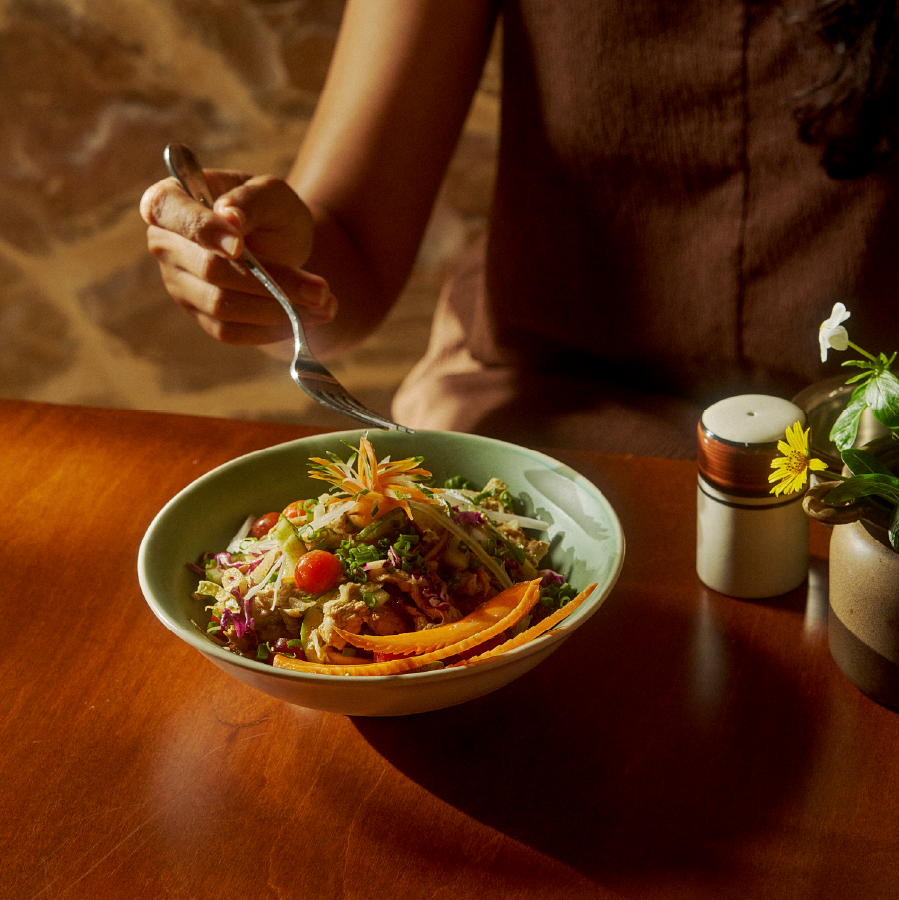
For building the menu, Apuroop and Pratyusha encouraged their chefs to travel to the villages around the area to find inspiration. What made it to the menu eventually was everything inspired by local flavours and ingredients. Local staples such as Ragi Sankati, Ugani Bhajji, Gongura Pappu and Gutti Vankaya sit alongside reinterpretations of regional favourites like Kurnool's chicken pakoda transformed into a cashew chicken pakoda. Given Rayalaseema's strong meat-eating traditions, dishes such as Naatu Kodi with Ragi Sankati and Gongura Mutton Curry also feature prominently. Many of these recipes are tied to the region's landscape—from the groundnuts that thrive in its red soil to the distinctive green brinjals used in Gutti Vankaya—making the menu an extension of the local ecology.

In addition to their regular menu, Sila also has seasonal specials. This summer for instance they experimented with the Banganapalle mango, a large sized mango variety local to Andhra Pradesh. It’s a sweet fruit but Sila’s head chef Chandan, created a curry out of it which was a hit by the time summer ended.

Besides food, the local building techniques also influenced Sila’s architecture. In their research phase, the architecture, they noticed, catered to the landscape and the available resources in the region — discarded quarry stones were repurposed into partition walls; in older homes, Palukur stone slabs were used in roofing that helped reduce heat indoors. Some of these houses had thoughtful ventilation systems, using the movement of air and pressure differences to keep interiors comfortable, “We wanted to carry that same thinking into Sila. We weren't interested in simply borrowing the appearance of traditional architecture. We wanted to understand the reasoning behind it and find ways to make that knowledge relevant to how we build today,” the couple shares. One of the most direct translations was their use of quarry waste for the flooring and foyer, which became an integral part of the building’s character. “It wasn't about making a sustainability statement. It was about recognising the value of a material that people in the region had understood and worked with for generations,” they say.
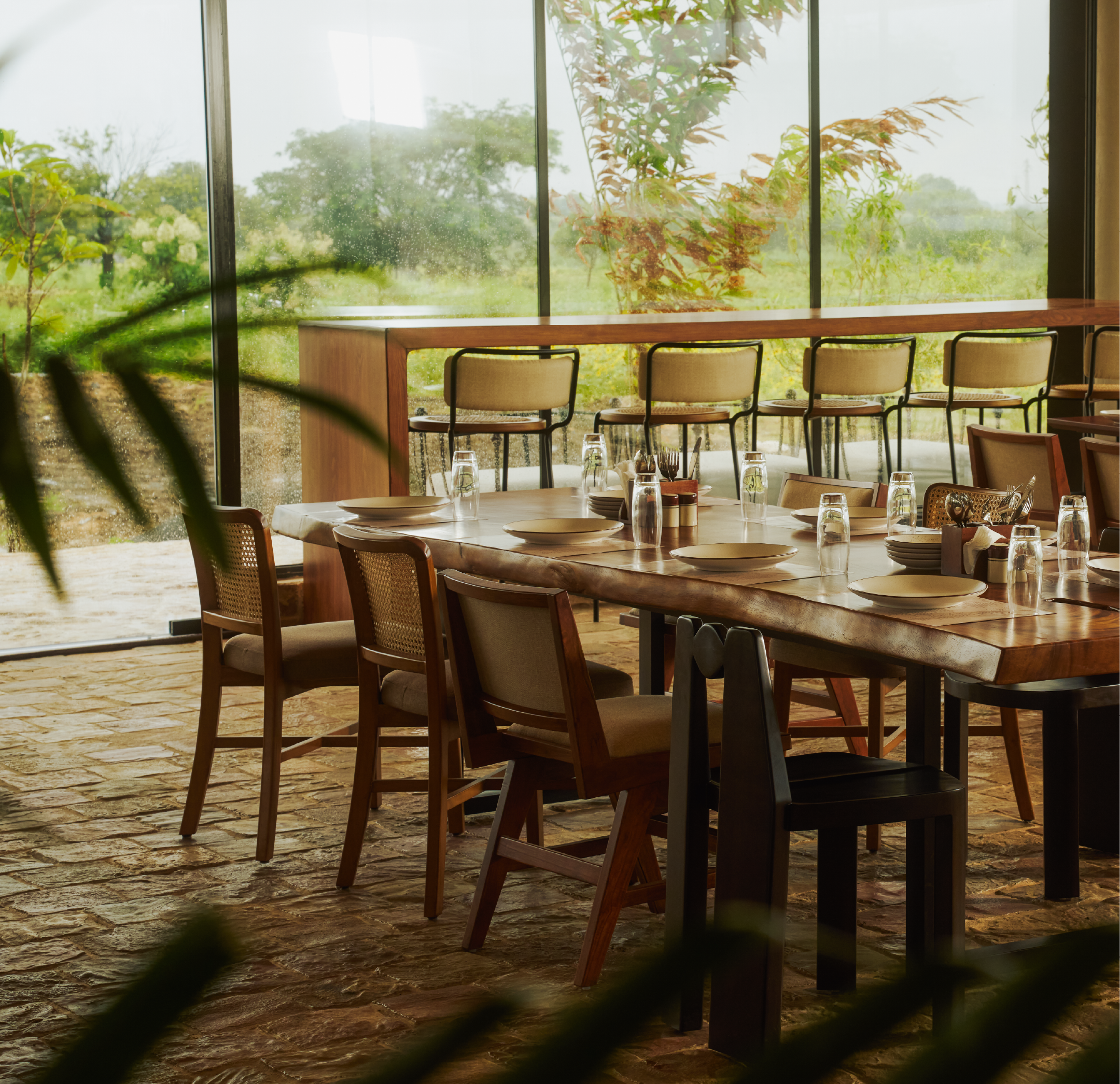
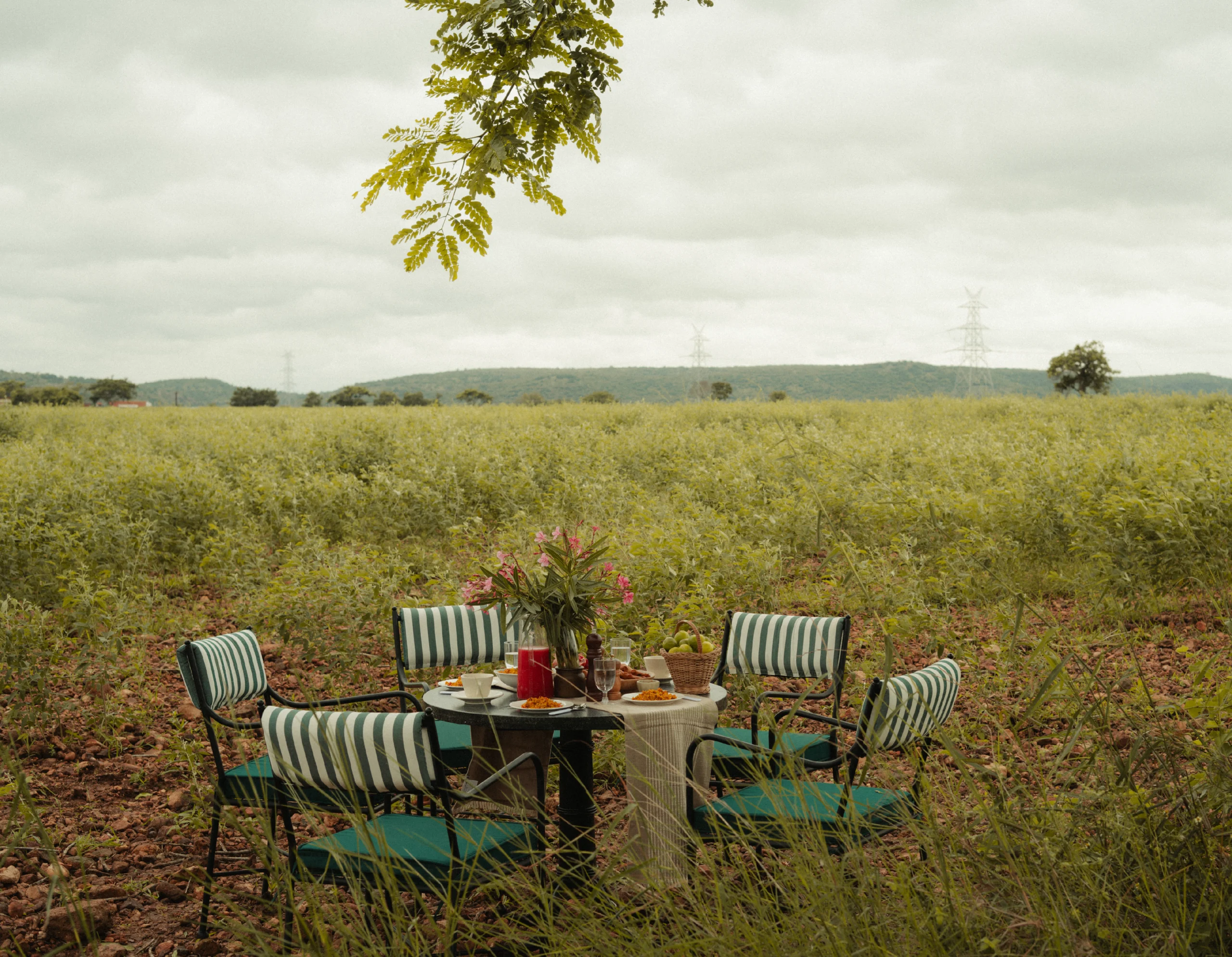
Set in the landscape Surrounded by farmland, Sila offers an immersive dining experience shaped by its agricultural setting

This is reflected in the way Sila is built, mostly using the pink kandarai stone. Pratyusha's training in design also meant she was dogged about the material vocabulary introduced in the space, the pink kandarai stone being a prime example. Usually avoided because of its hardness, she refused to trade this fine grained stone from Andhra Pradesh for any other. She spent eight months searching remote quarries for the right slabs, and three months cutting each piece by hand with local artisans employing techniques no one had tried before.
The result - stunning interior environment that was rooted in vernacular architecture, was minimal and calming. There are a few hero elements in the space but the kandarai stone’s textural feel does more than half the job. “The idea was that the moment you walk in, you feel like you are in an oasis,” says Pratyusha. The interiors are like an extension of the farm on the outside with several elements like plants, gentle soothing water bodies and weaver bird nest inspired structures anchoring the space.

Sila, the name also is a reflection of this. In Telugu, Sila means stone and since the building is made of natural stone 90-95%, the name made sense. For Apuroop and Pratyusha, Sila is more than just food and the farm, they actively try to host art, dance and music events to promote Rayalaseema’s local culture. You’re likely to spot a show of puppetry, or kolattam, the local Andhra Pradesh folk dance or veeranatyam, a form of Bharatnatyam being performed. They also organise day long farming trips and workshops where guests get to pick out veggies from the farm and cook up a storm. They soon want to start active forest walks to introduce people to the biodiversity of the region.

Their effort and initiative hasn’t just revived the biodiversity of their land or set up a brilliant highway pitstop, it has given a platform for Rayalaseema’s art and culture to be proudly put on display for anyone and everyone to experience. A day at Ervana farms will grace you with deer, peacocks, beautiful sunrises and picture perfect sunsets and a calming sense of peace and closeness to nature like never before.

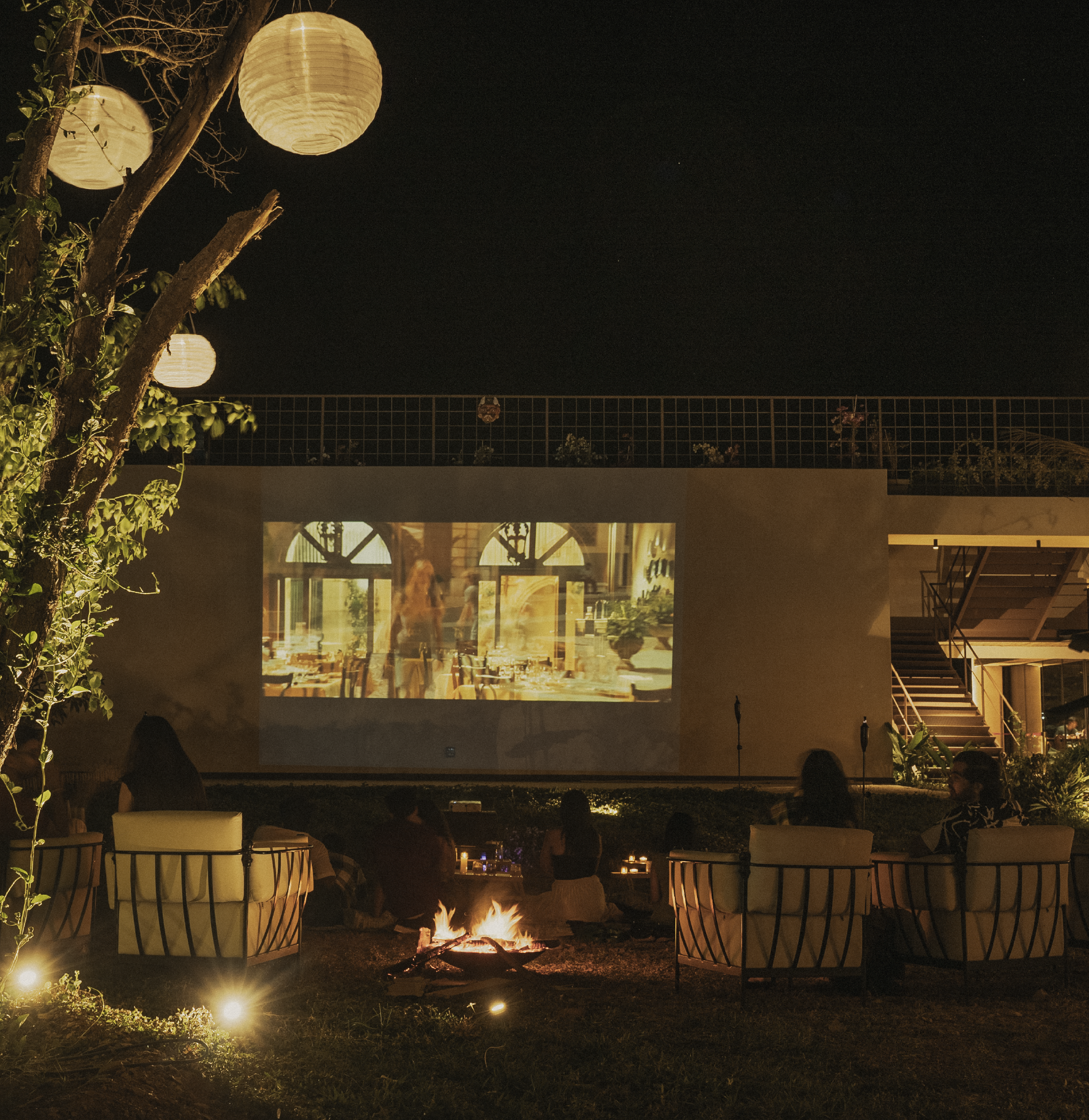
When the sun sets Beyond dining, Sila hosts cultural gatherings and community events that celebrate the traditions of Rayalaseema
Between field and farm Set within Ervana Wildfarms, the restaurant sits amid a landscape restored through regenerative farming practices
Join Our Newsletter

We're making your inbox interesting. Enter your email to get our best reads and exclusive insights from our editors delivered directly to you.


    More Articles

    Sign up for our Newsletter.

    X