The scene is familiar, almost invisible in its everydayness. A neighbourhood chaiwala performs his effortless, practised toss, the arc of tea between vessels, something you’ve likely seen a dozen times without stopping to blink. But somewhere nearby, an iPad is open, and Sajid is sketching today’s protagonist, Gopalettan, the chaiwala. His wrinkles, his stance, his presence, all are carefully observed and rendered in colours that mirror reality. And then, a grid in the background. Subtle, but grounding. The kettle, a cutting chai glass, banana fritters, and that nostalgic yellow Bobby packet. Sajid sees more than this in front of his eyes but chooses with intention. Words in English and Malayalam, and a striking typographic name become the final touches. Gopalettan is no longer just a passerby’s blur; he is a regular man now venerated as an existence that is worthy of beauty and notice.
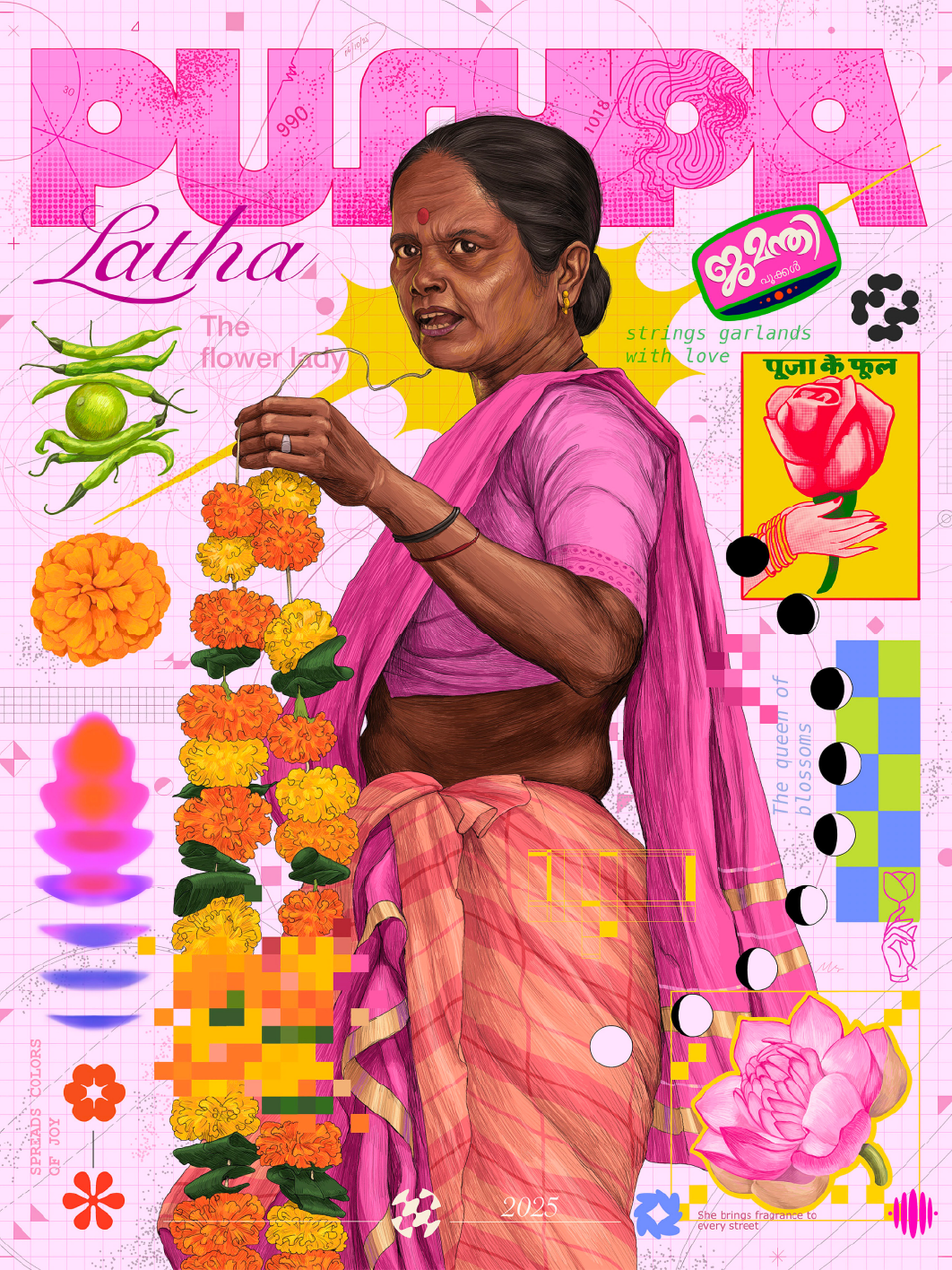
Pushpa Latha, the flower lady, set against a pink background, surrounded by the vivid colours of the flowers she sells
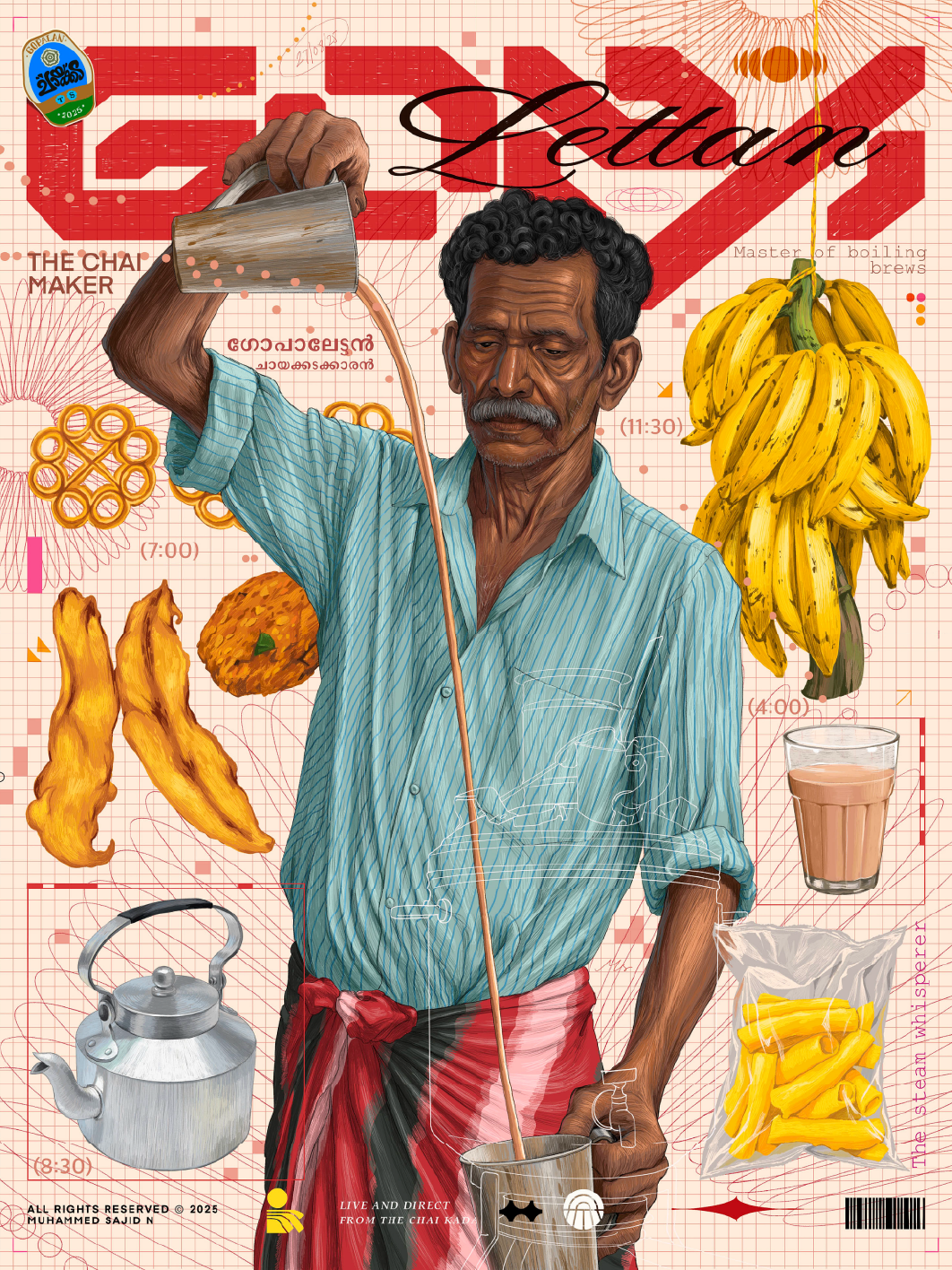
Gopalettan, the chai maker, stands against a graph-paper backdrop adorned with drawings of bananas, fritters, a cutting chai cup, and a steel tea kettle
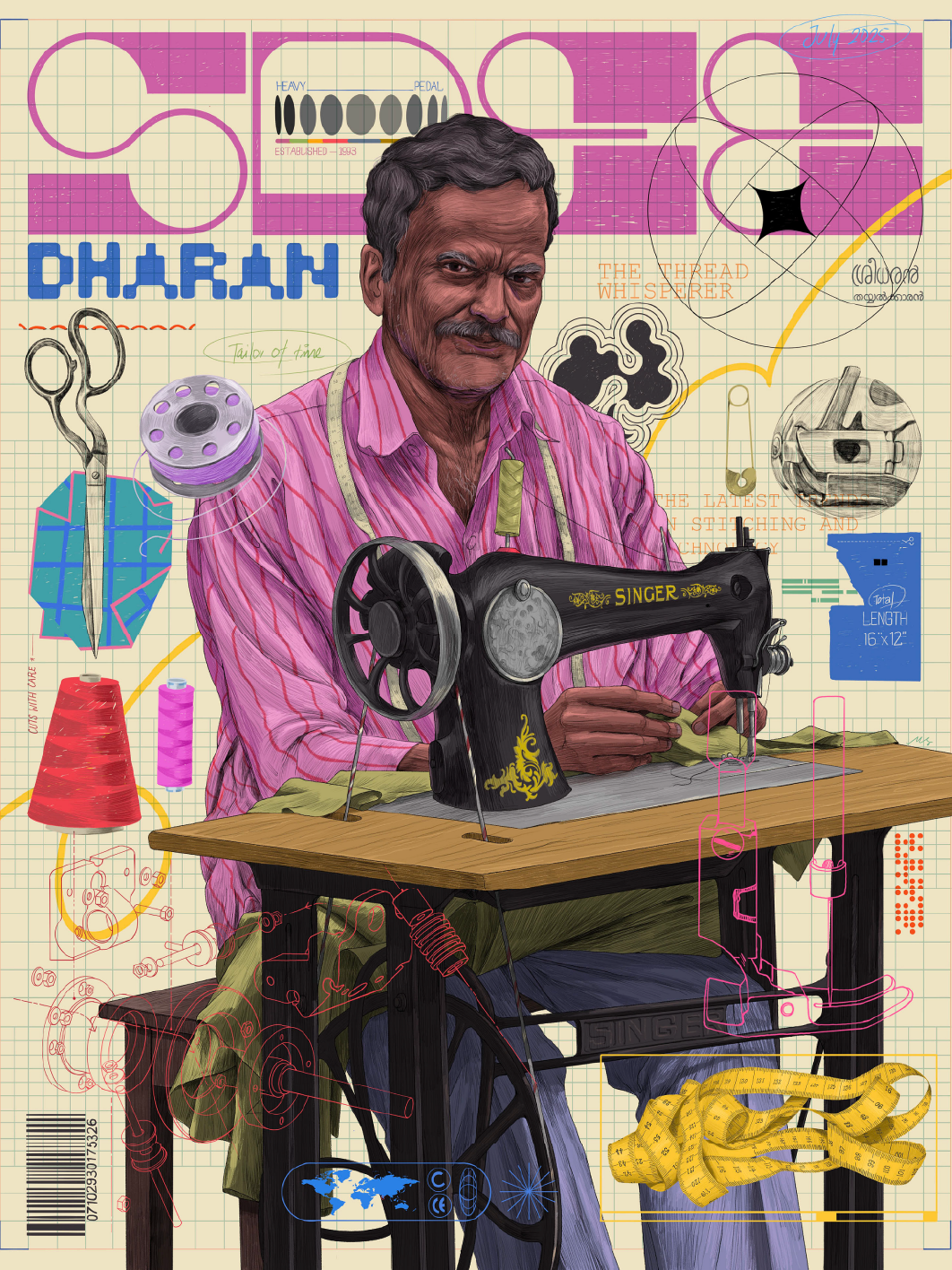
Sreedharan, the thread whisperer is the man behind the sewing machine, surrounded by all the tools of his trade
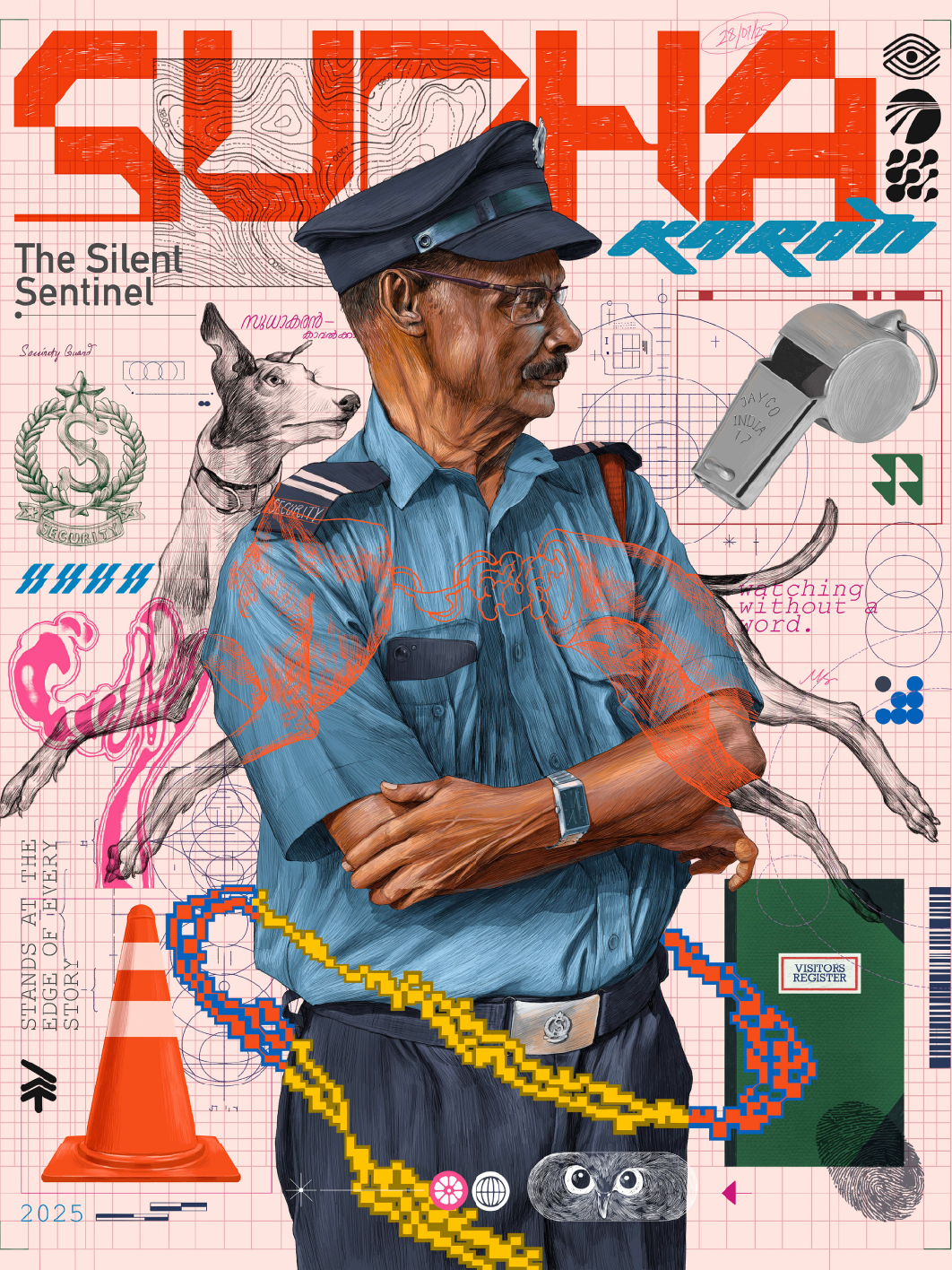
Sudhakaran, a watchman stands while elements that define his presence — a steel whistle, a dog, a traffic cone, a visitor's register, a pair of owl eyes, and the emblem on his shoulder, float across the canvas
Meanwhile, in real life, nothing pauses. A customer walks in, exchanges a few familiar lines, drinks his tea, and leaves. The world carries on, unaware.
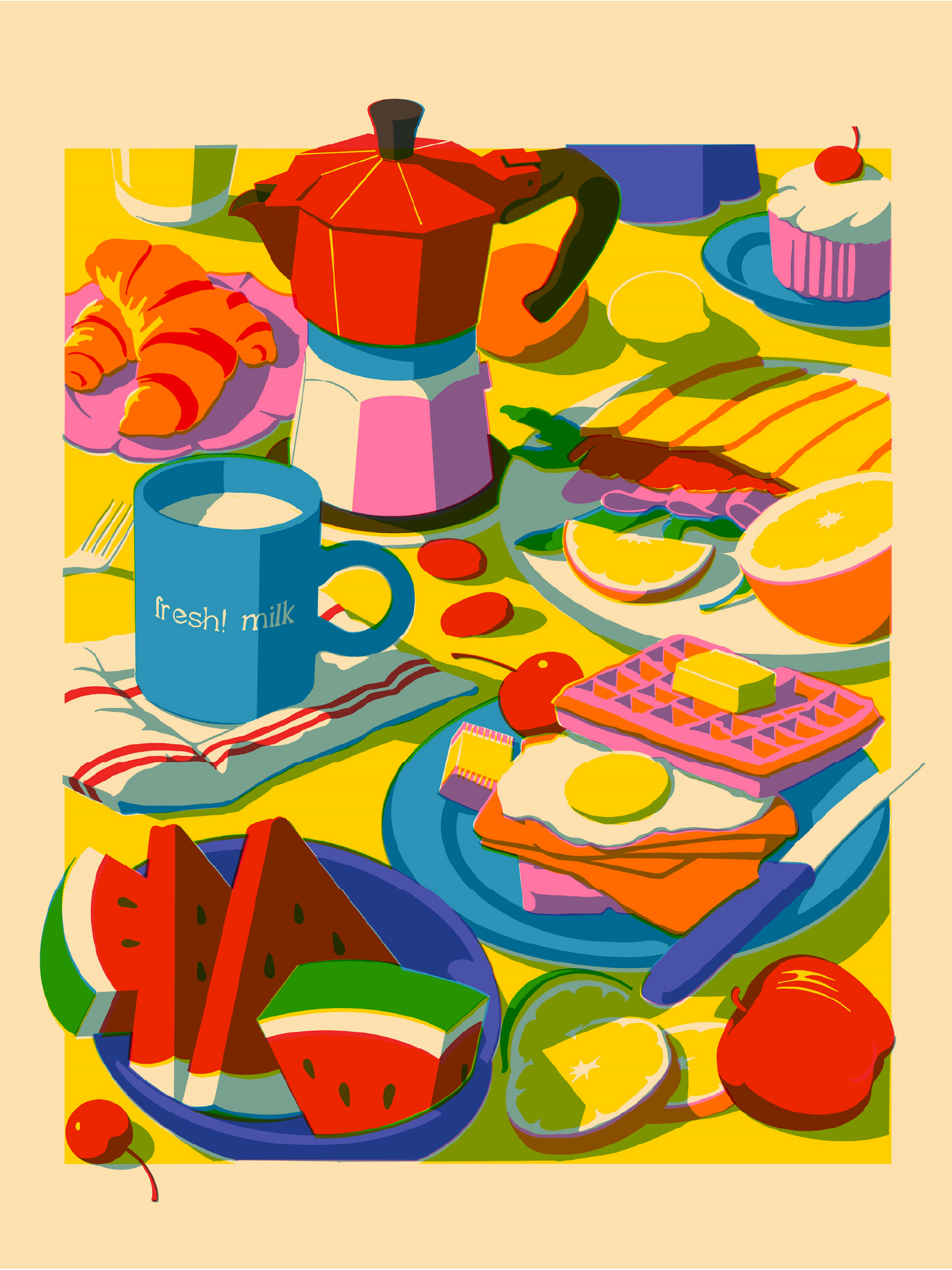
That’s what Sajid’s art does — not just with people, but with monuments, food, and even messy kitchen counters. Once something becomes his subject, it is no longer ordinary; it is elevated, noticed, and brought into focus. For Muhammed Sajid, a visual artist and illustrator based in Bengaluru and originally from Kozhikode, his work lingers on small moments and familiar scenes, treating them as vessels of memory and emotion. “I think the ordinary carries a quiet depth that often goes unnoticed and drawing those moments is a way of slowing down and giving them the attention they deserve,” he says.
A vibrant origin story
His journey into visual art began early, shaped by an instinct to observe and translate everyday life into sketches. Growing up in Kerala, the colours, people, and unspoken stories around him became his first references. As a child, drawing people came naturally to him. He gravitated towards realism — forms, shadows, and detail — before gradually evolving a visual language that blends observation with imagination. “Over time, I developed a visual language that turns familiar scenes into dreamlike compositions that still feel grounded,” he says.
His visual language is recognisable even from afar: bright colours spark a kind of dopamine rush, expressions are sharply observed, and rules are bent to suit the mood. The result is unapologetically maximalist; for Sajid, maximalism is not excess, but storytelling, where every element, texture, and pattern carries fragments of memory, culture, and emotion. It becomes his way of transforming the ordinary into something emotional and slightly surreal, shaped by observation as much as imagination. His style mirrors his own temperament: young, exuberant, calm, experimental, and disarmingly candid. Sajid doesn’t begin by drawing everything he sees. Instead, he keeps the start intuitive, allowing the work to reveal its own direction. “I figure out the most attention-deserving element and use light, contrast, and placement to push that element forward. If something feels too busy, I simplify until one thing naturally stands out,” he says of his process.
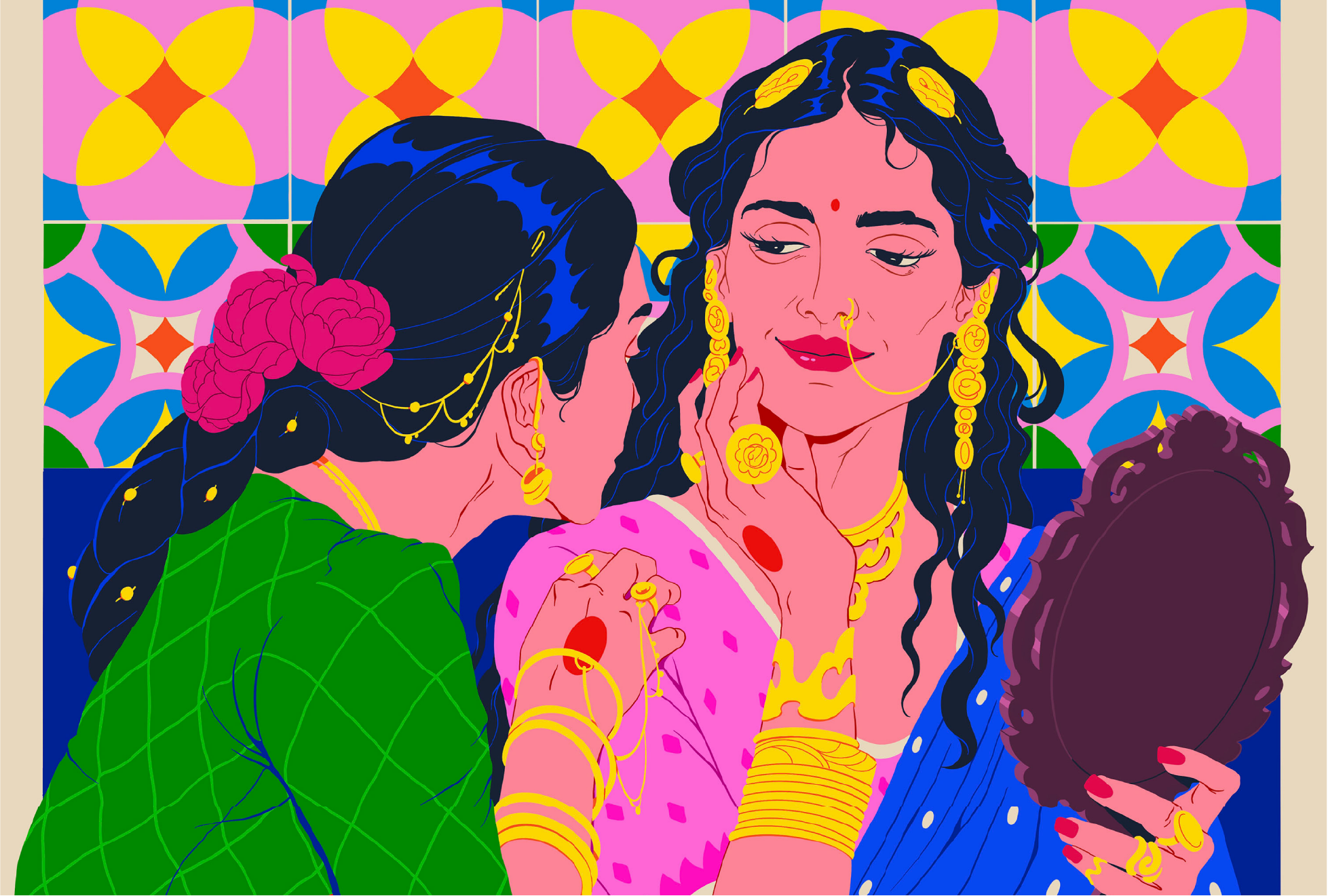
A familiar scene rendered in a vivid palette Set against a background of colourful tiles often found in South Indian homes are two women adorned in gold, seemingly whispering about something
Sajid’s art feels almost enriching, certainly for him, but just as much for the viewer. It makes you realise how much slips past when you rush through things. In that sense, it becomes a quiet commentary on how to live: slowly, meaningfully, with attention. It nudges you towards noticing, and in doing so, cultivates a kind of patience and appreciation. “I hope my work inspires people to pause, observe, and find beauty in everyday moments,” he says — a simple intent, but of monastic value, if I may.