Walking up the stairs into the corridor of this old world chawl in the Ravji Sojpal Compound in Mumbai’s Sewri neighbourhood, felt like stepping into an artist residency. A sense of community and kinship swaddles this place like a warm hug. “I love being a part of this creative community that we have nurtured here,” says Ceramist Tosha Jagad. A sunlit passageway opens to artist’s studios on both sides. Right at the beginning of this corridor is a half open door that allows me to peek into the colourful world of comic book artist, Anand Radhakrishnan while little on the other side, bright, little monsters peek out from visual artist, Poorva Shingre’s studio. The studio next to Tosha’s, belongs to photographer Hashim Badani, which holds a mirror to the brilliance of Art Deco. “It’s great when everyone’s here, it’s like a picnic for adults,” laughs Tosha as she opens the door to her bright and airy studio. Comprising three rooms, double height ceiling and skylight to boot, it is indeed an artist’s haven.
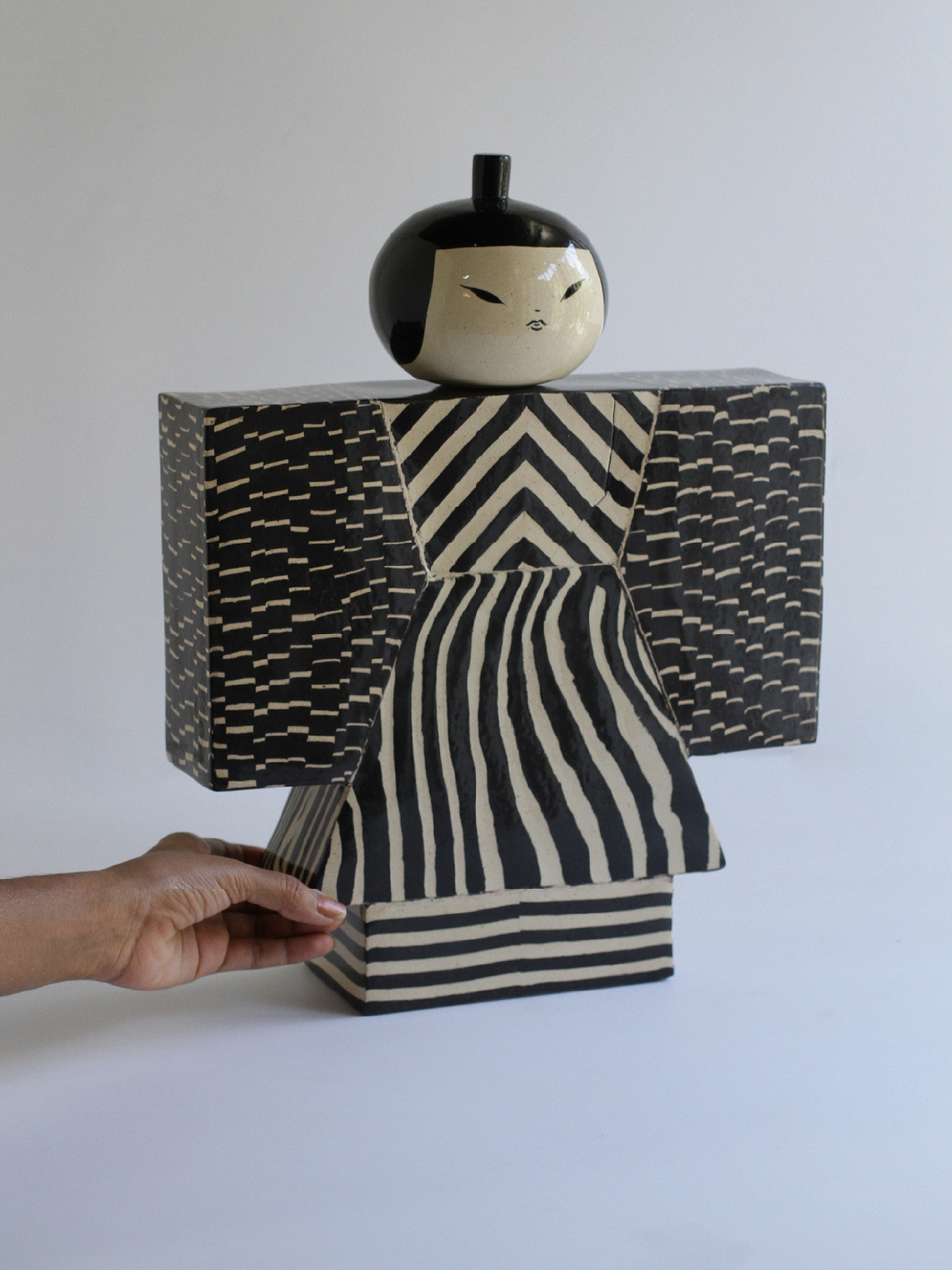
A 16" tall piece made using Nerikomi slabs
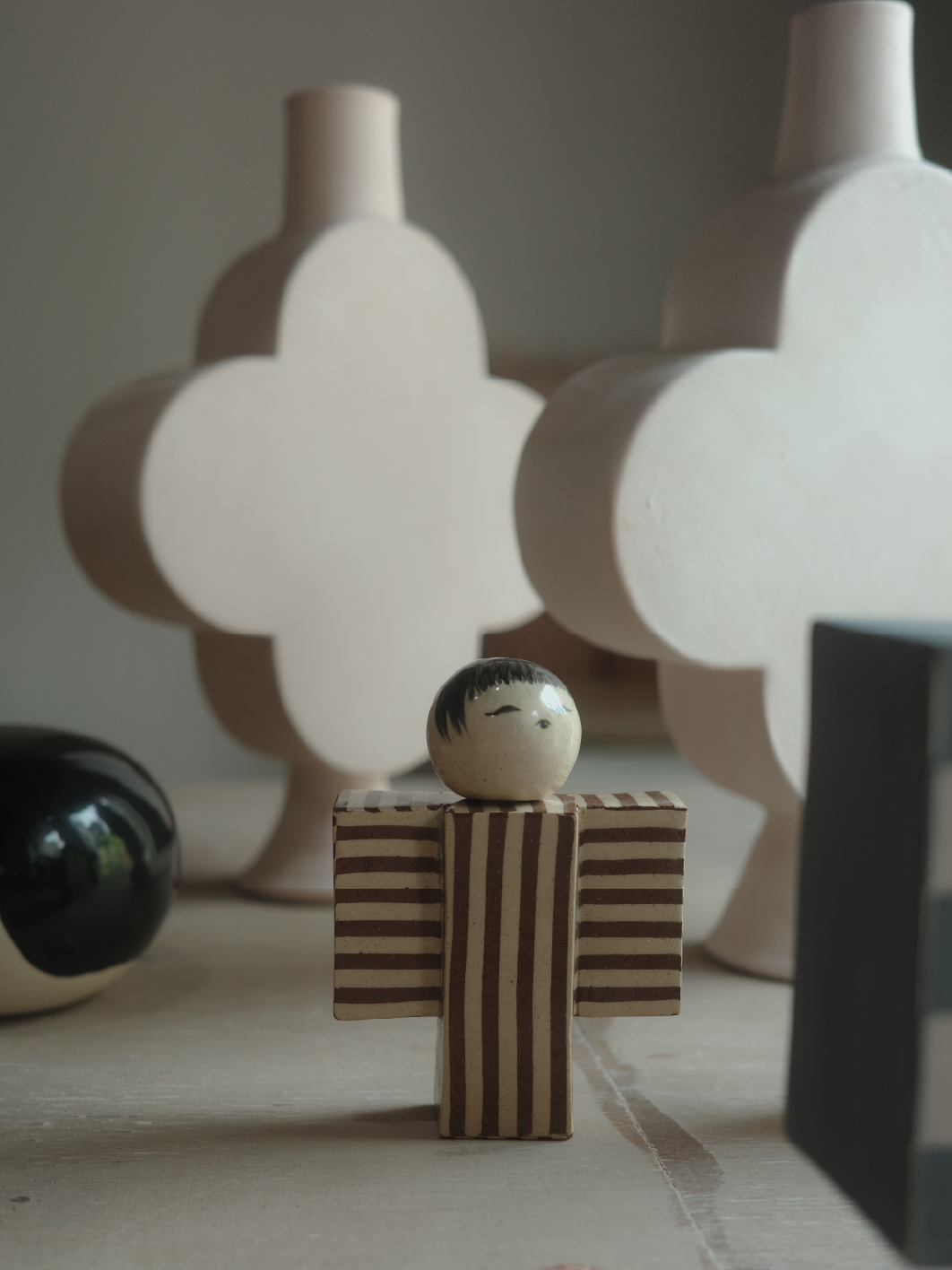
In the foreground is a piece with detachable head adding a sense of playfulness while in the background vases are ready for firing in the kiln
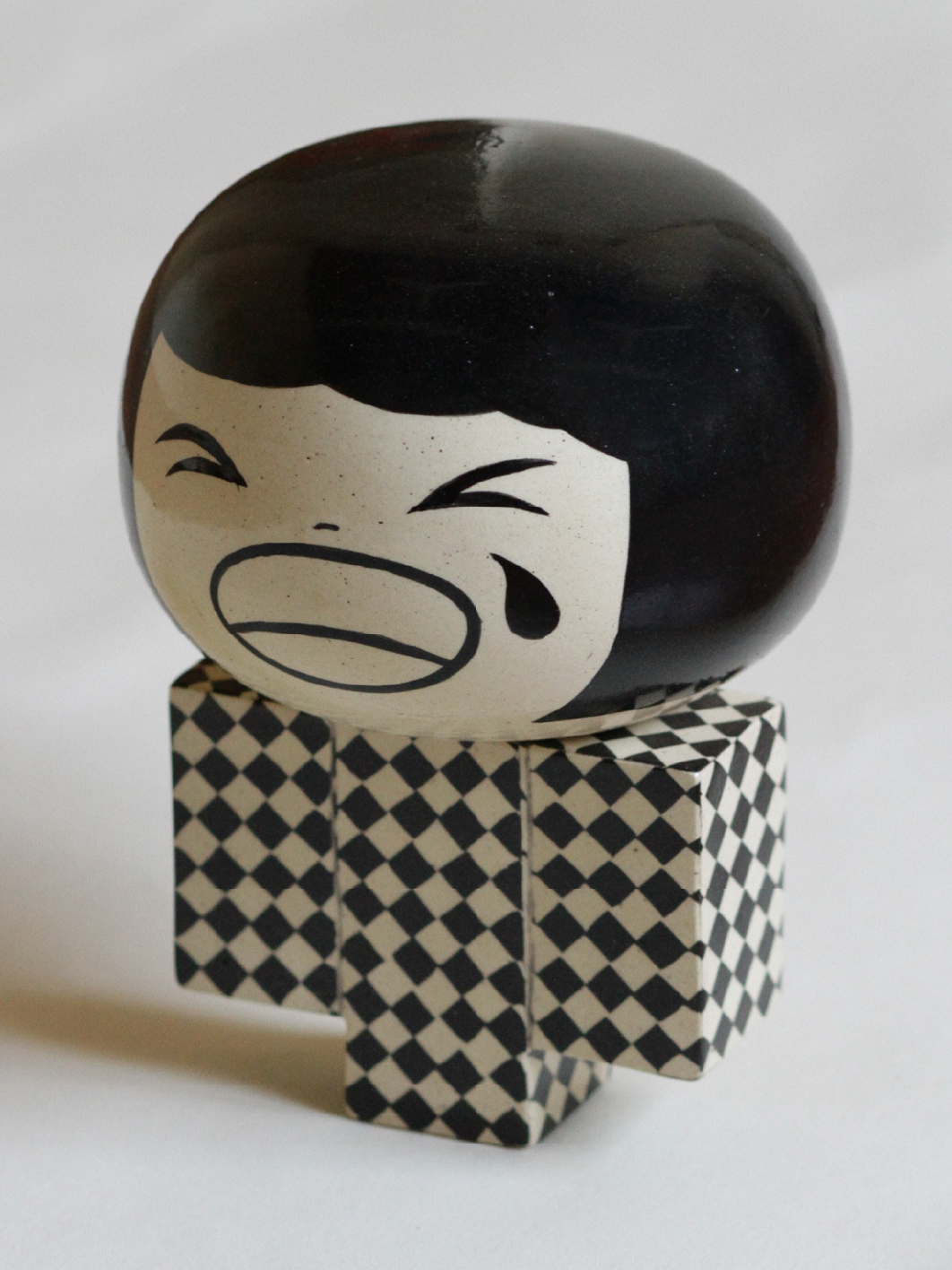
One of Tosha's favourite pieces, it showcases an ugly cry emotion – almost funny in its rendering
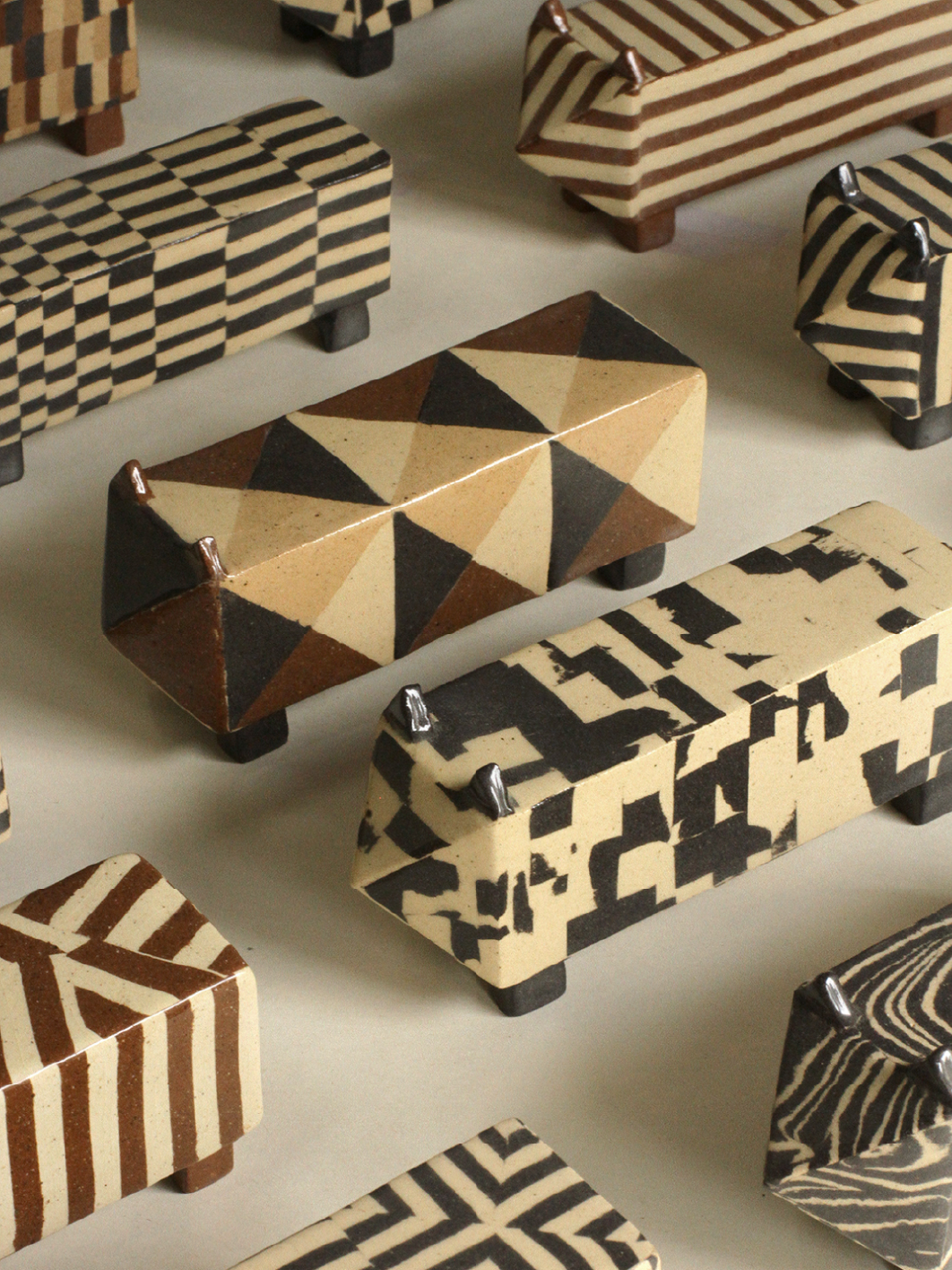
Block cat figures using Japanese Nerikomi techniques
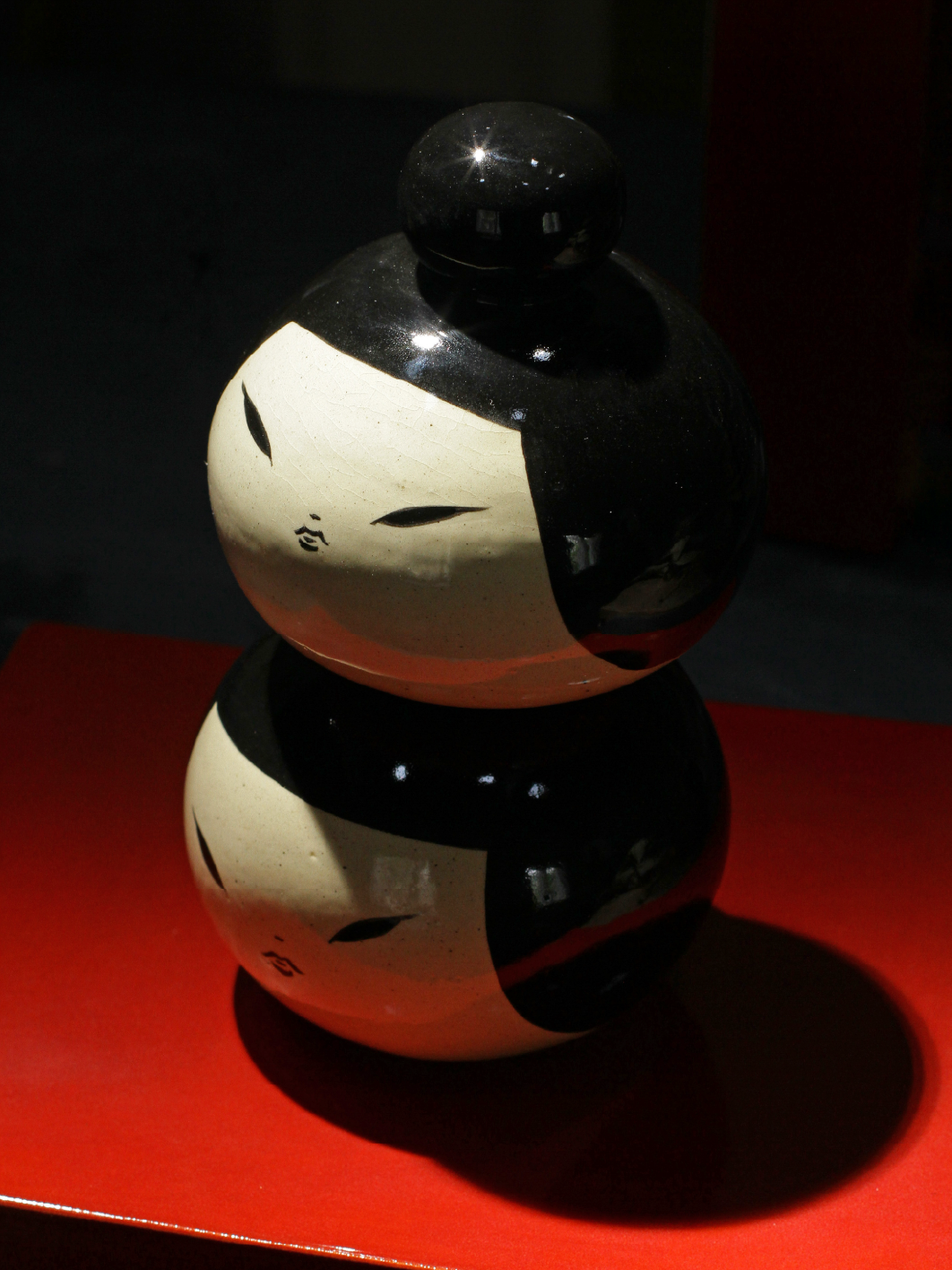
Detached pieces, each head is handcrafted and bisque fired
“I don't have a rigid schedule – it’s mostly dependent on what I am making that day, what needs to dry and what needs to get fired. Then there are days when I don't touch clay at all. I'm just sketching, letting my thoughts take over while visualising the final built form,” explains Tosha as she settles on to the red and white checkered couch, which reminds me of Nerikomi that I have started to associate with her work. This Japanese hand-building technique involves different coloured clays arranged into patterned blocks. “You often romanticise the idea of sitting on the wheel and making things, but it can be very frustrating,” laughs Tosha, “I really enjoy it though I don't use it as much.” Most of the techniques she adopts is dictated by the work she wants to create, like the Block Cat is made from the slab technique while some pieces like the set of heads, is a mix, where the top is thrown on the wheel and the bottom is built by hand. “I was drawn towards clay because of its tactility and how it allowed me to work in three dimension,” says Tosha.
She is focused on giving her work the time it needs, especially given that clay isn’t the easiest material to work with in this clammy Mumbai weather. She explains, “Once a piece is made, I put it in a box so that the moisture stays inside the box allowing it to dry slowly. If it’s kept out in the sun immediately after it is shaped, all the joints will crack.” The pieces need constant misting. “The head piece I was working on took me four days and at the end of each day I had to make sure it was wet enough for me to work on it again and again, till it was finally finished. You can't rush the drying process,” sighs Tosha.
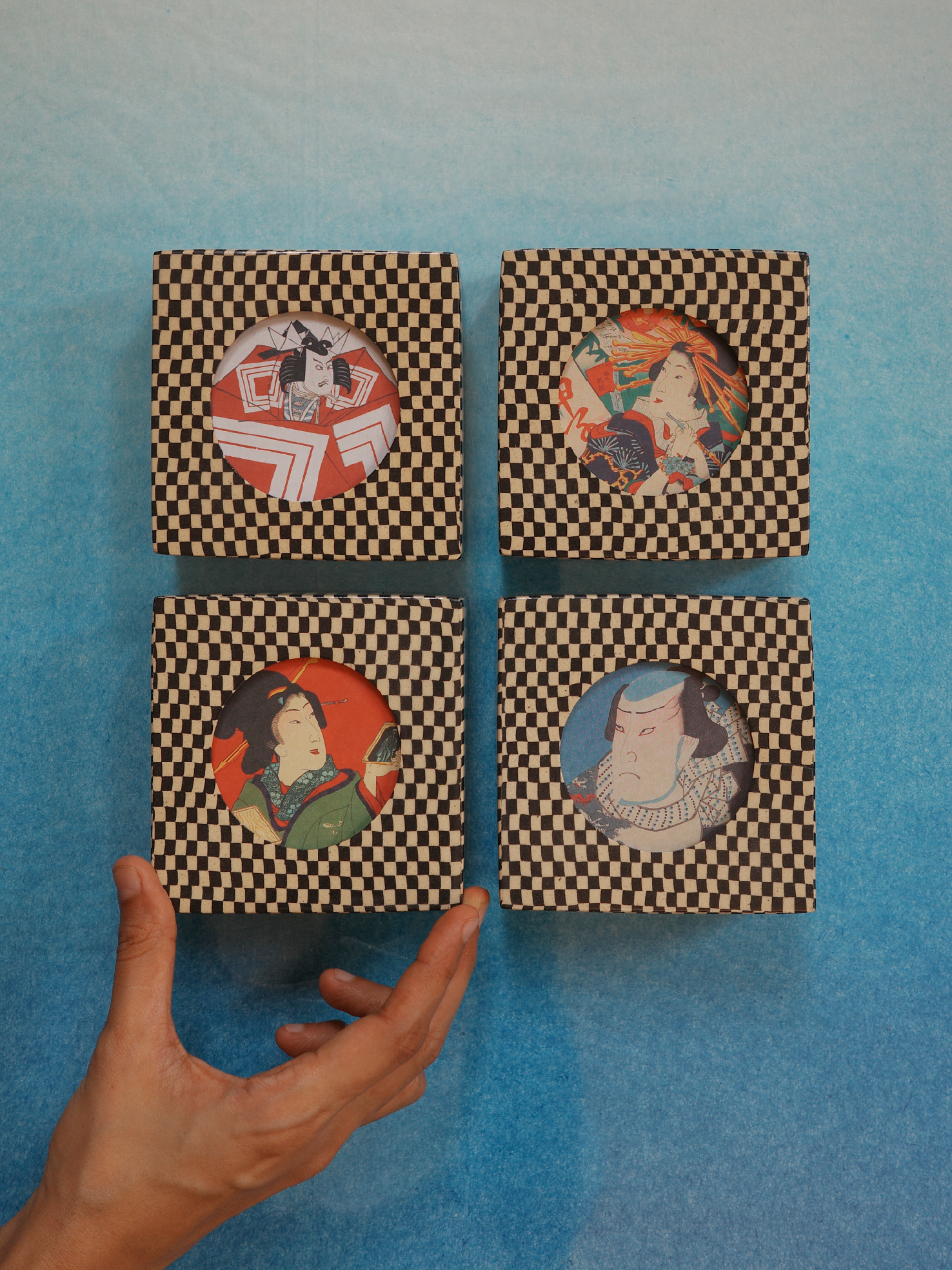
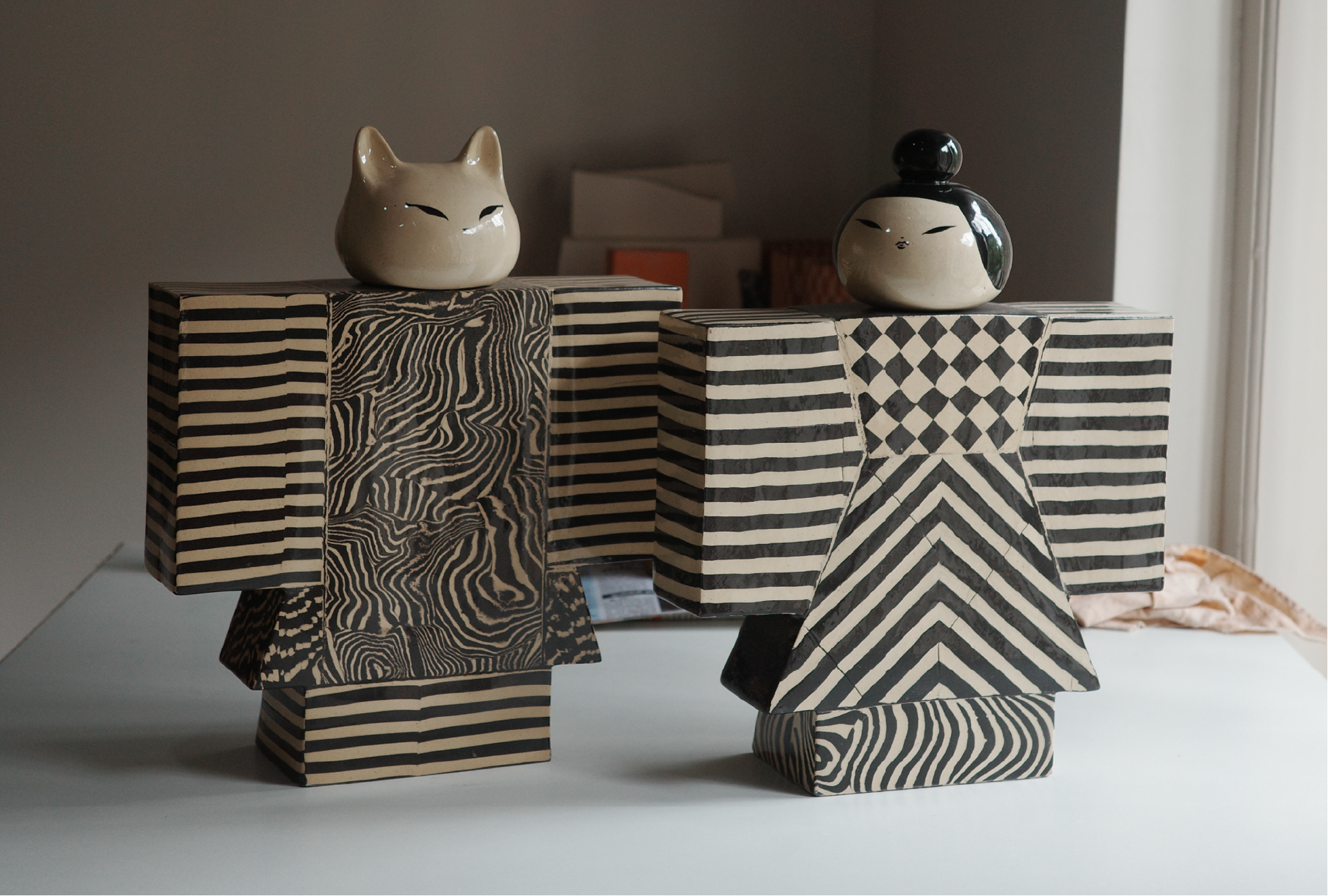
Best of Foes It brings together Tosha’s love for the feline form, the nerikomi technique and inspirations from her trip to Japan
It can be a fairly isolating process so she is grateful not just for the creative community that is around her but also the folks in Dharavi, where she buys her clay from. Introspecting, she says, “There’s a lot to learn from them,” They are generous with their knowledge so, “they help me figure out the firing temperatures, how different glazes may react and what kinds of clay work for which types of pieces.”
She is currently throwing a head on the wheel, perfecting it with every turn. There are a bunch of different sized heads kept in an airtight box for drying. The Weeping Girl sculpture is a work in progress. This one is a favourite, it’s an ugly cry emotion – almost funny in its rendering, “Everyone needs to cry out loud once in a while, it’s cathartic, I absolutely recommend it,” she says almost seriously. Her work is anything but serious. It’s whimsical, it’s joyful, and it calls you out to play. “I want people to laugh, have fun and connect with it. It doesn’t always have to be deep,” she signs off.