Set against the waterfront at the Ballard Pier Experience Centre, Collector's Cove 2026 was full of reasons to lose track of time. One minute you were admiring a hand-painted wallcovering, the next you were tracing the details of a centuries-old craft reimagined through a contemporary lens. It was the kind of fair that rewarded curiosity, and these are the pieces we found ourselves returning to for a second, maybe even third, glimpse.
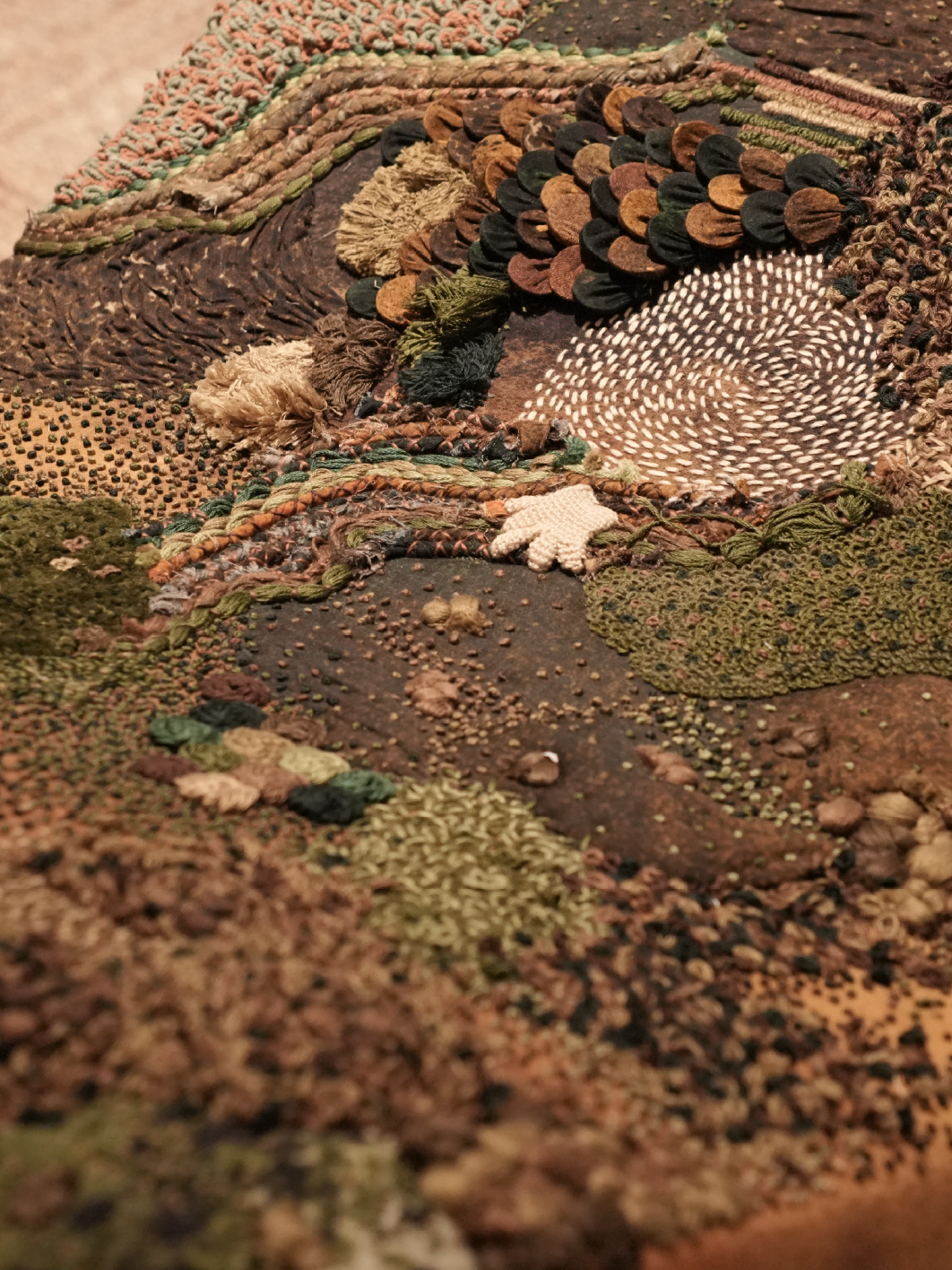
Kun Faya Kun Bench by Tabula Rasa
You could simply admire the Kun Faya Kun Bench from across the room, but when you step closer, that’s when the magic happens. Designed by Nithika Agarwal and Annanya Agarwal, every inch of the piece has been handcrafted, bringing together an intricate mix of embroidery and textile techniques. Look closely and you'll spot fingerprints, palms, and symbolic gestures woven into the surface. This is a quiet love letter to the hands that make, mend, and pass their craft from one generation to the next.
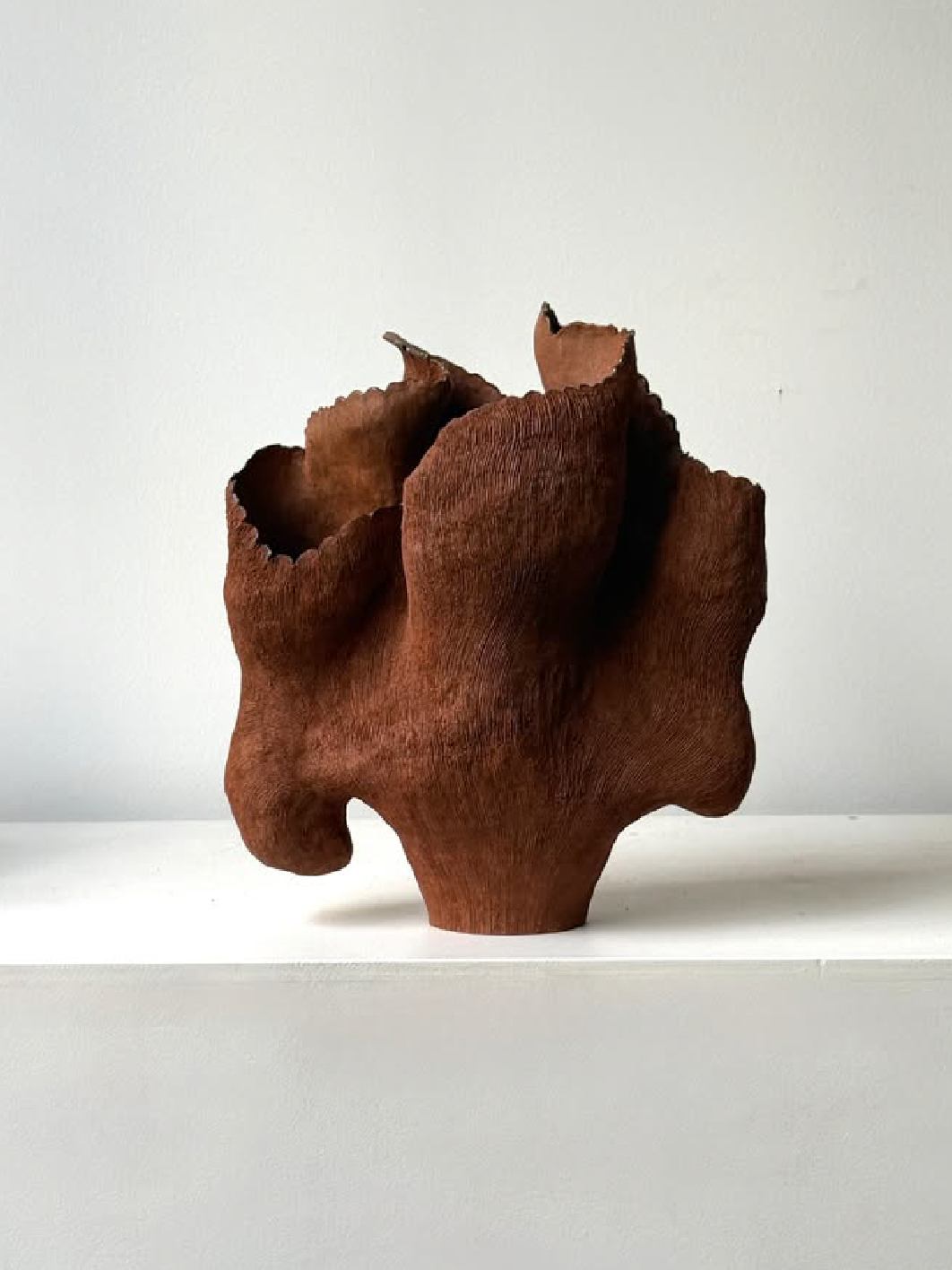
Frutti di Mare by Tania Whalen
Tania Whalen's Frutti di Mare vessels look as though they've drifted in from the ocean floor. Inspired by plant-like marine life, the hand-built ceramic pieces trade polished perfection for richly textured, almost primordial surfaces that seem to ripple with movement. Working with her signature pinch-and-coil technique, Whalen lets the clay retain its raw, tactile quality, so every ridge and curve feels instinctive rather than imposed. The result is a series that sits somewhere between vessel and sculpture. It’s organic, subtly dramatic, and impossible to walk past without taking a second look. Spotted at the curation by Sikao gallery.
The First Hearth by Pooja Ranvir Panwar
With The First Hearth, artist Pooja Ranvir Panwar looks back to one of humanity's defining moments: the discovery of fire. Rather than focusing on the flame itself, the work captures the emotions surrounding that first encounter— the awe, uncertainty, and quiet sense of wonder. The piece reflects on how fire evolved from a force of nature into the centre of human connection. Through this evocative work, Panwar invites viewers to consider the origins of community, belonging, and the timeless act of gathering together. Spotted at the curation by Sikao gallery.
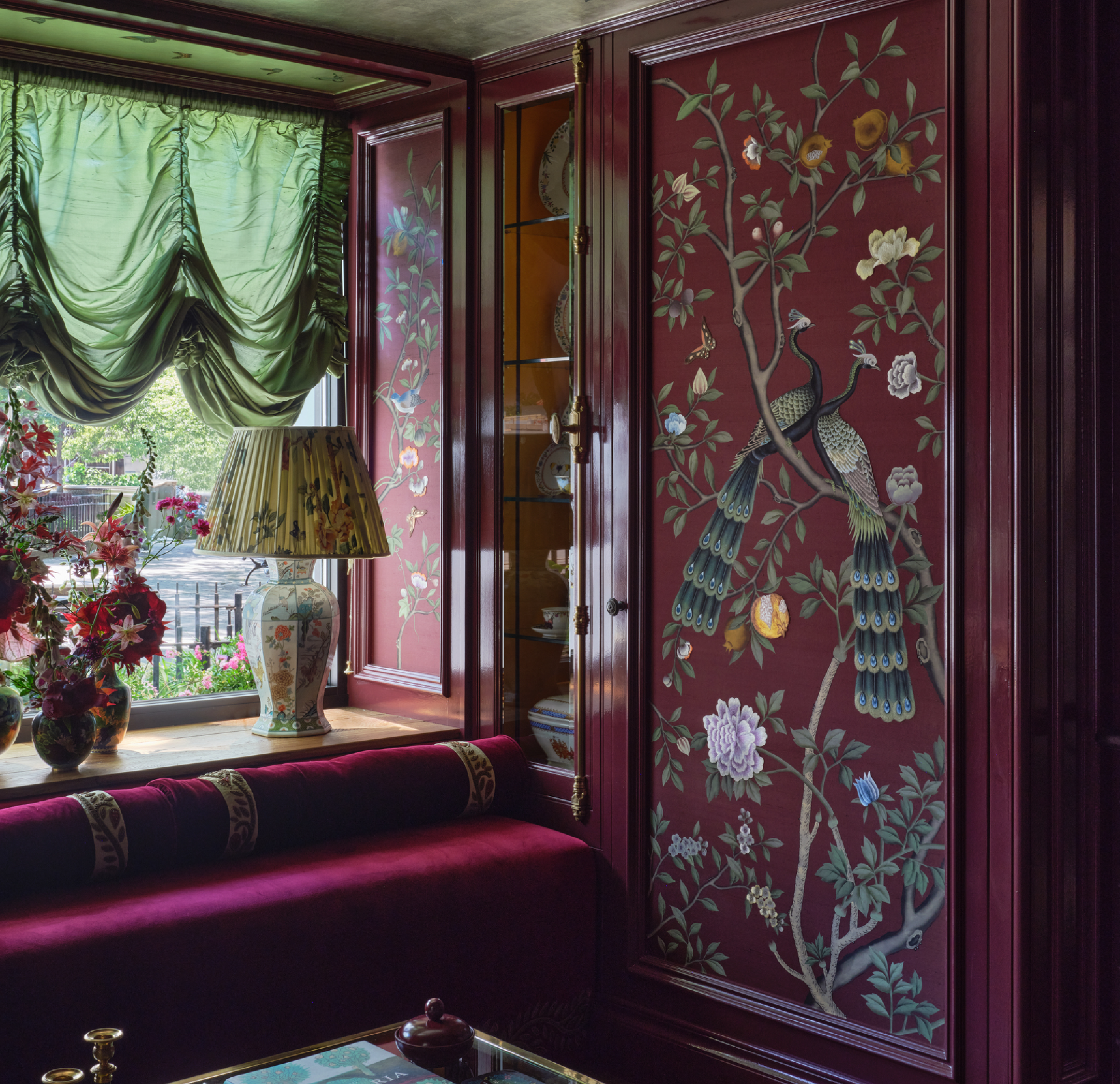
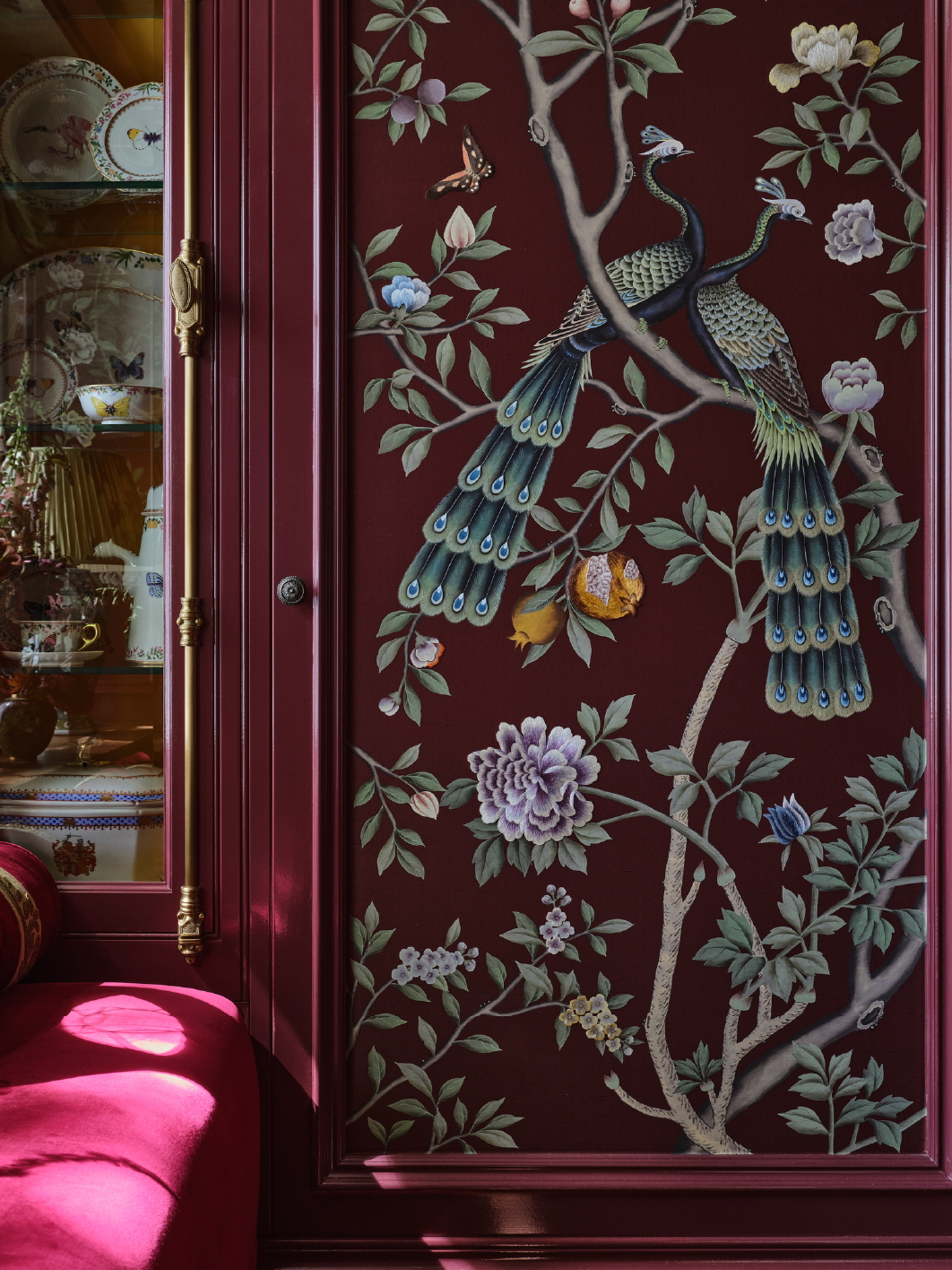
St Laurent Wallpaper by De Gournay
Inspired by a rare set of 17th-century Chinese wallpaper panels once owned by designer Yves Saint Laurent, de Gournay’s St. Laurent reimagines the grandeur of traditional Chinoiserie through meticulous hand-painting. The design unfolds as an expansive oriental garden, where richly plumed peacocks and doves nestle among flowering branches of Peony, Finger Citron, Prunus, Camellia and Chrysanthemum, their intricate forms spilling into mossy green landscapes below. Originally installed in Saint Laurent and Pierre Bergé’s Paris apartment, the historic panels had passed through the hands of American philanthropists Jayne and Charles Wrightsman and famed decorator Syrie Maugham, giving the design a provenance almost as elaborate as the garden itself. De Gournay preserves the faded beauty of the original panels through its carefully painted colour palette.
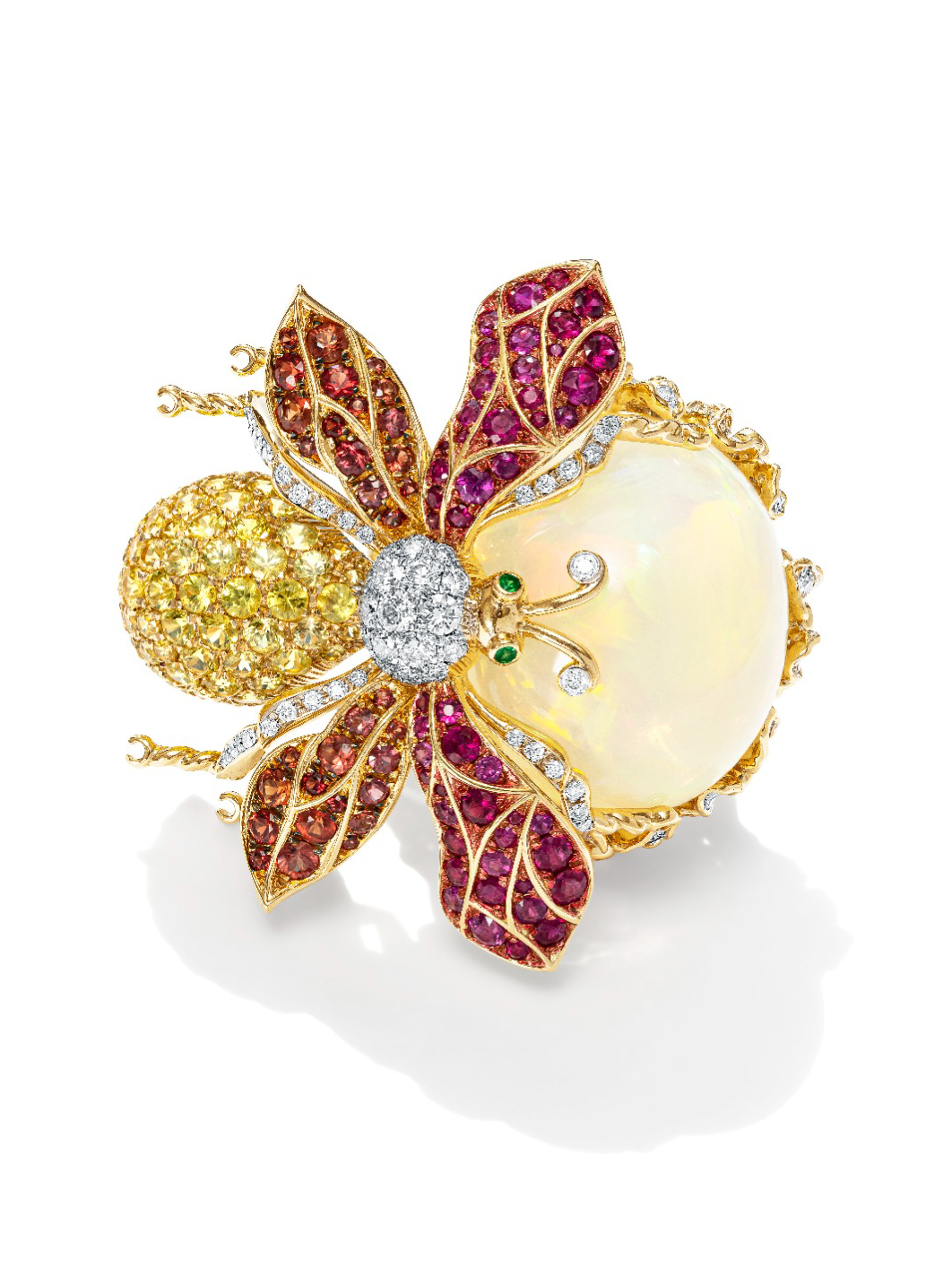
The Enchanted Bee Ring by Farah Khan Ali
Inspired by one of nature's most enchanting creatures, The Enchanted Bee Ring transforms the humble bee into a finely detailed jewel. Sculpted in 18kt gold, the ring features a luminous opal, pink and yellow sapphires, and natural diamonds, with each gemstone thoughtfully placed to accentuate the insect’s delicate form. The result is a playful yet exquisitely crafted piece that celebrates both whimsy and meticulous artistry.
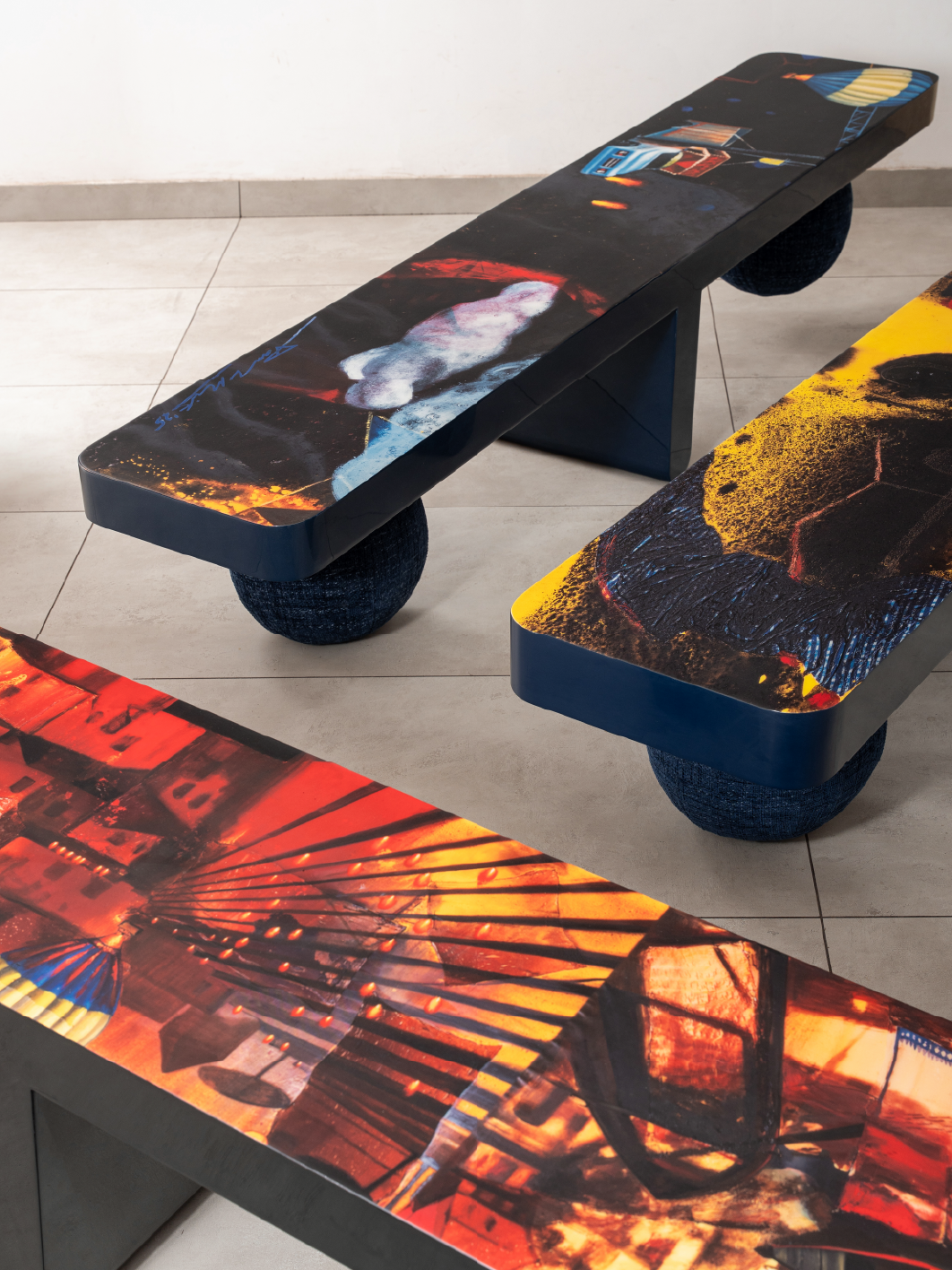
Gravity by Hands & Minds
Created in collaboration with Padma Shri awardee Paresh Maity, the Artist Edition of Gravity transforms the studio's signature see-saw-inspired bench into a collectible work of art. Rooted in the idea of balance and shared experience, the sculptural design reimagines a familiar childhood form as a place for conversation, where speaking and listening exist in equal measure. Rather than treating the bench as a surface to embellish, Maity's artwork becomes part of its very identity, with every brushstroke adding another layer to the story the piece tells.
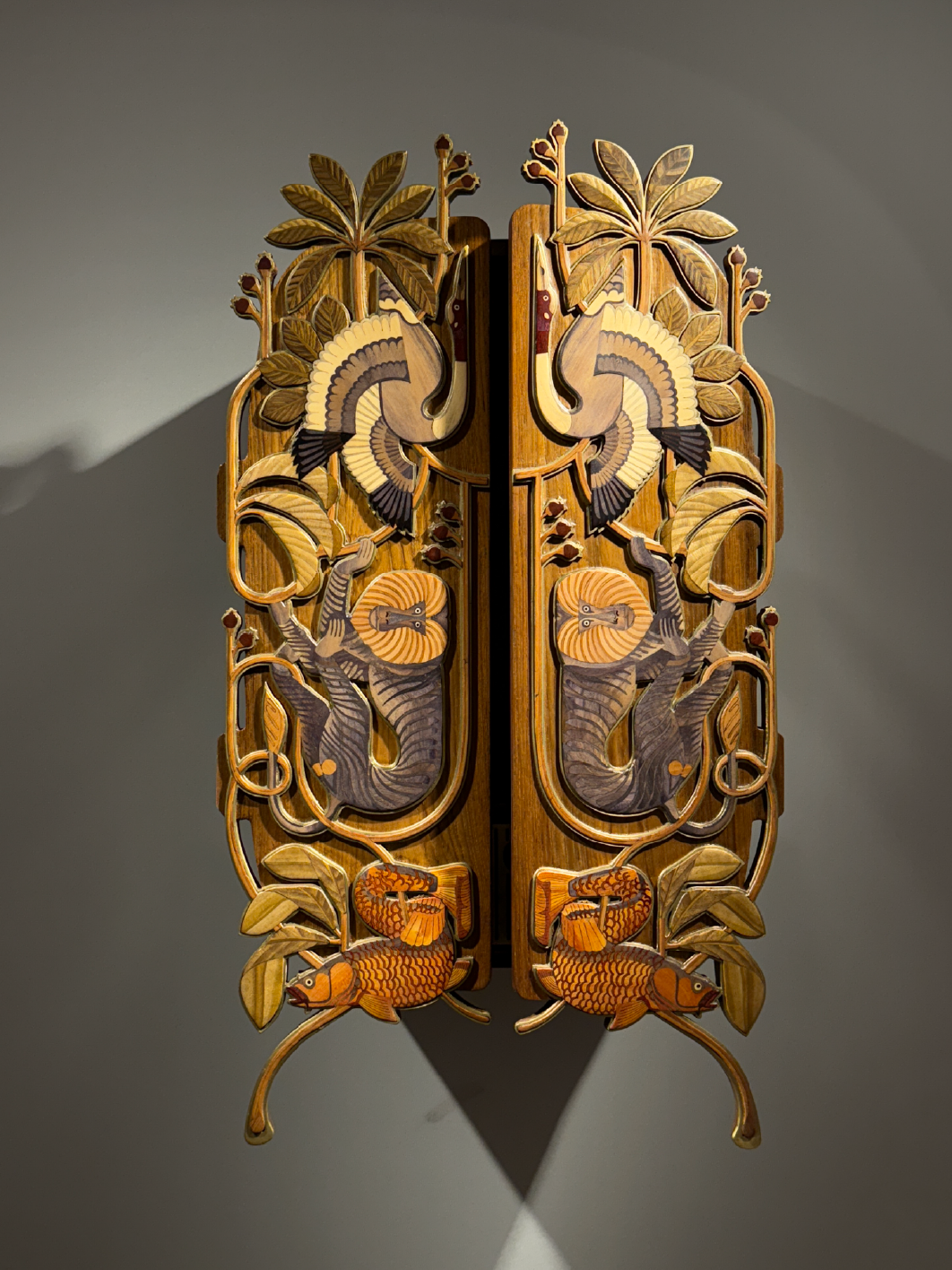
The Mehfil by Chacko
For Mehfil, Chacko brings together the practices of fine artist Gaia Cairo and marquetry studio Sampigé & Co. to create a limited-edition wall-mounted grotto that sits at the intersection of art and craft. Cairo's signature geometric compositions depict three endangered species from the Indian subcontinent, translated into marquetry using teakwood, brass, and indigenous hardwoods. Framed by a softly illuminated jaali-inspired border, the piece rewards a closer look, revealing the precision of every hand-assembled detail while quietly reflecting on the fragility of the wildlife it honours.
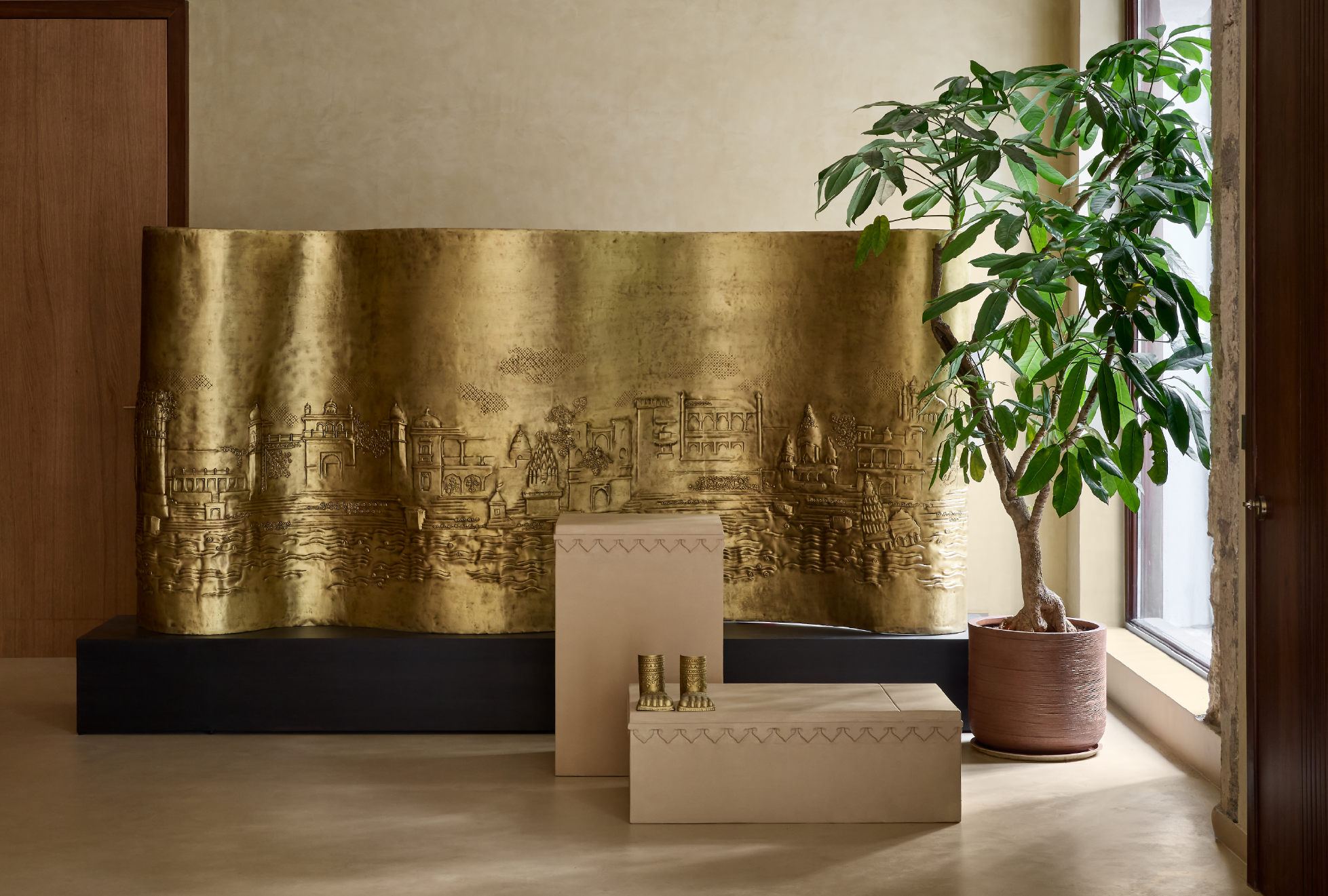
Kashi Undulated Pure Brass Metal Repoussée Art by Tilfi
Known for preserving and reinterpreting the rich legacy of Banarasi craftsmanship, Tilfi extends its storytelling beyond textiles with this striking repoussé artwork. Etched onto an undulating metal surface, the city's iconic ghats emerge with remarkable precision, while hallmark Banarasi motifs, including a peacock inspired by shikargah designs and the timeless koniya motif, are seamlessly woven into the landscape. The piece is a thoughtful tribute to a city where craft, culture, and history have always been deeply intertwined. Spotted at the curation by Sikao gallery.
The Mahakumbh Mirror by Atelier Ashiesh Shah
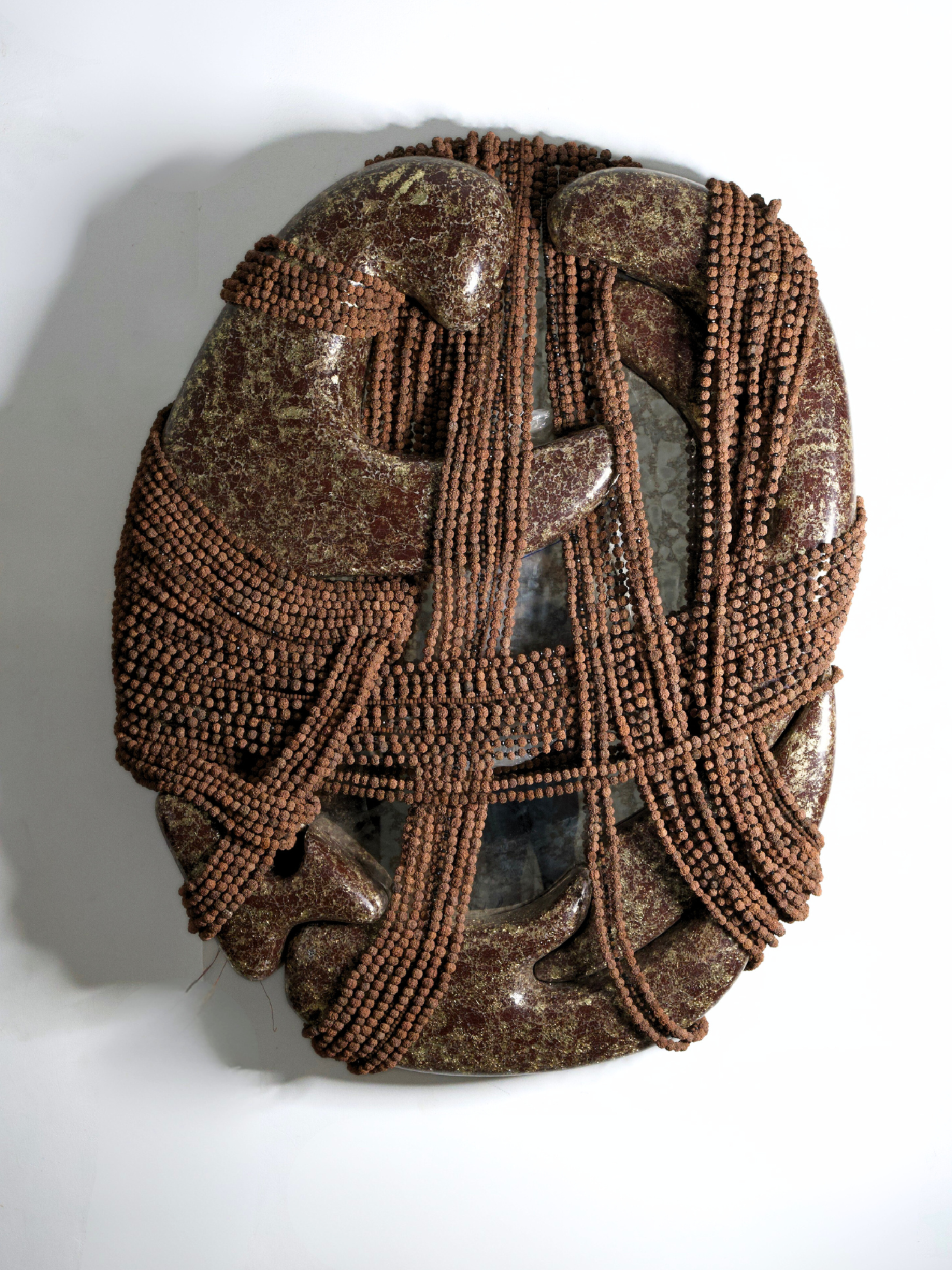
The Mahakumbh Mirror makes a case for the beauty of bringing things together. Antique mirror shards create its textured surface, catching the light in their own imperfect ways, while bronze elements and strands of rudraksha add warmth and weight. Up close, the mirror feels wonderfully fragmented; from a distance, it settles into one striking form. Made from hand-cast resin, mirror mosaic, antique mirror and rudraksha beads, it’s the kind of piece that reveals something new each time the light hits it.
The Oxymoron Table by Henge
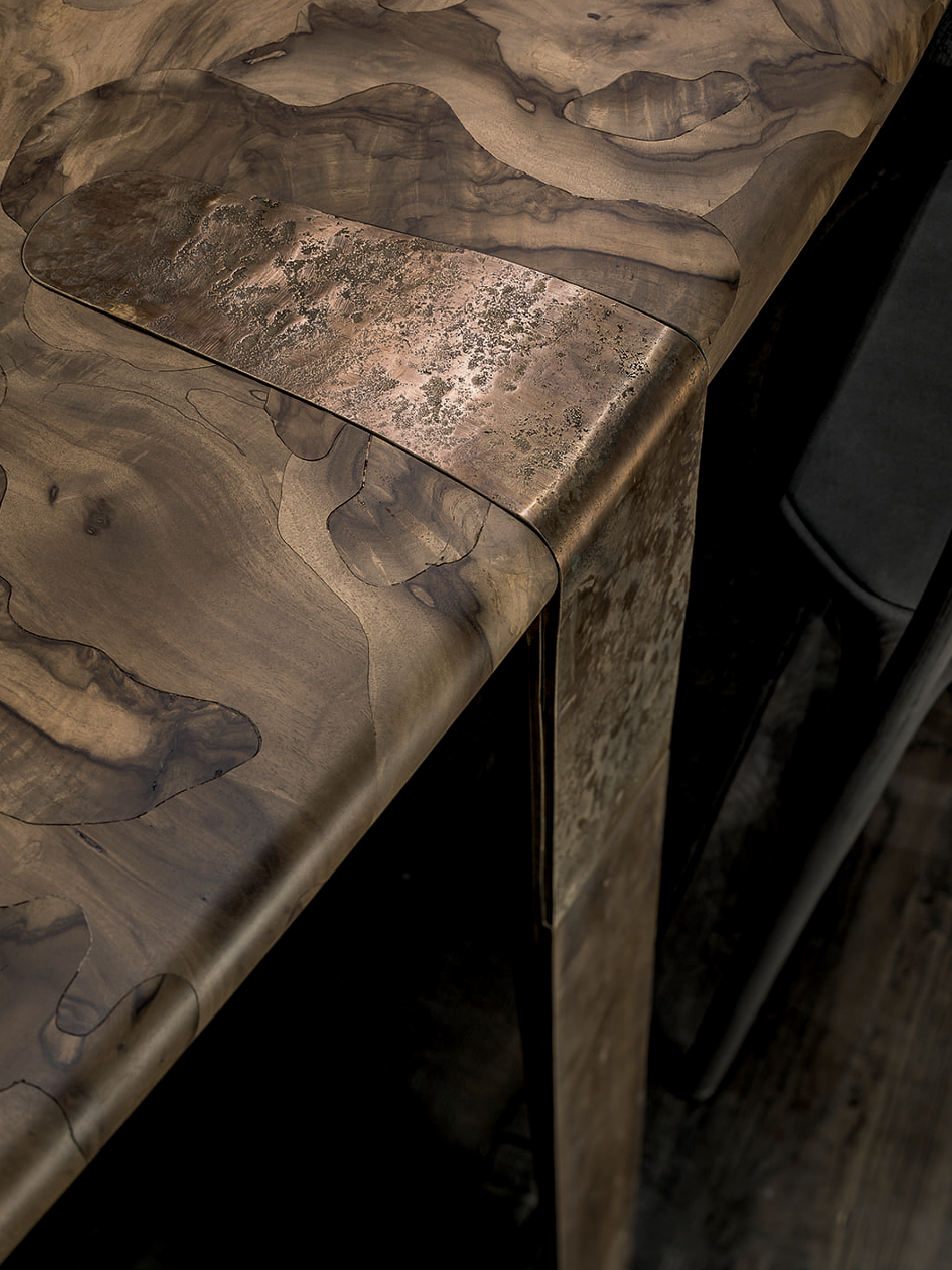
The Oxymoron table has a knack for making unlikely pairings look natural. A richly textured walnut top sits above slender bronze legs, with the tabletop’s mosaic-like finish giving the wood a uniquely tiled effect. The intricate surface is created by layering, cutting and fusing the walnut by hand — a delicate, almost forgotten craft technique. Hand-finished by skilled artisans, each piece carries subtle variations, making no two exactly alike. Designed by Massimo Castagna for Henge, the Oxymoron is now part of Vivono’s Italian design offering in India, bringing Henge’s distinctly artisanal approach to Indian interiors.