Artist Profiles 30 Jun 2026 read
Artist Dhruv Agarwwal’s imagination scales Channapatna beads into larger art pieces
The Delhi based artist spends his days rethinking this Indian craft through scale to pivot the narrative from plaything to presence
Artist Profiles 30 Jun 2026 read
The Delhi based artist spends his days rethinking this Indian craft through scale to pivot the narrative from plaything to presence
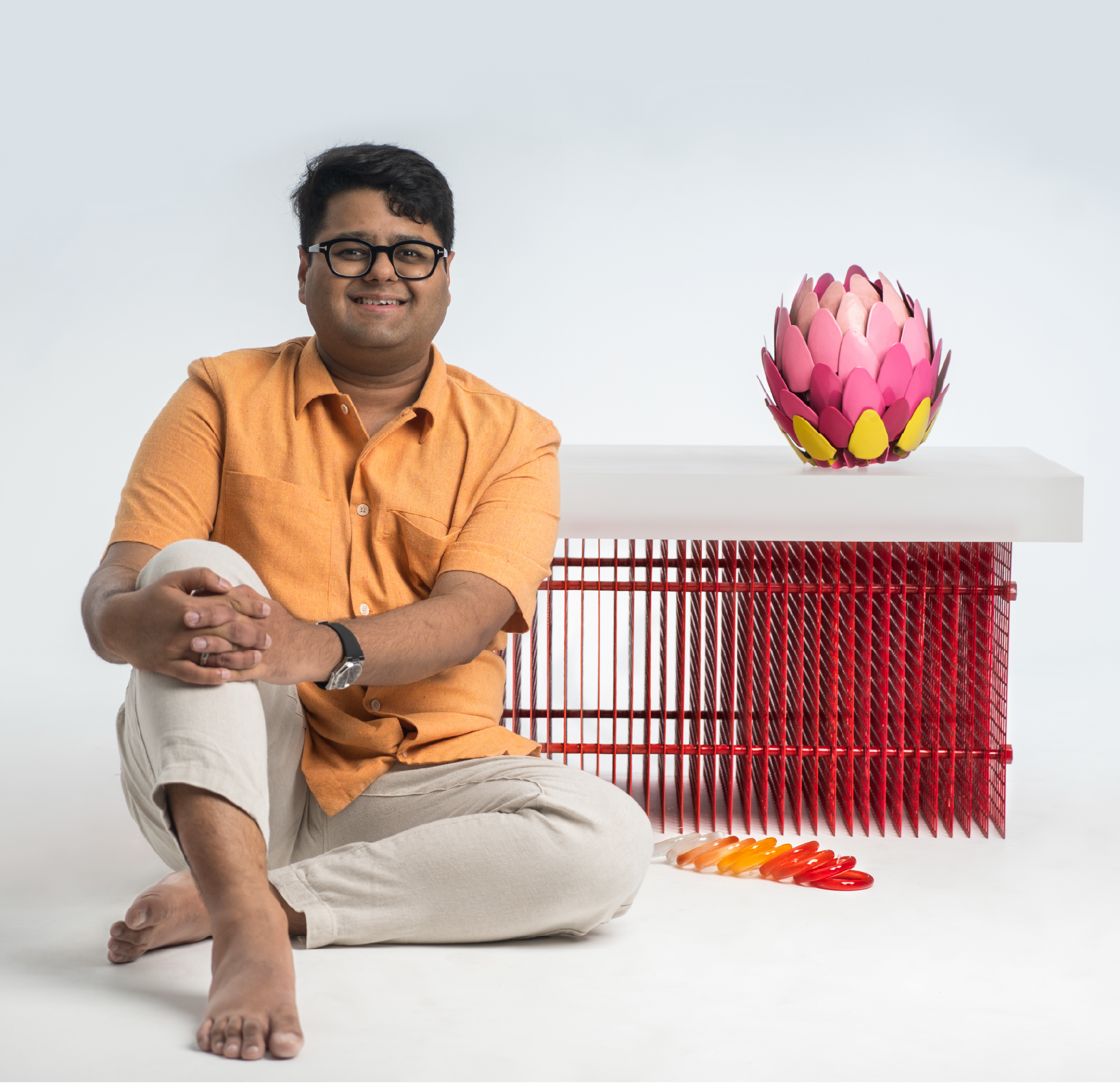
On shaded afternoons after school, a young Dhruv would return home to his grandmother, where play unfolded through games of Chaupar. Resembling Ludo, its pawns were rendered in Channapatna craft — lacquered ivorywood tinted with vegetable dyes and burnished to a soft sheen, a craft that originates in the town of Channapatna in Karnataka and is GI tagged under the World Trade Organisation. “The Channapatna bead tokens were smooth and cool,” he recalls. Now a Delhi-based artist represented by Galerie Maria Wettergren, Dhruv Agarwwal is recognised for his vividly chromatic Channapatna installations. What stayed with him was less narrative than sensation: texture, temperature, colour — the haptic intelligence of craft settling into memory. In parallel, the saturated chakra paintings of the Rameshwaram Temple sharpened his sense of colour, not as ornament but as structure — a trait that would later define his practice.
Years later, after studying interior design at Pearl Academy in Noida, he hadn’t planned a path in collectible design. While exploring materials for his first chandelier called Full Bloom, the piece that went on to start his Bloom series, he was suddenly reminded of the Chaupar bead — a moment that connected memory and material. “What if the bead we hold could engulf us? What if it could enlarge to occupy space?” he says. That question became the basis of his large-format ‘toys’, translated into tables, armchairs, and more.
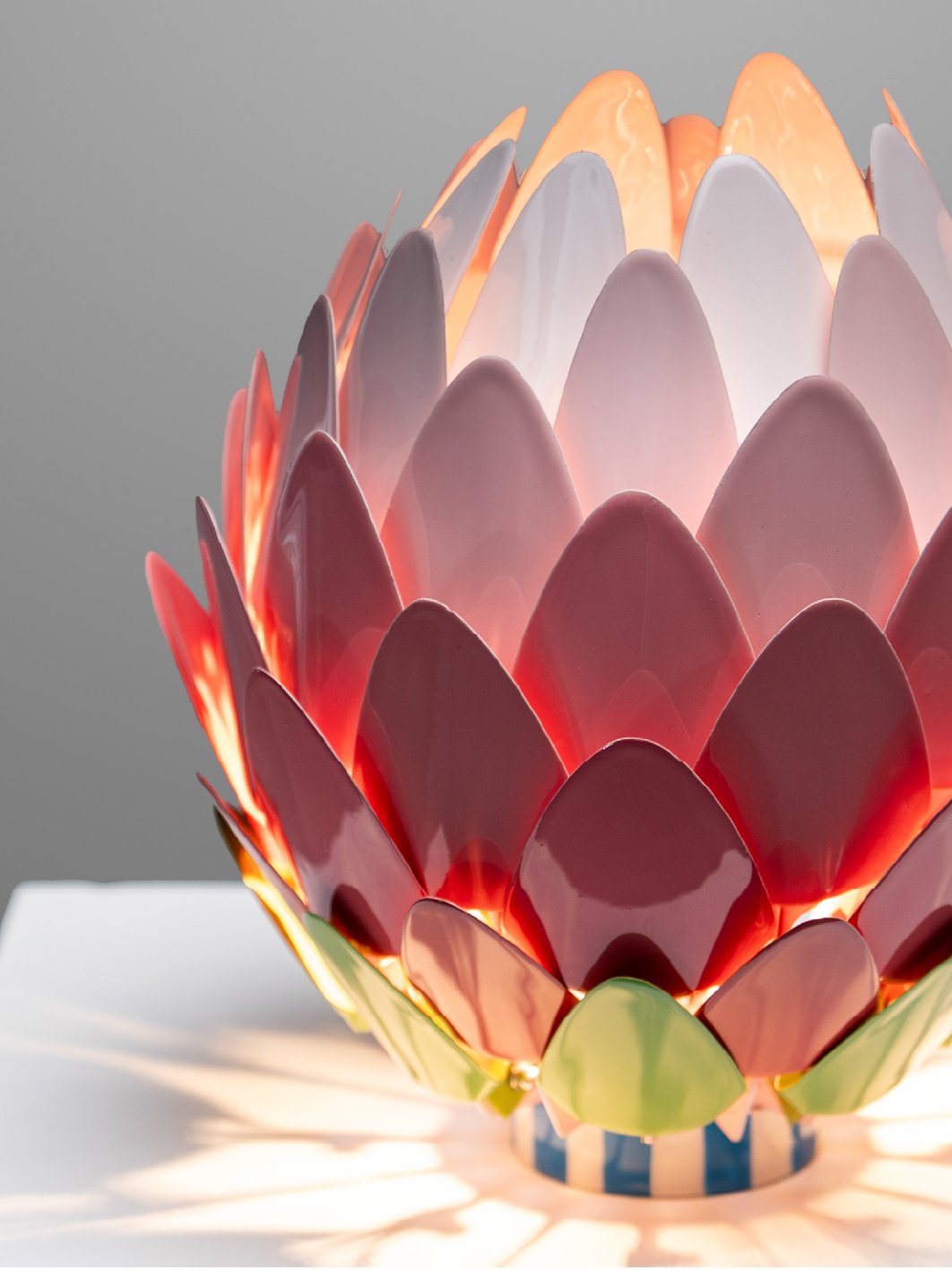
The Glim (Pink) table lamp, shaped like a lotus, is composed of colourful, petal-like steel elements finished with Meena enamel. LEDs within the structure allow the lamp to glow from within. Photography by Harsh Nigam
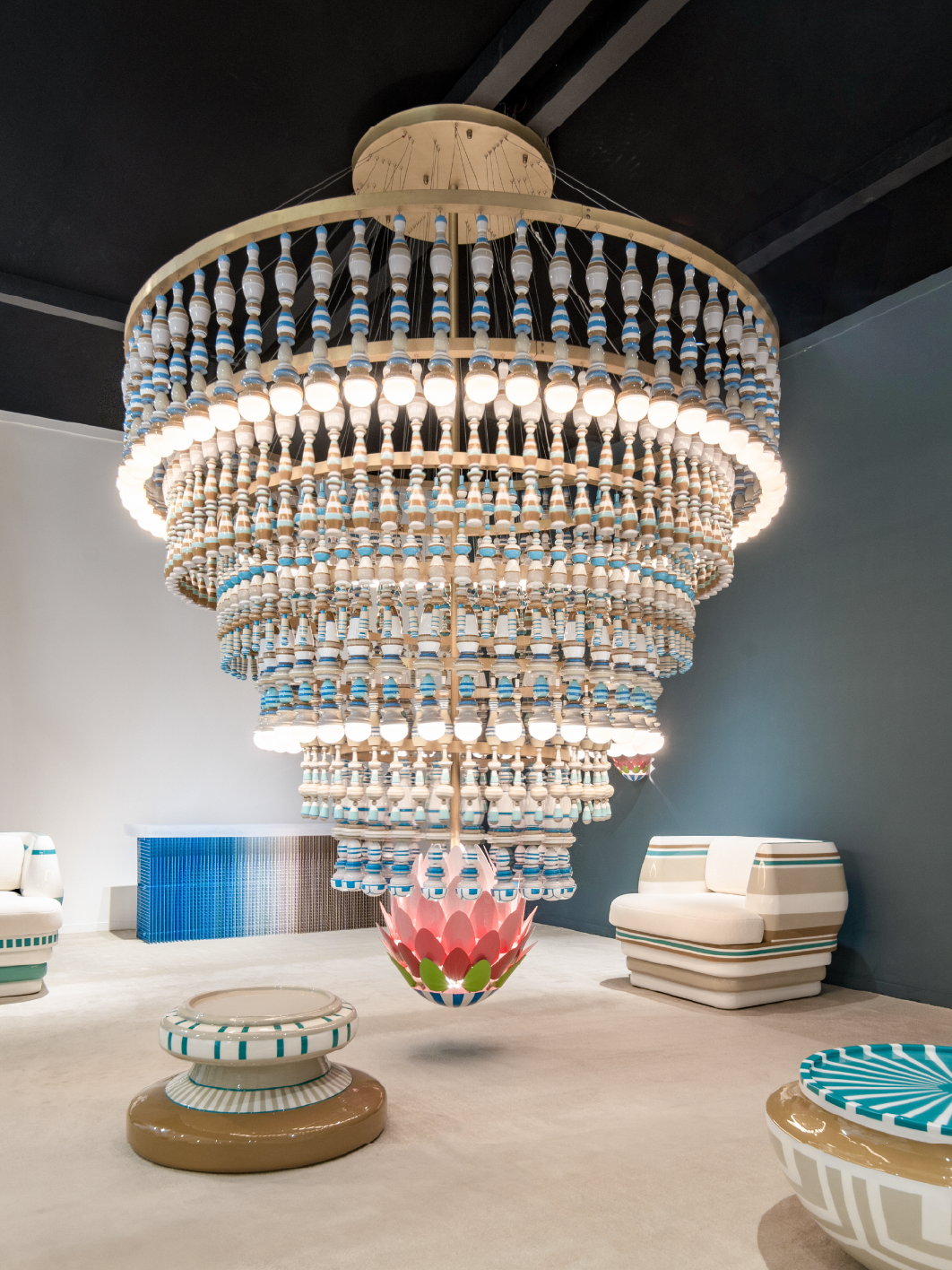
Bloom (Ganga) draws from the charged stillness of a Kumbh morning at the Ganga ghats. From the warm glow of brass diyas during aarti, to the dense, murky currents of the river, and the imagined blues of what the Ganga becomes in memory, its colour palette takes shape. Photography by Harsh Nigam
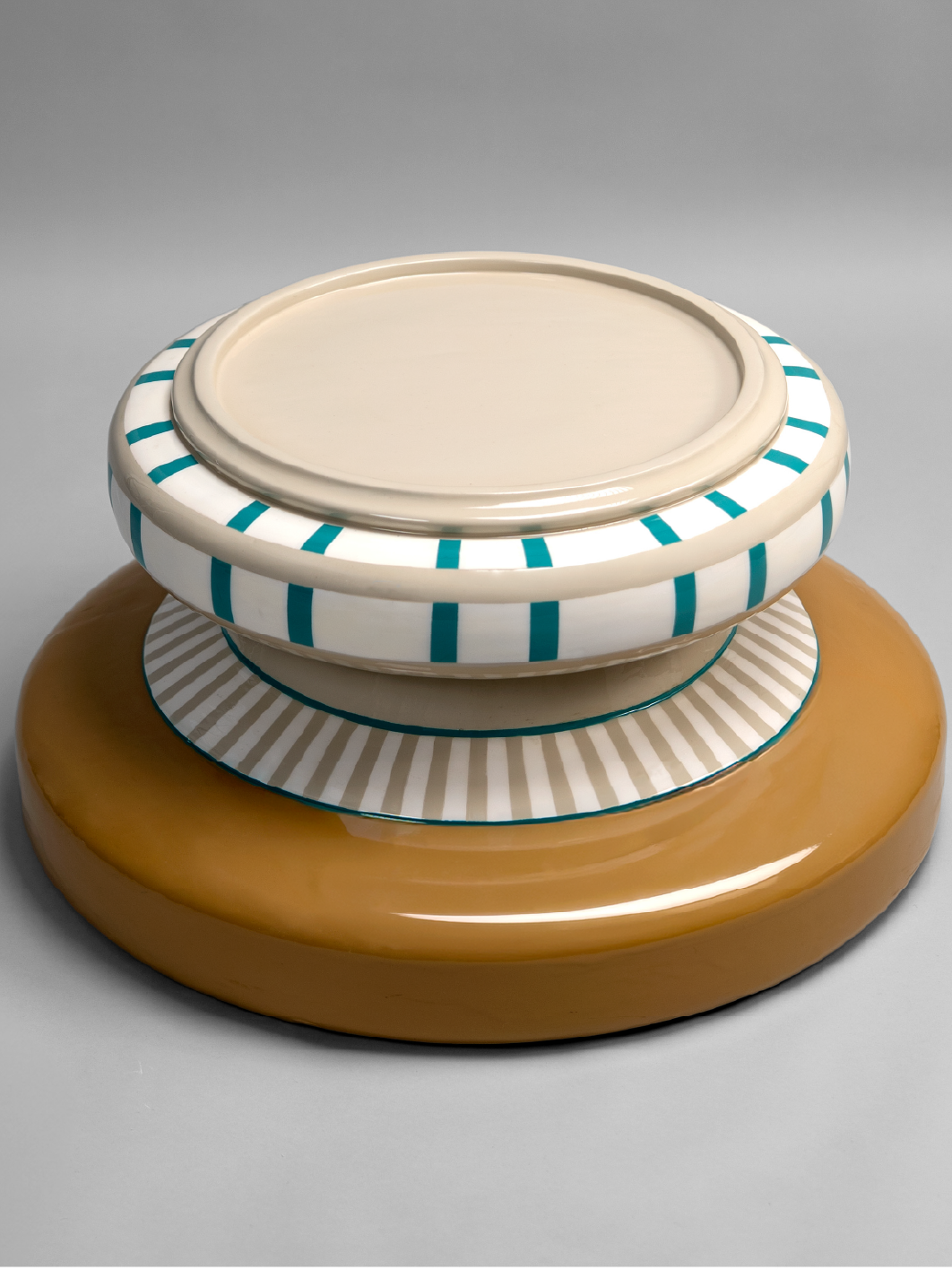
With its broad base and narrow top forming a circular table, Swirl (Ganga) is realised in a colour palette derived from the sacred river Ganga. Photography by Harsh Nigam
By enlarging the bead, the artist shifted it from something small and playful to something inhabitable and revalued. The material, however, doesn’t scale predictably: weight, balance, durability, even lacquer behave differently. Over time, he learnt to work in negotiation with the material and the artisans whose generational knowledge shapes it. This process redefined authorship for him, and became a journey of building trust, shared responsibility, and a commitment to sustaining a craft facing uncertain futures.
Channapatna carries a deep tactility, shaped by hand, built through layers of lacquer, appearing effortless but rooted in repetition and precision. Dhruv places this language in new contexts while retaining its essence.
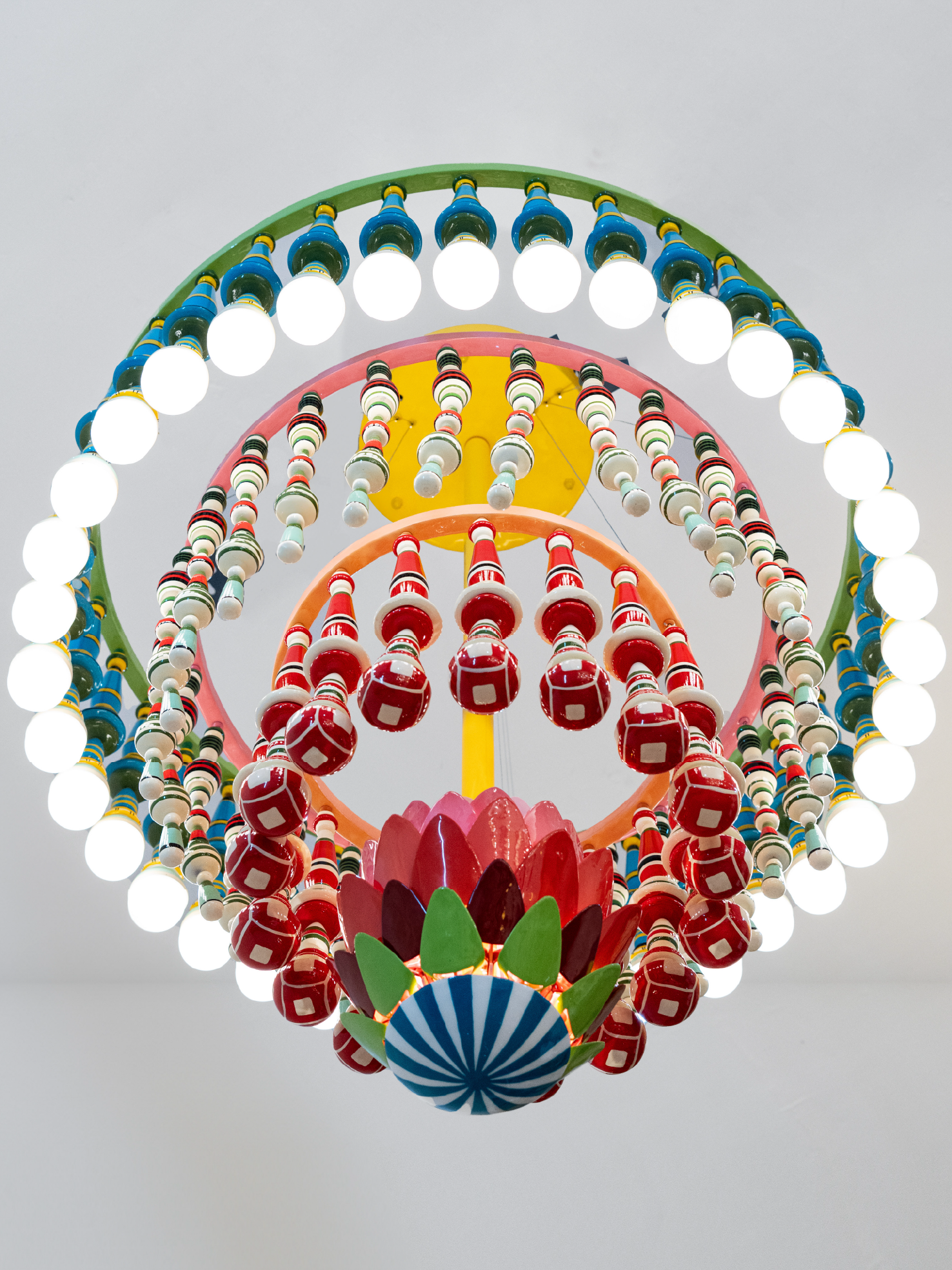
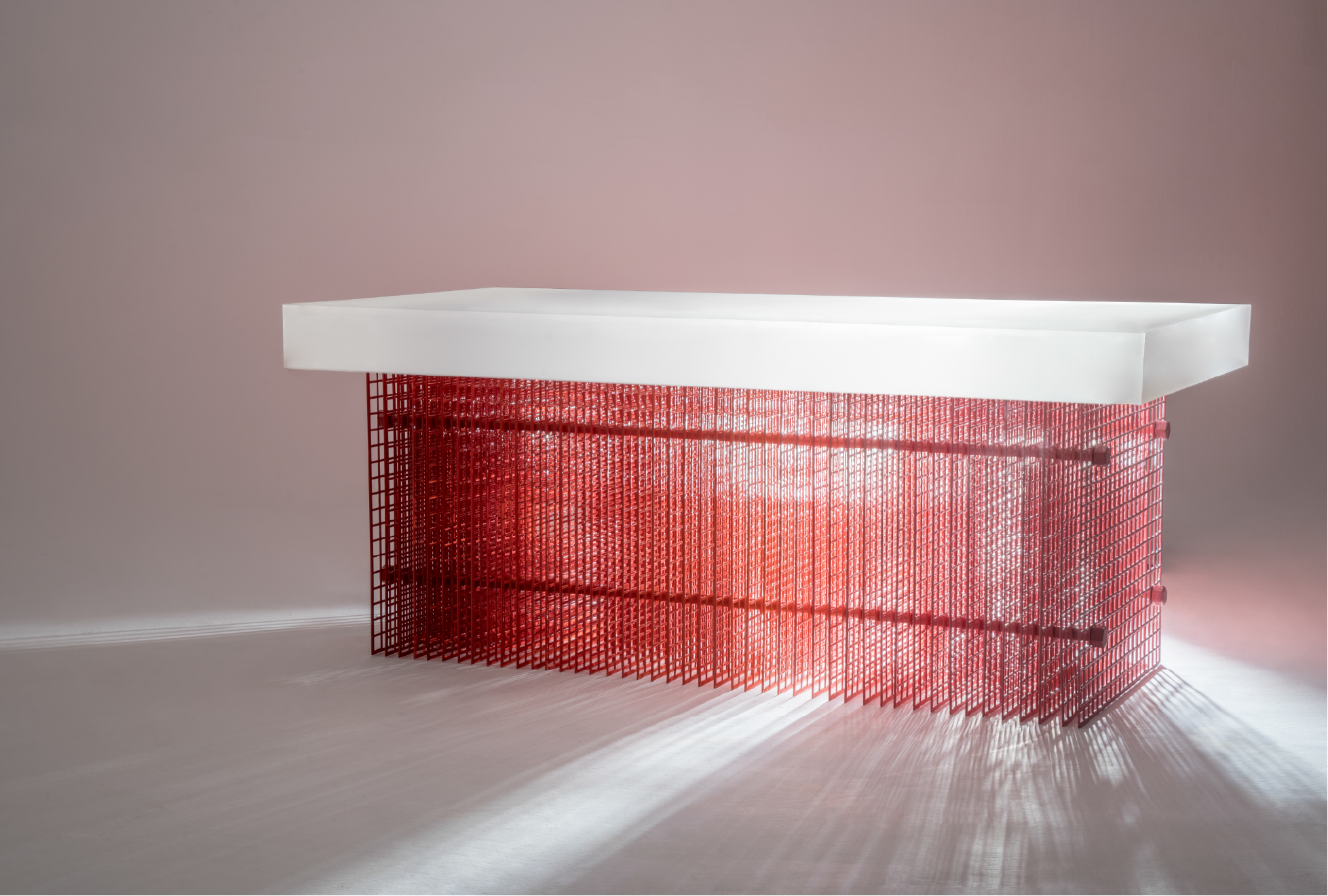
This shift is evident in works like his award-winning Bloom and Full Bloom chandeliers, the Spin centre table, and seating pieces such as Cuddle, Nest I and II. At first glance, they appear as smooth, colourful forms; up close, they reveal the familiar Channapatna stripes. Dhruv made sure he innovated in the wood and the lacquer while keeping the traditional process of making untouched. “The geography, community, and knowledge are not separate from the object — they are part of it. The making stays rooted, and the artisans remain central,” he says.
What emerges is neither preservation nor rupture, but calibration. In Dhruv’s practice, Channapatna is not an artefact but an active material carrying memory and knowledge. By enlarging the bead — from something held in the hand to something that holds you — he shifts not its essence, but its perception, ultimately transforming its narrative.