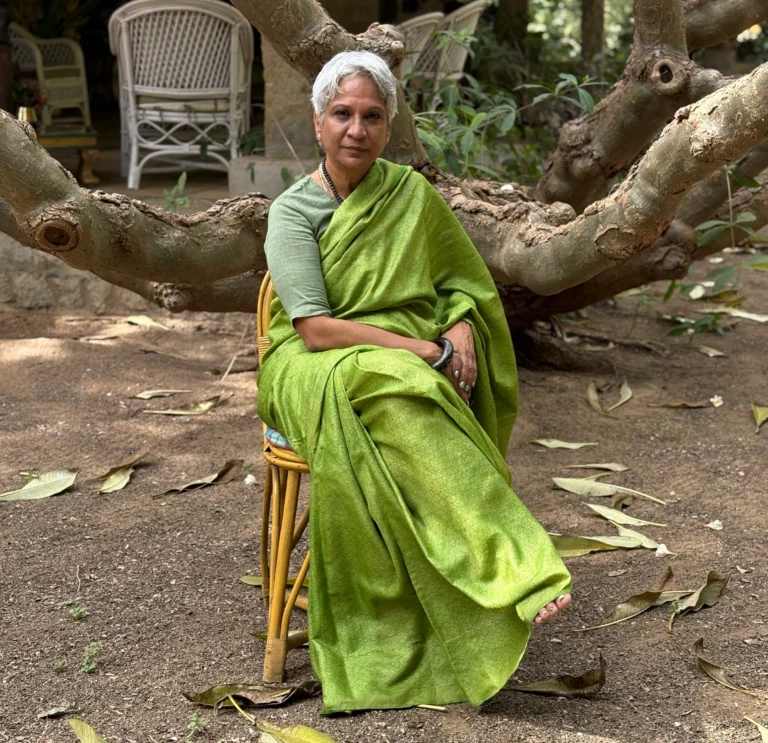
In 1972, Yeh Gulistan Hamara starring Dev Anand and Sharmila Tagore released. The story was based on Northeast India and the conflict and alienation it created due to its geographical distance from the mainland. It almost immediately caused a major uproar among a particular Naga community. Pran, the antagonist, had used a traditional warrior shawl under his feet in the movie causing protests by the community against the misrepresentation. “I still remember a lot of people went to sort of burn down the movie hall screen when that movie was being shown in town [Dimapur],” recalls Jesmina Zeliang, founder of Heirloom Naga, a textile enterprise championing made in Nagaland home textiles. This incident remained etched in Jesmina’s memory and evoked a realisation that while Naga textiles were widely appreciated, even at that time, it didn't have any relevance to somebody from outside the state.
This realisation laid the foundation for Heirloom Naga that she started twenty years after this incident, in 1993. Growing up in Dimapur, one of Nagaland's most cosmopolitan towns, Jesmina was surrounded by the cultural practices of different Naga tribes and sub-tribes. Craft was equally present at home. Her mother practised loin-loom weaving, making school bags for Jesmina and her siblings and the Angami Lohe shawl, a traditional handwoven black woollen shawl with red and green bands along the edges, for her husband. “She also made sure that her daughters learnt how to sew and knit and one winter packed me off to learn from her skilled cousins in Kohima, her native town. I guess these endeavours sowed the seeds for my passion for anything handmade,” recalls Jesmina.
Yet when she eventually entered the world of textiles, her ambition was not simply to preserve tradition and put it on the map. She wanted to explore how traditional weaving could find relevance in contemporary lives. As an experiment, she handed a cushion cover she owned to a weaver she knew and worked with her to create a collection of cushion covers featuring Naga designs and motifs. The response was immediate. Within a year, her weaving cluster grew from one artisan to 50 and Heirloom Naga was born.

Traditional Naga motifs and weaving techniques find new expression in textiles designed for contemporary interiors
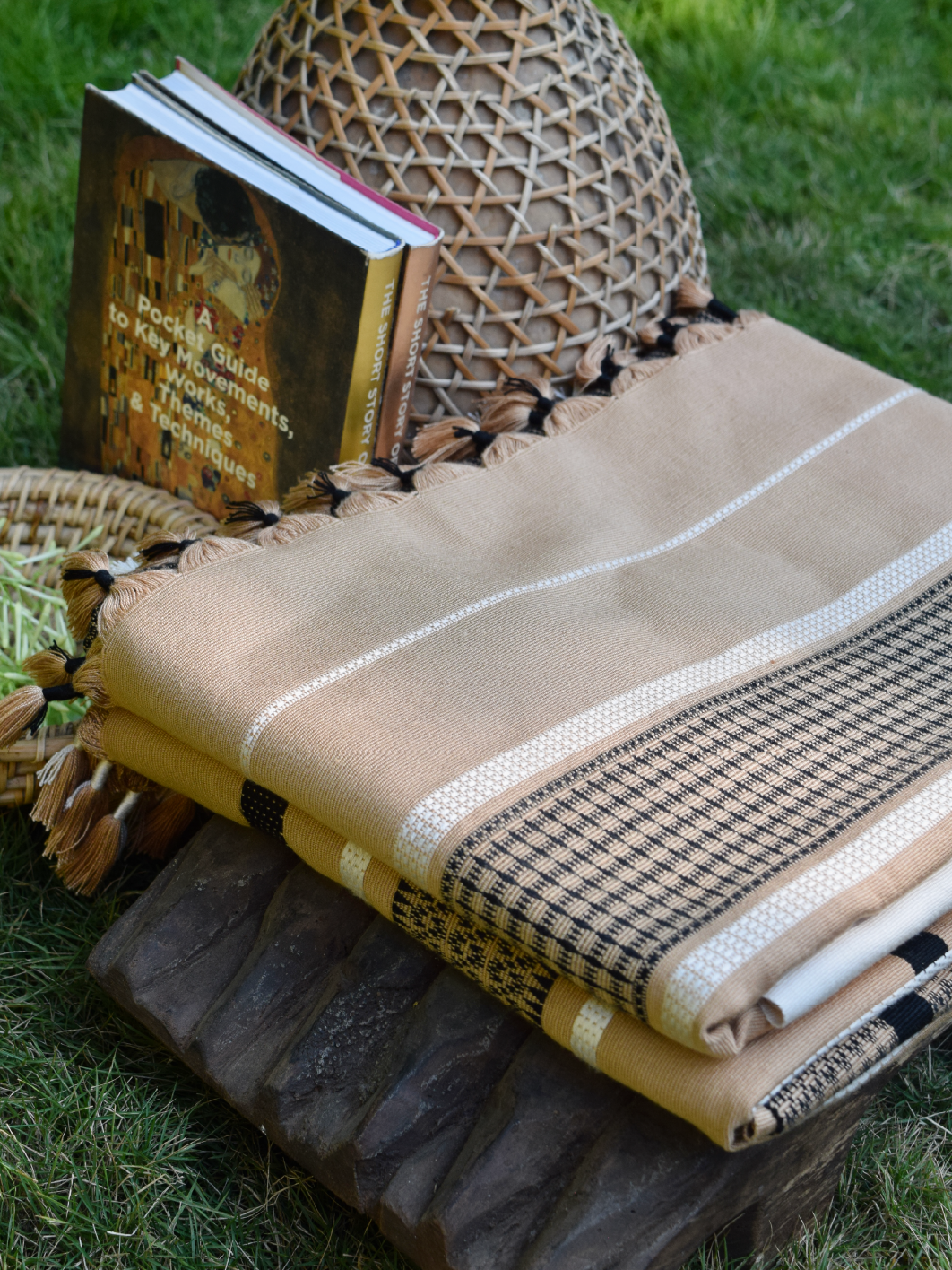
Cushions, throws and furnishings helped bring Naga weaving into everyday contemporary living
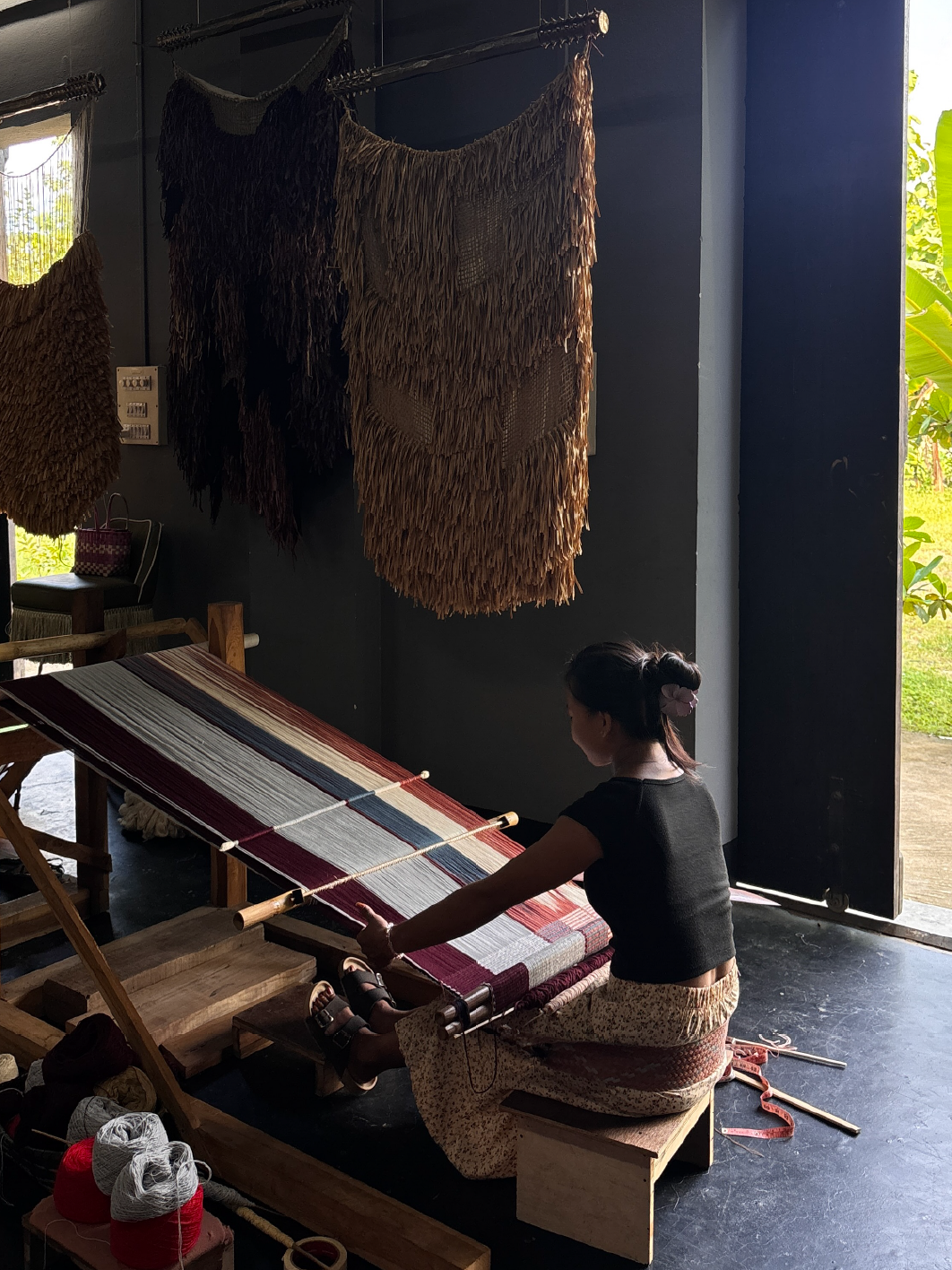
Many Naga weaving traditions rely on memory and skill, with motifs built directly on the loom
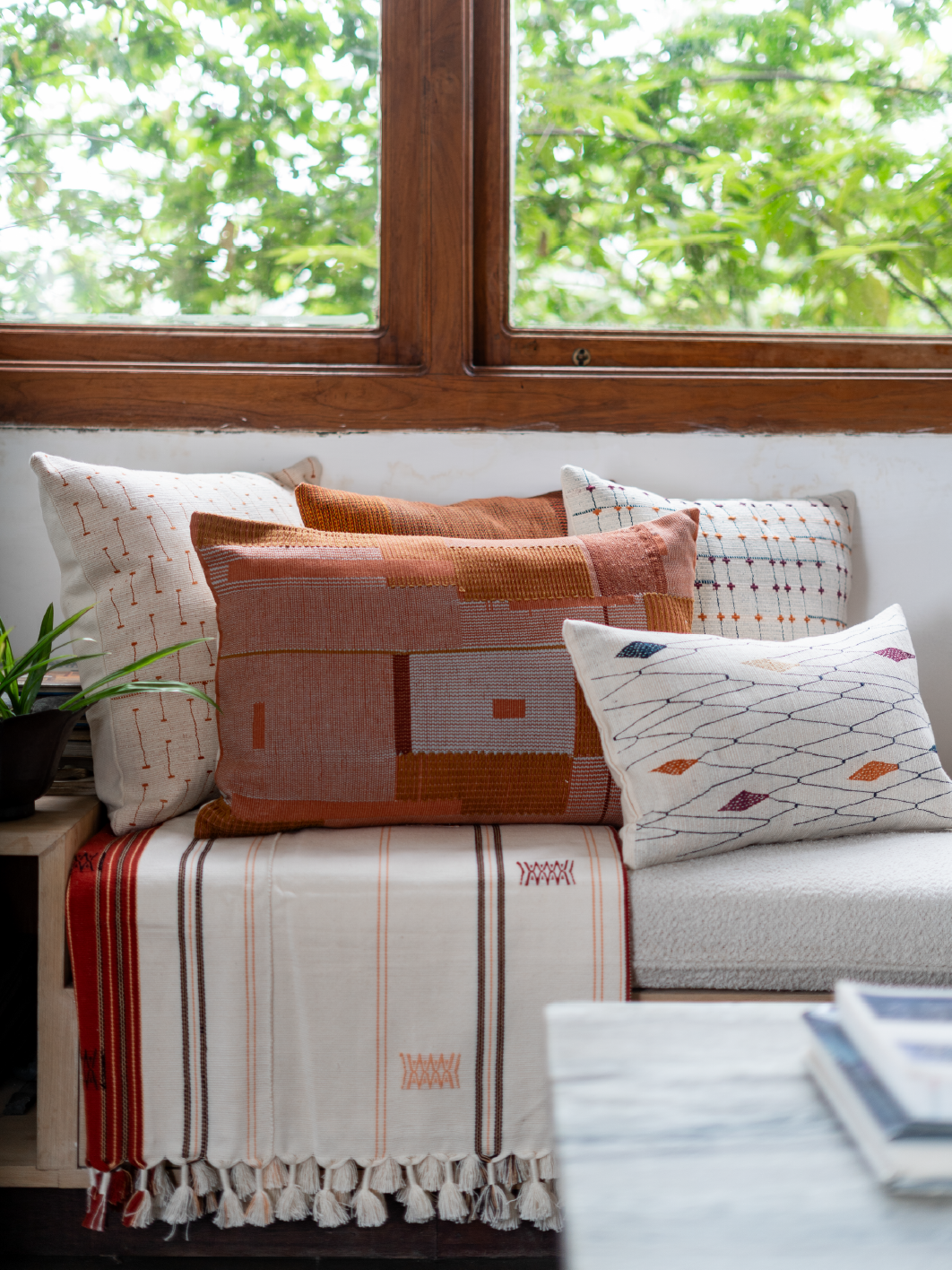
Heirloom Naga developed a distinct visual language that balances heritage references with modern sensibilities
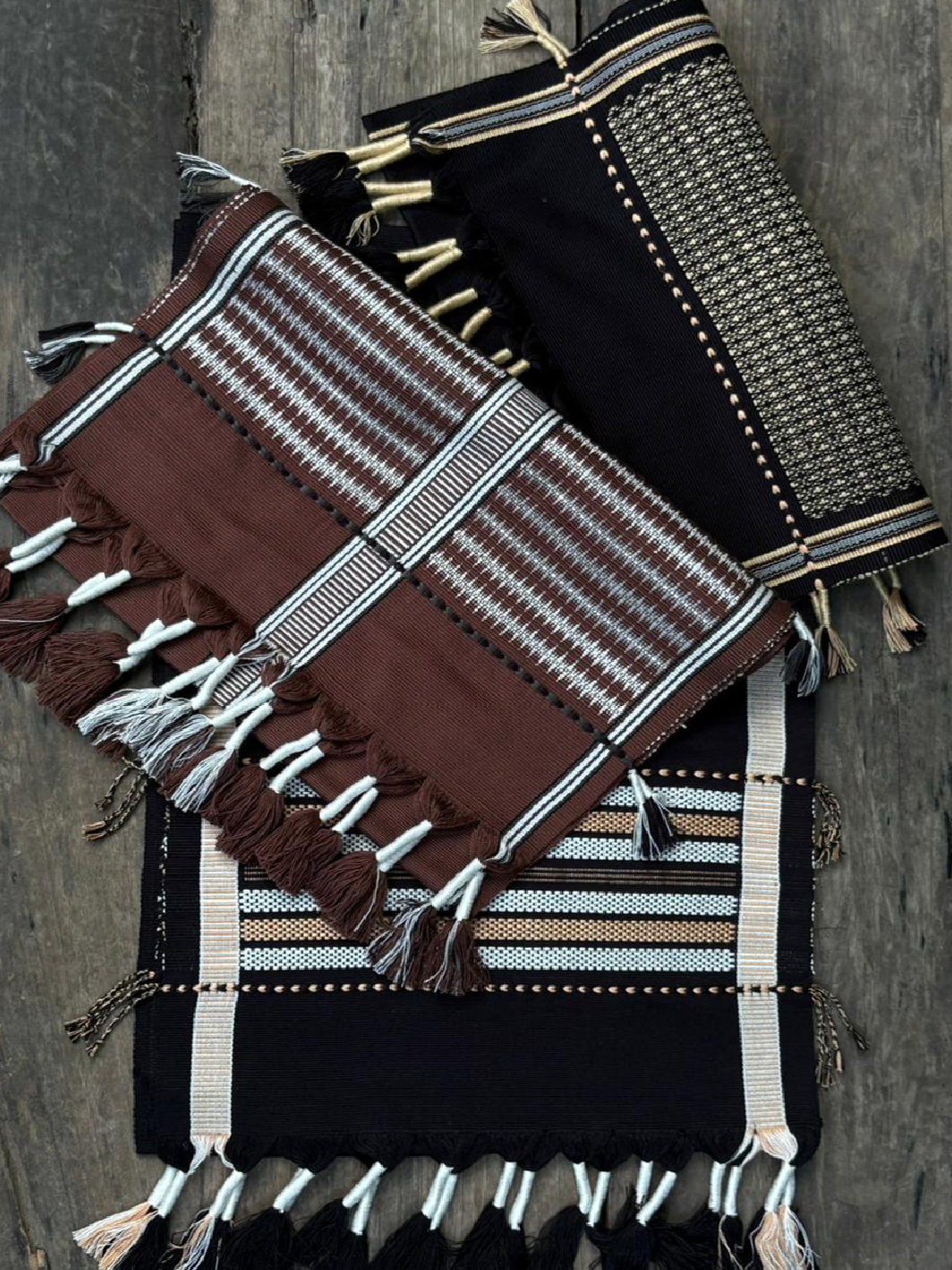
Inspired by the Zeliang Naga mekhela, tasselled details became one of the brand's defining signatures
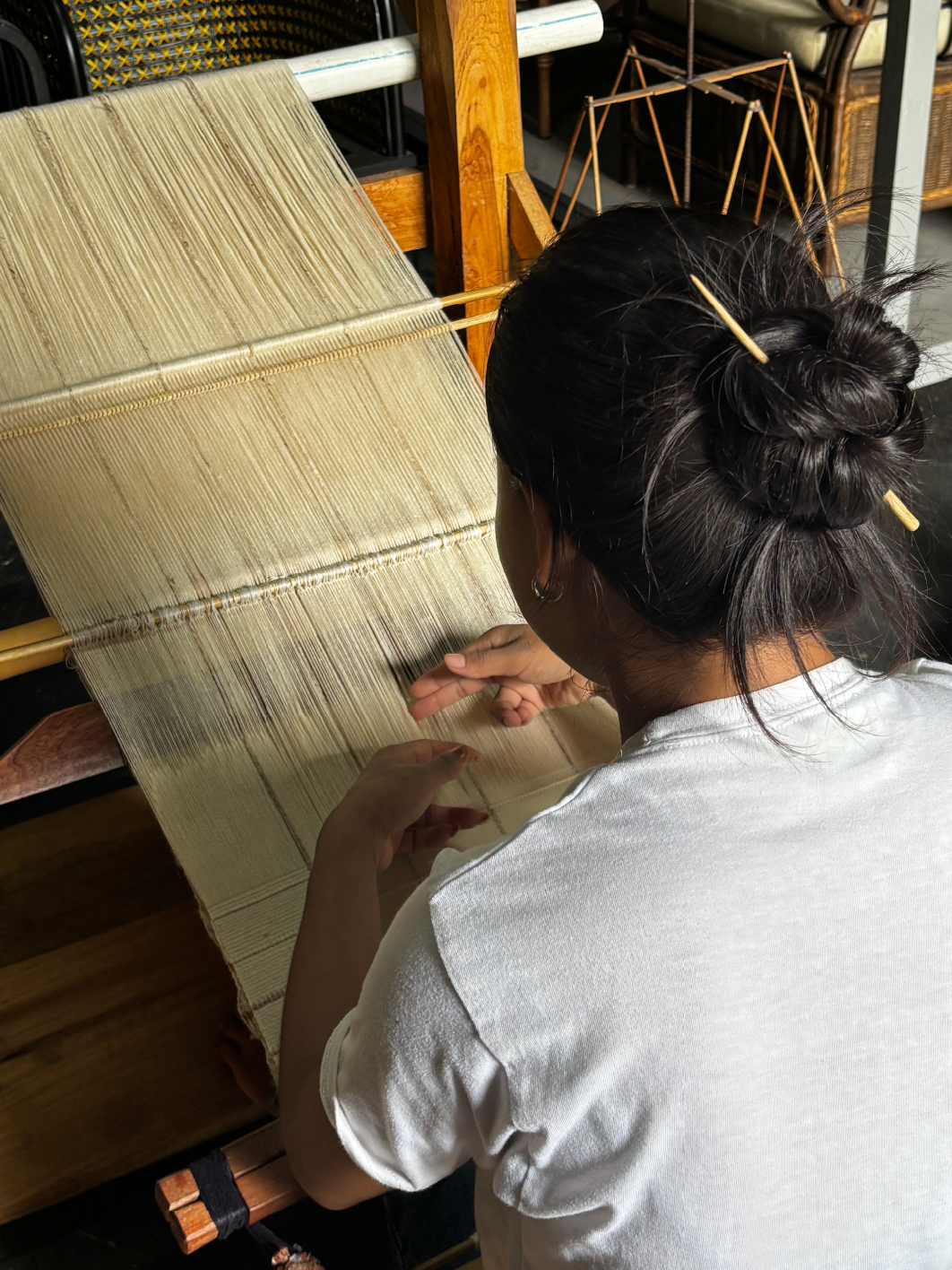
Designs are translated into woven form through the expertise, memory and craftsmanship of skilled artisans
For years, Naga textiles had found expressions only as shawls or sarongs, but Jesmina decided to go beyond them so they could be relevant in a more contemporary format. She worked with weavers from villages around Dimapur to develop home textiles such as cushion covers, throws, wall frames etc that drew from traditional Naga motifs while adapting them for contemporary spaces. Geometric forms and lozenge-shaped motifs, an identifying characteristic of Naga design, became recurring features in her early collections. She also borrowed from her own lived experiences. “In the Zeliang Naga tribe, into which I married, the women wear a mekhela or a skirt that is accentuated by tassels. I innovated upon the Zeliang Naga mekhela and used the tassels in almost all my pillows and throws and that sort of became my trademark. Within a year or two, Naga textiles came to be referred to as the tasselled textiles. It was that small feature that propelled a whole industry.”
Even as she was drawing from the culture she grew up surrounded by, Jesmina was clear about keeping certain Naga textiles and designs out of the commercial sphere. Long before conversations around cultural appropriation entered popular discourse, she was already thinking carefully about what should and should not be commercialised. One such example was the pristine white Loramhoushu, a traditional shawl worn by women from her mother's Angami tribe.
“There was no question about misleading or gaining out of a particular community's traditional knowledge,” she says. Whenever she worked with designs belonging to a specific community, she collaborated with artists from that community, ensuring accurate representation and eliminating the possibility of misappropriation.
Over the years, Heirloom Naga gradually moved away from simply adapting traditional motifs and began developing an increasingly contemporary visual language of its own. “We were also creating our own motifs in the process. We have really moved on to very contemporary and abstract sort of weaves which can appeal to evolved customers globally.”
At the centre of that evolution is what Jesmina calls her design “stamp”. For every piece she creates, there must be something that signals where it comes from, even if the design itself is contemporary. “That stamp often comes through colour combinations or the way motifs are styled,” she explains.
While the colour stories evolved, the commitment to retaining a recognisable identity remained unchanged. Interestingly, many of her motifs are inspired not only by Naga traditions but also by museums, galleries and artworks encountered during her travels. These references are then reinterpreted through her own lens and translated into woven forms.
The process itself reflects the uniqueness of Naga weaving traditions. Unlike many weaving systems that rely on graph-based patterns, Naga weaving is largely memory-based. Motifs are picked directly on the loom, almost as if they are embroidered while weaving. Jesmina herself does not have a design/ fashion background but she relies on conversation, inspiration and memory. Since she works primarily through verbal instructions, the process depends heavily on the skill of her weavers, who translate her ideas into woven motifs through experience, memory and technical expertise.
“The weavers that I work with are so talented that they understand my oral language and my oral instructions.” That relationship between designer and artisan forms the foundation of Heirloom Naga. Because weaving within Naga communities is traditionally practised by women, the brand's weaving clusters are almost entirely female. Working from their homes across different villages, these artisans are able to both earn a regular income without having to compromise on their family responsibilities.
“I realised much later in life that we were actively stemming migration, promoting a circular economy and contributing to women empowerment. So when people talk to me about women empowerment, I just look the other way because we've been doing that for too long.”
Today, however, sustaining that ecosystem requires more than simply generating work. For Jesmina, the conversation around artisan livelihoods needs to move beyond the language of “fair wages”. “We should do away with the word fair wages and talk about great, excellent wages for our artisans.”
Without meaningful incomes, she argues, traditional crafts risk becoming museum objects rather than living practices. The challenge is particularly pressing in Nagaland, where many young people migrate elsewhere after finishing school. To address this, Heirloom Naga has expanded into premium categories such as tapestries and wall art that command higher prices and generate better earnings for weavers. These collections may not feature prominently on the brand's website or social media platforms, but they play a crucial role in creating sustainable livelihoods.
Encouragingly, improved earnings have also begun attracting younger generations. Many weavers' daughters now participate in weaving part-time, helping ensure continuity of knowledge and skill. For Jesmina, however, preserving a craft is not enough. The larger question is who benefits from it. “I strongly stand for valuing and respecting local traditions and am very particular that they should not be misrepresented.”
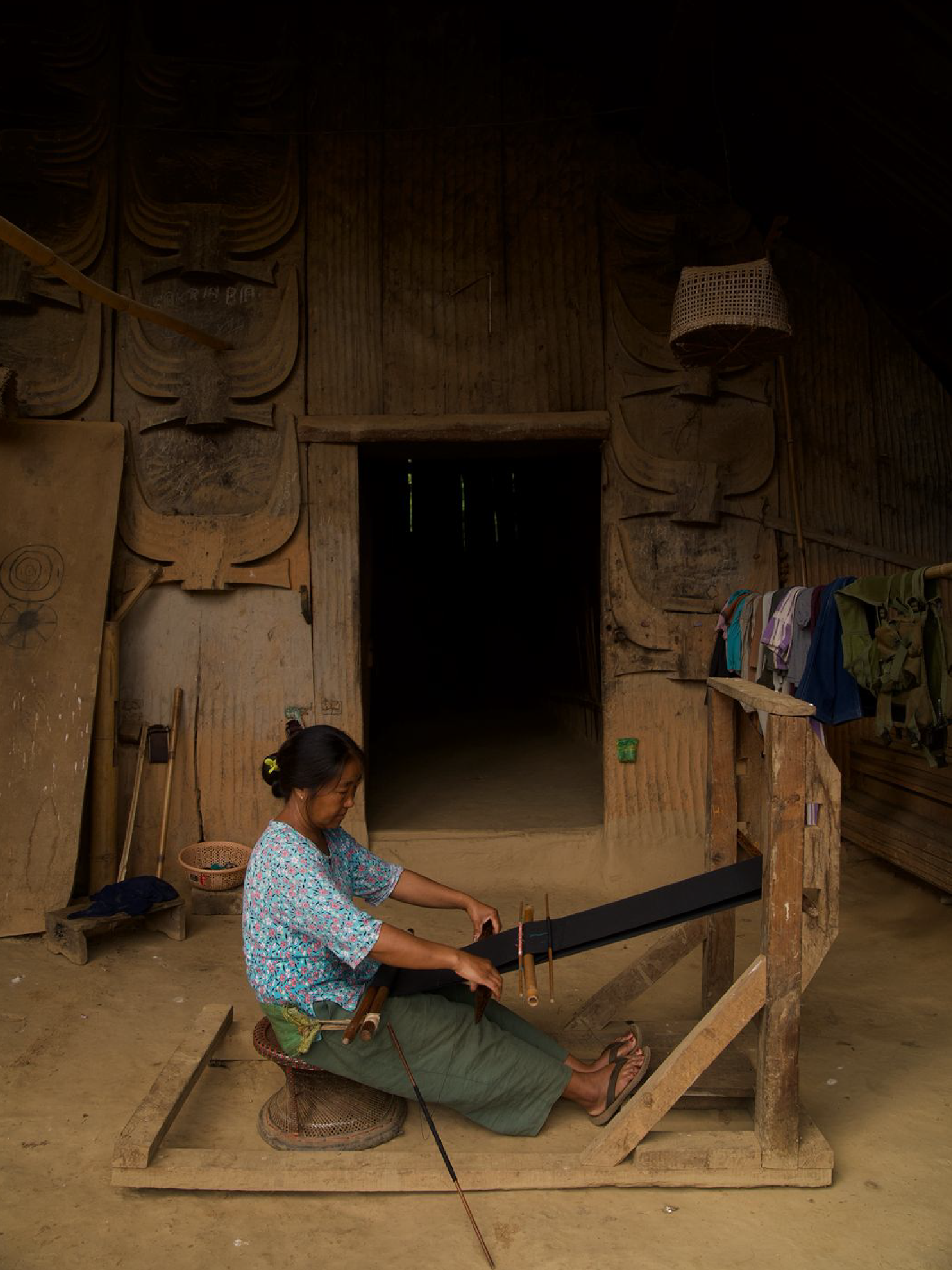
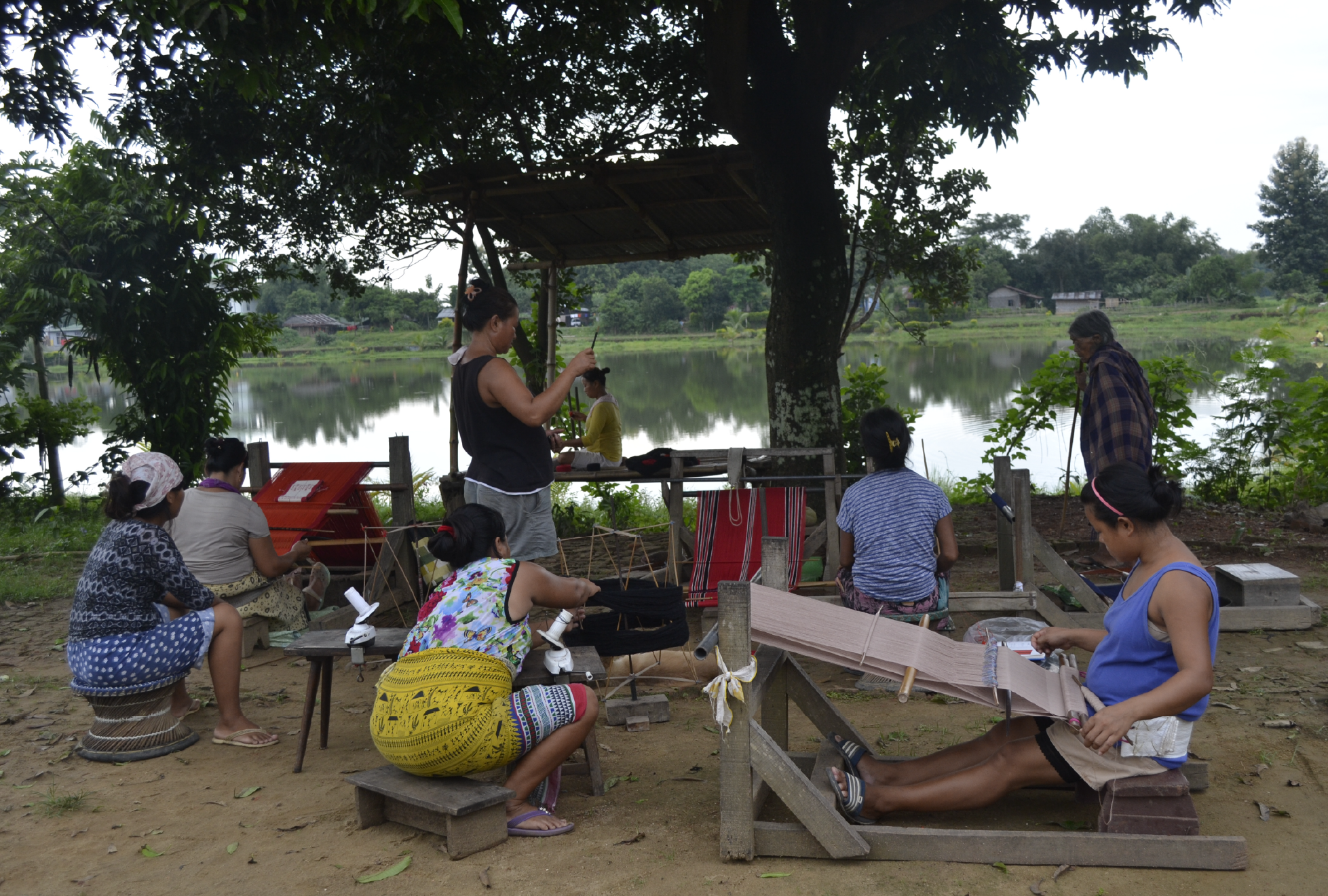
A growing network Today, Heirloom Naga collaborates with more than 400 women artisans across several Naga tribes
She is particularly concerned by instances where indigenous design traditions are borrowed by larger brands and reduced to aesthetic references without meaningful engagement with the communities they originate from. “There are many instances when design houses have borrowed heavily from our traditions and simply passed it off as inspiration. Now that's mere tokenism.”Any engagement with traditional knowledge, she believes, must happen in collaboration with local communities and generate tangible benefits for them.
After more than three decades, that philosophy continues to shape Heirloom Naga. Today, the business works with over 400 female artisans from various Naga tribes like Zeliang, Chakesang, Phom, Angami, Chang etc who continue to craft beautiful weaves. Jesmina has added several other feathers of achievement to her hat — in the early years of the millennium, she was one of the 40 small producers globally to be selected for a three year export mentorship programme by the Dutch government. Through that she was also given a fully funded spot to present Heirloom Naga products at Maison&Objet in Paris for the first year for the programme, which opened the doors of the international market for Jesmina. As a result of the international exposure, Heirloom Naga went on to work with several brands globally. In fact, in 2024, legendary designer Christian Louboutin paid Heirloom Naga a visit in Nagaland; but whether or not there’s a collaboration coming out is something only time will tell. Jesmina has also been a member of the Export Promotion Council of Handicrafts and is the only woman to be appointed on the board of directors till date. She’s also the current co chairman of the Handicrafts and Carpet Sector Skill Council. She also started the Heirloom Naga Centre in Dimapur 2023, a gallery space that showcases Naga art, craft and culture together. The space consists of a gallery that displays traditional and contemporary Naga craft, textiles, a retail store of products made by local artists and weavers, a guesthouse for visitors to stay, a restaurant that serves traditional Naga cuisine and flavours. The centre also holds workshops of different craft forms for visitors, students or design and culture aficionados, their speciality being loin loom weaving and basketry. “We are also open to anything and everything to do with the creative economy and in the process collaborate with a lot of young, talented artists from our town and within the state and region. We also have a small classroom-like space that we let out for other programmes, we had one recently on photography. So we're trying to keep this centre alive and vibrant. I am very proud to tell you that it's become a one stop destination for anyone who's traveling into Nagaland.”
Jesmina’s goal is not to simply preserve and promote local weaving traditions. It is to ensure that they don’t turn into a history we only read about in books and can thrive as a sustainable and economically viable way to earn a livelihood.