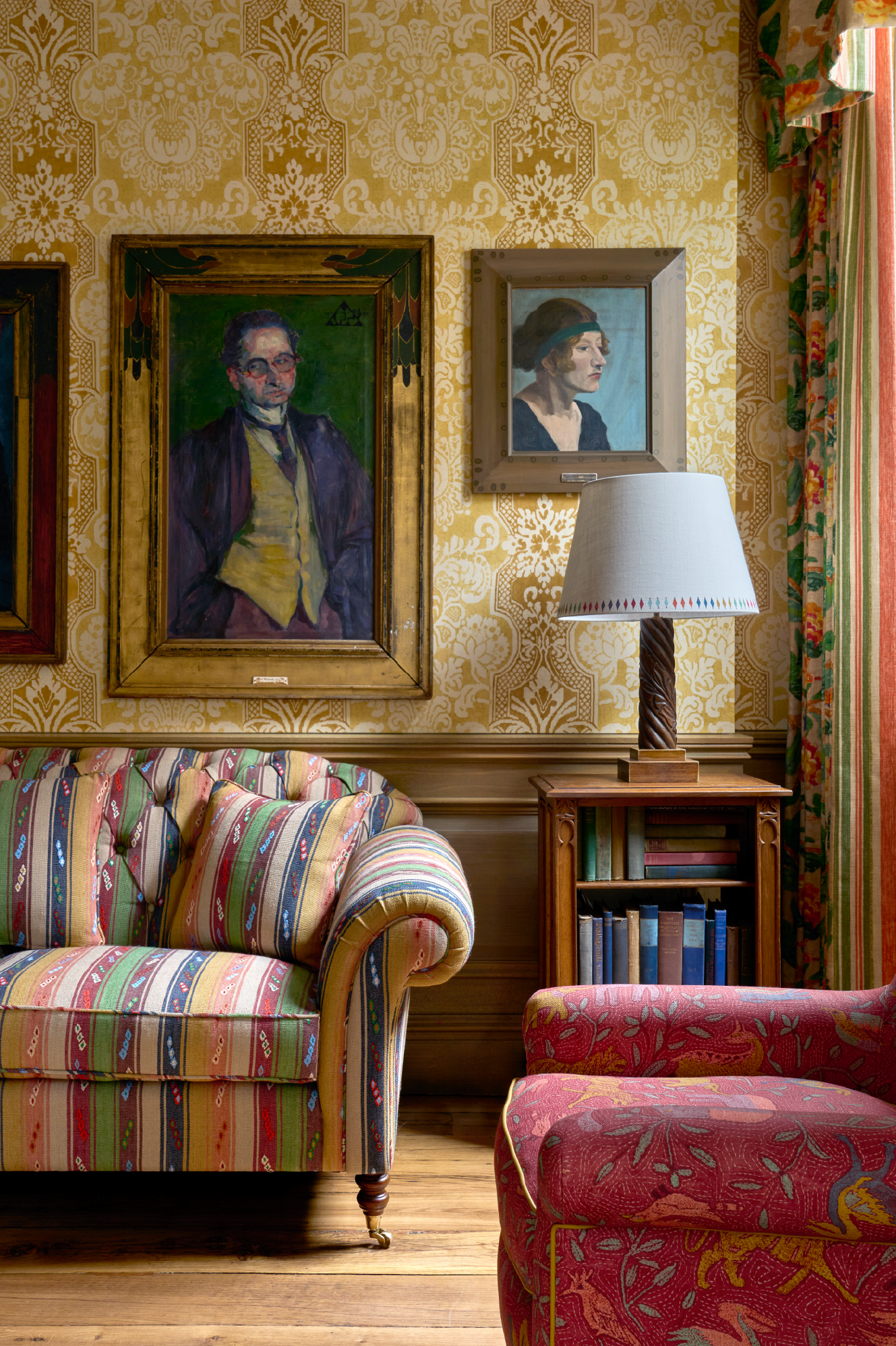
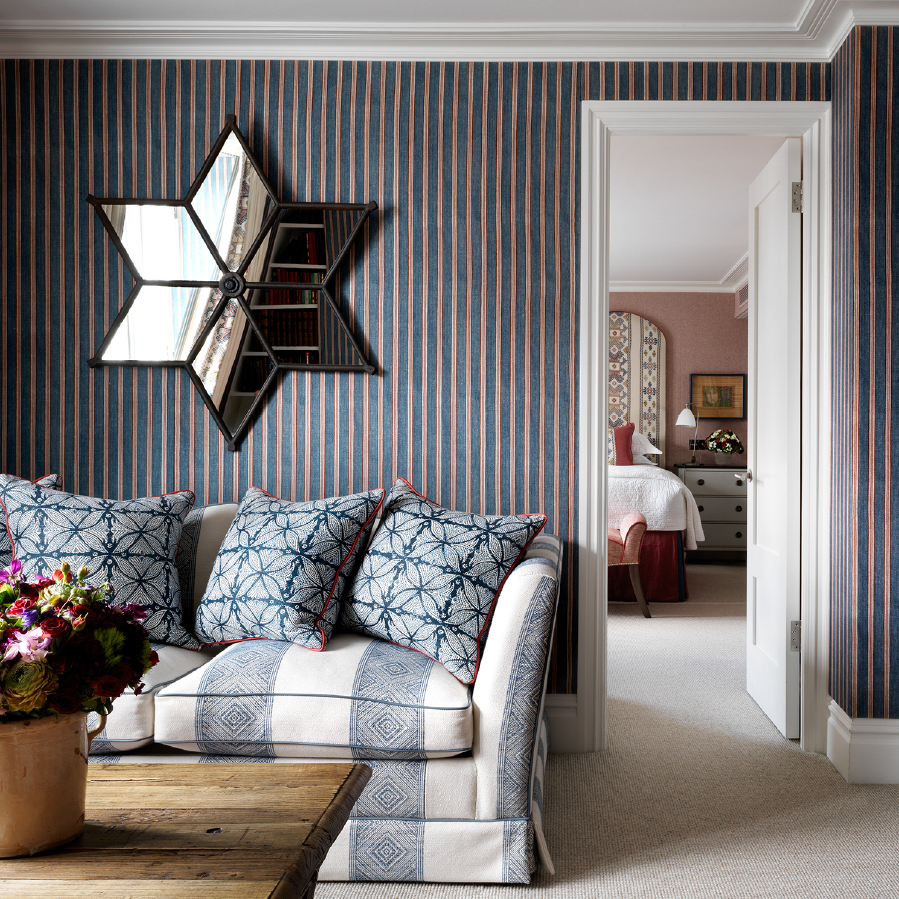
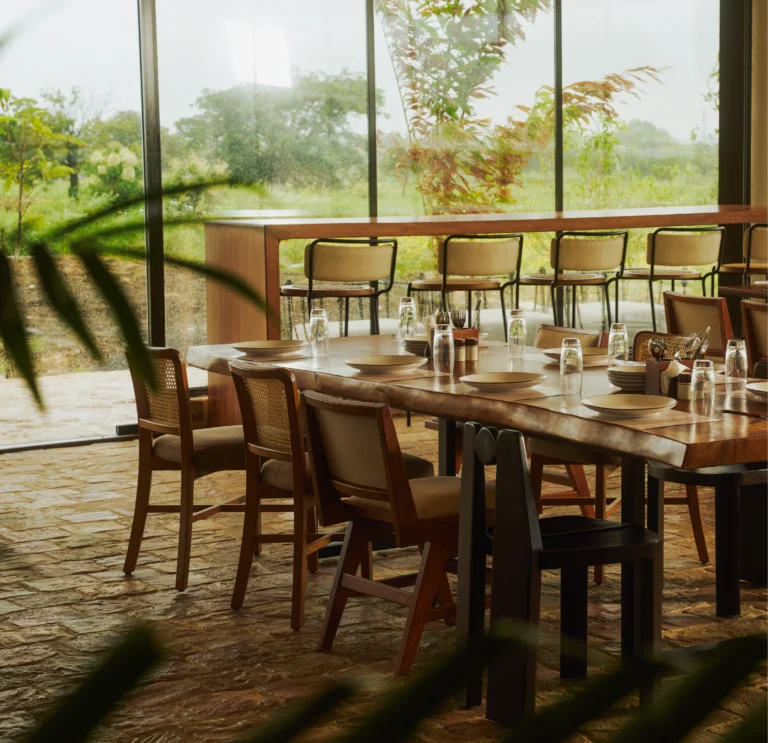
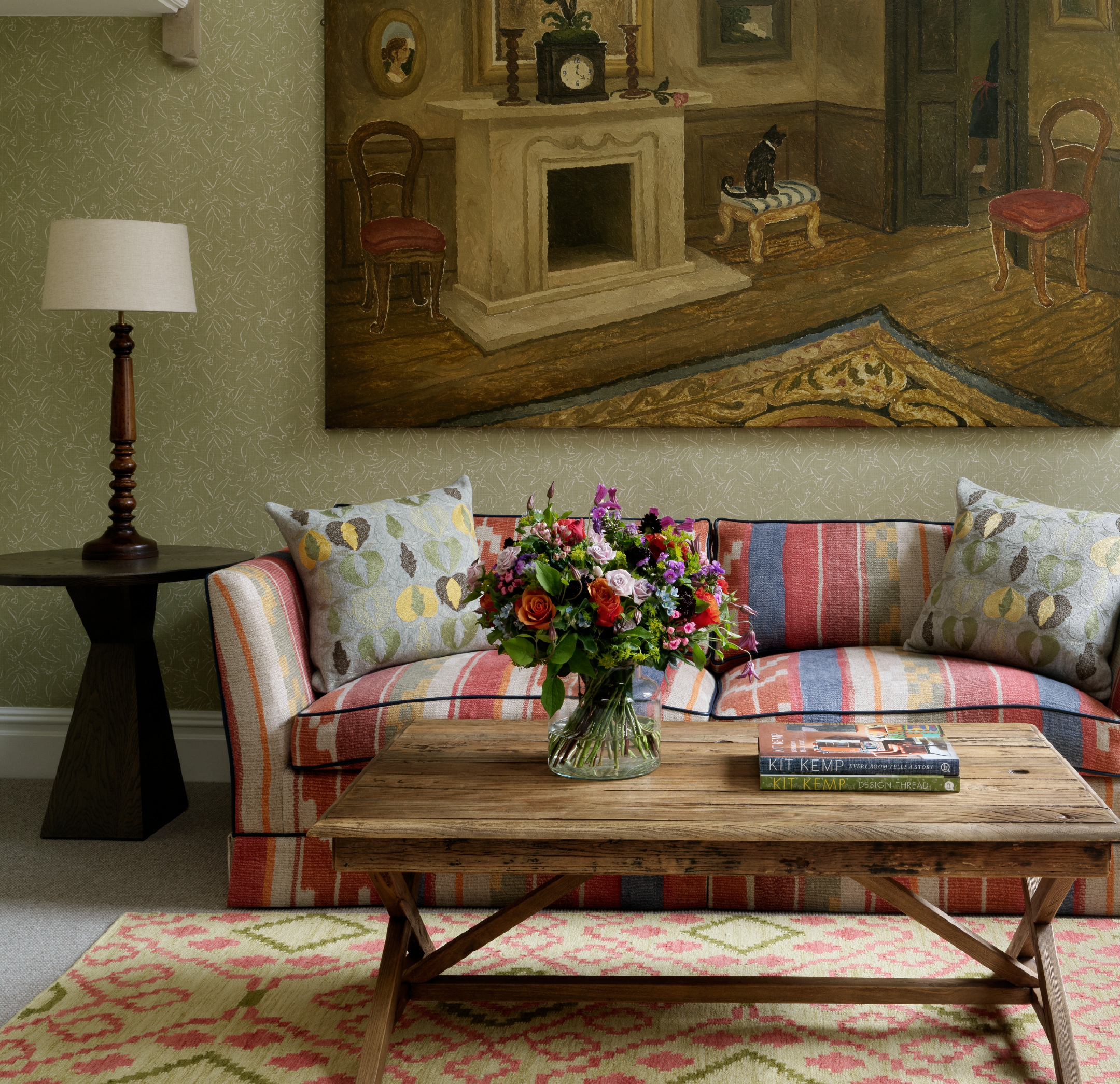
A sitting area at Charlotte Street Hotel in Fitzrovia with a striped sofa and a large framed painting

Hotels 03 Nov 2026 read

London’s Charlotte Street Hotel pays homage to the writers and artists who defined the culture in the early 20th-century through its eclectic design

At this boutique hotel, wallcoverings borrow from Bloomsbury book covers, original paintings hang in open lounges and carpets come from old woodblock designs

Words by Samara Fernandes Photographs courtesy Design Hotels

Share

In the 1900s London, a loose circle of painters, writers and thinkers began meeting in London townhouses and treating life as a shared creative project. They became known as the Bloomsbury Group, after the district where many of them lived, and their story spilled into Fitzrovia too. There was the novelist Virginia Woolf and her sister, the painter Vanessa Bell; the painter Duncan Grant; the critic Roger Fry; the economist John Maynard Keynes. They talked, argued, painted and published, and they decorated their homes as boldly as they lived. Roger Fry’s Omega Workshops turned out hand-painted furniture and textiles in vivid colour, and the Woolfs started their own publishing house, the Hogarth Press.

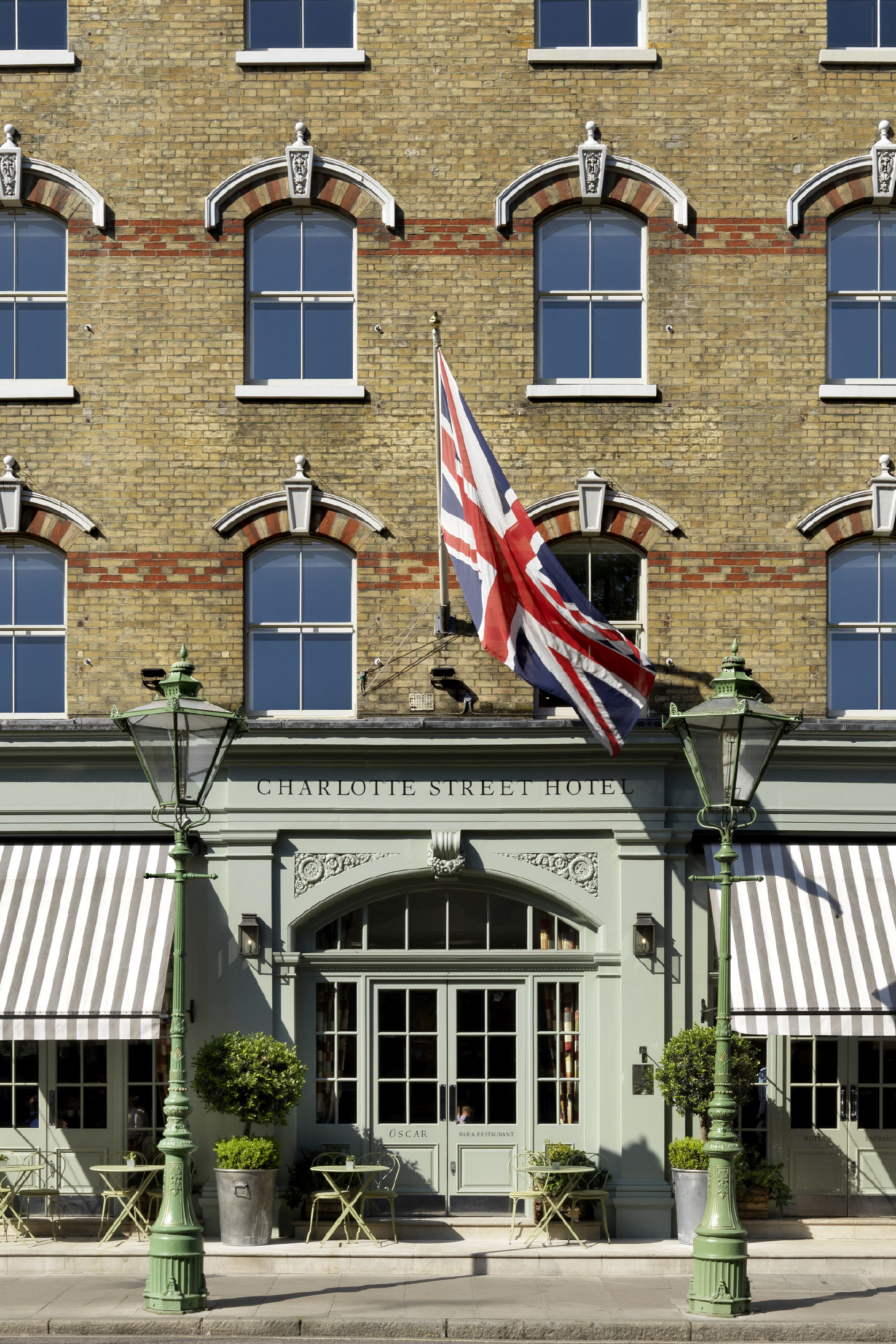
Decades later, there was almost no trace of this iconic history in the area until 2000 when the Charlotte Street Hotel came up. A sage-green façade appeared, its striped awnings pulled out over the pavement like a raised eyebrow, and the street had something new to look at. Step through the door on a grey afternoon and the story starts at once: soft, smoky colour like a Bloomsbury canvas, bold pattern everywhere, and a fire glowing somewhere past the lobby. Above its mantel hangs a Vanessa Bell still life, as though the owner of the house has only just left the room.

You half expect someone to walk back in and pick up the conversation. Instead, there is only the hotel itself, Kit Kemp’s long, lovely answer to a simple question: what would Bloomsbury’s spirit look like if it were still thriving today?

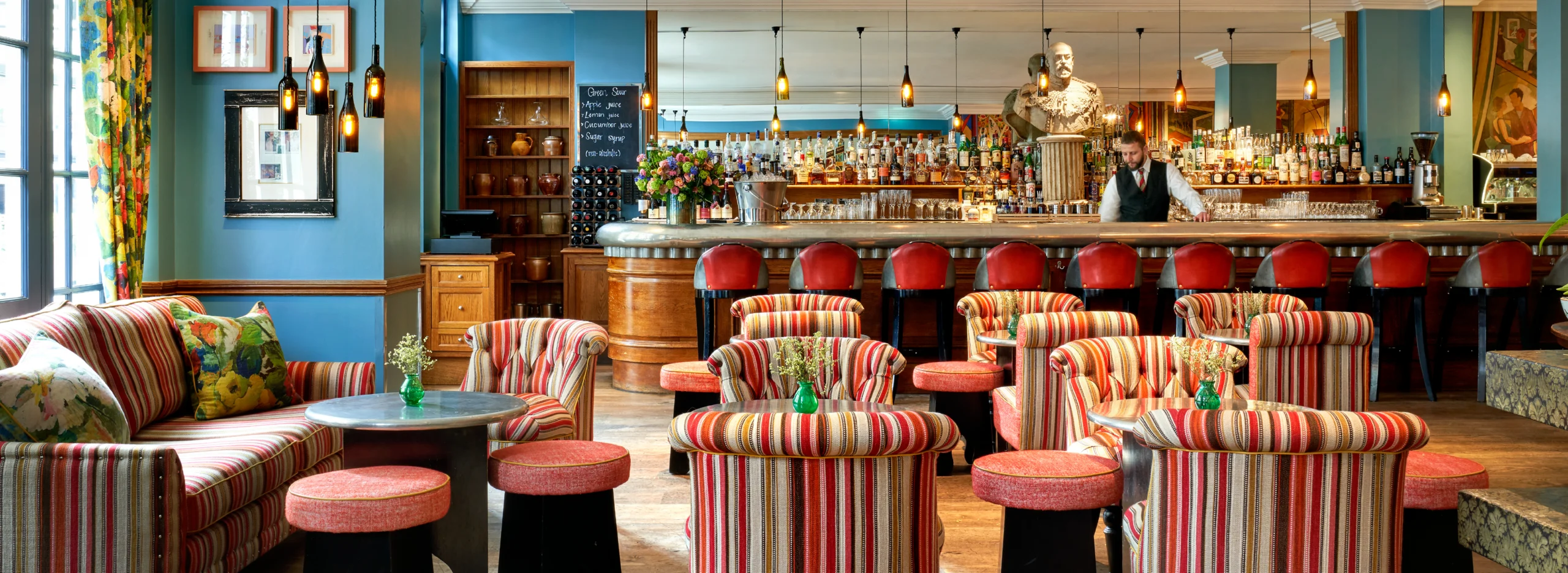
Where London lingers At Oscar Bar & Restaurant, striped upholstery and warm lighting set the scene beneath Alexander Hollweg's Bloomsbury-inspired mural

A warehouse becomes home
Kit Kemp MBE, the designer and founder of Firmdale Hotels, first asked herself that question in the late 1990s. Firmdale is the small hotel group she runs with her husband, Tim, now eleven hotels across London and New York, each one decorated by Kit herself. Charlotte Street would be one of its first, a converted warehouse on a stretch of the street that felt a little shabby and short on inspiration.
Despite the Bloomsbury group’s vibrant history echoing in the area, by the time Kit looked at Charlotte Street, it had forgotten them. As she has put it, there was “nothing of Bloomsbury in this street.” So she brought it in, one pattern at a time.

It begins in the lobby, high and airy, with wooden panelling and tall windows that frame the rooftops. The street noise falls away behind you, the carpet is soft underfoot, and the palette feels chosen for London’s grey days, warm enough to make the weather outside seem like part of the design. You slow down without meaning to. Then you start reading the walls.

A Fitzrovia landmark The sage-green façade and striped awnings of Charlotte Street Hotel bring a distinctly theatrical presence to Fitzrovia
An artful retreat Original artworks and richly patterned interiors lend the Drawing Room and Library the feel of a private collector's residence
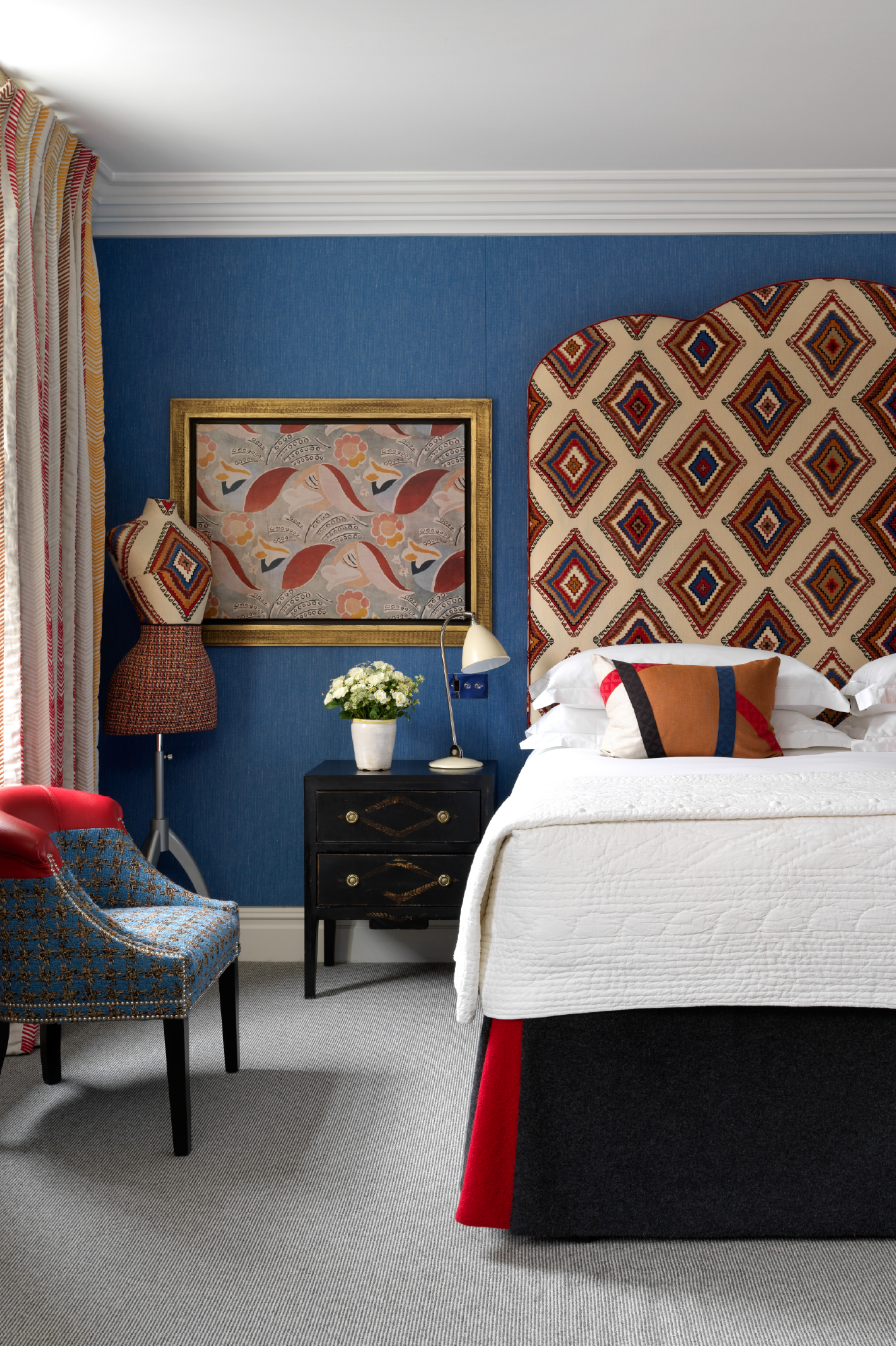
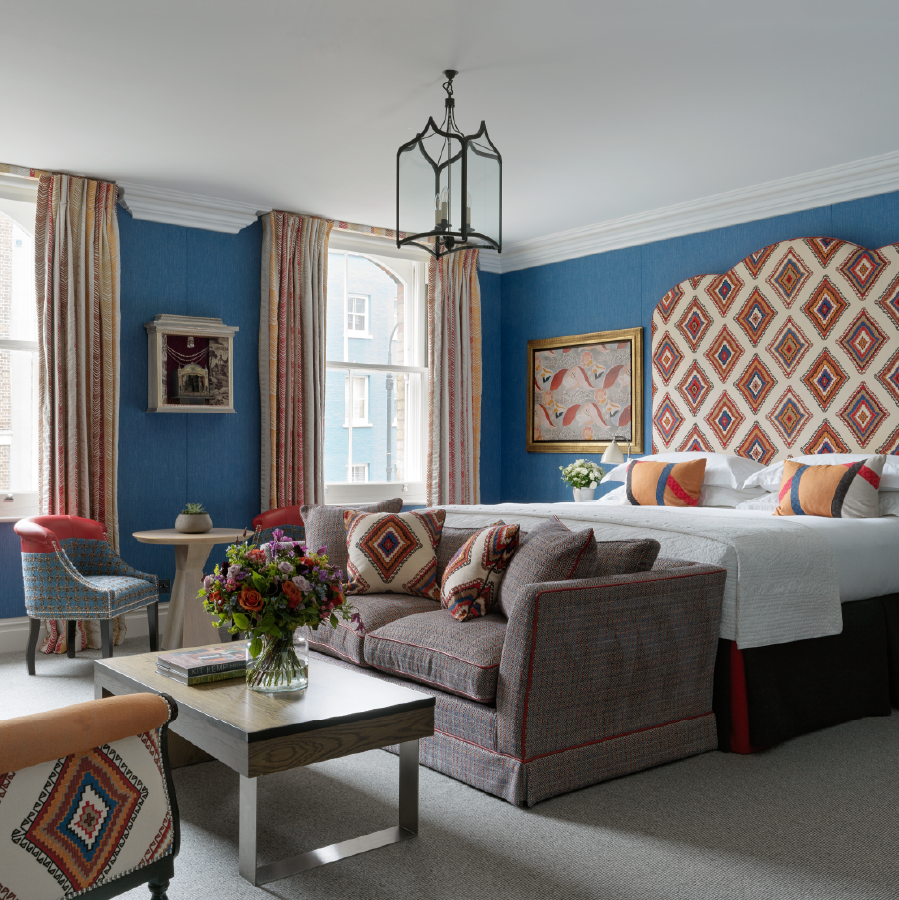
Kit Kemp-designed bedroom with bold patterned textiles at Charlotte Street Hotel, London
Pattern meets comfort One of the hotel's individually designed guestrooms pairs bold pattern with Bloomsbury-inflected colour and comfort
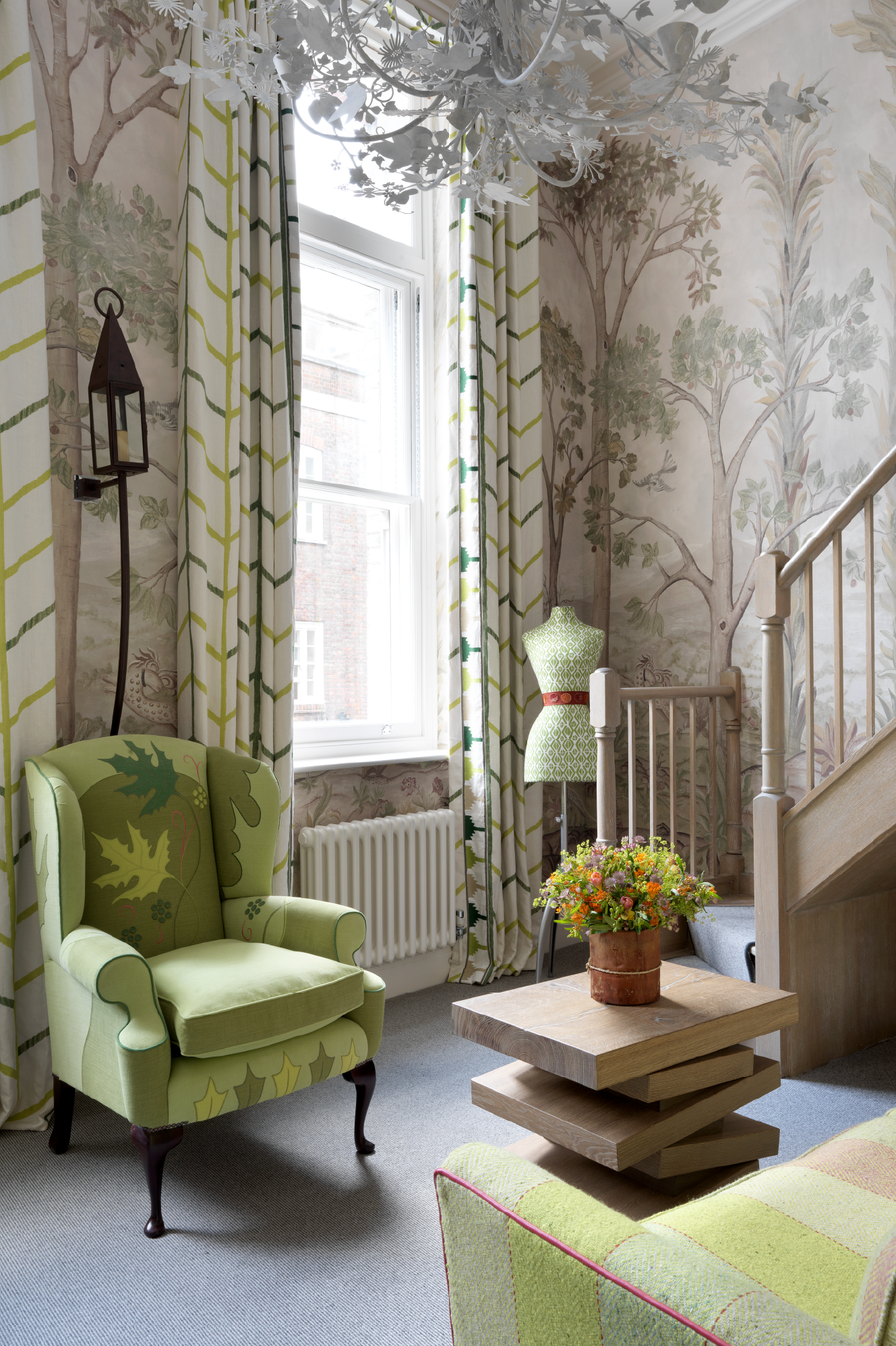
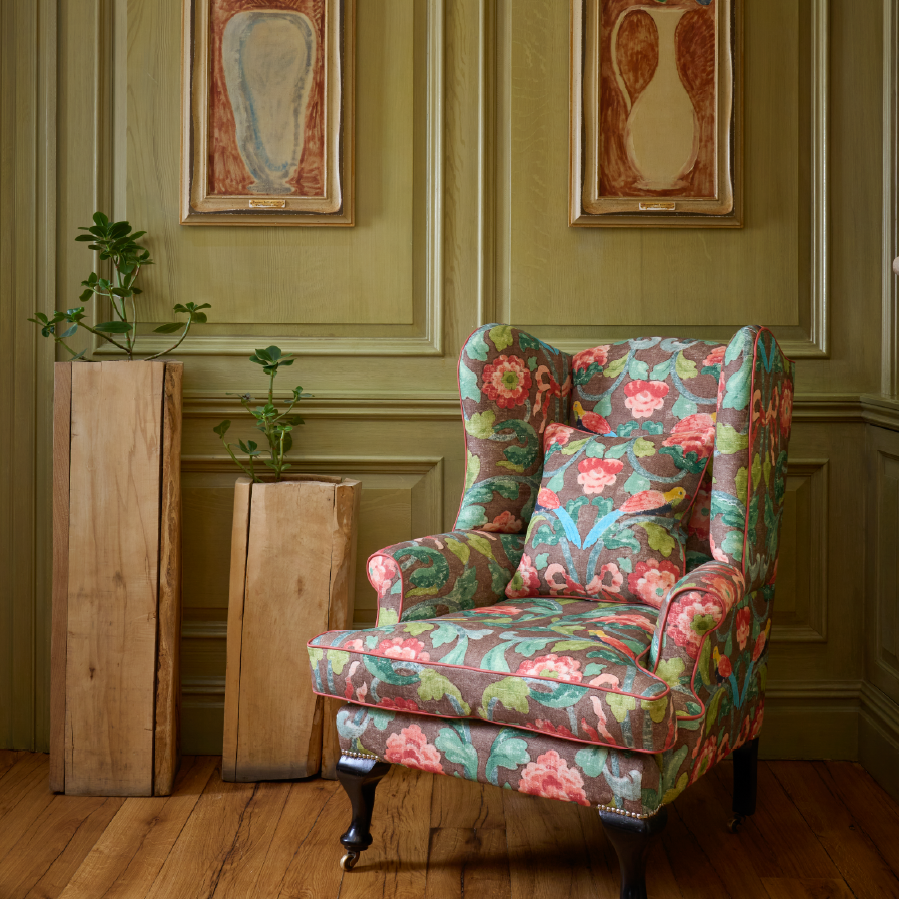
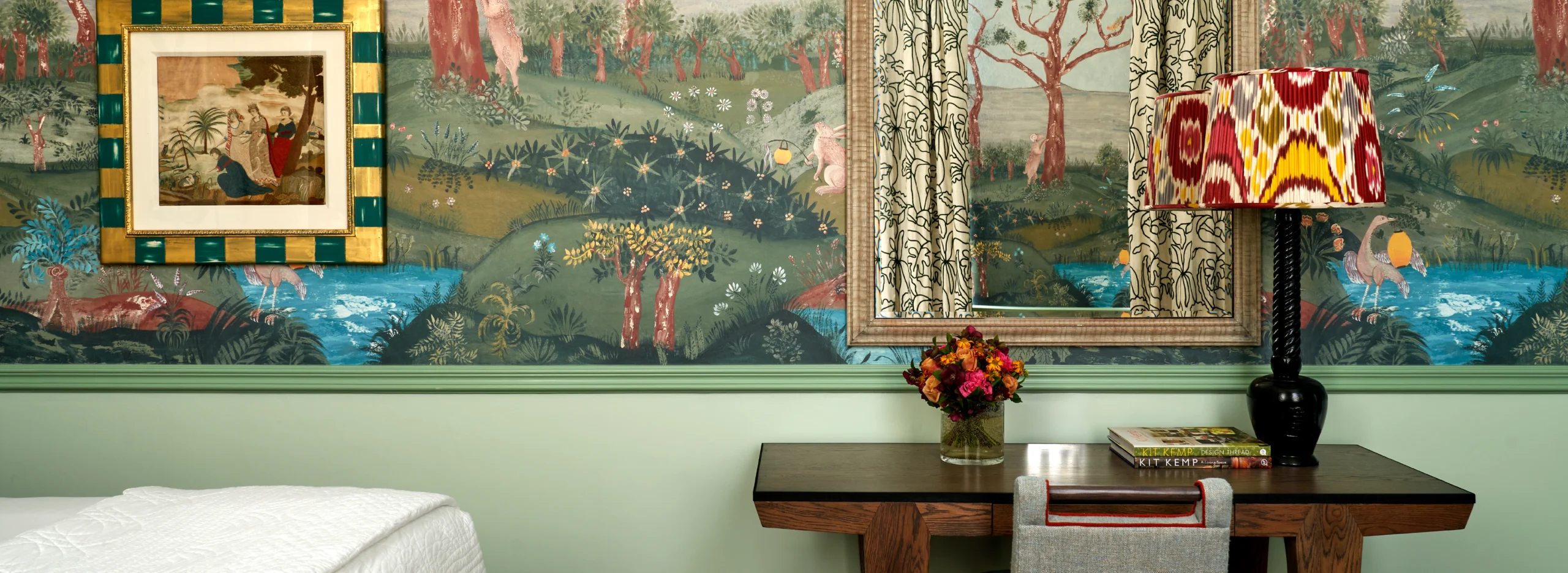
Walls that wander Illustrated wallcoverings and soft green furnishings continue the hotel's artful dialogue between history and contemporary design

Walls with stories
The wallcoverings take their cues from book covers by Bloomsbury artists, and one print draws on a Hogarth Press woodcut, a nod to the publishing house the Woolfs founded in 1917. The carpets come from old Bloomsbury woodblock designs. It is less a decorating scheme than a reading list.

Follow the clink of glasses and you reach Oscar, the hotel’s bar and restaurant, where Alexander Hollweg’s mural runs across three walls. It honours the Bloomsbury murals lost in the second world war, but it is set in today’s London, with laptops and mobile phones beside Omega-era abstraction and portraits of Kit and Tim in the mix. In summer the tables spill out onto Charlotte Street.

For something calmer, drift into the Drawing Room and Library. Each has a French sandstone fireplace and the kind of armchairs you sink into, and the walls hold original paintings by the Bloomsbury artists themselves. Vanessa Bell’s Basket of Flowers is the still life above the Library fire, with works by Duncan Grant and Roger Fry nearby. Nothing is roped off, and you needn’t be a guest to come and look. Tea is Bloomsbury-themed, and it is easy to imagine the talk turning to novels, with the faint sense that the circle might be listening in.

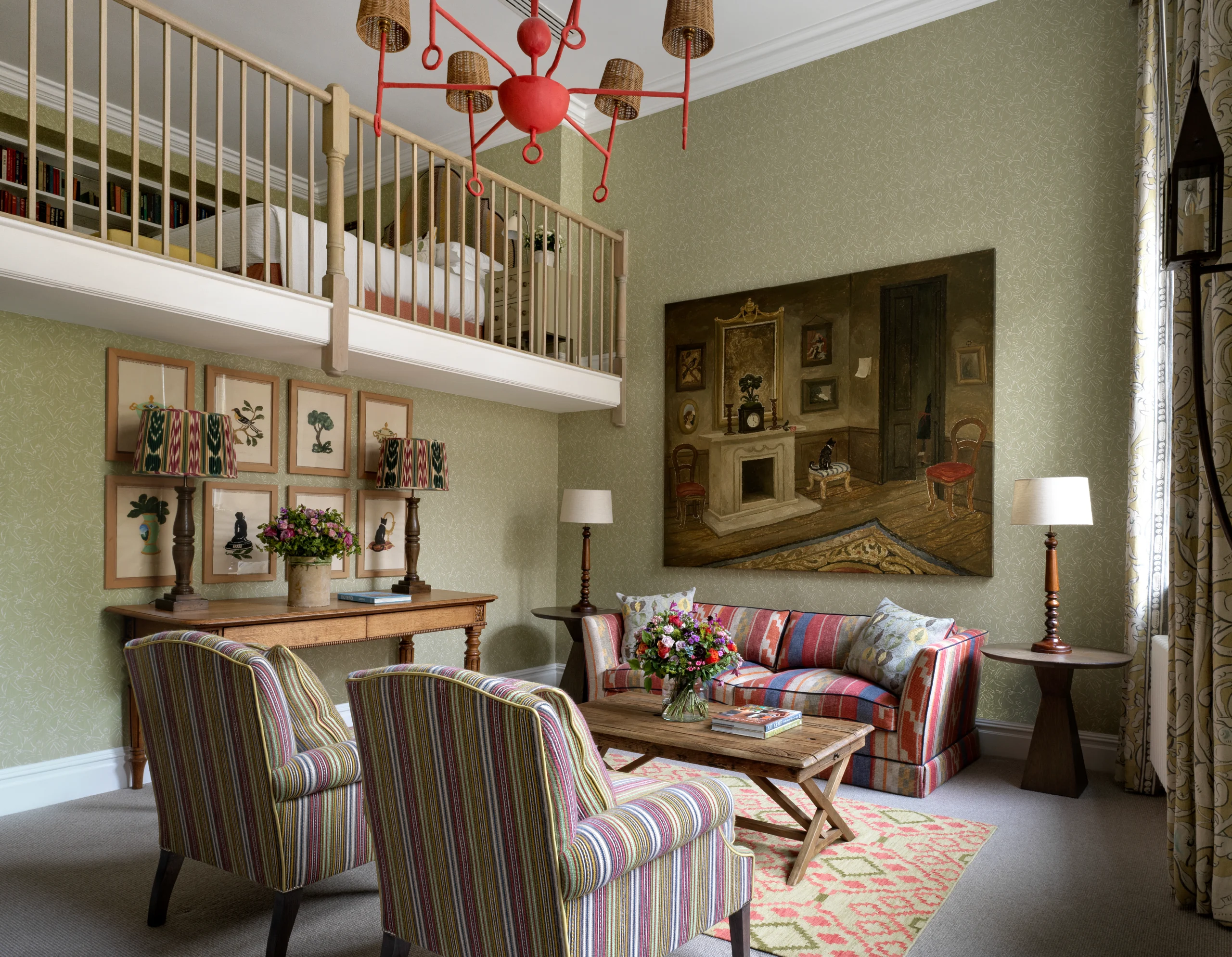
The loft life A loft-style suite pairs soaring proportions with layered textiles, collected artworks and a striking contemporary chandelier

Rooms worth lingering in
Upstairs, the story turns personal. There are 52 bedrooms and suites, each designed by Kit, many with a literary nod to the writers and painters who lived nearby. Upstairs, the nods are easy to spot once you know where to look. The One Bedroom Virginia Woolf Suite is named for the novelist and has a drawing room of its own. Room 500 has two framed Hogarth Press covers on its walls, a nod to the publishing house the Woolfs founded. In Room 202, a Bloomsbury-style painting hangs above the fireplace. And across the hotel, rooms carry original works by Vanessa Bell, Duncan Grant and Roger Fry.

Room 500, a top-floor suite, has a living room, a separate bedroom and a view across Bloomsbury’s streets, with two framed Hogarth Press covers on the wall. Pattern runs everywhere, from crisp stripes to embroidery-style weaves, but the comforts are calm: Frette linen, a well-stocked minibar, in-room dining at any hour and a scented pillow spray at turndown. It is bold without being brash, the kind of room where you’d happily stay in till noon.

When you do go out, Fitzrovia is right there, all Georgian brick and cobbled corners. Oxford Street is a minute away, Regent’s Park a short stroll, Goodge Street station three minutes on foot. You may well linger on Charlotte Street itself, known for its Michelin-starred restaurants, with the hotel’s own MICHELIN Key (one, for 2026) to match. Come back for the film club in the screening room, or book a spa treatment in your room. By the time the turndown is done and the patterned walls have settled into lamplight, there is no reason to be anywhere else.
By morning, you understand what Kit has built. Plenty of hotels are beautiful. Few carry an argument about taste so lightly, or give a neighbourhood back a piece of its own history. Kit’s hope, she has said, is that Roger, Vanessa and Duncan would find it fun. Walk out past the awnings and you’ll suspect they would, and that you’ll leave with your own sitting room in your head, already rearranging.
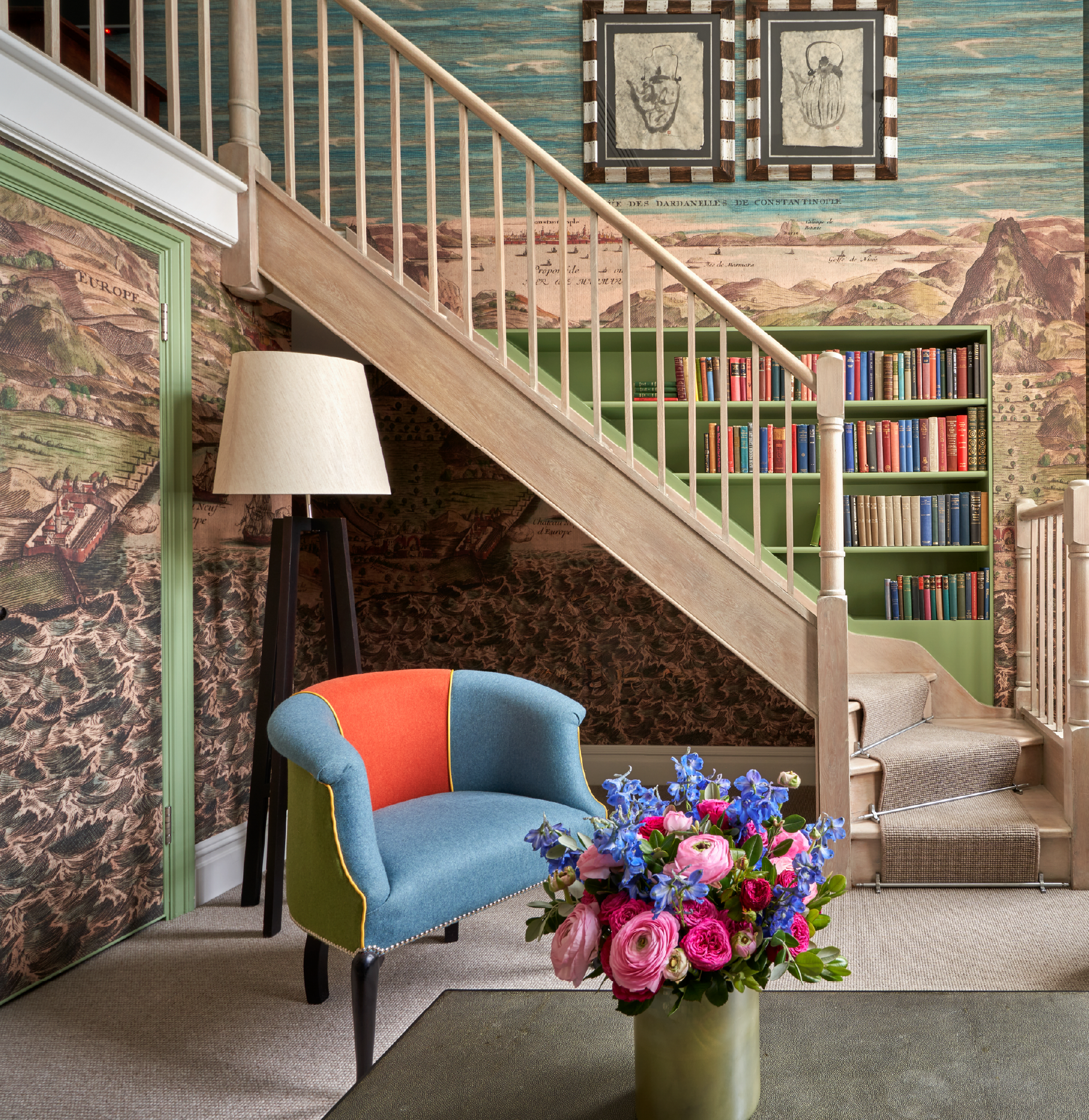
An artistic ascent A mural-clad staircase unfolds beside a colourful sitting area, illustrating the hotel's immersive approach to interiors
Scenes from nature Panoramic wallcoverings transform the room into a storybook landscape, bringing art and escapism to the fore
Join Our Newsletter

We're making your inbox interesting. Enter your email to get our best reads and exclusive insights from our editors delivered directly to you.


    More Articles

    Sign up for our Newsletter.

    X