Sorted by starlight
Past the hall, the house begins to unfold like a book, and the first chapters belong to the bedrooms. Every great house has a moment where its guests are sorted, and here it comes at the door of a room. The rooms and suites are gathered into four collections, each a small world with its own palette and story.
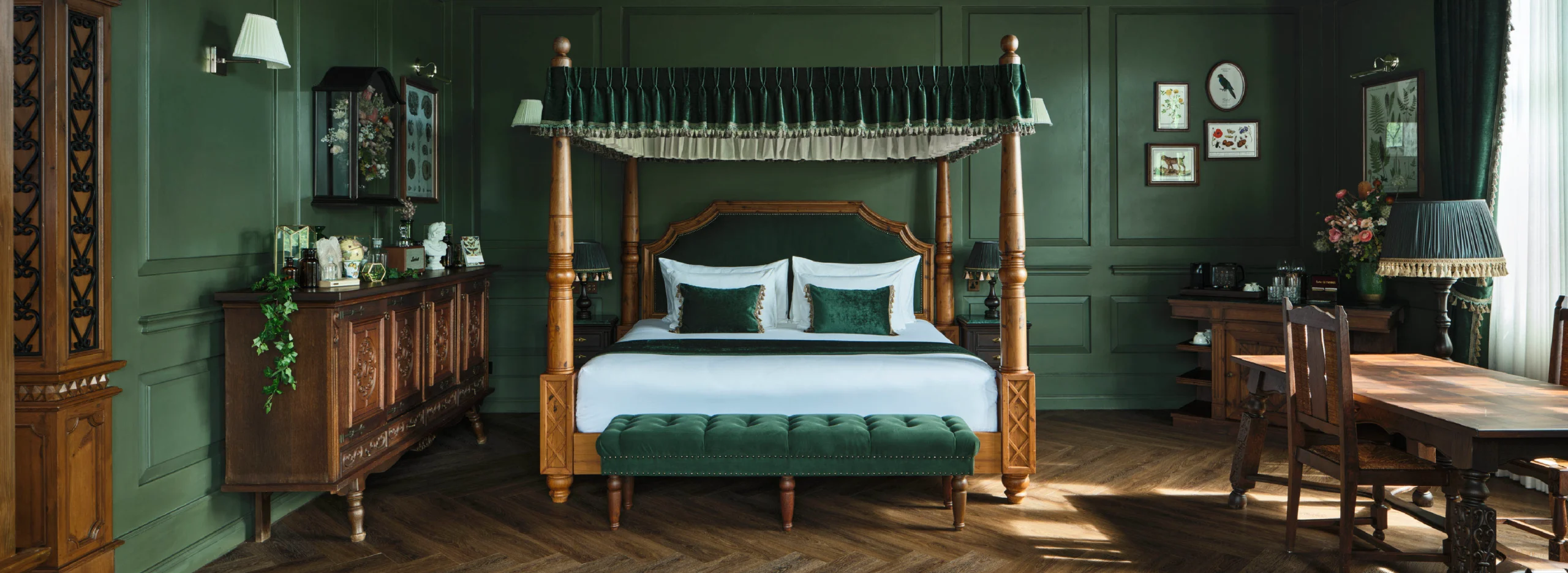
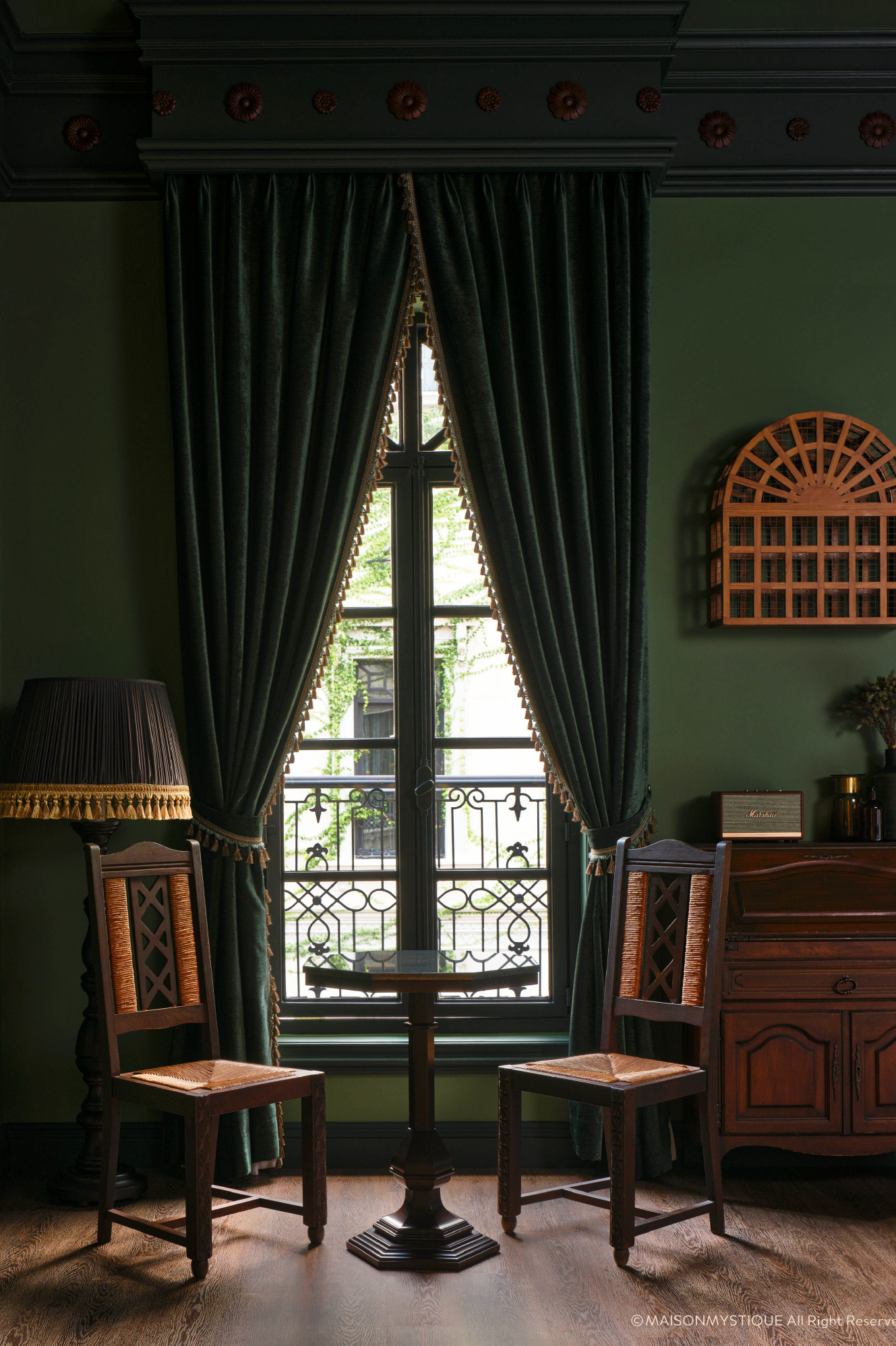
Botanical Obscura is for the naturalists. The Darwin Room, a heritage suite, recalls a nineteenth-century study in emerald velvet and arched wood panels, hung with illustrations of flora and fauna. Nocturnal Curiosities is for the collectors, and Rosey’s Curiosities keeps preserved butterflies under glass, wings caught mid-flutter, like a cabinet that might come alive at midnight.
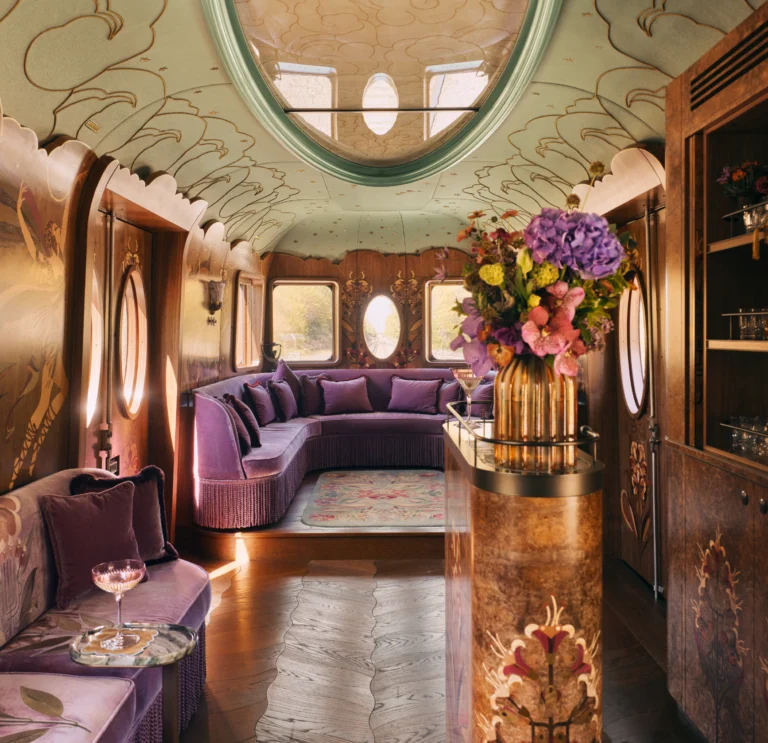
Siren Reverie is for the romantics, where Lilith’s Heart glows in teal and scarlet beneath painted sacred hearts. Celestial Lullaby is for the stargazers, and Odyssey to the Stars, a two-storey suite and the largest in the house, is cloaked in deep night blue and dusted with tiny stars. Behind any of these doors, velvet softens every sound, and the story shifts from something read to something lived in.
A corridor of pages
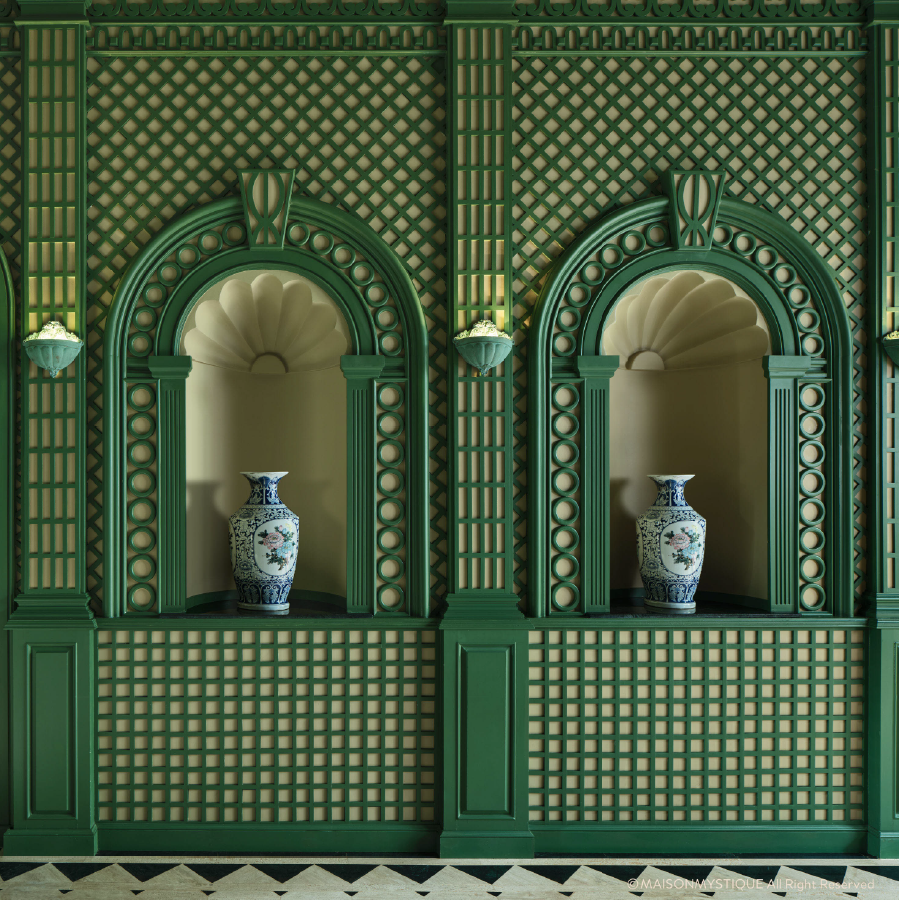
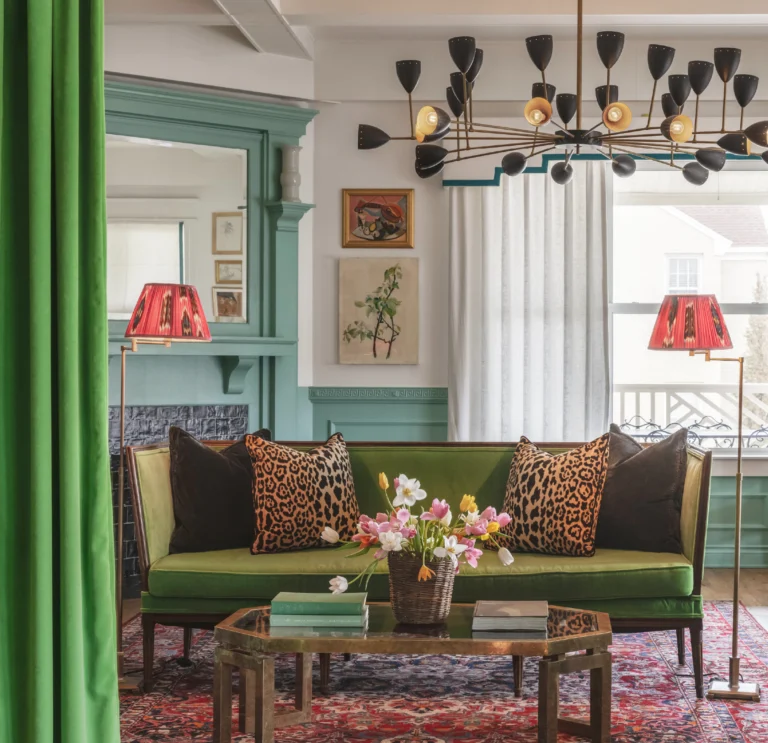
Beyond the bedrooms, a lantern-lit corridor turns each shared space into the next page. The Garden Hall, a light-filled sitting hall planned as a sunlit sanctuary, is washed in alabaster and verte anglaise, the soft greens of faded frescoes, with French latticework climbing the walls in a quiet geometry, like the framework of a secret garden. Stone busts and botanical reliefs sit among potted palms like guests who arrived early and never left, and the hall’s own cast-iron staircase curves up beneath a coffered ceiling that catches the morning light.
The Hall of Starry Night, the house’s room for celebrations and private gatherings, is all deep indigo and shimmering gold, its ceiling hand-painted with countless tiny golden stars and crescent moons that seem, by lamplight, to drift. The Bibliothèque Émeraude, the house’s library, is a reading room by day and a lounge by evening, wrapped in mysterious dark green, with carved wooden shelves and tufted velvet sofas. The shelves are labelled by gemstone, amethyst, lapis lazuli and jade, and a wrought-iron spiral stair winds up through a beam of window light. After dark, live jazz and classical music drift between the stacks, and the books seem to lean in and listen.
Dining keeps to the story. The Vivarium, the signature restaurant, sits beneath a floral ceiling in a garden-conservatory setting, and The Botanist’s Bible tearoom is hung with vintage botanical illustrations. In rooms like these, a portrait that blinked would hardly be a surprise.