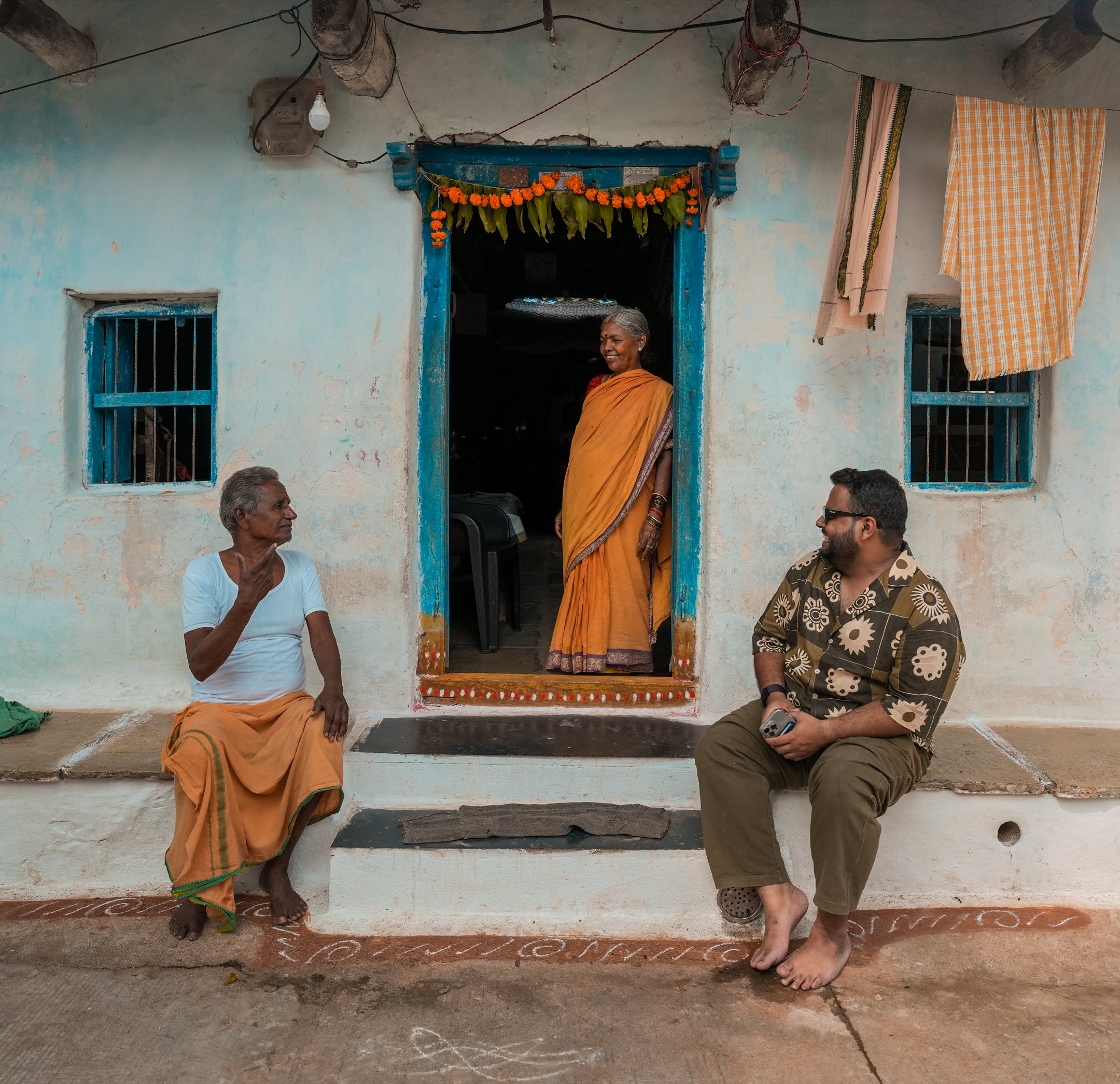
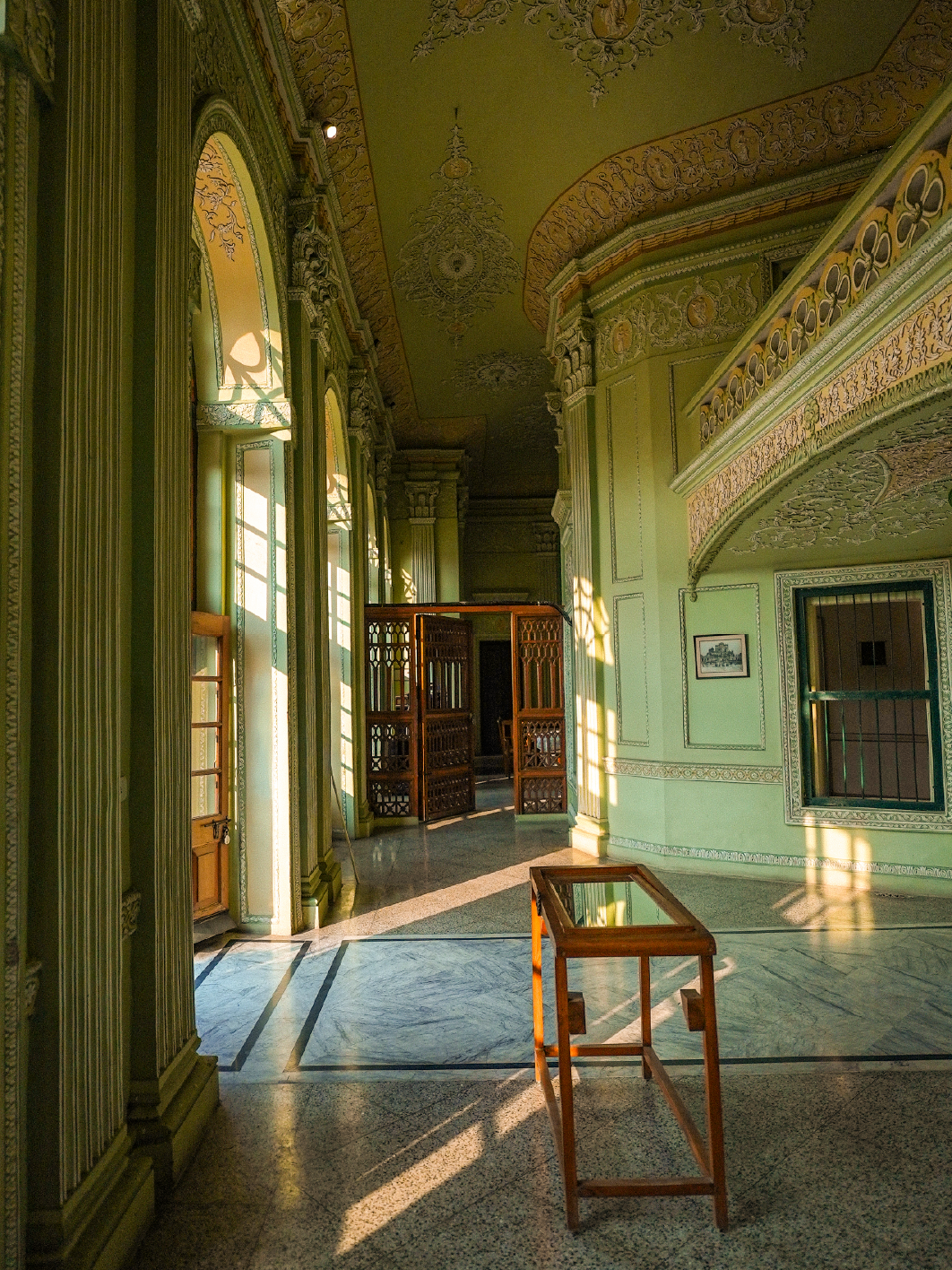
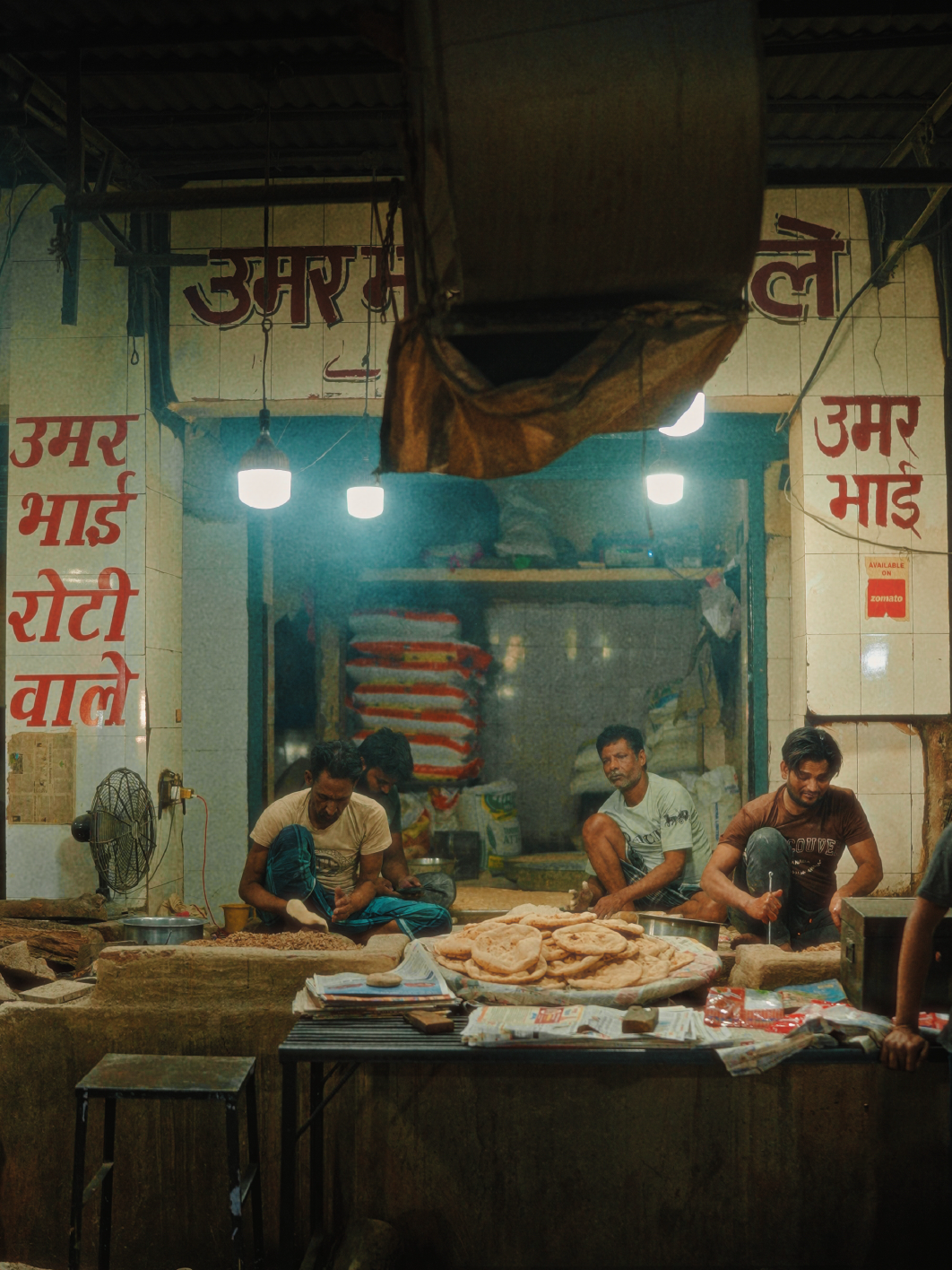
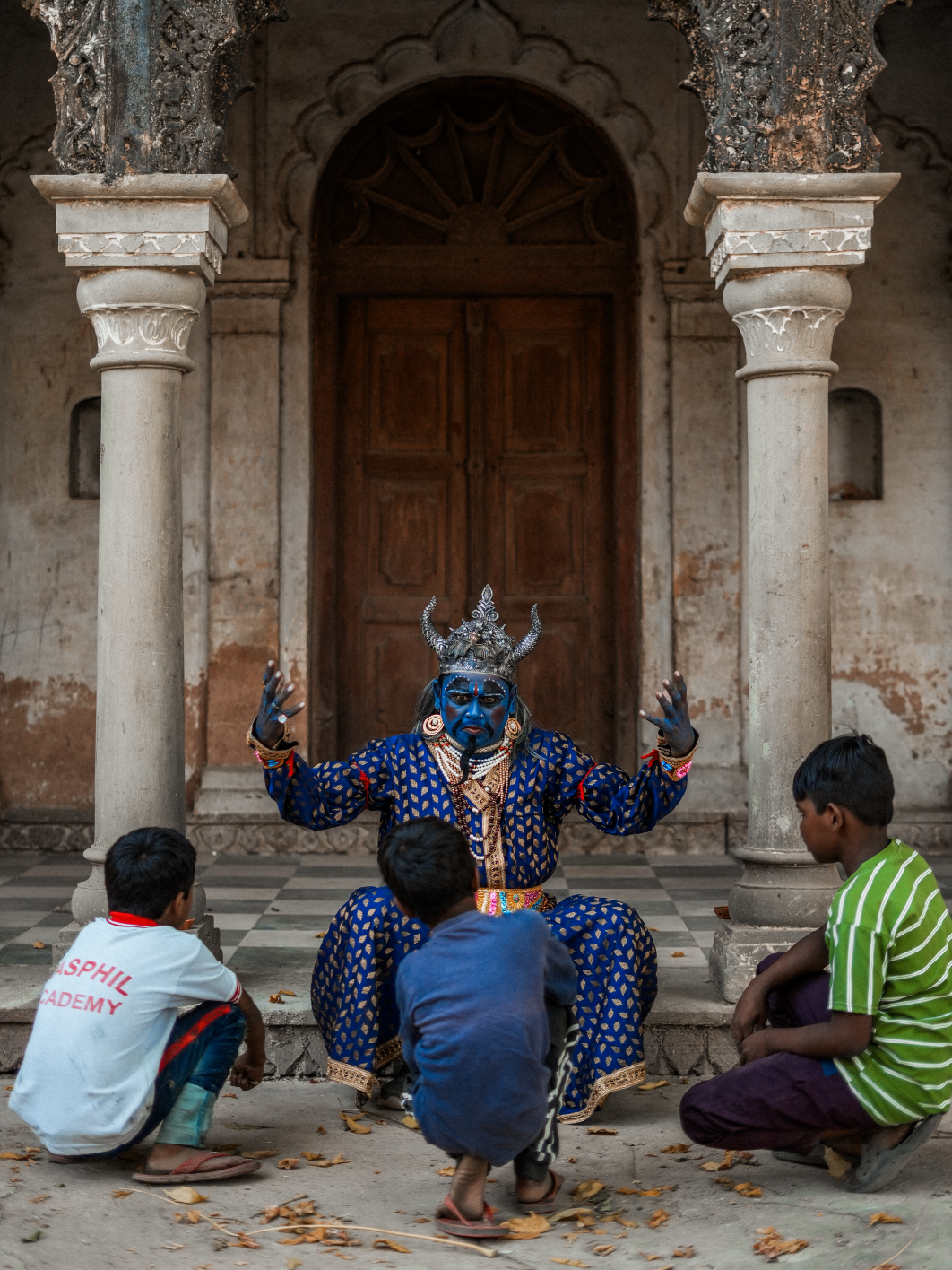
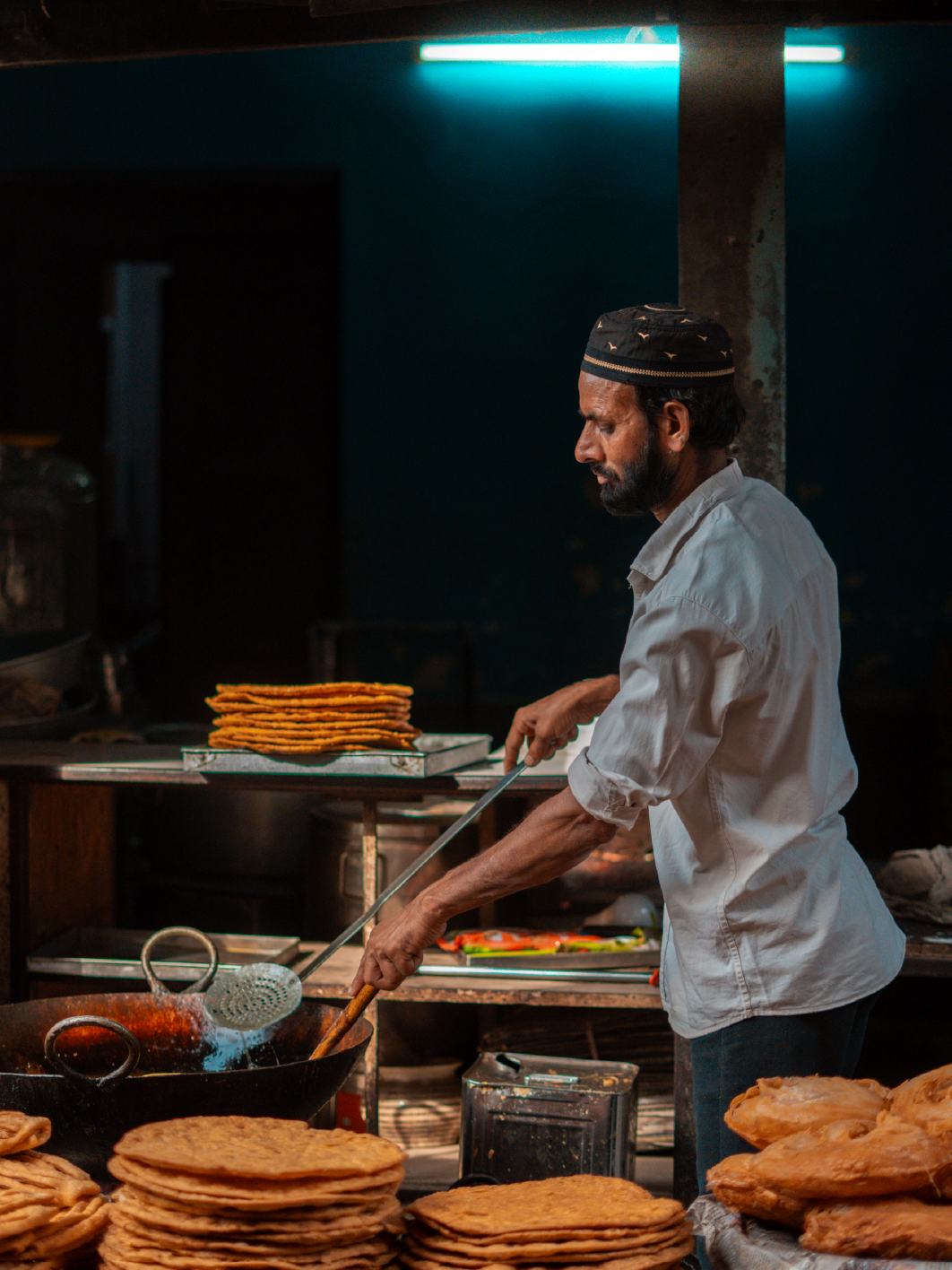
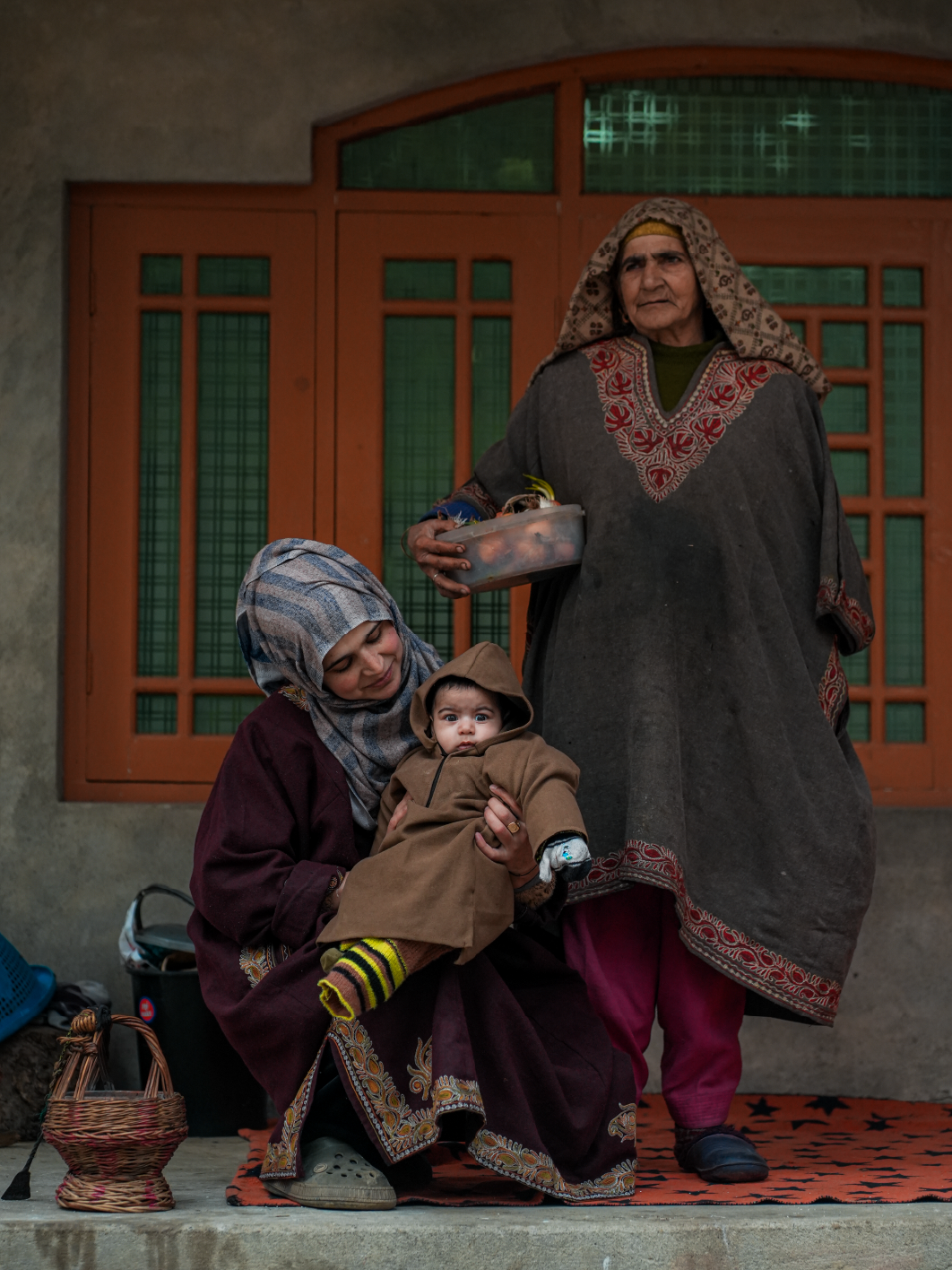
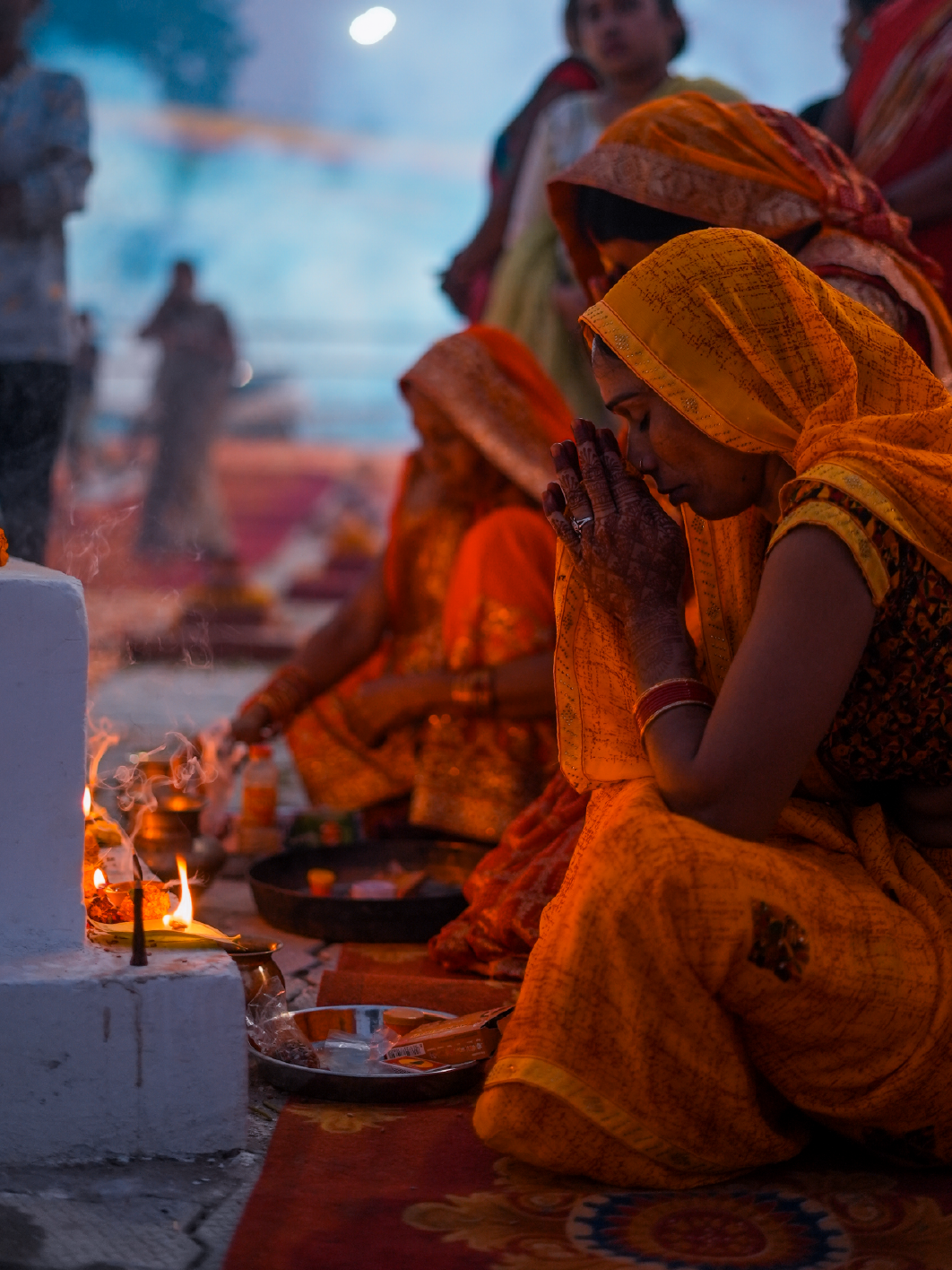
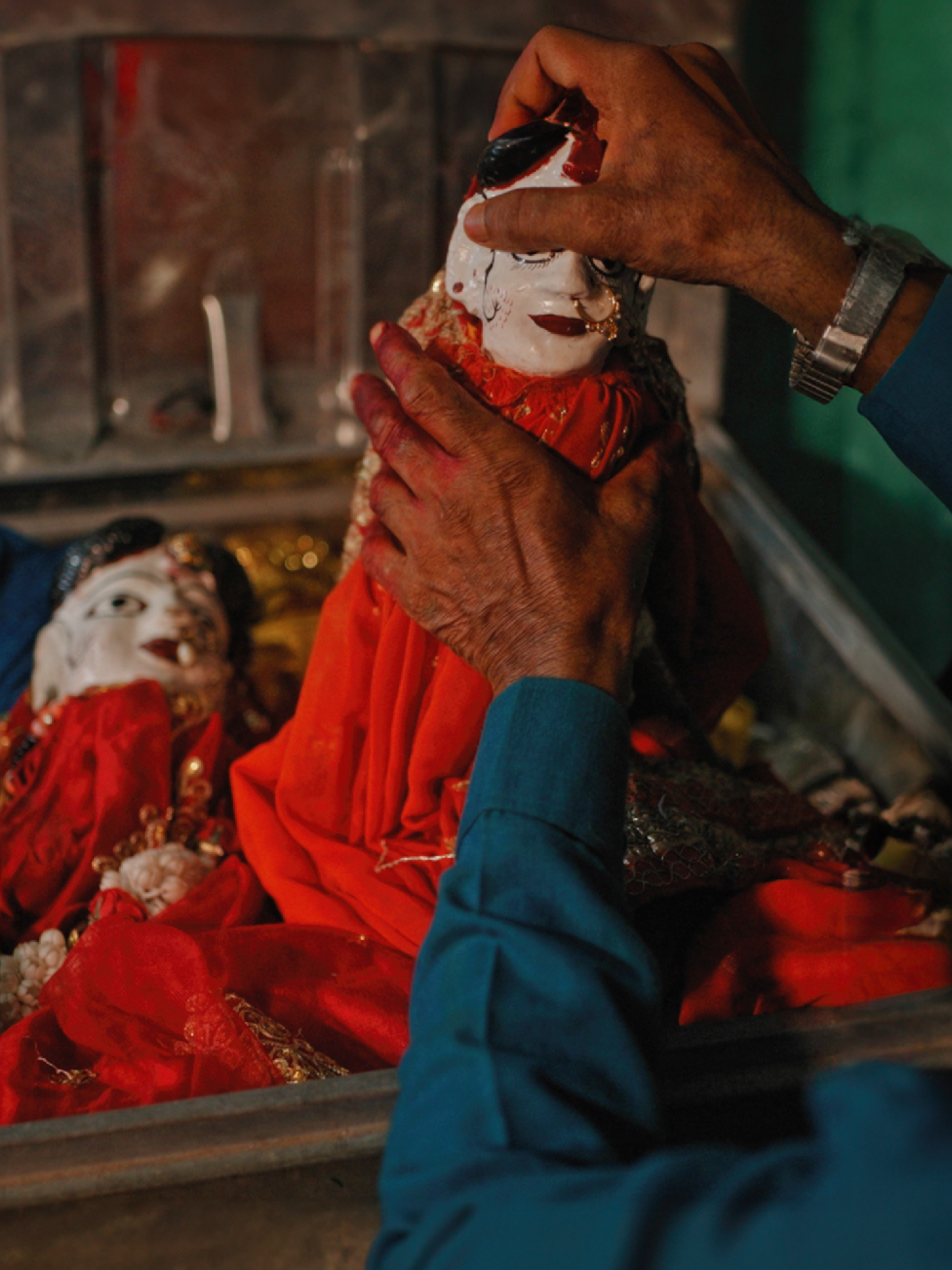
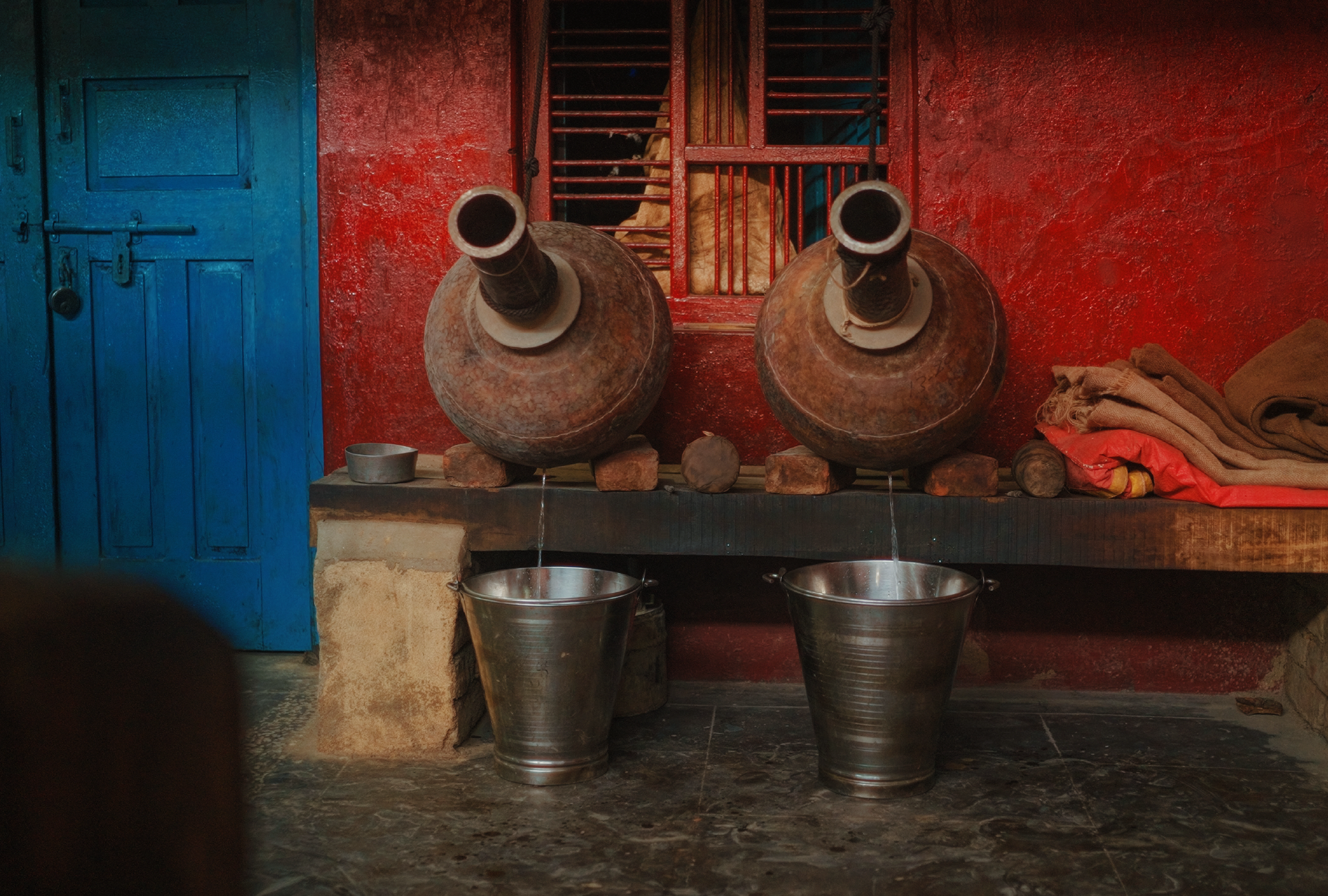
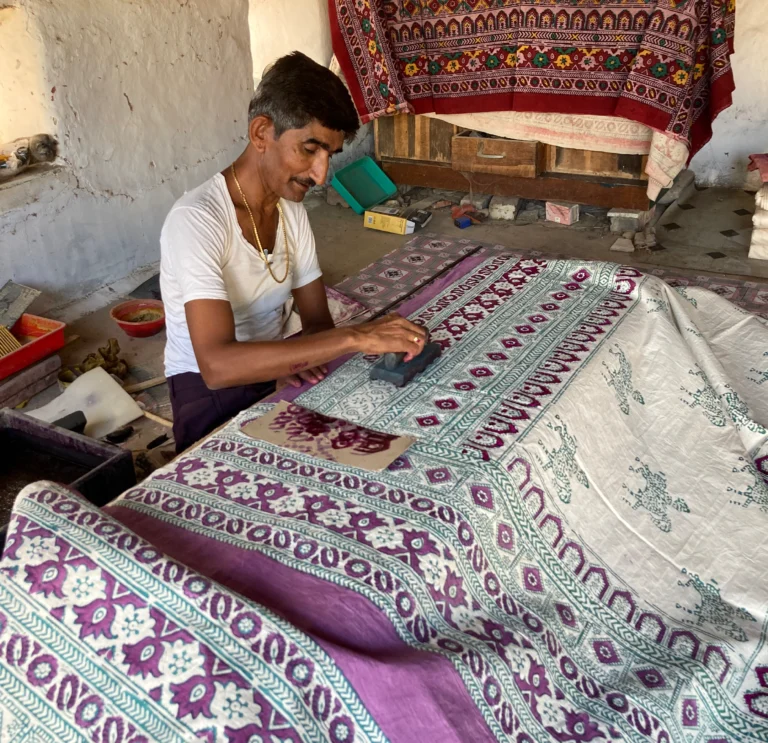
The romance of nostalgia weighs heavy in his work, in a way that takes you to a time where slow was a way of life. There’s magic in the minarets of the forts, love in the dastarkhwan that is laid, beauty in the bazaars and the guldastas, and joy in rediscovering the gullaq. Stories unfold with every frame, warm and brimming with memories of yore. Lucknow-based photographer Maroof Umar grew up in a home where stories were not told formally, they were simply part of everyday life. “Conversations often moved between the present and the past, and somewhere in between, you picked up a way of seeing the world. Summers, especially, had a certain stillness. Afternoons with a hand fan, plates of kharbooze, seeds drying on newspapers, and time moving at its own pace. There were small rituals, eating together, visiting familiar places, and getting to know the people behind the work they did. It was a simple life but full of observation. And I think that stayed with me,” says Maroof.
His work is an antidote to the fast-paced, algorithm led, mindless consumption where spaces have changed, interactions have become shorter, and attention is constantly shifting. Slowness here is intentional. He says, “It is always about going a layer deeper. Not just what something looks like, but what it means, who it belongs to, and how it exists in today’s world. The objective is not just documentation, but preserving perspective.”
Storytelling through visuals was not always on the cards though. Maroof found himself drawn to people, places and their details. Over time, he realised that visuals have a quiet power allowing them to carry emotions without needing too many words. Here he shares with us what is at the core of this practice.
Pragnya Rao: How do you stay true to the cultural fabric of your stories?
Maroof Umar: By taking my time. You cannot rush authenticity. You have to sit with people, listen to their stories and just allow it to unfold on its own. When there is trust, the story naturally finds its honest form.
Pragnya: Your work is deeply rooted in culture. Is that intentional?
Maroof: It is not something I try to do consciously. It is who I am. Being rooted gives clarity. It grounds your work and keeps it honest. I want to present the stories in their vernacular form without altering it, or trying to make them fit into a certain mould.
Pragnya: How do you choose your subjects?
Maroof: I am drawn to stories that feel like they might disappear if they are not told. It could be a craft, a profession, or even a way of life. Sometimes it is not logical, it is just a feeling that tells me this needs to be documented.
Pragnya: What has been your most cherished experience till date?
Maroof: There are many, but the ones that have stayed with me are the ones where someone says, “I had forgotten about this.” Also, meeting artisans who are among the last of their kind. Their stories carry a certain weight, both beautiful and heavy at the same time.
Pragnya: What have been your challenges so far?
Maroof: Time is the biggest one. Many of these stories are fading, and there is always a sense of urgency to capture them before they fade. At the same time, the digital space often demands speed, which can sometimes go against the depth these stories require. Finding that balance is an ongoing process.
Pragnya: What does authenticity mean to you?
Maroof: Authenticity is about intent. It is about not adding or taking away for the sake of perception. When something is real, people can feel it. That is what I try to hold on to in my work.
Pragnya: How do we carry culture forward without losing its essence?
Maroof: Culture has never been static. It has always evolved. The key is to carry forward its meaning, not just its form. If the essence remains intact, adaptation becomes natural. That is how culture survives, not by holding it in place, but by allowing it to move forward with integrity.