Kantha comes from leftovers—from old sarees, worn dhotis, torn bedsheets. The word finds its root in Sanskrit’s kontha, which literally translates to rags. Decades ago Bengali women from rural clusters started layering scraps of cloth that could no longer serve its original purpose, crafting quilts held together with a simple running stitch. Nakshi Kantha, the craft's most elaborate and narrative strand, carries that impulse furthest — its motifs shifting from district to district along with the folklore that shaped them. “What is remarkable is that, within this very simple and practical process, women created something incredibly expressive. They embroidered flowers, animals, people, scenes from village life, mythology and stories from their own imagination,” says Malika Varma, one half of the founding duo behind SHEKantha, an NGO focused on reviving the craft of kantha.
The Birth of SHE
In 1986, Malika’s mother Shamlu Dudeja walked into this tradition as an outsider. She was not born into a family of kantha-makers, she was a mathematics teacher from Kolkata, the daughter of a maths professor father and a mother who taught her embroidery as a hobby. At a craft fair in Santiniketan, she came across a group of women selling kantha wall hangings and stopped. "What fascinated her was the extraordinary embroidery these women were creating with nothing more than a needle and thread," says her daughter, Malika Varma. "She immediately recognised that there was an artistic language and a depth of storytelling in their embroidery that deserved to be seen."
Shamlu did not become a mere collector of the craft though—instead, she began asking why women with this much skill had no way to turn it into a livelihood, and why the craft was limited to rural Bengal, largely unseen and undervalued. This gap became the founding logic of what she and her daughter would eventually build: Self Help Enterprise (SHE) and its commercial arm, Malika’s Kantha Collection (MKC). “Our intention was therefore not only to revive kantha but also to bring in empowerment to the artisans and make this a form of livelihood. It was to bring dignity and value to the craft and, most importantly, to the women who created it,” she emphasises.
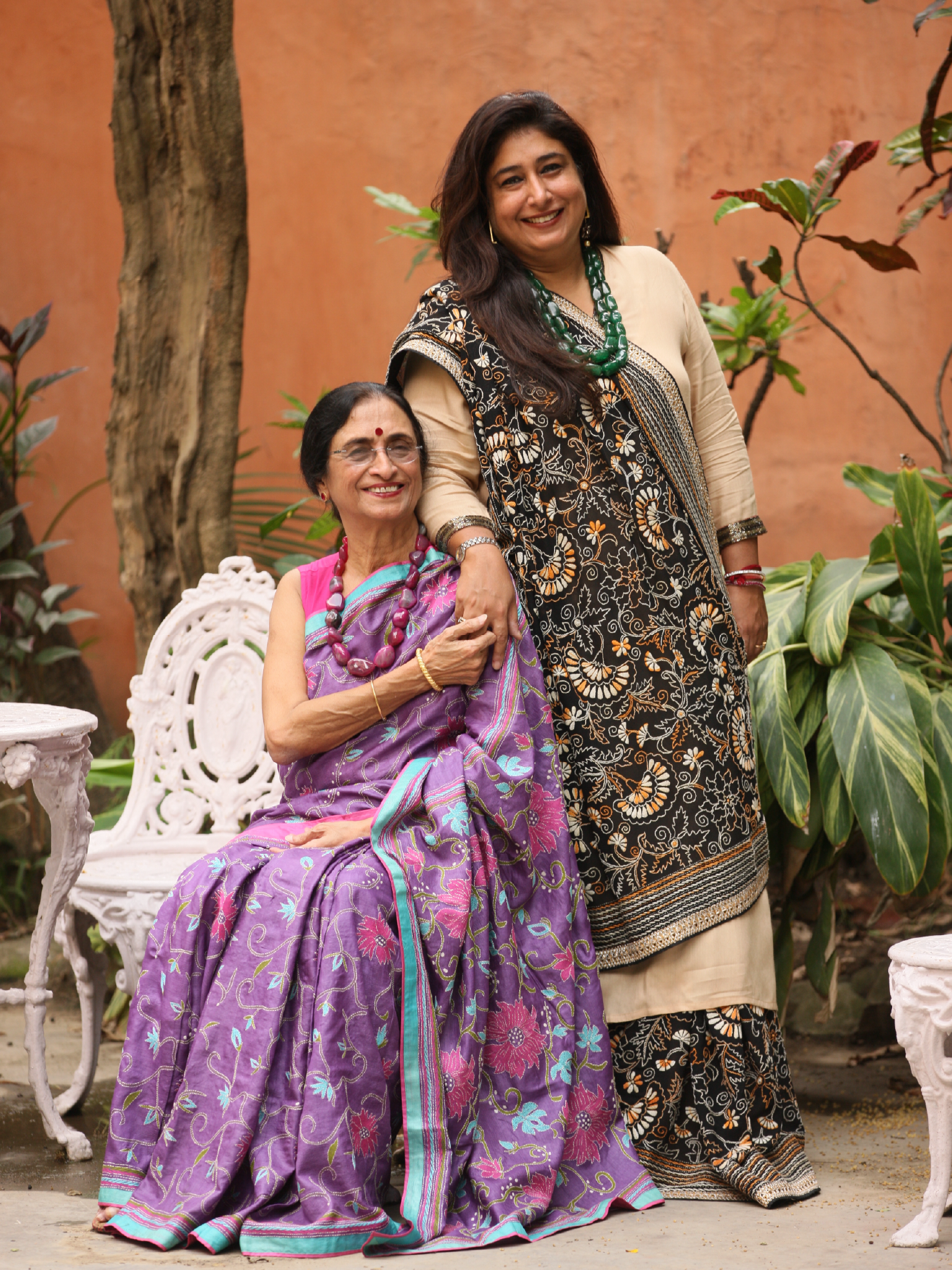
Malika’s own path into the craft was hardly linear. She spent 18 years running a kindergarten school, trained as an educator, but having watched her mother build an entire ecosystem from nothing, she slowly realised she could not separate the craft from her own life. Kantha, she says, “found me rather than the other way around”. When she did fully commit, she brought a distinct instinct, pushing kantha into contemporary design without loosening the artisan’s grip on the actual stitching, what she calls the “traditional-modern confluence”.
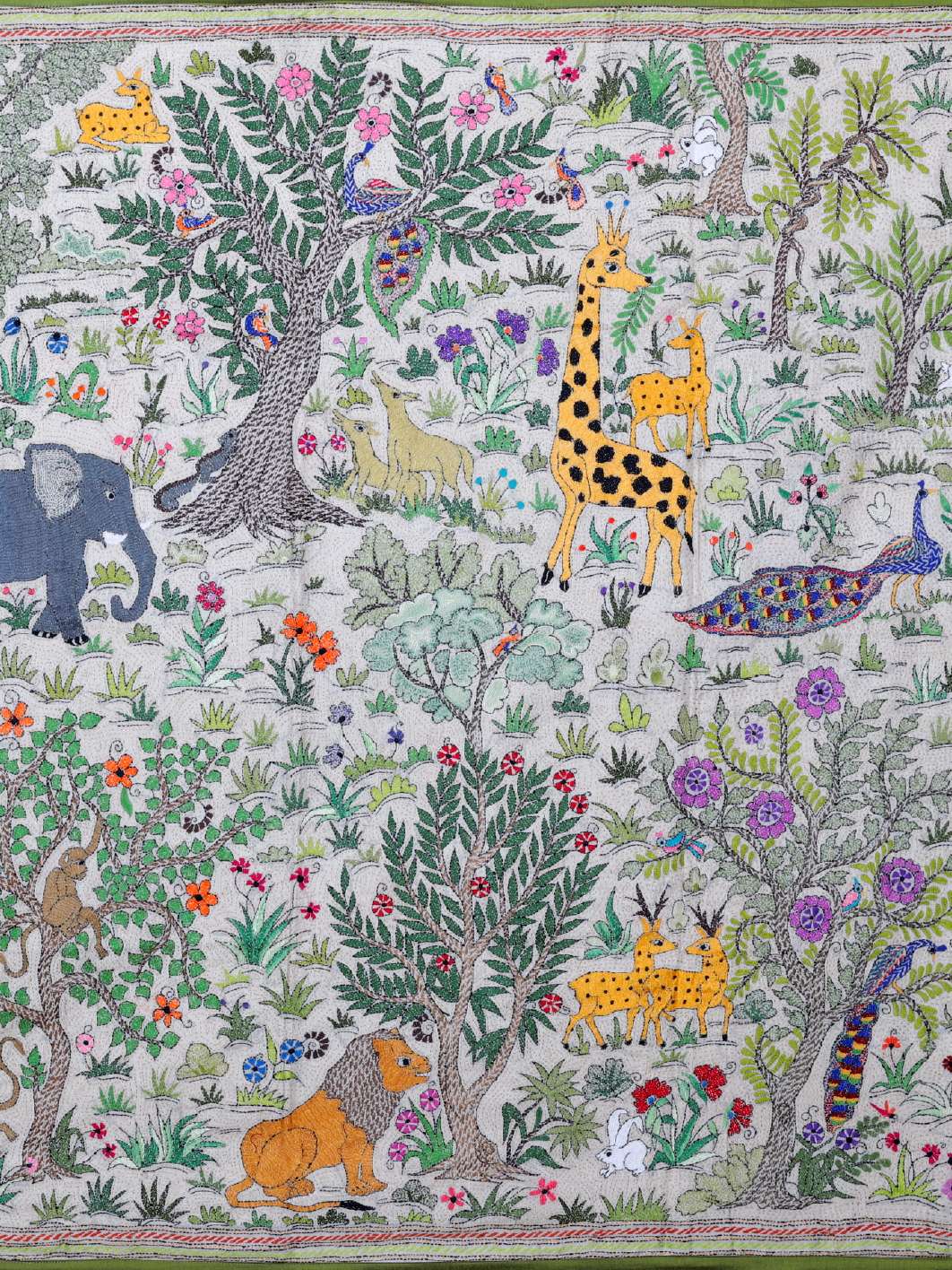
Nakshi Kantha, the craft's most elaborate and narrative strand, carries that impulse furthest — its motifs shifting from district to district along with the folklore that shaped them
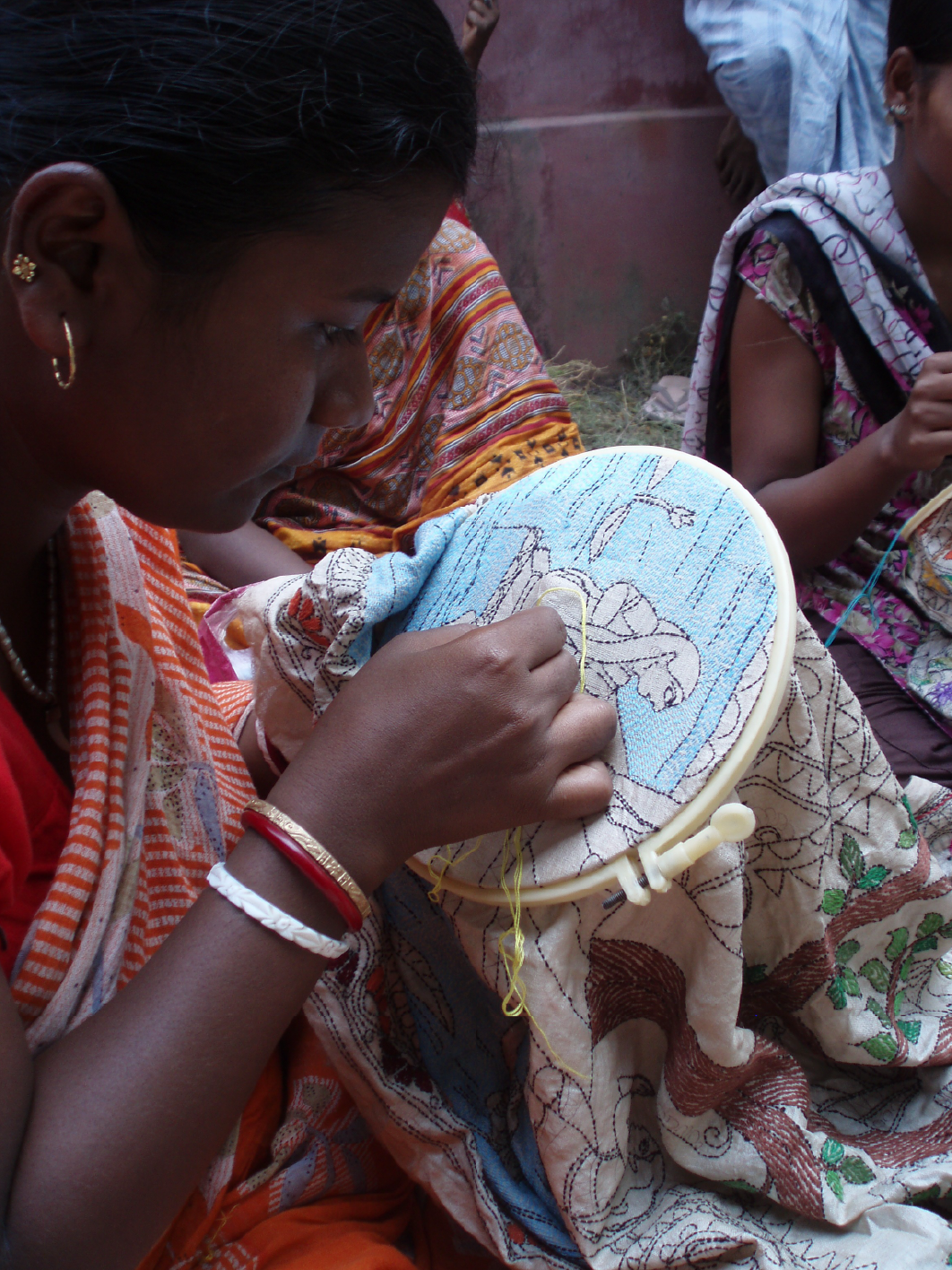
A piece begins from a rough brief, outlining a theme and composition. From here, the artisan takes over—stitch choice, colours and smaller narrative details belong to her
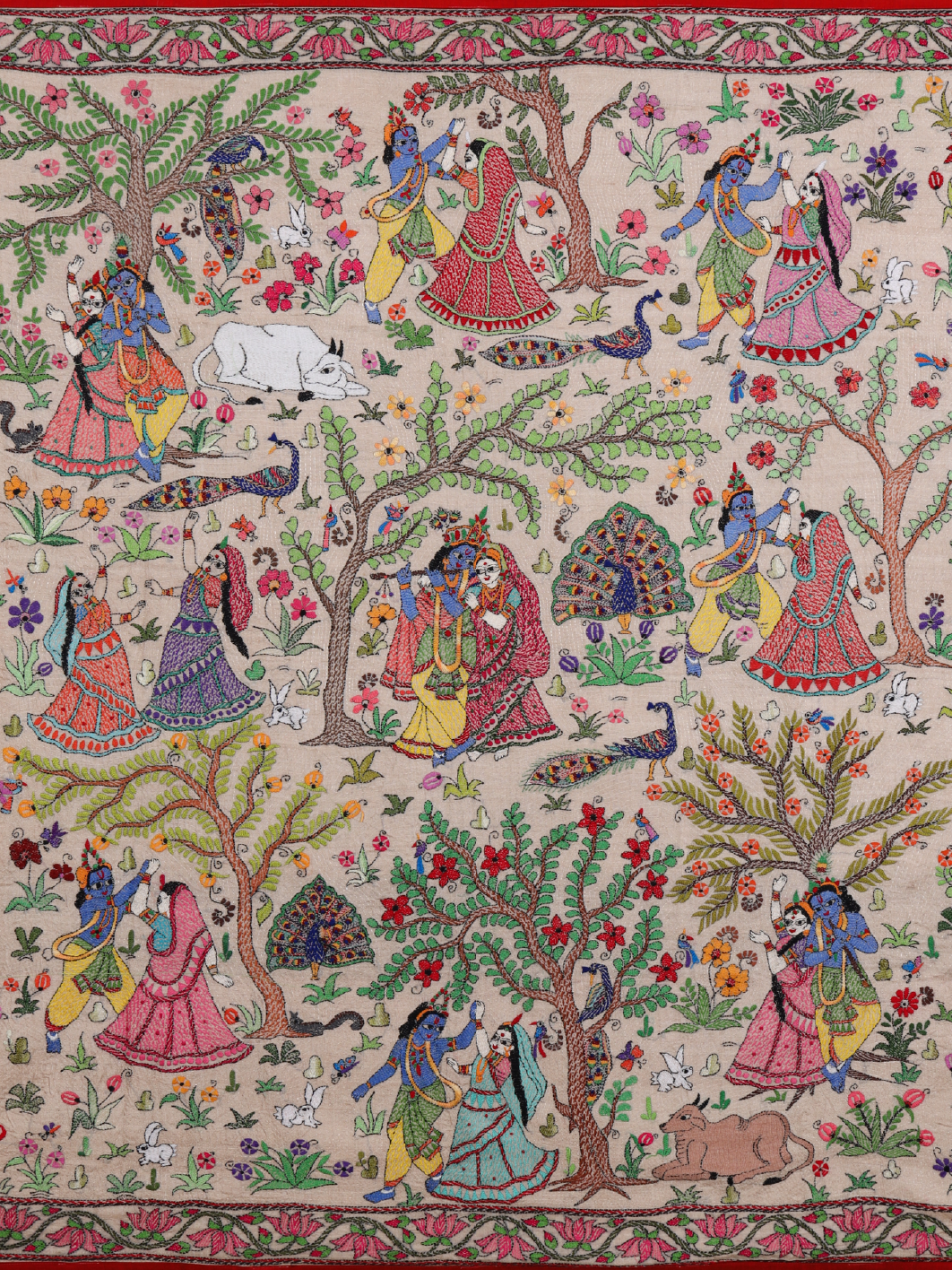
The women artisans create incredibly detailed works of embroidery using a simple, small circular frame, lying down in their homes and squeezing the work in between all their chores
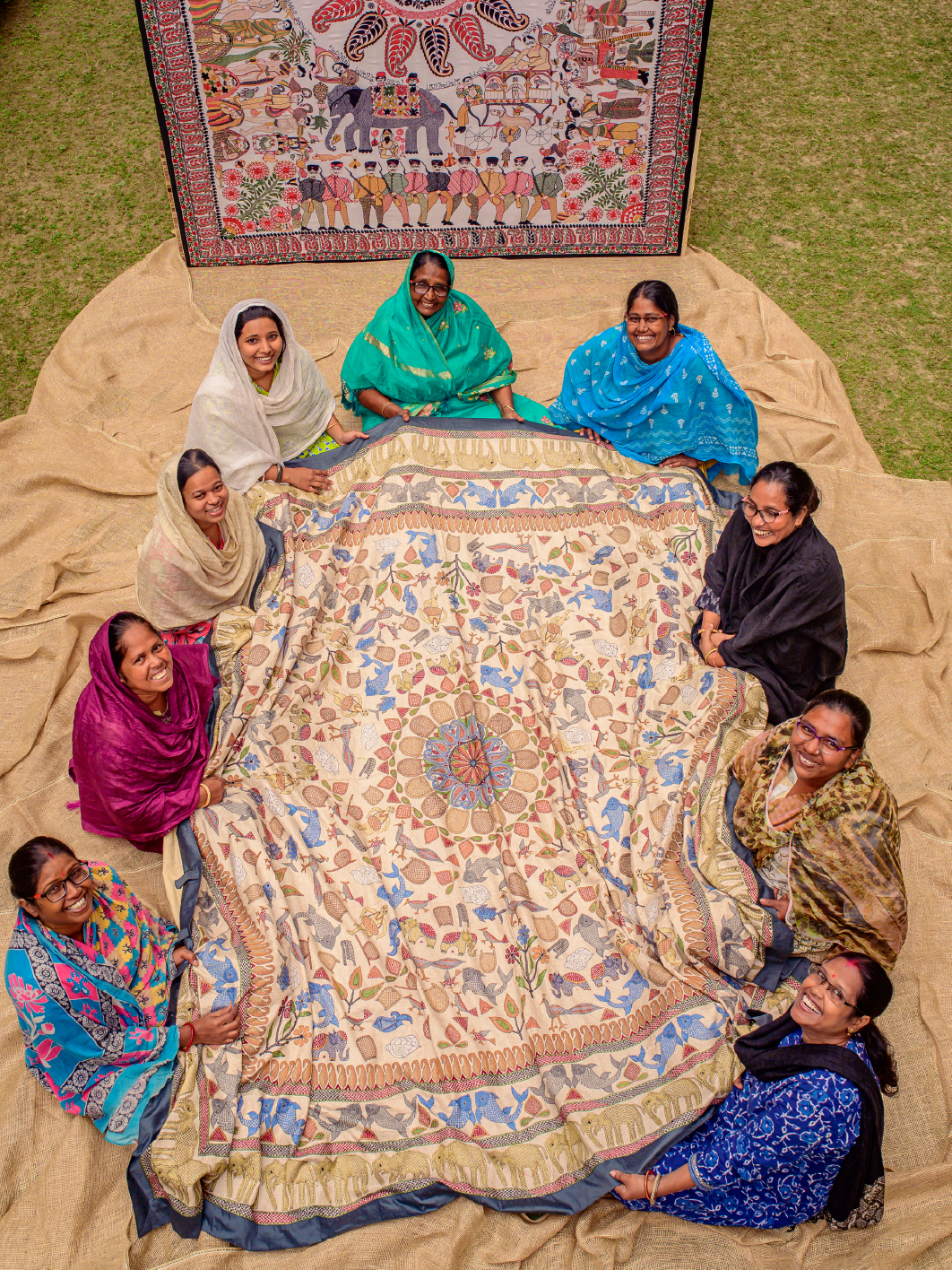
SHE Kantha started with fewer than 700 women engaged in the craft commercially; today, more than 60,000 women carry the legacy forward, with 1,218 artisans directly supported under the SHE Kantha umbrella
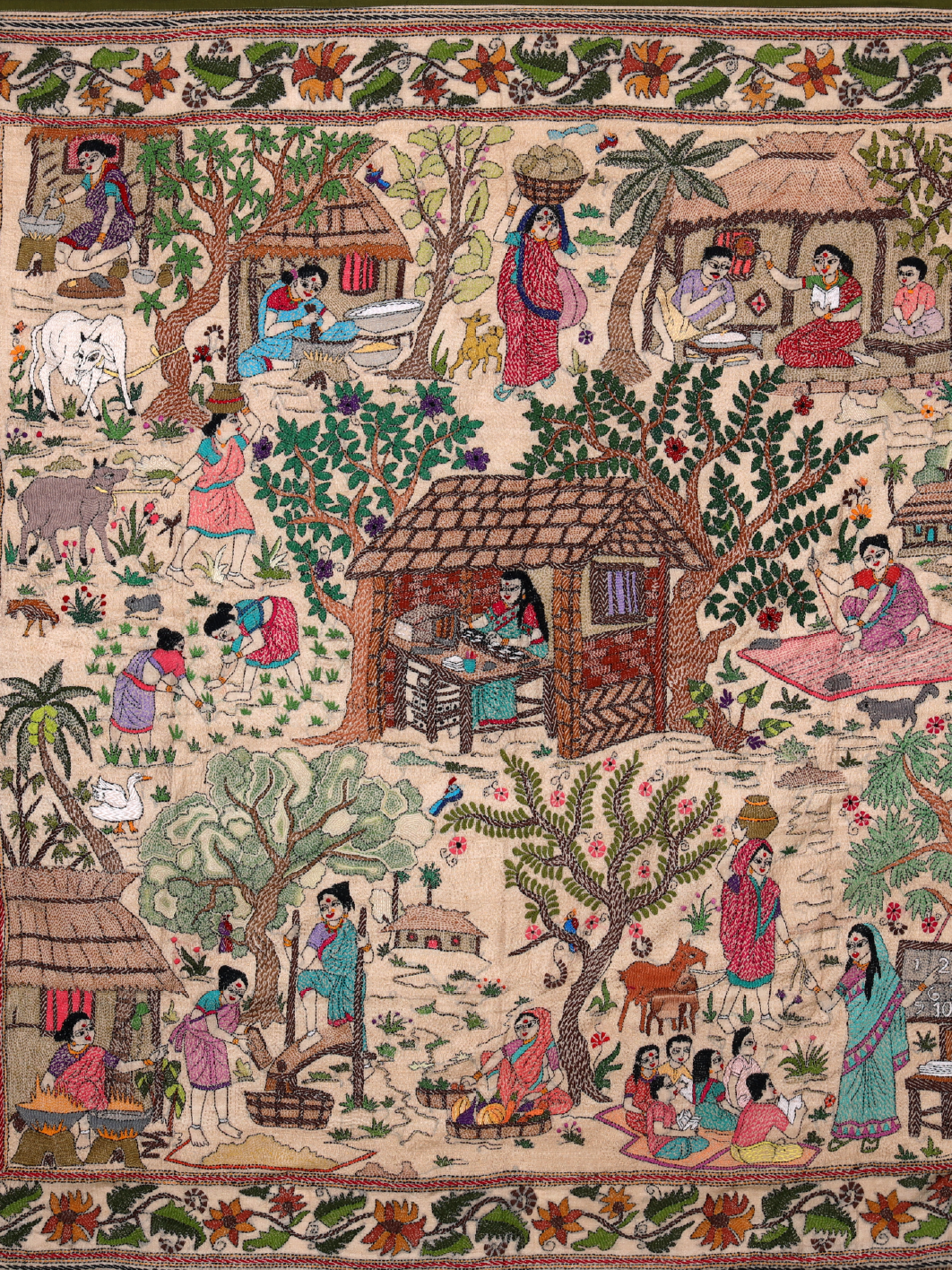
Women embroider flowers, animals, people, scenes from village life, mythology and stories from their own imagination onto the fabric as intricate designs
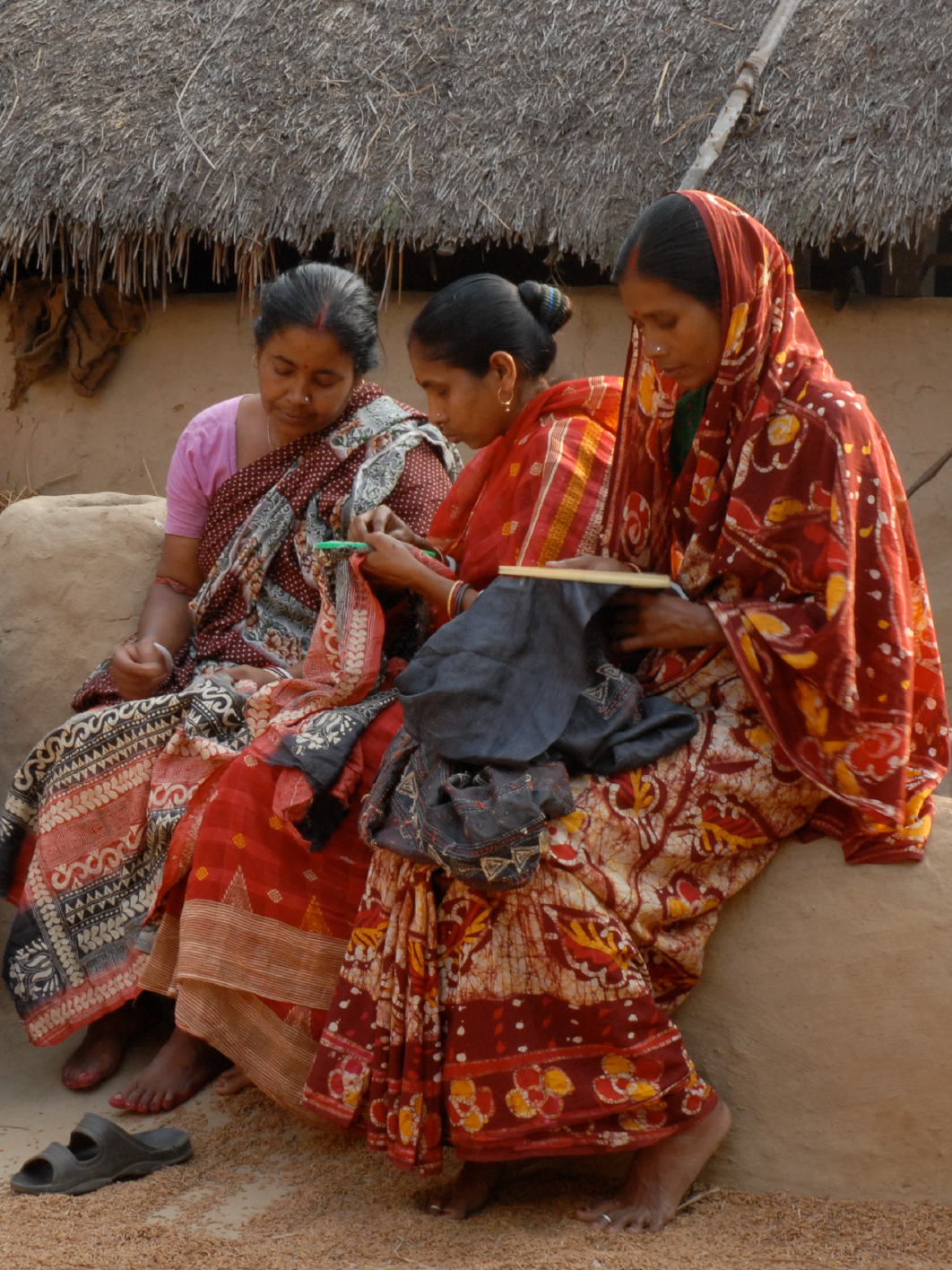
Inside SHE’s artisan clusters, the work preserves the craft’s origin—women stitch from their own villages, around their own family responsibilities, through an initiative by SHE called Dwar Pe Rozi
Behind the Thread
Inside SHE’s artisan clusters, the work preserves the craft’s origin—women stitch from their own villages, around their own family responsibilities, through an initiative by SHE called Dwar Pe Rozi (work brought to the doorstep). “They create these incredibly detailed works of embroidery using a simple, small circular frame, lying down in their homes and squeezing the work in between all their chores,” Malika describes.
A piece begins from a rough brief, outlining a theme and composition. From here, the artisan takes over—stitch choice, colours and smaller narrative details belong to her. “We don’t want to take away their individuality, the hand of the artisan is what makes kantha what it is,” says Malika. A single intricate piece can take months, from an idea and drawing to a village home, followed by hundreds of hours of handwork, back and forth from the artisan’s village homes to their centre, and finally to their finishing and quality-control process, all with “no industrial shortcut” as she puts it.
“Training is largely a process of working together and learning through experience. Many of our senior artisans have been associated with us for decades, and their knowledge is also passed down to newer generations of women. We encourage this exchange so that the skill doesn't remain with one generation,” she explains.
40 Years, Sixty Thousand Hands
SHE Kantha started with fewer than 700 women engaged in the craft commercially; today, more than 60,000 women carry the legacy forward, with 1,218 artisans directly supported under the SHE Kantha umbrella—a shift that's also changed what kantha itself looks like, moving from simple recycled quilts to intricate embroidered shawls, saris and standalone artworks. The studio’s work has extended into bolstering education, healthcare, sanitation and clean water access in the artisans’ rural communities. Globally, this 1000-woman network has found its way into some unlikely rooms—SHEKantha has shown at the Santa Fe International Folk Art Market for over a decade, travelled to trunk shows across the US, and even earned public acclaim from Hillary Clinton who became a collector after attending a SHEKantha exhibition in Bengal—carrying a craft once confined to Bengali households onto international retail floors and gallery walls.
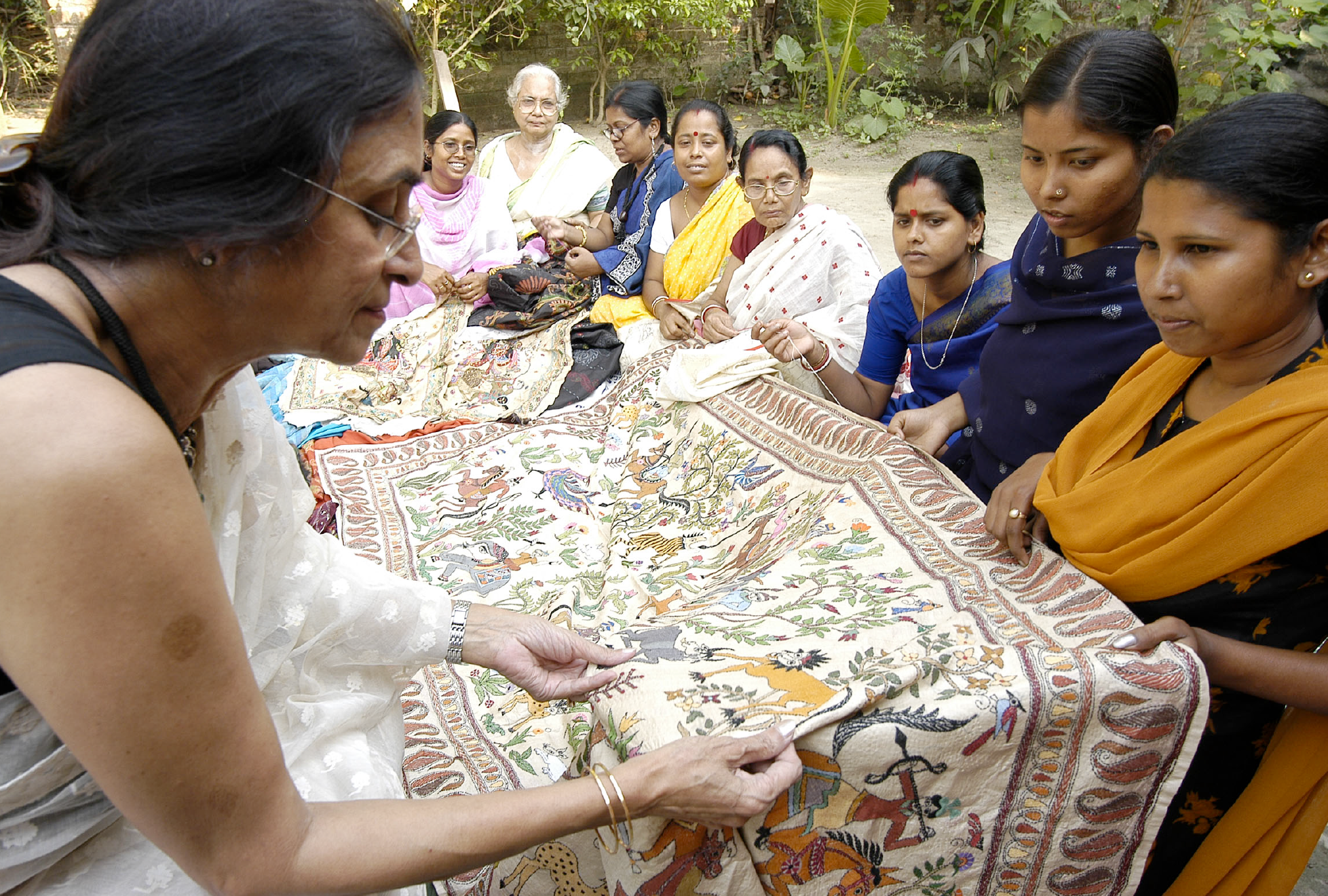
A detail-oriented process A single intricate piece can take months, from an idea and drawing to a village home, followed by hundreds of hours of handwork, back and forth from the artisan’s village homes to their centre, and finally to their finishing and quality-control process
Malika’s present ambition reaches further: she would like kantha to be understood as more than merely handicraft or decorative textile, but as a “serious contemporary art form with a remarkable cultural history” as she puts it. “What started in the mid-1980s with my mother and a small group of artisans has grown into a much larger community of artisans across villages in Bengal. For me, that is the real meaning of revival—not simply preserving an old craft, but ensuring that the people who carry it forward can continue to live with dignity through it,” Malika notes.